On this day in history….28th January 1953

On this day in history: 28th January 1953 – Derek Bentley is executed at Wandsworth Prison for his part in the murder of PC Sidney Miles….

img_5780
Derek Bentley – Fair use

Bentley was 19-years-old when he was hanged; he allegedly had a mental age of 11, was illiterate and suffered with epilepsy – probably resulting from a broken nose he received as a young child….

On the 2nd of November 1952 he and his 16-year-old friend, Christopher Craig, set out to commit a burglary on a warehouse in Croydon belonging to confectionary company Parker and Barlow…. However, while the pair were on the roof of the building they were spotted by a young girl living in a nearby house, who informed her mother – and she subsequently called the police….

Bentley was armed, with a knife and knuckle duster…. Craig too had a knife but he also carried a .455 Eley revolver….

A patrol car arrived with a uniformed constable and detective constable Fairfax – who proceeded to climb a drainpipe to get to the roof of the warehouse…. The would-be burglars attempted to run for it – but Bentley was restrained by Fairfax…. Craig shot the policeman, wounding him in the shoulder…. Notably, Bentley made no attempt to escape, he remained with the injured Fairfax….

Other police officers arrived on the scene….some were armed…. Craig, trigger-happy, was shooting haphazardly at any moving target…. It was as PC Sidney Miles reached the rooftop that the fatal shot was fired, hitting the constable in the head – he died instantly….

Craig, who had now run out of bullets, ran and threw himself off the roof of the building, landing some 30 feet below on a greenhouse – he broke his back….

Both Craig and Bentley were charged with murder…. At some point in all the shooting Bentley had supposedly uttered those fateful words “Let him have it Chris”…. Did he mean a bullet? Or was he in fact urging Craig to hand over the gun?

The controversial trial began on Thursday the 9th of December 1952, both Craig and Bentley pleaded ‘not guilty’…. It took the jury just 75 minutes to return a verdict of ‘guilty’ – but made the recommendation to mercy in the case of Bentley…. However, Judge Lord Goddard did not include this in his report to the Home Office…. Bentley was condemned to hang….

Due to his age Craig was spared the death penalty – instead he was ordered to be detained at Her Majesty’s pleasure…. He was released in 1963 after serving ten years….

Considering his mental age should Bentley have been sentenced as such? Yes, he had set out to commit a burglary and he was armed – but he was not the one who fired the gun….

An appeal hearing was held on the 13th of January – but the sentence was upheld…. A campaign was led by Bentley’s father – over 200 MPs signed a petition for a reprieve to be granted….

The night before the execution date crowds protested outside Parliament chanting “Bentley must not die”…. On the morning of the execution a large crowd gathered outside Wandsworth Prison, some sang the hymn ‘Abide With Me’…. Boos were heard when the notice it had been done was brought out….

Bentley’s sister, Iris, continued to campaign…. finally, in 1993, Home Secretary Micheal Howard, granted a partial pardon – saying Bentley should never have been hanged…. Later new evidence came to light that three officers had lied under oath about Bentley saying “Let him have it Chris”…. In 1998 the Appeal Court quashed Bentley’s conviction…. Sadly Iris did not live long enough to see this day….

img_5781
Photo credit : Steve Brown via Flickr

On this day in history….27th January 1910

On this day in history : 27th January 1910 – The death of English plumber and businessman Thomas Crapper….

img_5775
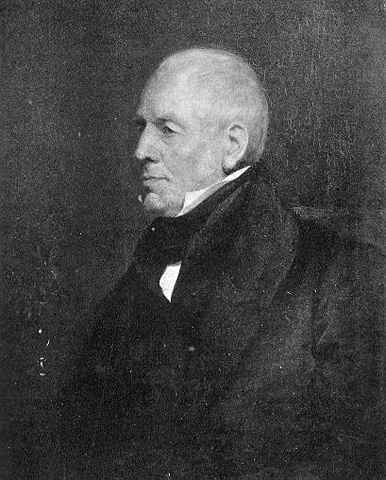
Thomas crapper – Photographer unknown – credit: MJC Plumbing – Public domain

It is thought American servicemen stationed in England during World War One brought the term ‘crap’ into our everyday language – as they saw the name ‘Crapper’ on so many cisterns when they visited our WCs…. “I’m just going to the Crapper”…. Actually the word ‘crap’ is Middle English in origin, it was used to refer to weeds and rubbish…. Its first entry in the Oxford English Dictionary was ten years after the birth of Thomas Crapper – long before he had left his mark on the British sanitary industry….

img_5778
Photo credit : Fawcett5 at English Wikipedia – Public domain

Thomas was born in Thorne, South Yorkshire, in 1836…. His brother George was a master plumber in Chelsea and in 1853 Thomas was to become his apprentice….

In 1861 he set up his own plumbing and sanitary business and quickly gained a reputation for high quality work…. In 1870 the company opened the very first bathroom showroom….

During the 1880s Prince Edward (the future King Edward VII) bought the Sandringham Estate in Norfolk…. Thomas Crapper & Co were contracted to do the plumbing in the renovations of the estate, including the supply and installation of 30 cedar wood seated lavatories…. This was to be the company’s first Royal Warrant – it went on to be awarded more in time both from Edward as King and then George V….

img_5776
Photo credit : Oxyman – own work CC BY 2.5

Having his own foundry and metal workshops at his premises enabled Thomas to develop his own ideas…. In 1880 he improved the ‘S’ bend trap by replacing it with the ‘U’ bend – delivering a far more efficient trap…. His company held nine patents, three of which were for improvements of the WC, including the floating ballcock….

It is often incorrectly thought that Thomas Crapper invented the lavatory…. It is also a common misconception that he invented the lavatory flush – (although his nephew is credited for improvements to the water siphon system at a later date)…. The confusion may come from the company’s advertisements of the time which do seem to imply the flushing loo was their invention….

img_5779
Public domain

Thomas Crapper was also the inventor of the manhole cover – allowing easy access to the drainage and sewer system….

img_5777
Manhole cover inscribed ‘T.Crapper & Co. Sanitary Engineers Marlboro Works Chelsea London’ – Photo credit : Patrick Mackie CC BY-SA 2.0

In 1904 Thomas retired and handed the business over to his nephew George and business partner Robert Marr Wharham…. Thomas died of colon cancer in January 1910….

On this day in history….26th January 1926

On this day in history : 26th January 1926 – Scottish engineer and inventor John Logie Baird demonstrates his mechanical television system publicly for the first time….

Baird was born in August 1888 on the West Coast of Scotland and was the son of a clergyman…. He studied at the Glasgow and West of Scotland Technical College but his studies were to be interrupted by the advent of World War One…. Having suffered ill-health for all of his life Baird was declared unfit to serve in the forces and so his war effort was spent working for the Clyde Valley Electrical Power Company, where he served as a superintendent engineer….

img_5755
John Logie Baird in 1917 – Public domain

After the War he travelled to the West Indies, spending a brief period in Trinidad where he tried to set up a jam making business! For whatever reasons his venture was not successful and he returned to England, to live in Hastings on the South Coast where he began to experiment with transmitting images….

One of his breakthroughs was to successfully transmit an image of the Maltese Cross for a distance of over 10 feet…. His very first demonstration was held in Selfridges in 1925 – but a further breakthrough came in October 1925 when he managed to transmit television pictures in light and shade – making the images much clearer to see….

img_5758
Early experimental television broadcast – Fair use

On the 26th of January 1926 he repeated this transmission at his laboratory on 22, Frith Street, Soho, London…. In attendance were members of the Royal Institution of Great Britain – an organisation based in London devoted to scientific research and education…. Also present was a reporter from The Times newspaper….

img_5757
Baird and his television receiver – Public domain

Baird demonstrated the first colour transmission on the 3rd of July 1928…. The test comprised of a young girl wearing a series of different coloured hats…. Her name was Noele Gordon – who went on to have TV success of her own in the TV soap ‘Crossroads’….

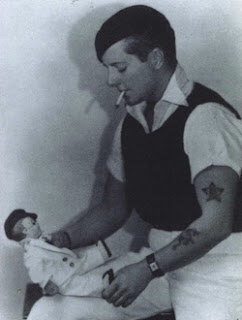
img_5756
Baird in 1925 with his transmitter equipment – and dummies ‘James’ and ‘Stooky Bill’ – which he used to demonstrate talking and movement – Public domain

On this day in history….25th January 1905

On this day in history : 25th January 1905 – The birth of Margery Sharp – the English author who brought us many novels, including the children’s series ‘The Rescuers’….

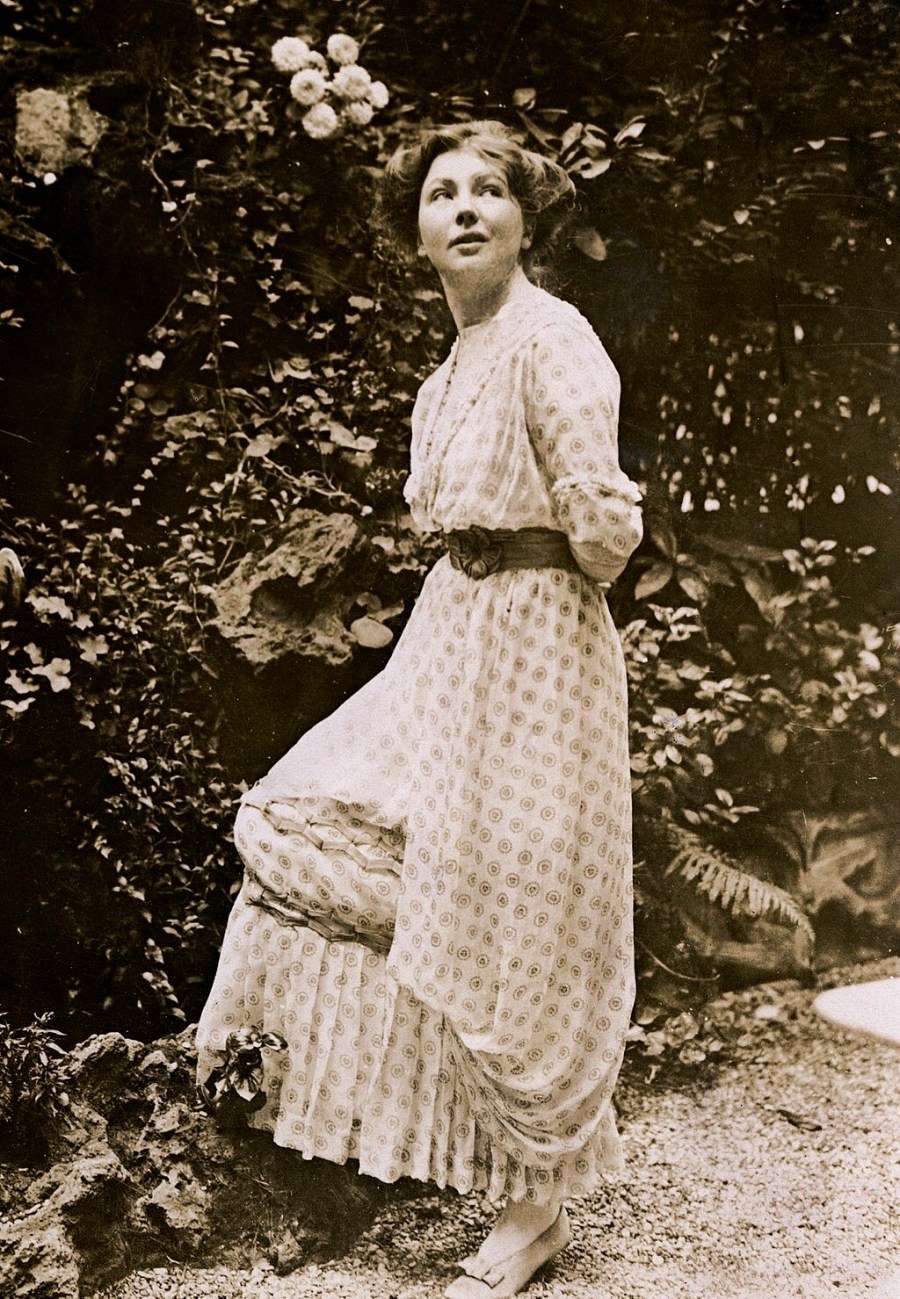
img_5752
Photo portrait by Bill Brandt, 1945 – Public domain

Sharp was born near to Salisbury in Wiltshire, although her family originally came from Yorkshire…. She then spent part of her childhood in Malta before returning to England in 1914 to study at Streatham High School and then Bedford College, part of the University of London…. She then spent a further year at Westminster Art College….

When she was 21 the satirical magazine ‘Punch’ began to publish her short stories…. She went on to write for several other magazines including ‘Good Housekeeping’, ‘Harper’s Bazaar’ and ‘ The Ladies’ Home Journal’…. Her first novel, ‘Rhododendron Pie’, was published in 1930 – after only taking her a month to write….

In 1938 she married Major Geoffrey Castle, an aeronautical engineer – and during WW2 she worked as an Army Education Lecturer…. All the while she continued with her writing – producing in her writing career 25 novels for adults, 14 for children, numerous short stories and 4 plays….

However the work we undoubtedly know her for best is her series of children’s books telling the stories of a socialite mouse by the name of Miss Bianca – who helped people and animals who found themselves in danger…. The first edition of ‘The Rescuers’ was published in 1959…. The books were illustrated by Gareth Williams, who also illustrated other children’s classics such as ‘Stuart Little’ and ‘Charlotte’s Web’….

img_5753
1st edition – Fair use

In 1977 Walt Disney released the animated film ‘The Rescuers’, based mainly on the second novel of Sharp’s series – it was an outstanding success…. A sequel ‘The Rescuers Down Under’, set in the Australian Outback, was released in 1990….

img_5754
Original theatrical release poster – Fair use

On this day in history….24th January 1901

On this day in history : 24th January 1901 – The birth of Edward Turner, the engineer and designer of Triumph motorcycles and the Ariel Square Four and the Daimler V8 engines….

Turner, who as born in Southwark, South London – the third of seven children – had his first ride on a motorcycle in 1915, on a Light Tourist New Imperial…. By 1916 he was serving in the Merchant Navy, under contract from Marconi, as a radio telegraphy officer….

img_5747
A 1920 New Imperial Light Tourist 300 cc motorcycle – Yesterdays Antique Motorcycles en Classic Motorcycle Archive CC BY-SA 3.0

In the early 1920s he bought Chepstow Motors in Peckham Road, South East London and by 1925 had designed his first motorcycle engine…. Within two years he had completed the motorcycle that became known as the ‘Turner Special’….

In 1928 Turner conceived an idea for an engine that would go on to become the ‘Square Four’…. It was a brand new concept – a 500cc unit with a one piece cylinder block and twin geared crankshafts….

img_5748
Close-up of a 1932 Ariel Square Four 4F 600 cc engine – Yesterdays Antique Motorcycles CC BY-SA 3.0

BSA were not interested in either the design of the Turner Special or his new engine – but Ariel saw the potential and offered Turner a job…. The Ariel Square Four was first shown at Olympia in 1930….

In 1936 Triumph was bought by Ariel owner Jack Sangster – and its name was changed to Triumph Engineering Co…. Edward Turner, now 35-years-old, was made General Manager and Chief Designer…. Under Turner Triumph’s existing range of motorcycles were redesigned to be more sporty in style…. In 1949 the Triumph Thunderbird was launched and a decade later the Triumph Bonneville….

img_5749
1950 Triumph 6T Thunderbird 650 cc motorcycle – Yesterdays Antique Motorcycles CC BY-SA 2.5
img_5750
Triumph Bonneville T120 on display at the Deutsches Zweirad-und-NSU-Museum – Image credit : Joachim Kohler – own work CC BY-SA 3.0

In 1959 Turner designed the Daimler 2.5 and 4.5 litre V8 engines for the Daimler SP250 sports car and Daimler Majestic Major….

img_5751
Daimler SP250 (also known as the Dart) – Image credit : Brian Snelson – via Flickr CC BY 2.0

It was in 1960 that Turner went to Japan for a tour of the Honda, Suzuki and Yamaha motorcycle plants…. He was somewhat shocked to see the extent of production in progress, it was obvious the Japanese were gearing up to take over the Western market…. British motorcycle manufacturers, including BSA (which by now owned Triumph) were totally ill-prepared…. It was inevitable what was to happen – Japanese machines flooded the market….

Turner resigned as Chief Executive of BSA-Triumph in 1963 but kept a directorship…. Although apparently none too happy with the direction the company was taking at the time of his resignation he kept close ties with it until his death in 1973….