On this day in history….18th October 1674

On this day in history : 18th October 1674 – The birth of dandy Richard ‘Beau’ Nash – Master of Ceremonies for Bath and who turned it into a city of fashion….
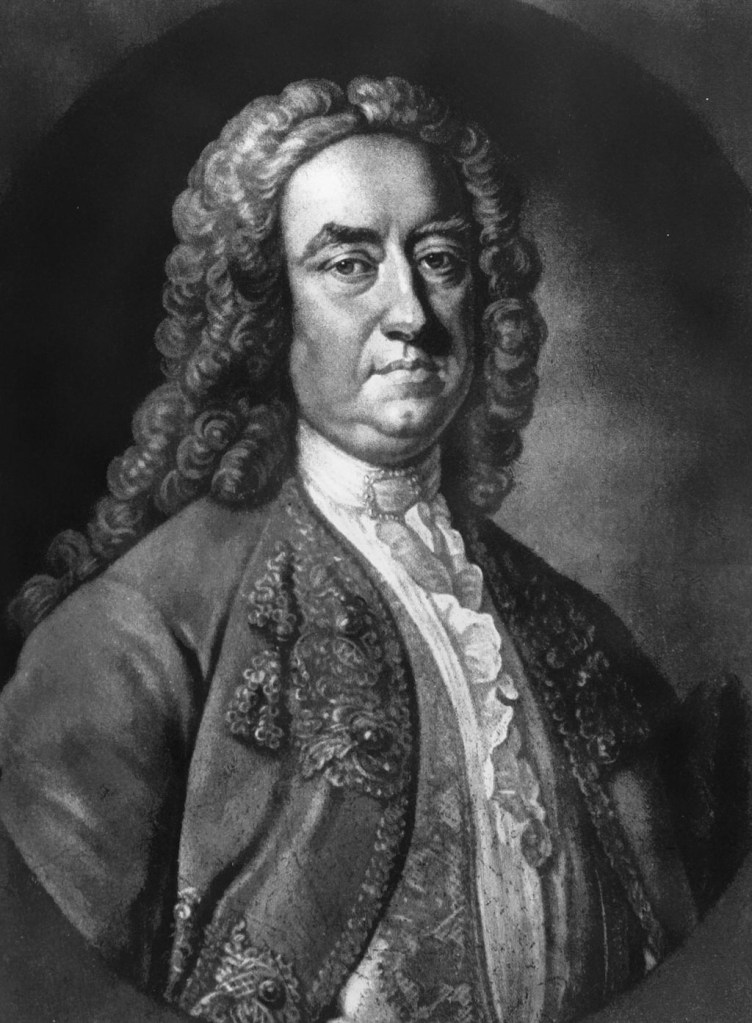
Beau Nash – Unknown artist , public domain – from the book ‘Bath Under Beau Nash’ by Lewis Melville

Nash, the son of a glass making factory owner, was born in Swansea…. He attended Oxford University – but dropped out to serve as an army officer – this didn’t last long either…. He then went on to become a barrister in London and yet again, this career did not amount to much….

Being one who loved to socialise Nash had used his army stint to establish connections in society…. He also liked to gamble – so much so that it dominated his life….

On a visit to Bath Nash found it to be perfect for his lifestyle…. The spa town, having been visited by Queen Anne in 1702, was already increasing in popularity…. Nash began to introduce it to the ‘delights’ of gambling…. Other than soaking in the hot mineral spas, taking the occasional stroll in the park or frequenting the taverns and coffee houses, the rich of Bath had little else to do….

Nash managed to wheedle his way in to become aide to Master of Ceremonies Captain Webster…. It was the job of the Master of Ceremonies to organise Society’s social life, with dances, balls and other social gatherings…. Webster was shot dead in a duel following an argument over a card game – and in 1704 Nash was elected by the Corporation of Bath to fill the vacant position….

He certainly looked the part with his flamboyant unique dress style – and quickly earned the nickname ‘Beau’…. He was a trendsetter; whilst everyone else was wearing white wigs, he wore a jet black one – with a cream beaver hat perched on it in a rakish fashion…. He left his coat unbuttoned to show off his lavish waistcoat and ruffled shirt and instead of the customary boots worn by men at the time, he introduced shoes and stockings – so much better for dancing in….
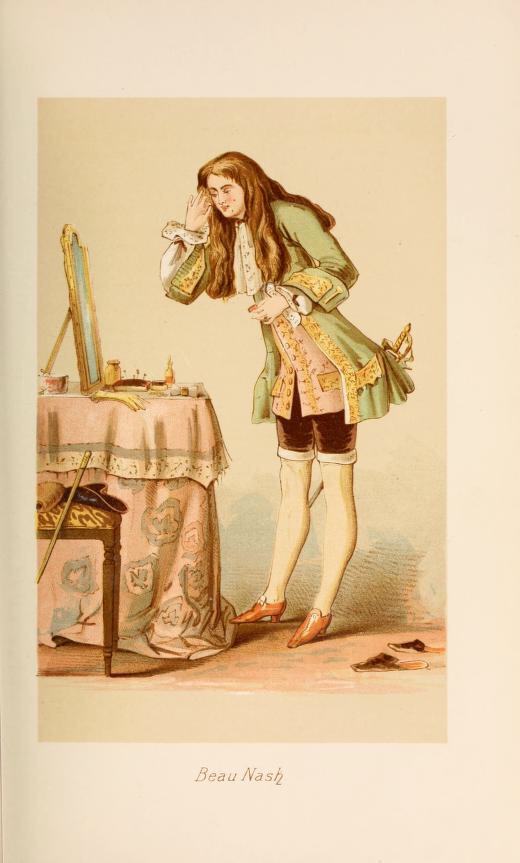
A young Beau Nash – Illustration from 1886 – Public domain

Bath became the centre for social change; Nash promoted refinement, banned swearing and encouraged social integration with friendships across the classes…. He would broker marriages – and appraise newcomers to Bath to see it they were suitable for the social set….

In 1708 he appointed Thomas Harrison to build the Bath Assembly House – a place for dancing and gambling…. With musicians brought in from London it became the social hub…. Bath had the reputation of being the most fashionable resort in England, even attracting continental nobility…. Nash became known as the ‘King of Bath’ – and had a string of mistresses to keep him company….

But – the higher you rise the harder you fall…. In 1745 anti-gambling laws were tightened…. Before there had been loopholes to exploit but now it was harder to get around the law…. This was a major setback for Nash and his income rapidly declined…. In the end he had to sell most of his possessions and had to move in with one of his mistresses, Julianna Papjoy – who cared for him until his death in 1761….


On this day in history….17th October 1091

On this day in history : 17th October 1091 – A tornado sweeps through London – it is the earliest reported tornado in Britain…. The wooden London Bridge is demolished along with over 600 houses….

The tornado is thought to have been T8 on the Torro Scale, which is used to measure tornado intensity ranging between T0 and T11…. Or on the Fujita Scale it would have registered at F4, indicating wind speeds between 207-260mph – classified as causing devastating damage….

The tornado twisted in from the south west direction…. Many churches in the area were badly damaged or demolished…. The church at St. Mary-Le-Bow, in the City, was completely levelled – all that survived was the newly completed arched crypt…. Four rafters at 28ft long were driven into the ground with such force that only 4ft showed above the surface…. The church was later rebuilt during the Norman period….

According to William of Malmesbury, in his account of the tornado – “churches and houses, enclosures and walls were left in heaps”…. Not only was it the first tornado recorded in England it has also been the most violent one ever…. Over 600, mostly wooden houses, were destroyed – it is amazing that out of a population of around 18,000 there were only two known fatalities….

After the tornado William Rufus rebuilt London Bridge – only for it to be destroyed by fire forty years later…. Eventually one was built from stone….

On this day in history….16th October 1902

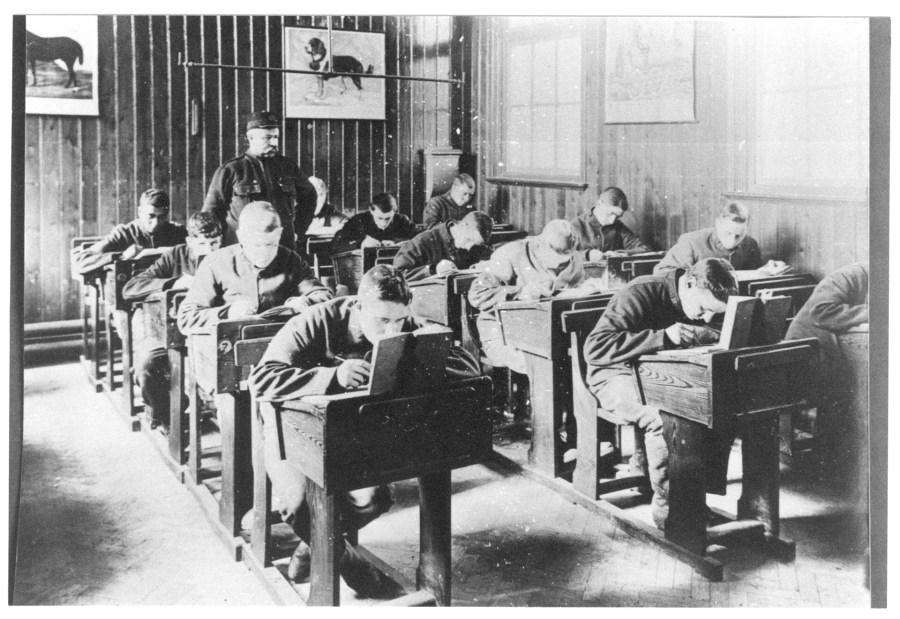
On this day in history : 16th October 1902 – In the village of Borstal, in Kent, a detention centre for young offenders is opened…. It is the first of several such custodial institutions, which become known as borstals….

Young offenders in the schoolroom at Borstal (now known as Rochester Prison), circa 1906 – Public domain

It was in 1895 that the Gladstone Committee first proposed the concept of the ‘borstal’ – seeing a need to separate young people from the influence of older convicts in adult prisons…. Those under the age of 16 were already segregated after the introduction of Industrial Schools, a new reformatory system to correct wayward behaviour as an alternative to prison…. The Gladstone Committee sought to find a solution for those in the 16-21 age group….

An experimental scheme was conducted at Bedford Prison commencing in 1899…. This was then extended to a part of the existing prison in Borstal; the new institution being kept entirely separated from the main adult prison…. The young inmates were given physical exercise, schooling and training for future work…. The skills taught included trades such as brick-laying, carpentry, farming, agriculture, metalwork and cookery…. Sentences were generally between two and three years, with supervision after discharge….

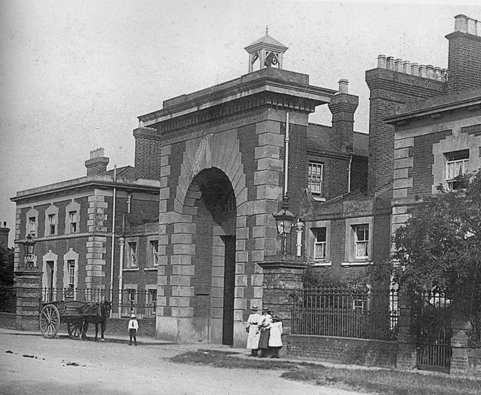
The Prevention of Crime Act 1908 saw the scheme come officially into force; in 1910 a second institution was established at Feltham and was then followed by others, including Portland…. The first for girls was opened in Aylesbury in 1909 and offered training in skills such as housework, cookery, laundry, sewing, gardening and farming….

Aylesbury Prison, where the first Borstal for girls was established – Public domain

Discipline was strict but with corporal punishment used only as a last resort…. Other punishments such as withdrawal of privileges, docked wages, reduction of food rations and confinement were implemented instead…. The birch could only be imposed by a visiting magistrate and was only ever administered to males over the age of 18…. In the ten year period between 1926-36 it was only used on 7 occasions…. Caning was used in Northern Ireland but was not authorised in England, Scotland and Wales…. Borstals should not be confused with approved schools, which were a different type of youth correction institution, based more on boarding schools – the cane was used in approved schools….

The Criminal Justice Act 1982, officially abolished the borstal system in the UK, being replaced by youth custody centres, or detention centres…. Since the 1960s and 1970s the old borstal system had been viewed as out dated…. In 1972 Community Order sentences began to appear – with offenders undertaking unpaid work to provide services for the benefit of the community….

On this day in history….15th October 1871

On this day in history : 15th October 1871 – The Church Times publishes Onward Christian Soldiers – originally written for a children’s festival by the Rev. Sabine Baring-Gould….

Reverend Sabine Baring-Gould – Engraving from Strand Magazine – Public domain

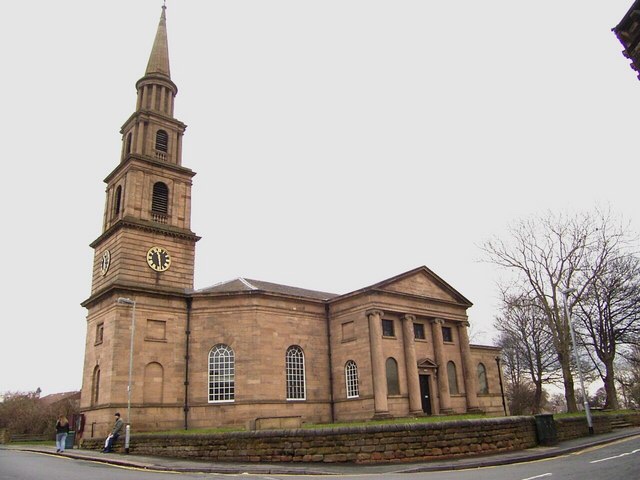
It was the Monday following Whitsuntide, 1865…. It had been arranged for the children of Horbury village school, near to Wakefield in Yorkshire, to meet up with children from a school in a neighbouring village…. They were to rendezvous at St. Peter’s Church in Horbury where Baring-Gould was curate at the time….

St. Peter’s Church, Horbury – Image credit : Stanley Walker CC BY-SA 2.0

Baring-Gould wanted a suitable rousing song for the children to sing as they marched along but was unable to find anything fitting…. So, he sat up the night before and wrote Onward Christian Soldiers – it reputedly took him 15 minutes to write the words….

He had not ever intended the song to be published – and when it was later added to the hymn books he apologised profusely for his hastily written words…. He allowed the compilers to change some of his lyrics – for example his ‘one in hope and doctrine’ was amended to ‘one in hope and purpose’….

The tune Baring-Gould had originally set his words to was Joseph Haydn’s Symphony in D No.15…. This did not particularly inspire public interest in the hymn – and even after being printed in the Church Times it did not increase in popularity…. Then along came composer Arthur Sullivan – best known for his collaborations with W.S. Gilbert, where together they produced works such as HMS Pinafore and The Pirates of Penzance…. Sullivan wrote the tune St. Gertrude to accompany Onward Christian Soldiers – it was first publicly performed in 1902…..

Winston Churchill further helped increase its popularity when in August 1941 he met with Franklin Roosevelt onboard HMS Prince of Wales to agree the Atlantic Charter…. As part of the proceedings a church service was held, for which Churchill chose the hymns…. Onwards Christian Soldiers was one of them….

Public domain

On this day in history….14th October 1881

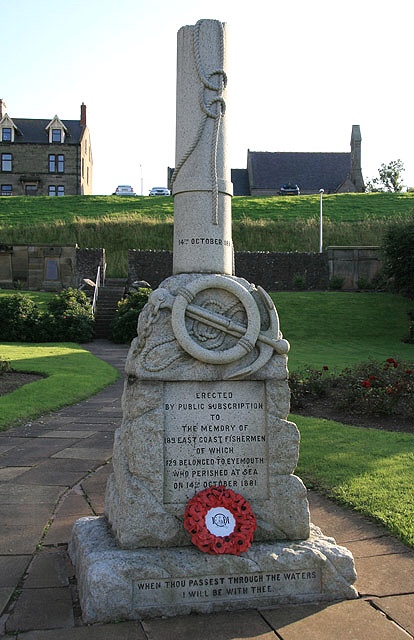
On this day in history : 14th October 1881 – Scotland’s worst ever fishing disaster occurs when a Berwickshire fishing fleet gets caught in a violent storm – 189 fishermen lose their lives….

Granite memorial in Eyemouth; depicts a broken sailing mast – Image credit : Walter Baxter CC BY-SA 2.0

Locals still know the day, when some 29 boats were swallowed by the sea off the south coast of Scotland in hurricane force conditions, as Black Friday…. Most of the fleet was from Eyemouth; 129 men from the town drowned, around 10% of the male population…. A further 24 from Burnmouth died, 15 from Newhaven-by-Edinburgh, 11 from Cove, 7 from Fisherrow, Musselburgh and 3 from Coldingham….

Bronze memorial at St. Abbs, figures of women and children looking out to sea – Image credit : Karen Bryan CC BY-SA 2.0

Fishing, being such a vital part of the economy, meant the fishermen had ignored the weather forecast that day…. Times were hard and not being able to afford losing a day’s income meant the fleet had set out as usual…. By lunchtime their worst fears were being realised – they were caught in the most violent of storms…. Those boats that could headed back to harbour but some were already beginning to sink, many more capsized and others were smashed against rocks…. The only glimmer of brightness out of this dark time being when fishing boat Ariel Gazell limped back into harbour at Eyemouth two days after the storm….

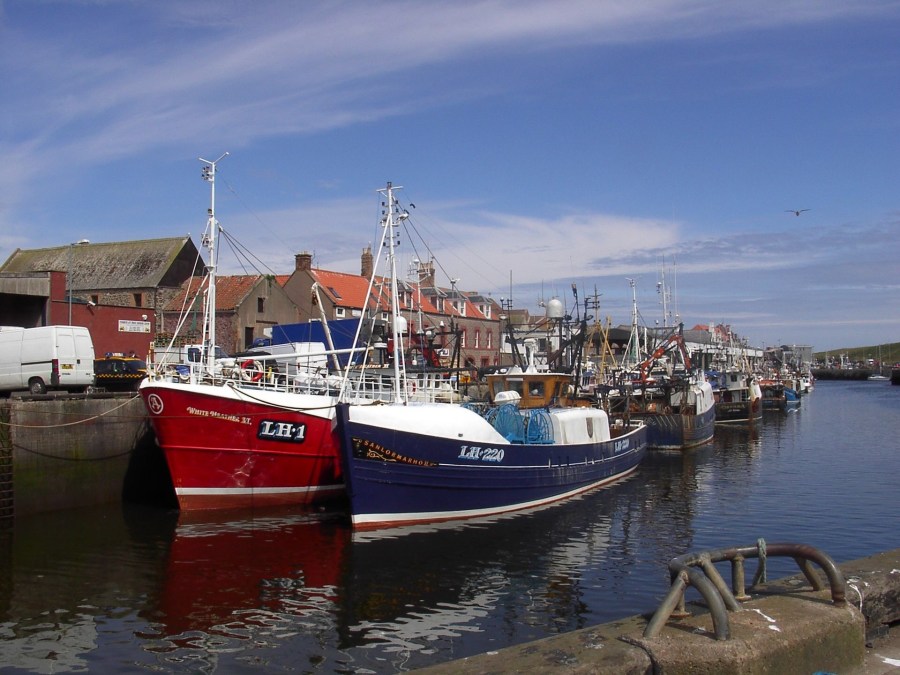
Eyemouth Harbour – Image credit : Peter Nisbet at English Wikipedia – Public domain

A massive relief fund was launched to help the families of the lost fishermen and the community – more than £5m in today’s equivalent was raised….

A commemorative tapestry of the tragic event can be seen in Eyemouth Museum….