On this day in history….2nd September 1807

On this day in history : 2nd September 1807 – The bombardment of Copenhagen – Britain attacks the Danish capital in order to prevent Denmark’s naval fleet from falling into the hands of Napoleon….
Battle of Copenhagen – Public domain

During the Napoleonic Wars Denmark was resolved to remain neutral…. In 1806 Napoleon had launched his campaign of destruction on British commerce in an attempt to paralyse Great Britain…. Under his Continental Blockade the allies of France and all neutral countries were prohibited from trading with Britain…. Whilst this was damaging to some British industries generally Napoleon was unsuccessful in maintaining his blockade, as Britain’s naval supremacy meant that French forces were spread too thinly….

Denmark was the weakest point in Napoleon’s coalition; still vowing to remain neutral the Danes were facing enormous pressure from France and Russia to surrender their fleet to Napoleon…. Britain was worried that Napoleon would force Denmark to close the Baltic Sea to British shipping severing a vital link with ally Sweden – an essential trading partner for raw materials…. Britain and Sweden tried to persuade Denmark to join them in a secret alliance – but the Danes remained firmly neutral…. Concerns began to grow that once Prussia was defeated, which looked increasingly likely, Denmark would fall under French control…. And then came the news that it appeared Napoleon had persuaded Alexander I of Russia to form an agreement with Denmark and Portugal against Britain…. Something had to be done….

Britain assembled a force of 25,000 troops – and offered Denmark a treaty of alliance and mutual defence…. In return for the protection of 21 British warships the Danes were expected to hand over their fleet after the war…. On the 31st of July 1807 Napoleon responded by telling Denmark it either prepared for war against Britain – or France would invade Denmark…. Britain retaliated by demanding the surrender of the Danish fleet…. Poor Denmark really was caught in the middle of it ~ things had to go one way or the other ~ and so the Danes responded with what was effectively a declaration of war against Britain….

Denmark had a strong naval fleet and around 10,000 troops based around Copenhagen…. Expecting an attack by the British most – but not all – civilians had been evacuated from the city…. On the 26th of August General Sir Arthur Wellesley led his own reserve, along with two light brigades of British artillery, one battalion, eight squadrons and one troop of horse artillery into battle…. On the 29th of August the British forces overpowered the Danish troops….

Contemporary Danish painting of the Battle as seen from land – Public domain

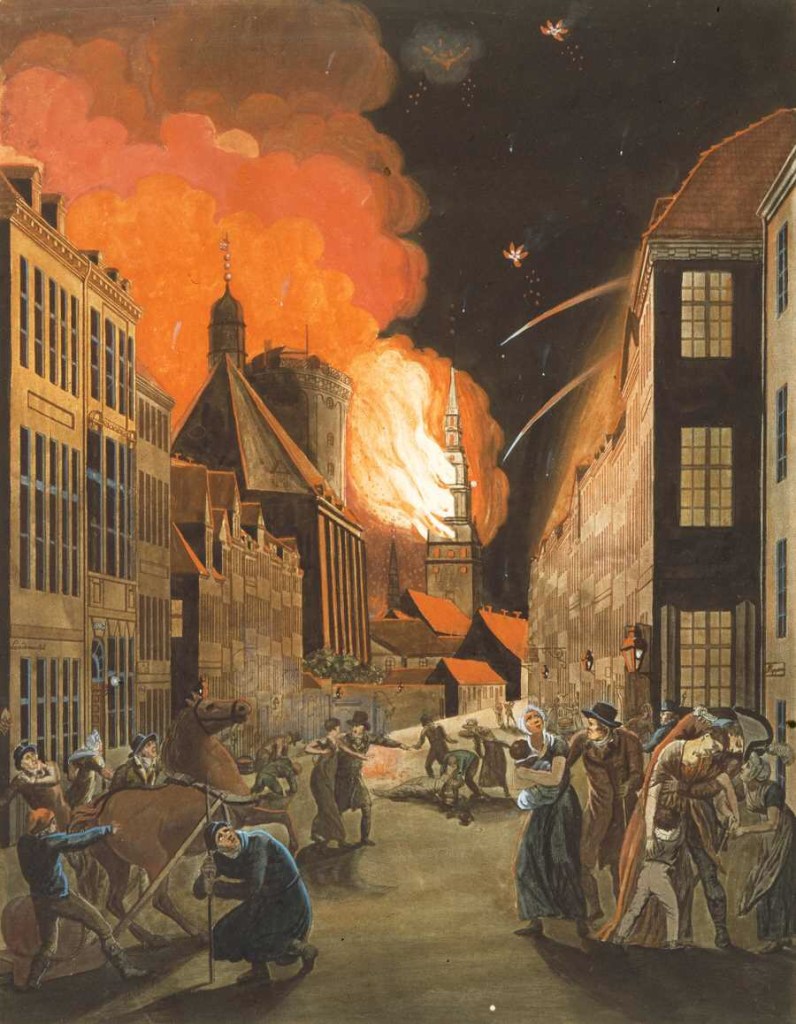
But still the Danes resisted British demands to give up its naval fleet – so the order was given that from the 2nd to the 5th of September Copenhagen would be bombarded…. During the bombardment of fire bombs and phosphorus rockets over 1,000 buildings were burned down…. On top of the expected military casualties 768 civilians were injured – and a further 195 were killed….

Public domain
Public domain

On the 5th of September Denmark surrendered and agreed to give up its navy….the capitulation was signed on the 7th…. In return Britain pledged to leave Copenhagen within six weeks – which it did on the 21st of October 1807…. However, Britain and Denmark remained at war until 1814….

After the bombardment – Public domain

On this day in history….1st September 1960

On this day in history : 1st September 1960 – The British government gives the green light for betting shops to open on the high street – as from the 1st of May 1961….

The announcement followed the introduction of the new Betting and Gaming Act…. The aim was to remove gambling from the street and end the practice of runners – who collected from punters on behalf of bookmakers…. At the time betting was a rather complicated business – it was archaic and inconsistent…. Anyone wishing to place a bet had to open an account with a bookmaker and prove they were credit worthy….

From January 1961 public houses were permitted to have fruit machines and other slot machines….it also became legal to have a small wager on card games, such as bridge…. Then from May the 1st approved bookmakers were issued with a license or permit from the Racecourse Betting Control Board….

Following the beginning of May around 100 betting shops a week were opening up…. Within six months there were at least 10,000….and within five years 1,000 casinos had opened…. Two more Gaming Acts, in 1963 and 1968, took things further, introducing licences for other forms of gaming….

In 1970 a new Gaming Act tightened up restrictions as there had been too many loopholes to exploit…. This was also to cover games such as bingo…. With the advent of the National Lottery in 1994 and the growth of on-line gambling the industry is worth billions…. In October 2004 a Gambling Bill was introduced to tighten regulation for betting on the internet….

On this day in history….31st August 1422

On this day in history : 31st August 1422 – The death of King Henry V…. He is succeeded by his only son and heir, Henry VI – who is just 9 months old….

King Henry V – Public domain

Henry V died suddenly at Chateau de Vincennes, in the royal fortress town of Vincennes, to the east of Paris…. He is believed by many to have died from dysentery; some historians think he contracted this at the Siege of Meaux – which was fought between the English and the French during the Hundred Years’ War…. He had become ill during the long battle, which had taken place during the winter months – it is, therefore, disputed that dysentery was the cause of his death as he would undoubtedly have died long before August…. Another possible cause could have been heatstroke, as he had been riding in full armour in the blistering heat…. Henry V was 35 years old and had reigned for nine years…. Just two years before, in 1420, he had married Catherine of Valois, the daughter of Charles VI of France – and their son Henry, was born at Windsor Castle on the 6th of December, 1421….

Henry’s marriage to Catherine of Valois – British Library – Public domain

Henry V had died before he could be crowned King of France…. His body was returned to England and on the 7th of November 1422 he was buried at Westminster Abbey…. Not long before his death he had named his brother, the Duke of Bedford, as Regent of France, in name of his young son Henry VI….

Henry VI was the youngest ever to succeed the throne…. On the 21st of October 1422 he also became the King of France, following the death of his grandfather, Charles VI of France – and in accordance with the terms of the Treaty of Troyes, which was made after Henry V’s victory in France….

Catherine of Valois was treated with suspicion by the English as she was the daughter of Charles VI and she was prevented from having a major part in the upbringing of her son…. On the 26th of September 1423 nobles of England summoned Parliament in the young King’s name to establish a regency council to govern until Henry VI came of age…. The Duke of Bedford was appointed Senior Regent of the Realm….

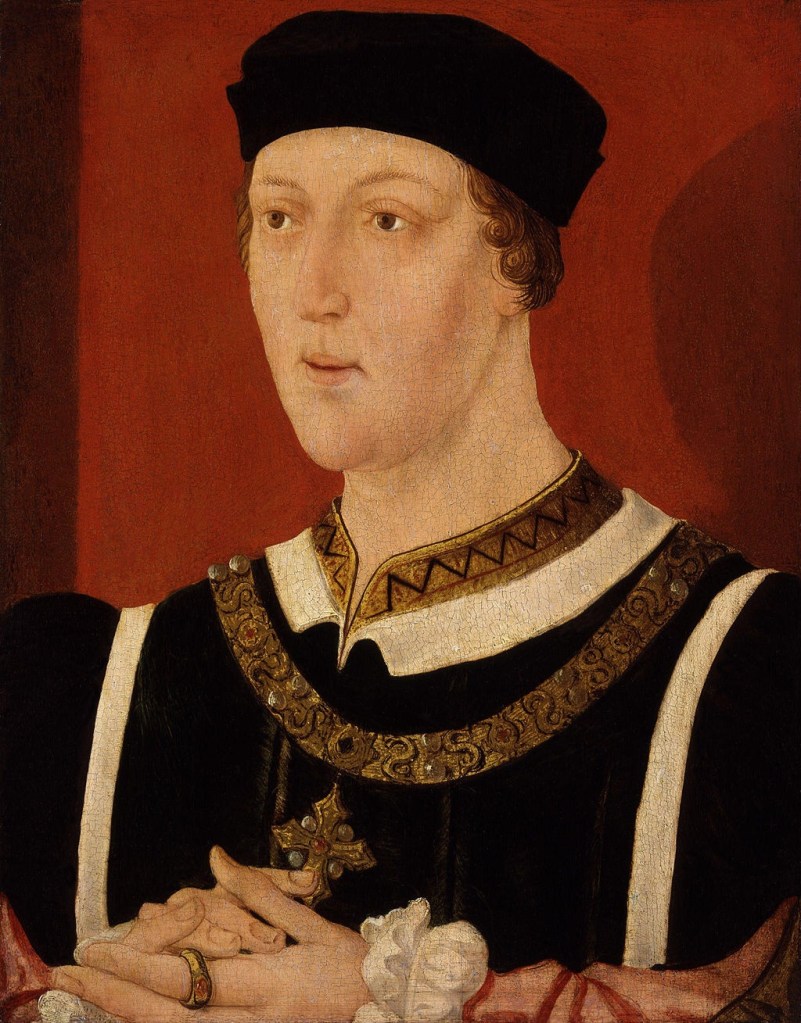
Henry VI was headstrong and unruly as a child – but finally in 1437 he was considered old enough to rule for himself….

King Henry VI – Public domain

On this day in history….30th August 1716

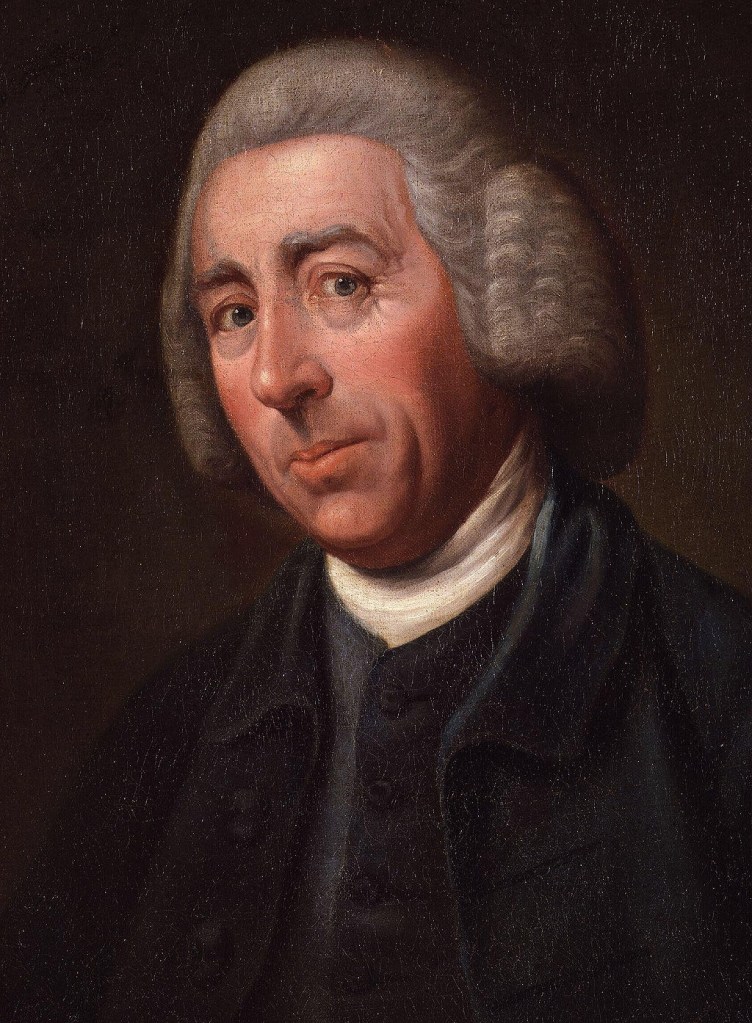
On this day in history : 30th August 1716 – The baptism of Lancelot Brown, better known as Capability Brown – the landscape architect who designed over 170 parks, many of which we still enjoy today….

Lancelot (Capability) Brown – Public domain

Brown was born in the village of Kirkdale in Northumberland…. He was the son of a land agent and of a chambermaid, who were employed by Sir William Loraine of Kirkcharle Hall…. At the age of 16, after finishing his education, at a school in the nearby village of Cambo, Brown became an apprentice to the head gardener at Kirkcharle Hall…. Finishing his apprenticeship at 23 he then travelled south, ending up working at Wotton, an estate owned by Sir Richard Grenville….

Then in 1741 he joined the staff of Lord Cobham at Stowe in Buckinghamshire…. Here he worked under William Kent, a founding member of the new English style of landscape gardening…. Brown was responsible for bringing Kent’s designs to life – and as he gained experience and confidence he began to take on work of his own for associates of Lord Cobham…. Even though he was still working for Lord Cobham this was done with his employer’s blessing….and indeed at the age of 26 he was appointed Head Gardener at Stowe and remained so until 1750…. In 1744 he married Bridget Wayet, ‘Biddy’ – the daughter of a landowner – and they were to have seven children (three of whom died in infancy)….

Brown continued to take commissions from his employer’s aristocratic friends and became much in demand – in fact by 1751 he was becoming quite famous…. By the 1760s he was extremely wealthy, earning in today’s equivalent to well over £800K per year…. He had by now gained the name ‘Capability Brown’ – because of his ‘sales pitch’ – which invariably involved him telling his clients that their land had ‘capability for improvement’….

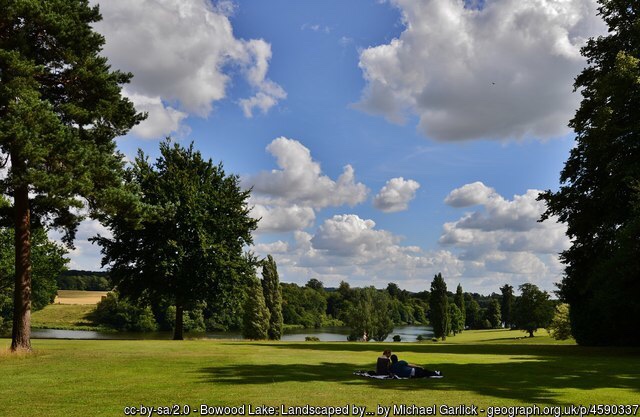
Capability Brown landscape, Bowood Lake

In 1764 Brown was appointed Master Gardener at Hampton Court Palace for King George III…. Then in 1767 he was able to buy his own estate, in the manor of Fenstanton, Huntingdonshire, East Anglia…. It was an estate that comprised of 2,668 acres, with two manor houses and two villages…. In 1770 he was appointed High Sheriff of Cambridgeshire and Huntingdonshire but it was eldest son, Lance, who stepped in to carry out the majority of the duties….

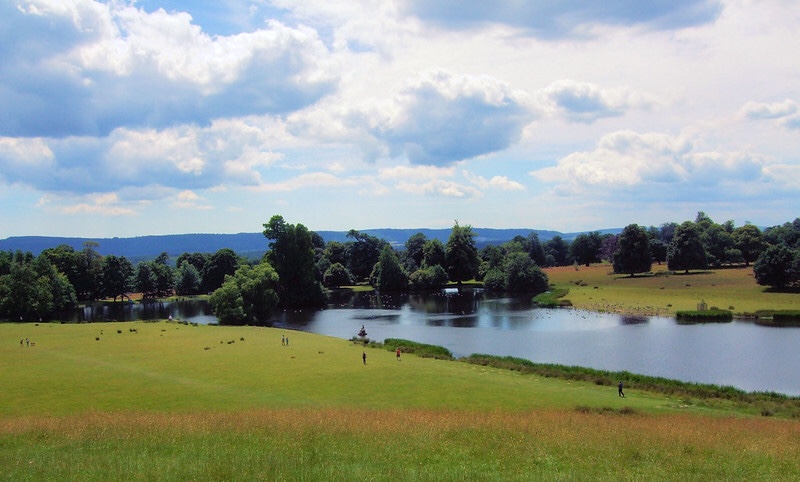
Capability Brown was responsible for the design of around 170 grounds of some of the finest country estate houses of the land…. Blenheim Palace, Warwick Castle, Highclere Castle, Milton Abbey, Belvoir Castle, Petworth House, Longleat, Clandon Park, Broadlands and Syon Park to name but a few…. his influences can be seen at Kew Gardens…. His style – the sweeping landscapes, with clumps of trees and serpentine lakes – replaced the previous formal gardens of aristocratic England…. Not all approved of his work, some accused him of destroying the work of past generations…. His work fell out of favour in the 1800s but a new appreciation arose in the 20th century and we continue to enjoy his legacy at many of the historical homes we visit today – many of which are now owned by the National Trust….

Petworth Park, West Sussex – Photo credit : John Linwood via Flickr

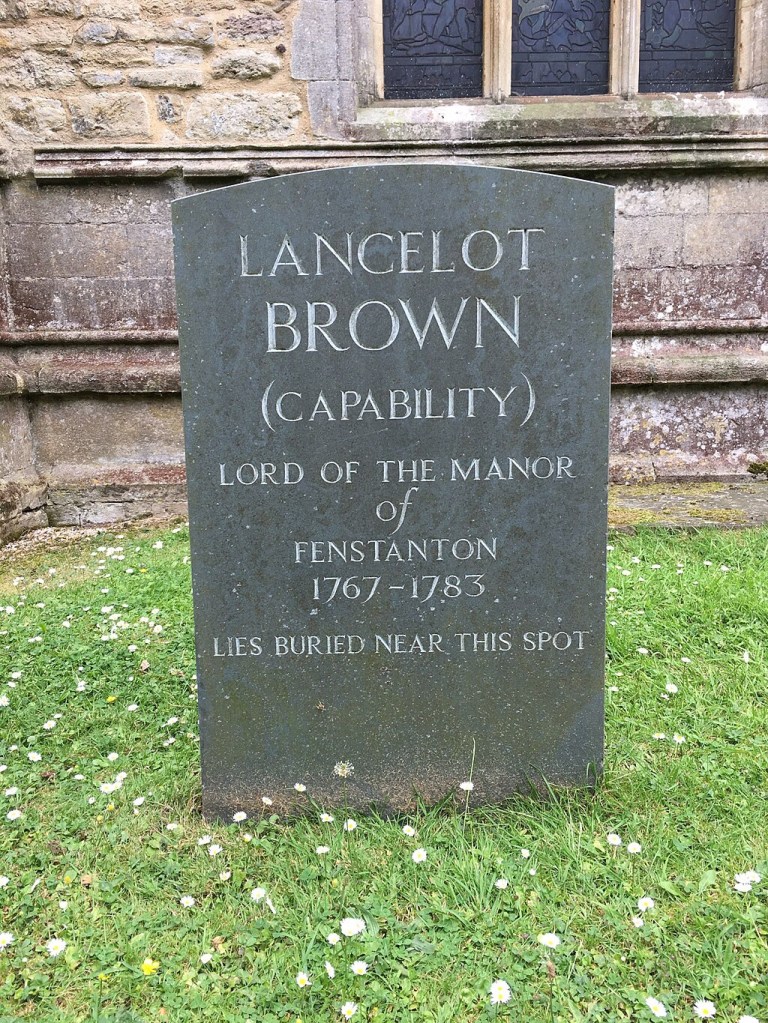
Brown continued to work until his sudden death on the 6th of February 1783….when after an evening out he collapsed on his daughter’s doorstep…. He was buried in the churchyard of St Peter and St Paul, the parish church on his estate – Fenstanton….

Image credit : Tedster007 CC BY-SA 4.0

On this day in history….29th August 1782

On this day in history : 29th August 1782 – British battleship HMS Royal George sinks off of Spithead whilst repair work is carried out beneath its waterline…. Some 900 lives are lost….

HMS Royal George – by John Cleveley the Elder – Public domain

At the time of its launch, on the 18th of February 1756, HMS Royal George was the largest warship in the world, with 100 guns on 3 decks….

In August 1782 preparations were being made for the Royal George to sail to Gibraltar, as part of the fleet of Admiral Howe…. The fleet was anchored off of Spithead in order to take on supplies…. All shore leave had been cancelled, out of fear of desertion, so all 1,200 crew were onboard apart from a detachment of 60 men who had been sent ashore on errands…. Also on board were over 300 family members of the crew, mostly women and children, spending time with their loved ones before it was time to set sail…. A large group of workmen, working against the clock to get repairs done, were also present….

Around 7am the ship was ‘heeled over’, to enable easier access to the hull…. The process involved rolling the ship’s starboard guns to the centre of the ship to cause it to tilt over the port side, raising the starboard side up…. However, a large quantity of rum casks had been loaded onto the port side and the additional weight of these was overlooked…. As a result the ship rolled over too far….

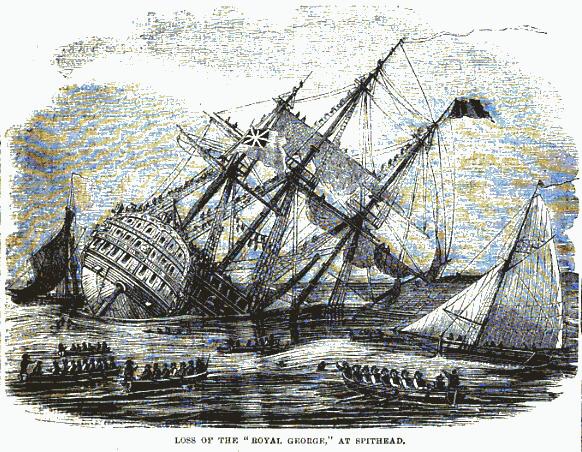
Public domain

The captain gave the order to roll the guns back but it was too late….the ship had taken on too much water through the gun ports…. A sudden in-rush of water filled the ship and it sank…. Although 255 people were saved around 900 more were lost, including some 300 women and 60 children….

Many of the victims were washed ashore at Ryde on the Isle of Wight…. They were buried in a mass grave stretching along the beach….

Toll for the brave
The brave that are no more,
All sunk beneath the wave,
Fast by their native shore.
- The Loss of the Royal George, William Cawper, 1782