On this day in history….29th June 1916

On this day in history : 29th June 1916 – British diplomat Sir Roger Casement, an Irish patriot, is sentenced to death for his part in the Easter Rising against British rule in Ireland….

Sir Roger Casement – National Library of Ireland

Casement was the British consul in Portuguese East Africa and was well regarded and respected for his work…. He published his Congo report in 1904 which led to major changes in the Belgian rule of the Congo and his Putumayo report of 1912 gained him a knighthood….

In 1912 he retired to Ireland due to ill health as a result of the malaria he had contracted from his time in the Congo…. Although Casement came from a Protestant background he sympathised with the Irish Catholic Nationalists…. In 1913 he helped form the Irish National Volunteers and travelled to New York in 1914 to promote the cause and raise money for the Volunteers from among the large Irish community in New York….

After the outbreak of World War 1 Casement travelled to Berlin via Norway – he considered himself an ambassador for Ireland…. The idea was that if Germany would supply guns to the Volunteers and provide military leadership the Irish would revolt against the English diverting attention away from the war with Germany….

However on arriving in Germany in November 1914 he discovered the German government were not willing to risk an expedition to Ireland…. Another blow was that the majority of Irish prisoners of war being held in Germany, who he had intended to recruit to the cause, refused to give their support…. To add to all of this he could only secure a fraction of the guns he was hoping for….

Casement at around the time of his time in Germany – Public domain

When he learned that an uprising had been planned for the Easter of 1916 he knew that without the full quota of weapons and the lack of military support that he had to get back to Ireland to try and prevent it…. He returned on board a German submarine, departing on the 12th of April and was dropped off in County Kerry on the 21st of April – just 3 days before the planned uprising….

However, on his return Casement was suffering from a bout of malaria and was too weak to travel…. The British, who had been intercepting German radio communications, knew that there was something afoot and that there was going to be an attempt to land arms in Ireland…. Casement was quickly found and on the 24th of June he was arrested and taken to London….

At his highly publicised trial on the 29th of June Casement was found guilty of treason, sabotage and espionage – and sentenced to hang…. He was also stripped of his knighthood….

Casement was hanged at Pentoville Prison on the 3rd of August 1916 – on the day of his execution he was, at his request, received into the Catholic Church…. He was buried in the prison cemetery but in 1965, after many formal requests had previously been refused by the British government, he was repatriated to Ireland…. Here he was given a state funeral and buried with full military honours in the Republican plot of Glasnevin Cemetery, Dublin….

On this day in history….28th June 1838

On this day in history : 28th June 1838 – The Coronation, at Westminster Abbey, of Queen Victoria – in a five hour long botched service full of mis-fortunate mishaps….

Sir George Hayter – Public domain

Victoria came to the throne after the death of her uncle, William IV, on the 20th of June 1837…. She was 18 years old and her Coronation took place a year later…. With a year to plan such an event one would imagine things to run smoothly on the day – but this was not entirely to be the case….

When writing in her diary to record the day Victoria remarked “I shall remember this day as the proudest of my life”…. There would have been those who remembered the day for very different reasons – but indeed Victoria had every right to feel proud – and not least for the way she managed to hold it together….

Sir George Hayter – Public domain

It could perhaps be said that Victoria was more than a little responsible for some of the difficulties of the day herself…. There had been very little rehearsal for the ceremony – she had only visited the Abbey on the eve of the Coronation and even then only after persuasion from Prime Minister Lord Melbourne…. She insisted she knew what she was meant to be doing – saying she understood where to stand and when to move throughout the ceremony – although it is highly likely she had forgotten half of it by the time came….

As the day dawned clusters of people began to gather in London…. With the advent of the railways it had become easy for people to travel – soon the numbers had swelled to some 400,000 – lining the route to Westminster Abbey….

The Gold State Coach – Image credit: Steve F.E. Cameron – own work – CC BY-SA 3.0

The lengthy service involved two changes of dress for the Queen and when not needed for the proceedings it had been arranged that the royal party should retreat to St. Edward’s Chapel…. Whilst a chapel in every sense of the word it certainly did not resemble one on this occasion…. The altar was piled with plates of sandwiches and bottles of wine….people’s possessions and paraphernalia were littered everywhere…. Victoria was quite appalled at the state of the place….

Placing the crown upon the Queen’s head went more or less according to plan – but it is a shame the same cannot be said for the Coronation ring…. The ring had been sized to fit Victoria’s little finger but the Archbishop forced it on to her ring finger…. After the ceremony Victoria had to painfully struggle to remove it – having to resort to soaking her hand in iced water to reduce the swelling….

The Bishop of Durham then gave her the ceremonial orb at the wrong time in the ceremony and the Bishop of Bath and Wells managed to turn over two pages of the order of service and missed out a crucial chunk of the proceedings – Victoria had to be called back so that it could be repeated….

If it wasn’t her bishops giving her grief it was her Lords…. As the peers came before the new Queen to pay their respects one in particular, Lord John Rolle, Devon’s wealthiest landowner at the time, came a right cropper! As he mounted the steps leading up to her he tripped – and in an action truly befitting his name – he dramatically rolled back down to the bottom…. Luckily he was unhurt – well, maybe his pride was a little dented – and he was determined to fulfil his duty….so started the ascent again…. Showing concern Victoria rose and went down the steps to meet him…. It was an act that was seen as being both gracious and kind by many – but there were those who were not willing to show such kindness towards his Lordship….

“Then the trumpets braying, and the organ playing,
And the sweet trombones, with their silver tones,
But Lord Rolle was rolling; ‘twas mighty consoling
To think his Lordship did not break his bones!”
- Mr Barney Maguire

After this catalogue of events a new programme was put together ready for the next Coronation…. Thankfully they got it right the next time – but then they did have 63 years to plan it….

Coronation of Queen Victoria by Edmund Thomas Parris – Public domain

On this day in history….27th June 1746

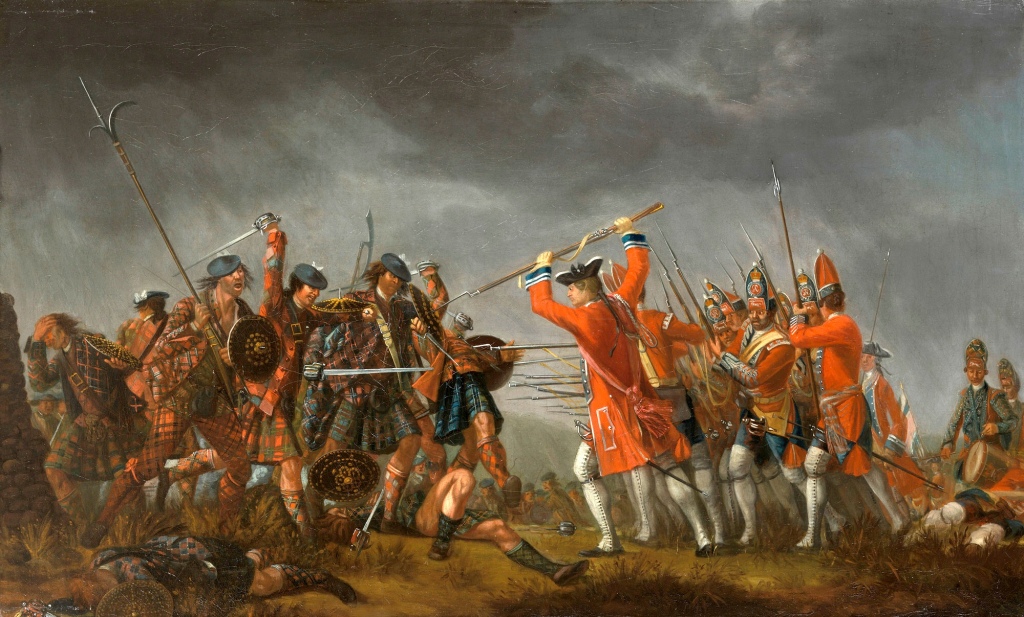
On this day in history : 27th June 1746 – Flora MacDonald helps Bonnie Prince Charlie escape to the Isle of Skye, dressed as an Irish maid, following his defeat by the English at the Battle of Culloden….

The Battle of Culloden by David Morier – Public domain

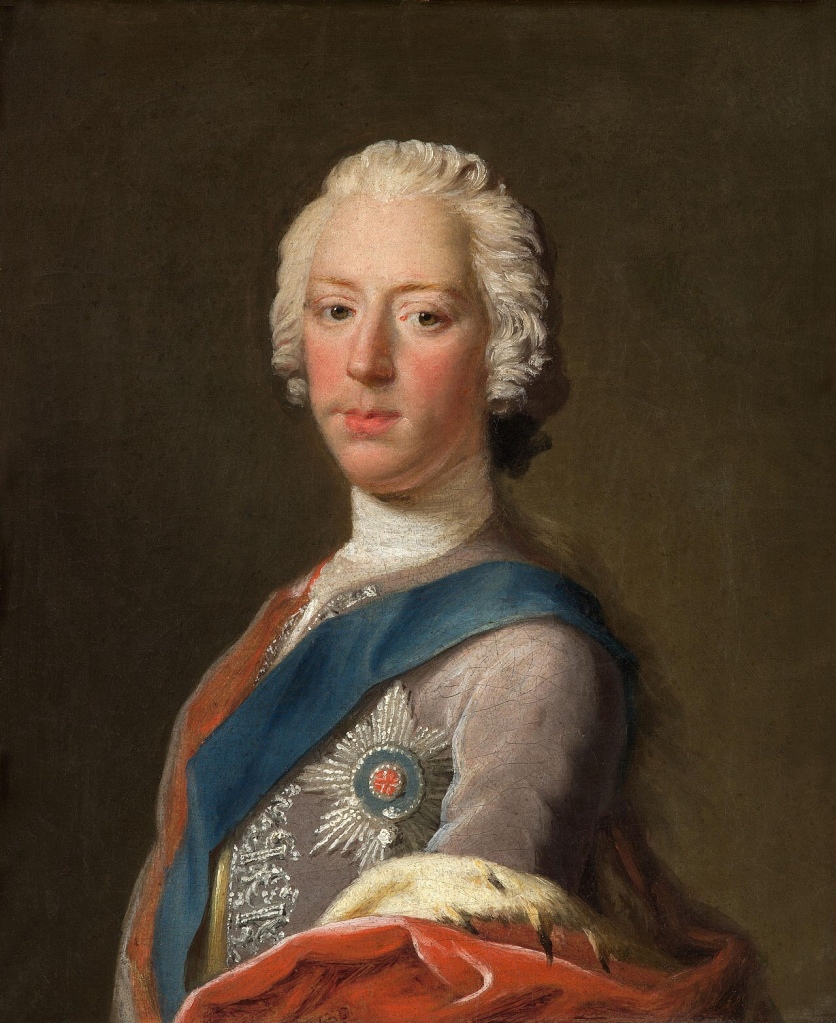
Prince Charles Edward Stuart, better known as Bonnie Prince Charlie, was the grandson of King James II of England…. Charlie was to lead the Second Jacobite Uprising to overthrow King George II in 1745…. But 1746 saw the defeat of the Jacobites at the Battle of Culloden Moor….and Charlie was forced to run or face certain death….

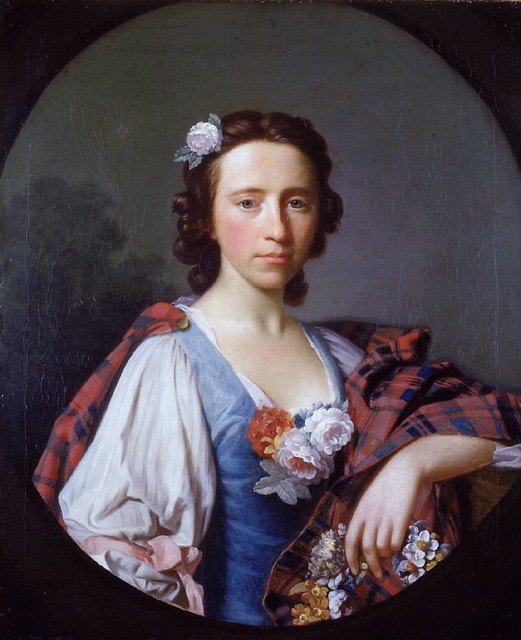
After two months he arrived at the outer Hebridean island of South Ulst – and it was here that he was to meet 24-year-old Flora MacDonald…. Even though the man she was due to marry and her stepfather were both loyal soldiers under King George she agreed to help the Prince – even if somewhat reluctantly to begin with….

Portrait of Flora MacDonald by artist Allan Ramsay – Public domain

Flora managed to persuade her stepfather, who was in charge of the local militia, to allow her to travel to the mainland accompanied by a couple of servants and half a dozen boatmen…. Only one of the ‘servants’ – an Irish spinning maid by the name of ‘Betty Burke’ – was actually Bonnie Prince Charlie in disguise…. And instead of travelling to the mainland the little boat made its way to Kilmuir (now known as Prince’s Point) on the Isle of Skye….

They spent the night hiding in a cottage and the following day made their way on foot to Portree…. From here Charlie was able to find a boat to take him to the island of Raasay – and then he was able to escape to France….

Portrait of Charles Edward Stuart by artist Allan Ramsay – Public domain

Flora however faced arrest and was imprisoned at Dunstaffnage Castle in Oban – before being moved for a short time to the Tower of London…. She was eventually released in 1747 and she returned to Scotland….

“Speed Bonny boat like a bird on a wing,
Onward the sailors cry,
Carry the lad that’s born to be King,
Over the sea to Skye”....

On this day in history….26th June 1939

On this day in history : 26th June 1939 – Private Rupert Alexander, Service No. 10000001, signs up to the Middlesex Regiment, as Britain’s first National Serviceman….

The Spring of 1939 saw the deterioration of international relations and Prime Minister Neville Chamberlain had to consider necessary preparations in case Britain found itself at war with Nazi Germany…. Parliament approved the Military Training Act which required men to undertake 6 months military training…. In the beginning this was limited to men between the ages of 20 to 22…. Some 240,000 registered for service….

War was declared on the 3rd of September 1939 and the National Service (Armed Forces) Act came in…. Now all men between 18 to 41 had to register…. There were some exemptions, such as those medically unfit and some key professionals, including farmers, engineers, bakers, doctors and the clergy…. Tribunals were held for conscientious objectors – who were usually assigned essential non-combat tasks it their hearings were successful….

Tribunal for conscientious objectors in Britain during WW2 – Public domain

In December 1941 a second National Service Act was passed…. The age was extended for men, up to the age of 60…. It meant all men up to this age were expected to do some sort of war effort work, such as police and civilian defence – those under the age of 51 were required to be available for military service….

All unmarried women, or widows without children, between the ages of 20 to 30 were liable to be called up to do work related to the war…. Pregnant women were not exempt but were generally not called up….

On this day in history….25th June 1953

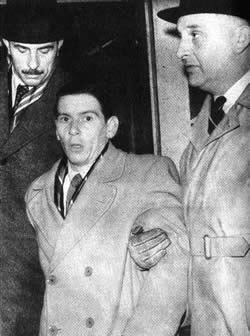
On this day in history : 25th June 1953 – John Christie is sentenced to hang for the murder of his wife and then hiding her body under the floorboards of their Notting Hill home, 10 Rillington Place….

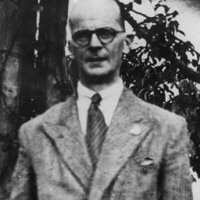
John Christie – Fair use

Before his own trial Christie had been a key witness for the Crown in another murder trial – that of Timothy Evans, another resident at the Notting Hill address…. Evans had stood trial, accused of the murder of his wife and child – and although the murder charge for his wife was not pursued he was convicted of killing his daughter and was sequently hanged….

Christie himself was no stranger to the criminal world…. Throughout his adult life he had committed a string of petty crimes and had spent time in prison…. He had served a three month sentence for stealing postal orders whilst working as a postman, nine months for theft, six months for assaulting the prostitute girlfriend he had briefly lived with and another three months for stealing a car from a priest he had befriended….

Christie had a troubled childhood and grew up with some abnormal ideas on how a healthy sexual relationship should be conducted…. He married Ethel in 1920 but because of his sexual hang-ups was impotent with her – he could only perform with prostitutes and so he continued to use their services…. After four years the marriage broke up – but in 1933, after his last prison sentence, they got back together….

In December 1938 the Christies moved into the ground floor flat of 10 Rillington Place in the Ladbroke Grove area of Notting Hill…. Ten years later, in the April of 1948, Timothy Evans and his pregnant wife, Beryl, moved into the top floor flat…. She gave birth to a little girl soon after, who they named Geraldine – and then in the November of 1949 Beryl discovered that she was pregnant again…. The couple were worried as they could not afford to have another baby – and so Christie said he could help them, by performing an abortion…. Only, what he actually did was strangle her and because his depraved sexual gratifications now included necrophilia – he then raped her….

When Evans arrived home Christie claimed she had died during the termination procedure…. As abortion was illegal he managed to convince Evans that they had to hide Beryl’s body and he also persuaded him to leave Geraldine with him and to go to relatives in Wales to lay low for a while…. When Evans returned to London and wanted to see his daughter Christie refused….

On the 30th of November 1949 Evans went to the police and explained he had accidentally killed Beryl by giving her a potion to end her pregnancy…. He said that he had hidden her body in a sewer – but after a search the police could not find a body…. Evans then told the truth – how Christie had offered to help them and how he, Evans, had found his wife dead on returning home from work…. He explained how Christie arranged for the disposal of her body and somebody to look after Geraldine while he disappeared to Wales….

But this late admission of the truth only added to the tangled web that had already been woven…. A search of 10 Rillington Place revealed the bodies of both his wife and child hidden in an outside wash house…. Evans was then tried for murder, the jury took just 40 minutes to find him guilty…. After a failed appeal Timothy Evans was hanged on the 9th of March 1950….

Timothy Evans, 1949 – Fair use

Ethel Christie was last seen on the 12th of December 1952…. Christie told people that he had been offered a good job out of the area and that his wife had gone on before him…. He eventually moved out of Rillington Place on the 20th of March 1953, booking seven days lodgings in King’s Cross…. However, he had only been there four nights when Beresford Brown, the new tenant at 10 Rillington Place, discovered the remains of three women in an alcove which had been wallpapered over…. When the news broke Christie left his lodgings and took to wandering London, sleeping rough…. The police eventually caught up with him on the 31st March 1953, on the Embankment near to Putney Bridge….

A total of eight female bodies in all were found at Rillington Place…. Those of his wife, Beryl and baby Geraldine Evans and five others:- Ruth Fuerst, a 21-year-old Austrian prostitute – Muriel Amelia Eady, a work colleague of Christie – Kathleen Maloney, prostitute – Rita Nelson, who was six months pregnant – and Hectorina MacLennan, who Christie had befriended, along with her boyfriend, Alex Baker….

At first Christie only confessed to the murders of the three bodies that had been found in the alcove and that of his wife…. He eventually admitted to Beryl’s murder – but not that of Geraldine…. He went on trial for the murder of his wife – in the same court that Evans had been convicted in – on the 22nd of June 1953…. He pleaded insanity but the jury rejected this plea – and after just 85 minutes of deliberation found him guilty…. There was no appeal….

Christie was hanged by Albert Pierrepoint, who had also executed Evans, on the 15th of July…. Two-hundred people people waited outside the prison to see the execution notice…. After being restrained for the procedure to take place Christie had complained that his nose was itching – only to be told by Pierrepoint that it wouldn’t bother him for much longer….

10 Rillington Place was demolished – in the 1970s the whole street was redeveloped…. Timothy Evans was granted a posthumous pardon in 1966….

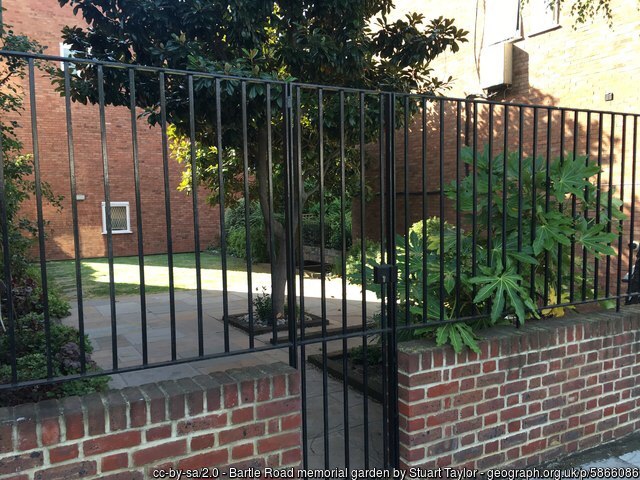
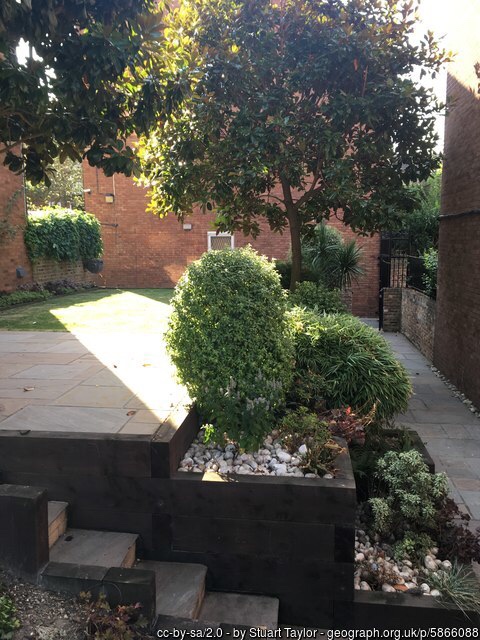
Memorial garden on the approximate location of 10 Rillington Place