On this day in history….19th June 1925

On this day in history : 19th June 1925 – “Hello my darlings”….the catchphrase of slapstick English comedian, actor, singer and writer Charlie Drake – who was born on this day….
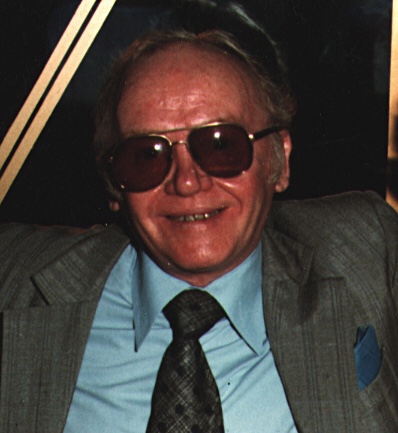
Charlie Drake – Image credit : Latour61 at en.wikipedia CC BY-SA 3.0

Born Charles Edward Springall at the Elephant and Castle, South London, Charlie was later to take his mother’s maiden name for the stage….

He made his first appearance on stage at the age of 8…. After finishing school he appeared in working men’s clubs – and after serving in the RAF during World War 2 he began his professional career as an entertainer in earnest….

At just 5ft 1” tall, with his red curly hair, slapstick comedy and almost childlike manor he became a popular comedian with children…. But he was loved by children and adults alike and was to become one of the most successful entertainers of the 1950s and 60s….
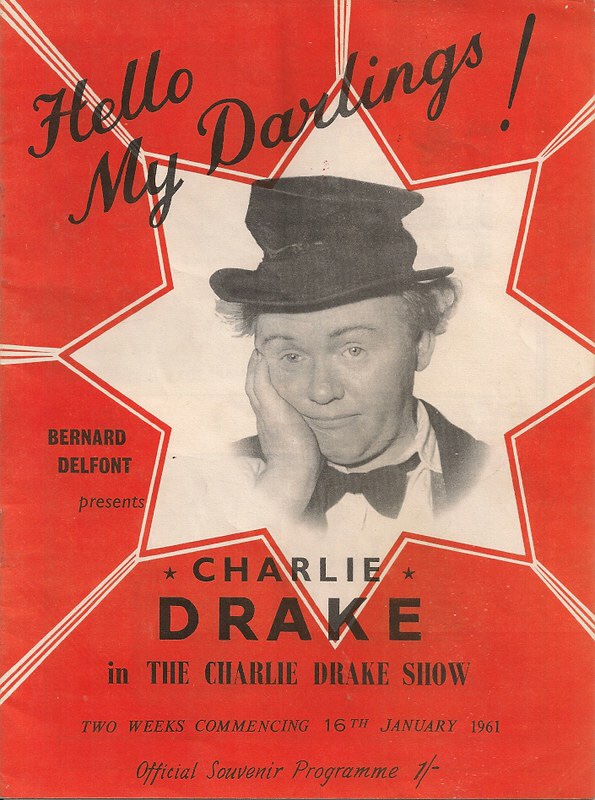
Image credit : Bradford Timeline via Flickr

Charlie made his TV debut on the BBC’s ‘The Centre Show’ in July 1953, as a stand up comic…. In 1954 he teamed up with comedian Jack Edwardes, who at 6ft 4” was as tall as Charlie was short – he towered above him….

The pair appeared as a comedy duo on the BBC talent show ‘Showcase’ and afterwards adapted their act to appeal to children, calling themselves ‘Mick and Montmorency’…. They featured on children’s show ‘Jigsaw’ and this was followed with their own series between 1955-1958 on ITV….

However, Charlie wanted to further his own solo career and wished to appeal to adult audiences…. He began to appear as a guest on popular BBC shows…. Eventually his partnership with Edwardes was dissolved….

He had a succession of series of his own with the BBC – ‘Laughter in Store’, ‘Drake’s Progress’, ‘Charlie Drake In’ and ‘The Charlie Drake Show’….

During the 1960s he attempted to establish a film career, starring in ‘Sands of the Desert’ 1960, ‘Petticoat Pirates’ 1961, ‘The Cracksman’ 1963 and ‘Mr Ten Per Cent’ 1967…. However, film acting was not to be his niche….

In 1963 he returned to ITV with ‘The Charlie Drake Show’, followed by ‘Who is Sylvia?’ In 1967…. He was back at the BBC between 1967-68 with his ‘The Charlie Drake Show’ which won him the Charles Chaplin Award for Best Comedy at the Montreux Television Festival in 1968…. But his most popular series was ITV’s ‘The Worker’ between 1965-70 – the exploits of a little man who found it impossible to keep a regular job….
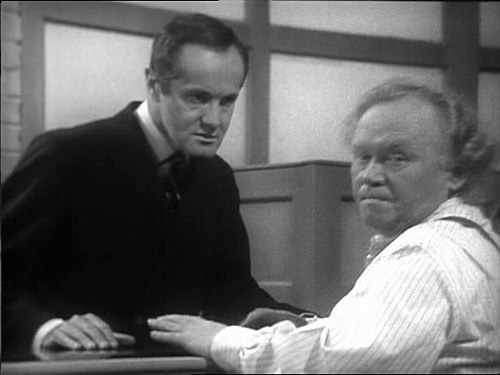
Charlie Drake with Henry McGee in ‘The Worker’ – Image credit : Paul Townsend CC BY-SA 2.0

During the 1980s Charlie concentrated on serious acting, appearing on stage in Shakespeare productions…. He also had several TV roles; he appeared as Smallweed in ‘Bleak House’, 1985 and had roles in ‘Filipina Dreamgirls’ and in ITV’s thriller ‘99-1’ in 1994/5…. His last stage performance was with Jim Davidson in ‘Sinderella’, an adult version of Cinderella….

Charlie married Heather Barnes in 1953 and they had three sons, the marriage ended in 1971…. He then married Elaine Bird in 1976 but the couple divorced in 1984….

In 1995 Charlie suffered a stroke…. He retired to Brinsworth House, a retirement home for actors and performers in Twickenham, West London…. After a series of strokes in just a few hours he died on the 23rd of December 2006….

On this day in history….18th June 1822

On this day in history : 18th June 1822 – An 18ft bronze statue of Achilles is unveiled in Hyde Park, London…. Originally it was nude and caused outrage – so a small fig leaf was added….

The statue was made by sculptor Sir Richard Westmacott, who was an enthusiast of the Ancient Greeks and it was to commemorate Arthur Wellesley, 1st Duke of Wellington…. Achilles was the Greek hero of The Trojan War and the statue used 33 tonnes of bronze repurposed from captured French canons…. The body was modelled on a Roman figure found on Monte Cavalio in Italy – and the head was based on the Duke of Wellington himself…. It was cast in Westmacott’s foundry in Pimlico….

The statue, which is located close to Queen Elizabeth Gate at Hyde Park Corner was the first statue to be installed in Hyde Park – and London’s first nude statue! It had been commissioned for £10,000 by the upper class society of ‘Ladies of England’ and was installed on the orders of King George III…. People were shocked and disgusted by the statue’s nudity – especially as it was a tribute from the ‘Ladies of England’…. A fig leaf was quickly added for modesty….

On this day in history….17th June 1974

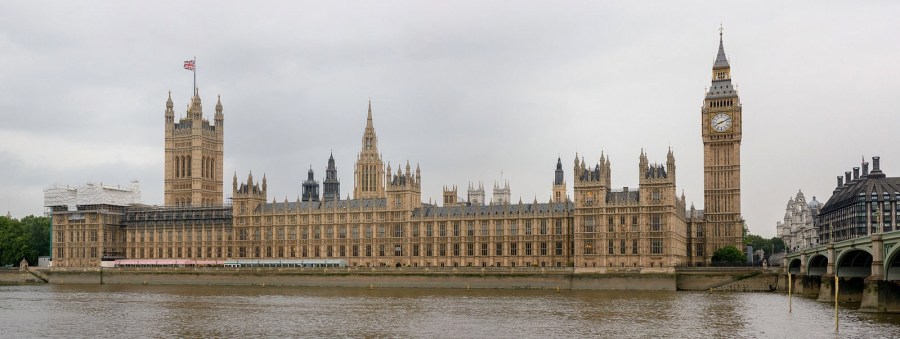
On this day in history : 17th June 1974 – An IRA bomb explodes at the Houses of Parliament, injuring eleven people and is suspected of having fractured a gas main….

Henry Kellner – own work

Six minutes before the explosion a phone call to the Press Association, by a man with an Irish accent, gave a code word (which was recognised by the police) and warned that a 20lb bomb had been planted….

There was no time to completely clear the building; just before 8.30am a bomb exploded in the corner of Westminster Hall…. Flames tore through the centuries old hall – and it was thought a gas main had been damaged….

Scotland Yard were fearful that this was to be the beginning of a new IRA bombing campaign – and indeed 1974 proved to be one of the deadliest years for terrorist attacks on the mainland…. In the February a bomb on a coach carrying soldiers on the M62 exploded, killing 12…. A bomb at the Tower of London and the pub bombings in Guildford and Birmingham claimed another 26 lives later in the year….

On this day in history….16th June 1930

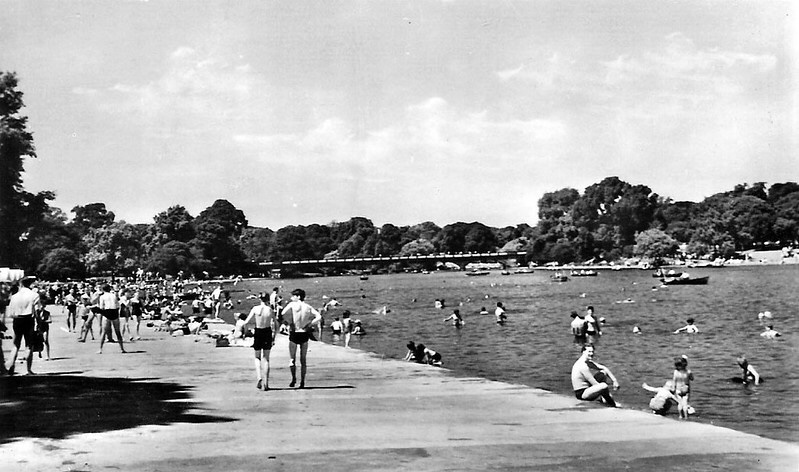
On this day in history : 16th June 1930 – Mixed bathing is permitted for the first time in the Hyde Park Lido – to the delight of some and the outrage of others….

Hyde Park Lido pre-WW2 – Leonard Bentley via Flickr

The idea of the Hyde Park Lido had been championed by Labour politician George Lansbury, First Commissioner of Works…. It was he who was responsible for historic buildings and monuments in the royal parks…. He actively did much to improve recreational facilities – and was particularly keen to do so during the Depression years…. As well as being a social reformer he was also a supporter of women’s suffrage….

George Lansbury, 1935 – Public domain

In 1929 Dr Saleeby, of The Sunlight League, which had been founded in 1924, visited Lansbury to request the establishment of a lido…. The stretch of water in Hyde Park – known as the Serpentine because of its long snake like appearance and created in 1730 – became a magnet in warm weather and so was chosen as the designated site…. An appeal for funds was put out – one benefactor alone, a Mr D’Arcy-Cooper, donated £5,000 in memory of his son…. A rectangular area was built on the Serpentine for bathing and a pavilion added…. It soon became known as ‘Lansbury’s Lido’….

The Lido opened in 1930 and rapidly became the talk of the town…. ‘Men and women swimming together in nothing but skimpy swimsuits! Good Heavens! Whatever next’….

We’ve all seen pictures of the Victorian bathing machines that used to be found at our seasides…. It was thought bathing in the sea water was beneficial to the health – but to be able to swim in male company, even family members was not an option for women…. ‘Exposure of any part of the female body works more erotically than exposure of the corresponding part of the male….There is no activity where the body is so overtly exposed than when bathing in public’….

Public domain

Growth of swimming as a competitive sport for men and boys increased as public baths began to appear across the country…. For serious female swimmers access to facilities came slowly, with restricted allocated time slots….

Another contributing factor to women’s non-participation was the potentiality of exposure to the sun…. Before the 1920s tanned skin was seen as a sign of being working-class…. Ladies were expected to be pale and interesting! But during the 1920s sun-kissed skin became associated with affluence – as to give the impression that the summer had been spent on the fashionable Riviera….

Kathleen Murphy was the first woman to legally swim in the Serpentine waters…. The Lido became an instant success…. During the heatwave of August 1930 over 30,000 used the paid for facilities which included changing and bathing…. A further 60,000 – men only – used the free section, which provided no changing area…. Both men and women had to wear one piece bathing suits – the men’s generally buttoning at the shoulder…. However, it became the trend for men to roll the top half down to the waist in order to go bare chested…. This would upset the authorities who would patrol around ordering bathers to wear their costumes correctly….

As much as the public loved the Lido, readily adapting to the idea of mixed bathing – it appears the authorities had a monumental issue with it…. Metropolitan Police files uncovered in the archives at Kew paint a picture that the activity was nothing short of providing sexual licence…. ‘Women of doubtful character, who display themselves in flimsy bathing dresses – attracting vulgar men and teenage boys’….’Some upstanding female bathers had complained of their costumes being ripped off on diving boards and in the water by the over-excited male populace’…. On one particularly riotous Sunday afternoon in 1932 eleven officers had to be despatched to restore public order….

In all honestly perhaps the police should have been concentrating on a much bigger problem at the time – an outbreak of bicycle thefts at the Lido….

Lansbury’s Lido – Iridescenti – own work CC BY-SA 3.0

On this day in history….15th June 1971

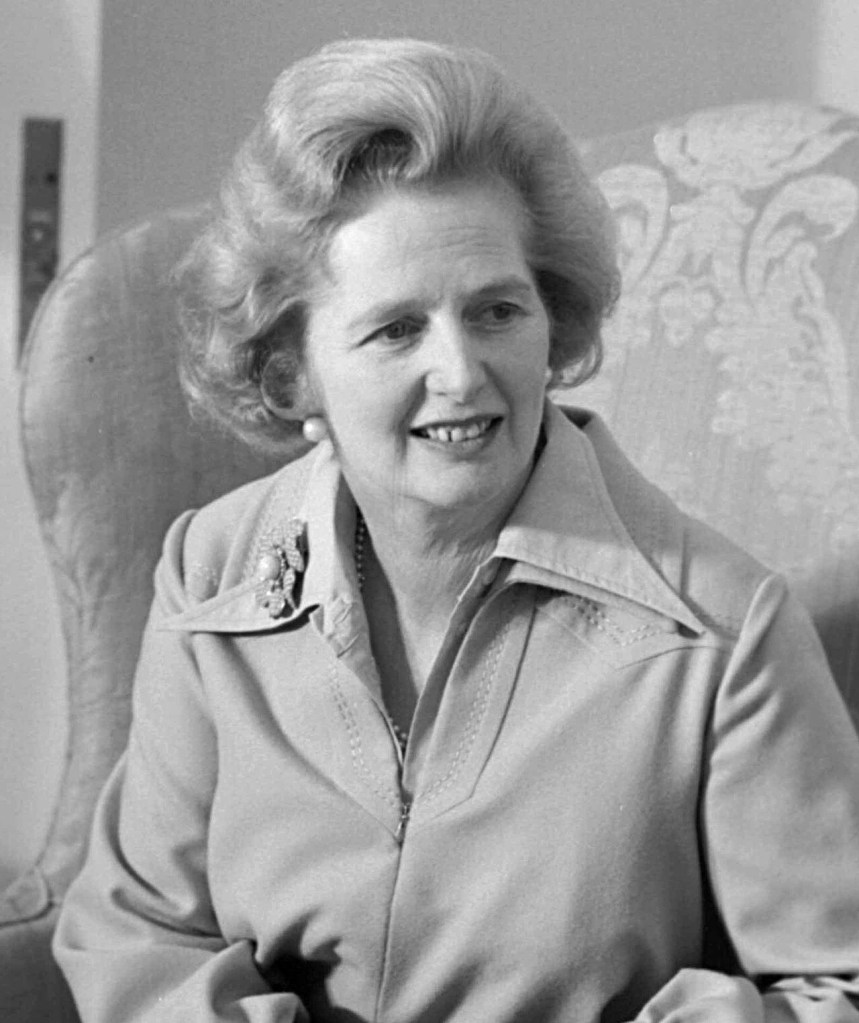
On this day in history : 15th June 1971 – Opposition grows to Education Secretary Margaret Thatcher’s plans to end free school milk for the over sevens…. Some councils threaten to defy the ban….

Ministry of Information Photo Division – Public domain

School children began to receive a third of a pint of milk per day in 1946 with the advent of the welfare state…. However, the Labour Government had already stopped milk for secondary schools by 1968…. When the Conservatives came to power it was to a bleak economic situation – but election promises on tax had to be met….

Margaret Thatcher knew how controversial stopping the free milk would be – and she was absolutely horrified when Health Secretary Ken Clarke suggested it also be stopped for nursery school children…. She had considered other measures, such as charging admission to museums, or charging to borrow library books….but in the end it was with reluctance that she put forward the proposal…. The Bill received a second reading on the 14th of June and was passed by 281 votes to 248….

Local authorities were urged not to break the law by deliberately going against government policy…. Some Labour councils had threatened to put up rates in order to fund school milk…. It was argued that withdrawing milk could potentially harm children’s diets and health…. Thatcher reasoned that the money saved could be spent in other ways, such as on school buildings…. Indeed the milk bill was coming in at £14m a year – double the amount being spent on books….

Margaret Thatcher -Public domain

Needless to say the political storm raged on – and the public also showed their anger…. The playground taunt ‘Thatcher, Thatcher milk snatcher!’ was heard far and wide…. In fact the cuts did not stop there – with various measures put into place with regards to education funding…. A £200m package was approved in September 1971, which also saw the cost of school dinners raised….