On this day in history….30th May 1972

On this day in history : 30th May 1972 – The Angry Brigade goes on trial for a series of 25 bombings throughout the United Kingdom…. It is to be one of the longest criminal trials in English history….

Angry Brigade logo – Fair use

The Angry Brigade, a far left, militant anarchist group, often referred to as urban guerrillas, were discontent with Tory cuts, high unemployment, the general state of the economy and just about every other political issue going-on at the time…. Their wish was to bring about an uprising and they decided to launch a campaign using small bombs…. The aim was to get as much media coverage as possible to expose their demands….

The campaign began in August 1970 and was to continue for a year before any arrests were made…. Their targets were varied – from the homes of Conservative MPs, banks, property speculators….to the embassies of far right regimes – they even targeted a BBC mobile broadcasting unit being used to broadcast the 1970 Miss World contest…. Bombs mostly caused damage to property and throughout the campaign only one person received minor injuries…. Each bombing was followed by a printed statement explaining the reason for the attack….whether it was for the government’s policies, the situation in Northern Ireland, the Vietnam War, sexism – or whatever other grievance they had at the time….

The arrests began in 1971 with Jake Prescott…. Although he was cleared of direct involvement in the bombings he admitted having addressed three envelopes for letter bombs…. Prescott was sentenced to 15 years imprisonment by Judge Milford Stevenson – this was later reduced to 10 years on appeal….

Sir Melford Stevenson – Fair use

The 30th of May 1972 saw the trial begin at the Old Bailey of another eight members of the group….known as the ‘Stoke Newington Eight’ – after the area of London they came from…. The group were prosecuted for carrying out the bombings and the trial was to go on until the 6th of December 1972…. Four members, John Barker, Jim Greenfield, Hilary Creek and Anna Mendelssohn were sentenced to ten years each…. The other members were acquitted…. The explosions were to lead to the formation of the Bomb Squad – now the Antiterrorist Branch….
On this day in history….29th May 1948

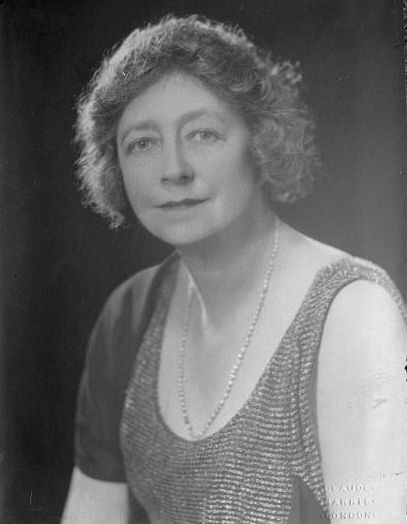
On this day in history : 29th May 1948 – The death of May Whitty, English stage and film actress – and one of the first women entertainers to be made a Dame for services to the Arts….

Dame May Whitty – Public domain

Born in Liverpool on the 19th of June 1865 she was christened Mary Louise Whitty but was to become known by her stage name of May Whitty…. Her father, William Alfred Whitty, was a newspaper proprietor and her grandfather was Michael James Whitty – who founded the police force and fire brigade in Liverpool and was founder of the Liverpool and Daily Post….

May made her stage debut in 1881 at the Royal Court Theatre, Liverpool – in the chorus of ‘Mountain Sylph’…. A year later she joined the Lyceum Company in London’s West End, which was then being managed by Henry Irving and Ellen Terry…. In 1895 she was to tour the USA for the first time, with Irving….

On the 3rd of August 1892 she married actor-manager Ben Webster and they had two children…. Their first, a son, sadly died at birth but their daughter, born in 1905, was also to become an actress – as well as a successful producer and director (Margaret Webster)….

For some 25 years May was known as one of the UK’s best leading stage actresses…. She made her first film appearance in 1914, a silent film ‘Enoch Arden’…. She did not care much for this form of acting and made only a few more of such films….

In 1918 May was made Dame Commander of the British Empire by King George for her service to the Arts and for entertaining the troops during World War One…. She was then to go on to have a run of successful hits on Broadway…. Back on home soil she was involved in the formation of Equity, when it was created in 1930 by a group of West End performers at her home in West London….

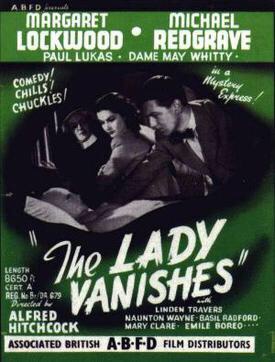
In 1937, at the age of 72, May made her Hollywood debut in the lead role of ‘Night Must Fall’ for which she received an Oscar nomination…. However, perhaps the highlight of her Hollywood career was as Miss Froy in Hitchcock’s 1938 film ‘The Lady Vanishes’….

Theatrical release poster, 1938 – Fair use

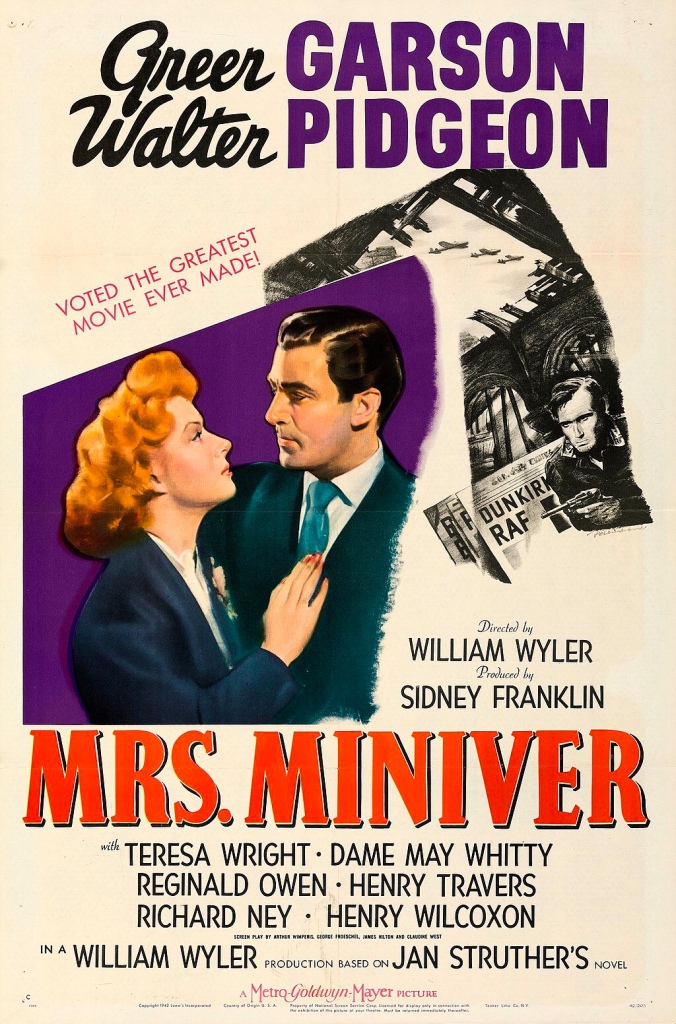
In 1939 May moved to the States permanently…. She was often cast in heart endearing roles – and sometimes as a cantankerous old lady…. 1942 saw her second Oscar nomination as Best Supporting Actress in ‘Mrs Miniver’…. When once asked about her late coming Hollywood career, she replied “I’ve got everything Betty Grable has – only I’ve had it longer”….

Theatrical release poster, 1942 – public domain

May died of cancer at the age of 82 in Beverly Hills – shortly after completing the 1948 film ‘the Sign of the Ram’….

On this day in history….28th May 1911

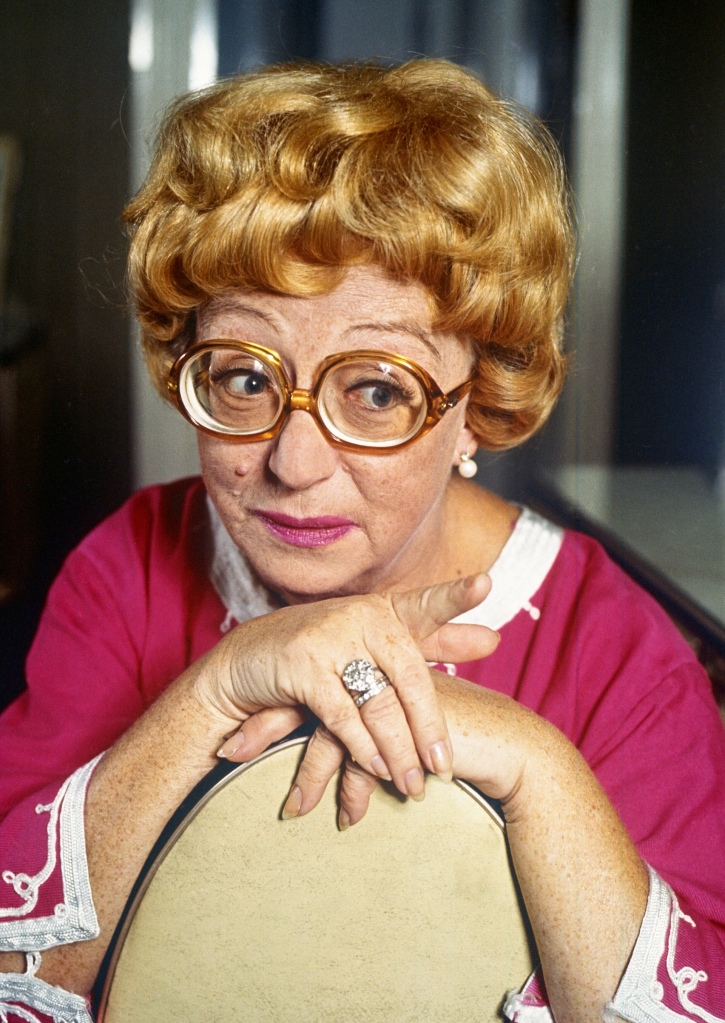
On this day in history : 28th May 1911 – The birth of actress, comedienne, presenter and writer Dame Thora Hird – who with a career spanning more than 70 years was to become a British institution….

Dame Thora Hird, 1974 – Image : Allan Warren, own work CC BY-SA 3.0

Thora was born in Morecambe, Lancashire…. Her mother, Mary Mayor, had been an actress and her father Henry Hird, managed entertainment venues in Morecambe…. Thora’s first stage appearance was at just 2 months old, during a play at the Royalty Theatre, one of the venues her father managed….

On leaving school Thora worked in the local Co-op store and in 1937 she married James Scott…. The couple had a daughter in December 1938, Jeanette Scott, who was also to become a successful actress….

Thora joined the Morecambe Repertory Theatre and then made her West End debut in 1944 in the play ‘No Medals’…. She was to make several film appearances, alongside big names such as Laurence Olivier, before finding her niche in TV comedy…. We probably remember her best for sitcoms such as ‘Meet the Wife’, ‘In Loving Memory’, “Hallelujah!’ and of course as Edie Pegden in ‘Last of the Summer Wine’…. But whilst we may particularly remember her for comedy roles Thora was a versatile actress, winning a BAFTA for best actress in two of Alan Bennett’s ‘Talking Heads’ monologues – and she won another BAFTA for her role in the 1999 TV film ‘Lost for Words’…. She was awarded an OBE in 1983 and made Dame Commander in 1993….

She had a heart bypass operation in 1992 and was widowed in 1994…. Suffering from severe arthritis Thora became a wheelchair user in later life…. However, this was not going to stop her from acting…. In December 1998 she played the part of Dolly’s mother in Victoria Wood’s hit TV comedy’Dinner Ladies’…. Her final acting role was for radio, ‘The Last of the Sun’ – a monologue written for her by Alan Bennett…. Thora died on the 15th of March 2003, aged 91….

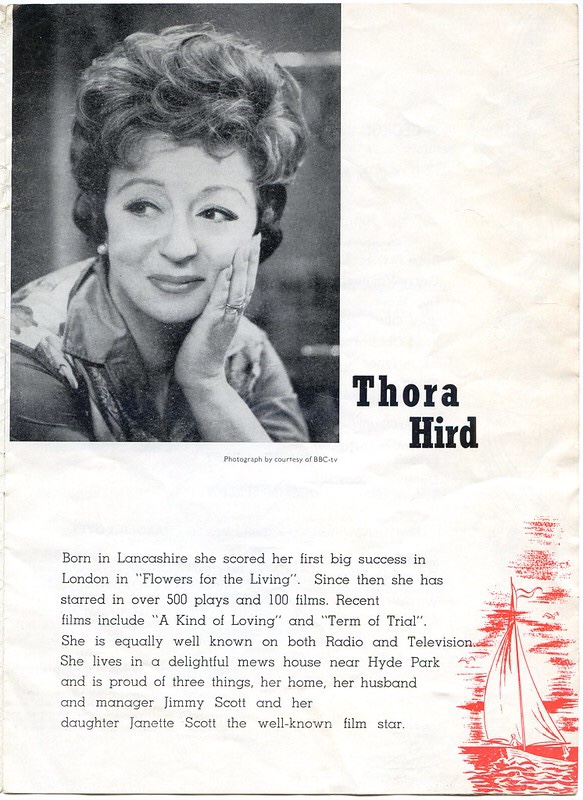
1964 Bournemouth Pier Theatre programme – Image : Alwyn Ladell via Flickr
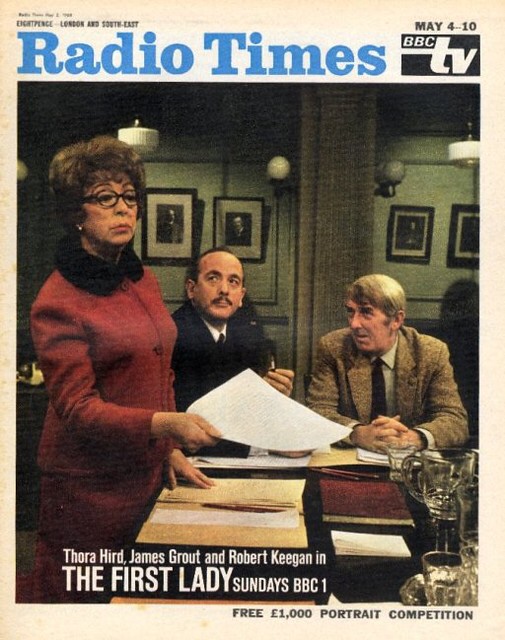
Radio Times, 4th May 1968 – Image : Bradford Timeline via Flickr

On this day in history….27th May 1975

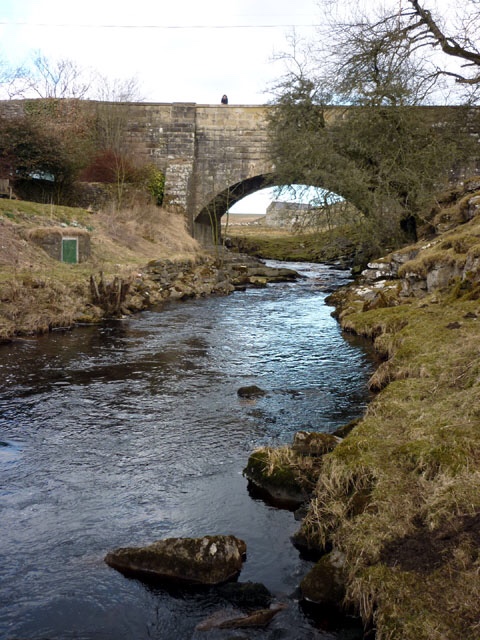
On this day in history : 27th May 1975 – The Dibbles Bridge coach crash, near Hebden, North Yorkshire kills 33 people – and is the highest ever death toll in a road accident in the UK….

Dibbles Bridge – Image : Karl and Ali CC BY-SA 2.0

The coach, belonging to Riley’s Luxury Coaches, was carrying elderly passengers from Thornaby-on-Tees, North Yorkshire to Grassington in the Yorkshire Dales on a day trip….

Whilst travelling along the B6265, on a downhill stretch between Greenhow and Hebdon, coach driver Roger Marriott missed a gear and applied the brakes…. The previous week the brakes had undergone a service and new linings had been fitted…. However, the brakes were unable to hold the coach and it continued to accelerate – the brakes began to heat up and then failed altogether…. The vehicle hurtled down the 1,300m 1:6 gradient hill from Fancarl Top to the bottom of the valley – before crashing through a steel barrier and then a 1m high stone wall above the bank of the River Dibb…. The coach landed on its glass fibre roof some 5m below in the garden of a cottage – its sides buckled on impact…. The owners of the cottage were enjoying a barbeque at the time and son-in-law Lincoln Seligman was first on the scene….

Dibbles Bridge

An inquest was held at Skipton Town Hall in July 1975 and was told that because of defects, due to the service and maintenance carried out, there was no breaking on the offside rear wheel…. Owing to deficient brakes the driver had been unable to negotiate the bend in the road…. The main loss of life had been caused by victims being crushed between the seats…. 33 were killed, including the driver – and a verdict of accidental death was recorded…. The owner of the coach company was fined £75 (the equivalent of just under £650 in today’s terms) for running a vehicle with defective brakes….

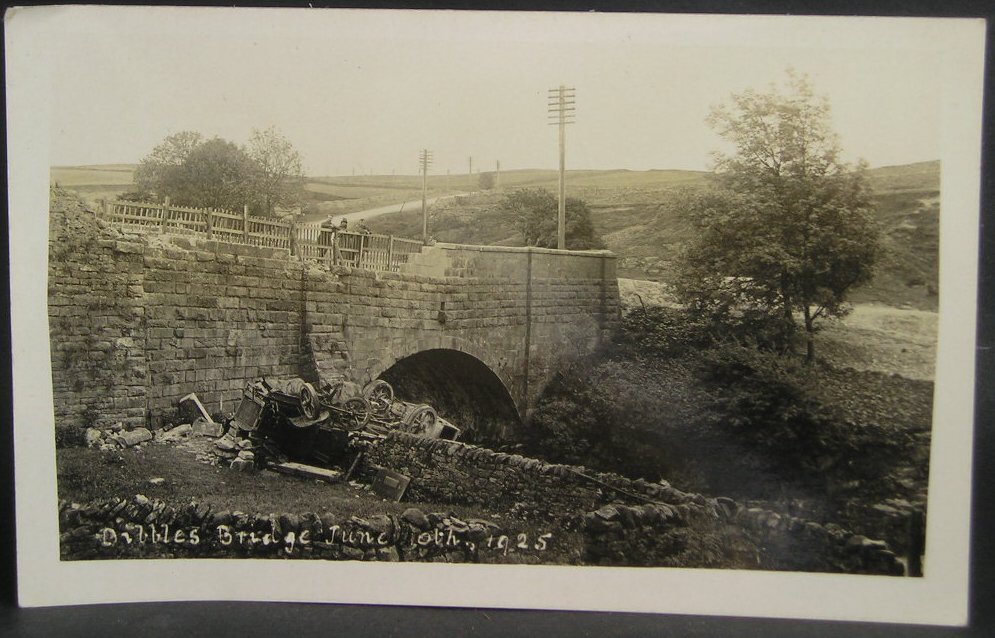
There had previously been another fatal coach crash at Dibbles Bridge…. In June 1925 seven people were killed and a further eleven injured when a coach carrying members of the York Municipal Employees’ Guild and their families on an outing to Bolton Abbey also suffered break failure….

1925 postcard of Dibbles Bridge coach crash – public domain

On this day in history….26th May 1868

On this day in history : 26th May 1868 – Irish terrorist Michael Barrett, who was responsible for the Clerkenwell explosion, leaving 13 dead, is hanged in what is to be England’s last public execution….

Clerkenwell Prison, seen from within, after the bombing – unknown author – public domain

Barrett was born in 1841 and at the age of 27 he joined the Fenians, a political movement which dominated Irish Republican politics during the 1860s…. Ireland had been under British rule since the beginning of the 1600s…. The Irish Republican Brotherhood was founded in March 1858 with the aim of establishing independence and democracy for Ireland – its American counterpart, the Fenian Brotherhood, was founded in 1859…. By 1865 there were some 100,000 members and many acts of violence were being carried out across mainland Britain….

In 1867 the organisation was planning an armed uprising against the British – but the authorities had got wind of their plans and the leaders in Ireland were arrested…. However, two managed to evade capture and fled to England – but were caught in Manchester…. On the 18th of September, as they were being transferred to court, an ambush was to take place on the police van and the two prisoners were freed…. In the process police sergeant Charles Brett was shot dead….

Five men were arrested for the ambush and tried for murder….three were hanged at Salford Gaol on the 23rd of November 1867…. Mass protests had been held to demand clemency and a petition had been sent to Queen Victoria….

Meanwhile, three days before the hangings two more Fenian members had been arrested in London…. Ricard O’Sullivan Burke was charged with treason for securing weapons for the Fenians – it was also he who had planned the prison van ambush – and Joseph Casey, who was charged with assaulting a police officer…. They were placed in Clerkenwell Prison to await trial….

Ricard O’Sullivan Burke – Public domain

On Thursday the 12th of December their Republican colleagues attempted to rescue them by blowing a hole in the prison wall whilst the prisoners were in the exercise yard…. However the bomb failed to explode…. At 3.45pm the following day they tried again, using a barrel of gunpowder hidden in a street seller’s barrow…. A 60ft (18m) section of the prison wall was demolished – but also several houses nearby were damaged leaving many people injured and 13 dead…. The bombing was to cause much public backlash against the Irish community…. As it was the prisoners had all been locked in their cells at the time of the explosion as the prison authorities had been tipped off – so nobody escaped….

‘The Fenian Guy Fawkes’ by John Tenniel, Punch Magazine, 28 December 1867 – Public domain

Six men were tried at the Old Bailey, including Michael Barrett, with the trial starting on the 20th of April 1868…. It was presided over by Lord Chief Justice Cockburn and Mr Baron Bramwell…. Barrett protested his innocence and witnesses testified that he had been in Scotland at the time – however, another placed him at the scene…. Two of the defendants were acquitted by the Judges and after two and a half hours of deliberation by the Jury three more were acquitted…. On the 27th of April Barrett was found guilty and sentenced to death…. There was an outcry – many, including MPs, pleaded for clemency….

On the 26th of May 1868 some 2,000 gathered to watch as Barrett was hanged by William Calcraft outside Newgate Prison…. As his body fell the crowd sang ‘Rule Britannia’ and ‘Champagne Charlie’ and booed and jeered…. And that was to be the last public execution in England….