The restoration and living in of an English country cottage
Author: cottagecapers
Hi, I'm Hazel....
I write purely for pleasure; I love to delve in history, customs, traditions and nature....or whatever else grabs my attention at the time....
I am in no way an expert on what I choose to write about - I simply love to find out about things.... Whilst I always endeavour to get the facts right - occasionally I may get things wrong.... I guess you could call this my disclaimer....
I hope you enjoy reading my blog posts.... If so please give me a follow on Twitter or sign up via email for future posts.... If you are on Facebook Cottage Capers has a page with lots of ‘mini blogs’ and snippets.... It’s where we ‘like-minded’ folk can interact.... Hope to meet you again soon....
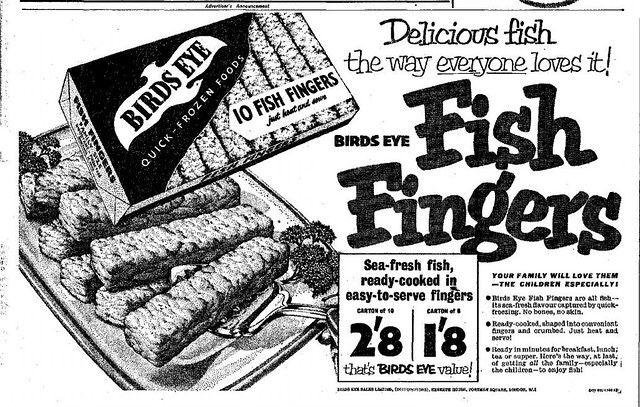
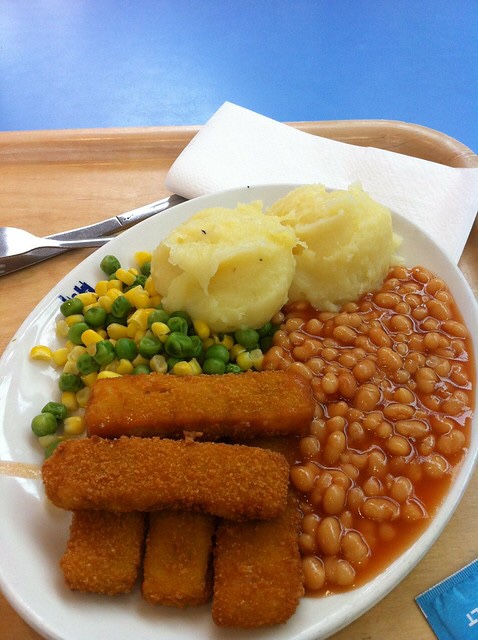
On this day in history : 26th September 1955 – Birds Eye launches one of the most famous of its products – the frozen fish finger….
Birds Eye fish fingers (1956) – Bradford Timeline via Flickr
After World War 2 there was an abundance of herrings in the UK – and after sampling ‘herring savouries’ in the United States Clarence Birdseye wondered if there could be a market for herring fish fingers in Britain…. A test was conducted; shoppers in Southampton and South Wales were asked to try the herring fish fingers and compare them to a blander alternative – cod…. Much to the surprise of Birdseye the public overwhelmingly preferred the taste of the cod variety….
The fish finger we know and love was launched at the Brighton Sales Conference in the Autumn of 1955 – it retailed at an introductory price of 1s 6d a pack…. Each finger came individually wrapped in a waxed film, then packaged in a wax coated carton…. In the first year the British public got through some 600 tonnes of fish fingers! Nowadays more than 1.5 million are sold on a daily basis….
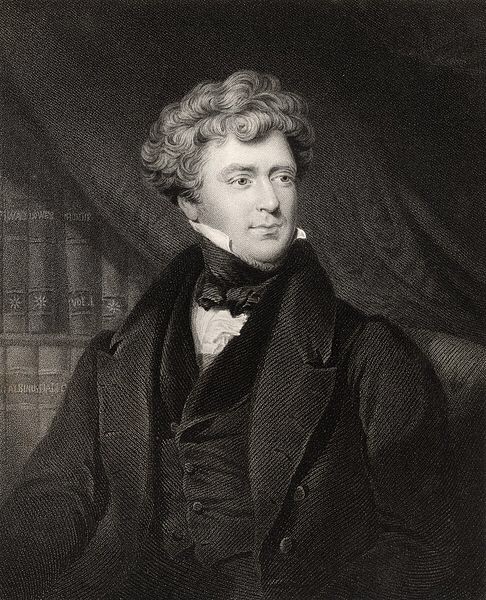
On this day in history : 25th September 1818 – Obstetrician James Blundell performs the first successful transfusion of human blood at Guy’s Hospital, London….
James Blundell (Physician) – engraved by John Cochran after Henry Room – Public domain
Blundell performed the procedure on a woman who had haemorrhaged during childbirth…. However, it was not the first ever successful blood transfusion to be done…. The first is attributed to British physician Richard Lower in 1665 – who bled a dog almost to the point of death and then by transfusing blood from another dog managed to revive it….
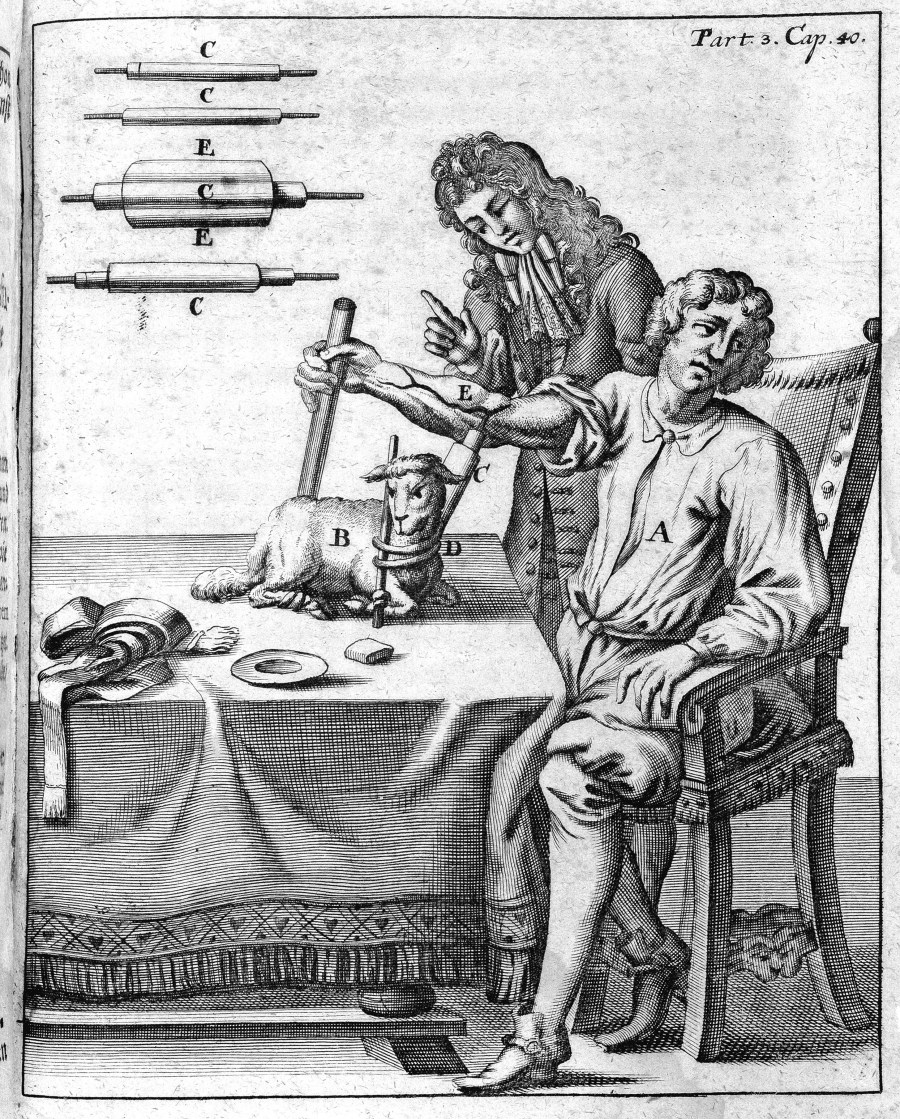
And in 1667, Jean-Baptiste Denis, physician to King Louis XIV transfused the blood of a sheep to a 15-year-old boy…. He repeated the process on a labourer….both patients survived their transfusions….
An early blood transfusion from lamb to man – Image credit : Wellcome Collection CC BY
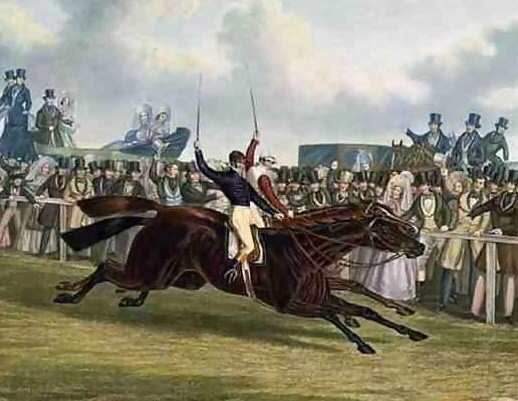
On this day in history : 24th September 1776 – The St. Leger, the World’s oldest classic horse race, is run for the first time at Cantley Common, Doncaster….
Colonel Anthony St. Leger, an army officer and politician, founded the five horse race…. The original distance was 2 miles and the rules stipulated that colts and geldings were to carry 8 stone in weight with an allowance of 2 pounds for fillies….
Charles the Twelfth beats Euclid in the deciding heat of the St. Leger, 1839 – John Frederick Herring – Public domain
The very first race, which was still to be officially named – and was referred to as ‘A Sweepstake of 25 Guineas’ – was won by an un-named filly owned by the 2nd Marquess of Rockingham (who also happened to be the event organiser)…. It was at a dinner party in 1777 that the race was christened the St. Leger Stakes – after its founder…. It had also been suggested it be named after the Marquess as the ‘Rockingham Stakes’….
Nowadays the St. Leger is run at Doncaster each year in September – it is open to three-year-old thoroughbred colts and fillies over a distance of 1 mile, 6 furlongs and 115 yards (2,921 metres)…. This year the race was held on the 14th of September and was won by Logician, ridden by Frankie Dettori, his sixth win of the classic race….
On this day in history : 23rd September 1641 – The Merchant Royal is lost at sea off of Land’s End – full of treasure! It is one of the most valuable wrecks of all time….
During a voyage across the Atlantic, with a cargo of silver and gold, bound for Europe from the New World, the Merchant Royal sprung a leak and Captain John Limbrey put in to Cadiz for repairs…. Whilst there a fire broke out on a neighbouring ship – also laden with gold, silver and jewels, on its way to Antwerp…. It was agreed that Captain Limbrey would add the cargo from the stricken vessel to his own and for a price make delivery on its behalf….
Example of a merchant ship from the 17th Century – Wenceslaus Hollar, graphic artist – Public domain
So, the Merchant Royal set off in tandem with her sister ship, the Dover Merchant…. As they approached the English Channel, in very rough stormy weather, the Merchant Royal’s pumps broke and the ship stared to take on water…. The crew launched the ship’s lifeboat, urging the Captain to go with them – but he refused, determined to stay with the treasure…. However, he soon had a change of heart and fired a canon to call the Dover Merchant for assistance – to which she responded and he was rescued….
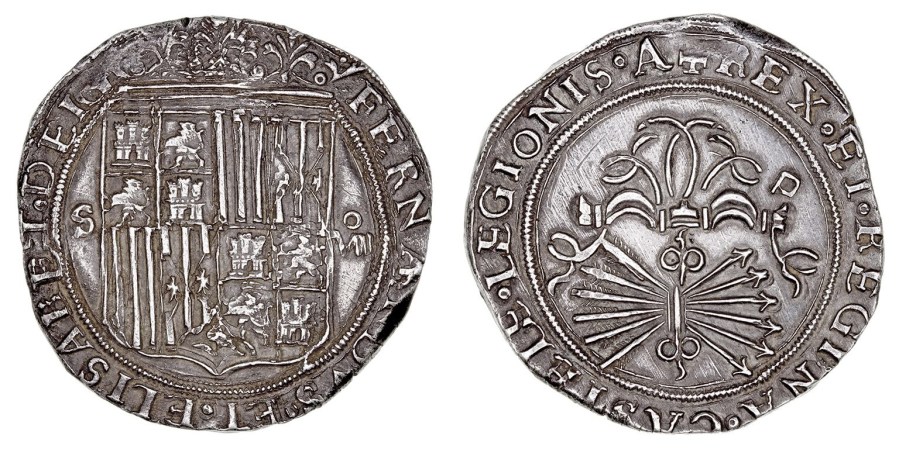
The Merchant Royal went down some 30 miles or so off of Land’s End, near to the Isles of Scilly – with its cargo of 100,000lb of gold – which equates to over £1bn in today’s prices…. There were also 400 bars of Mexican silver, 500,000 pieces of eight (Spanish dollars) and countless jewels…. The wreck has never been found….
Pieces of Eight (Spanish dollars) – Image credit : Numismatica Pliego CC BY-SA 3.0
On this day in history : 22nd September 1914 – Three Royal Navy cruisers are sunk after being torpedoed by one single German U-Boat….
Illustration by Hans Bohrdt depicting the sinking of HMS Cressy, HMS Aboukir and HMS Hogue – Public domain
The incident was a wake up call to both the British and Germans; it had not yet been realised the full potential of the new submarines…. Some in authority had been dismissive of their usefulness – but this heralded the dawning of a new era….
U-9 – Public domain
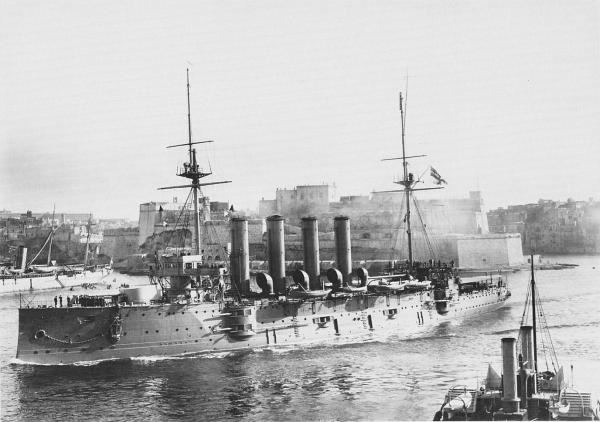
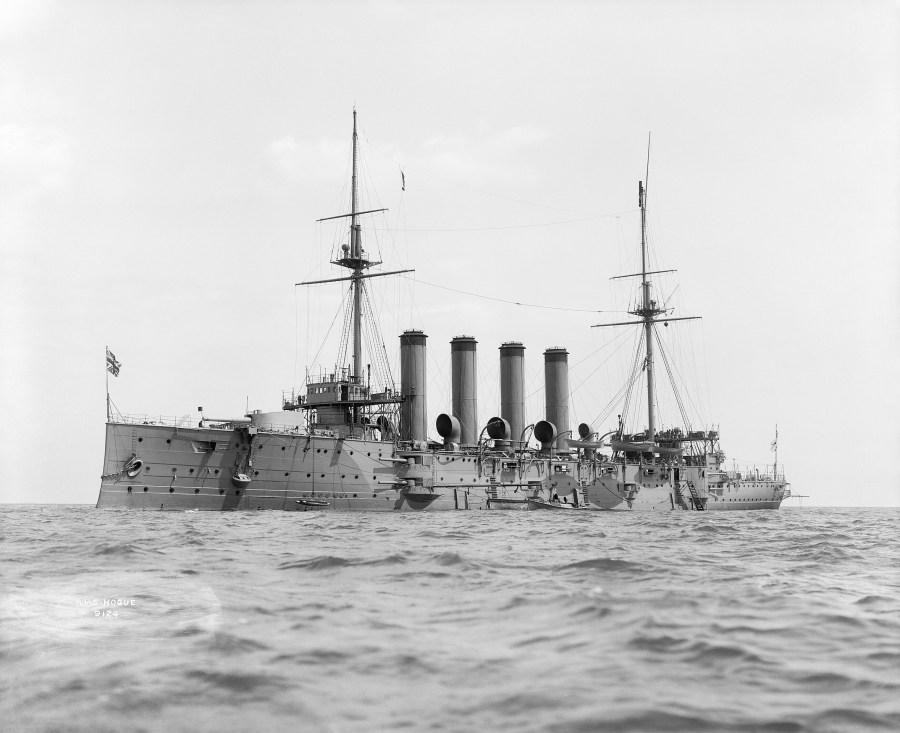
The three Royal Navy cruisers, HMS Hogue, HMS Aboukir and HMS Cressy, were making their way across the North Sea and were a few miles off the coast of the Netherlands…. They had been sailing abreast at a distance of a couple of miles apart – no precautions against submarines, such as ‘zig-zagging’, were undertaken as the sea conditions were rough and considered as to be too unsuitable for the operation of submarines….
HMS Cressy, lead ship of the squadron – UK Government, public domain
The three cruisers had been built in the late 1800s/early 1900s and the general view was that they were unreliable and verging on becoming obsolete…. The crews were inexperienced, mostly recruited reservists and many were young, even including naval college cadets younger than 15-years-old…. They were part of a squadron who’s job was to patrol the North Sea – such was their inadequacy they were known as the ‘Livebait Squadron’…. Some high ranking authorities – admirals, commodores and even the First Lord of the Admiralty himself, Winston Churchill – had raised concerns at such an inexperienced squadron performing this role…. However, those in direct charge insisted the squadron in its current capacity remain in service and continue their duties until the time came that they could be replaced by the new Arethusa Class cruisers – which were awaiting completion…. So the events of the 22nd of September would most likely have caused considerable embarrassment to the immediate senior officers – they had completely underestimated the capabilities of the German U-Boat….
HMS Aboukir – UK Government, public domain
Kapitanleutnan Otto Weddigen was in charge of the Tyne U9 U-Boat that was to first strike at 6.30 am…. He had been patrolling these waters, on the hunt – and the three cruisers were sitting ducks…. The first torpedo struck HMS Aboukir – the captain, John Drummond, thought they had hit a mine and called the other two ships for assistance…. A massive explosion sent the Aboukir down at 6.55am – just as she was disappearing beneath the surface HMS Hogue arrived to pick up any survivors….only to be hit by a torpedo herself…. Next on the scene was HMS Cressy – to meet the same fate….
HMS Hogue – Symonds & Co, public domain
In total 1,459 men lost their lives; Britain was horrified and outraged – but such was the propaganda that the news reported that the squadron had been hit by six German U-Boats – but in truth senior officers faced reprimands…. A valuable lesson was learned….albeit a very expensive one in the respect of the unnecessary loss of lives….
As for Kapitanleutnan Weddigen – he was hailed a national hero and awarded the Iron Cross First Class….and his crew received the Iron Cross Second Class….






 Cottage Capers