On this day in history….18th August 1587

On this day in history : 18th August 1587 – The birth of Virginia Dare, the first English child to be born in the New World; what became of her and the rest of the Roanoke Colony remains a mystery….

Colonists had set sail for Virginia onboard ‘The Lion’ in May 1587 – the Captain of their expedition was Simon Fernandez, the Portuguese navigator…. Their chosen destination was Chesapeake Bay – but on reaching Roanoke in late July, Fernandez stopped to let his passengers disembark and then refused to allow them back onboard again….
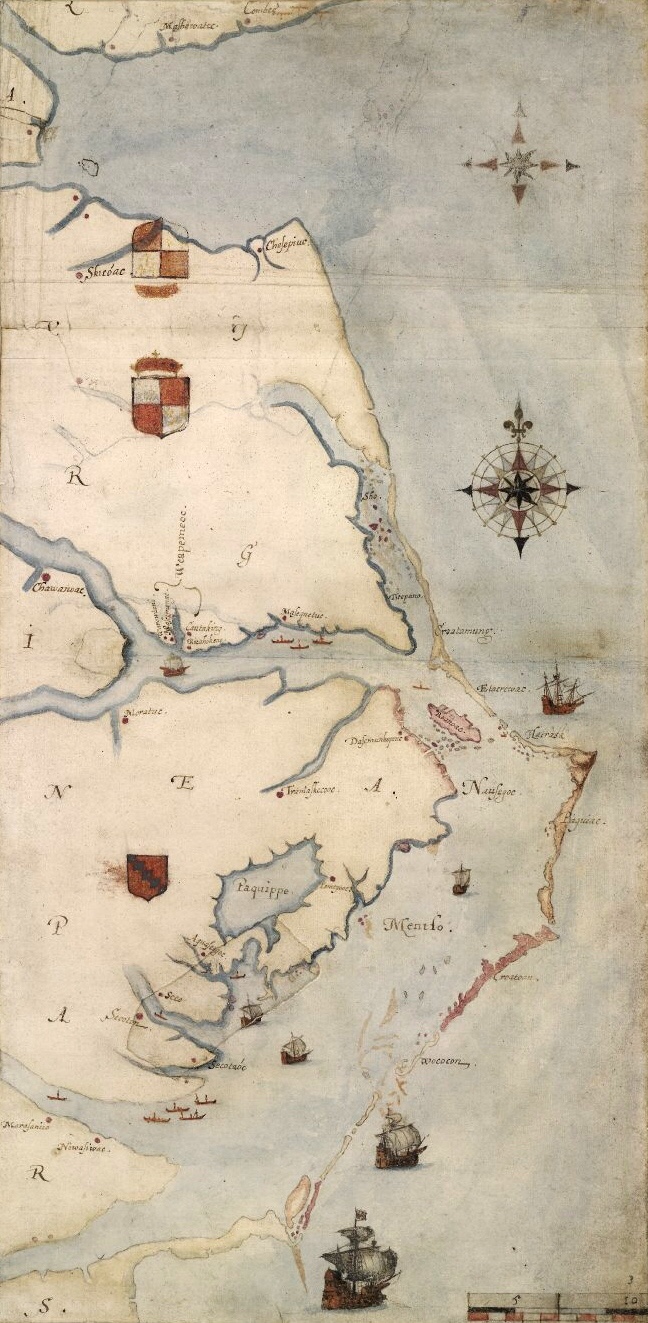
img_3733
Roanoke Colony – drawn by John White during his first visit to the region in 1585. Roanoke is the pink coloured island, centre, right – John White, public domain

Roanoke, which is now part of North Carolina, had previously been inhabited by 15 men…. The new settlers patched-up the dwellings left behind by their predecessors and attempted to search for the men – but all they found were bones….

The settlers were led by Governor John White; he made enquiries with some friendly natives, the people of Chief Manteo and was told the 15 men had been killed by a hostile tribe…. On the 8th of August White led his men on a dawn raid….but they got it so wrong! Instead of attacking an antagonistic tribe they attacked friendly natives, killing one and wounding many more…. From then on relations with all the tribes declined….

Ten days later White became a grandfather; his daughter, Elenora, who herself had been born in London circa 1563, gave birth to a healthy baby girl…. It was announced : “Elenora, daughter to the governor of the city, and wife to Ananias Dare, one of the assistants, was delivered of a daughter in Roanoke”…. Ananias Dare, a tiler and bricklayer by trade, had also been born in London, circa 1560…. The Dares named their new daughter ‘Virginia’, as she was the first to be born there….and she was christened the following Sunday….

img_3730
Baptism of Virginia Dare, lithograph, 1880 – Henry Howe, public domain

Towards the end of 1587 food supplies were rapidly beginning to run out; the supply ships, not knowing Fernandez had stranded the Colonists at Roanoke, did not stop there…. The settlers persuaded White to set off and make his way back to England to organise necessary provisions for them – something he eventually agreed to – but against his will….

These were difficult times; England was at war with Spain – and Queen Elizabeth I had commandeered almost all seaworthy ships with which to fight the Spanish Armada…. This meant White did not return to Roanoke until the 18th of August 1590 – on what would have been little Virginia Dare’s third birthday….

img_3731
The return of Governor White to Roanoke – Public domain

Only there was no sign of his grand-daughter, or his daughter – or indeed any of the 80 men, 17 women and 11 children who made up the Colony of Roanoke…. The houses and fortifications were collapsed….not torn down but purposely dismantled….and there was no evidence of a battle or a struggle…. White had told the settlers before he left that if they were forced to leave they should carve a Maltese Cross as a sign…. There was no cross to be seen….just the word ‘Croatoan’ carved onto a post of the fort…. White assumed they had moved on to Croatoan Island (now called Hatteras Island)…. He never did find out what happened to them….their disappearance remains a mystery to this day….

Of course most theories conclude that they were killed by natives; although others say they were given refuge by sympathetic Chesapeake Indians…. There are those who believe they were taken captive by natives and forced into slavery; there were even reported sightings of European women and children among the native people…. We will never know what happened to little Virginia Dare….but featuring prominently in myths and legends, through American folklore she lives on….
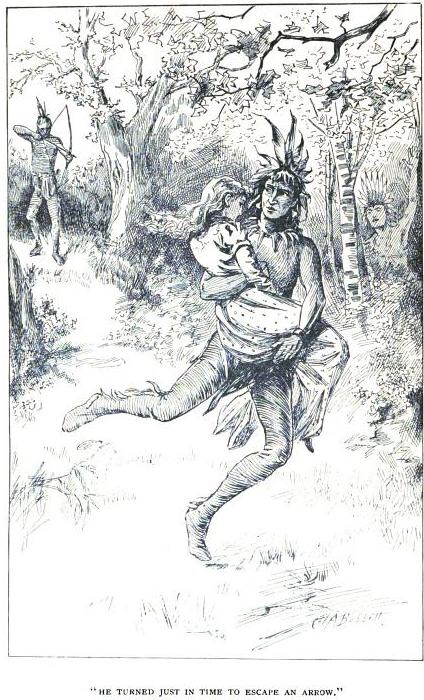
img_3732
Illustration from Virginia Dare : A Romance of the Sixteenth Century, 19th Century novel by Mrs E.A.B. Shackelford, loosely based on the life of Virginia Dare – Public domain

On this day in history….17th August 1896

On this day in history : 17th August 1896 – Mrs Bridget Driscoll, from Croydon, Surrey is the first person in Britain to be knocked down by a car and killed….

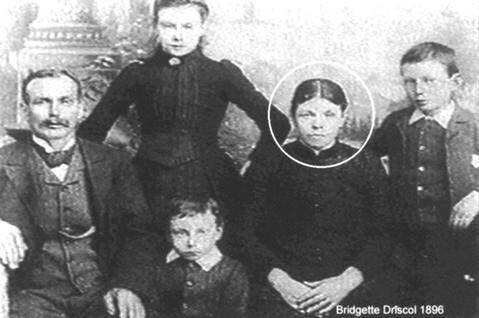
Bridget, aged 44, had been on a visit to the Crystal Palace with her 16-year-old daughter; as part of the exhibition automobiles were being demonstrated…. People were unfamiliar with these new horseless carriages and many were unsure how to react around them….

img_3712
Bridget Driscoll (circled) Public domain (this version – Madgamers via Wikimedia)

The driver of the Roger-Benz, an employee of the Anglo-French Motor Co., had only been driving for three weeks (there were no driving tests back then)…. He claimed he was only doing 4mph and had rung his bell and shouted “Stand back!”…. But as he swerved and zig-zagged towards them Bridget Driscoll hesitated and appeared bewildered…. Bridget had the misfortune of becoming Britain’s first motoring fatality – at the time there were fewer than 20 cars on the roads….

At the inquest her death was given an ‘accidental death’ verdict – the coroner stated that he hoped “this would be the last death in this sort of accident”…. It is estimated there have been more than 550,000 people killed on Britain’s roads since then….

On this day in history….16th August 1743

On this day in history : 16th August 1742 – Champion bare-knuckle fighter John ‘Jack’ Broughton formulates the first prize-ring code of boxing rules….

img_3728
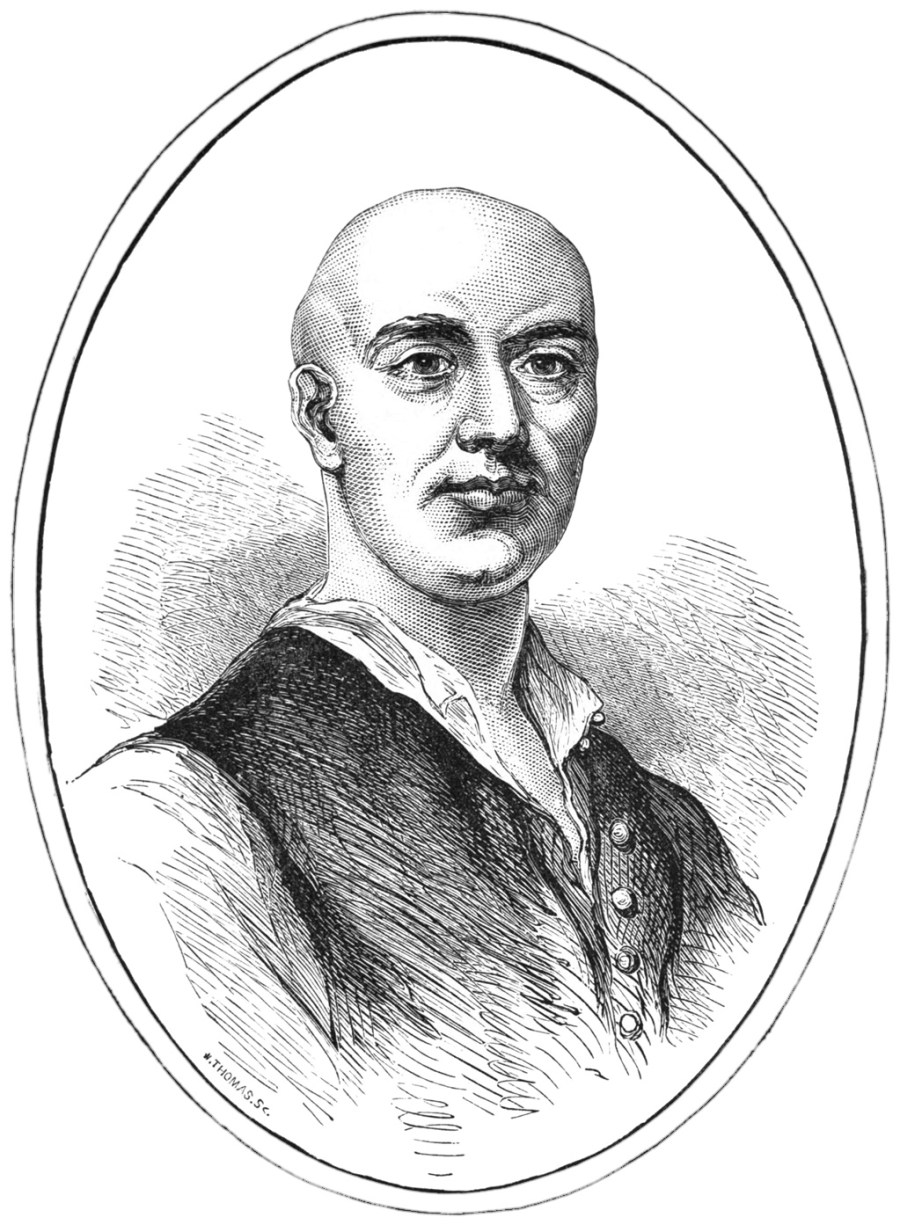
Jack Broughton – W.THOMAS.SCFRANK HAYMAN, R.A. Henry Downes Miles ( 1806-1889) – Public domain

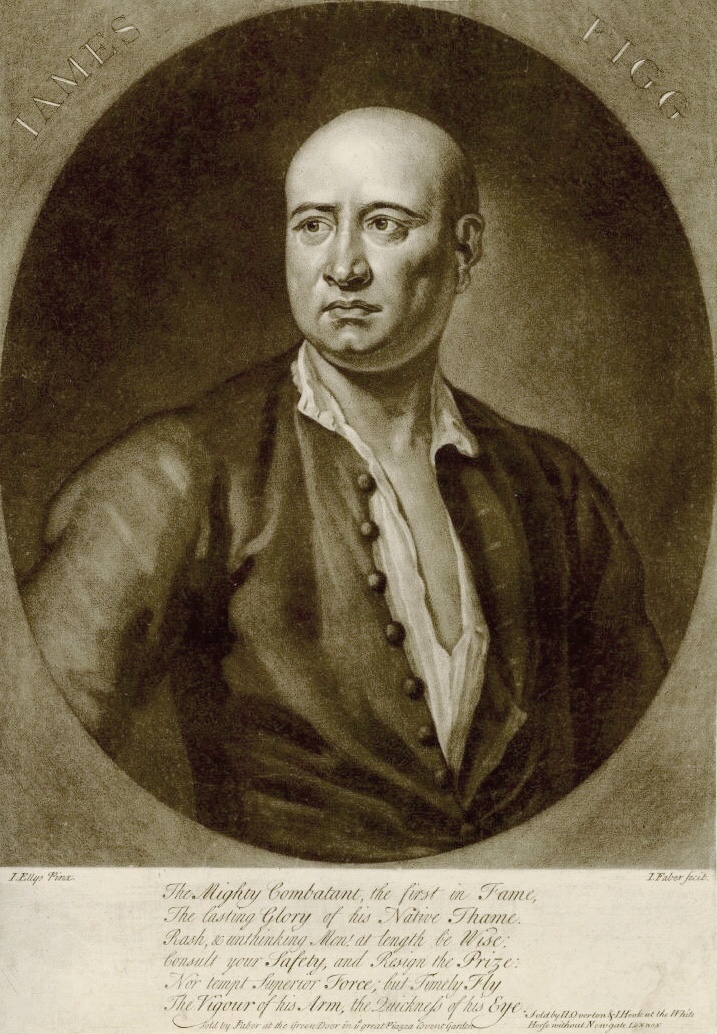
Broughton, born around 1704 was the son of a farmer from Baunton, Gloucestershire…. At the age of 12 he went to work at the quayside in Bristol – and would often fight with the local lads…. Before long he came to the attention of James Figg, England’s first bare-knuckle champion – having claimed the title in 1719; the concept of current-day boxing originally came from him….

img_3729
James Figg – John Faber Jr after John Ellys – Public domain

Figg owned an amphitheatre in London – and it was here that he trained Broughton to bare-knuckle fight…. Once Broughton had become successful he opened an amphitheatre of his own, near to Oxford Street; it became the largest and most influential establishment of its kind in the country….

At the time ‘rules’ varied from contest to contest, Broughton decided some regulation was needed…. He devised a set of rules; among them – that a round would last until one man went down – and that there should be a 30 second interval between rounds…. His rules eventually evolved into the London Prize-Ring Rules – promulgated in 1838 and revised in 1853…. They outlawed head butting, kicking, biting, scratching, gauging, hitting a man whilst he was down, using hard objects in the hands and holding the ropes….

img_3726
Broughton’s rules – Jack Broughton, public domain

The London Prize Rules were replaced by the Marquess of Queensbury Rules during the 1860s; however most of the earlier measures still remain in effect today, having laid the foundation to modern-day boxing….

As for Broughton, in 1750 he fought Jack Slack – and within 14 minutes of the contest starting had received a punch that rendered him temporarily blinded – and he had to retire from the fight….His patron of the time, the Duke of Cumberland, is said to have lost thousands on the match…. Broughton closed his amphitheatre very soon afterwards and ran an antiques business instead…. He died on the 8th of January 1789….

img_3727
‘The Bruiser Bruisd; Or the Knowing Ones Taken-in’ – A boxing match between John Broughton and Jack Slack – Public domain

On this day in history….15th August 1971

On this day in history : 15th August 1971 – English equestrian Harvey Smith is stripped of his £2,000 winnings at the British Show Jumping Derby, after allegedly making a rude gesture at the judges….

It is said Harvey had been involved in a heated exchange with one of the judges on the morning of the competition, which was being held at Hickstead in West Sussex…. Harvey, who had won the derby the previous year had forgotten to bring the trophy with him for this year’s presentation…. Some believed he had done this deliberately, assuming it was a foregone conclusion he would win it again…. The trophy eventually arrived from Harvey’s Yorkshire home just in time for it to be presented back to him….

img_3724
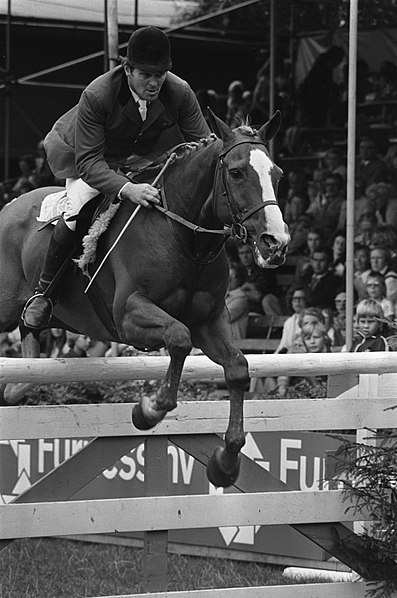
Photo credit : The Dutch National Archives – Public domain

It was after winning the competition that Harvey was seen to make a two-fingered V-sign in the direction of the judges…. He protested innocence, saying “It was a straightforward V for Victory. Churchill used it throughout the war”….

He had a point…. Harvey had used the gesture with his palm facing towards him; Churchill, on first adopting his V for Victory salute had also done so with his palm inwards…. His advisors eventually took him aside and explained the actual meaning of this….and from then on Churchill used the palm outward-facing sign….

Harvey bucked the trend of the then usual upper class snobbery of the show jumping set…. He was a blunt Yorkshire lad, with a broad accent; he was known as ‘Heathcliff on Horseback’…. Frequently clashing with the sport’s governing body, his rebellious nature made him popular with the public…. Through much publicity and the backing of the public the disqualification was reversed two days later….

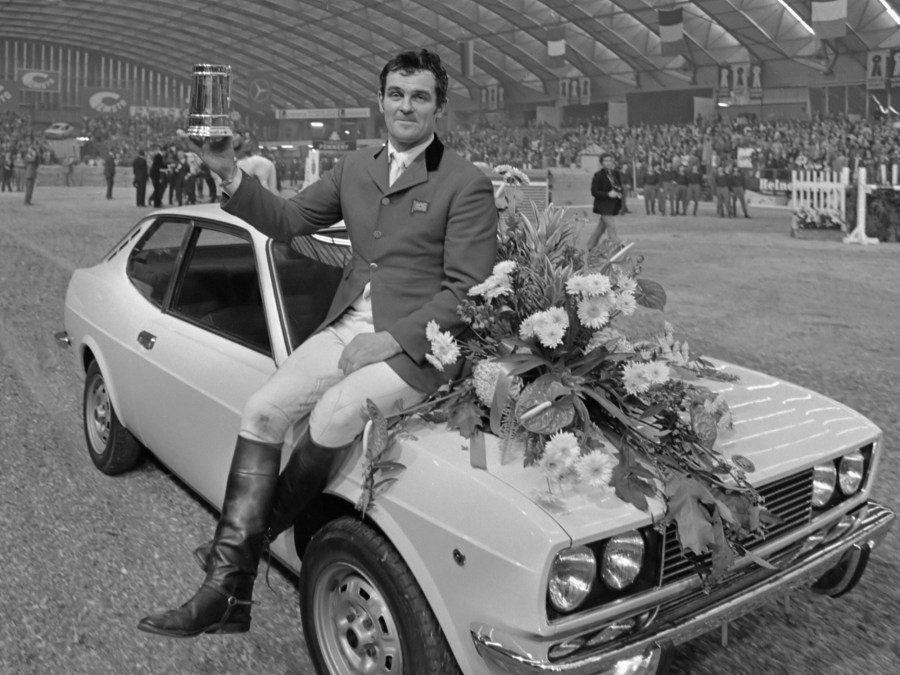
Harvey Smith (1974)
Harvey Smith (1974) – Photo credit: Rob Mieremet / Anefo CCO

Harvey won the British Show Jumping Derby a total of seven times and represented Britain in the Olympics three times…. He did later admit in interviews that he had indeed V-signed the judges!

On this day in history….14th August 1941

On this day in history : 14th August 1941 – Prime Minister Winston Churchill and American President Franklin D Roosevelt sign the Atlantic Charter, laying out their plans for a post-war world….

img_3722
Winston Churchill’s edited copy of the final draft of the Charter – Churchill blue, public domain

The announcement ended speculation as to the whereabouts of the Prime Minister, who had noticeably been absent from the House of Commons for a number of days…. Similarly Roosevelt had done a disappearing act too, along with several other top officials…. The pair had been involved in secret talks onboard American Cruiser USS Augusta and British Battleship HMS Prince of Wales, in Placentia Bay, Newfoundland…. A joint declaration had been made setting out the basic principles for after the war had ended….sealing an alliance between Britain and America….in anticipation of Hitler’s downfall….

img_3721
Franklin D Roosevelt and Winston Churchill aboard HMS Prince of Wales in 1941 – US Navy, public domain

The Charter had eight main objectives:- that Britain and America seek no territorial gains from war and any change to a country’s territory had to be with the agreement of its people…. Nationals would also have the right to choose their own government….with self-government being restored to those countries that had already lost it…. There was to be free trade for all nations – with improvement to economies and to living standards…. The aim was for peace at the end of the Nazi tyranny and for freedom of movement around the world….the belief being that aggressive nations must be disarmed to ensure world peace….

img_3723
Printed version – Winston Churchill, public domain

As it stood the Charter was to lay foundations for granting independence to Britain’s own Empire….starting with Indian Independence Day in 1947….