On this day in history….8th August 1963

On this day in history : 8th August 1963 – The robbery of £2.6m from a Royal Mail train travelling to London from Glasgow at Bridego Railway Bridge…. It was to become known as The Great Train Robbery….
img_3689
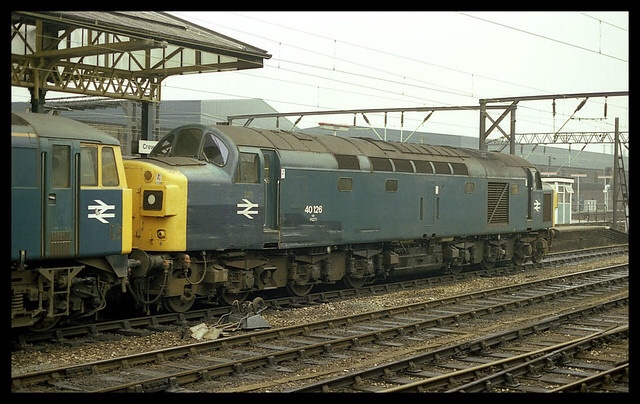
The locomotive 40126 (ex D326) from The Great train Robbery – Image credit: JohnGreyTurner via Flickr

The train had left Glasgow Central Station at 18.50pm on Wednesday the 7th of August and was due to arrive at London Euston at 3.59am the following morning…. On board the 12-carriage mail train were 72 Post Office employees who had the job of sorting the mail, which was collected at stops en route….

One of the carriages, the second nearest to the engine, carried high value packages and a large quantity of money…. Ordinarily the mail train would carry a sum averaging around £300k; however, because the previous weekend had been a bank holiday the amount onboard was considerably more….between £2.5-£3 million….

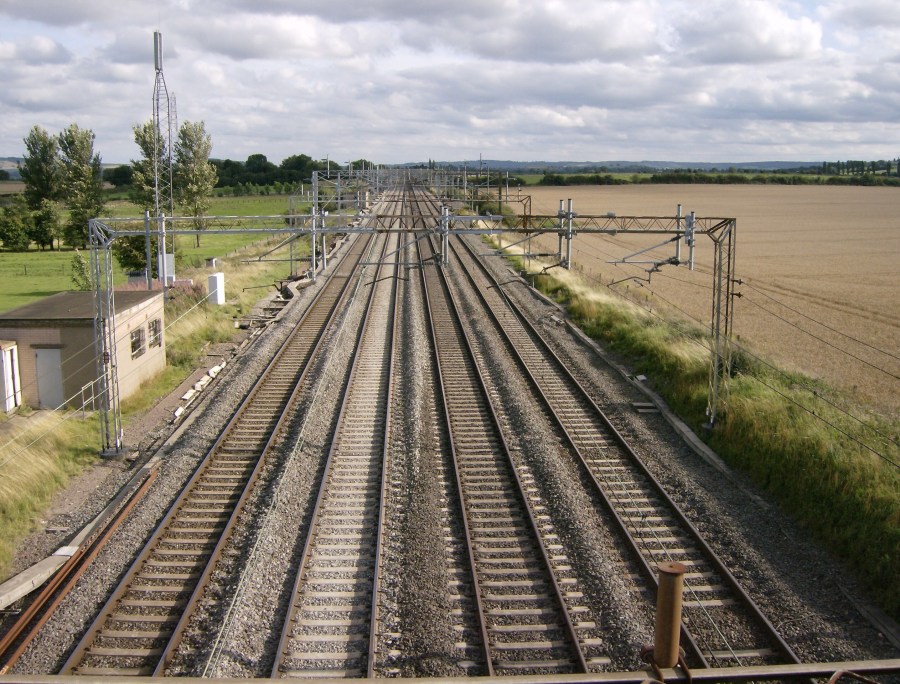
Just after 3am the train had to stop at a red signal light at Sears Crossing, Ledbury – which lies between Leighton Buzzard and Cheddington on the West Coast Main Line…. Unbeknown to the train crew the signal had been tampered with…. The fireman, 26-year-old David Whitby, climbed down from the cab to investigate as it was not normal to be stopped at this location at this time in the early morning…. On approaching the line-side telephone to call the signalman he found the wires had been cut; it was then that he was overpowered by one of a gang of robbers….
img_3688
View towards ‘Sears Crossing’ – Image credit: Sealman CC BY-SA 3.0

The other gang members climbed into the cab of the waiting engine…. The driver, 58-year-old Jack Mills, struggled with one of them before being struck over the head by another with a cosh…. He was left semi-conscious….

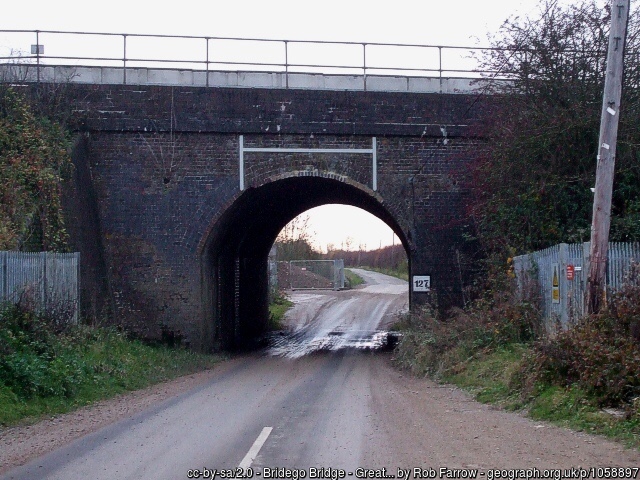
The gang had in their midst a retired train driver, the plan was that he would drive the train to nearby Bridego Bridge…. However, it soon became apparent he was unable to fathom out how to drive this newer, more modern train to what he had been used to…. The gang’s only option was to force poor Jack Mills to drive the mail train to their chosen destination….
img_3690
Bridego Bridge (now renamed Mentmore Bridge)

On arriving they were met by more members of the gang, who were waiting with a truck…. There were no police or security guards on the train and the Post Office employees were unable to put up any resistance…. The gang removed all but 8 of the 128 sacks within the HVP carriage of the train; forming a human chain they loaded their vehicle – taking about 15-20 minutes to do so…. Within 30 minutes of their first stopping the train they were on their way to escape….

15 criminals made up the gang:- Bruce Reynolds, Charlie Wilson, Gordon Goody, Buster Edwards, Roy James, Roger Cordrey, Jimmy White, John Daly, Bob Welch, Tommy Wisbech, Jim Hussey, Ronnie Biggs, Harry Smith, Danny Pembroke and one other who remains unknown…. They were also accompanied by their hired train driver, known as ‘Pops’…. Out of the gang 11 were caught and convicted….

On this day in history….7th August 1840

On this day in history : 7th August 1840 – The practice of sending children up chimneys in order to sweep them is banned in Britain….

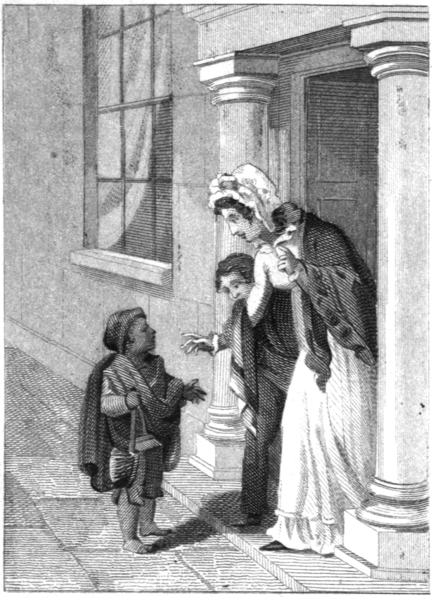
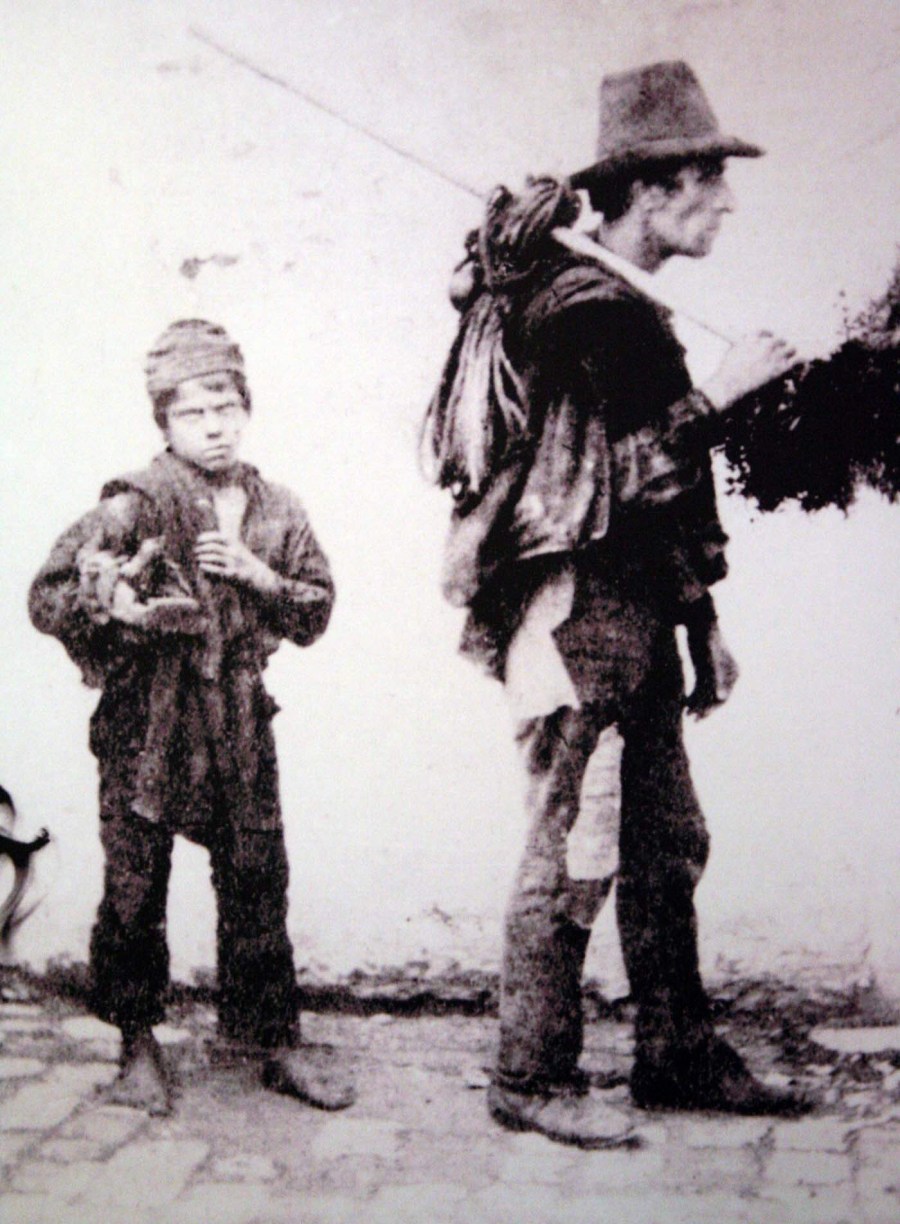
Climbing boys (and sometimes girls) were technically chimney sweeps’ apprentices…. Master sweeps would often be paid by the Parish to teach orphans and pauper children the trade…. Once signed over by the authorities or guardian the child would be bound over to the sweep…. His obligations were to teach the craft, provide food and a second set of clothing, make sure his apprentice washed once a week and attend Church on a Sunday…. It was also stipulated a child could not be sent up a chimney that was on fire…. Apprentices were not paid for their work….

img_3686
The Temperance Sweep from ‘Street Life in London’ – LSE Library via Flickr

It was a cruel, harsh and dangerous occupation…. Children as young as four would be sent up chimneys that could be flues as narrow as 9 x 9 inches…. It was not uncommon for the climbers to get stuck; death by suffocation or burning in the hot, soot encrusted chimneys happened all too often…. Soot, being carcinogenic, caused chimney sweep’s cancer (soot wart) – which affects the scrotum….and was found in boys as young as 8-years-old…. This disease has the distinction of being the first ever recognised occupational cancer….

These children were seldom treated kindly by their masters – in fact they were frequently viewed as commodities….to be sold to other sweeps – fetching between 7 shillings and 4 guineas….

img_3685
A master chimney sweep and his apprentice – public domain

In 1840 the Revised Chimney Sweeps Act was brought in, raising the minimum age of apprenticeship to sixteen…. However, it was widely ignored as there was no way of enforcing the legislation….still children, many under the age of ten, were forced to climb chimneys….

In 1863 Charles Kingsley’s ‘The Water Babies’ was published and raised public awareness to the plight of children being mistreated through this type of employment…. A new Chimney Sweeps Regulation Act came into force in 1864 – but once again it was ineffective….

1875 saw the Chimney Sweeps’ Act….making is compulsory that all chimney sweeps had to be licensed…. This time the enforcement of the law was overseen by the police – effectively bringing an end to the exploitation of children in this way in Britain….

img_3687
The Little Chimney Sweep – public domain

On this day in history….6th August 1971

On this day in history : 6th August 1971 – British yachtsman Chay Blyth docks his yacht at Hamble on the South Coast, becoming the first to sail non-stop around the world the ‘wrong-way’ – from east to west….

Chay had set off from Hamble in Hampshire on the 18th of October 1970, onboard his specially designed 59ft ketch ‘British Steel’….so named because of his backing by the British Steel Corporation….

img_3682
British Steel – Image credit : Beautiful Cornwall and Devon via Facebook

Sir Francis Chichester had commented that he thought the voyage was impossible…. Chay completed the 30,000 miles, against prevailing winds and currents in 292 days….it became known as ‘the impossible voyage’…. It was also the fastest non-stop round the world voyage….

On his return Chay was met by a welcoming party consisting of a flotilla of 200 boats and 6,000 well-wishers, among them the Duke of Edinburgh, the Prince of Wales, Princess Anne and Prime Minister Edward Heath….

Chay was later awarded a CBE and was voted ‘Yachtsman of the Year’ by the Yachting Journalists Association…. He was also named as ‘Man of the Year’….

img_3683
Sir Chay Blyth – Image credit : Classic Boat via Facebook

On this day in history….5th August 1975

On this day in history : 5th August 1975 – The Forestry Commission officially announces the spread of Dutch elm disease in Britain…. To date over 60 million British elms have been lost….

Dutch elm is one of the most serious tree diseases in the world and infects all of Britain’s major elm species…. The fungus is spread by the bark beetle in the genus Scolytus and invades the water conducting system of the tree…. The symptoms first appear early summer, clusters of leaves wilt and turn yellow….they then turn brown and fall…. Affected shoots begin to die back….dark streaks appear in the outer wood under the bark and twigs may dip down to form a ‘shepherd’s crook’….

img_3674
The crown of a diseased elm…. Note the dying back of branches in multiple places. Image credit : Ptelea – Public domain

It is believed the disease originally came from Asia – and was accidentally introduced to the USA and Europe…. It was first noticed on continental Europe in 1910 and first identified in England, on an English elm in Hertfordshire by T.R.Peace, in 1927…. However, this particular outbreak was relatively mild, often just killing a few branches and had largely died out by the 1940s…. The name Dutch elm disease refers to its identification by Dutch scientists in 1921….

However, in 1967 a far more virulent strain emerged…. It apparently arrived via the east coast ports on shipments of elm from Canada bound for the boat industry…. This was confirmed in 1973 on another consignment examined at Southampton Docks…. By the mid 1970s millions of trees had been wiped out, within ten years it had reached Scotland…. By 1990 very few mature elms were left in Britain and much of Europe; the largest concentration of mature elms in the UK are now in the Brighton and Hove area of Sussex….

You may sometimes see saplings growing in hedgerows…. The roots of the elm are not killed and sends up suckers – but rarely do they reach above 5m high….before succumbing to a new attack of the fungus….

img_3677
Image credit : Dougie Nisbet via Flickr

On this day in history….4th August 1865

On this day in history : 4th August 1865 – The birth of Edith Cavell, the English nurse who helped hundreds of British, French and Belgian soldiers escape occupied Belgium during World War I….

img_3669
Edith Cavell – Public domain

Edith Louisa Cavell, the daughter of a rector and the eldest of four children was born in Swardeston, Norfolk…. She worked as a governess in Belgium before training as a nurse in London…. She was employed in hospitals in Shoreditch, King’s Cross and Manchester and then took the position of Matron in Brussels – in what was Belgium’s first training hospital and school for nurses…. Her work involved training nurses during Belgium’s modernisation if its medical care system….

img_3671
Edith (seated centre) with a group of the student nurses whom she trained in Brussels – Public domain

Edith was back in Norfolk visiting her family when WWI broke out…. On hearing that German troops were advancing on Belgium she returned to Brussels immediately…. By the 20th of August 1914 Brussels was occupied and the nursing school became a Red Cross Hospital – treating casualties on both sides, as well as continuing to treat civilians….

img_3670
Edith with her two dogs in a garden in Brussels before the outbreak of WW1 – Public domain

On September the 14th Edith was asked to help two wounded British soldiers, who after the Battle of Mons had become trapped behind enemy lines…. She treated them at the hospital and then arranged to have them smuggled out of Belgium into neutral Holland….

Becoming part of the network who helped Allied troops, over the next 11 months Edith helped over 200 British, French and Belgian soldiers escape…. She would first treat them at the hospital and then arrange for guides to take them across the border….

On the 5th of August 1915 Edith was arrested and placed in solitary confinement at St. Gilles Prison, Brussels…. She was one of 34 members of the network to be arrested….

Edith’s court martial took place on the 7th of October 1915…. She was found guilty….and sentenced to death…. Before her execution she was granted one final communion with an Anglican Priest…. She wished her friends to know that she willingly gave her life for her country….“I have no fear nor shrinking, I have seen death so often that it is not strange or fearful for me’….

img_3672
Portrait of Edith Cavell before WW1 – from the Collections of the Imperial War Museums

Edith was shot by firing squad at the Tir National, the Brussels firing range, on the 12th of October 1915 – she was executed along with 4 Belgian men…. Her death caused outrage in Britain and many neutral countries – including the United States…. It prompted the US First Secretary, Hugh Gibson, to put intense diplomatic pressure on Germany….

Edith had been betrayed by a Frenchman, Gaston Quien….who after the war was put on trial by the French for his collaboration with the Germans…. He was sentenced to death for his treasonous acts, including Edith’s death – but this was commuted to twenty years imprisonment and he was released in 1936….

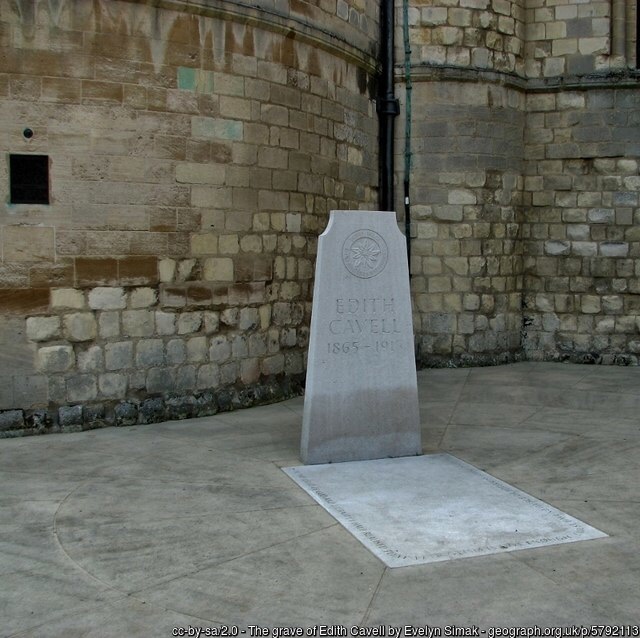
After the war had ended Edith’s body was exhumed and repatriated – she was buried at Norwich Cathedral and a memorial service was held at Westminster Abbey….img_3673