On this day in history….19th July 1941

On this day in history : 19th July 1941 – Winston Churchill adopts the ‘V for Victory’ hand sign – after referring to the Victory campaign, which had spread through Europe, with approval in a speech….

img_3585
Winston Churchill, British Prime Minister, giving a V sign in 1943 – British Government, public domain

On January the 14th 1941 Victor de Lavelaye, former Belgian Minister of Justice and director of the Belgian French-language broadcasts on the BBC (1940-44) suggested that Belgians adopt a ‘V’ for ‘Victoire’ – in an attempt to raise morale during World War 2…. In a BBC broadcast de Lavelaye claimed “the occupier, by seeing this sign, always the same, infinitely repeated, would understand that he is surrounded, encircled by an immense crowd of citizens eagerly waiting his first moment of weakness, watching for his first failure”…. Within weeks chalked ‘V’ signs were appearing on walls across Northern France, Belgium and the Netherlands….

The BBC started a ‘V for Victory’ campaign….with assistant news editor Douglas Ritchie taking on the persona of ‘Colonel Britton’…. Ritchie suggested the BBC should use an audio ‘V’ – using the dot-dot-dot-dash Morse Code for the letter ‘V’…. Beethoven’s Fifth Symphony has the same rhythm – so this was used by the BBC as a call-sign for its foreign language broadcasts to occupied Europe for the rest of the War….

img_3587
American V for Victory campaign – showing the dot-dot-dot-dash of Morse Code – public domain

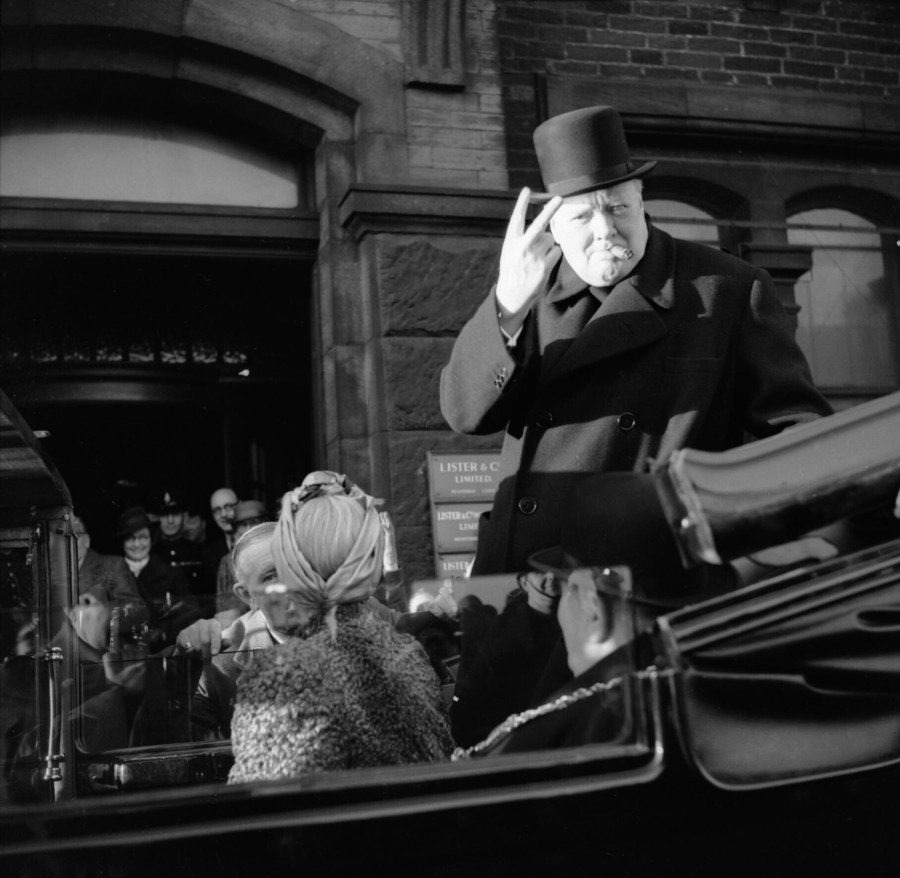
Churchill – and other allied leaders too – adopted the ‘V’ sign hand signal…. Sometimes Churchill gestured with a cigar between his fingers…. In the beginning he used the sign with his palm facing towards him – and his Aides had to explain to him what this version meant! So, later he used it with his palm facing out…. However, one can’t help thinking that perhaps it was his misuse that made it so popular….

img_3586
Churchill, initially unaware of the meaning of this particular gesture! – War Office official photographer, Horton (Capt.) – Public domain

On this day in history….18th July 1817

On this day in history : 18th July 1817 – The death of English novelist Jane Austen, at the age of 41….who brought to us works such as Pride and Prejudice and Sense and Sensibility….

img_3584

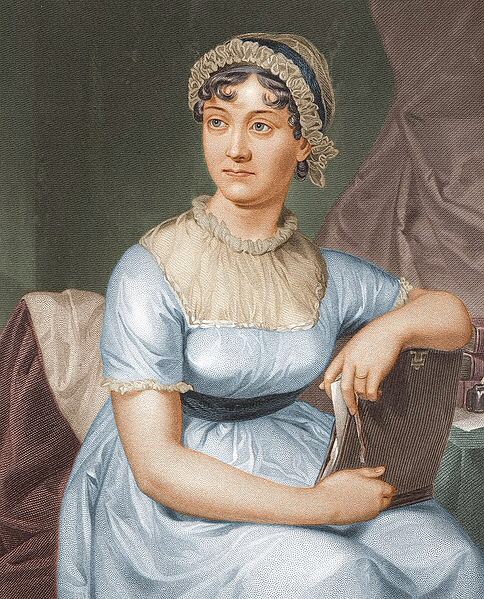
Jane, born in Steventon, Hampshire on the 16th of December 1775, appears to have been susceptible to infectious diseases throughout her life….she contracted typhus as a child – and as an adult she suffered with conjunctivitis so chronic that at times she was unable to write…. There is evidence that as early as January 1813 she was suffering immune deficiency and fatal lymphoma…. By early 1816 she was beginning to feel really unwell – but ignored the signs – putting it down to ‘a bit of bile – or rheumatism’…. By the middle of the year her health had really deteriorated….

img_3582
Jane Austen – Public domain

Despite her illness Jane continued to write…. In January 1817 she had begun ‘The Brothers’….which when published posthumously in 1925 was entitled ‘Sanditon’…. As the illness progressed Jane had difficulty in walking and lacked energy….and by April 1817 she was confined to her bed….

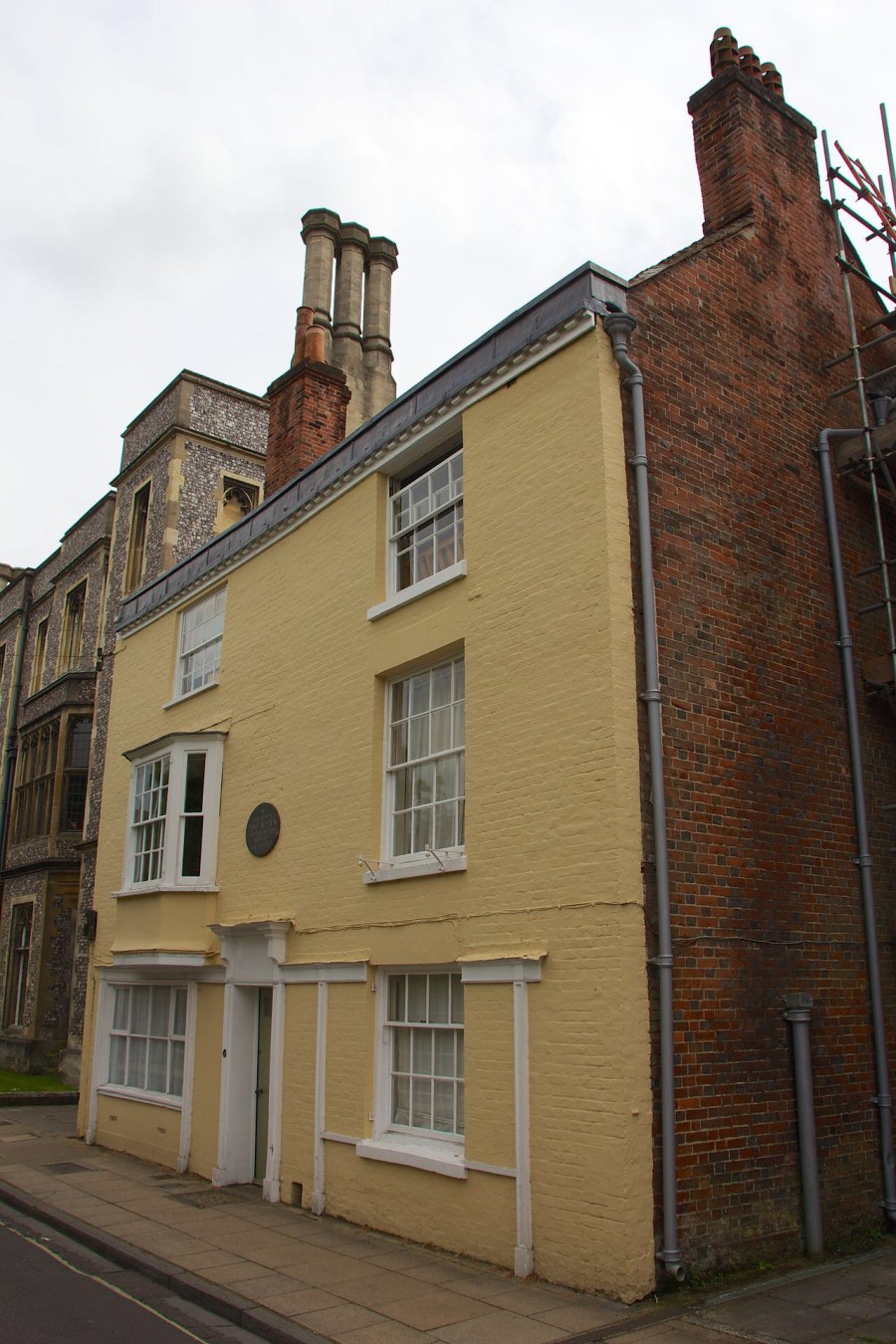
Jane’s sister, Cassandra and brother, Henry took her to Winchester for treatment – by now she was in terrible pain and sadly on Wednesday the 18th of July she passed away…. Henry, with his clerical connections, arranged for her burial in the north aisle of the nave of Winchester Cathedral….

img_3581
House in Winchester where Jane spent her final days and died – Photo credit: Mike Peel (www.mikepeel.net) CC BY-SA 4.0

The cause of Jane’s death has usually been attributed to an illness such as Hodgkin’s disease, Addison’s disease or auto-immune disease Lupus…. However, there has also been speculation that she died from arsenic poisoning…. A sentence written in an old volume of Jane’s letters stated that she was feeling better and was recovering her looks a little, which had been ‘black and white and every wrong colour’…. The comments were discovered by an author who was researching Jane and having previously done extensive research on modern forensic techniques and poisons for crime novels, recognised the symptoms that could be attributed to arsenic poisoning…. Coincidently a lock of Jane’s hair, on display in an American museum, had been tested for arsenic and the result had come back positive…. It is possible the medicine she had been prescribed, possibly for her rheumatism, may have contained arsenic….

img_3583
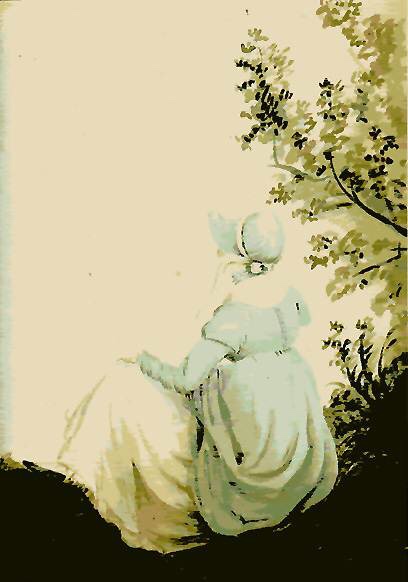
Watercolour of Jane, painted by her sister Cassandra – Public domain

On this day in history….17th July 1717

On this day in history : 17th July 1717 – The premiere of Handel’s Water Music….written for an outdoor performance for King George I and is played on a barge whilst sailing up the River Thames….

img_3580
George Frideric Handel by Balthasar Denner – Public domain

“On Wednesday evening at about 8, the King took water at Whitehall on an open barge….where in were 50 instruments of all sorts, who play’d….the finest symphonies compos’d express for the Occasion by Mr. Hendel, which his Majesty liked so well, that he caus’d it to be plaid over three times in going and returning”…

It is rumoured the King felt he was being over-shadowed by his son, the Prince of Wales – who was constantly throwing lavish dinners and parties – and was stealing all the limelight…. So, King George decided to do something about it….

George Frederick Handel liked to use musical influences from all over Europe….France, Italy, Germany….and mix them all up…. For an English flavour to his Water Music he included ‘Alla Hornpipe’ – the Hornpipe Dance being ‘very English’ – associated with sailors and involving a lot of jumping up and down…. This lively dance would have appealed to an exhibitionist King who liked to show-off his dancing skills….

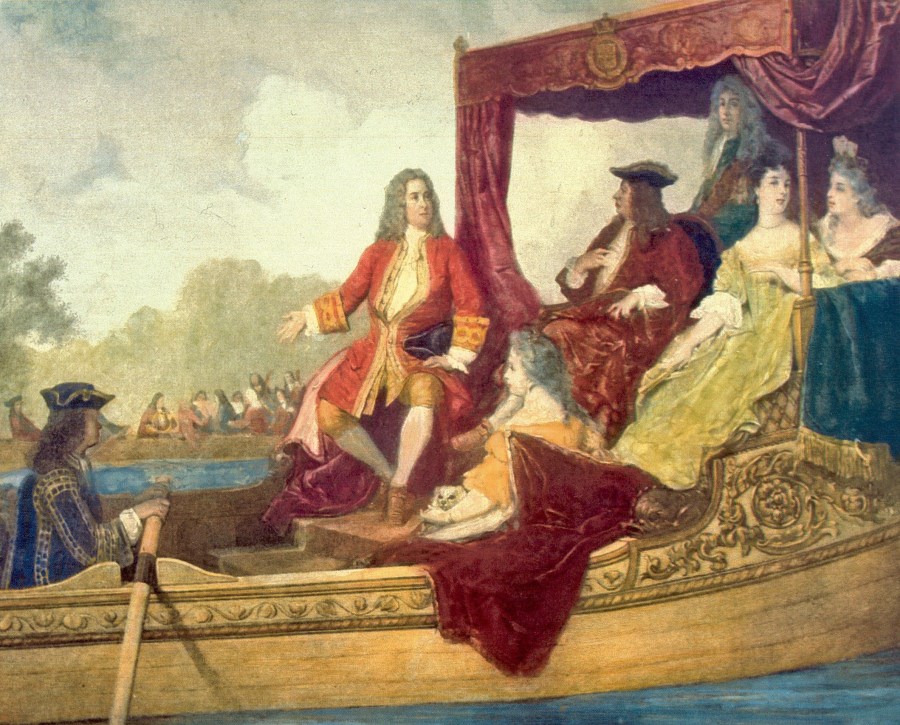
King George and his party, which included Dukes, Duchesses and his two mistresses, boarded the royal barge at 8pm on a summer’s evening at Whitehall Palace and travelled up the Thames towards Chelsea…. They were accompanied by another barge with 50 musicians – an orchestra that comprised of flutes, recorders, oboes, bassoons, trumpets, horns, violins, basses – and French horns – which the British had never seen before…. People lined the river banks to see and hear….and many other boats joined the flotilla, wanting to enjoy the music….

img_3579
Handel (left) and King George I on the River Thames – painting by Edouard Hamman – Public domain

At Chelsea the royal party left the barge but returned at 11pm for the return trip….and the music was played again…. In fact the King enjoyed it so much that the 3 suites of Handel’s Water Music were performed three or four times….each lasting for over an hour…. The only break the exhausted orchestra got all evening was the brief interlude when the royal party disembarked at Chelsea….

On this day in history….16th July 1439

On this day in history : 16th July 1439 – King Henry VI bans kissing in England – in an attempt to stop the spread of the plague…. A ban that failed as people refused to co-operate….

img_3575
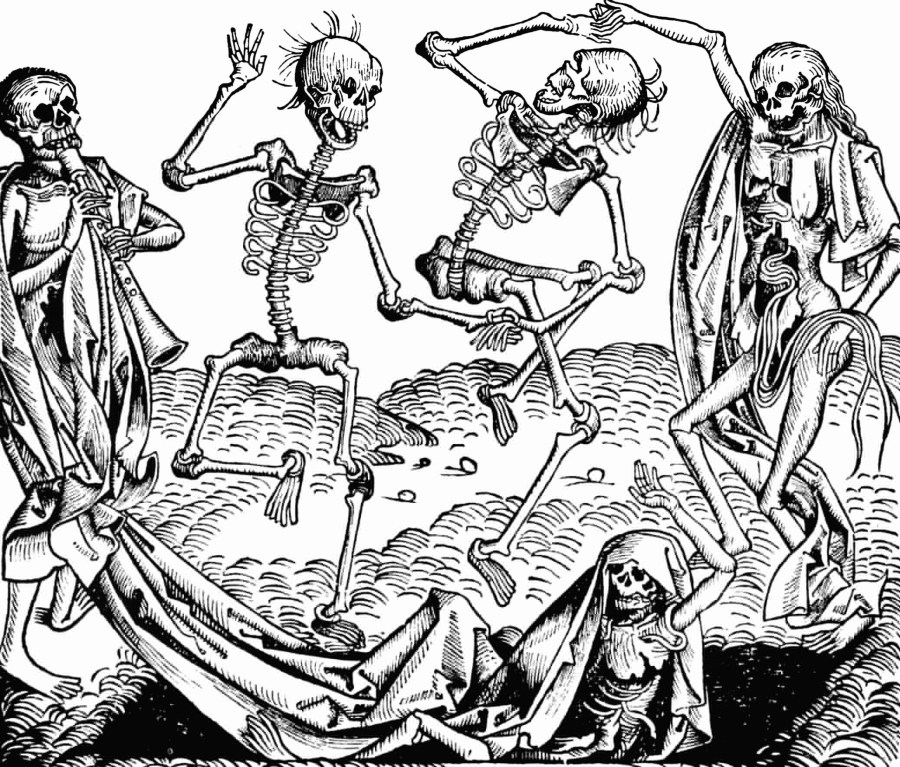
Inspired by the Black Death, ‘The Dance of Death’ or, ‘Danse Macabre’ – a common painting motif in the late Medieval period – Public domain

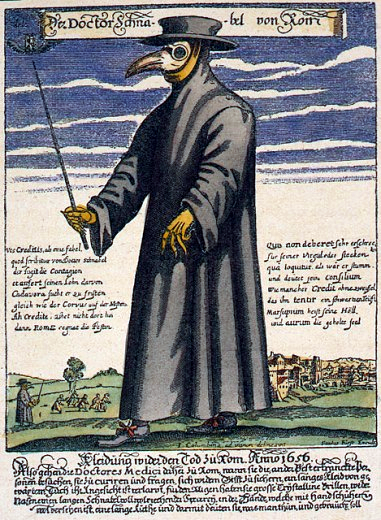
People in the Middle Ages believed that disease was spread through tiny particles…. It was not understood that the plague was spread by black rats, which were everywhere; fleas would bite the rats and then humans, passing the disease on…. Symptoms would start with a high fever and a hacking cough…. Huge black boils, some the size of an egg, would then appear on the neck, in the armpits and groin area…. Most died within 2-7 days…. There was no medical help….only special ‘plague doctors’ who would beat sufferers with a rod to try and ‘purify’ them of whatever sin they had committed in order to receive such a terrible punishment….

img_3577
Copper engraving of Doctor Schnabel (Dr Beak), a plague doctor in 17th Century Rome, circa 1656 – Public domain

It is thought the disease arrived in Europe from Central Asia via the Silk Route – with rats coming in onboard merchants’ ships…. It is thought between 1347 and 1351 up to 200 million died across Eurasia; there are no exact figures but recent research believes between 45-50% of Europe’s population was wiped out…. It is estimated around 30% of England’s population died but some sources say it could have been as high as 50%…. Whole families perished….nobody was safe, from peasants to royalty…. The unhygienic environment of the time meant disease spread quickly….King Henry VI issued his decree – banning kissing until the plague had passed – as he believed ‘if the lips were kept chaste the small particles of plague could not be passed on’….

img_3576
The Great Plague of London, in 1665, killed up to 100,000 people – Public domain

By the end of 1350 Black Death had more or less died out in Europe….but not so in England, the disease kept on recurring…. It peaked in 1665 with the Great Plague of London….and it was The Great Fire of London in 1666 that helped eradicate the disease by killing most of the black rats….and their fleas….

img_3578
Black rat at London Zoo – Image credit: Liftarn CC BY-SA-3.0

On this day in history….15th July 1685

On this day in history : 15th July 1685 – James Scott, 1st Duke of Monmouth and illegitimate son of Charles II is executed – later his head is re-attached so his portrait can be painted….

Monmouth had been born on the 9th of April 1649 in Rotterdam, the Netherlands – he was the eldest illegitimate son of King Charles II and his mistress Lucy Walter…. He was made the Duke of Monmouth on the 14th of February 1663, shortly after he was brought to England….and at the tender age of 14 was married to heiress Anne Scott, on the 20th of April 1663…. Two years later he was to begin his military career, rising to rank of Commander of the Anglo-Dutch Brigade, fighting against the French, by 1678….

img_3556
Duke of Monmouth – public domain

On his return to Britain Monmouth commanded a small army which was formed to stop the Scottish Covenanters…. His small, massively outnumbered army managed to defeat the Covenanters…. By now Monmouth was becoming a serious contender as heir to the English throne….a position he was eager to secure….

In 1683 Monmouth was implicated in the Rye House Plot – an attempt to assassinate Charles II and his brother James, Duke of York and successor to the throne…. Monmouth, identified as a conspirator was forced to go into exile in the Dutch United Provinces….

King Charles II died in February 1685…. In an attempt to take the throne from his uncle Monmouth led the Monmouth Rebellion….landing three ships at Lyme Regis in June 1685…. However, on the 8th of July 1685 Monmouth was captured near to Ringwood in Hampshire and was taken to London….

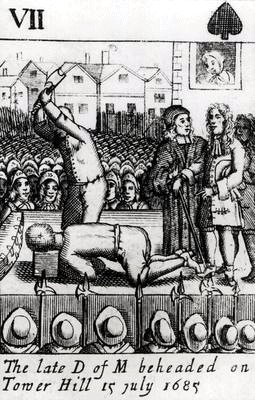
Monmouth was beheaded by executioner Jack Ketch on the 15th of July 1685 on Tower Hill…. He begged Ketch to finish him with one blow….but the executioner had other ideas…. He administered several blows – some say as many as eight – the official Tower of London records report five…. After each blow Monmouth rose up – giving the crowd a ghastly sight…. It s said a knife was finally used to sever his head…. He was then buried in the church at the Tower of London….

img_3557
Monmouth’s execution on Tower Hill – Public domain

According to legend soon after his execution realisation dawned that no official portrait of Monmouth existed…. So his body was exhumed….his head stitched back on to his shoulders and he was ‘sat’ for his portrait…. However, it has to be said, portraits in the National Gallery do appear to have been dated before his death…. But who really knows….