On this day in history….4th July 1985

On this day in history : 4th July 1985 – Child prodigy Ruth Lawrence graduates Oxford University with a starred first in mathematics…. At 13-years-old she is the youngest known Oxford graduate….

img_3488
Ruth Lawrence circa 1991 – Photo credit : George M Bergman CC BY-SA

Ruth was born in Brighton on the 2nd of August 1971 to Harry Lawrence and his wife Sylvia Greybourne – who were both computer consultants…. When Ruth turned 5-years-old her father gave up work to educate her at home….

Aged 9 she passed her ‘O’ level in mathematics and then achieved Grade A at A-level pure mathematics…. In 1981 she passed the Oxford University entrance exam in maths and in 1983 at the age 11 joined St. Hugh’s College…. Her father accompanied her to lectures…. Ruth completed her Bachelor’s degree in two years – as opposed to the usual three….and graduated at the age of 13 with a starred first and special commendation…. This made her the youngest person to graduate Oxford University in modern times….

img_3487
St. Hugh’s College, Oxford – Credit image : Fittoprint CCO

Ruth continued her studies; she went on to gain a Bachelor’s degree in physics in 1986 and a Doctor of Philosophy degree in mathematics in June 1989….

Once again accompanied by her father, Ruth moved to the US to work at Harvard and became a junior fellow at 19-years-old; she then went on to the University of Michigan as an associate professor….

In 1998 Ruth married fellow mathematician Ariyeh Neimark and she moved to Israel and became an associate professor at the same establishment as her husband, the Hebrew University of Jerusalem…. This time her father did not accompany her! In 2012 she became a fellow of the American Mathematical Society….

Ruth became the mother of four children…. She has expressed some regret at her childhood and vowed she would not put her own children through the rigorous studies she had to endure….

img_3486
Ruth Lawrence in 2014 – Image credit : Ben David CC BY-SA 2.0

On this day in history….3rd July 1970

On this day in history : 3rd July 1970 – A charter flight from Manchester carrying 105 holiday-makers and 7 crew goes missing over Northern Spain….

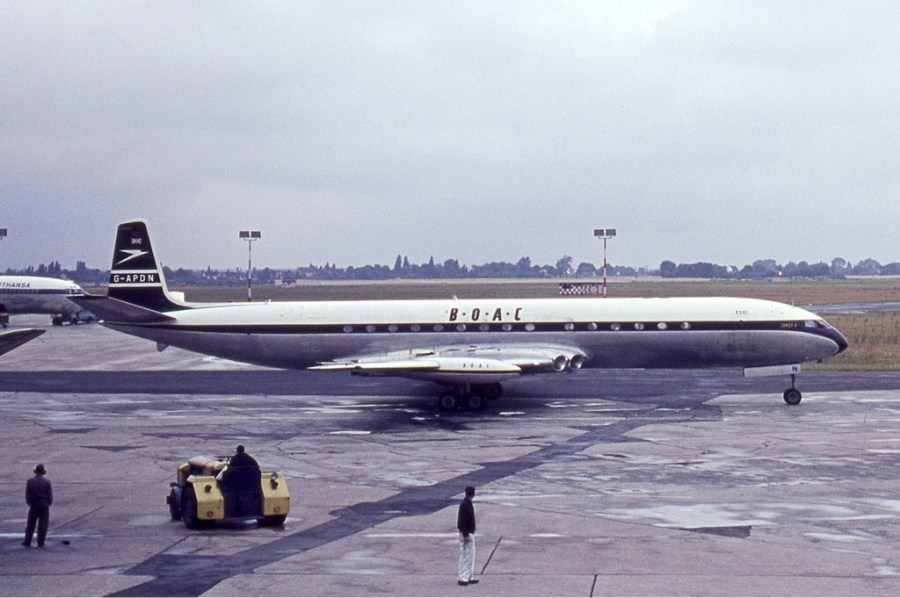
The Comet jet, DAN-AIR Flight 1903, chartered by British tour operator Clarksons Holidays, had left Manchester just after 4pm bound for Barcelona; most of the passengers onboard were from the Greater Manchester area…. On reaching Parisian airspace a change of route had been issued due to air traffic control delays….

img_3482
The aircraft which crashed, seen in 1964 when it was operated by B.O.A.C. – Image credit : Ralf Manteufel GFDL 1.2

The flight had been due to land at Barcelona at 7pm local time; the last radio contact air traffic controllers had with the plane was around this time, when it was supposedly 12 miles northwest of Barcelona at 6,000ft…. The weather was clear, there had been nothing to indicate there were any problems….the aircraft simply disappeared….

An all-night search took place and eventually the wreckage was found the following day…. The plane had crashed onto the wooded slopes of Serralada del Montseny, in the Montseny Mountains of Catalonia, Northern Spain….the highest peaks of which are over 5,600ft…. All lives had been lost, the impact explosion would have killed instantly….

img_3483
Les Agudes, one of the highest peaks of the Montseny mountain range – Image credit : Pere Lopez CC BY-SA 3.0

There was some confusion as to the location of the wreckage, as it was 32 miles north of where it should have been at the time…. It appears the Dan Air crew had mistakenly reported flying over a recognised landmark….at the same time another plane was coincidently flying over the area that the crew thought they had reached…. Air traffic control assumed the echo of the second aircraft was that of the Dan Air plane….so did not pick up on the navigational error…. The Spanish Air Ministry report, which was published in November 1970, concluded a mutual misunderstanding as the aircraft was off-course due to navigation errors by the crew….

The dead were buried in a mass grave in the village of Arbucias….Sadly no relatives were able to attend the funeral as Spanish law insists remains have to be buried within 48 hours for public health reasons…. At the same time as the funeral memorial services were held across Manchester….

img_3484
Arbucias

On this day in history….2nd July 1698

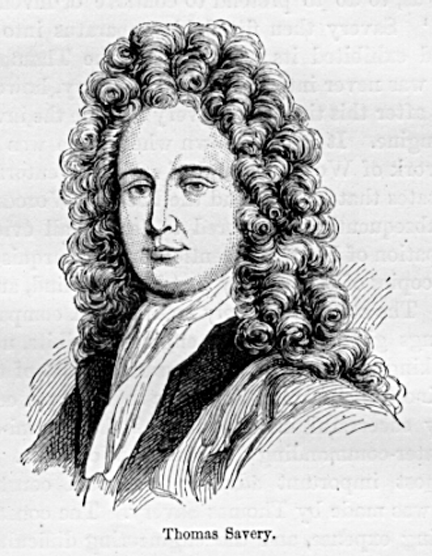
On this day in history : 2nd July 1698 – English inventor and engineer Thomas Savery patents an early steam engine which becomes a revolutionary method of pumping water….

img_3479
Thomas Savery – Public domain

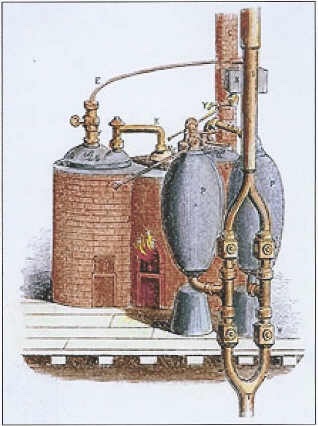
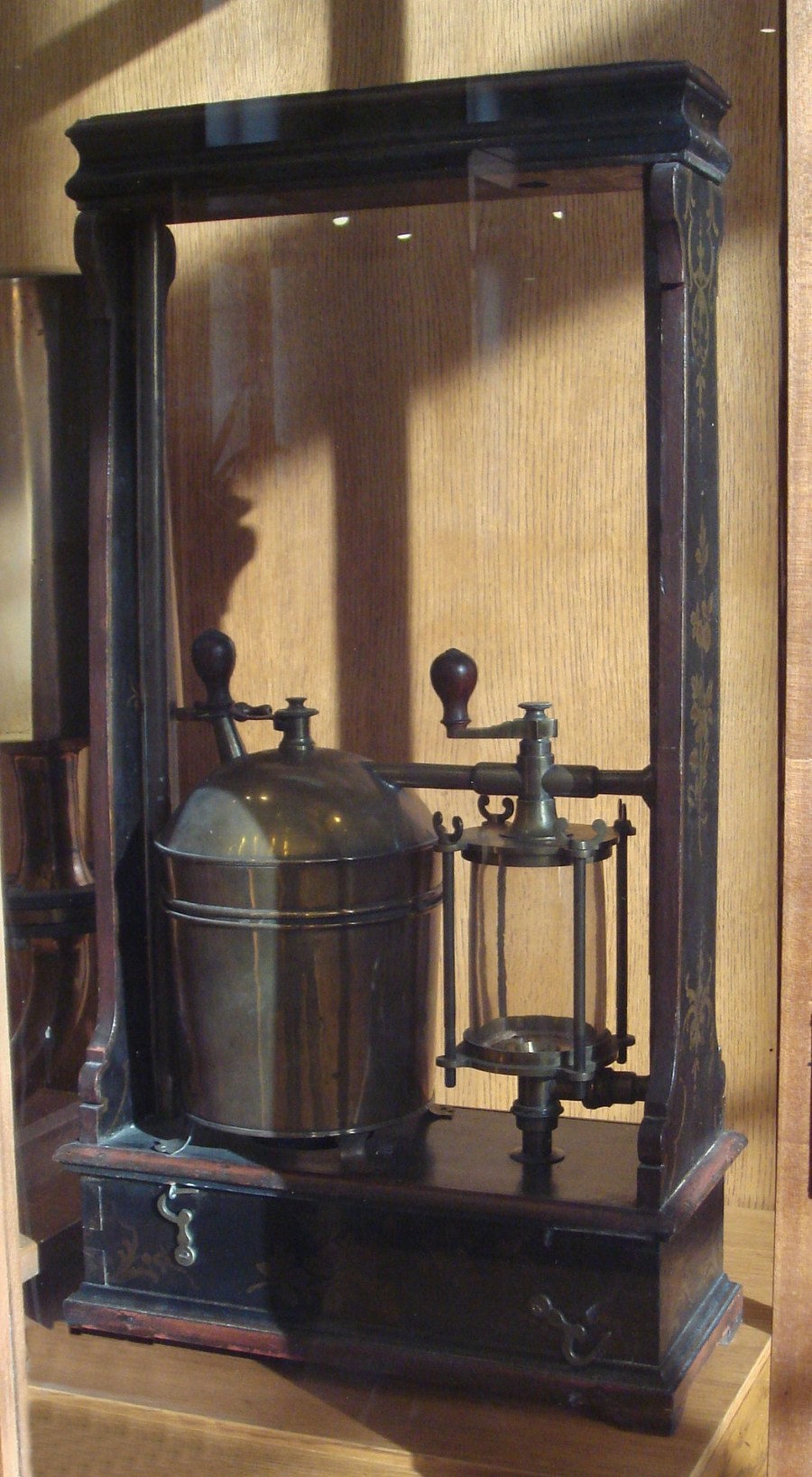
Savery, a military engineer, had become interested in the problem of pumping water out of coal mines during the 1690s…. He designed a piece of apparatus which consisted of a closed vessel, which was filled with water and then heated…. Steam under pressure was produced, forcing the water to a higher level; as the water was expelled a sprinkler then condensed the steam producing a vacuum which was capable of drawing water through a valve…. to make this more efficient two closed vessels were incorporated into the same apparatus….

img_3481
The 1698 Savery Engine – Institute of Human Thermodynamics and IoHT Publishing Ltd – Public domain

Savery described his creation as “A new invention for raising water and occasioning motion to all sorts of mill work by the impellent force of fire, which will be a great use and advantage for draining mines, serving towns with water, and for the working of all sorts of mills where they have not the benefit of water nor constant winds”….

Following an advertising campaign Savery sold his engine not only for pumping out mines but also to supply water to large buildings, particularly those housing manufacturing operations…. In his 1702 book Savery described the engine as “The Miner’s Friend; or, An Engine to Raise Water by Fire”….

img_3480
Fire pump, Savery System, 1698 – PHGCOM CC BY-SA 3.0

Savery’s engine was not without its faults…. Under high pressure it had weaknesses as the soldered joints were put under immense strain…. In 1712 a more advanced atmospheric-pressure piston engine was developed by Thomas Newcomen…. However, as Savery’s 1698 patent gave his design protection for 14 years – and then a year later the Fire Engine Act was passed, extending this protection a further 21 years – (his patent covered all engines that raised water by fire) – Newcomen had little choice but to work in partnership with Savery….

On this day in history….1st July 1916

On this day in history : 1st July 1916 – 19,240 British and Allied soldiers are killed and a further 40,000 are injured on the first day of the Battle of the Somme during World War One….

img_3472
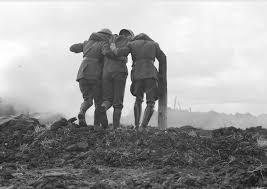
First day of the Battle of the Somme – Cassowary Colorizations via Flickr

100,000 Allied troops took part in the Battle of Albert – the name given by the British to the first two weeks of the planned joint operation between Britain and France…. Also included were men from South Africa, India, Newfoundland and many from Ireland….all brought together to try and break the deadlock on the Western Front…. The German and Allied troops faced each other from trenches separated only by a strip of ‘no man’s land’….

img_3474
From the collections of the Imperial War Museums

There had been a week’s long artillery bombardment before the main offensive, with the aim of destroying the German defences…. However, the decision was taken to extend the attack to a bigger area which meant the artillery fire had to cover a larger range….making it less effective….

On Saturday the 1st of July at 7.30am the first offensive began….for most of the infantry who went over the top it was their first taste of battle…. Many were volunteers of the ‘Pals’ battalions, formed after Lord Kitchener had called for volunteers…. At the beginning of the war the British Army consisted of 750,000 men….whereas the Germans had six times this number…. Kitchener appealed to Britain’s patriotism – calling friends, relations and neighbours to join-up together….the idea being men would have more desire to fight alongside those they knew….

img_3476

Sending untrained, inexperienced men over the top was to be a recipe for disaster…. As they entered no man’s land they were met with a hail of machine gun fire…. The Germans, in their deep trenches, had ridden out the bombardment…. With German barbed wire defences still intact the Allies were unable to reach their objective; those that did were either killed or forced back…. On this, the bloodiest day in the history of the British Army, the losses were catastrophic…. The 1st Battalion of the Newfoundland Regiment were virtually wiped out – and out of the 720 Accrington Pals – the 11th East Lancashire Battalion – 584 were casualties….

img_3478
From the collections of the Imperial War Museums

The Battle of the Somme continued for 4 months…. After that first day the Allied had captured 3 square miles….over the next two weeks a series of smaller attacks on the German lines were made, in preparation for another large assault…. On the 4th of July the two sides were engaged in another bloody battle….a further 25,000 were killed or injured…. By the second week in July the casualty numbers began to appear in the British newspapers….and people back home began to realise the hell that their loved ones had been sent to….

OLYMPUS DIGITAL CAMERA
Thiepval Memorial to the British Missing of the Somme – Photo credit : Amanda Slater from Coventry (England) CC BY-SA 2.0
img_3477
German prisoners captured by the British – From the collections of the Imperial War Museums

On this day in history….30th June 1894

On this day in history : 30th June 1894 – Tower Bridge in London is officially opened by the Prince of Wales (the future King Edward VII) and his wife, the Princess of Wales, Alexandra of Denmark….img_3469

It was a beautiful summer’s day with a cloudless sky….tens of thousands of people flocked to see one of the Victorian era’s greatest feats of engineering declared ‘open for traffic by land and water’…. It was a pageant full of pomp and splendour and after the ceremony the bascules were opened to allow a flotilla of ships and boats to sail down the Thames….img_3470

In 1876 the City of London Corporation launched a competition for the design of a much needed new river crossing…. In all 50 designs were submitted – but it wasn’t until 1884 that the design of Sir Horace Jones and Sir John Wolfe Barry was finally chosen….

Construction began in 1896 and took 8 years to build, with 5 major contractors employing 432 construction workers between them…. The total project cost being £1,184,000 which equates to over £132 million in today’s terms….img_3468

Two huge piers of over 70,000 tons of concrete were sunk into the river bed to support over 11,000 tons of steel, used to provide a framework for the towers and road and walkways…. This was then clad in Portland stone and Cornish granite, not only for appearance but also to protect the steelwork….

The combined bascule and suspension bridge, named for the nearby Tower of London, is a much-loved iconic symbol of the city…. It is 244m (800ft) long between two 65m (213ft) towers built on the concrete piers…. A central 61m (200ft) span splits into two bascules which can raise to an 83 degree angle to allow river traffic through….it takes just five minutes to perform this operation…. At first this was operated by coal burning steam engines….but in 1976 was replaced by electricity….

img_3471
Image courtesy : http://www.all-free-photos.com