On this day in history….14th June 1961

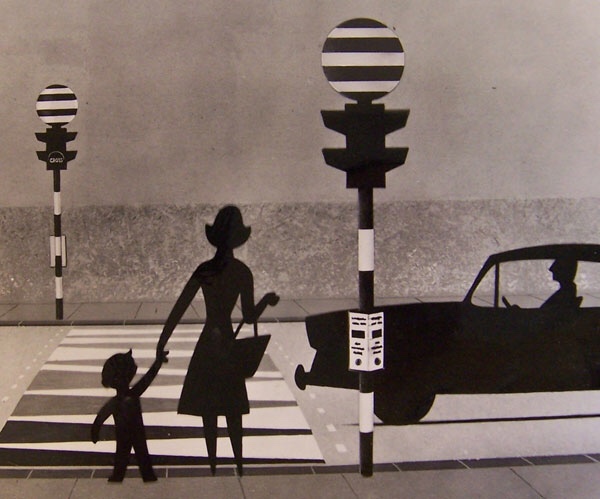
On this day in history : 14th June 1961 – The Ministry of Transport announces a new type of road crossing…. If trials are successful the panda crossing would replace the zebra crossing….
img_3369
Promotional illustration – image via Roads.org.uk – fair use

The Government had become concerned by the rise in accidents at zebra crossings – which had been introduced in 1951 when there were just two million cars on Britain’s roads…. By 1961 this number had increased to over 10 million….and in the first six months of 1960 some 533 had been killed or injured at uncontrolled zebra crossings, compared to 447 in the same period of 1959…. Transport minister Ernest Marples hoped by enabling a method of control at pedestrian crossings “some of the dangerous uncertainties of the present system would be eliminated”….

3371
Zebra crossing with Belisha beacons, Abbey Road, London….the one featured on the Beatles album…. Image : Misterweiss at English Wikipedia – Public domain

The new panda crossing consisted a triangular black and white stripes – rather than the rectangular ones of the zebra crossing…. A push button on either side of the road controlled a set of flashing lights; pedestrians would push the button and wait at the flashing light…. Drivers would simultaneously be warned to slow down by an amber flashing light – which then turned red…. At the same time a ‘WALK’ sign would appear to the pedestrian….which after a specified time would start to flash to warn that the lights for the motorist were about to turn green again….

The new system was to be installed on a twelve month experimental trial at between 40 and 50 sites in England and Wales…. The very first panda crossing had been installed on the 2nd of April 1961 outside Waterloo station and it had been decided to test in on a larger scale…. Included in the overall number were thirteen in Guildford and ten in Lincoln….

However, the scheme had to be abandoned in 1967 as pedestrians and motorists complained it was too confusing….and there were also too many mechanical failures…. In 1969 it was replaced with the far more successful pelican crossing – and this was superseded by the puffin crossing in the 1990s – using sensors to detect pedestrian and car flow and thus controlling traffic automatically….

img_3370
Pelican crossing control panel – Secretlondon CC BY-SA 3.0

On this day in history….13th June 1981

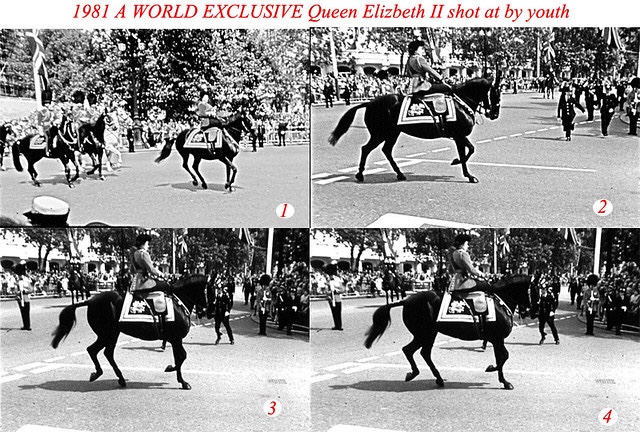
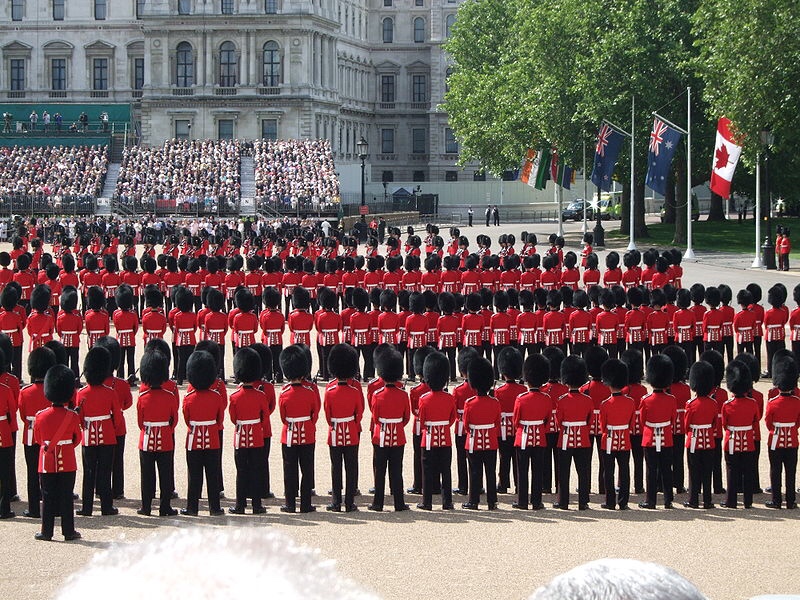
On this day in history : 13th June 1981 – Marcus Sarjeant, a 17-year-old former air cadet is arrested after firing a starting pistol at the Queen during the Trooping the Colour ceremony in London….

img_3366
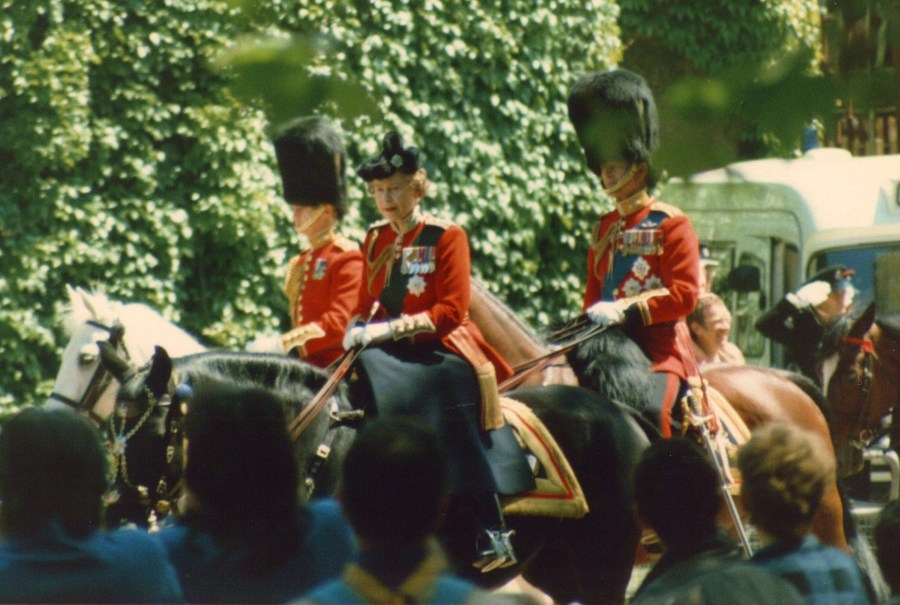
Trooping the Colour. Image credit : Ibagli – Public domain

The Queen, riding 19-year-old Burmese – the horse she had ridden at the ceremony since 1969 – had left Buckingham Palace around 15 minutes earlier, travelled down Pall Mall and just before 11.00am turned into Horseguards’ Parade – when six shots rang out…. Sarjeant had fired six blank cartridges before being overcome by police and a Guardsman….

img_3364
Image credit: Alberto Botella via flickr

The horse was startled by the shots but the Queen managed to maintain control…. She was visibly shaken by the incident but soon regained composure and the procession continued…. Afterwards the return to Buckingham Palace took the same route….

At his trial on the 14th of September 1981, presided over by Lord Chief Justice, Lord Lane, Marcus Simon Sarjeant from Folkestone, Kent pleaded guilty…. The Court was told he had intended to kill the Queen but had been unable to obtain a suitable weapon…. He was found guilty of wilfully discharging a blank cartridge pistol at Her Majesty, with intent to harm…. Under the 1842 Treason Act, the first time it had been used since 1966, Sarjeant was sentenced to five years in prison….

Sarjeant claimed to have been inspired by the shooting of John Lennon…. He said “I wanted to be famous…. I wanted to be a somebody”…. Psychiatric investigations drew the conclusion that he had no abnormalities within the Mental Health Act 1983….

On leaving school Sarjeant had applied to join the Royal Marines – but was unable to accept the discipline and left after three months…. He also only managed to last two days on an Army induction course….

He was released from prison in October 1984 after serving just over three years of his sentence…. He changed his name and began a new life….

img_3365
Queen Elizabeth II riding Burmese to Trooping the Colour for the last time, in 1986. Since then she has travelled in a carriage. Image credit: Sandpiper – Public domain

On this day in history….12th June 1889

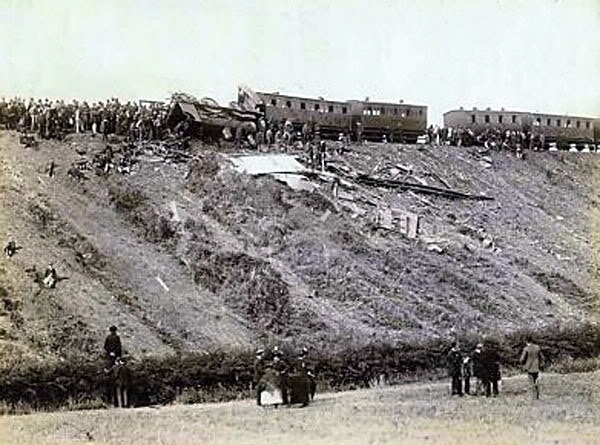
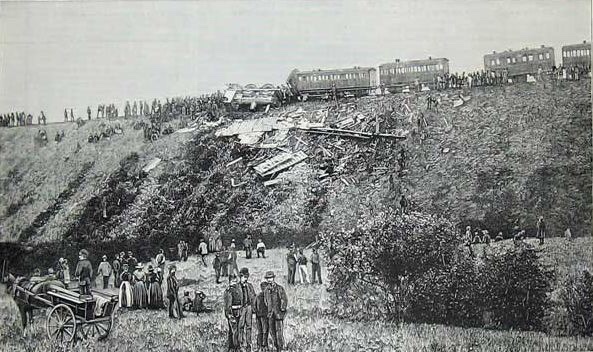
On this day in history : 12th June 1889 – 89 people are killed and over 170 are injured in the Armagh rail disaster, in Northern Ireland – nearly a third are children…. It remains Ireland’s worse ever rail disaster….

img_3362
Public domain – photographer unknown

Each year the Armagh Abbey Street Methodist Church would hold a Sunday School excursion to Warrenpoint, a resort town on the northern shore of Carlingford Lough, about an hours train journey away…. The traditional day trip was extremely popular and open to all; lots of different religions:- Catholics, Church of England, Presbyterian and Methodists – of all classes joined in….

This particular year the demand for places was especially high and a special train with extra carriages was laid on…. Accompanied by the band of the Royal Irish Fusiliers around 940 passengers boarded the train – the doors were locked behind them to prevent non-ticket holders from boarding….and the train departed at 10.15am….

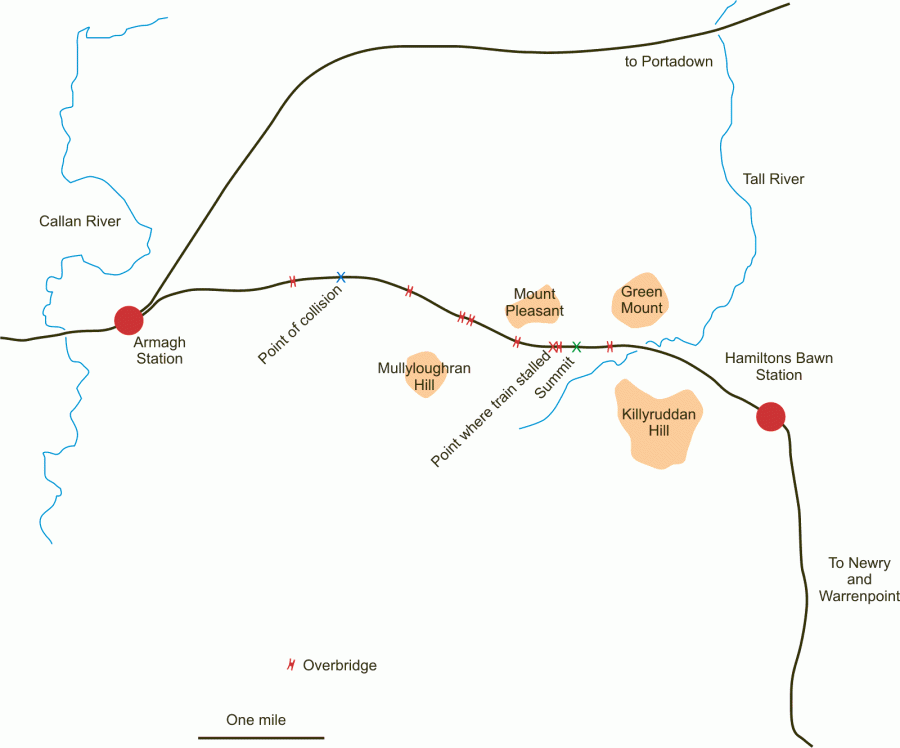
Three miles out of the city they ran into problems; the train tried to pull up the Armagh Bank, a gradient of 1.75…. The weight of the train, some 186 tons not including the engine, was too much – and on reaching Derry’s Crossing, almost at the top, the train stalled…. Realising it would be impossible to restart with that much weight it was decided to decouple the front four carriages and take them on to Hamiltons Bawn – and then return for the remaining eight….

img_3361
Map of the Railway between Armagh and Hamiltons Bawn – Image credit: Afterbrunel (talk) (uploads) – Public domain

The handbrake was applied in the guard’s carriage at the rear – but as an added precaution large stones were placed behind the wheels of the waiting carriages…. However, the stones could not hold the weight and were crushed as the carriages began to roll back…. The runaway train gathered speed and finally crashed into the 10.35 – a powerful engine with a light load – at about 40mph…. There was little damage to the 10.35 but the last three carriages of the Sunday School special and their occupants were obliterated…. 64 were declared dead at the scene and over the following days this number rose…. The names of those who died are recorded in Abbey Street Methodist Church….

img_3360
Illustrated London News, June 22, 1889 – Public domain
img_3363
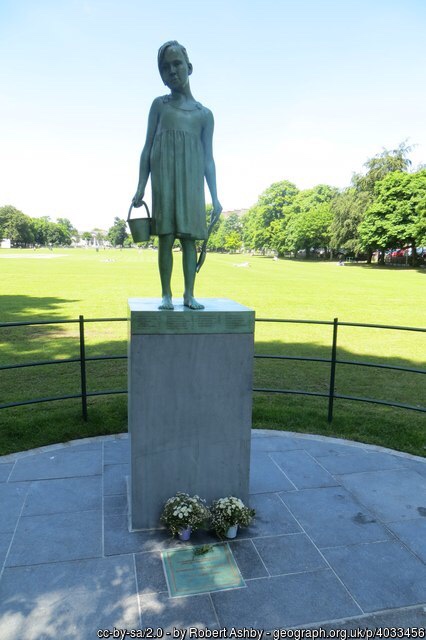
Recently installed memorial in The Mall, Armagh – commemorating the Armagh railway disaster

On this day in history….11th June 1959

On this day in history : 11th June 1959 – The Hovercraft, an invention by Christopher Cockerell, is officially launched in the Solent – marking a new era in transport….img_3356

Cockerell, a boat builder from Lowestoft, had begun working on the design in the mid-1950s…. He had originally been trying to come up with a way of making boats go faster by reducing friction…. His initial ideas came from experimenting with coffee and cat food tins and a hairdryer….

His design was referred to as a ‘man-made flying saucer’….and it was described as ‘a cross between an aircraft, a boat and a land vehicle’…. Being propelled along on a cushion of air created by an on-board fan made it hover just above the surface of water or land….img_3355

Cockerell approached the Government for backing – but his design was immediately placed on the ‘Top Secret List’ – as its potential was seen for military use…. This meant Cockerell was unable to develop his idea commercially…. Finally, in 1959 he managed to get his design de-classified and he formed the Hovercraft Development Company Ltd – and managed to secure a grant of £100,000 from the National Research Development Company to develop his project….

img_3359
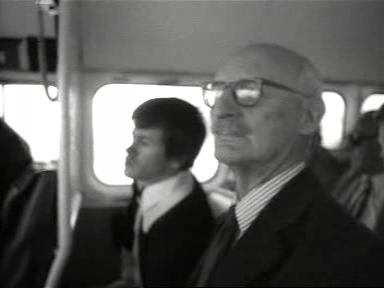
Cockerell in 1976 – Image credit: Polygoon-Profilti (producent) / Nederlands Instituut voor Beeld en Geluid (beheender) CC BY-SA 3.0 nl

An experimental model, 29ft long and 24ft wide, known as ‘SRN-1’ was built at Saunders-Roe at Cowes on the Isle of Wight…. The Duke of Edinburgh visited Saunders-Roe and persuaded the chief test pilot to let him take over the controls…. The Duke flew the craft so hard he had to be asked to slow down…. Later an inspection revealed damage to the bow due to the excessive speed….it was never repaired and became referred to as the ‘Royal Dent’….

SRN-1 was launched officially in the Solent on the 11th of June 1959….and at the same time Saunders-Roe announced another prototype ten times the size was planned…. The hope was that one day Hovercraft would be able to cross the Channel in just 20 minutes….

img_3358
SRN-4 Hovercraft (Mountbatten class) – Andrew Berridge CC BY-SA 2.5

Within weeks, on the 26th of July, a crossing had been made of the English Channel…. Since then over 80 million people and 12 million cars have been carried across by Hovercraft…. The service stopped in 2000 due to competition from the Channel Tunnel and the ferry companies…. However a service still operates from Portsmouth to Ryde on the Isle of Wight….img_3357

On this day in history….10th June 1977

On this day in history : 10th June 1977 – After two years on the rampage in a Kent pond a rogue perch nicknamed ‘Mini-Jaws’ is finally caught – having apparently devoured 3,000 goldfish….

img_3351
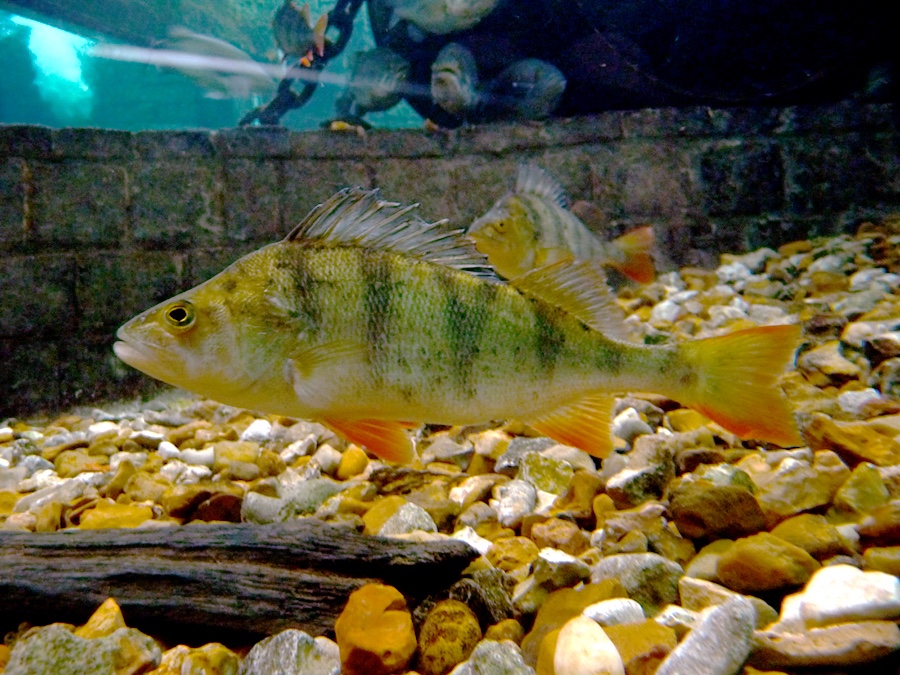
Perch – Perca fluviatilis – Image credit: Citron CC BY-SA 3.0

61-year-old Alf Leggatt, a former trawler skipper, owned a lake in which he bred goldfish, in the village of Ickham near to Canterbury…. Somehow a perch (Latin name Perca fluviatilis) had found its way into the pond; generally perch live in small groups as adults and are found in running water…. If given half a chance they will eat goldfish and this particular one must have thought he had died and gone to Heaven as goldfish were on the menu every day…. He managed to munch his way through 2,000 of them….

Alf tried to net him but without success; others tried with net and line but they too were unsuccessful….and eventually the Army were called in…. But the wily fish managed to outwit five soldiers with a machine gun and a quantity of explosives….

Next big-game hunter Lt. Col. Blashford-Snell had a go…. He simply upped the explosives to create a bigger bang – but was confident enough of his success to say ‘that must have done the trick’…. Alf restocked with another 800 goldfish – but Mini-Jaws was still at large….and hungry….

img_3353

Eventually it took two Southern Water Board engineers in a rowing boat, armed with a fishing net and a 240v stun-rod to get the better of the errant perch…. The shocked fish, along with most of its intended prey, lay stunned on the surface and poor old Mini-Jaws was plucked from the water….

Mr Leggatt said he was delighted that the fish had been caught – but had also gained a lot of respect for him…. Mini-Jaws weighed just 1lb (0.45kg) – and one of his captors expressed doubt as to whether a perch that size could have eaten 3,000 gold fish in that time span….and wondered if perhaps the herons had helped….img_3354