On this day in history….26th April 1923

On this day in history : 26th April 1923 – The marriage of Prince Albert, Duke of York (to become King George VI) to Lady Elizabeth Bowes-Lyon (later the Queen Mother)….

Prince Albert, ‘Bertie’ to his family, was the second son of King George V and Queen Mary and was second in line to the throne – but was in fact to ascend the throne in 1936 after the abdication of his brother, Edward VIII…. Elizabeth Bowes-Lyon was the ninth of ten children born to Claude Bowes-Lyon, Lord Glamis and Cecilia Cavendish-Bentinck….

The Prince first proposed to Elizabeth in 1921 – but she refused him, thinking royal life was not for her….“afraid never, never again to be free to think, speak and act as I feel I really ought to”…. After three times of being asked she eventually agreed in January 1923 to become his wife….

img_3037
Albert, Duke of York with Lady Elizabeth Bowes-Lyon – Public domain

The ceremony took place in Westminster Abbey….the first royal wedding to take place at the Abbey since 1383…. The newly formed BBC wanted to record and broadcast the service but was refused permission – The Archbishop of Canterbury expressed concerns that men may listen to it whilst in public houses….

Elizabeth had eight bridesmaids…. Her dress, designed by Madame Handley-Seymour – dressmaker to Queen Mary – was made in a deep ivory chiffon, embroidered with pearls and silver thread…. It had two trains, one flowing from the shoulders, the other attached at the hips…. Although in the fashion of the early 1920s it had a medieval style to it…. She wore no tiara – but a circlet of leaves held her veil in place….

The Duke of York wore the full RAF uniform of a group captain – his rank at the time….

img_3036
Wedding of George VI and Elizabeth Bowes-Lyon – Public domain

On the way into the Abbey Elizabeth did an unexpected thing…. She laid her bouquet of flowers on the tomb of The Unknown Warrior – in memory of her brother Fergus…. This is something that has now become a tradition with royal brides….only they lay their flowers on the way out after the ceremony….

The wedding rings were made from 22 carat Welsh gold, from the Clogau St. David’s mine in Bontddu – this has also now become a tradition….

After the ceremony the royal couple had a wedding breakfast at Buckingham Palace…. They then spent part of their honeymoon at Polesdon Lacey – a Manor House in Surrey that now belongs to the National Trust – before travelling to Scotland….
 

On this day in history….25th April 1982

On this day in history : 25th April 1982 – Royal Marines land on the island of South Georgia and re-establish a British presence in the Falkland Islands….

On the 19th of March 1982 a group of 40 Argentinian scrap metal workers had landed on South Georgia and raised the Argentine flag…. Some believe they were an advance party for what was to come…. Two weeks later Argentinian forces arrived and Royal Marines stationed on the island were forced to surrender…. South Georgia had fallen under Argentine control – as had the rest of the Falkland Islands….

img_3035
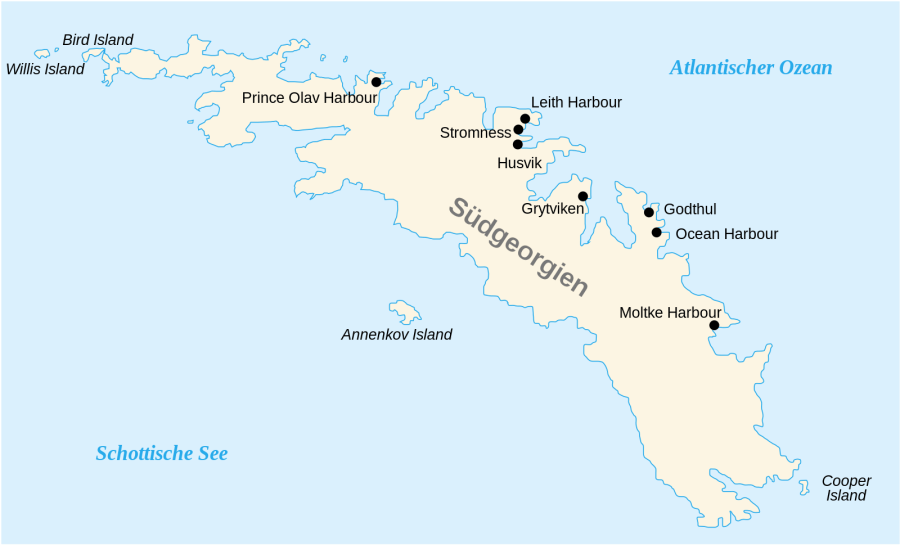
South Georgia Islands – Image credit: Danny Pabst CC BY-SA

On the 5th of April the British dispatched a naval task force – comprising of 127 ships: 43 Royal Navy vessels, 22 Royal Fleet Auxiliary and 62 merchant ships – to engage the Argentine Navy and Air Force….

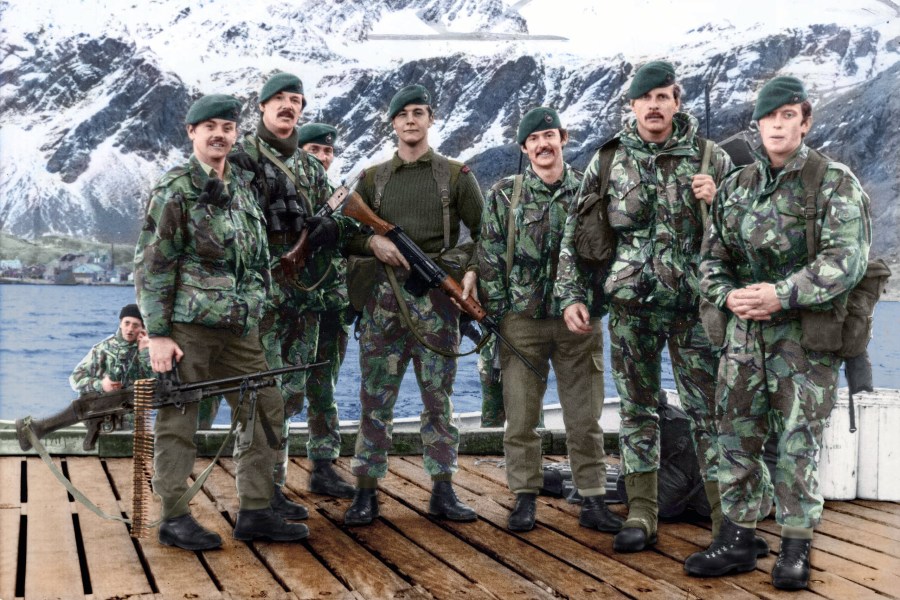
‘Operation Paraquet’ – the code name for the recapture of South Georgia — was put into motion on the 25th of April…. Helicopters attacked the Argentine submarine ‘Santa Fe’ and the Royal Navy provided a bombardment lasting a couple of hours…. At 16.00hrs, London time, British Special Forces and Marines landed by helicopter at Grytviken on South Georgia…. Within two hours they had taken control, the Argentine forces on the island surrendered with little resistance….

The victory message sent to London said : “Be pleased to inform Her Majesty that the white ensign flies alongside the Union Jack in South Georgia. God save the Queen”….

img_3033
Royal Marines of M Company, 42 Commando,at Grytviken after liberating South Georgia (recoloured from original black and white photograph) – Fz81z6 CC BY-SA 4.0

There were no British casualties in the South Georgia operation – although some Argentinians were injured on the Argentine submarine….

An announcement was made outside 10, Downing Street by Defence Secretary John Nott, with Prime Minister Margaret Thatcher by his side…. When reporters fired questions at her afterwards her response was to cut them short by replying “Just rejoice at that news and congratulate our forces and the Marines”….

img_3034
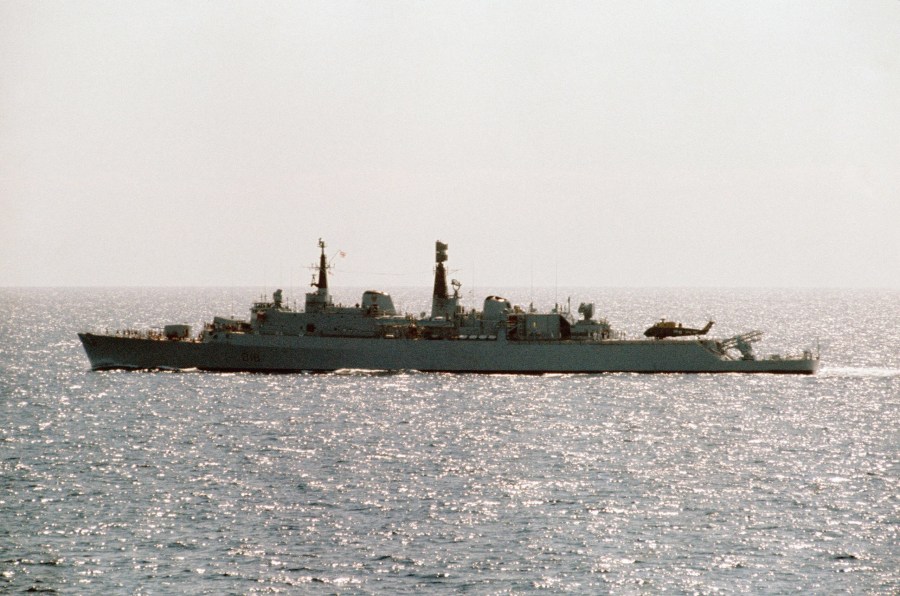
HMS Antrim – one of the Royal Navy vessels which took part – image U.S. Navy – Public domain

The Falklands War was to last for a total of ten weeks; a cease-fire was called on the 14th of June and Argentina finally surrendered on the 20th…. 907 were killed in the conflict: 649 Argentinians, 255 British servicemen and 3 Falkland Islanders….

On this day in history….24th April 1965

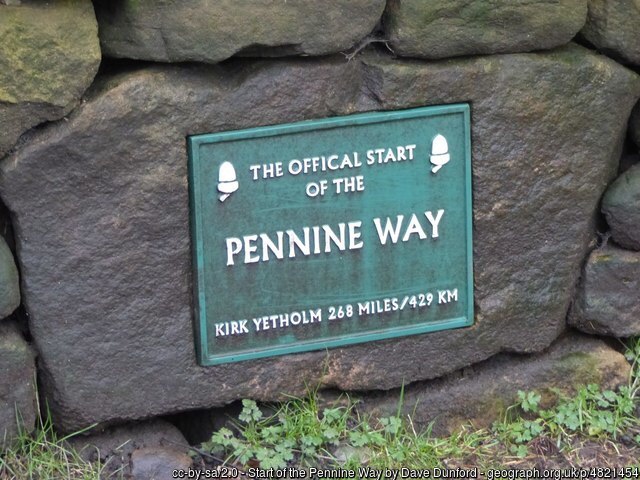
On this day in history : 24th April 1965 – The Pennine Way, a 268 mile trail – often called the ‘Backbone of England’ – which runs across the Pennine Hills is officially opened….img_3028

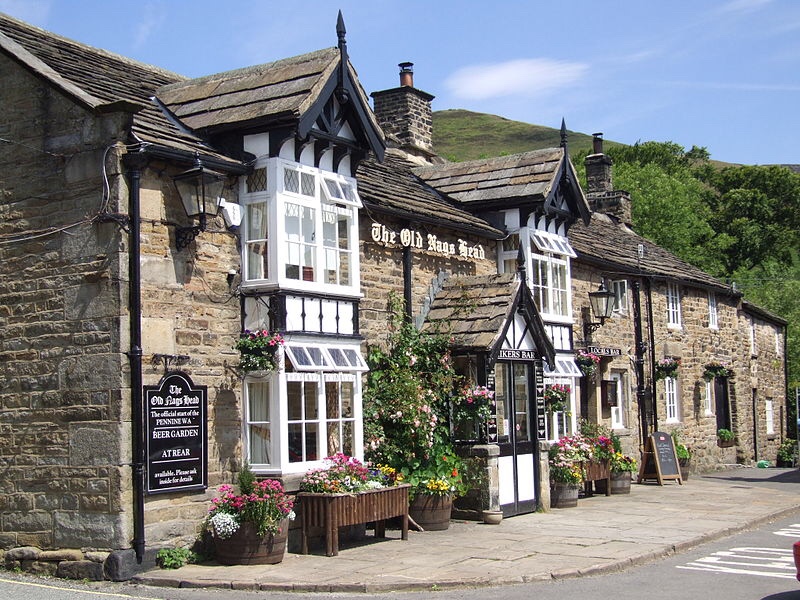
The trail begins at Edale in the northern Derbyshire Peak District – (the traditional starting point being the Old Nags Head public house) – through the Yorkshire Dales, Northumberland National Park and ends at Kirk Yetholm on the Scottish border….

img_3027
The Old Nags Head, Edale – image credit: Clem Rutter

It was the brainchild of journalist and Rambler Tom Stephenson…. Inspired by similar trails in the United States, especially the Appalachian Trail, he wrote an article for the Daily Herald in 1935, entitled ‘Wanted: A Long Green Trail’….

img_3025
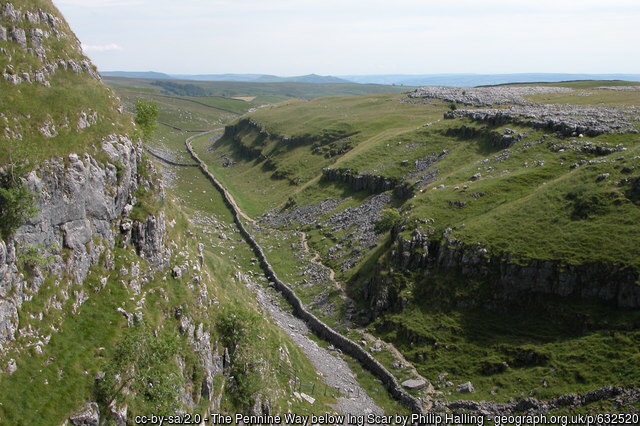
Below Ing Scar

Stephenson, a founder member of the Ramblers and a strong campaigner for walkers’ rights confided to his friends that his ulterior motive was to open up moorlands that had long been closed to the public by landowners…. In 1948, to publicise the trail, he organised a three-day walk from Middleton-in-Teeside up to Hadrian’s Wall…. Several prominent MPs got involved, including Barbara Castle and Arthur Blenkinsop….

Before the Pennine Way was officially opened to the public it was tested by soldiers from the Junior Tradesman’s Regiment of Army Catering Corps…. Split into small groups of four or five, each covering a 15-mile section of the walk, they checked the route’s feasibility and signage…. They completed the task in just one day…. The record for the fastest completion by a single individual is 2 days, 17 hours, 20 minutes and 15 seconds – completed by runner Mike Hartley in July 1989 who did not even stop to sleep….

img_3024
The Pennine Way on Ickornshaw Moor

On the 24th of April 1965 the final section of the trail was declared open in a ceremony that took place on Malham Moor….hundreds of walkers attended…. The first guide-book was written by Tom Stephenson and published in 1969…. Nowadays, the route is used by approximately 250,000 day walkers per year and 15,000 long distance trekkers…. 458 signs mark the way and walkers encounter 249 stiles, 204 bridges and 287 gates….

img_3026
The Schil and the Pennine Way

On this day in history….23rd April 1915

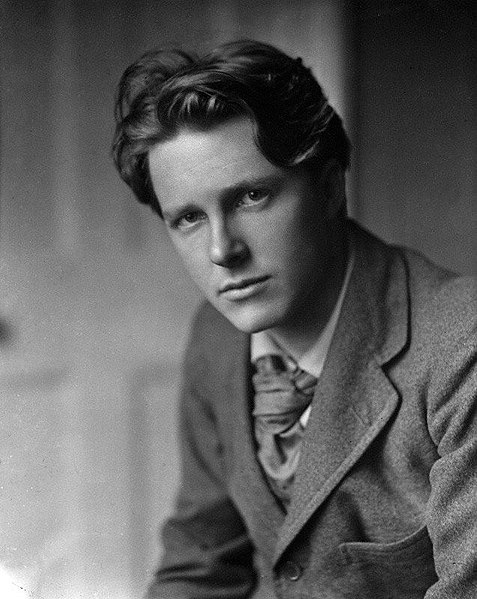
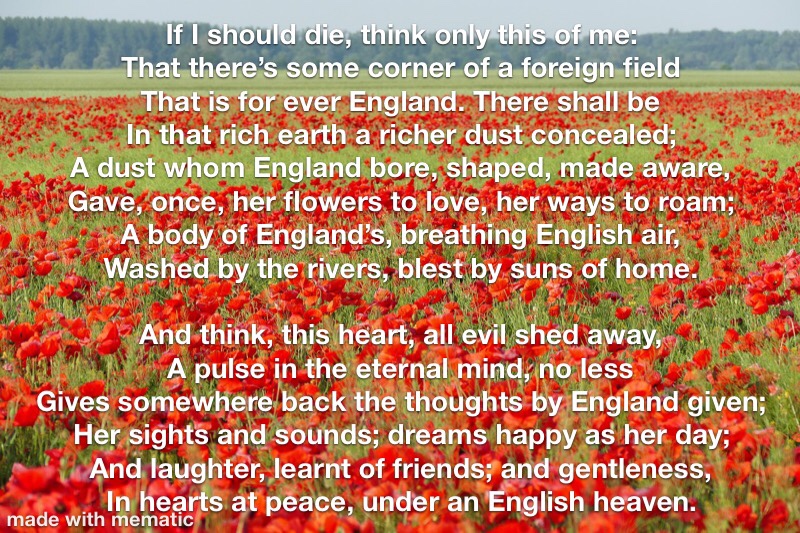
On this day in history : 23rd April 1915 – The death of English poet Rupert Brooke, known for his sonnets written in World War I – especially ‘The Soldier’….

Rupert Chawner Brook was born in Rugby, Warwickshire on the 3rd of August 1887 – he was the third of four children…. He attended prep school and then went to Rugby and Cambridge University….

img_3022
From a photograph by Sherril Schell taken in 1913

Known for his boyish good looks, Brooke was a popular character – amongst his friends were the likes of mountaineer George Mallory and writer Virginia Woolf…. Brooke belonged to the Bloomsbury group of writers and to the Georgian Poets….he was also one of the most important of the ‘Dymock Poets’ and lived in the Gloucestershire village for a while…. In 1912 he suffered an emotional breakdown after his long-term relationship with Katherine Laird Cox, whom he had met at University, ended….

At the outbreak of World War I Brooke immediately enlisted and came into the public eye for his war poetry the following year…. The Times Literary Supplement had published two of his sonnets – ‘The Dead’ and ‘The Soldier’…. On Easter Sunday, the 4th of April 1915, ‘The Soldier’ was read as part of the service at St. Paul’s Cathedral….in less than three weeks time Brooke was to pass away….img_3020

Coming to the attention of Winston Churchill, who was at the time First Lord of the Admiralty, Brooke was commissioned into the Royal Naval Volunteer Reserve….taking part in the Antwerp Expedition in October 1914…. On the 28th of February 1915 he sailed with the British Mediterranean Expeditionary Force bound for the Gallipoli Campaign….

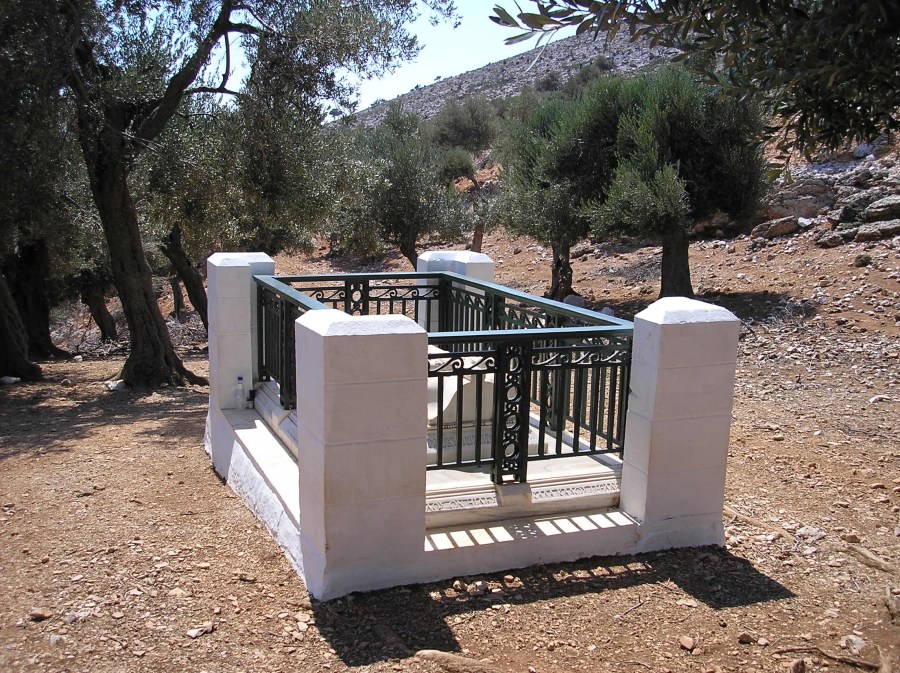
It was during the voyage he developed sepsis from an infected mosquito bite…. At 4.46pm on the 23rd of April 1915, on board the ‘Duguay-Trouin’, a French hospital ship moored in a bay off of the Greek island of Skyros, Brooke died…. He was buried in an olive grove on the island at 11pm that night….

Grave of Rupert Brooke on the Greek island of Skyros

On the 11th of November 1985 he was one of sixteen World War I poets’ names to be commemorated at Poets’ Corner in Westminster Abbey…. The inscription on the slate monument reads the words ~ “My subject is War, and the pity of War. The poetry is in the pity” ~ ….and are by Brooke’s fellow war poet Wilfred Owen….

img_3021
Rupert Brooke – From the collections of the Imperial War Museums

On this day in history….22nd April 1969

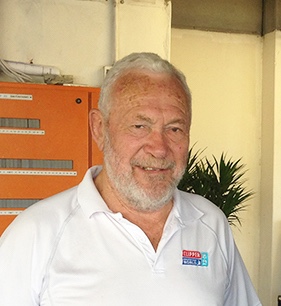
On this day in history : 22nd April 1969 – British yachtsman Robin Knox-Johnston sails into Falmouth Harbour completing the first non-stop solo circumnavigation of the World….

img_3005
Sir Robin Knox-Johnston – 2013 : Image credit – George Caulfield CC BY-SA 4.0

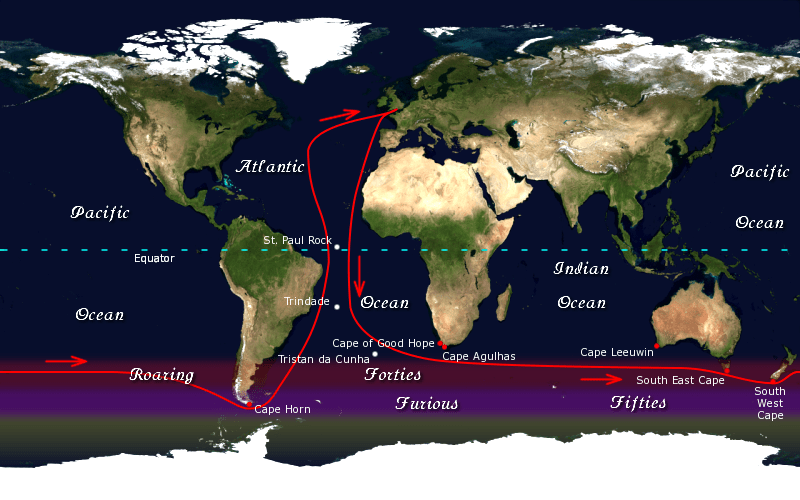
Robin had left Falmouth on the 14th of June 1968, one of nine sailors competing in the Golden Globe Race, the first single-handed round-the-world yacht race and sponsored by the Sunday Times….

img_3004
The route of the Golden Globe Race – Public domain

Out of the nine entrants Robin was the only one to finish the race…. Four retired in the early stages – whilst Chay Blythe, who had set off with no previous sailing experience, made it to just beyond the Cape of Good Hope before retiring…. One boat sank and another competitor abandoned the race…. Tragically, one competitor, Donald Crowhurst, suffered a mental breakdown during the race and committed suicide….

Robin’s 32 foot Bermudan ketch was one of the smallest yachts in the race…. Named ‘Suhaili’ – meaning ‘good wind’ – she was built in Bombay in 1963 and Robin still owns her today….

img_3003
Suhaili – May 2018 : Image credit – Thomas Keyser CC BY-SA

It wasn’t all plain sailing for Robin, there were problems encountered during the voyage, such as losing his self-steering gear off of Australia…. In recognition of his achievement Robin was awarded a C.B.E. – he donated his £5,000 prize money from the race to the family of Donald Crowhurst….