The restoration and living in of an English country cottage
Author: cottagecapers
Hi, I'm Hazel....
I write purely for pleasure; I love to delve in history, customs, traditions and nature....or whatever else grabs my attention at the time....
I am in no way an expert on what I choose to write about - I simply love to find out about things.... Whilst I always endeavour to get the facts right - occasionally I may get things wrong.... I guess you could call this my disclaimer....
I hope you enjoy reading my blog posts.... If so please give me a follow on Twitter or sign up via email for future posts.... If you are on Facebook Cottage Capers has a page with lots of ‘mini blogs’ and snippets.... It’s where we ‘like-minded’ folk can interact.... Hope to meet you again soon....
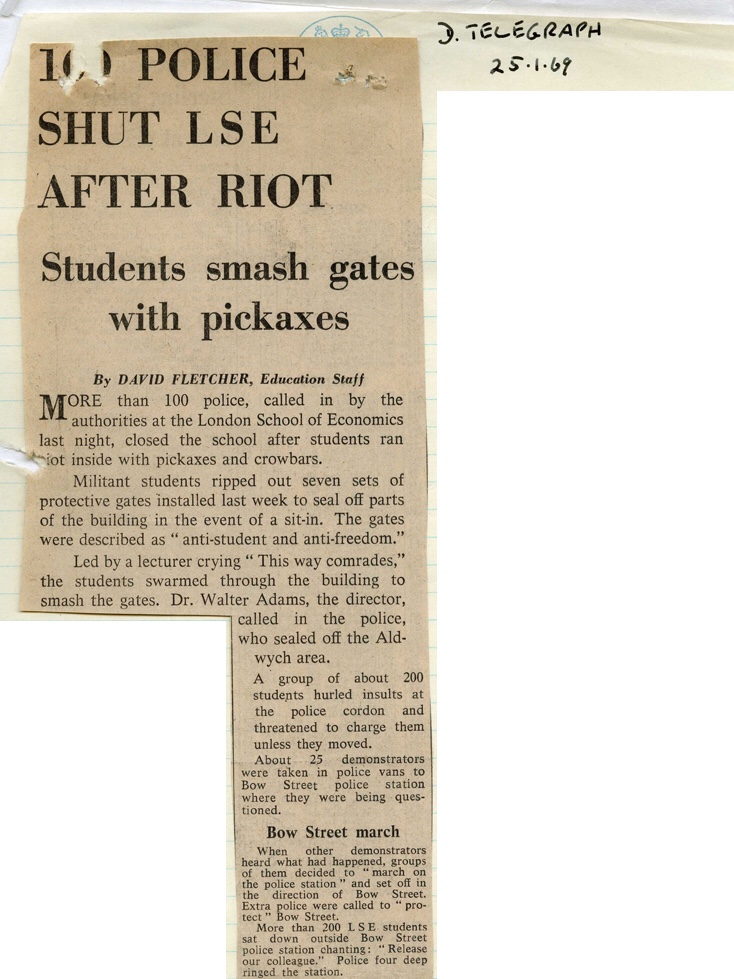
On this day in history : 24th January 1969 – Students at the London School of Economics go on the rampage with crowbars, sledgehammers and pickaxes – in protest at the installation of steel security gates….
This was just one incident in a long period of student unrest during the 1960s – not just in the UK but in some European countries and North America too….
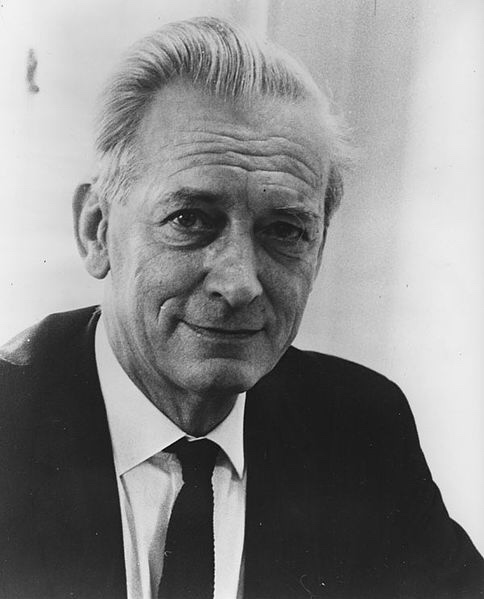
For the LSE problems had begun a couple of years previously when Dr. Walter Adams had been appointed LSE Director…. It had sparked a series of protests and sit-ins, as Dr. Adams had formerly been the Principal of the University College of Rhodesia…. It was felt that he had not shown enough resistance to Ian Smith’s regime – and students disagreed with his appointment as Director….
Dr. Walter Adams
As a result of these earlier protests seven sets of steel gates had been erected in and around the university….Dr. Adams said they had been installed to improve security and so that areas of the building could be closed off in times of protest…. Students and staff claimed the gates made the place look like a concentration camp – they were described as ‘anti-student and anti-freedom’….
A week after the installation of the gates a meeting was held to discuss their removal…. Francis Keohane, the then Student Union president, wanted a solution to be found through negotiation – but when put to the vote his motion failed….
Within half an hour the gates were down…. Led by a lecturer apparently yelling “this way comrades” students took to the gates with pickaxes, sledgehammers and crowbars…. Francis Keohane and treasurer Roger Mountford immediately resigned from their posts as they could not condone the violence….
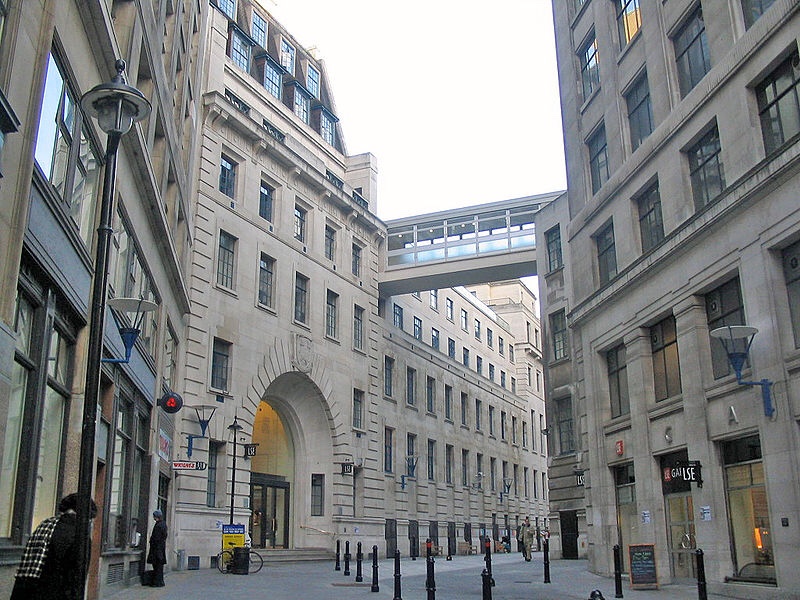
London School of Economics main entrance Image credit: Umezo KAMATA
The police were called and over 100 officers arrived and closed off the area around Aldwych….25 arrests were made and the protestors taken to Bow Street Police Station…. More than 200 students responded by marching, nine abreast, to the police station and then sat outside chanting “release our colleagues” …. Extra police had to be drafted in to protect the police station….
The protests continued for the following few days and as a result the LSE closed for more than three weeks. Legal action was brought against a total of 13 people, 3 of which were members of staff and believed to be the ring leaders – two lost their jobs…. The charged students were banned from college for a month and were only permitted to return if they promised not to cause any more damage and not to interfere with management decisions…. Other students faced disciplinary action for disrupting lectures….
On this day in history : 23rd January 1893 – The death of Dr. William Price – the eccentric physician who set a legal precedent for cremation in Britain….
Price was born on the 4th of March 1800 near to Caerphilly, Glamorganshire – he was the son of a priest, who wanted his son to either go into the Church or become a solicitor…. But William Price had other ideas….he wanted to be a doctor….
At the age of 13 he was apprenticed to Dr. Evan Edwards, a local surgeon. In 1820 his apprenticeship came to an end and he went to London and managed to get himself enrolled in to St. Bart’s…. Within just 12 months he had passed his exams and had become a member of the Royal College of Surgeons….
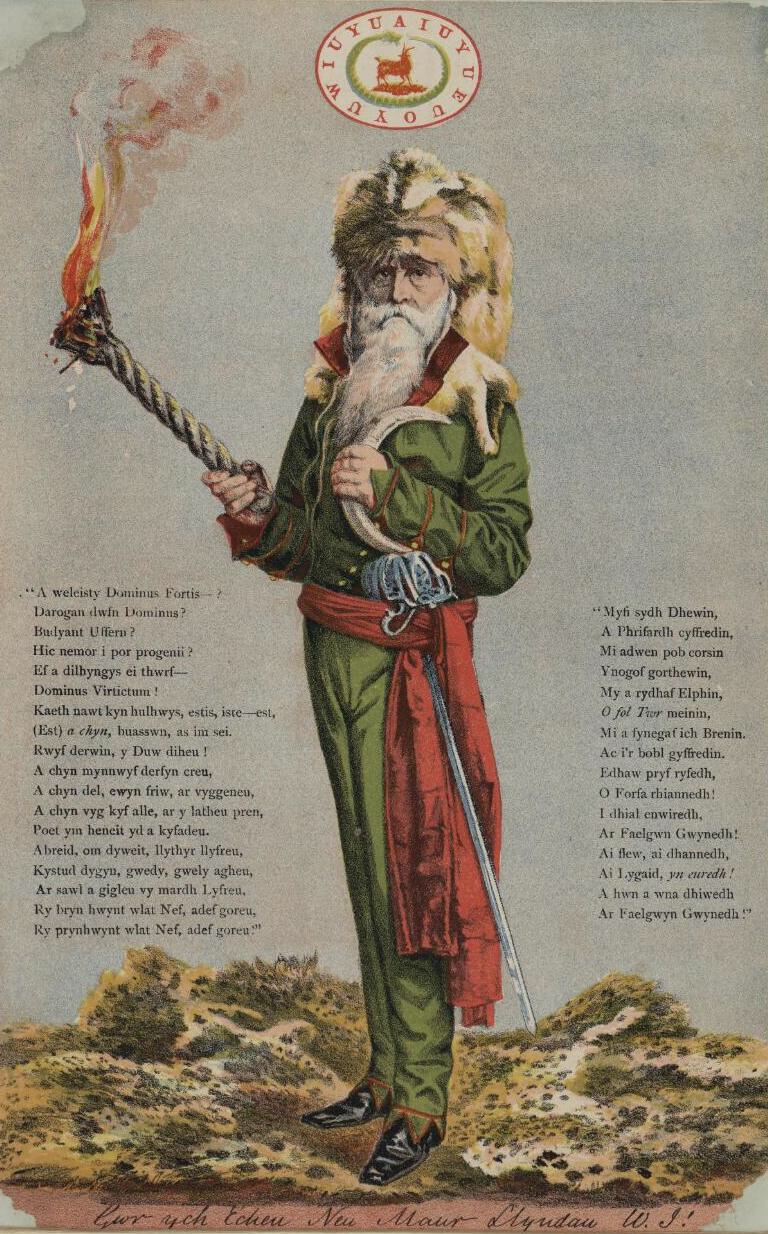
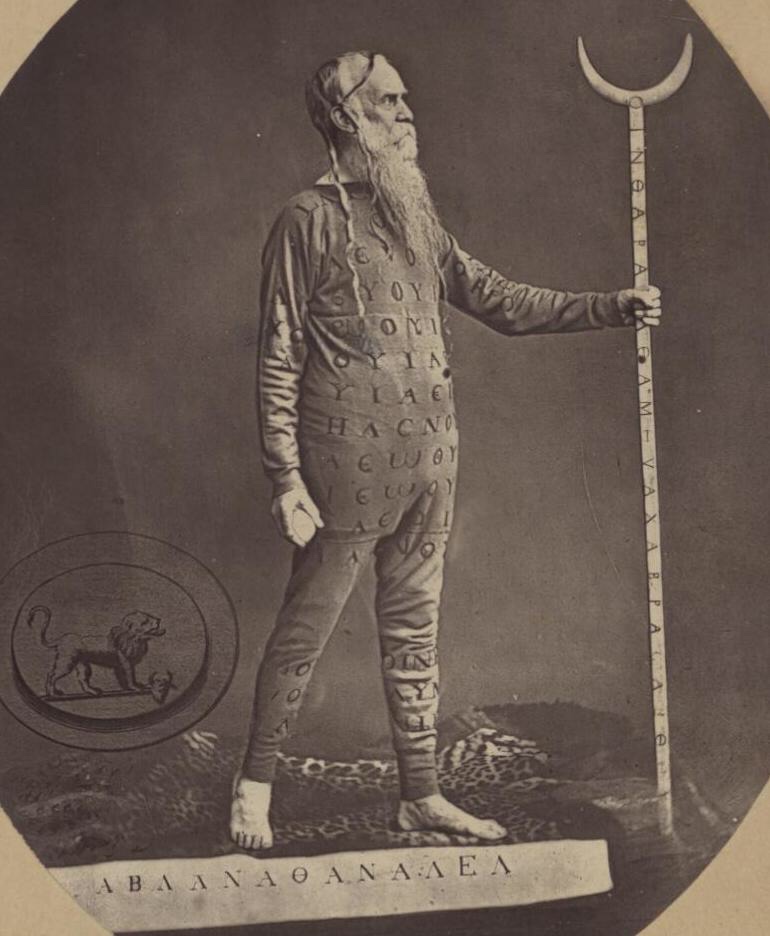
He had considered travelling to India – but instead in 1821 returned to live and work in Wales…. He was an eccentric character – a 19th Century ‘Hippie’…. He liked to wear unorthodox clothing – baggy tunics, green trousers, waistcoats – and a headdress made from a fox pelt, its legs and tail dangling over his shoulders…. His long hair was tied into plaits – and he liked to run naked over the hills at Pontypridd….
He was also unorthodox in his approach to medicine…. He shunned the usual methods of the day….the purging, bleeding and leeches – preferring to prescribe a vegetarian diet to all his patients instead of medicine…. Price ate no meat himself – and drank mainly Champagne….he also refused to treat anybody who smoked tobacco….
He was also extremely unconventional for the time in his beliefs…. He thought marriage enslaved women and practised ‘free love’ – fathering several illegitimate children in the process…. The way he lived his life caused him to fall out of favour with the Church on more than one occasion….
It was during the late 1830s that he became involved with Chartism…. The Chartist Movement being the first major push by the working classes to gain equality – the idea that all men had the right to vote. It fought for a secret ballot, annual parliamentary elections, equal sized constituencies and the abolishment of the requirement to own property in order to become a Member of Parliament…. It also demanded that MPs should be paid…. Many Welsh Chartists took up arms to fight for the cause….and Price helped them obtain them….
Price was made leader of the Pontypridd and District Chartist Group…. A report said that by 1839 he had acquired seven pieces of field artillery – no doubt to be used in the 1839 Newport Uprising – when the Chartists rose up against the authorities, resulting in several being killed by soldiers…. Price had realised there was going to be a crack-down on the protesters and so had not been present at the rebellion…. Fearing arrest he fled to France….
Mural of the Newport Rising of 1839 Author Hugh Thomas – Public domain
Price resided in Paris for several years….returning to Wales in 1846 – only to find himself in trouble again after refusing to pay a fine…. Once more he fled to Europe….
It was whilst in France that he developed a fascination with old Druid rites and when he eventually returned to Wales, five years later, he set about forming his own Druid group…. It didn’t take long for him to gain a number of followers….and he managed to infuriate the Church once more when he attempted to build his own Druid temple….
William Price in Druid costume Public domain
In his later years Price got himself a housekeeper – 16-year-old Gwenllian Llewelyn – and he took her as his mistress….he was 83! The couple had a child and named him lesu Grist – which is Welsh for Jesus Christ….
The baby died five months later, on the 10th of January 1884…. On the evening of Sunday the 13th of December Price made a pyre on a hillside overlooking Llantrisant – and dressed in his Druid robes embarked on the cremation of his infant son…. He had planned the ceremony to coincide with the Sunday evening chapel service – and as the congregation left and discovered what was happening – went wild…. Price was attacked and the baby’s body, which had not yet been engulfed, pulled from the flames….
Price was arrested; a post-mortem was carried out on the body of the child and concluded death had been from natural causes…. Price was charged with performing a cremation….
At his trial in Cardiff, Price argued that the law did not say that cremation was legal – but it was not illegal either…. He did not believe in burial because he thought it polluted the earth…. Justice Stephens, who was presiding over the trial, acquitted Price…. Almost directly after the trial the decision was made by Parliament to pass the Cremation Act….making cremation legal in Britain….
William Price went on to father two more children – and eventually died on the 23rd of January 1893…. On the 31st of January, on the same hillside where he had attempted to cremate his son, Price himself was cremated…. A crowd of nearly 20,000 gathered to watch as his body burned upon a pyre of two tons of coal….just as he had requested in his Will….
Price with his friend, Robert Anderson, who would later light Price’s funeral pyre. Unknown photographer – Fair use
Portrait of William Price in 1861 Joseph Jacquier – Public domain
Statue in the Bull Ring, Llantrisant Image credit: picturingponty via Flickr
On this day in history : 22nd January 1962 – The start of the trial of James Hanratty – also known as the A6 Murderer – who is accused of the murder of Michael Gregsten….
The trial was to become one of the longest and most controversial in British legal history….
James Hanratty – Fair use
It was the 22nd of August 1961 ~ lovers Michael Gregsten and Valerie Storie were sat in a parked car in a quiet spot near to Slough….when a gunman climbed into the back seat and ordered Gregsten to drive…. At around 1.30am he told Gregsten to pull in to a lay-by….
Saying he needed to sleep the gunman told the pair that he would have to tie them up…. Using Gregsten’s necktie he secured Valerie Storie’s hands behind her back…. Gregsten was then shot twice in the head. Valerie Storie was raped and shot five times in the shoulder and neck….leaving her paralysed. She was then left for dead, lying in the road next to Gregsten while the murderer made off in their car…. The car, a grey Morris Minor, was found abandoned in Ilford, Essex the following evening….
Gregsten and Storie were discovered at 6.45am on the morning of August 23rd by farm labourer Sydney Burton and John Kerr, an Oxford undergraduate, who was conducting a traffic census…. The police and an ambulance were called to the lay-by on the A6, at Deadman’s Hill, near to Luton, Bedfordshire…. A search of the area by police using sniffer dogs revealed two .38 cartridges….
Deadman’s Hill on the A6 – close to the lay-by and the murder scene….
During the following investigation a hotel room in Maida Vale was searched – that had been occupied the night prior to the murder by a Mr J. Ryan (who later turned out to be James Hanratty) and .38 cartridge cases were found. The murder weapon, a .38 revolver, had been found under a seat on a 36A London bus…. However, the hotel room had also been previously occupied by a Peter Louis Alphon – and he was publicly named as a murder suspect…. Alphon turned himself in to the police – but four days later was released as Valerie Storie failed to pick him out in an identity parade….
Hanratty was known to the police – he was a petty thief and car thief and was already facing a jail sentence for robbery…. On the 11th of October he was arrested in Blackpool on suspicion of Gregsten’s murder – and this time Valerie Storie identified him as the murderer….
At the trial the prosecution focused mainly on identification as there was no forensic evidence to connect Hanratty with the murder scene or the car…. Valerie Storie had said that the murderer had driven badly when leaving with the car – whereas Hanratty was an accomplished car thief…. He did not have a violent history and had never owned a gun…. He did not know either of the victims and had little motive to kill them…. He also claimed he was in Rhyl, North Wales at the time – some 200 miles away from the scene of the murder….
Despite there being no firm evidence and over nine hours of deliberation by the Jury, Hanratty was found guilty of the murder of Gregsten and the death sentence was passed…. He was hanged on the 4th of April 1962, confessing his innocence to the end, at Bedford Prison and was one of the last eight to face the hangman’s noose before the death penalty was abolished in Britain….
However, too many questions remained unanswered…. Hanratty’s family, lawyers and journalists began to dig deeper in to the case….and things just did not add up…. Then to add to the discrepancies Peter Louis Alphon confessed to the murder but later retracted his confession….
Hanratty’s family tried for over thirty years to gain a posthumous pardon and eventually in March 1999 the case was referred back to the Court of Criminal Appeal….and Hanratty’s remains were exhumed in order to obtain a DNA sample…. In March 2001 forensic experts matched two samples from the crime scene to that taken from Hanratty’s exhumed body….
On the 10th of May 2002 it was ruled by the Court that the conviction was sound – Hanratty’s guilt was established beyond doubt….
Valerie Storie survived the shooting – but spent the rest of her life in a wheelchair. She died in 2016….
On this day in history : 21st January 1966 – The Monte Carlo Rally ends in uproar over the disqualification of the British cars due to the way their headlamps dip….
The first four cars to cross the finishing line were all British; Timo Makinen (from Finland) in a Mini Cooper took first place…. Roger Clark came second in a Ford Lotus Cortina, followed by Rauno Aaltonen and Paddy Hopkirk both driving Mini Coopers….
Timo Makinen – 1966 Eric Koch / Anefo CC BY-SA 3.0
All four were ruled out of the prizes; as was Rosemary Smith in her Hillman Imp – disqualified from 6th place after winning the ‘Coupe des Dames’ – the Ladies’ Class…. In total ten British cars were disqualified….
The controversy centred around alleged infringements over the way the British cars’ headlamps dipped…. Non-dipping single filament quartz iodine bulbs had been used instead of the standard double filament dipping glass bulbs as fitted to cars leaving the production line….
The race organisers had recently brought in a rule saying that all cars had to be exactly as they were when first built – i.e. no modifications…. The confusion came when the organisers said the 1966 rally would run under the old rules and only announced the switch after entries for the race had been accepted….
Mini Cooper 1966 Monte Carlo Rally 1966 via Pinterest ( classiccarcatalogue.com )
Incidentally, the official winner – Paul Toivonen of Finland (but living in Paris) – had similar lamps on his Citroen ID to those used on the British cars…. Only he was not disqualified because some of the Citroens that came off the production line were fitted with them as standard….
The British team objected – arguing that these bulbs had been used in previous rallies – but their protests were rejected…. Prince Rainier of Monaco, who always attended the prize-giving ceremony, left early to show his disgust at the decision…. The British team boycotted the traditional official farewell dinner – and the headline in ‘Motor Sport’ proclaimed “The Monte Carlo Fiasco”….
On the 13th of October 1966 a tribunal upheld the disqualifications as the Federation Internationale de l’Automobile ruled that the bulbs fitted to the British cars were not standard….
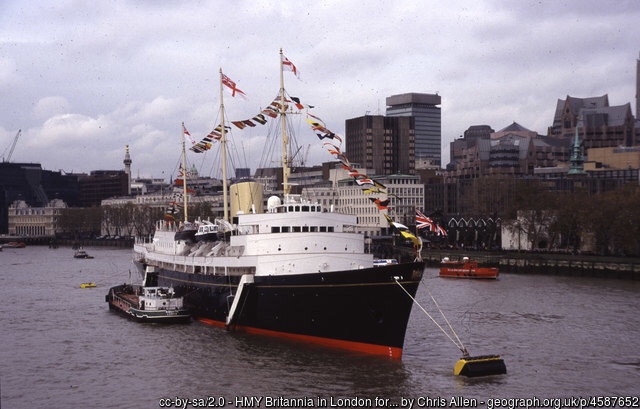
On this day in history : 20th January 1997 – Her Majesty Queen Elizabeth II’s Royal Yacht Britannia begins her final official voyage – before she is due to be de-commissioned later in the year….
Her Majesty’s Yacht Britannia
This last foreign mission was to bring home the Prince of Wales and Chris Patten, who was the last Governor of Hong Kong before the handover to China on the 1st of July 1997….
HMY Britannia was originally commissioned for King George VI – the Queen’s father – but sadly he died even before the keel was laid…. One of the first things Her Majesty did on becoming Monarch was to change the plans for the decor of the Royal apartments of Britannia – she viewed the proposed plans as too formal and ‘stuffy’…. Instead she opted for white-painted walls, mahogany woodwork, brass fittings and chintz covered armchairs and sofas…. She wanted to create the feeling of a ‘country home at sea’…. The only thing she would have liked – but because of regulations was not allowed – was an open fire in the drawing room….instead she had to settle for an electric fire….
Image credit: gray_um via Flickr
The Queen and the Royal Family loved HMY Britannia…. Her Majesty once described the yacht as being the one place she felt she could truly relax…. The Royal apartments were filled with personal photographs and heirlooms….
HMY Britannia was built at Clydebank, West Dunbartonshire and was launched by Queen Elizabeth on the 16th of April 1953…. She first went into service in 1954; her maiden voyage was from Portsmouth to Grand Harbour, Malta – departing on the 14th of April and arriving eight days later…. She carried Princess Anne and Prince Charles to meet their parents who had just completed a Commonwealth Tour…. Queen Elizabeth and the Duke of Edinburgh embarked on the 1st of May 1954 for the very first time….
Ship’s Bridge Image credit: Salicia via Flickr
During her 43 year service HMY Britannia sailed some 1,087,623 nautical miles…. The 412ft long yacht, which weighs nearly 6,000 tons, completed 696 foreign visits and 272 official voyages on British waters….including annual Royal family holidays…. Known as the ‘Western Isles Tour’, each year Britannia would take the Royals on a cruise around the islands off of the west coast of Scotland…. She was also used for four Royal honeymoons…. Princess Margaret and Anthony Armstrong Jones sailed to the West Indies upon her in 1960 and Princess Anne and Captain Mark Phillips were also carried to the Caribbean in 1973…. In 1981 Prince Charles and Princess Diana enjoyed a Mediterranean cruise for their honeymoon, followed by the Duke and Duchess of York, who sailed to the Azores in 1986…. As recently as 2011 the yacht was used as part of Royal Wedding celebrations when Zara Phillips and Mike Tyndall held a pre-wedding reception onboard…. She has a capacity for 250 guests….
When HMY Britannia was launched she was the largest yacht in the World…. In order for her to sail a crew of 21 Officers and 250 Royal Yachtsmen were required…. When the Royal Family were aboard they would be accompanied by up to 45 household staff, including a hairdresser, surgeon and chauffeur – (yes, a Royal limousine was carried onboard)…. The Royal party would travel with around five tons of luggage….and when she sailed Britannia would always be accompanied by a Royal Navy warship….
The crew, who were accommodated at the front of the yacht away from the Royal apartments, wore plimsolls to keep a tranquil ambience…. Orders were given by hand signals and shouting was forbidden – as was running…. Any work that needed to be done near the apartments had to be done in silence and completed by 8am….
However, HMY Britannia earned her keep…. She was built so she could be converted in to a hospital ship, able to accommodate approximately 200 patients if required during wartime…. Fortunately her services in this capacity were never needed…. In event of a nuclear war the intended plan (with the code name ‘Python System’) was for the Queen and Duke of Edinburgh – along with the Home Secretary – to take refuge onboard the yacht off the north-west coast of Scotland….
She was also used to entertain dignitaries…. American Presidents Dwight D. Eisenhower, Gerald Ford, Ronald Reagan and Bill Clinton all enjoyed hospitality onboard…. Used by the government to entertain prominent business figures HMY Britannia was an Ambassador for British trade and industry….during the period of 1991-1995 she earned some £3 billion for the Exchequer….
Nowadays she earns her keep as an award-winning visitor attraction…. Berthed at Ocean Terminal, Leith, Edinburgh she receives 300,000 visitors per year….
In 1997 the Conservatives committed to replacing her if re-elected…. Labour did not divulge their proposed plans…. On winning the election Tony Blair’s Labour Government announced HMY Britannia’s retirement and that there would be no replacement….
A de-commissioning ceremony was held on the 11th of December 1997 at Portsmouth Dockyard…. At 15.01 Her Majesty was piped ashore for the last time and all the clocks onboard HMY Britannia were stopped…. The Queen openly cried as The Band of HM Royal Marines played ‘Highland Cathedral’….
Since the de-commissioning of HMY Britannia the Queen twice chartered MV Hebridean Princess – a private charter cruise ship – for a family holiday in the Scottish islands…. But surely, it was never be the same for Her Majesty, was it….





 Cottage Capers