The restoration and living in of an English country cottage
Author: cottagecapers
Hi, I'm Hazel....
I write purely for pleasure; I love to delve in history, customs, traditions and nature....or whatever else grabs my attention at the time....
I am in no way an expert on what I choose to write about - I simply love to find out about things.... Whilst I always endeavour to get the facts right - occasionally I may get things wrong.... I guess you could call this my disclaimer....
I hope you enjoy reading my blog posts.... If so please give me a follow on Twitter or sign up via email for future posts.... If you are on Facebook Cottage Capers has a page with lots of ‘mini blogs’ and snippets.... It’s where we ‘like-minded’ folk can interact.... Hope to meet you again soon....
On this day in history : 11th December 1903 – The Society for the Preservation of Wild Fauna of the Empire is formed – and is the first wildlife preservation society in Britain….
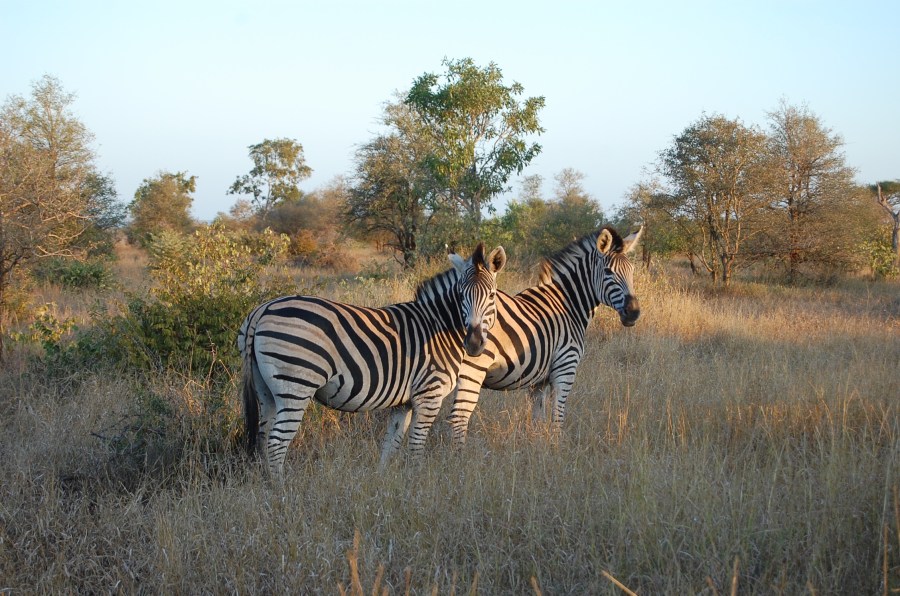
Zebra in Kruger National Park – Image credit : Nithin bolar K – own work – CC BY-SA 3.0
The SPWFE was formed by a group of British and American statesmen in Africa, out of concern over the excess hunting of Africa’s large game animals, especially by trophy hunters…. Concerns were also raised about encroachment on natural habitats, it was recognised that intervention was needed to safeguard the future of these species….
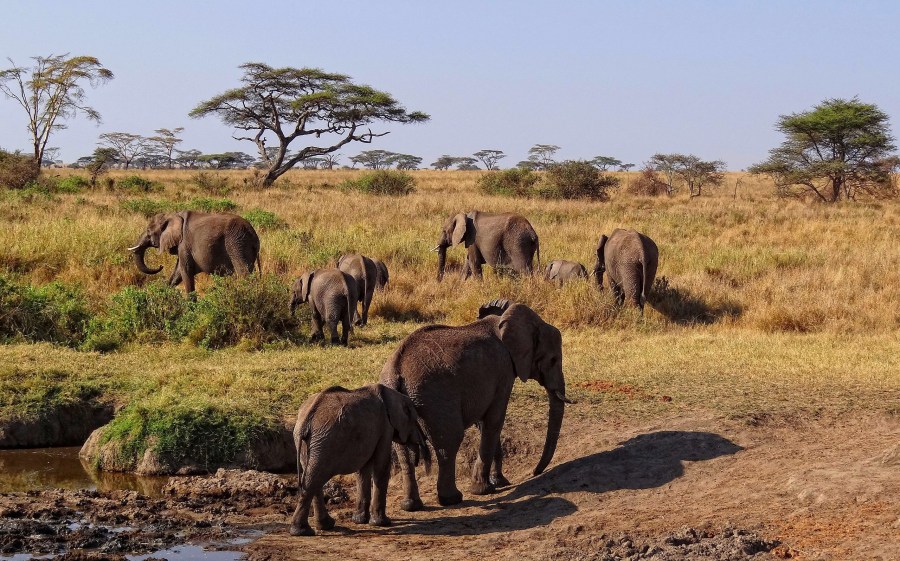
Herd of Elephant in the Serengeti National Park – Image credit : Bjorn Christian Torrissen – own work CC BY-SA 3.0
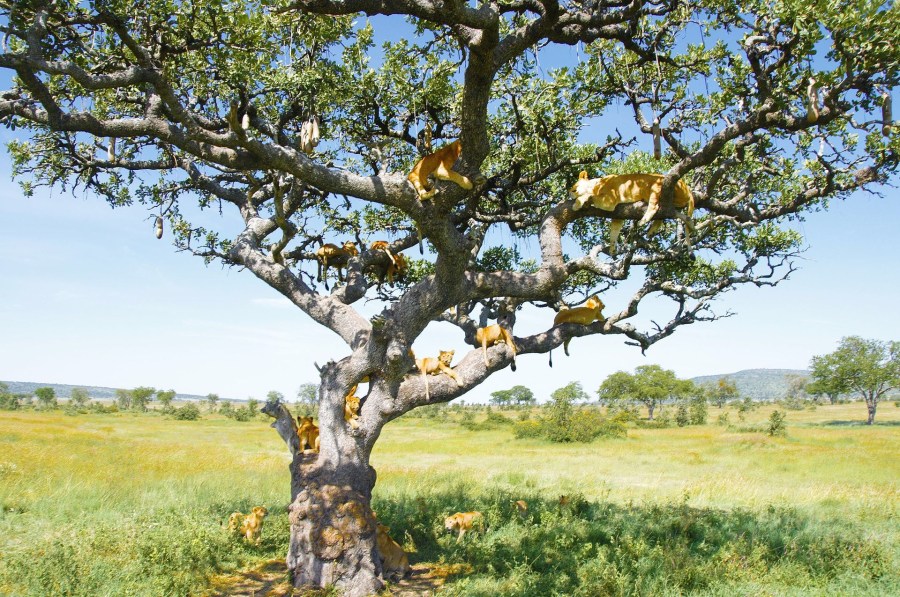
The society worked with landowners, sports hunters and the government…. Doing so aided the passing of legislation controlling hunting in vast areas of East and South Africa…. This in turn made it possible for later National Parks to be formed, such as the Serengeti and the Kruger National Parks….
Group of lions in a tree on the Serengeti Prairies – Image credit : Prof. Chen Hualin – own work – CC BY-SA 4.0
In 1981 the society became known as the Fauna and Flora Preservation Society…. It is now a registered charity with its head office in Cambridge…. It has royal patronage, dating back to 1928, when Edward Price of Wales (later to become King Edward VIII) became its first Patron…. Queen Elizabeth II is its current Patron….
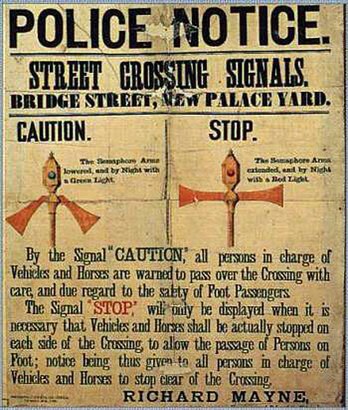
On this day in history : 10th December 1868 – The world’s first traffic lights come into service outside of the Palace of Westminster, London…. They were not quite like those that we are used to today….
Image credit : Leonard Bentley via Flickr
The lights were placed at a busy and notoriously dangerous junction at the north-east corner of Parliament Square…. A traffic policeman had recently been killed – and two Members of Parliament had been badly injured….
Installation had been completed the previous day and there were high hopes that the new lights would alleviate the traffic problems…. They had been designed by railway engineer J.P.Knight from Nottingham, who had adapted his design for a railway signal…. The 22ft high contraption had three semaphore arms on a pillar, that had to be operated by a police constable using a lever at the base…. The arms would extend horizontally to tell drivers to stop; arms lowered to 45 degrees meant proceed with caution…. At night gas lamps on the arms were lit – red for stop, green for proceed with caution….
John Peake Knight – Public domain
Initially it was a partial success – but there were those who were sceptical…. Punch Magazine described it as a ‘Scary Apparition, beaming through the fog’…. Many drivers found the semaphore arms too confusing….
Image : Punch, March 20th 1869
Then on the 2nd of January 1869 leaking gas from one of the supply cables under the pavement exploded – and the contraption blew up, seriously injuring the policeman who was operating it at the time…. The lights were repaired and were used for a few more months – but they kept on going wrong and so were removed by the end of the year…. Electric lights were eventually installed in 1926 with the first at Piccadilly, London….
On this day in history : 9th December 1995 – British soldier Sgt. Timothy Cowley is freed by special forces 119 days after being taken hostage by Colombian bandits….
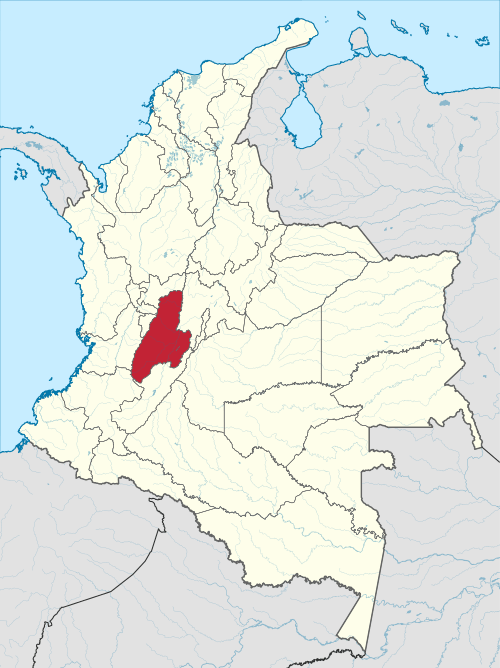
32-year-old Staff Sergeant Timothy Cowley had been birdwatching in the Tolima region, a remote mountainous area of Colombia – and a known drug producing territory….He had been driving and had come across a roadblock – when it was realised that he was connected to the British Embassy he was seized by the guerrilla gang…. It was not long before the British authorities received a ransom demand of £1.3m from the Revolutionary Armed Forces of Colombia – the country’s largest guerrilla group….
Tolima shown in red – Image credit : TUBS – own work CC BY-SA 3.0
Negotiation experts from Scotland Yard arrived in Colombia, along with members of the SAS – to assist the Colombian authorities…. Negotiations were so sensitive that news of his kidnapping was kept secret – although it was leaked a couple of weeks later…. Only two weeks before Cowley had been taken a 22-year-old British student had been executed when a £33k ransom had not been paid…. And three years previously a British businessman had been shot dead after being kidnapped….
There was much speculation at the time that Cowley was involved in British military action against the drugs gangs…. However, this was strongly denied by the British government – who said he had been working as a clerk at the British Embassy in Bogotá and had gone to the Tolima region as an amateur ornithologist….
Tolima Department of Colombia – Image credit : JELVi CC BY 3.0
The SAS were not involved in the physical rescue operation but advised the Colombian Special Forces and helped them to track Cowley…. When they found him the gang had fled and Cowley was tied to a tree with a rope around his neck – but otherwise unharmed…. He had spent much of his 119 days in captivity blind folded and tied up….
After the successful rescue mission Foreign Secretary Malcolm Rifkind sent his congratulations to everybody involved….
On this day in history : 8th December 1932 – The death of garden designer and horticulturist Gertrude Jekyll – who created over 400 gardens in the United Kingdom….
Portrait of Gertrude Jekyll by William Nicholson, painted in October 1920 after being commissioned by Lutyens – Public domain
Gertrude was born on the 29th of November 1843 in Mayfair, London and was one of the seven children of army officer Captain Edward Joseph Hill Jekyll and his wife Julia Hammersley…. In 1848 the family moved to Bramley House, in the Surrey village of Bramley, near to Guildford….
In 1861 Gertrude entered the South Kensington School of Art to study the paintings of Turner and the writings of Ruskin…. It was whilst at Kensington that she became interested in gardening and creative planting….
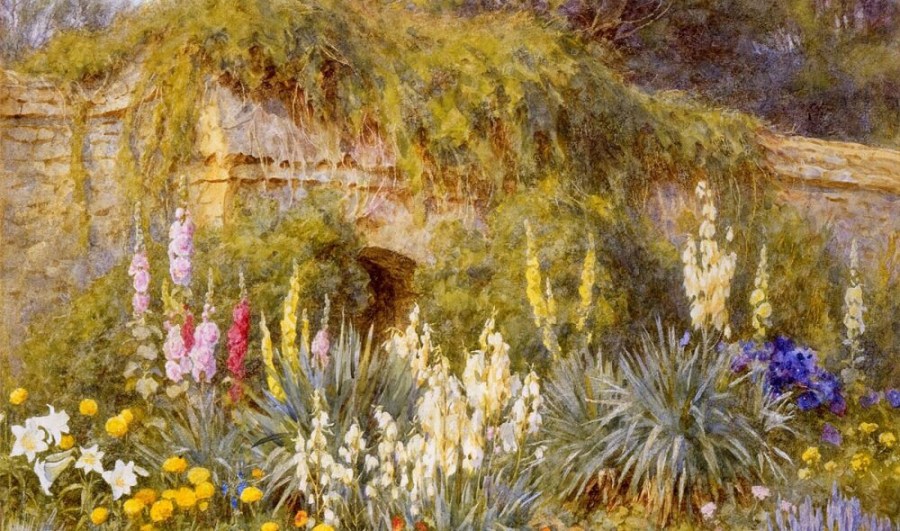
Gertrude was to travel widely – recording what she saw by painting in watercolour and oil, particularly the plants, landscapes and local ways of life…. She developed a wide circle of friends including other artists such as William Morris, Helen Allingham, G.F. Watts and watercolour artist Hercules Brabazon Brabazon, who greatly influenced her….
South Border at Munstead Wood by Helen Allingham
After living in Wargrave, Berkshire for a while Gertrude was to move back to Surrey in 1878, to Munstead near to Godalming…. She returned with her mother, following the death of her father, to what was a newly built house – and it was here that she found her love of designing gardens…. In 1882 her mother bought her some land nearby – with the idea that her daughter may one day build her own house upon it….
Gertrude loved to get out and about to explore the countryside, learning about the plants and flora…. She continued to draw and paint them – and she also took a great interest in traditional country crafts…. She learned the skills of wall building, fencing, thatching and was also taught carpentry and metalwork…. She took up photography – which helped her later as her eyesight deteriorated…. Eventually Gertrude became so shortsighted that she had to give up her art and craft work….
And so she began to concentrate on garden design – and then in 1889 she was introduced to young architect Edwin Lutyens…. She asked him to design a house for her, to be built on her land…. Work on Munstead Wood began in 1896….
Lutyens also designed the gardens for the houses he was commissioned to design for his clients – and Gertrude became more and more involved with working with him…. Steadily their reputation as a partnership grew…. She was also to work with architect Robert Lorimer….
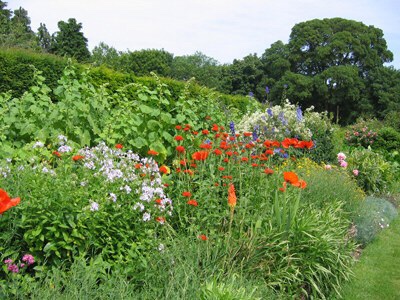
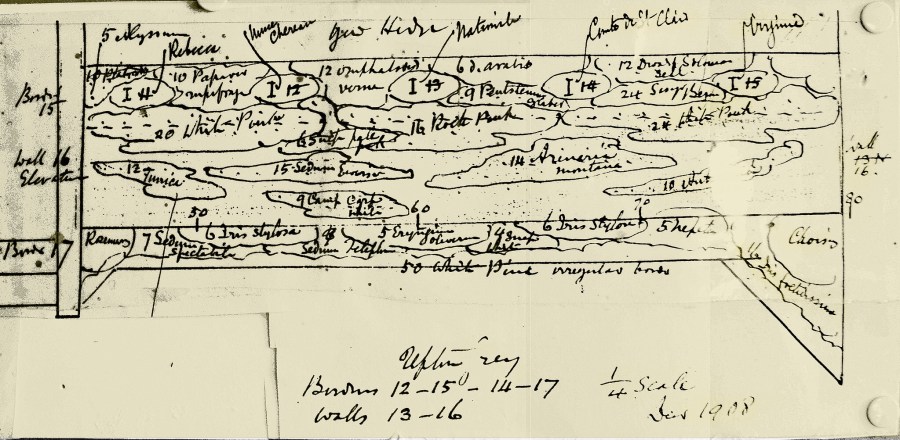
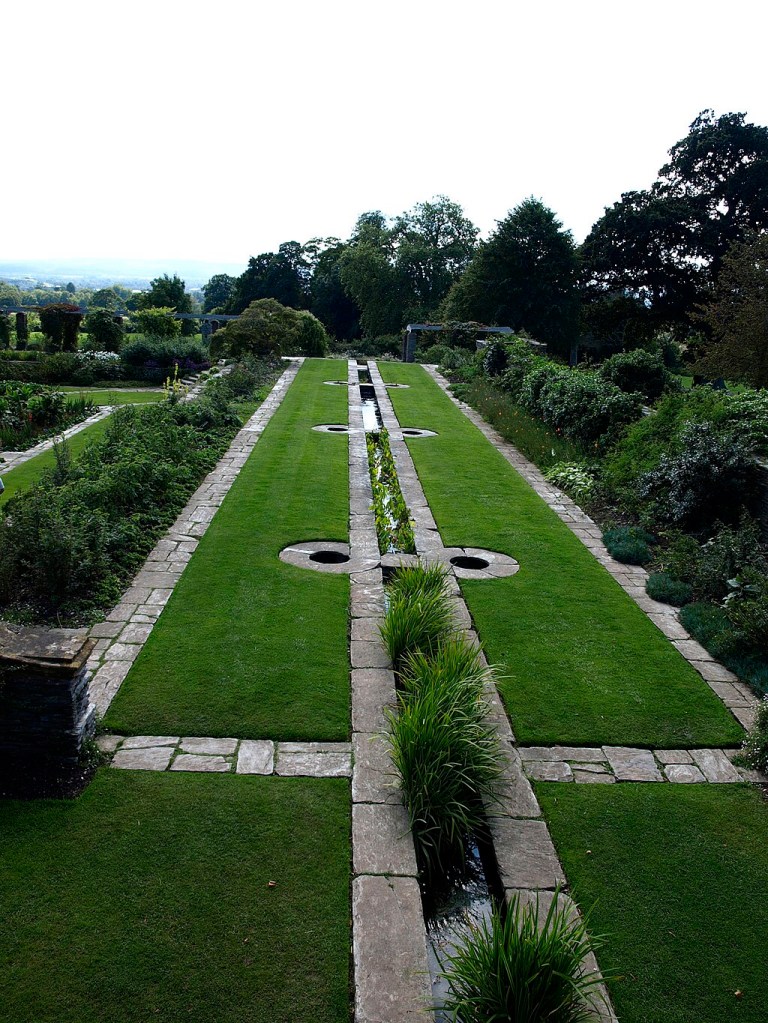
Gertrude designed over 400 gardens – most of which are now lost…. However, some have been restored, including her own at Munstead Wood – and also Hestercombe House, Woolverstone House and Upton Grey Manor House…. In 1897 she was awarded the Victoria Medal of Honour of the Royal Horticultural Society and the Veitch Memorial Medal in 1929….
Restored long border at Upton Grey Manor House – Image credit : Aquilineyes CC BY-SA 3.0Gertrude Jekyll’s hand-drawn plans for Upton Grey Manor House, Hampshire – Image credit : Anguskirk via Flickr
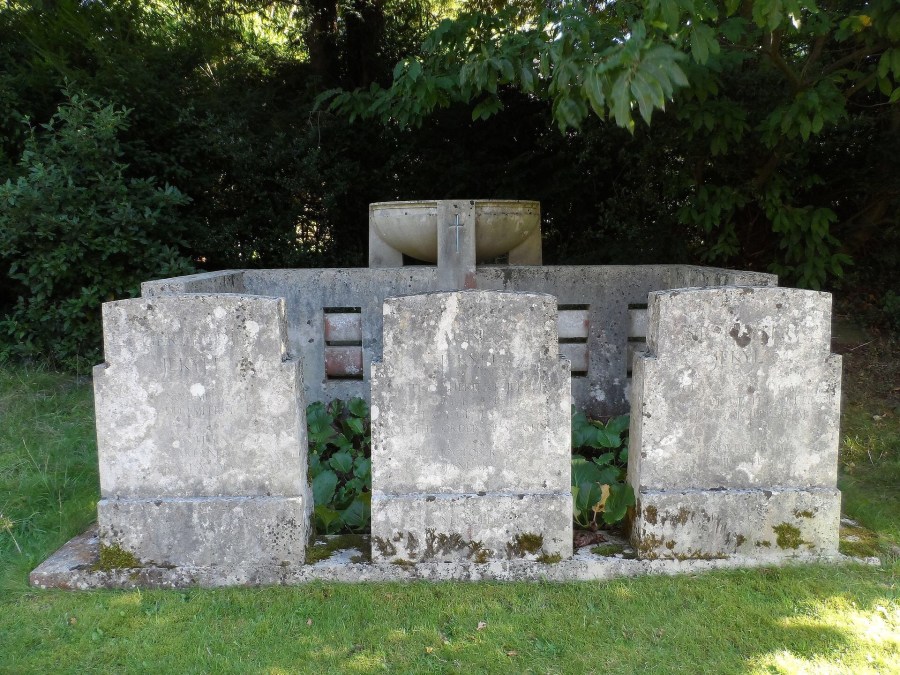
Gertrude never married…. She is buried in the churchyard of Busbridge Church, near to Godalming – alongside her brother…. The Jekyll family memorial was designed by Lutyens….
Jekyll family memorial in Busbridge churchyard – Image credit : Carcharoth – own work – CC BY-SA 4.0Hestercombe Gardens – Image credit : Scott Zona CC BY 2.0
On this day in history : 7th December 1983 – A tomcat, called George, climbs 160ft up an industrial chimney in Lancashire and refuses to come down – halting the work of steeplejack Fred Dibnah….
Fred Dibnah in 1985 – Image credit : trainsandstuff via Flickr CC BY 2.0
The ginger cat resisted all attempts to coax him down; when Fred climbed up to reach him George moved even further up the chimney…. An emergency meeting was held with the RSPCA and the fire brigade and it was decided that the best plan of action was to leave the tom up there overnight – hoping hunger would force him down….
Fred was not impressed with the feline’s antics – he said : “Ihave got a few hundred pounds at stake and I cannot be held up by a cat”…. But held up he was – as the following morning George was still up there….
By now George was very distressed…. Fred made a further attempt to reach the terrified cat, who paced at the top of the chimney crying pitifully…. Fred had to admit defeat and an expert cat handler was brought in, who managed to grab hold of George and put him in a cat basket…. Fred then carried him down….
Britain’s favourite steeplejack, who rose to fame through a series of television documentaries, had been delayed by George for 30 hours…. George in turn had used up one of his nine lives….







 Cottage Capers