On this day in history….15th November 1899

On this day in history : 15th November 1899 – Winston Churchill, whilst working as a war reporter for the Morning Post, is captured in South Africa by the Boers…. He escapes a few weeks later….
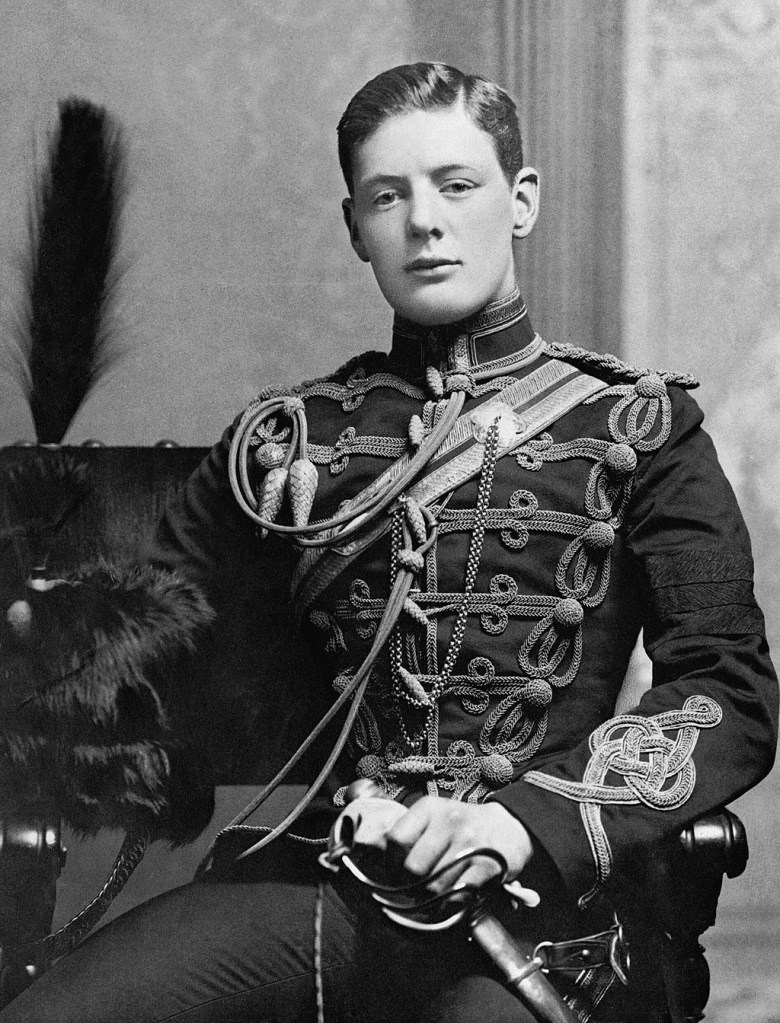
Churchill in the dress uniform of the 4th Queen’s Own Hussars at Aldershot, 1895 – Public domain

25-year-old Churchill had arrived in Cape Town on the 30th of October 1899…. A couple of weeks later the armoured train he was travelling on, accompanying a scouting expedition into Boer-occupied territory, was ambushed and partially derailed….

Churchill was captured – (it is rumoured by Boer Louis Botha – later to become Prime Minister of South Africa) – and although a civilian he was sent to a prisoner of war camp for British officers, in a converted school in Pretoria…. Churchill was considered a good catch and a significant bargaining tool for the Boers….

Four weeks later, on the 12th of December 1899, Churchill made his dramatic escape by managing to climb over a wall…. He had with him £75 and some chocolate…. He managed to get onboard a coal train and by hiding among the coal sacks got out of the area…. However, once he left the train he found himself walking for miles and miles without a clue of where he was heading…. Eventually hunger and thirst got the better of him and he banged on the door of a house he was passing to ask for food…. As luck would have it he chose the home of one of the only Englishmen in the neighbourhood, John Howard, the manager of a local colliery…. Howard agreed to help Churchill and hid him in the mine and then with the aid of another Englishman, Mr. Dewsnap, Churchill was smuggled on to a wool train….

The train took him to Portuguese occupied East Africa – from here he made his way back to Durban…. By now there was a £25 reward on his head – ‘dead or alive’….

Churchill returned to the battle front and took part in the Battle of Spion Kop and the relief of Ladysmith…. Towards the end of the war he and his cousin, the Duke of Marlborough, returned to Pretoria to demand the surrender of the guards at the prisoner of war camp where he had been held….and the release of the British officers being held there….

Churchill in 1900 – Public domain

On this day in history….14th November 1864

On this day in history : 14th November 1864 – German tailor Franz Muller is publicly hanged at Newgate Prison, for the murder of Thomas Briggs – the first killing on a British train….

Franz Muller – Public domain

On the 9th of July 1864 city banker Thomas Briggs had been travelling on the 9.50pm London Railway train between Fenchurch Street and Hackney Wick…. Train travel at the time was not without its risks – robberies were commonplace but as of yet nobody had been killed…. However, this was about to change…. Briggs was beaten, robbed of his gold spectacles, watch and chain…. He was then thrown from the train, to be later found by the driver of another train travelling in the opposite direction…. He was taken to a nearby public house but died of his injuries….

A pool of blood was found in the compartment of the train where Briggs had been sitting – along with a black beaver hat assumed belonging to the murderer…. Then John Death, a jeweller from Cheapside, gave a description of a German man who had exchanged a gold chain two days after the attack – this chain was identified as having belonged to Briggs….

Nine days after, by which time a substantial £300 reward had been offered, a cab driver by the name of Matthews came forward with information…. He claimed he had not heard about the murder (even though it had been widely publicised) – but said he had become suspicious about a jeweller’s box with Death’s name on it, in the possession of his future son-in-law…. The cab driver’s daughter was engaged to 24-year-old Franz Muller – and Matthews was able to provide a photograph of the German…. This was then identified by the jeweller as being the man who had exchanged the chain; a warrant was issued for Muller’s arrest….

However, Muller was now onboard a passenger liner heading for New York…. Fortunately two detectives from Scotland Yard managed to get passage on a much faster ship and were in New York three weeks before Muller – who was arrested upon his arrival….

Extradition was to prove a little tricky as diplomatic relations were not good between America and Britain at the time, due to the American Civil War…. But eventually Muller was brought back to face trial….

The trial caught the attention of the British public, who were becoming increasingly wary about the safety of travelling by train…. Many believed Matthews had only shopped his future son-in-law to get the reward money and speculated that he might even have been involved in the crime himself…. Much of the evidence against Muller was circumstantial and he pleaded not guilty, protesting his innocence throughout…. Nevertheless he was found guilty and sentenced to hang…. His was one of the last public executions and a large, unruly, drunken crowd of some 50,000 gathered to watch…. Muller’s last words were “Ich habe es getan” ~ “I did it”….

Engraving of Newgate Prison, early 1800s – Public domain

The case was to lead to the establishment of the communication cord onboard trains, giving passengers a way of contacting train staff…. Briggs had been murdered in a closed compartment with no way of exiting between stops…. As a result railway carriages were created with corridors….

On this day in history….13th November 1002

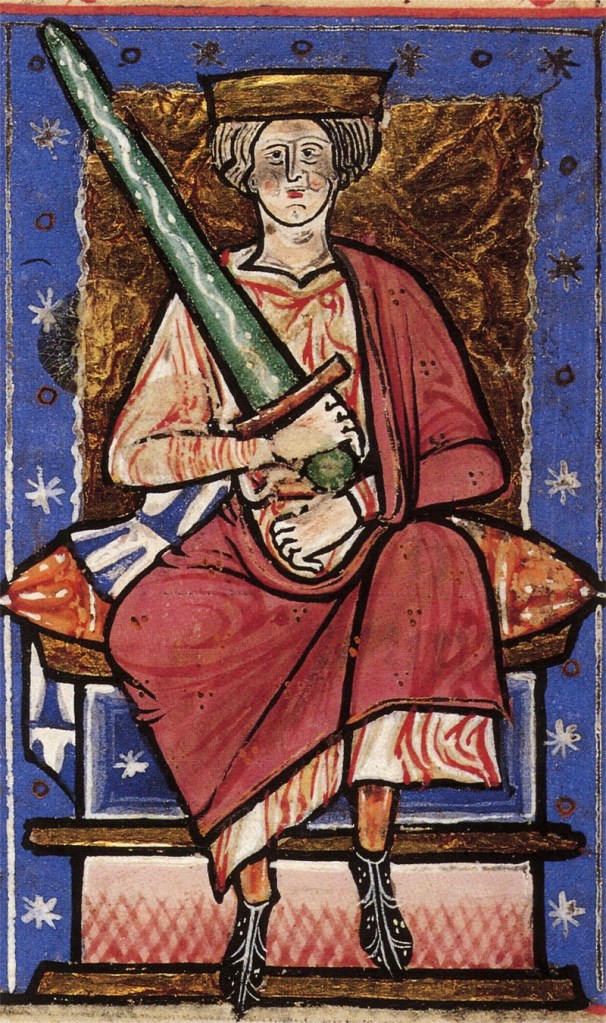
On this day in history : 13th November 1002 – English King ‘Aethelred the Ill-advised’ orders the killing of all Danish men in England – it is known today as the St. Brice’s Day Massacre….

Aethelred – Public domain

In 2008 evidence of a brutal massacre of Vikings was found in Oxford during an archaeological dig…. At least 35 male skeletons, aged between 16 – 25, were discovered at St. John’s College in a dig prior to building work being carried out…. The bones showed obvious signs of violence, with fractured skulls and blade puncture marks, especially to the back of the head…. A similar mass grave, of at least 55 skeletons, again all young males, had been found previously when the Weymouth relief road had been built…. These finds indicated an intolerance towards Vikings at the time and gave evidence that violence had been rife….

Aethelred came to the throne in 978 at the age of 12, after his mother had arranged for the murder of his stepbrother…. All the while the Vikings were watching from their lands across the seas – and seeing this young king as weak thought it a good time to make a claim on England…. What followed were numerous Viking raids and Aethelred was powerless to stave them off…. The Danes were establishing themselves everywhere, whole Viking families trading and farming – the north and east of England was to become known as ‘Danelaw’….

Aethelred and his advisors became concerned that there would be a mass Viking uprising and that the whole country would fall under their rule…. So an order was given that all Danish men in England were to be executed – the massacre began on the feast day of St. Brice….

These ruthless mass killings angered Viking leaders and the attacks from overseas became more frequent and even more ferocious…. Particularly angry was King Sweyn Forkbeard of Denmark, as his sister Gunnhild had been slaughtered at Oxford…. Eventually in 1013 Sweyn was declared King of England….

Sweyn Forkbeard – Public domain

On this day in history….12th November 1919

On this day in history : 12th November 1919 – The first successful flight from England to Australia begins at Hounslow…. The converted Vickers Vimy bomber reached Darwin on the 10th of December 1919….

The winning Vickers Vimy, 1919 – Image credit : John Oxley Library, State Library of Queensland – Public domain

It was in 1919 that the Australian government offered 10,000 Australian £s, as prize money, to the first Australian pilots in a British aircraft to fly from Britain to Australia…. Six entries were received…. The rules stipulated that the crews had to be Australian, the aircraft had to be made in the British Empire and the flight had to be done in no more than 30 days – arriving by midnight on the 31st of December 1920…. In addition departure had to be either from Heath Aerodrome, Hounslow near to London for land-planes or from RNAS Calshot for sea-planes….

Vickers entered a Vimy bomber, which had been designed for World War I but which had not seen active service…. It had twin Rolls Royce engines, a top speed of 177 kph – and an open cockpit…. It completed the 17,911 km (11,123 mile) journey in 28 days – at an average speed of 137 kph….

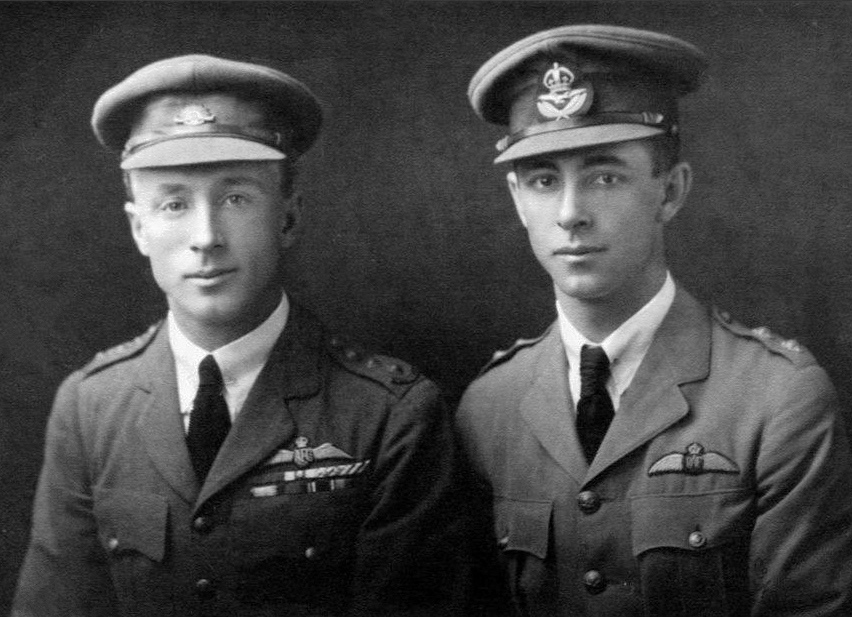
The aircraft was crewed by brothers pilot Ross and co-pilot Keith Smith, along with mechanics James Bennett and Wally Shiers…. They left Hounslow at 8.30am and flew via Lyon, Rome, Cairo, Damascus, Basra, Karachi, Delhi, Calcutta, Akyab, Rangoon, Singora, Singapore, Batavia, Surabaya and reaching Darwin at 4.10pm on the 10th of December…. The journey was not without its difficulties…. They became bogged-down in Surabaya – and a temporary airstrip had to be constructed from bamboo mats – and heavy rain forced several unscheduled stops….

Brothers Capt. Ross & Lieut. Keith Smith – Pilot and co-pilot – Image credit : State Library of South Australia via Flickr CC BY 2.0

The prize money was shared between the four crew and each of the two brothers received a knighthood…. The aircraft was presented to the Australian government and is now on display at Adelaide Airport….

On this day in history….11th November 1987

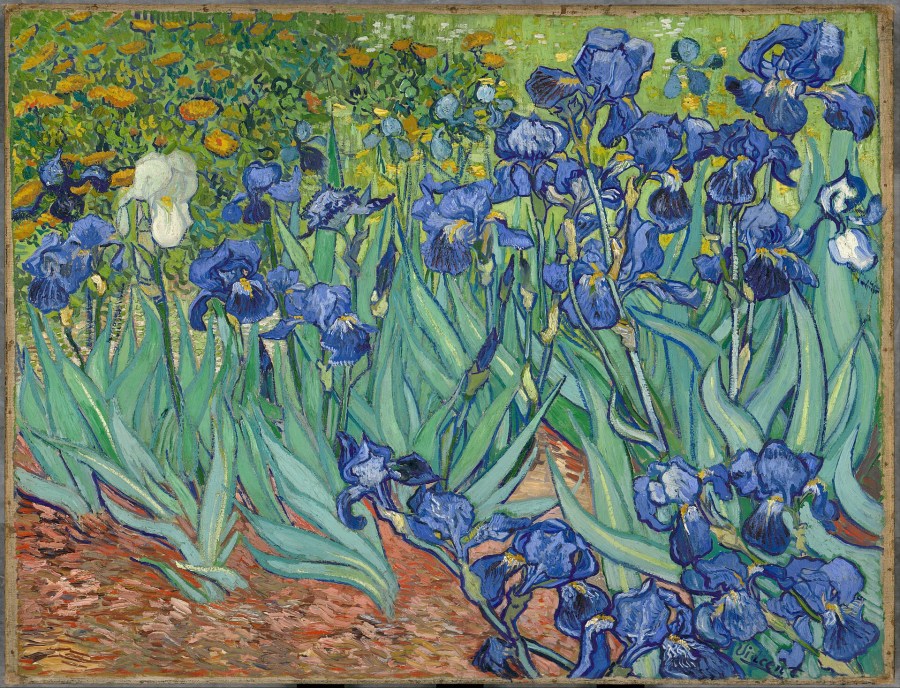
On this day in history : 11th November 1987 – ‘Irises’ ~ a painting by Vincent Van Gogh sells at Sotheby’s for a record of £27m, more than twice the amount the painting had been expected to reach….

Irises – Vincent van Gogh – Public domain

It had beaten the previous world record for a work of art, which had stood for two and a half years – also a painting by Van Gogh – ‘Sunflowers’ – which had sold for $40m….

Irises had been painted in 1889, just a few months before Van Gogh killed himself at the age of 37…. He had painted it in the garden of the French mental asylum in Saint-Remy, where he was being treated….

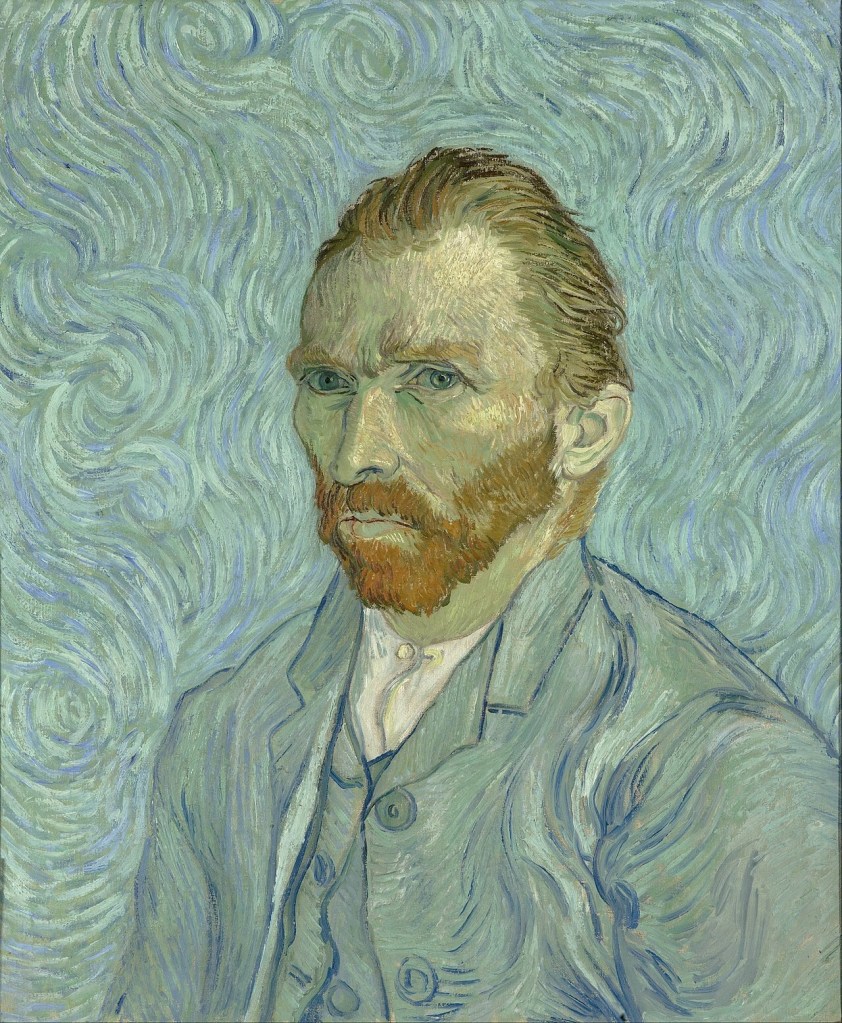
Self portrait – Vincent van Gogh – Public domain

After Van Gogh’s death Irises came into the possession of Julien ‘Pere’ Tanguy, an art dealer…. He later sold it to art critic Octave Mirbeau for 300 francs…. In 1975 it came into the ownership of John Whitney Payson, heir to one of America’s biggest fortunes…. He inherited the painting from his mother who had paid £44,000 for it in 1947 – and had kept it hanging over her fireplace…. Payson had a gallery built in his mother’s memory and this is where Irises was displayed….

However, after the sale of Sunflowers and realising the potential value of Irises he began to worry about the painting’s safety – and so decided to sell it…. The purchaser remained anonymous at the time but turned out to be Australian entrepreneur Alan Bond…. He purchased it with the help of a loan from Sotheby’s – causing controversy as critics claimed such practices artificially inflated values…. As it was, Bond ran into difficulties repaying the loan and in 1990 Irises was sold to the Getty Museum in Los Angeles for $53.9m….