On this day in history….9th November 1907

On this day in history : 9th November 1907 – The Cullinan Diamond, the largest diamond ever to be found, is presented to King Edward VII on his birthday by the government of Transvaal….
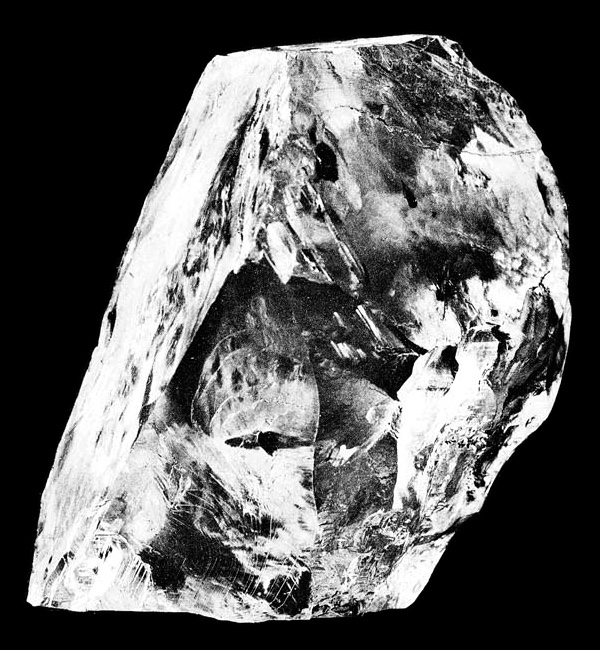
The rough diamond – Public domain

The stone had been discovered on the 26th of January 1905, near to Pretoria in South Africa – and had been named after Thomas Cullinan, chairman of the mining company…. The diamond weighed 3,106 carats and measured approximately 10cm x 6.5cm x 6cm….

It was presented to Edward VII as a gift to help cement the new relationship between Britain and South Africa following the Boer War…. At first the King was reluctant to accept a gift so extravagant but it was finally presented to him on his 66th birthday in a formal ceremony held at Sandringham….

The gem was sent to Asschers of Amsterdam, the world’s leading diamond cutters – it took weeks to decide the best way to split it…. Eventually, on the 10th of February 1908 Joseph Asscher broke it in two – the first blow broke his cutting knife! It took a further eight months and three experts to cut and polish nine individual stones from the original diamond…. They were named I – IX and are still referred to in this way today…. 97 smaller diamonds were also created from the spoils….

Joseph Asscher splitting the diamond – Public domain

I is known as the Great Star of Africa, weighing 530 carats it has 74 facets…. II is the Second Star of Africa and has 66 facets…. After Edward’s death in 1910 he was succeeded by George V, who had the Great Star set into the top of the Sovereign’s Sceptre and the Second Star set into the Imperial State Crown (but can be removed and worn as a brooch)…. Asschers kept the remainder of the diamonds in payment for their work…. Edward VII had already purchased VI and VIII as a gift for his wife, Queen Alexandra and the South African government bought back the remainder and presented them to Queen Mary…. Queen Elizabeth II received them in 1953 as a bequeathment, stones III – XI were made into part of Her Majesty’s personal jewellery…. The smallest diamond, IX, is 4.39 carats and is set into a platinum ring….
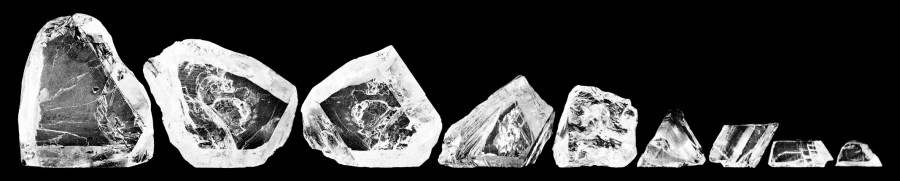
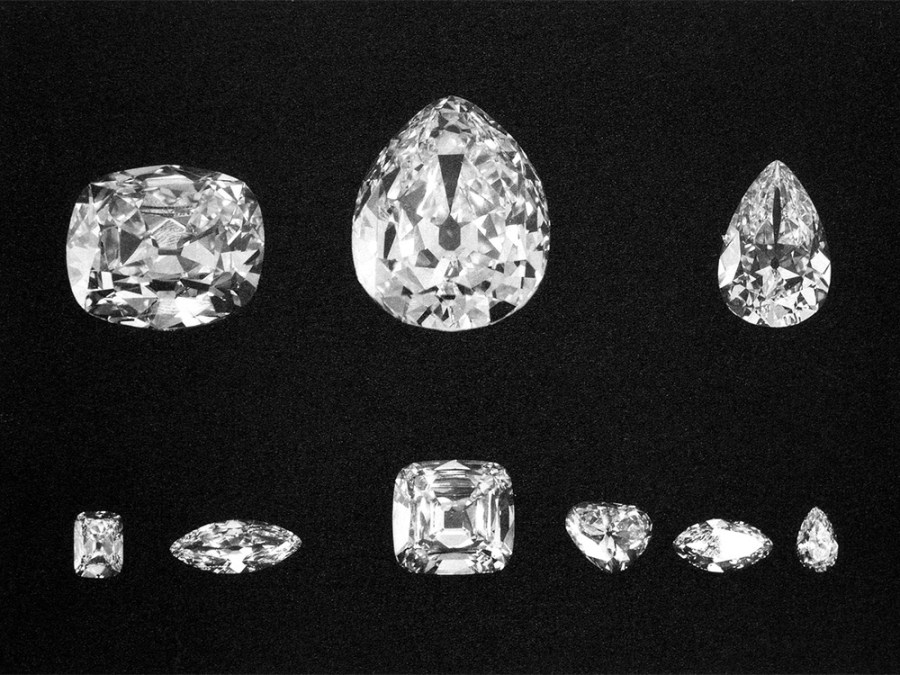
I – IX in order of size – Public domain
I – IX in their cut forms – Public domain

On this day in history….8th November 1920

On this day in history : 8th November 1920 – Rupert the Bear makes his first appearance in the Daily Express newspaper…. The comic strip is still published every day….

Fair use

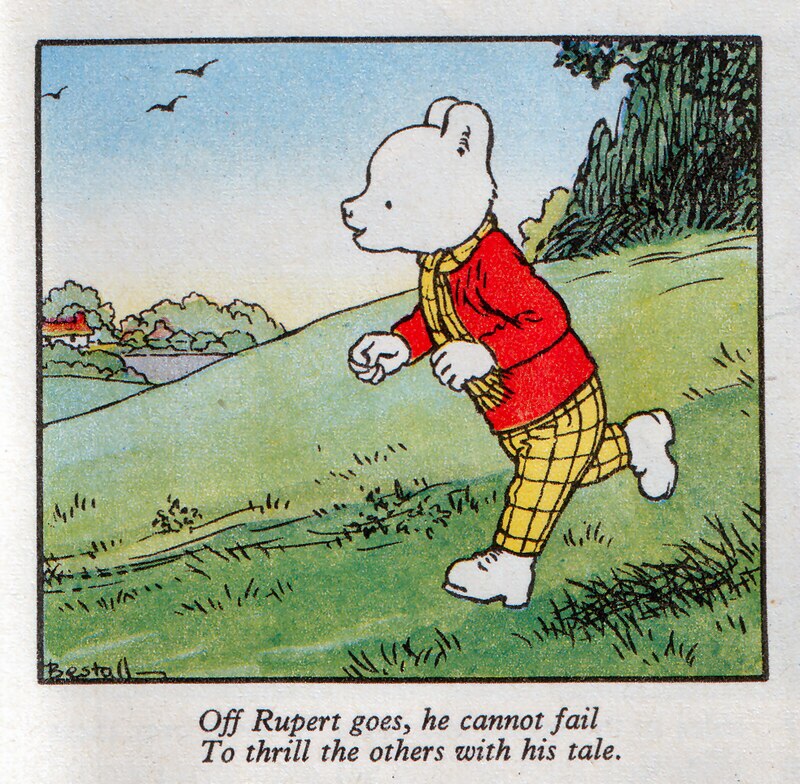
Rupert was created by British artist Mary Tourtel…. His first appearance was in a single panel – one of 36 to be printed over the coming days telling the story of the Little Lost Bear…. The main purpose of Rupert was to attract readers to the Daily Express away from its main rivals the Daily Mirror and Daily Mail….

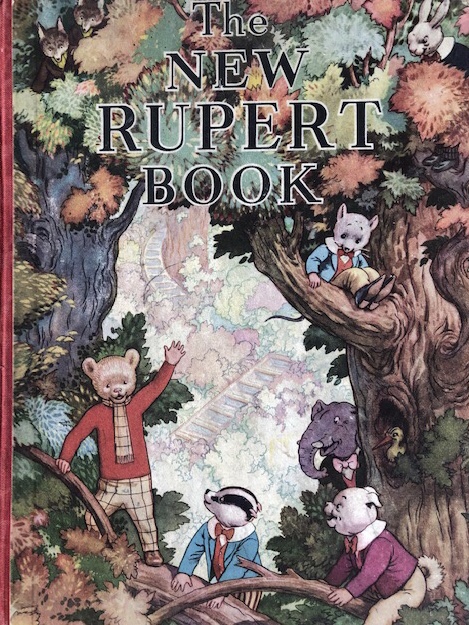
When Tourtel originally created Rupert he was a brown bear – but it was decided to print him in white, to keep publishing costs down…. In 1935 Rupert was taken over by Alfred Bestall, who had worked for Punch Magazine but was to go on to produce Rupert for the next 30 years…. Rupert’s last outing for the Daily Express under Bestall was in July 1965, although he continued working on Rupert annuals into his nineties…. Since Bestall Rupert has had a succession of illustrators and writers….

Alfred Bestall – Fair use

The first Rupert annual was published in 1936 – and a new one has been released every year since – telling of Rupert’s adventures along with those of his friends such as Bill Badger, Edward Trunk the elephant, Willie the mouse, Ping-Pong the Pekinese dog and Podgy Pig…. Over the years some 50 million copies of Rupert annuals have been sold….

Rupert is still a popular character in children’s culture…. There have been several TV series and he has his own fan club…. On the 31st of October 2005 UK media group Entertainment Rights bought a majority interest in the little bear…. This in turn was bought by Boomerang Media and then DreamWorks Animation, with plans for a movie and associated merchandise….

From the 1970 Rupert Bear Annual – Image credit : Ian Burt via Flickr

On this day in history….7th November 1665

On this day in history : 7th November 1665 – The first edition of the London Gazette is printed…. The publication claims to be the oldest surviving English newspaper….

Reprint of The London Gazette September 3-10, 1666 reporting on the Fire of London – Public domain

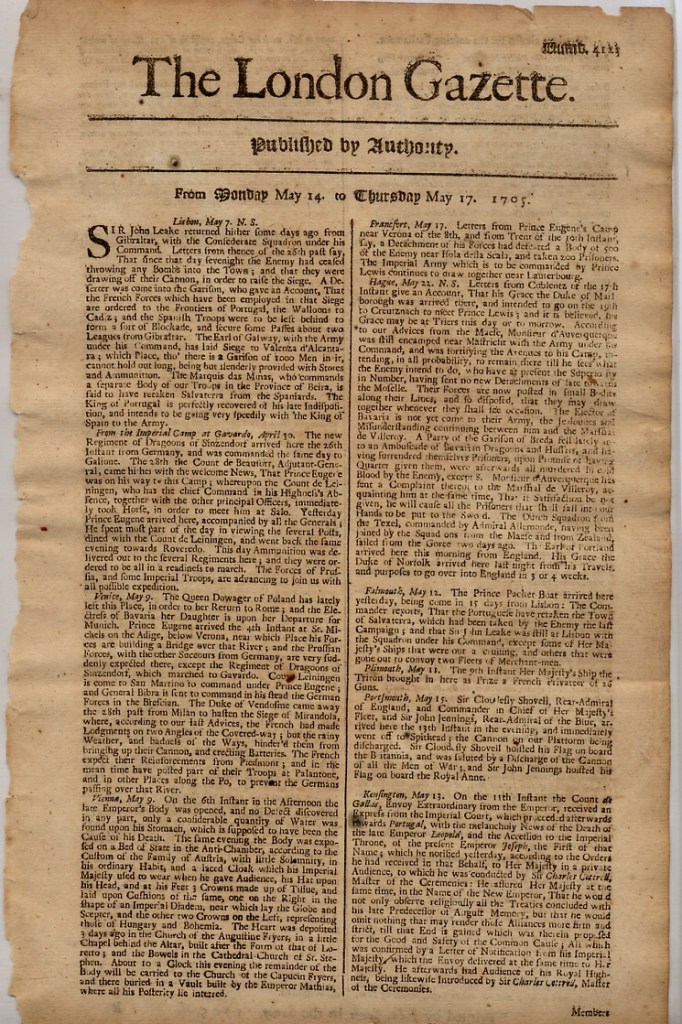
Two other publications also make this claim; the Berrows Worcester Journal, established in 1690 and the Stamford Mercury, established in 1712, both like to point out that the Gazette is not a conventional newspaper…. The London Gazette, which was originally published as the Oxford Gazette, is a ‘journal of record’….in as it provides an official publication in the UK for statutory notices which legally have to be recorded and published….

The London Gazette 14-17 May 1705 – Public domain

King Charles II and his Royal Court had decamped to Oxford to escape plagued London…. They did not want papers sent from London for fear of contamination – and so the Gazette was published in Oxford by English journalist and publisher Henry Muddiman…. Charles and his entourage returned to London as the plague diminished and the Gazette moved to the capital with them…. The first London edition appeared on the 5th of February 1666; it did not go on general sale but was sent to those who subscribed…. Her Majesty’s Stationery Office took over its publication in 1889 and since the 1990s it has been produced by The Stationery Office….

Nowadays the Gazette is printed every week day, excluding public holidays…. It records:- Royal assent of Parliamentary Bills for the UK Government and Scottish Parliament, Writs of Election for House of Commons vacancies, promotions and commissions of officers in the Armed Forces, the appointment of public officials, bankruptcies and insolvencies, military honours and awards that have been granted, changes to coats of arms and change of name and Royal proclamations and declarations….

These days the London Gazette can be viewed online….

On this day in history….6th November 1942

On this day in history : 6th November 1942 – The Church of England relaxes the rule that women must wear a hat when in Church….

Image credit : Kaye on Flickr – Public domain

Britain used to be a nation of hat wearers – it was almost considered indecent to be seen out and about without one…. Head coverings in one form or another have had a place throughout human history…. Crowns, head-dresses, wigs, veils, fascinators, tiaras, hats….whether for ceremonial purposes, professional attire, etiquette or fashion…. Head coverings are essential in many religious practices – a hat may be a compulsory part of a uniform – or it might define a profession…. It could be worn for safety – or perhaps the wearer may simply wish to keep his or her head warm…. In days gone by the type of hat worn would define class….

Public domain

Gone are the days when we would automatically don a hat to nip to the corner shop – unless its as fashion statement or freezing brass monkeys outside…. As hairstyles changed throughout the twentieth century so began the demise of the hat (but undoubtedly quickly pulled out of the closet many a time on a bad hair day)…. Sunglasses were launched in 1929 and by the 1940s nearly everyone was wearing them – eliminating the need of a hat brim to shade the eyes…. Lifestyles had altered, people worked indoors more with fewer toiling in the fields…. Less people used public transport as more and more families owned a car – hats had become a hinderance….

Millinery department of Bourne & Hollingsworth, Oxford Street, London, 1942

The decline in hat wearing became a real concern for milliners and hat makers…. In a 1947 survey, undertaken for the Hat Research Foundation, 19% of men said they chose not to wear a hat “because I had to in the army!”…. The Hat Research Foundation had attempted to halt the decline of the hat’s popularity with a promotional campaign…. In towns that had once thrived on the hat making industry workers were sometimes known to shout abuse at those who went bare-headed – as they were seeing their livelihoods threatened….

Sometimes it might still be necessary to wear a hat, whether for work, safety, part of a uniform or for etiquette…. And it’s nice to be able to dress up for a formal occasion, such as a wedding – and have the choice of adding a hat to complete an outfit…. Me, I’m just glad it’s not compulsory – as I look ridiculous in a hat!

On this day in history….5th November 1967

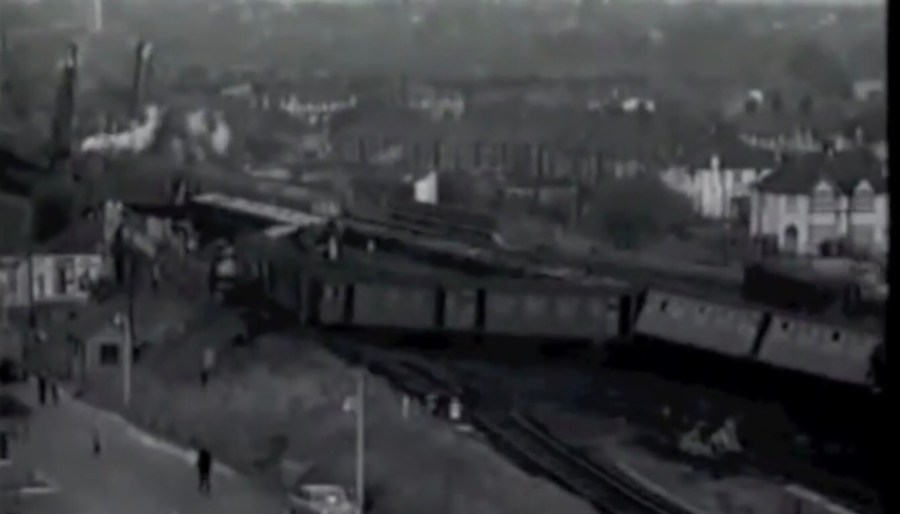
On this day in history : 5th November 1967 – A passenger train derails at Hither Green in South East London…. 49 people are killed and a further 78 injured….

It was a Sunday evening, the packed 12 coach 7.43pm express train was travelling from Hastings to Charing Cross…. At just after 9.15pm disaster was to strike when moving at a speed of approximately 70mph the train derailed…. It happened just before the St. Mildred’s Road railway bridge, close to the Hither Green maintenance depot – a little over a mile from the scene of another rail-crash killing 90 people in Lewisham ten years before….

Hither Green maintenance depot – Image credit : Leaozinho – own work – Public domain

The Hastings to London derailment occurred when the leading pair of wheels of the third coach hit a broken rail and came off the tracks…. The train carried on for a quarter of a mile until it came to a set of points – causing eleven of the coaches to derail…. Four of them turned on to their sides, with two jack-knifing….

It was a busy train, many of the passengers were standing – most of the casualties were in the over-turned carriages…. The emergency services arrived within five minutes and rescuers worked through the night under floodlights to free survivors – among them Robin Gibb of the Bee Gees and his wife, Molly….

An investigation found a rail had fractured at its joint – a triangular piece of metal had fallen out of the bolt hole…. Consequently maintenance of the line was improved, along with inspection procedures – and future rail joints made to a different specification….

A plaque at Hither Green commemorates those who died and on each anniversary flowers and wreaths are laid….

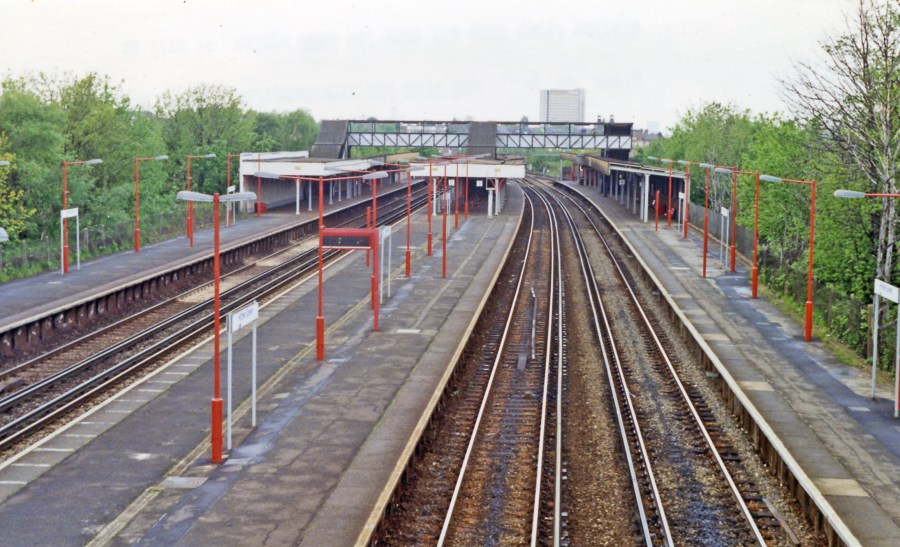
Hither Green Station, 1992 – Image credit : Ben Brooksbank CC BY-SA 2.0