On this day in history : 22nd November 1946 – The first British Biro ballpoint pen goes on sale…. It was manufactured by a British company but had originally been designed by Hungarian Laszlo Biro….
Biro’s invention – Image credit : Roberto Fiadone – edited by Daniel Schwen – CC BY-SA 2.5
Laszlo, who was a Hungarian-Jewish newspaper editor living in Germany, got frustrated with the amount of time he spent filling up his fountain pen with ink – and then cleaning up the mess afterwards…. He couldn’t help but notice that the ink used for printing newspapers did not smudge and so the paper it was used on stayed dry…. He approached his brother, Gyorgy, who was a chemist, to help him develop an ink that could be used in a pen….
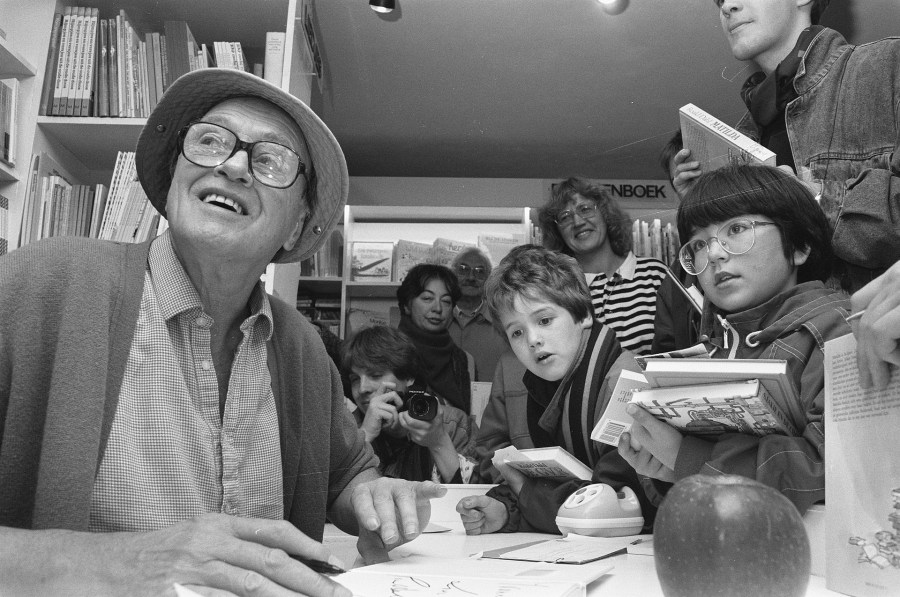
Laszlo Biro circa 1978 – Public domain
The first patent for such a writing instrument had originally been issued in October 1888 to John J Loud – who had wanted something he could write with on coarse surfaces, such as wood, rough paper and leather…. His pen nib had a small rotating steel ball held by a socket…. However, it did not sell commercially and the patent expired…. Further attempts by others to create a reliable ballpoint which delivered ink properly failed – the ink would either be too thin, or would clog…. Very often the ball socket would be too tight, not allowing ink to reach the paper…. But the Biro brothers managed to get the formula just right – and a patent was filed on the 15th of June 1938….
In 1941 the brothers had to flee Germany and the Nazis…. Along with friend Juan Jorge Meyne they went to Argentina – and together they formed Biro Pens of Argentina, with a new patent filed in the US in 1943…. The pens were sold as the Birome in Argentina and are still known by this name there…. Britain soon cottoned on to this revolutionary new pen and started to produce them for use by RAF aircrews – as they could be used at high altitudes – whereas fountain pens leaked even more….
Advert in Argentine magazine ‘Leoplan’, 1945 – Image credit : Revista Leoplan, Argentina, ano 1945 – CC BY-SA 2.5
In 1946 Catalonian firm Vila Sevilla Hermanos began making ballpoint pens in contract with French firm Societe Bic – hence the name Bic-Biro….
On this day in history : 28th October 1986 – Jeremy Bamber is jailed for life for the White House Farm murders – where he killed five members of his own family….
Bamber shortly after his arrest – Fair use
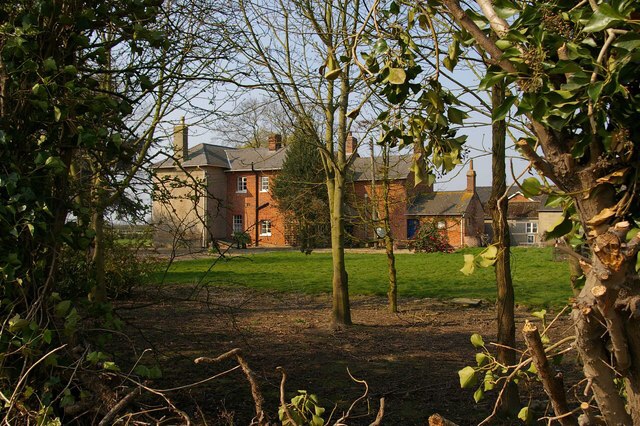
The Bambers were a wealthy farming family, living at White House Farm, a large Georgian property near to Tolleshunt D’Arcy in Essex…. Jeremy was legally adopted by the family as a baby…. Four years previously they had also adopted a baby girl, Sheila….
White House Farm (in 2007) – Image credit : Glyn Baker CC BY-SA 2.0
After leaving school Bamber’s adoptive father paid for him to travel to Australia and New Zealand…. Here he reputedly became involved in drug smuggling – and also broke into a jewellery shop, stealing two valuable watches….
Once he had returned to the UK and after a few casual jobs, Bamber began to work for the family farm…. However, he was resentful of the low wage – despite living rent free in one of the family’s cottages and having been given a car…. He further showed his lack of appreciation by committing a robbery at the caravan park owned by his family….
Bamber’s adoptive parents Neville and June Bamber – Fair use
Bamber’s adoptive sister, Sheila, had been treated in hospital for schizophrenia…. On the 7th of August 1985 at 3.30am 24-year-old Bamber phoned the police to say his father had phoned him and told him that Sheila had got hold of his gun and had gone berserk with it…. When the police arrived at the house they found her dead, with the gun lay on her chest – along with a Bible…. Her mother lay dead in the same room, her father was found dead in the kitchen and Sheila’s 6-year-old twin boys lay dead in their beds upstairs….
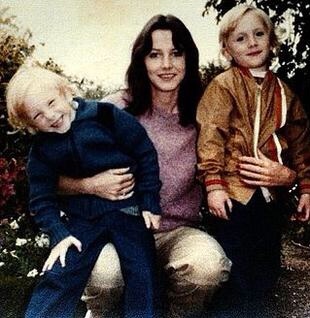
Sheila and her twin boys, Daniel and Caffell (around 1984) – Fair use
At first police believed that Sheila had killed them all before turning the gun on herself…. But when Bamber’s girlfriend came forward and said that he had talked about killing his parents forensic tests were carried out and revealed his fingerprints on the gun…. Bamber had been set to inherit £436,000….
As the guilty verdict was read out at Chelmsford Crown Court Bamber showed little reaction…. Judge Mr. Justice Drake described him as “Warped and evil beyond belief”…. He then handed down five life sentences….
Bamber has always protested his innocence…. In July 2001 an inquiry was launched into the case and it was referred back to the Court of Appeal…. In December 2002 Bamber lost his appeal….
That time of year is almost upon us, when excited kids transform into witches, ghosts, monsters and zombies; ready to hit the streets with the aim of collecting enough candy to give a sugar-rush that could redefine the word ‘hyper’ into something positively lethargic….
I – like many I suspect – could be forgiven for assuming Halloween is a festivity that we Brits have imported from the States. In truth, our American cousins were introduced to its customs and traditions by Irish immigrants during the 19th Century; particularly the 1840s, the time of the Great Famine, caused by the crop failure due to potato blight…. Thousands upon thousands emigrated from Ireland to America to begin a new life….
Potato famine of Ireland / Ireland in the 1840s Public domain Author unknown
I don’t really remember celebrating Halloween as a child; the focus always seemed to be on Guy Fawkes Night, which of course follows closely after, on November the 5th…. Naturally, we all knew Halloween to be the night ghosts come out to haunt us and witches bomb around on their broomsticks….but certainly for me, that was as far as it went….
Maybe it was because I grew up in the South of England – had my childhood been spent in more Northern parts, or Ireland, indeed anywhere with more Celtic influences, perhaps I would have been familiar with ‘Mischief Night’ and taken part in a bit of ‘guising’ – (which comes from ‘disguising’)….
Halloween, as we now know it, didn’t really become big here in the UK until the 1980s; even as its popularity has increased there are just as many who are not fans. A poll conducted in 2013 revealed 70% of those asked admitted they would prefer trick and treaters not to knock on their door…. I’m sure we all know somebody who turns the lights off and pretends to be out on that particular evening….
So, on discovering it was Irish immigrants who took the customs of Halloween with them to the States, it got me wondering how the festival has its origins rooted in the Emerald Isle in the first place….
Halloween can be traced back to its Pagan roots of some 2,000 years ago…. Certainly the Romans had an Autumn festival, one that was dedicated to Pomona – a divine spirit, representing Nature, also known as a wood nymph – she was the goddess of the fruits of the tree, particularly apples…. This would give an explanation as to why apples are so often involved in the party games associated with Halloween, like apple-bobbing for instance….
pixabay.com
blogdroed via Foter.com / CC BY-NC-ND Original image URL: httsp://www.flickr.com/photos/blogdroed/58192420/
Long after the advent of Christianity, Pomona was still celebrated…. It seems these Pagan beliefs were deeply ingrained and indeed the Celtic people of Ireland, the UK and Northern France were heavily influenced by Pagan beliefs of their own….
The Pagan calendar year can be simplified into four seasonal sections: Imboic – February 1st; Beltane – May 1st; Lughnasa – August 1st and then the one we are concerned with; Samhain – which falls on the first day of the eleventh month. ‘Samhain’ (pronounced ‘sow-in’), being the Irish name for the equivalent English ‘November’, is also the name given to the ancient Pagan festival celebrating the Celtic New Year. Other Celtic regions have their own variations of the name; in Scottish Gaelic it is known as ‘Samhuinn’, whereas on the Isle of Man it is called ‘Sauin’ – it comes from ‘sam’ for summer and ‘fuin’, meaning ‘end’. In Wales however, it is named ‘Calan Gaeaf’ and in Brittany, ‘Kala Goanv’….
Whichever particular Celtic name applied, the celebration was (or indeed, for many still is…) essentially a fire festival. Falling at the time of year when all the crops had been gathered and stored, the animals brought in from the fields either to be slaughtered or over-wintered, it was a time for feasting and festivity…. Celebrations began on the last day of the year, with the ceremonial lighting of bonfires and the sacrificing of animals – the bones being thrown into the fire as an offering. It was also known as the Feast of the Dead; being the last day of the year – a time of transition – it was believed that the barrier between the mortal Earth and the ‘Otherworld’ was at its thinnest. Spirits of departed loved ones were invited to return and visit their Earthly homes and families…. Pagans do not fear death and old age is revered as it brings with it wisdom…. It was believed the returning spirits could help the Druid priests predict the future, fortune-telling was very much a part of the celebrations. Of course, with the path between the Otherworld and human World being open, it was not just invited spirits who made their presence known; this is where the ‘spooky’ side of Halloween comes from. Malevolent spirits, banshees and fairies also came over from the other side, bringing their evil with them. People would dress in scary costumes with grotesque masks and animal heads to scare away the wicked spirits…. Sometimes offerings of food would have been left out in the home, or by the nearest hawthorn tree (where fairies were believed to reside)….
After the festival people would relight the fires within their own homes using flames from the sacred bonfire – thus ensuring protection of the household during the coming year. The following day, the cold ashes from the bonfire would have been spread on the fields to bring luck for the next harvest….
It was around the 8th Century that the Church, in an attempt to quell Pagan beliefs, made November the 1st ‘All Saints Day’; the evening before became ‘All Hallows’ – later to become known as ‘Hallowe’en’. As hard as it tried, the Church was unable to prevent many of the old customs from staying with us, in one form or another….
Foter.com
Many of this Pagan New Year celebration’s traditions are reminiscent of those we know from our own New Year today….the casting out of the old and welcoming in of the new…. It could be said that the UK’s customs of ‘first footing’, fire festivals and the Welsh ‘Calennig’ – (a festive form of trick and treating) – all stem from Samhain….
Halloween trick and treating in Britain and Ireland goes back as far as the Middle Ages, at least to the 16th Century…. Dressed in ghoulish garb, people would go from door to door reciting prayers, poems and verses – (delivering tales of bad fortune to come if not welcomed) – in exchange for gifts of food, especially ‘soul-cakes’…. “Mercy on all Christian souls for a soul-cake” would be sung at doors and under windows in order to beg for one of the small round cakes, decorated with a cross on the top – either simply scored on or perhaps more elaborately made using currants or other dried fruits….
Trick and treating didn’t actually become popular in the States until the 1920s/30s. The first recording in North America was in Ontario, Canada in 1911….
It wasn’t until the 1800s that it became common-place to display Jack-o’-lanterns in windows to ward off evil spirits…. In days gone by lanterns would have been made by hollowing out and carving faces into vegetables such as turnips and swedes….
Upon arriving in America, Irish immigrants encountered pumpkins; being so much easier to carve, the pumpkin soon took over and became one of our main symbols of Halloween….
The story behind the Jack-o’-lantern varies somewhat, depending on which region of the UK it comes from….
The Irish version tells of a farmer, ‘Stingy Jack’ or ‘Drunk Jack’. Jack enjoyed a drink, so much so he ran up a huge debt at his local pub, which he was unable to pay. He did a deal with the Devil, who paid off his bar-tab in exchange for Jack’s soul…. When the Devil arrived to collect his payment, Jack tricked him into climbing up a tree – he then carved a cross into the base of it. The Devil, unable to descend the tree had no choice but to release Jack from the debt…. When the time came for Jack to knock on the Pearly Gates, he was denied entrance to Heaven and so had to try his luck with Hell…. The Devil refused to allow him in, leaving Jack with the only option of wandering through the World of Lost Souls for the rest of eternity…. To make things a little easier for him, the Devil gave Jack a burning coal from the fires of Hell, which he carried in a lantern made from a carved turnip….
Another account tells of a wicked blacksmith named Will – who on reaching Heaven’s gates was given a second chance by St. Peter to redeem his ways. Will continued to live a life of wickedness and so was doomed to wander the Earth for evermore….the Devil gave him a hot coal to keep him warm and guide his way…. Will then used the light to lure travellers at night from the safe paths as they crossed over marshes, bogs and swamps. This tale entwines with the folklore myth of Will-o’-the-wisp…. People travelling at night would sometimes be drawn towards ghostly lights dancing and swirling in boggy areas – on approach the lights would disappear; some believed it was malevolent fairies, others said it was Will-o’-the-wisp….
What they were actually seeing was ‘Ignis Fatuus’ (friars lantern)….an eerie, phosphorescent aura, seen at night, over swamps and bogs – believed to be spontaneous combustion of gas caused by decaying organic matter; also known as ‘marsh gas’….
Image taken from page 75 of [‘A System of Physical Geography…To which is added a treatise on the Physical Geography of the United States…The whole embellished by numerous engravings and…maps…by J.H.Young.]’ via Foter.com / no known copyright restrictions Original image URL: https://www.flickr.com/photos/britishlibrary/11239810913/I suppose Halloween is one of those occasions you either love or loathe…. As a child, for me the night of October 31st was usually spent in a state of utter excitement as the following day happens to be my birthday – I arrived in the ‘wee’ hours of November the 1st, long before sun-up…. I’m not sure if this makes me a witch or a saint – if I’m a witch, then I promise I’m a friendly one…. I quite look forward to trick and treaters knocking on the door – (this old place lends itself to it)….and I always make sure I’ve got plenty of sweets in….to help fuel that sugar-rush I mentioned earlier.
Perhaps we should be reviving the tradition of giving out soul-cakes instead…. If you fancy giving them a try, they can be made 2 or 3 days in advance and stored in an airtight container….
Try adding dried fruit to the mixture to add a bit more flavour; cherries, cranberries, dates etc all work well…. Me – I’m off to design my Jack-o’-lantern now; last year I used the pumpkin flesh to make caramelised pumpkin and chilli jam – (the caramelised bit was an accident – but it was absolutely delicious)…. Unfortunately, I made the recipe up as I went along and didn’t think to write it down – I will try and replicate it again this year and will pass the recipe on if I’m successful….as it really was rather good, even if I say so myself….
6 oz butter
6 oz sugar
3 egg yolks
1 lb plain flour (sifted)
Pinch of salt
Milk to mix
4 oz currants (optional)
Pre-heat oven to 180C / gas 5
Cream butter and sugar together; add and blend 1 egg yolk at a time
Fold in sifted flour (add dried fruit if using). Gradually add enough
milk to form a soft dough
Roll out and cut into rounds with a cookie cutter. Either score a cross
on to the top of each cake with a knife or use currants (or other dried
fruit) to make a cross shape
Bake on a greased baking sheet for 10-15 minutes or until golden brown.
Cool on a wire rack….
A 19th Century souling rhyme….
A soul! a soul! a soul-cake!
Please good Missus, a soul-cake!
An apple, a pear, a plum or a cherry,
Any good thing to make us merry.
One for Peter, two for Paul,
Three for Him, who made us all….
On this day in history : 16th September 1847 – The Shakespeare Birthplace Trust buys the house in which playwright William Shakespeare was born in Stratford-upon-Avon, Warwickshire, for £3,000….
The timbered house situated on Henley Street, Stratford-upon-Avon, is believed to be where Shakespeare was born in 1564 and where he spent his childhood….
It is thought the building dates to the 1400s…. At the time of Shakespeare’s birth his father was renting the house but ten years later was in a position to buy it along with another property in Henley Street…. The house remained in the family until 1806 when it was sold to Thomas Court, a butcher….
In the following years the house fell into disrepair – but interest in it sparked again when writers such as Charles Dickens, Sir Walter Scott, Isaac Watts and Thomas Carlyle visited, wanting to see Shakespeare’s birthplace….
1769 engraving of Shakespeare’s birthplace from Gentleman’s Magazine, July 1769 – Public domain
The house was put up for sale in 1846 – American showman P.T.Barnum planned to buy it and ship it back to the United States, where he intended to have it rebuilt…. To prevent this from happening the Shakespeare Birthday Committee was formed and with the help of the likes of Dickens the necessary £3,000 to buy it was raised – and restoration work began…. The committee later became the Shakespeare Birthplace Trust….
Nowadays Shakespeare’s birthplace is a museum and popular tourist attraction – it is often referred to as ‘a mecca for all lovers of literature’….
On this day in history : 13th August 1964 – The last two criminals to face the death penalty in Britain are simultaneously hanged for the murder of a laundry van driver In Cumberland….
Evans (left) : Allen (right) – Fair use
24 year old Gwynne Evans dropped to his death at the hands of hangman Harry Allen in Strangeways Prison, Manchester – whilst at exactly the precise same time 21 year old Peter Allen was hanged in Walton Jail, Liverpool by Robert Leslie Stewart….
The pair had been convicted of killing 53 year old John Alan West at his home in Seaton, Cumberland…. John West, known as ‘Jack’, was a bachelor and had worked for the Lakeland Laundry at Workington for 34 years…. He had returned home after an ordinary days work and gone about his usual evening routine…. But then, at 3am, a neighbour was woken by noises coming from West’s house…. On looking out of the window he saw a car disappearing – and he called the police…. West was found dead, with severe head injuries and a stab wound to the chest….
A search of the property revealed a raincoat which had been left behind by Evans…. In one of the pockets was a medal, along with the name and address of a Norma O’Brian in Liverpool…. The police contacted her and she confirmed that she knew Evans and that the medal belonged to him….
Evans was traced through his criminal and army records to the home of his parents – and from there they were able to find Allen…. Within 36 hours both men had been arrested – on being questioned Allen initially claimed that he had been at home with his wife on the night of the murder – however, it soon came to be that both men were blaming each other for striking the fatal blows…. Both were found guilty of murder at trial….
By now public opinion had turned against capital punishment – despite this calls for a reprieve failed…. Theirs were, however, to be the last executions in Britain….