Blog

On this day in history….27th September 1888

On this day in history : 27th September 1888 – A letter is received by the Central News Agency, London, signed ‘Jack the Ripper’….so giving the name to one of the most infamous murderers in British history….

The letter was addressed to ‘The Boss, Central News Office, London City’…. It began ‘Dear Boss’ and was signed ‘Yours truly Jack the Ripper’…. The contents of the letter were of a gloating nature – and at first it wasn’t taken seriously, being put down to another crank letter…. Two days later a postcard arrived, signed in the same manner – so both were passed on to the Metropolitan Police….

Although it has been commonly accepted by experts that neither correspondence was from the actual killer the name ‘Jack the Ripper’ stuck…. Previously names such as ‘The Whitechapel Murderer’, ‘Leather Apron’ and ‘Red Fiend’ had been used….

Jack the Ripper was responsible for five murders between the dates of August 31st and November 9th 1888…. All of the victims, Mary Ann Nichols, Annie Chapman, Elizabeth Stride, Catherine Eddowes and Mary Jane Kelly, were prostitutes and all but one had been brutally mutilated…. As well as the five proven cases the Ripper may well have been responsible for a further four murders – and possibly even another two in addition to that….
On this day in history….26th September 1955

On this day in history : 26th September 1955 – Birds Eye launches one of the most famous of its products – the frozen fish finger….

img_3895
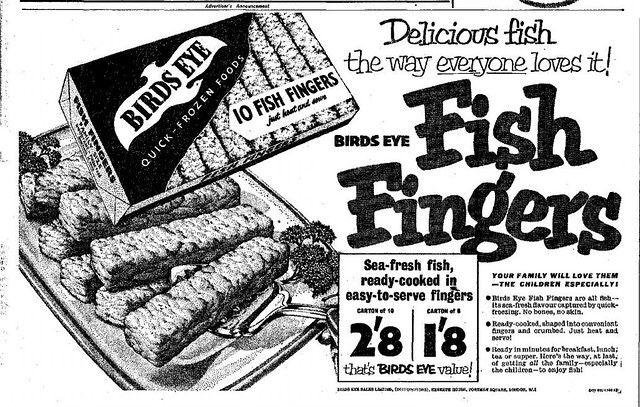
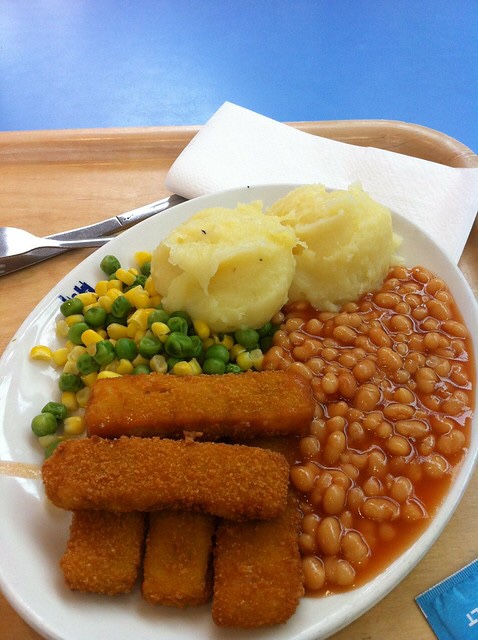
Birds Eye fish fingers (1956) – Bradford Timeline via Flickr

After World War 2 there was an abundance of herrings in the UK – and after sampling ‘herring savouries’ in the United States Clarence Birdseye wondered if there could be a market for herring fish fingers in Britain…. A test was conducted; shoppers in Southampton and South Wales were asked to try the herring fish fingers and compare them to a blander alternative – cod…. Much to the surprise of Birdseye the public overwhelmingly preferred the taste of the cod variety….

The fish finger we know and love was launched at the Brighton Sales Conference in the Autumn of 1955 – it retailed at an introductory price of 1s 6d a pack…. Each finger came individually wrapped in a waxed film, then packaged in a wax coated carton…. In the first year the British public got through some 600 tonnes of fish fingers! Nowadays more than 1.5 million are sold on a daily basis….

img_3896
Hazel Nicholson via Flickr

On this day in history….25th September 1818

On this day in history : 25th September 1818 – Obstetrician James Blundell performs the first successful transfusion of human blood at Guy’s Hospital, London….

img_3897
James Blundell (Physician) – engraved by John Cochran after Henry Room – Public domain

Blundell performed the procedure on a woman who had haemorrhaged during childbirth…. However, it was not the first ever successful blood transfusion to be done…. The first is attributed to British physician Richard Lower in 1665 – who bled a dog almost to the point of death and then by transfusing blood from another dog managed to revive it….

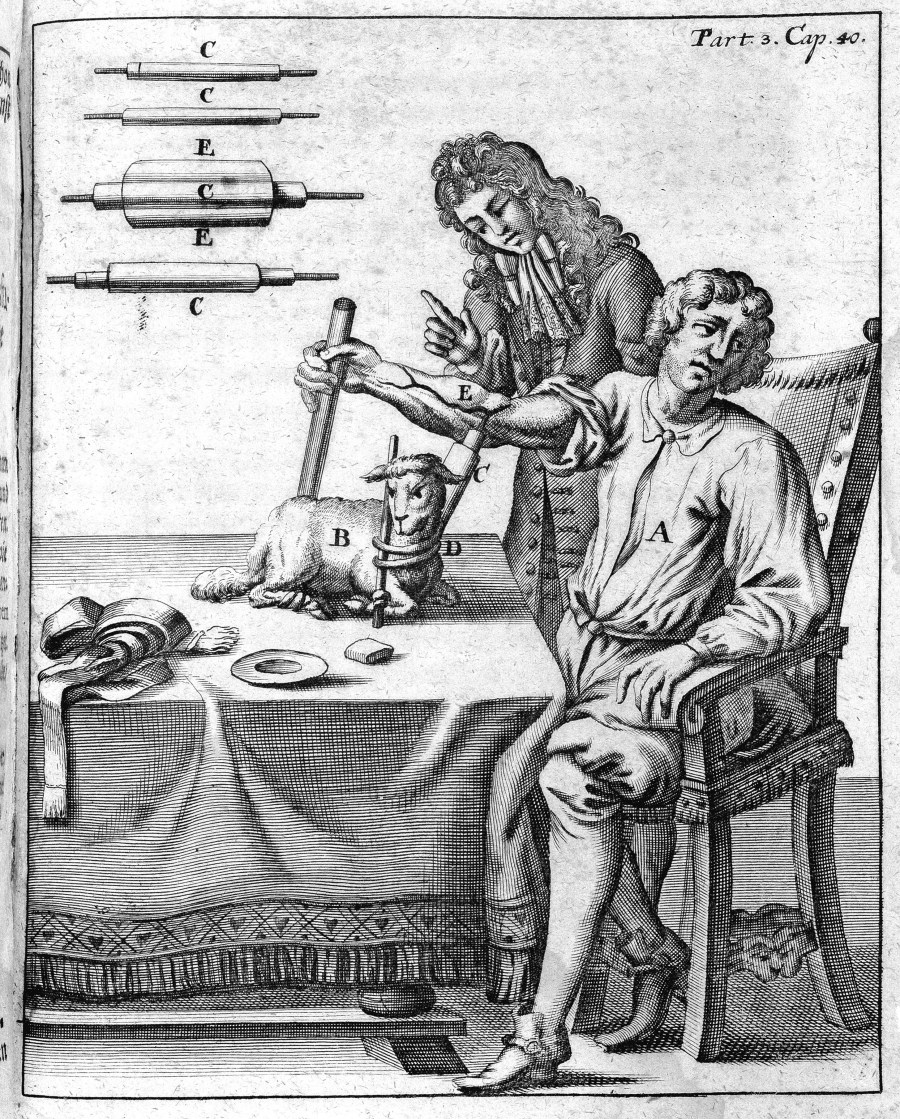
And in 1667, Jean-Baptiste Denis, physician to King Louis XIV transfused the blood of a sheep to a 15-year-old boy…. He repeated the process on a labourer….both patients survived their transfusions….

img_3893
An early blood transfusion from lamb to man – Image credit : Wellcome Collection CC BY

On this day in history….24th September 1776

On this day in history : 24th September 1776 – The St. Leger, the World’s oldest classic horse race, is run for the first time at Cantley Common, Doncaster….

Colonel Anthony St. Leger, an army officer and politician, founded the five horse race…. The original distance was 2 miles and the rules stipulated that colts and geldings were to carry 8 stone in weight with an allowance of 2 pounds for fillies….

img_3891
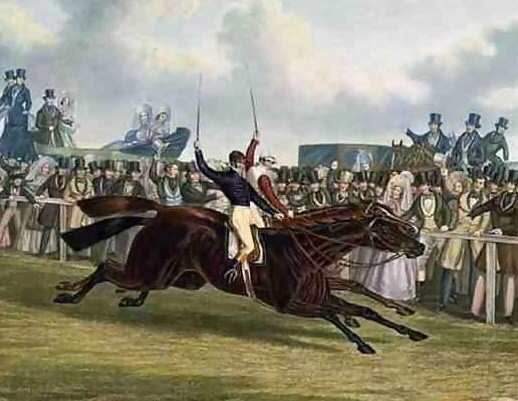
Charles the Twelfth beats Euclid in the deciding heat of the St. Leger, 1839 – John Frederick Herring – Public domain

The very first race, which was still to be officially named – and was referred to as ‘A Sweepstake of 25 Guineas’ – was won by an un-named filly owned by the 2nd Marquess of Rockingham (who also happened to be the event organiser)…. It was at a dinner party in 1777 that the race was christened the St. Leger Stakes – after its founder…. It had also been suggested it be named after the Marquess as the ‘Rockingham Stakes’….

Nowadays the St. Leger is run at Doncaster each year in September – it is open to three-year-old thoroughbred colts and fillies over a distance of 1 mile, 6 furlongs and 115 yards (2,921 metres)…. This year the race was held on the 14th of September and was won by Logician, ridden by Frankie Dettori, his sixth win of the classic race….

img_3890
Doncaster Racecourse, home of the St. Leger – Image courtesy http://www.badobadop.co.uk CC BY-SA 3.0

On this day in history….23rd September 1641

On this day in history : 23rd September 1641 – The Merchant Royal is lost at sea off of Land’s End – full of treasure! It is one of the most valuable wrecks of all time….

During a voyage across the Atlantic, with a cargo of silver and gold, bound for Europe from the New World, the Merchant Royal sprung a leak and Captain John Limbrey put in to Cadiz for repairs…. Whilst there a fire broke out on a neighbouring ship – also laden with gold, silver and jewels, on its way to Antwerp…. It was agreed that Captain Limbrey would add the cargo from the stricken vessel to his own and for a price make delivery on its behalf….

img_3888
Example of a merchant ship from the 17th Century – Wenceslaus Hollar, graphic artist – Public domain

So, the Merchant Royal set off in tandem with her sister ship, the Dover Merchant…. As they approached the English Channel, in very rough stormy weather, the Merchant Royal’s pumps broke and the ship stared to take on water…. The crew launched the ship’s lifeboat, urging the Captain to go with them – but he refused, determined to stay with the treasure…. However, he soon had a change of heart and fired a canon to call the Dover Merchant for assistance – to which she responded and he was rescued….

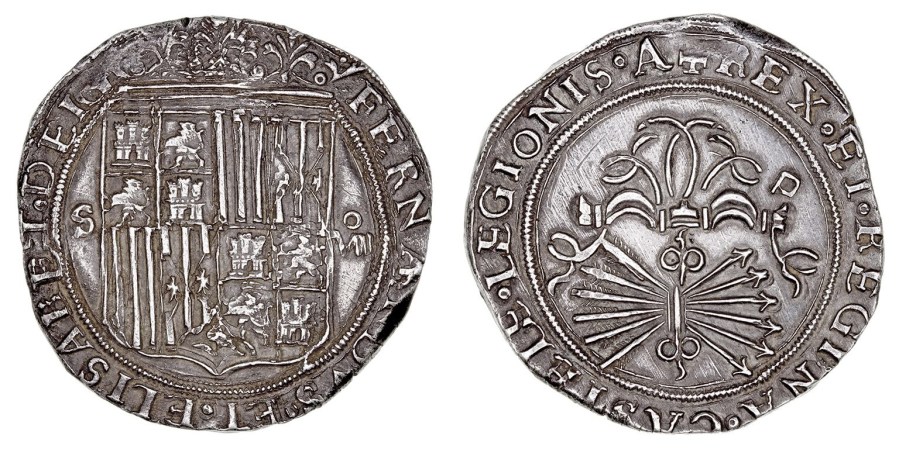
The Merchant Royal went down some 30 miles or so off of Land’s End, near to the Isles of Scilly – with its cargo of 100,000lb of gold – which equates to over £1bn in today’s prices…. There were also 400 bars of Mexican silver, 500,000 pieces of eight (Spanish dollars) and countless jewels…. The wreck has never been found….

img_3889
Pieces of Eight (Spanish dollars) – Image credit : Numismatica Pliego CC BY-SA 3.0