Blog

On this day in history….17th July 1717

On this day in history : 17th July 1717 – The premiere of Handel’s Water Music….written for an outdoor performance for King George I and is played on a barge whilst sailing up the River Thames….

img_3580
George Frideric Handel by Balthasar Denner – Public domain

“On Wednesday evening at about 8, the King took water at Whitehall on an open barge….where in were 50 instruments of all sorts, who play’d….the finest symphonies compos’d express for the Occasion by Mr. Hendel, which his Majesty liked so well, that he caus’d it to be plaid over three times in going and returning”…

It is rumoured the King felt he was being over-shadowed by his son, the Prince of Wales – who was constantly throwing lavish dinners and parties – and was stealing all the limelight…. So, King George decided to do something about it….

George Frederick Handel liked to use musical influences from all over Europe….France, Italy, Germany….and mix them all up…. For an English flavour to his Water Music he included ‘Alla Hornpipe’ – the Hornpipe Dance being ‘very English’ – associated with sailors and involving a lot of jumping up and down…. This lively dance would have appealed to an exhibitionist King who liked to show-off his dancing skills….

King George and his party, which included Dukes, Duchesses and his two mistresses, boarded the royal barge at 8pm on a summer’s evening at Whitehall Palace and travelled up the Thames towards Chelsea…. They were accompanied by another barge with 50 musicians – an orchestra that comprised of flutes, recorders, oboes, bassoons, trumpets, horns, violins, basses – and French horns – which the British had never seen before…. People lined the river banks to see and hear….and many other boats joined the flotilla, wanting to enjoy the music….
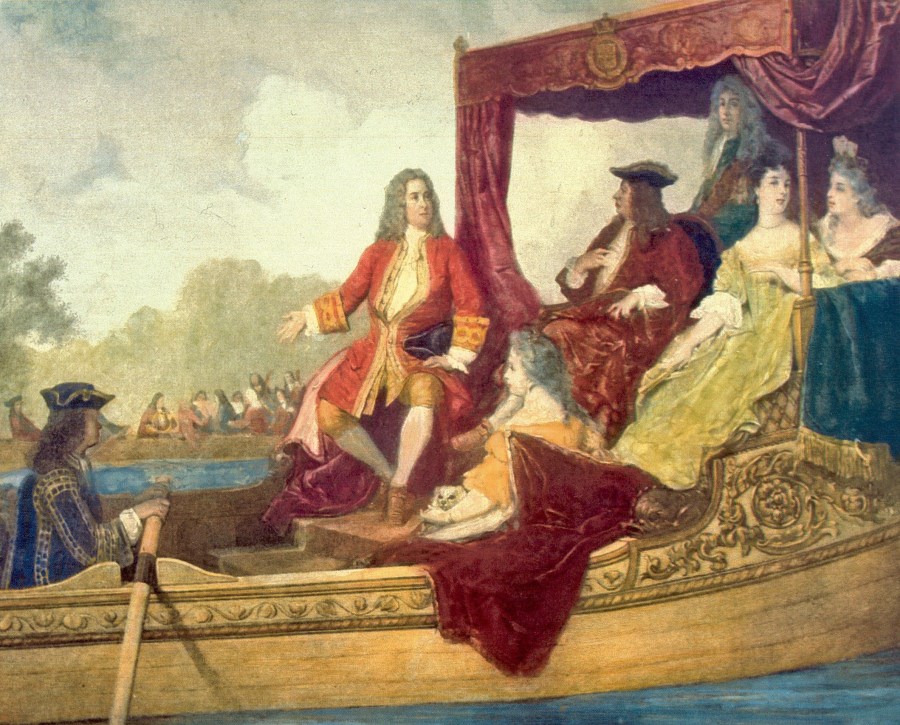
img_3579
Handel (left) and King George I on the River Thames – painting by Edouard Hamman – Public domain

At Chelsea the royal party left the barge but returned at 11pm for the return trip….and the music was played again…. In fact the King enjoyed it so much that the 3 suites of Handel’s Water Music were performed three or four times….each lasting for over an hour…. The only break the exhausted orchestra got all evening was the brief interlude when the royal party disembarked at Chelsea….
On this day in history….16th July 1439

On this day in history : 16th July 1439 – King Henry VI bans kissing in England – in an attempt to stop the spread of the plague…. A ban that failed as people refused to co-operate….

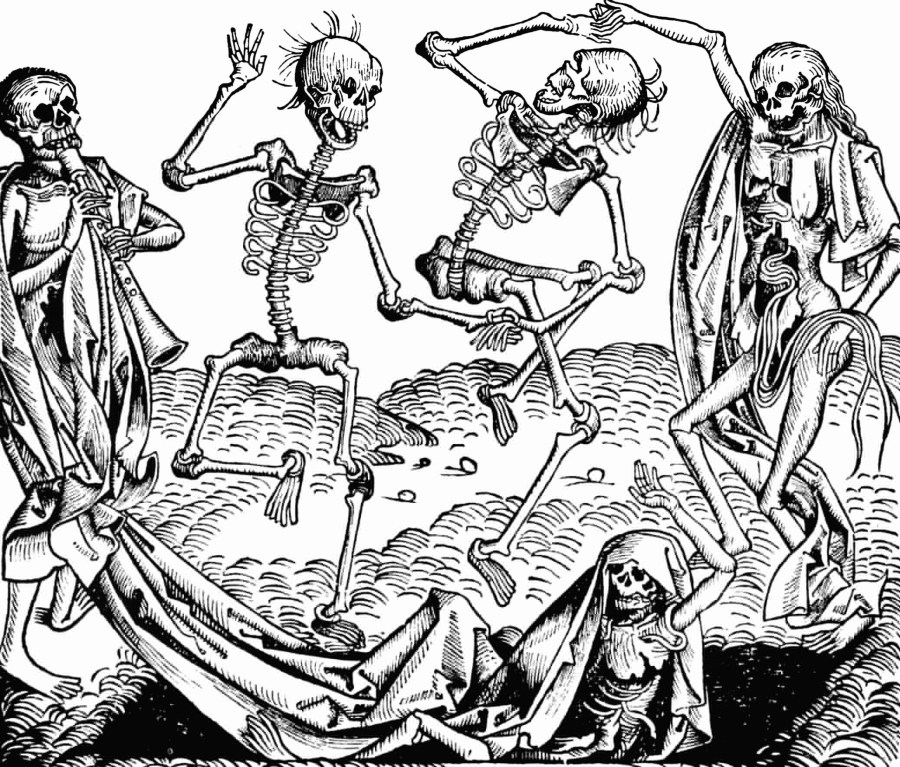
img_3575
Inspired by the Black Death, ‘The Dance of Death’ or, ‘Danse Macabre’ – a common painting motif in the late Medieval period – Public domain

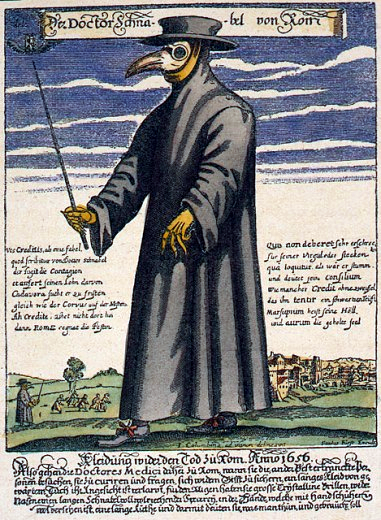
People in the Middle Ages believed that disease was spread through tiny particles…. It was not understood that the plague was spread by black rats, which were everywhere; fleas would bite the rats and then humans, passing the disease on…. Symptoms would start with a high fever and a hacking cough…. Huge black boils, some the size of an egg, would then appear on the neck, in the armpits and groin area…. Most died within 2-7 days…. There was no medical help….only special ‘plague doctors’ who would beat sufferers with a rod to try and ‘purify’ them of whatever sin they had committed in order to receive such a terrible punishment….

img_3577
Copper engraving of Doctor Schnabel (Dr Beak), a plague doctor in 17th Century Rome, circa 1656 – Public domain

It is thought the disease arrived in Europe from Central Asia via the Silk Route – with rats coming in onboard merchants’ ships…. It is thought between 1347 and 1351 up to 200 million died across Eurasia; there are no exact figures but recent research believes between 45-50% of Europe’s population was wiped out…. It is estimated around 30% of England’s population died but some sources say it could have been as high as 50%…. Whole families perished….nobody was safe, from peasants to royalty…. The unhygienic environment of the time meant disease spread quickly….King Henry VI issued his decree – banning kissing until the plague had passed – as he believed ‘if the lips were kept chaste the small particles of plague could not be passed on’….

img_3576
The Great Plague of London, in 1665, killed up to 100,000 people – Public domain

By the end of 1350 Black Death had more or less died out in Europe….but not so in England, the disease kept on recurring…. It peaked in 1665 with the Great Plague of London….and it was The Great Fire of London in 1666 that helped eradicate the disease by killing most of the black rats….and their fleas….

img_3578
Black rat at London Zoo – Image credit: Liftarn CC BY-SA-3.0

On this day in history….15th July 1685

On this day in history : 15th July 1685 – James Scott, 1st Duke of Monmouth and illegitimate son of Charles II is executed – later his head is re-attached so his portrait can be painted….

Monmouth had been born on the 9th of April 1649 in Rotterdam, the Netherlands – he was the eldest illegitimate son of King Charles II and his mistress Lucy Walter…. He was made the Duke of Monmouth on the 14th of February 1663, shortly after he was brought to England….and at the tender age of 14 was married to heiress Anne Scott, on the 20th of April 1663…. Two years later he was to begin his military career, rising to rank of Commander of the Anglo-Dutch Brigade, fighting against the French, by 1678….

img_3556
Duke of Monmouth – public domain

On his return to Britain Monmouth commanded a small army which was formed to stop the Scottish Covenanters…. His small, massively outnumbered army managed to defeat the Covenanters…. By now Monmouth was becoming a serious contender as heir to the English throne….a position he was eager to secure….

In 1683 Monmouth was implicated in the Rye House Plot – an attempt to assassinate Charles II and his brother James, Duke of York and successor to the throne…. Monmouth, identified as a conspirator was forced to go into exile in the Dutch United Provinces….

King Charles II died in February 1685…. In an attempt to take the throne from his uncle Monmouth led the Monmouth Rebellion….landing three ships at Lyme Regis in June 1685…. However, on the 8th of July 1685 Monmouth was captured near to Ringwood in Hampshire and was taken to London….

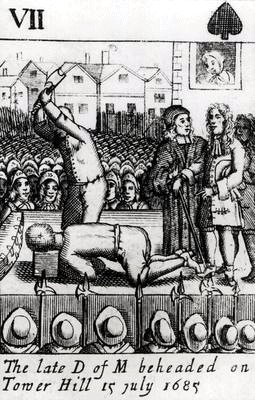
Monmouth was beheaded by executioner Jack Ketch on the 15th of July 1685 on Tower Hill…. He begged Ketch to finish him with one blow….but the executioner had other ideas…. He administered several blows – some say as many as eight – the official Tower of London records report five…. After each blow Monmouth rose up – giving the crowd a ghastly sight…. It s said a knife was finally used to sever his head…. He was then buried in the church at the Tower of London….

img_3557
Monmouth’s execution on Tower Hill – Public domain

According to legend soon after his execution realisation dawned that no official portrait of Monmouth existed…. So his body was exhumed….his head stitched back on to his shoulders and he was ‘sat’ for his portrait…. However, it has to be said, portraits in the National Gallery do appear to have been dated before his death…. But who really knows….

On this day in history….14th July 1967

On this day in history : 14th July 1967 – Abortion is legalised in Britain, ending the misery of many of the illegal backstreet terminations that claimed the lives of so many women….

img_3549
ImageCreator CC BY-SA 3.0

Throughout history attitude towards abortion in the Western World had been more relaxed – it was considered the foetus was part of the woman and abortion was acceptable providing it took place before ‘quickening’ started – or when the baby’s movements began to be felt (16-20 weeks)…. However, towards the end of the 18th century attitudes began to change – including in Britain….

img_3550
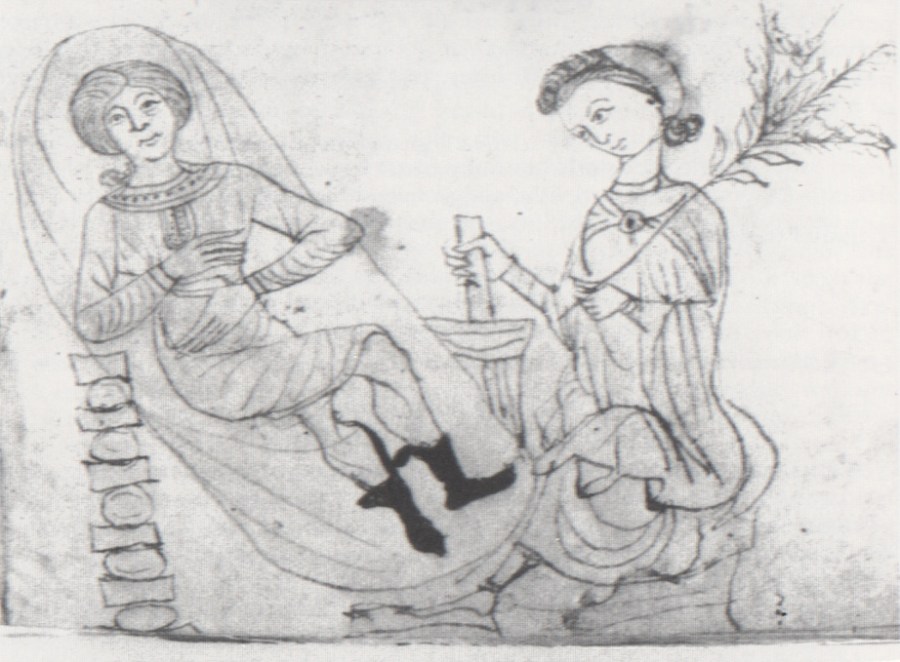
Art from a 13th century illuminated manuscript – featuring a herbalist preparing a concoction containing pennyroyal for a woman – Public domain

In 1803 The Ellenborough Act was brought in…. Any abortions carried out after quickening carried the death penalty…. In 1837 the Act was amended to include all abortion…. This was relaxed in 1861 with The offences Against the Person Act, which meant performing an abortion or trying to self abort carried a sentence of life imprisonment….

The Infant Life Preservation Act replaced this in 1929 – making it to crime to kill a viable foetus in all cases except when an expectant mother’s life was at risk…. However, this didn’t last for long – a succession of laws followed to eventually all but totally take away even this access to a termination….

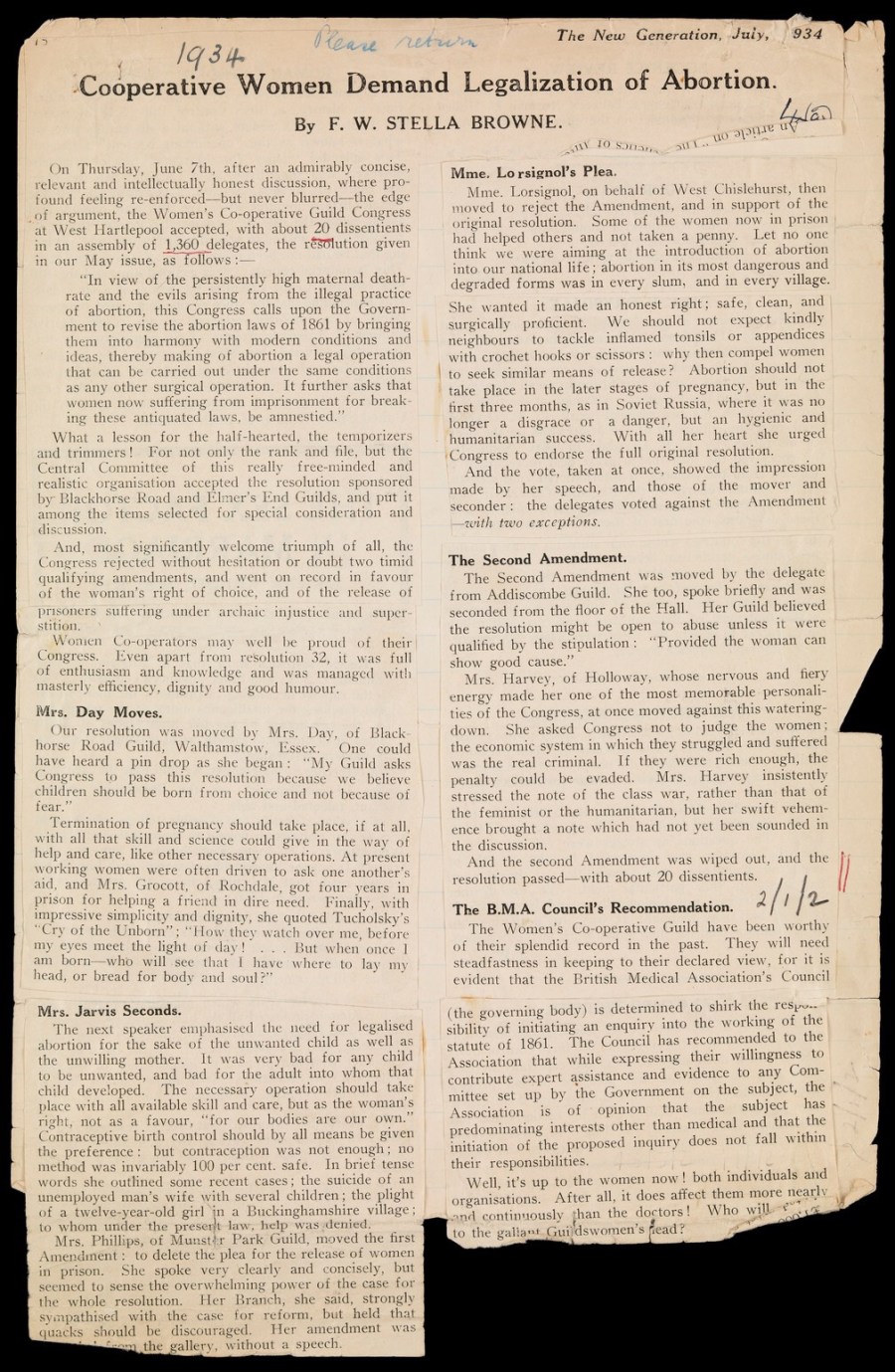
During the 1930s MPs and women’s groups began to audibly voice concerns about the loss of life and damage to women’s health…. Between 1923-33 around 15% of maternal deaths were due to illegal abortions…. This eventually led to the establishment of The Abortion Law Reform Association in 1936…. In 1938 Dr Alex Bourne was acquitted for performing an illegal abortion – this case set a precedence….and during the 1950s support for reform grew…. The contraceptive pill arrived in the 1960s (initially for married women only) and finally The Abortion Act, sponsored by David Steel MP came in 1967….coming into effect as law on the 27th of April 1968…. Abortion became legal under certain circumstances, with the approval of two doctors…. At last control over women was coming to an end….though it didn’t happen overnight – but it was a start….

img_3554
Cooperative Women Demand Legislation of Abortion, 1934 – The Wellcome Collection CC BY

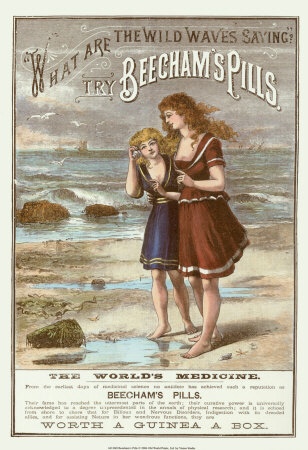
Before the Act came in to force it is estimated some 100,000 women had undergone backstreet abortions – but in reality it is likely the number was much higher than this…. Other women resorted to DIY methods; drinking bleach, scalding baths, moving heavy furniture or even using a knitting needle or crochet hook on themselves…. Advertisements would appear in newspapers for cures for ‘menstrual blockages’ – but women knew these were abortion aids…. One of the most common and cheapest was for a lead based potion – which was responsible for poisoning and blinding many women…. (Below is an example of an advertisement for Beecham’s Pills from the 1880s – which discreetly claimed to be an abortion aid in the small print – I am not suggesting this was the lead based preparation previously mentioned)….

img_3551
Suggestive advertisment for the use of Beecham’s Pills as an abortion aid, 1880s…. Beecham’s (Life time : na) CC BY-SA 3.0

A network of backstreet abortionists spread across the country…. Extra staff had to be drafted in to hospital accident and emergency departments on Friday nights – as Friday, being pay-day, would be the time many women would seek out the services of the illegal abortionists…. Often performing the ‘operation’ in squalid conditions, the abortionist would usually be unskilled – although occasionally they may have had limited nursing experience – sometimes they could even be a friend or relative of the woman…. Inevitably things often went wrong and emergency medical help had to be sought…. Sometimes there was loss of life….to avoid police questioning and bringing shame on the families sympathetic doctors were known to lie on death certificates, saying the woman had died of miscarriage….

These weren’t all ‘fallen women’…. many already had large families and simply could not afford to feed another mouth…. So many women were forced to take such drastic measures….

On this day in history….13th July 1955

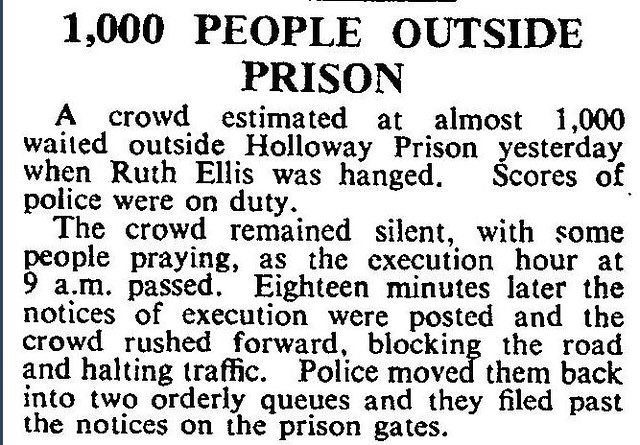
On this day in history : 13th July 1955 – Ruth Ellis, the last woman to be hanged in Britain, is executed at Holloway Prison for the murder of her lover, David Blakely….

Born on the 9th of October 1926 in Rhyl, North Wales, Ruth at a young age was then to move with her family to Basingstoke, Hampshire – where she went on to attend Fairfields Senior Girls’ School…. Leaving at 14 she found work as a waitress…. The family moved to London in 1941 – and when Ruth was 17 she became pregnant by a married Canadian soldier…. She gave birth to a son, who was initially brought up by Ruth’s mother….

Ruth took up nude modelling – and through this got a job as a nightclub hostess…. She also took up prostitution and in 1950 fell pregnant once again…. This time she had a backstreet abortion….

img_3536
Ruth Ellis – Fair use

In November 1950 she married George Johnston Ellis, a dentist with two sons from a previous marriage…. He was a jealous, possessive and violent alcoholic and became convinced Ruth was having an affair….needless to say, it was a stormy marriage…. When Ruth gave birth to their daughter he refused to believe the baby was his…. Ruth took her son and daughter and moved back in with her parents…. She also returned to prostitution….

1953 saw Ruth become the manageress of a nightclub in Knightsbridge…. She had by now made a number of celebrity friends, among them racing driver Mike Hawthorn….and it was through him that she met his fellow racing driver friend, David Blakely…. Although he was already engaged to another, Blakely had soon moved into Ruth’s flat above the nightclub…. and it wasn’t long before she was pregnant again…. Once more she had a termination….

Ruth also started seeing former RAF pilot Desmond Cussen, who was now a director of the family business, a wholesale and retail tobacconists across London and also South Wales…. When Ruth was sacked from her nightclub job it was his Oxford Street home that she moved into…. All the while she continued to carry-on with Blakely…. This relationship was becoming increasingly violent as Ruth insisted on seeing other men…. In January 1955 she suffered a miscarriage after Blakely punched her in the stomach following an argument….

Blakely wanted to end the relationship and went to stay with friends – wanting to lie-low…. On Easter Sunday, the 10th of April 1955, Ruth, having an inkling of where he was hiding, went to the address in Hampstead, London…. She arrived just in time to see his car drive off…. With an idea of where he may be going she walked the quarter mile or so to the Magdala public house – and sure enough his car was outside…. Ruth waited and around 9.30pm he and friend Clive Gunnell left the pub…. Ruth stepped from the doorway of the newsagents where she had been waiting and said “Hello, David”…. Blakely ignored her and continued to fumble for his car keys…. Ruth shouted his name – she then took a .38 calibre Smith & Weston Victory Model revolver from her handbag – and fired 5 shots at Blakely….

img_3537
Site of the Magdala pub (2008) which closed in 2016 – Steve Bowen – Public domain

The first shot missed…. Blakely ran…. Ruth fired again, this time the bullet struck Blakely and he collapsed on to the pavement…. Ruth stood over him and fired 3 more bullets into his body…. She fired one last bullet into the ground….which ricocheted off the road, hitting and injuring Gladys Kensington-Yule, a by-stander, in the thumb….

Ruth, in shock, asked “Will you call the police, Clive?” An off-duty police officer, Alan Thompson, who was at the scene, took the gun from Ruth – and arrested her….

img_3539

Ruth’s trial took place in Court No.1 at the Old Bailey on the 20th of June 1955 – the jury took just 20 minutes to convict her…. Her execution was performed by Albert Pierrepoint….

img_3538
Image credit : Bradford Timeline via Flickr