Blog

On this day in history….2nd June 1850

On this day in history : 2nd June 1850 – The birth of Jesse Boot – who transformed the business his father had founded into a national retailer – Boots – ‘Chemist to the Nation’….img_3281
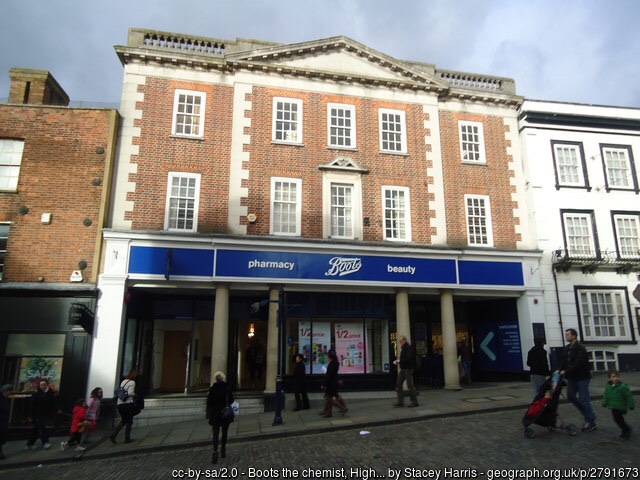
John Boot had started out by making and selling herbal remedies from recipes his mother had taught him…. He opened his first shop in 1849 at Goose Gate, Nottingham and it was to become the roots of the Boots empire….

img_3279
16-22 Goose Gate – Photo credit: Alan Murray-Rust CC BY-SA 2.0

He married Marry Wills and they had two children, Jesse and Jane…. Having suffered ill-health for most of his life John Boot died in 1860 – leaving his wife and 10-year-old Jesse to run the business, which they did as M & J Boot, Herbalists…. Jesse and his sister would go and collect herbs from the countryside….and as he got older he took on a larger role within the business until when in 1877 he took over….

Jesse wanted to make medicines available and affordable to all….and once he took over he began to put his big ideas into practice…. He started to buy ingredients in bulk…. On one occasion he bought a ton of Epsom salt – and it took the family a whole weekend to package it up and fill the shop window…. Advertised at a penny a pound – or seven pounds for sixpence – Jessie was ridiculed by his competitors, who all sold Epsom salt for a penny an ounce, they said he would soon go out of business…. In response he took out a large advertising campaign in the local Press and doubled his sales in a month….img_3278
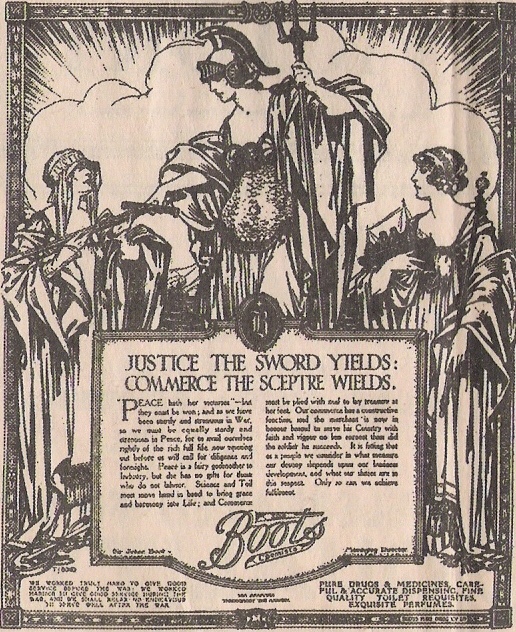
The business became incorporated as Boot & Co. Ltd in 1883 and then Boots Pure Drug Company in 1888…. Jesse married Florence in 1885 and their son, John, was born in 1889…. His flagship store at Pelham Street, Nottingham opened in 1892…. Between them Jesse and Florence continued to grow the business – and began selling other associated products…. Florence concentrated on developing stationery lines and gift ideas – and she established Boots Booklovers Libraries…. She also took particular interest in the welfare of their staff….img_3277

By 1896 Jesse owned 60 shops in 28 towns – offering prescriptions, which doctors had previously had to make up themselves…. Jesse often worked up to 16 hours a day but having no chemist training himself employed qualified staff….

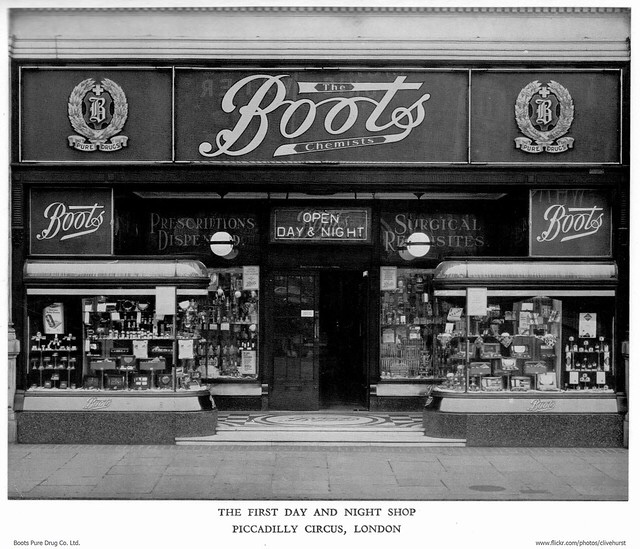
Jesse received a knighthood for his achievements in 1909…. By the beginning of World War 1 he had more than 560 branches and in 1917 was made a baronet….
img_3280
Piccadilly Circus, London – Image credit: Clive Hurst via flickr

By the time he was 70 Jesse was almost crippled with rheumatism….and in 1920 he sold his controlling share of the business to the United Drug Company of America, in a deal worth over £2m…. The Company employed some 1,500 staff by this time…. Despite his illness Jesse continued to work and in 1929 was made 1st Baron Trent…. He died two years later in 1931….

Jesse’s son had taken over as chairman of the Company in 1926 and upon his father’s death had inherited his title…. In the 1930s North America suffered a severe economic depression and in 1933 John made a successful bid to buy the Company back…. Shortly after Boots opened its 1,000th store….
img_3276
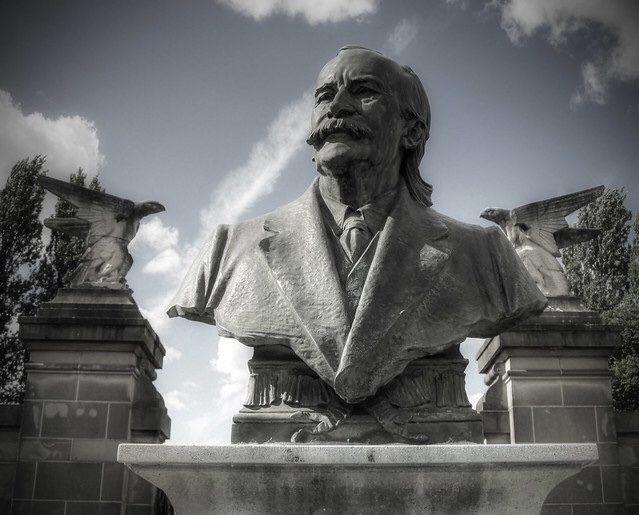
Bust of Jesse Boot, Nottingham – Photo credit : Addy Clarke via Flickr

On this day in history….1st June 1985

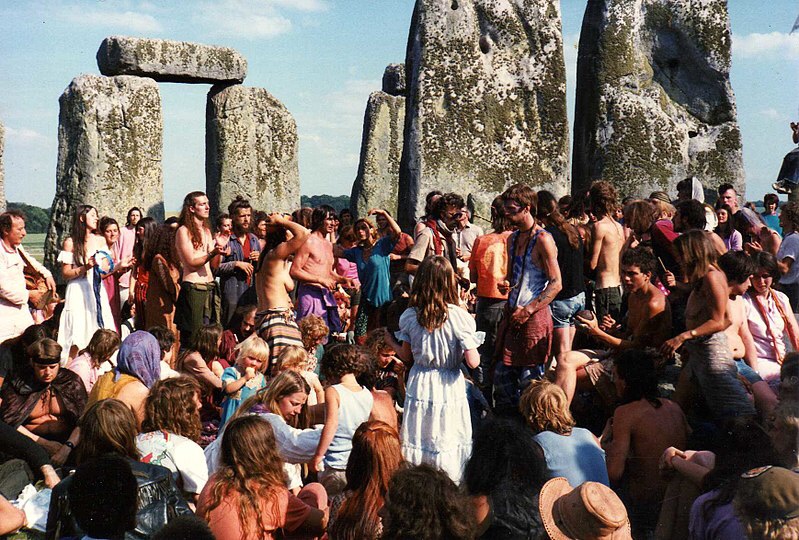
On this day in history : 1st June 1985 – The ‘Battle of the Beanfield’ takes place, near to Stonehenge…. More than 500 arrests are made as travellers attempt to reach the stones to hold an illegal festival….

The Stonehenge Free Festival ran from 1974 to 1984 – it is estimated attendance had grown to about 100,000 annually…. In 1984 the Department of the Environment passed the management of Stonehenge to English Heritage – and because of damage incurred to the stone circle and its surrounding area a High Court injunction was imposed to prevent the 1985 festival from taking place….

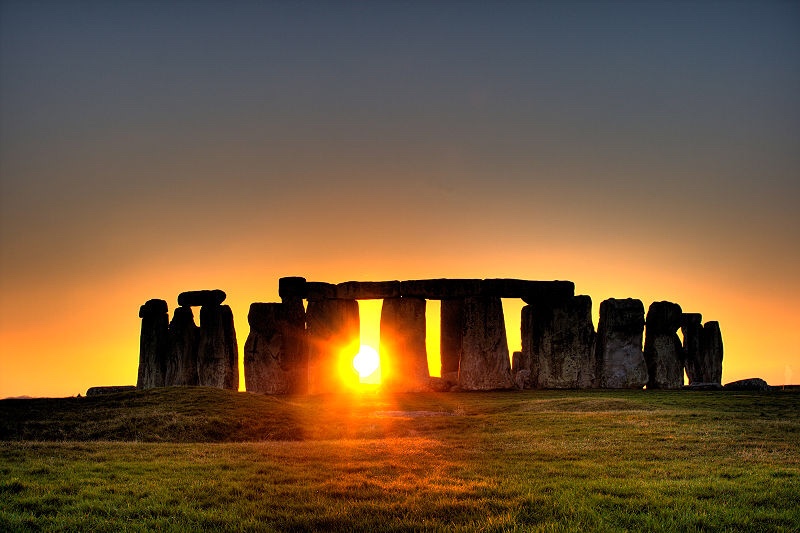
img_3274
Stonehenge Free Festival 1984 – Salix aiba at en.wikipedia CC BY-SA 3.0

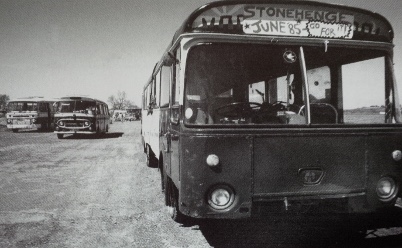
The New Age Traveller culture had developed in the 1970s as an alternative lifestyle…. Some 140 vehicles, mostly buses and vans converted to living space and accommodating around 600 travellers, had spent the night at Savernake Forest…. The following morning they had set off in convoy for Stonehenge – and managed to avoid a first roadblock on the A303 by diverting down a side road…. However, 7 miles from their destination they encountered a second roadblock; 500 police officers, council vehicles and 15 tons of gravel dumped on the road barred their way….

img_3273
Photo credit : Alan Lodge – fair use

What actually happened next is somewhat disputed…. The police claimed their vehicles were rammed; stones, lumps of wood and even petrol bombs were hurled…. Whereas those in the convoy described how they were ambushed; the windows of their vehicles smashed, they were beaten with truncheons and women were dragged along by their hair….

Some 200 fled into a nearby field, many were women and young children…. The police told of how a stand-off commenced…. Through negotiation some of the travellers left peacefully around 4 hours later…. However, at around 7pm a second police attack took place as some travellers tried to escape by driving across the fields…. It is claimed the police threw truncheons, shields, stones and even fire extinguishers to try and prevent them….

img_3272
Photo credit : Tim Malyon – fair use

This was the first test of English Heritage’s ban on Midsummer festivals at Stonehenge…. Around 1,300 police from 6 different forces took part…. In total 537 arrests were made and 24 people needed hospital treatment; 16 travellers and 8 police officers…. A carnage of damaged vehicles and fires were left behind….

Two years later a Wiltshire police sergeant was found guilty of causing actual bodily harm…. In February 1991 Winchester Crown Court awarded £24,000 to 24 travellers who had sued the police for wrongful arrest and damage to property…. The police were cleared of wrongful arrest….and the £24,000 awarded was swallowed up by the legal bill of the travellers, as legal costs had not been awarded…. In 2000 English Heritage lifted the ban that had been imposed on festivals at Stonehenge…. Druids and revellers now enjoy limited access….

img_3275
Photo credit : Simon.Wakefield via flickr

On this day in history….31st May 1838

On this day day in history : 31st May 1838 – The Battle of Bossenden Wood takes place between a group of agricultural labourers and armed soldiers…. It is the last battle to be fought on English soil….

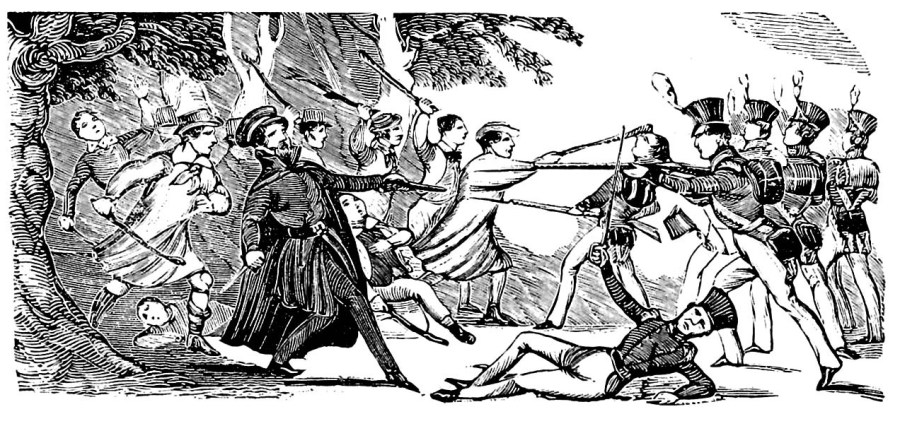
img_3265
Scene at Bossenden Wood drawn by an eyewitness – Public domain

Self-proclaimed Sir William Courtenay was a Cornish wine merchant; his real name was John Nichols Tom – and he was born in 1799 to inn-keeper parents…. Tom received a good education in which he stayed until he was 18 and then he was apprenticed to a solicitor…. Deciding Law was not for him he left after 3 years and tried his hand as an inn-keeper…. Later he went to work as a clerk for a wine merchants and when the owners retired took over the business…. He married Catherine in 1821….and everything in life should have been rosy – only this was not how it was to work out….

img_3266
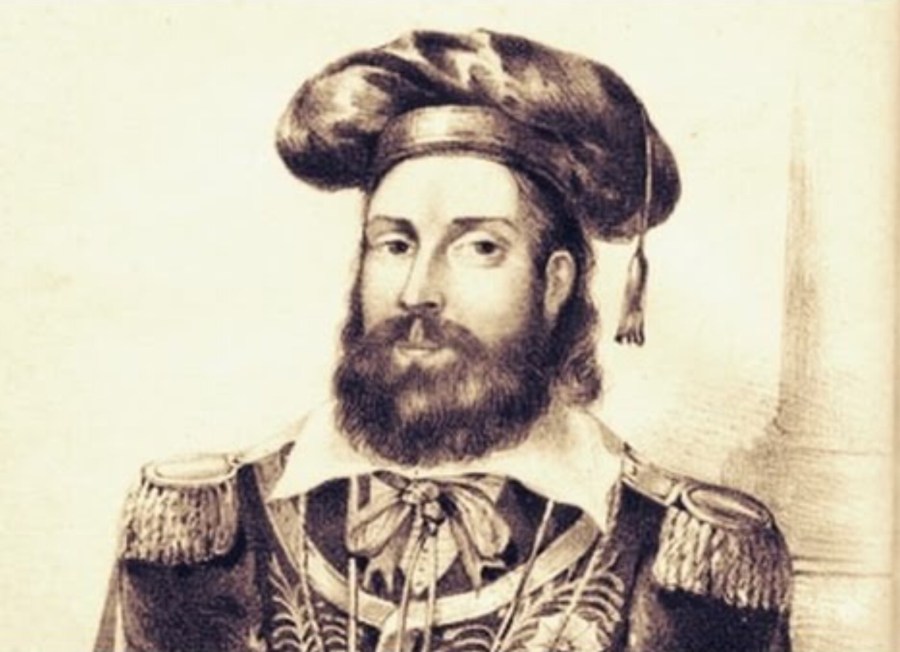
Courtenay – public domain

When Tom was in his late twenties his mother was sent to a lunatic asylum – where she died…. Around the same time, in 1828, the premises of his wine merchants business was destroyed by fire…. In 1831 Tom had a mental breakdown, for which he received treatment…. Believing himself sufficiently recovered he left Truro with a consignment of malt, bound for Liverpool…. From there he wrote to his wife; he travelled to Birmingham and wrote again that he was going to France – that was the last she heard from him….

In September of the following year Tom turned up in Canterbury, dressed in flamboyant finery, with long flowing red hair and beard…. He called himself ‘Sir William Percy Honeywood Courtenay, Knight of Malta, heir to the Earl of Devon and the Kentish estates of Sir Edward Hales’…. Most people realised he was an imposter – but he was an amusing larger-than-life figure and soon became very popular in Canterbury…. Having being persuaded by local dignitaries and politicians to stand for parliament, in the December 1832 General Election, he gave some colourful speeches – and actually gained respectable results, even if not enough to get him into government….

In March 1833 Tom found himself on the wrong side of the Law…. He gave evidence in the defence of some smugglers from Faversham; they got off – but Tom was charged with perjury…. He was found guilty and sentenced to 3 months imprisonment and 7 years transportation….

News reached Cornwall of the goings on of this man who called himself Sir William Courtenay – and Catherine travelled to Kent to find out if this was indeed her missing husband…. Tom denied knowing her – but she managed to convince the authorities and told them of his mental breakdown…. After being examined by two doctors Tom was declared of being ‘not in sound mind’ and was admitted to Barming Heath Asylum in October 1833…. He was the perfect patient….and 4 years later Queen Victoria granted him a pardon – on condition he returned to his family in Cornwall….

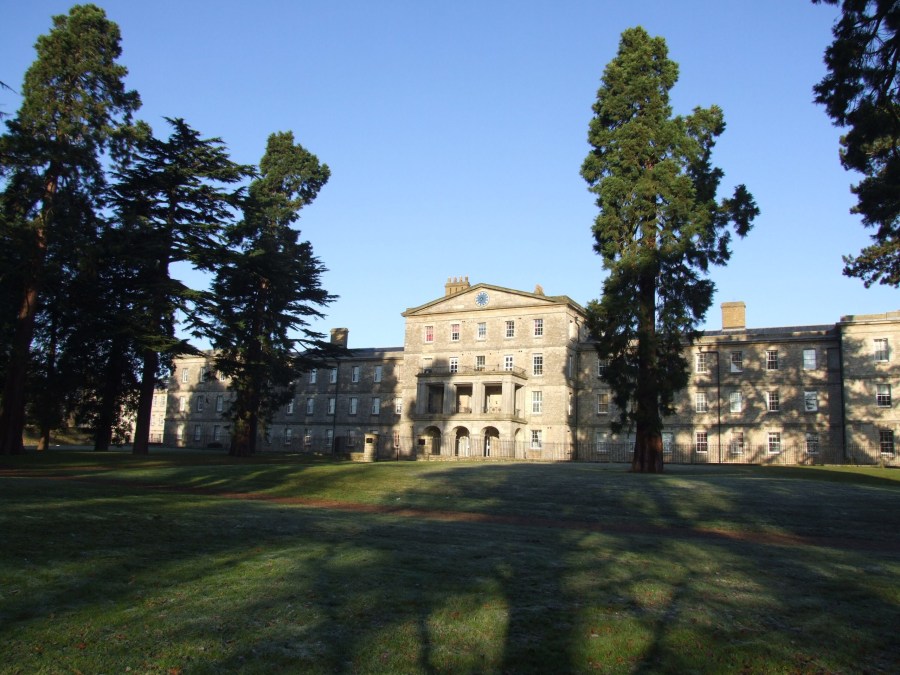
img_3267
Barming Heath Asylum – now St. Andrew’s House, Oakwood Hospital…. Coutenay would have been one of the first patients admitted when it opened in 1833…. Image : Moriarti01 CC BY-SA 3.0

But of course, he didn’t…. instead he spent the next few months wandering through eastern Kent rousing agricultural workers, small holders and artisans…. A New Poor Law had recently been introduced; all unemployed, able-bodied men were required to enter the workhouse…. Tom promised a better life….inciting them to rise-up against low pay, lack of work and poor conditions…. Gradually he built up a band around him….and together they roamed through the Kent countryside and drummed up support….

Wealthy landowners began to get agitated and on the 31st of May 1838 a warrant was issued for Tom’s arrest…. The local constable of Boughton-under-Blean, his assistant and brother, Nicholas Mears were despatched to find him…. Tom and his followers were staying at Bossenden Farm, near to to the village of Hernhill and when the constable’s party arrived Tom shot Nicholas Mears dead…. The constable and his assistant beat a hasty retreat – and a detachment of the 45th Infantry was called out from their barracks in Canterbury…. Under the command of Major Armstrong, 100 men and 3 junior officers tracked Tom and his 30 or 40 followers to a clearing in Bossenden Wood…. Tom and one other carried guns….the others were armed only with sticks….

img_3269
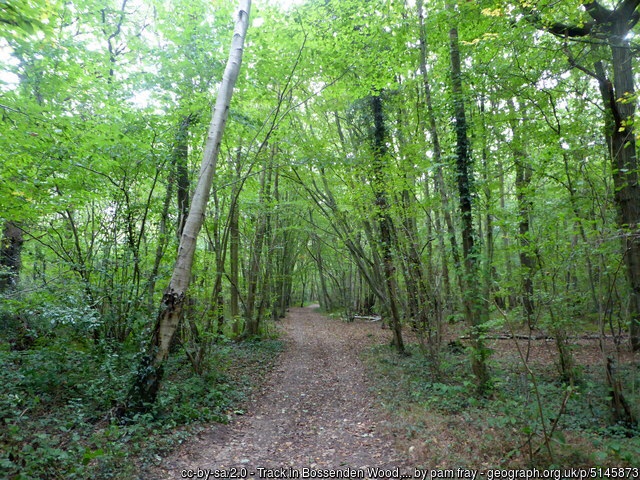
Bossenden Wood

As the soldiers advanced Tom shot dead Lieutenant Bennet, one of the junior officers…. A battle commenced, that lasted for around 10 minutes…. Tom and 8 of his men were killed….and a young special constable helping the soldiers was caught in the crossfire and died…. One soldier got slightly injured by a stick….

img_3268
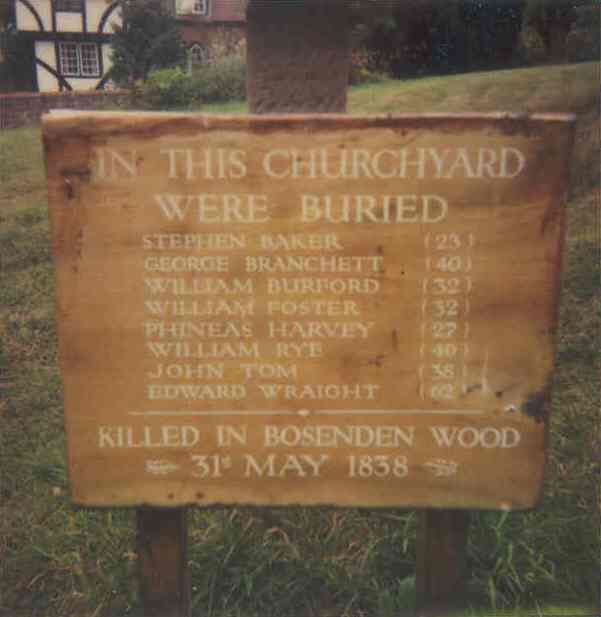
Commemorative plaque, Hernhill Churchyard CC-BY-SA- 3.0

Over the following days most of Tom’s men who had managed to escape were rounded up….including 2 women…. They were all tried for murder and were either transported or imprisoned….

img_3270
John Nichols Tom – image via Youtube

On this day in history….30th May 1842

On this day in history : 30th May 1842 – Would-be assassin John Francis attempts to shoot Queen Victoria – for the second time in two days….as she rides in an open carriage….

img_2503
Photograph by Alexander Bassano 1882. Public domain

The first attempt had been on the 29th of May; Queen Victoria and Prince Albert had attended a Sunday morning service at the royal chapel, St. James’s Palace and were returning to Buckingham Palace…. As they travelled down the Mall, in their open carriage, Prince Albert saw ‘a little swarthy, ill-looking rascal’ point a flintlock pistol in their direction…. The man pulled the trigger but the gun failed to fire…. He tucked the weapon back into his coat and disappeared into the crowd towards Green Park…. It seemed as if nobody else had noticed what had happened….

Prince Albert informed the police of what had occurred …. Any doubts he may have had at what he had seen were soon dispelled – as a young lad, who had been in the crowd, came forward to say he had witnessed a respectably dressed man in his early twenties aim a pistol at the royal carriage….

Queen Victoria refused to be confined to the Palace whilst the police hunted for the suspect…. The following day, on the 30th of May, she and Prince Albert went out for an evening ride in an open barouche – although feeling nervous they thought this may flush the villain out…. Plain clothed police offices circulated amongst the crowds – and at around 6pm, as the carriage moved down Constitution Hill, a shot suddenly rang out nearby….

img_3264
fair use

Police Constable Tanner had been one of those surveying the crowds, when he saw a man raise a pistol – he rushed to knock the gun from the man’s hand and in the process the weapon had fired…. Thankfully the shot missed and the man was apprehended…. He turned out to be the same gunman from the previous day – one John Francis….

Following trial at the Old Bailey Francis was found guilty of high treason and sentence was passed….

“It now only remains for me to pass upon you the sentence of the law, which is that you, John Francis, be taken from hence to the place from whence you came, that you be drawn from thence on a hurdle to the place of execution and that you be hanged by the neck until you be dead; that your head be afterwards severed from your body, and that your body be divided into four quarters, to be disposed of in such a manner as to Her Majesty shall seem fit. And the Lord have mercy on your soul.”

~ [Sheffield Independent, Saturday 25 June 1842]

However, luckily for Francis, Queen Victoria intervened and his sentence was commuted to banishment…. He was transported for life with hard labour….

img_3263
A broadside on the assassination attempt on Queen Victoria, conducted by John Francis on 30 May 1842, with a wood-engraving showing an open horse-drawn carriage with Queen Victoria and Prince Albert inside – Image credit: The British Museum CC BY-NC-SA 4.0

On this day in history….29th May 1968

On this day in history : 29th May 1968 – Manchester United win the European Cup Final….making them the first English club to do so….

img_3258
Image via Pinterest – fair use

Over 92,000 spectators packed Wembley Stadium on a highly charged emotional night to watch Manchester United play Benfica of Portugal – whilst another 250 million viewers watched on TV around the World….

It was the 13th season of the European Cup and came ten years after eight members of Manchester United’s team had been killed in the Munich air disaster of 1958….which also left Manager Matt Busby fighting for his life…. The crash had happened a day after the team had earned a place in the semi finals of the 1957-58 European Cup…. Two of the 1968 team, Bill Foulkes and Bobby Charlton, had survived the crash….

Portugal’s Benfica had won the Cup in 1962 and Celtic had lifted the trophy the previous season in 1967, making them the first British team to win the title…. But now it was Manchester United’s turn….

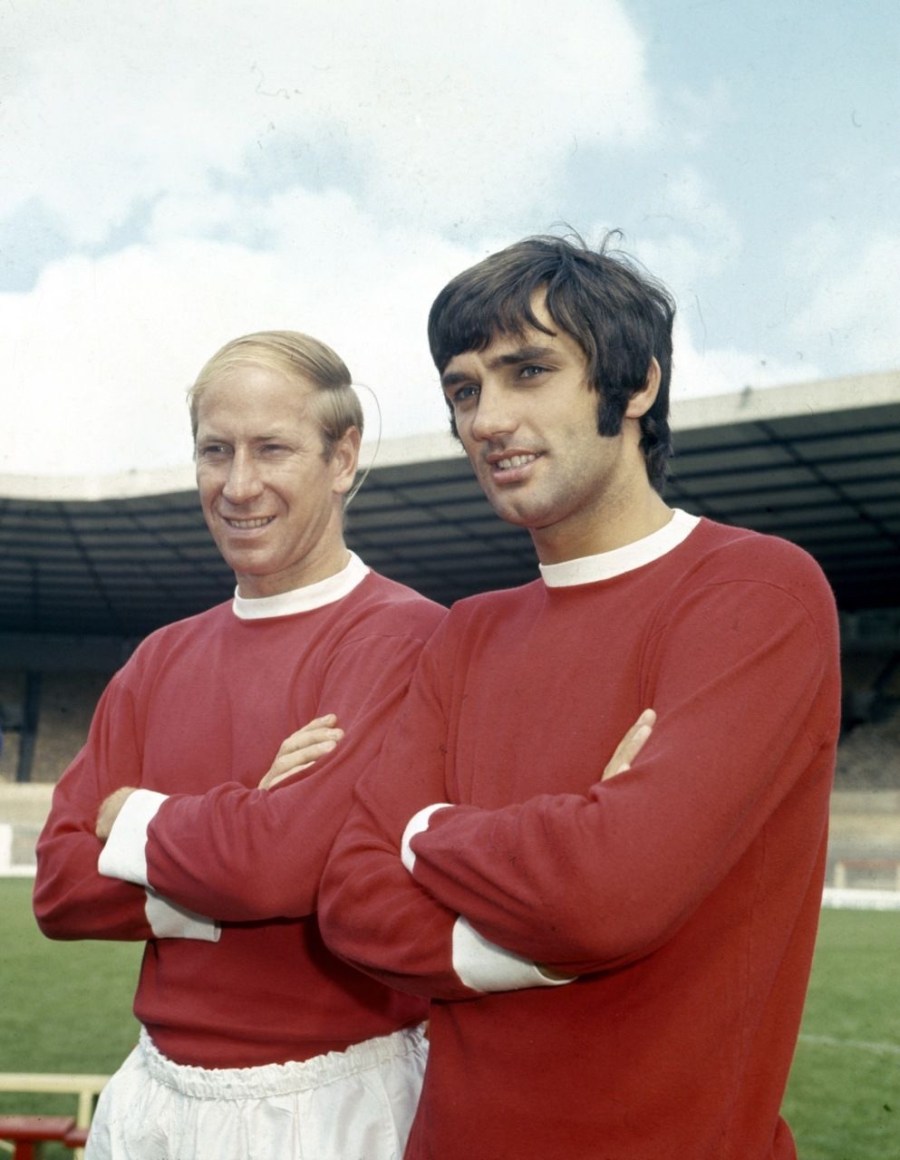
Because both teams had red as their colour Man United had opted to play in their blue away strip…. The first half remained goalless – but 8 minutes into the second half Captain Bobby Charlton headed a goal into the net…. However, 22 minutes later Benfica equalised….the score remained 1-1 until the end of normal time, forcing extra time…. Three minutes into extra time George Best scored….and a minute after that Brian Kidd, who was celebrating his 19th birthday, added a third goal…. Just to make sure it was a done deal Bobby Charlton scored his second goal of the match to make the final score 4-1….and he as Captain lifted the trophy….

img_3259
Image via Pinterest – fair use

A fortnight later George Best was named European Footballer of the Year…. Manager Matt Busby later received a Knighthood…. Bobby Charlton became Sir Bobby Charlton in 1994 – during his career he scored 49 goals for England….