On this day in history : 20th December 1979 – More than five million council tenants in Britain are to be given the right to buy their homes as The Housing Bill is published….
The right-to-buy scheme gave council tenants, who had lived in their homes for up to three years, a 33% discount on the market value of the property…. This discount increased the longer they had lived there, up to 50% for those who had been resident for twenty years or more…. Additional help was offered in the way of a 100% mortgage from the local authority….
Margaret Thatcher’s Conservative Government believed a property owning population would be a more socially responsible one and that the social structure of Britain would change for the better…. Michael Heseltine, the then Secretary of State for the Environment, stated “This Bill lays the foundations for one of the most important social revolutions of this century”….
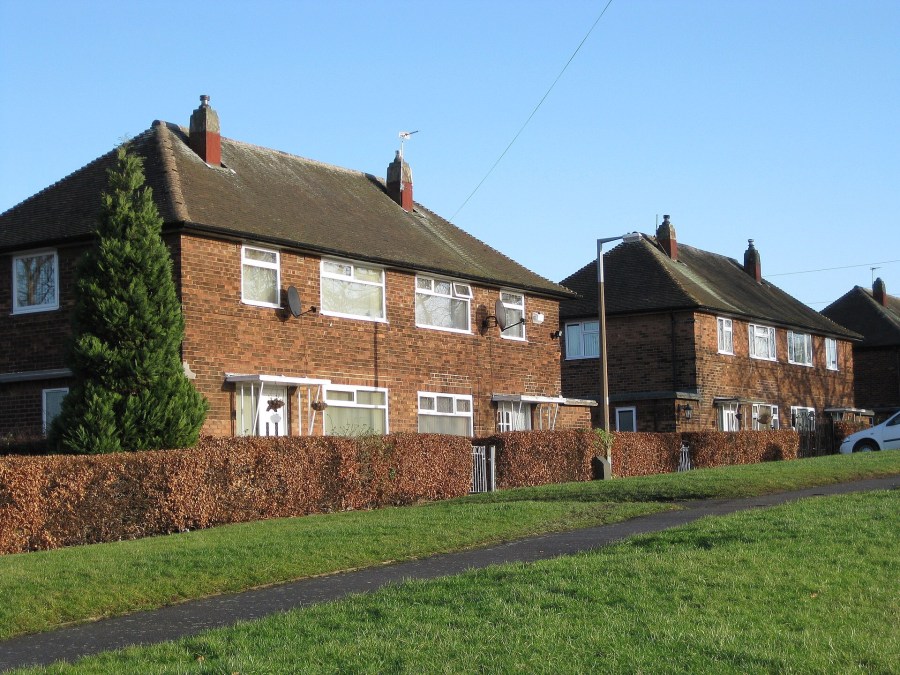
Semi-detached council homes, Seacroft, Leeds – typical of the many now privately owned – Image credit : Chemical Engineer – Public domain
The scheme was strongly oppose by Labour – but nevertheless The Housing Act came into force on the 3rd of October 1980…. By November 1982 more than 400,000 households had bought their homes and the scheme extended to leasehold property tenants…. By 2003 it is estimated some 1.5 million council homes had been sold….
There is now a shortage of social housing across the UK….
On this day in history : 19th December 1981 – The eight volunteer crew of the Penlee Lifeboat lose their lives attempting to rescue those onboard the Union Star, off the coast of Cornwall…. In all sixteen people perish….
Memorial garden at Penlee – Image credit : Chris Wood – own work CC BY-SA 4.0
The MV Union Star had been launched a few days before in Denmark…. It was a mini-bulk carrier, registered in Ireland and was making its maiden voyage having collected a cargo of fertiliser from Holland to be delivered to Arklow, Ireland…. Onboard were five crew and the wife and two teenage daughters of Captain Henry Morton….
As the Union Star reached the south coast of Cornwall, approximately 8 miles east of Wolf Rock, the ship’s engines failed…. The crew attempted to restart them but unsuccessfully – a salvage tug offered assistance but this was refused as the crew believed at the time that the issue could be sorted….
However, the weather deteriorated and soon force 12 winds were whipping up 60ft waves – and the Union Star was being pushed towards the rocks of Boscawen Point close to Lamorna Cove…. A Sea King helicopter was scrambled by the coastguard – but on arriving it was unable to get a line to the Union Star…. There was no alternative but to call out the lifeboat….
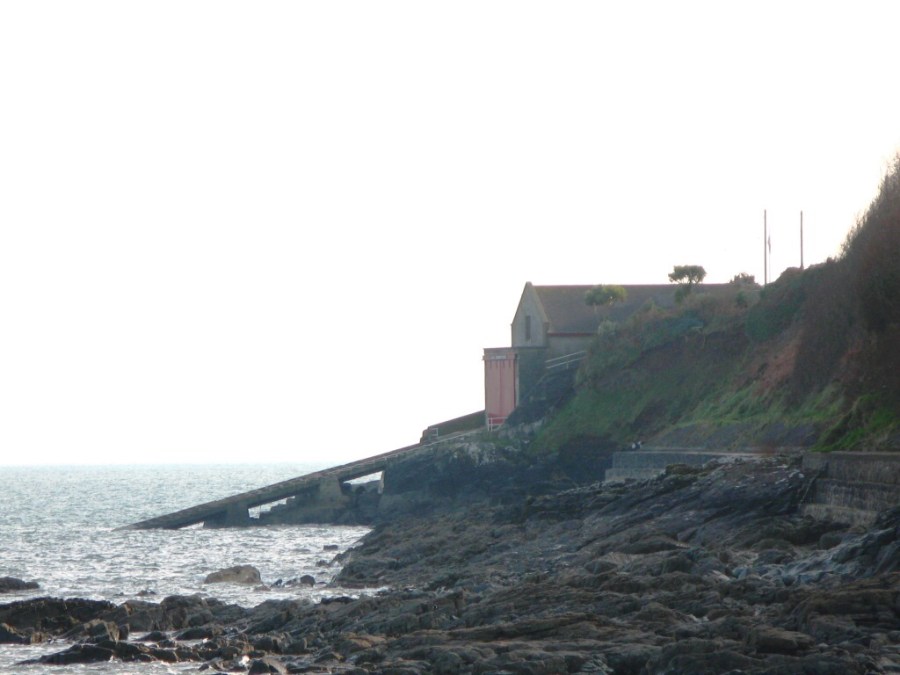
Original Penlee Lifeboat Station, where Solomon Browne was launched from – Image credit : Geof Sheppard – own work CC BY-SA 4.0
It was the Penlee (near to Mousehole) Lifeboat that responded…. The Solomon Browne was a 47ft wooden Watson Class motorised lifeboat, which had been built in 1960…. It was launched to embark on its rescue mission at 8.12pm and once it reached the Union Star was successful in managing to take 4 people off the stricken ship…. It then made a further attempt to go back alongside to rescue those still onboard – but at that point all radio contact with the two vessels was lost…. It is unclear exactly what happened next – but ten minutes later the lights of the lifeboat had disappeared….
Wreckage from the lifeboat was later found along the shore and the Union Star lay capsized on the rocks west of the Tater Du Lighthouse…. There were no survivors and only some of the sixteen bodies were ever recovered….
Tater Du Lighthouse – Image credit : Tom Corser CC BY-SA 3.0
An inquiry determined that the Union Star’s engines had failed due to contamination of the fuel by sea water…. The severity of the storm had made the rescue operation intensely difficult and had resulted in the loss of the Solomon Browne…. Tribute was paid to the crew….
“In consequence of the persistent and heroic endeavours by the coxswain and his crew to save the lives of all from the Union Star. Such heroism enhances the highest traditions by the Royal National Lifeboat Institution in whose service they gave their lives”….
Coxswain William Trevelyan Richards was posthumously awarded the RNLI’s gold medal and the remainder of the crew – Stephen Madron, Nigel Brockham, John Blewitt, Charlie Greenhaugh, Kevin Smith, Barrie Torrie and Gary Wallis – were each awarded the bronze medal….
Within a day of the disaster there were enough volunteers from Mousehole to form a new lifeboat crew….
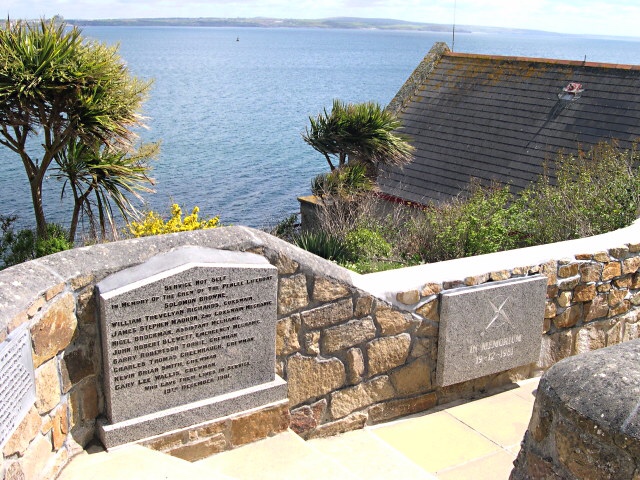
Penlee Lifeboat Memorial – Image credit : Tony Atkin CC BY-SA 2.0
On this day in history : 18th December 1985 – British born Kevin Barlow and Australian Brian Chambers face the death penalty in Malaysia after their appeal against conviction for drug smuggling is rejected….
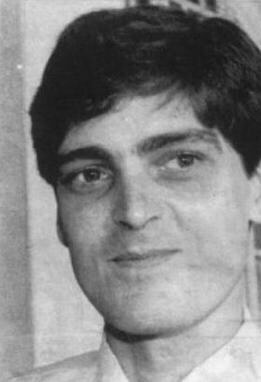
Kevin Barlow – Fair use
Brian Chambers – Fair use
The pair, who were both 28 years old and residents of Australia, were arrested in the November of 1983 at Penang International Airport with 180 grams of heroin in their possession…. Each blamed the other and pleaded innocence – however, at their trial in the following July both were found guilty….
The two men appealed the decision…. Barlow’s aunt, back in Britain, appealed directly to Prime Minister Margaret Thatcher and to the Foreign Office to intervene and seek clemency on their behalf…. But it was the Australian authorities who took the lead – headed by Bill Hayden, the Australian Minister for Foreign Affairs and who was firmly against the death penalty…. However, the Supreme Court of Malaysia refused any leniency and upheld the ruling that they should be executed….
The Honourable Bill Hayden – Image credit : Ali Kazak 9 – CC BY-SA 3.0
Despite a last minute plea for a stay of execution from Australian Prime Minster Robert Hawke both men were hanged in Pudu Prison on the 7th of July 1986…. A law had been introduced in Malaysia in 1983 that if anyone was caught with more than 15g of heroin it carried a mandatory death penalty…. Barlow, a welder from Perth and Chambers, a building contractor from Sydney, were the first non-Malaysians to be hanged under the country’s strict drug laws…. In Australia a similar offence would have received a sentence of three years imprisonment…. After the executions relations between Australia and Malaysia soured….
On this day in history : 17th December 1849 – Thomas and William Bowler, makers of felt hats, sell their first Bowler hat to Edward Coke – after being commissioned by James Lock & Co of London….
Coke had approached hat shop James Lock & Co looking for a hat that could protect the gamekeepers of his family’s estate, Holkham Hall, in Norfolk, whilst they were on horseback…. Up until that point they had always worn top hats – but these kept getting knocked off by low hanging branches…. A hat was needed that was low crowned, close fitting and hard…. When Coke arrived to collect his new hat he reputedly placed it on the floor and twice stamped on it to check its suitability before handing over his 12 shillings….
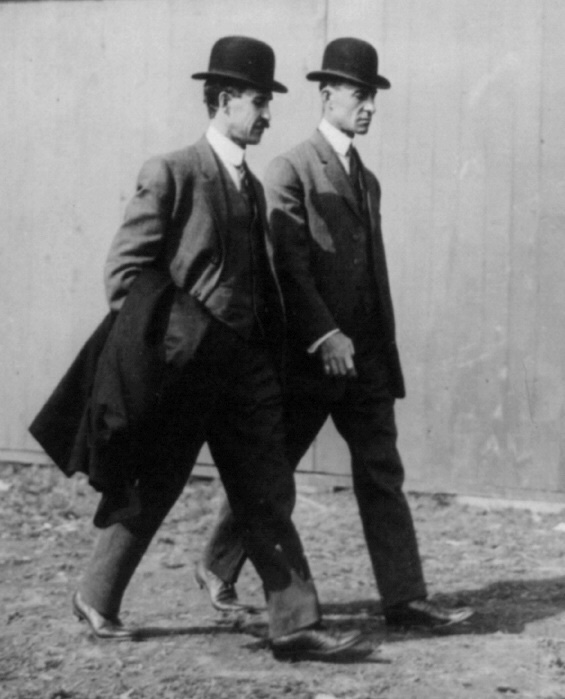
The Wright brothers, pioneers of aviation wearing Bowler hats in 1910 – Public domain
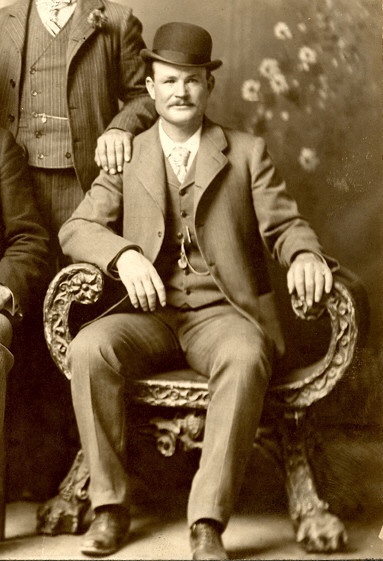
During the 19th century the Bowler hat became popular among the working classes – and its popularity soon spread to other parts of the world…. In the American West, where it was known as the Derby, it was favoured by cowboys, as it did not blow off in the wind…. Even the outlaws, such as Billy the Kid and Butch Cassidy wore one….
Butch Cassidy – Public domain
From the early 20th century the Bowler became associated with businessmen, especially City Gents…. It also became the trademark of certain famous personalities, such as Charlie Chaplin, Laurel and Hardy, PatrickMacnee’s John Steed in The Avengers – and John Cleese….
Laurel and Hardy – Image credit : Insomnia Cured Here via Flickr
On this day in history : 16th December 1914 – German warships attack the seaside resort of Scarborough; Hartlepool and Whitby are also targeted…. 137 people, mostly civilians, are killed….
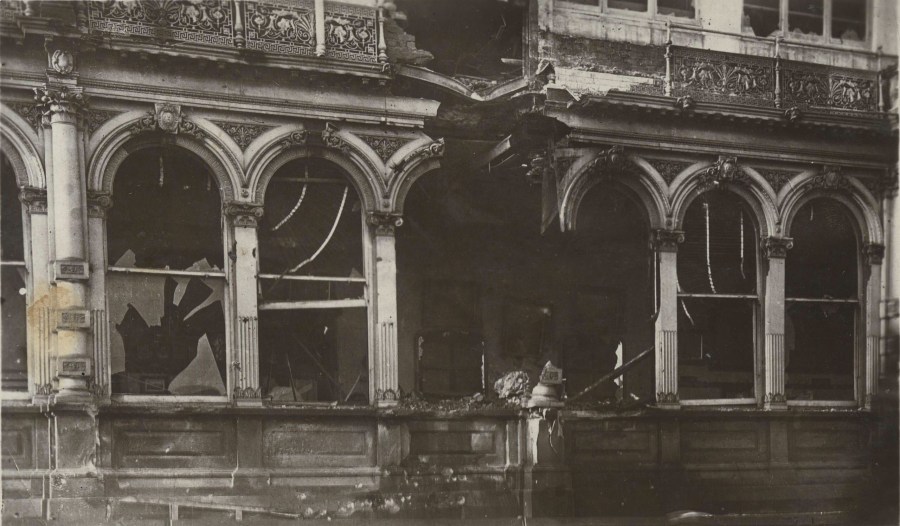
Damage to the Grand Hotel, Scarborough – Public domain
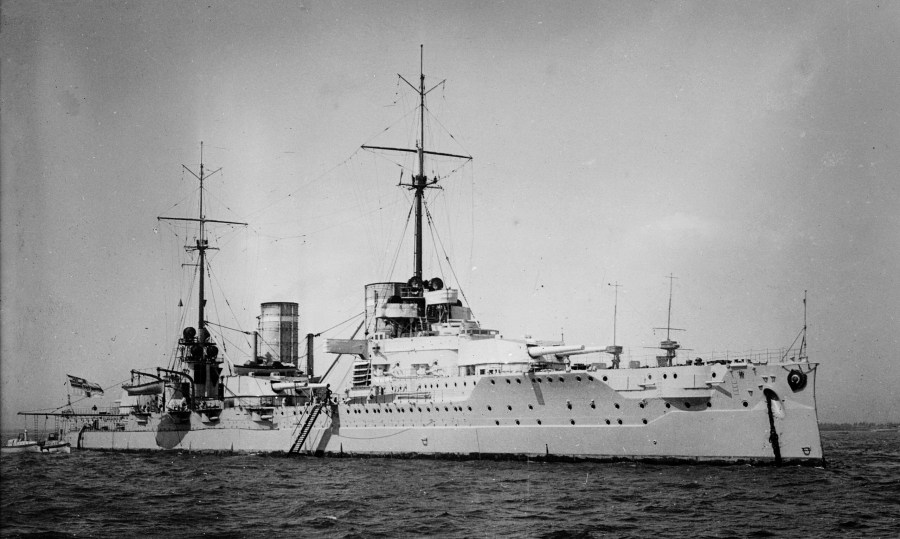
The bombardment of Scarborough began at 8am and lasted for half an hour…. Two German battleships, Von den Tann and Derfflinger, fired 500 shells – hitting the town and castle…. The townsfolk thought it must herald the start of the German invasion….
SMS Von der Tann – Public domainSMS Derfflinger – Public domain
The medieval castle was seriously damaged, as were the 18th century barracks, which were shelled repeatedly…. It seems the Germans had mistaken Scarborough for a major military port – whereas in fact the barracks had not been occupied by troops for many years…. In all 17 people were killed in the attack, hundreds were injured and many had their homes destroyed….
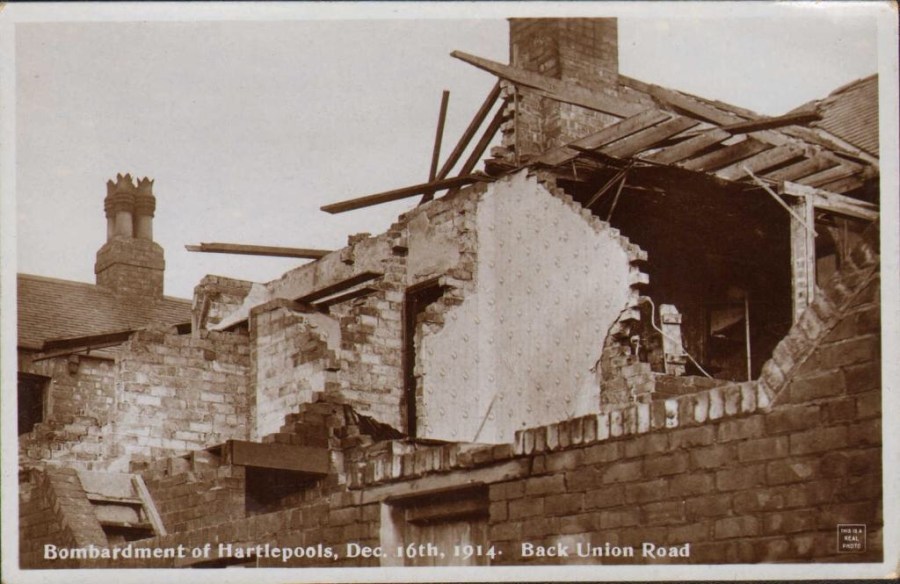
At 8.30am the two ships left, headed north and shelled Whitby…. At the same time another German naval force attacked Hartlepool…. These attacks caused even more death and destruction than what had already occurred in Scarborough…. Hartlepool with its extensive civilian dockyards and factories received some 1,150 shells – hitting steelworks, gasworks, railways, 7 churches and over 300 homes…. In total 86 civilians were killed and 424 more wounded…. In addition 14 soldiers were injured and 7 lost their lives…. It also saw the first death in 200 years of a British soldier from enemy action on British soil when 29-year-old Private Theophilus Jones of the Durham Light Infantry was killed….
Ruins of a church in Whitby – Public domainDamaged house, Hartlepool – Public domain
The raids had an enormous effect on the British public and prompted the propaganda campaign Remember Scarborough…. It also caused an outcry from other nations – neutral America cited – ‘This is not warfare, this is murder’….










 Cottage Capers