On this day in history….21st June 1919

On this day in history : 21st June 1919 – In the biggest act of self-destruction in military history German sailors scuttle 74 of their own warships at Scapa Flow in the Orkney Islands….

SMS Derfflinger capsizes – C.W.Burrows – Public domain

One of the terms of the November 1918 armistice, which brought World War 1 to an end, was the handing over of the German naval fleet to the Allies…. The details of the surrender of the fleet were worked out between Admiral Sir David Beatty on behalf of the Allies and German Rear-Admiral Hugo Meurer – along with other senior naval officers….

On the 21st of November 1918 seventy German battleships, cruisers and destroyers, under the command of Rear-Admiral Ludwig Von Reuter, arrived at the Firth of Forth, off the Scottish coast…. They were escorted to Rosyth, to the north-west of Edinburgh, where they anchored…. The order was given for all German flags to be lowered….

HMS Cardiff leading German fleet into Firth of Forth – Royal Navy official photographer – from the collections of the Imperial War Museums – Public domain

At this point the Allies had not yet decided what to do with the German fleet…. The French and Italians were hoping to get their hands on a few to replenish their own depleted fleets – whereas the British and Americans favoured destroying the lot…. In the meantime the fleet was moved to Scapa Flow where it would be held until a decision had been made…. Over the following few weeks four more ships arrived, now making a totally of seventy-four, along with 20,000 German sailors…. Gradually these were returned to Germany – leaving just skeleton crews to man the vessels…. The Germans were forbidden to leave their ships – food and provisions were sent from Germany on a fortnightly basis…. For months the men were kept like this whilst the negotiations continued – they were bored, restless and undoubtedly mutinous….

German sailors fishing over the side of a destroyer – Royal Navy official photographer – from the collections of the Imperial War Museums – Public domain
Scapa Flow, November 1918 – Royal Navy – Public domain

Eventually the talks in Versailles broke down…. Britain began to make plans to destroy the fleet, with a date being set for the 23rd of June 1919…. Somehow Von Reuter learned of this and began to put his own plan into action….

Emden, Frankfurt and Bremse entering the Scapa Flow – Royal Navy official photographer – from the collections of the Imperial War Museums – Public domain

The 21st of June dawned a perfect Summer’s day – and the British fleet had decided to take advantage of the good weather and had left the harbour early to go out on exercise – leaving just a minimal guard behind to oversee the German fleet…. Technically the ships still legally belonged to the Germans, as they had not officially surrendered them – this explains why there was no physical Ally presence onboard….

At 10.30am Von Reuter set the wheels in motion to prevent the British from seizing the ships…. He had already managed to get messages to the commanding officers of all the other ships and as his flagship ‘Emden’ sent out the obscure message “Paragraph eleven, confirm”, using searchlights and semaphore, they knew it was their signal to scuttle….

SMS Bayern sinking – Royal Navy official photographer – from the collections of the Imperial War Museums – Public domain

The crews hoisted their German flags, opened water tight doors, the seacocks, portholes, hatches and torpedo tubes – and smashed pipes, deliberately flooding the ships…. It was done so that each vessel flooded from one side, causing it to capsize – it took the British a couple of hours to realise what was happening….

Hindenburg – Royal Navy official photographer – from the collections of the Imperial War Museums – Public domain
Seydlitz on her side – Copyright free use

The Germans left the sinking ships in their lifeboats – while at the same time the British boarded some of them to try and prevent the scuttling…. They towed some to shallow water to beach them – skirmishes broke out between the opposing sides….9 Germans were killed and a further 16 wounded….

In all 52 of the 74 ships sank….the rest stayed afloat or were beached…. The islanders helped themselves to anything worth having…. Any surviving ships were then divided up among the Allies….

Salvage work on Baden – Royal Navy official photographer – from the collections of the Imperial War Museums – Public domain

As for the sunk ships, some of them still remain there…. In the 1920s salvage attempts were made…. British scrap metal dealer Ernest Cox had managed to salvage over 30 by the early 1930s – he became known as ‘the man who bought a navy’….

On this day in history….20th June 1497

On this day in history : 20th June 1497 – The consecration of St. Mary’s Church, Fairford, in the Cotswolds – which has a stone memorial to Tiddles the cat in its churchyard….

Fairford Church – Photo credit : Andy Dolman CC BY-SA 2.0

St. Mary’s in Fairford, Gloucestershire is one of the finest ‘wool’ churches in England…. To show off their wealth successful wool merchants would splash their cash on their parish churches…. John Tame was one such merchant, it was he who rebuilt the church at Fairford…. The story goes that he had another ulterior motive for rebuilding the church – to display his collection of stained glass….

It is said that in 1492 he captured a ship that was sailing to Rome from the lowlands…. It was carrying 28 beautiful stained glass windows, intended as a gift for the Pope…. Tame brought the windows back to England, along with the party of workmen who were travelling with them…. He then had the church built purposely to take the windows…. Well, that’s how the story goes – but in reality it is believed they were made in Westminster by Barnard Flower, a Flemish glazier…. However they came to be there, the 28 stained glass windows at St. Mary’s Church, displaying scenes from the Bible, are a sight to behold….

Great West Window – Image : Mattana – own work – Public domain

Inside the church a monument to John Tame can be seen…. But what about that other stone memorial that can be found in the churchyard facing the South door? The one for Tiddles the cat….

In 1963 a tabby cat appeared and befriended the verger and his wife…. She became a firm favourite among those who frequented the church, would attend the services and make herself comfortable on the lap of any willing person in the congregation…. She no doubt earned her keep by making sure the church mice were kept in order….

When Tiddles passed away in 1980 local a local stonemason decided she needed to be remembered – and so he carved a likeness of her….

Nearly a quarter of a century later history was to repeat itself…. Another female tabby, apparently homeless, decided to adopt the church as her home….and the congregation as her family…. She was soon to become known as Tiddles 2…. She would happily curl up in a church pew by day – but as she wasn’t allowed to stay in the church overnight she had her own ‘house’ in the church porch…. She also had a basket by the door which caught the afternoon sun….

Tiddles 2

In 2009 the winter was particularly cold, her health was not so good and so she went to live with one of the parishioners…. She lived with the lady for about a year before becoming very poorly…. The Parish people raised the money to pay for her ongoing vet bills but several weeks later, in December 2010, she passed away….

On this day in history….19th June 1925

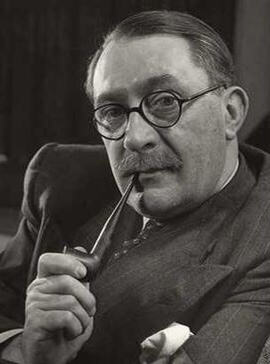
On this day in history : 19th June 1925 – “Hello my darlings”….the catchphrase of slapstick English comedian, actor, singer and writer Charlie Drake – who was born on this day….

Charlie Drake – Image credit : Latour61 at en.wikipedia CC BY-SA 3.0

Born Charles Edward Springall at the Elephant and Castle, South London, Charlie was later to take his mother’s maiden name for the stage….

He made his first appearance on stage at the age of 8…. After finishing school he appeared in working men’s clubs – and after serving in the RAF during World War 2 he began his professional career as an entertainer in earnest….

At just 5ft 1” tall, with his red curly hair, slapstick comedy and almost childlike manor he became a popular comedian with children…. But he was loved by children and adults alike and was to become one of the most successful entertainers of the 1950s and 60s….

Image credit : Bradford Timeline via Flickr

Charlie made his TV debut on the BBC’s ‘The Centre Show’ in July 1953, as a stand up comic…. In 1954 he teamed up with comedian Jack Edwardes, who at 6ft 4” was as tall as Charlie was short – he towered above him….

The pair appeared as a comedy duo on the BBC talent show ‘Showcase’ and afterwards adapted their act to appeal to children, calling themselves ‘Mick and Montmorency’…. They featured on children’s show ‘Jigsaw’ and this was followed with their own series between 1955-1958 on ITV….

However, Charlie wanted to further his own solo career and wished to appeal to adult audiences…. He began to appear as a guest on popular BBC shows…. Eventually his partnership with Edwardes was dissolved….

He had a succession of series of his own with the BBC – ‘Laughter in Store’, ‘Drake’s Progress’, ‘Charlie Drake In’ and ‘The Charlie Drake Show’….

During the 1960s he attempted to establish a film career, starring in ‘Sands of the Desert’ 1960, ‘Petticoat Pirates’ 1961, ‘The Cracksman’ 1963 and ‘Mr Ten Per Cent’ 1967…. However, film acting was not to be his niche….

In 1963 he returned to ITV with ‘The Charlie Drake Show’, followed by ‘Who is Sylvia?’ In 1967…. He was back at the BBC between 1967-68 with his ‘The Charlie Drake Show’ which won him the Charles Chaplin Award for Best Comedy at the Montreux Television Festival in 1968…. But his most popular series was ITV’s ‘The Worker’ between 1965-70 – the exploits of a little man who found it impossible to keep a regular job….

Charlie Drake with Henry McGee in ‘The Worker’ – Image credit : Paul Townsend CC BY-SA 2.0

During the 1980s Charlie concentrated on serious acting, appearing on stage in Shakespeare productions…. He also had several TV roles; he appeared as Smallweed in ‘Bleak House’, 1985 and had roles in ‘Filipina Dreamgirls’ and in ITV’s thriller ‘99-1’ in 1994/5…. His last stage performance was with Jim Davidson in ‘Sinderella’, an adult version of Cinderella….

Charlie married Heather Barnes in 1953 and they had three sons, the marriage ended in 1971…. He then married Elaine Bird in 1976 but the couple divorced in 1984….

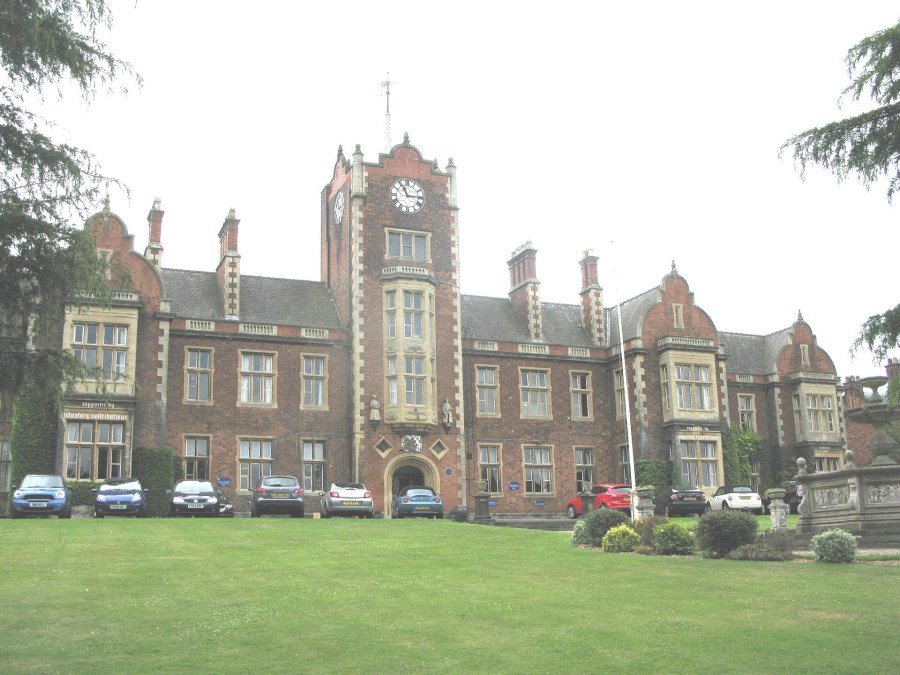
In 1995 Charlie suffered a stroke…. He retired to Brinsworth House, a retirement home for actors and performers in Twickenham, West London…. After a series of strokes in just a few hours he died on the 23rd of December 2006….

On this day in history….18th June 1822

On this day in history : 18th June 1822 – An 18ft bronze statue of Achilles is unveiled in Hyde Park, London…. Originally it was nude and caused outrage – so a small fig leaf was added….

The statue was made by sculptor Sir Richard Westmacott, who was an enthusiast of the Ancient Greeks and it was to commemorate Arthur Wellesley, 1st Duke of Wellington…. Achilles was the Greek hero of The Trojan War and the statue used 33 tonnes of bronze repurposed from captured French canons…. The body was modelled on a Roman figure found on Monte Cavalio in Italy – and the head was based on the Duke of Wellington himself…. It was cast in Westmacott’s foundry in Pimlico….

The statue, which is located close to Queen Elizabeth Gate at Hyde Park Corner was the first statue to be installed in Hyde Park – and London’s first nude statue! It had been commissioned for £10,000 by the upper class society of ‘Ladies of England’ and was installed on the orders of King George III…. People were shocked and disgusted by the statue’s nudity – especially as it was a tribute from the ‘Ladies of England’…. A fig leaf was quickly added for modesty….

On this day in history….17th June 1974

On this day in history : 17th June 1974 – An IRA bomb explodes at the Houses of Parliament, injuring eleven people and is suspected of having fractured a gas main….

Henry Kellner – own work

Six minutes before the explosion a phone call to the Press Association, by a man with an Irish accent, gave a code word (which was recognised by the police) and warned that a 20lb bomb had been planted….

There was no time to completely clear the building; just before 8.30am a bomb exploded in the corner of Westminster Hall…. Flames tore through the centuries old hall – and it was thought a gas main had been damaged….

Scotland Yard were fearful that this was to be the beginning of a new IRA bombing campaign – and indeed 1974 proved to be one of the deadliest years for terrorist attacks on the mainland…. In the February a bomb on a coach carrying soldiers on the M62 exploded, killing 12…. A bomb at the Tower of London and the pub bombings in Guildford and Birmingham claimed another 26 lives later in the year….