On this day in history….28th October 1986

On this day in history : 28th October 1986 – Jeremy Bamber is jailed for life for the White House Farm murders – where he killed five members of his own family….

Bamber shortly after his arrest – Fair use

The Bambers were a wealthy farming family, living at White House Farm, a large Georgian property near to Tolleshunt D’Arcy in Essex…. Jeremy was legally adopted by the family as a baby…. Four years previously they had also adopted a baby girl, Sheila….
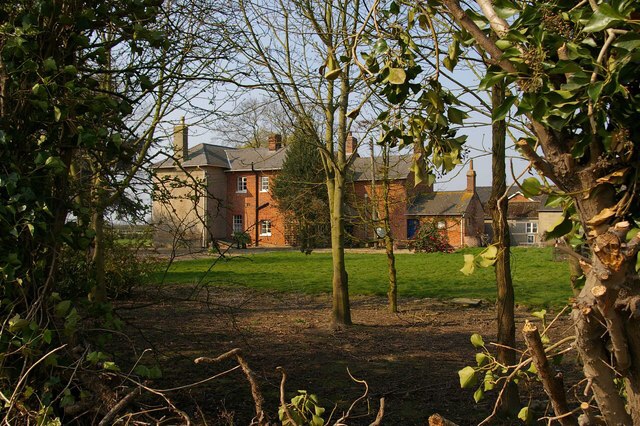
White House Farm (in 2007) – Image credit : Glyn Baker CC BY-SA 2.0

After leaving school Bamber’s adoptive father paid for him to travel to Australia and New Zealand…. Here he reputedly became involved in drug smuggling – and also broke into a jewellery shop, stealing two valuable watches….

Once he had returned to the UK and after a few casual jobs, Bamber began to work for the family farm…. However, he was resentful of the low wage – despite living rent free in one of the family’s cottages and having been given a car…. He further showed his lack of appreciation by committing a robbery at the caravan park owned by his family….

Bamber’s adoptive parents Neville and June Bamber – Fair use

Bamber’s adoptive sister, Sheila, had been treated in hospital for schizophrenia…. On the 7th of August 1985 at 3.30am 24-year-old Bamber phoned the police to say his father had phoned him and told him that Sheila had got hold of his gun and had gone berserk with it…. When the police arrived at the house they found her dead, with the gun lay on her chest – along with a Bible…. Her mother lay dead in the same room, her father was found dead in the kitchen and Sheila’s 6-year-old twin boys lay dead in their beds upstairs….
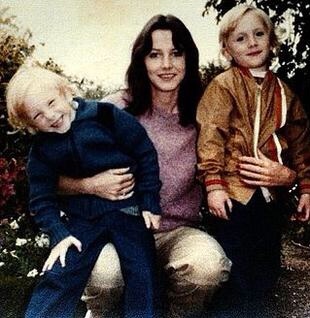
Sheila and her twin boys, Daniel and Caffell (around 1984) – Fair use

At first police believed that Sheila had killed them all before turning the gun on herself…. But when Bamber’s girlfriend came forward and said that he had talked about killing his parents forensic tests were carried out and revealed his fingerprints on the gun…. Bamber had been set to inherit £436,000….

As the guilty verdict was read out at Chelmsford Crown Court Bamber showed little reaction…. Judge Mr. Justice Drake described him as “Warped and evil beyond belief”…. He then handed down five life sentences….

Bamber has always protested his innocence…. In July 2001 an inquiry was launched into the case and it was referred back to the Court of Appeal…. In December 2002 Bamber lost his appeal….
On this day in history….10th October 1580

On this day in history : 10th October 1580 – After the three day Siege of Smerwick, in Ireland, the English Army behead over 600 Irish civilians and Papal soldiers….

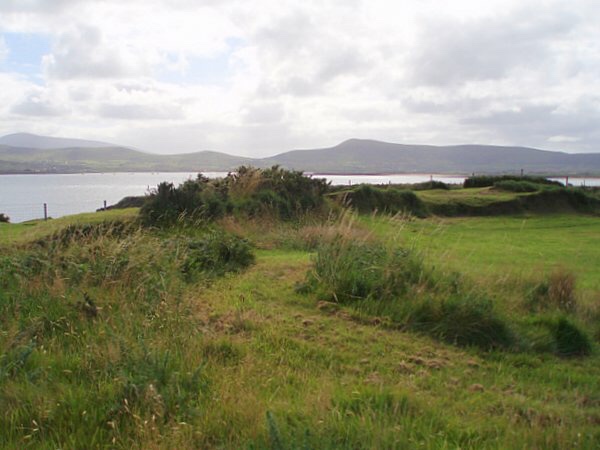
The massacre site today – Image credit : Sharon Loxton CC BY SA 2.0

On the 10th of September 1580 some 600 Italian and Spanish Papal troops landed in Smerwick under the command of Sebastiano di San Guisseppi…. They had been sent by Pope Gregory to help with the ongoing rebellion…. English forces were quick to respond and blockaded the Papal ships into Smerwick Bay…. The Papal troops had little choice but to take refuge in the fort at Dun an Oir….

In October 4,000 English troops arrived led by Grey de Wilton and laid siege to the garrison – the Papals had no way of escaping…. After three days of negotiations San Guisseppi ordered his men to surrender…. It is unknown if de Wilton offered clemency as part of the deal….

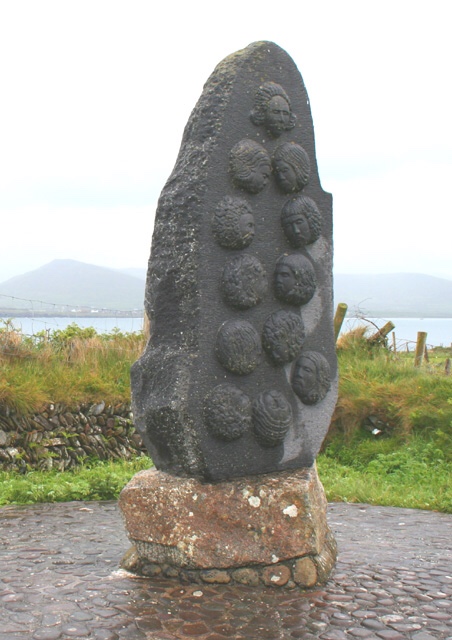
But what is known is that de Wilton callously ordered the massacre of the Papal troops along with scores of Irish civilians – sparing only between 20 and 30 Papal commanders…. The Italian and Spanish troops and Irish men and women were slaughtered by beheading – their bodies then thrown into the sea and their heads thrown into a field, now known as Gort na gCeann – Field of the Heads….

Memorial monument at the Field of the Heads – Image credit : Expresso Addict CC BY-SA 2.0

Irish folklore tells of how the massacre took two days to complete – the condemned lined up in a field to await their turn…. The field is now known as Gort a Ghearradh – Field of the Cutting…. One of those ordered to carry out the executions was Sir Walter Raleigh….

On this day in history….30th April 1963

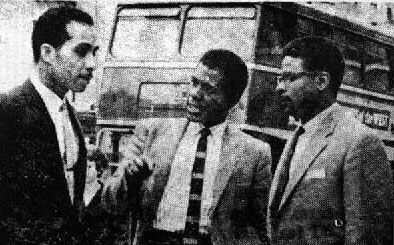
On this day in history : 30th April 1963 – Residents of Bristol begin a two month boycott of bus travel with the Bristol Omnibus Company, after its refusal to employ Black or Asian bus crews….

Fair use

During the early 1960s racial discrimination was widespread across the UK…. At this time it is estimated some 3,000 West Indian people were living in Bristol, some having recently arrived, whereas others had been living in the area for years and many had served for the country during World War 2…. However, this did not make them exempt from the discrimination that many faced on a daily basis….

Four young West Indian men, Roy Hackett, Owen Henry, Audley Evans and Prince Brown, decided to do something about this and they set up an action group – which was later to be called the West Indian Development Council….

Owen Henry was to meet Paul Stephenson, a social worker with a West African father…. With his education and the field he worked in Stephenson was a natural choice to act as spokesman for the group…. Unemployment amongst the Black population of Bristol was much higher than that of the White…. 5% unemployment as opposed to just over 2%…. Many companies were reluctant to employ non-white people – it was perfectly legal in 1963 to refuse a person a job on account of their ethnicity…. It was suspected that the Bristol Omnibus Company was one such employer…. It was decided to set up a test case to prove the company had a colour bar….

Paul Stephenson arranged a job interview as a bus conductor for a young warehouseman and Boys’ Brigade Officer called Guy Bailey, for the 27th of March 1963…. Bailey arrived at the appointed time, dressed smartly in his best suit and introduced himself to the receptionist and explained his reason for being there…. To which she replied “I don’t think so”…. He politely pointed out that she was mistaken and that his name was Mr Bailey and could she please check again…. After a brief conversation with her manager she came back and said all the vacancies were full….

It wouldn’t have made any difference if all the positions were vacant – Bailey would have been denied a job anyway – all because of the colour of his skin…. The action group decided to trigger a boycott of the bus company – inspired by the Montgomery Bus Boycott in the United States in 1955, when Rosa Parks refused to relinquish her seat when ordered to do so by the bus driver….

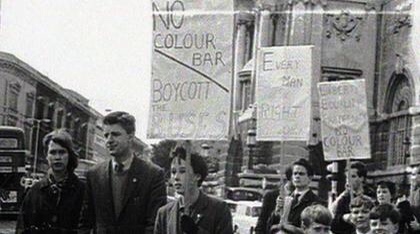
The action was announced in the Press on the 29th of April – and the following day none of Bristol’s West Indians used the buses and they were supported by a good proportion of the white population…. The action escalated; Bristol University students held protest marches to the bus station and to the headquarters of the Transport and General Workers’ Union (TGWU)…. Politicians became involved – condemning the bus company…. The TGWU refused to meet with the West Indian Development Council and a bitter war of words broke out in the Press….

Bristol University students marching in support – Fair use

Eventually the Bishop of Bristol and representatives of the local Labour Party stepped in independently of the West Indian Development Council and negotiated with the Union…. A further meeting was held between the Lord Mayor of Bristol and Frank Cousins, leader of the TGWU – and talks began with the parent company of Bristol Omnibus – Transport Holding Company…. After several months of talking finally on the 27th of August it was agreed to lift the colour bar….and on the 28th it was announced there would be no more discrimination…. On the 17th of September 1963 Raghbir Singh, a Sikh, became Bristol’s first non-white bus conductor…. The 1965 and 1968 Race Relations Acts were later passed by the UK Parliament…. In 2009 Stephenson, Bailey and Hackett were awarded OBEs for their parts in organising the bus boycott….

On this day in history….20th April 1968

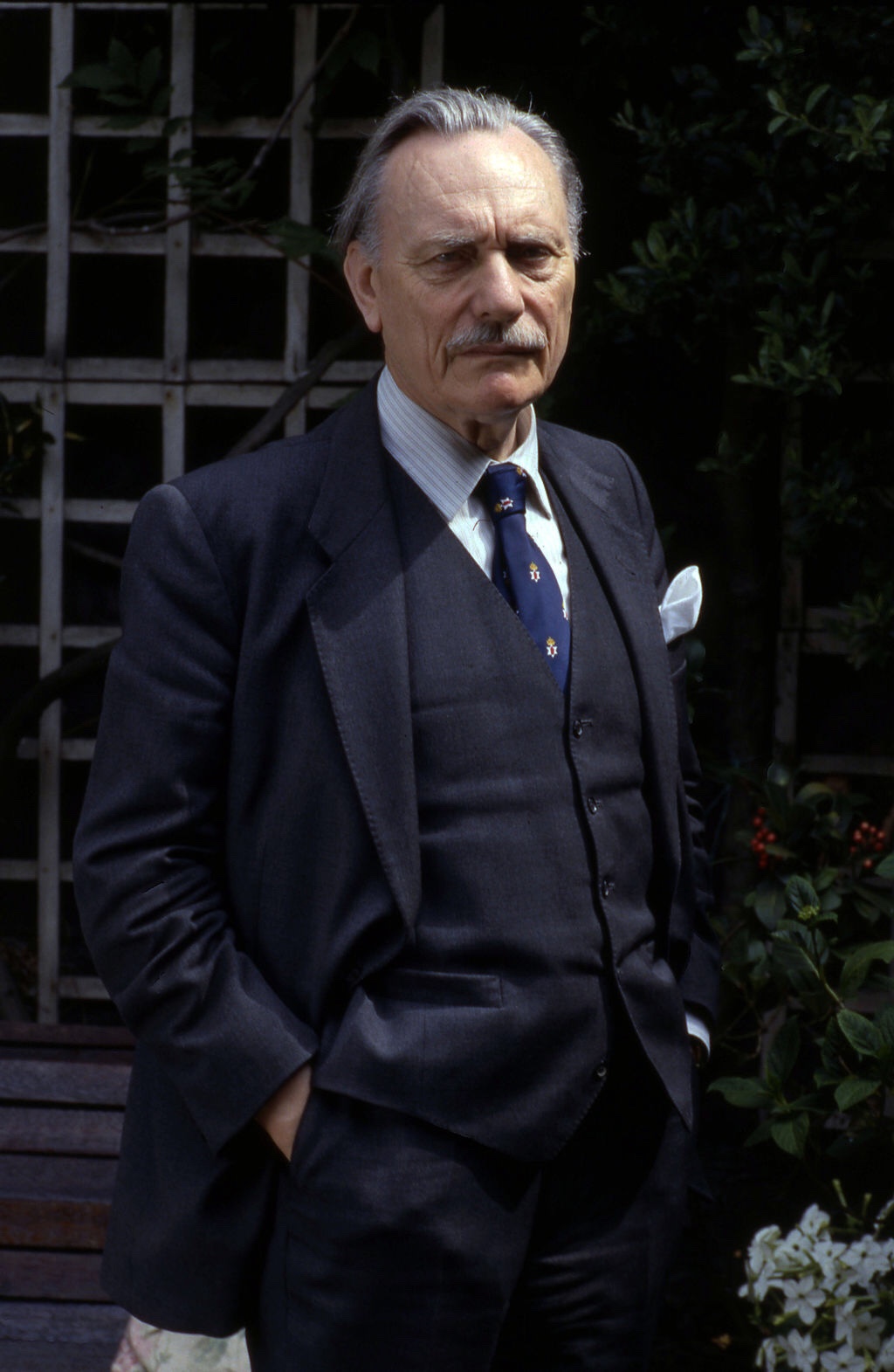
On this day in history : 20th April 1968 – Conservative MP Enoch Powell makes his controversial ‘Rivers of Blood’ speech – resulting in his dismissal from the shadow cabinet….

Enoch Powell – Image credit : Allan Warren – own work – CC BY-SA 3.0

“As I look ahead, I am filled with foreboding. Like the Roman, I seem to see the River Tiber foaming with much blood”….

Powell made his speech, attacking the Labour Government’s immigration policy, at the general meeting of the West Midlands Area Conservative Political Centre in Birmingham…. He was MP for Wolverhampton South West…. He claimed Britain was “mad, literally mad” to allow 50,000 dependents of immigrants into the country each year….

“It is like watching a nation busily engaged in heaping up its own funeral pyre”….

His estimation was that by the year 2000 one in ten of the population, up to 7 million people, would be of immigrant descent…. He called for an immediate reduction in immigration and a policy urgently encouraging those already in the UK to return to their native lands….

Enoch Powell had every intention of stirring things up – and he certainly succeeded….

Leading Conservative front bench MPS were outraged, with many threatening to resign if Powell was not sacked from his position as Shadow Defence Secretary…. When seeking advice from Margaret Thatcher, the leader of the Conservative Party Edward Heath, was told by her that she thought it best to “let things cool down rather than heighten the crisis”…. Nevertheless, that following Sunday evening Heath sacked Powell via a telephone call…. Edward Heath later said in public that Powell’s speech was “racist in tone and liable to exacerbate racial tensions”….

Any hopes Powell had for future postings within the Conservative Party were now dashed…. However, he received overwhelming support from the public…. Letters poured in, thousands of workers came out on strike and marches were organised by protesters – all to show support of his views…. A poll conducted showed 75% of the population were sympathetic to his views….

In February 1974 Powell left the Conservative Party as he disagreed with Edward Heath’s intention of joining the European Community…. Margaret Thatcher, as Prime Minister – and a long standing admirer of Powell – was forced to admit race relations in the country had gone “badly, badly wrong”….

The 2001 census showed there were 4.6 million people of ethnic minority in the United Kingdom…. A far cry from the 7 million Powell had predicted….

Image credit : Allan Warren – own work – CC BY-SA 3.0

On this day in history….3rd February 1960

On this day in history : 3rd February 1960 – Prime Minister Harold MacMillan makes his famous ‘Wind of Change’ speech against apartheid, angering some South African politicians….

img_5877
Harold MacMillan in 1959 – Public domain

MacMillan had been in South Africa for over a month visiting the then British colonies, including Ghana and Nigeria…. He chose to give his speech whilst addressing the South African Parliament in Cape Town, making it clear that South Africa was included in the views of the British government…. What he had to say did not come as a total surprise as he had hinted he was going to use the opportunity to voice his opinion about the situation in South Africa….

“The wind of change is blowing through this continent, whether we like it or not, this growth of national consciousness is a political fact. We must all accept it as a fact, and our national policies must take account of it”….

img_5875
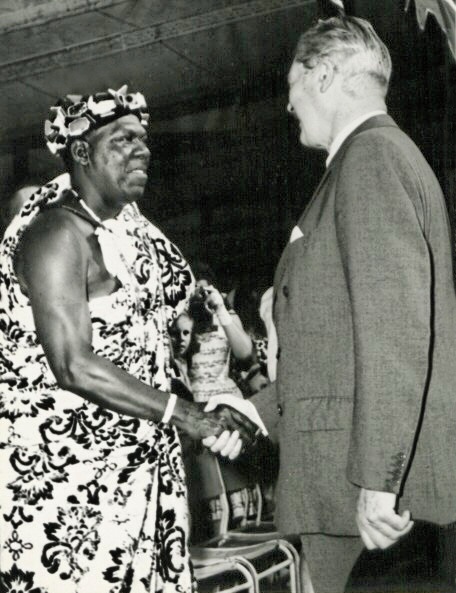
MacMillan meeting Ghanaian leader Prempeh II – The National Archives UK – OGL v1.0

MacMillan’s speech was the first time a senior international representative had publicly voiced disapproval on South Africa’s racial segregation laws…. It made it clear the UK government was not going to prevent the independence of its own territories and recognised that the people had the right to claim the governing of their countries for themselves…. It was the responsibility of the British government to promote the equal rights of all the individuals concerned…. As this was something MacMillan envisaged for the whole of the Commonwealth he urged South Africa to move towards racial equality….

South African Prime Minister Hedrick Verwoerd thanked MacMillan for his speech but added that he disagreed, claiming it was white South Africans who had brought civilisation to the country….

“To do justice in Africa means not only being just to the black man of Africa, but also to the white man of Africa”….

img_5876
The National Archives UK – no restrictions

It was the first time Britain had acknowledged the black nationalist movements in Africa…. Nationalist Party politicians were outraged by the speech…. However, it opened the way for international opposition to the apartheid system…. A month later the Sharpeville Massacre caused so much revulsion worldwide that South Africa faced exclusion and trade sanctions….

It took a further 30 years for South Africa to finally begin to disband its apartheid laws, under President de Klerk…. Nelson Mandela was released in 1990 and became President of South Africa in May 1994….