On this day in history : 27th June 1746 – Flora MacDonald helps Bonnie Prince Charlie escape to the Isle of Skye, dressed as an Irish maid, following his defeat by the English at the Battle of Culloden….
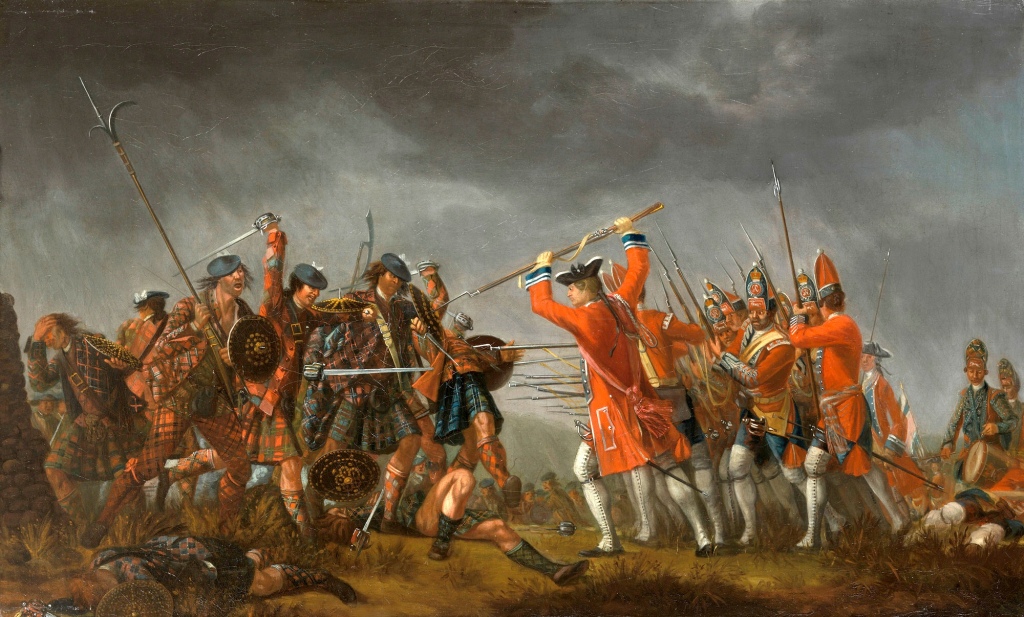
The Battle of Culloden by David Morier – Public domain
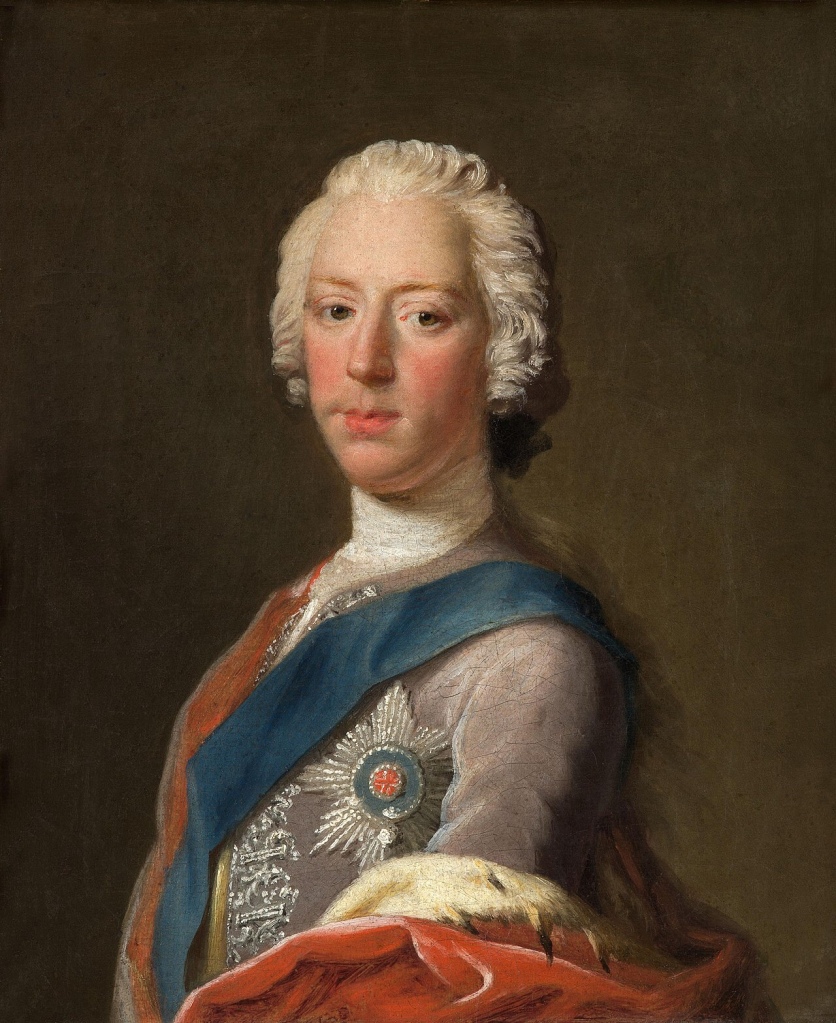
Prince Charles Edward Stuart, better known as Bonnie Prince Charlie, was the grandson of King James II of England…. Charlie was to lead the Second Jacobite Uprising to overthrow King George II in 1745…. But 1746 saw the defeat of the Jacobites at the Battle of Culloden Moor….and Charlie was forced to run or face certain death….
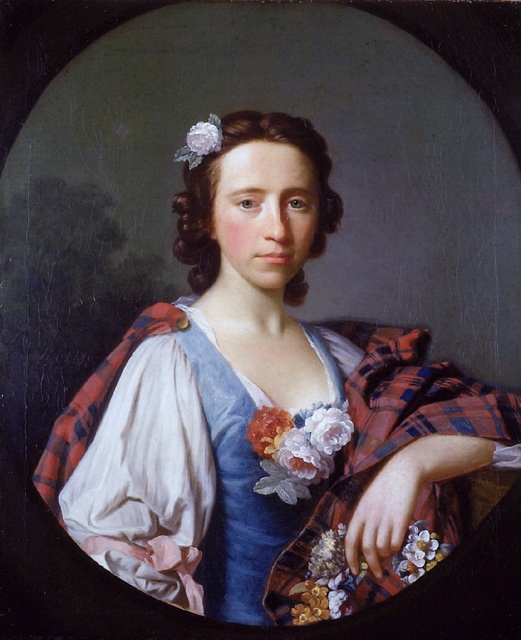
After two months he arrived at the outer Hebridean island of South Ulst – and it was here that he was to meet 24-year-old Flora MacDonald…. Even though the man she was due to marry and her stepfather were both loyal soldiers under King George she agreed to help the Prince – even if somewhat reluctantly to begin with….
Portrait of Flora MacDonald by artist Allan Ramsay – Public domain
Flora managed to persuade her stepfather, who was in charge of the local militia, to allow her to travel to the mainland accompanied by a couple of servants and half a dozen boatmen…. Only one of the ‘servants’ – an Irish spinning maid by the name of ‘Betty Burke’ – was actually Bonnie Prince Charlie in disguise…. And instead of travelling to the mainland the little boat made its way to Kilmuir (now known as Prince’s Point) on the Isle of Skye….
They spent the night hiding in a cottage and the following day made their way on foot to Portree…. From here Charlie was able to find a boat to take him to the island of Raasay – and then he was able to escape to France….
Portrait of Charles Edward Stuart by artist Allan Ramsay – Public domain
Flora however faced arrest and was imprisoned at Dunstaffnage Castle in Oban – before being moved for a short time to the Tower of London…. She was eventually released in 1747 and she returned to Scotland….
“Speed Bonny boat like a bird on a wing,
 Onward the sailors cry,
 Carry the lad that’s born to be King,
 Over the sea to Skye”....
On this day in history : 26th June 1939 – Private Rupert Alexander, Service No. 10000001, signs up to the Middlesex Regiment, as Britain’s first National Serviceman….
The Spring of 1939 saw the deterioration of international relations and Prime Minister Neville Chamberlain had to consider necessary preparations in case Britain found itself at war with Nazi Germany…. Parliament approved the Military Training Act which required men to undertake 6 months military training…. In the beginning this was limited to men between the ages of 20 to 22…. Some 240,000 registered for service….
War was declared on the 3rd of September 1939 and the National Service (Armed Forces) Act came in…. Now all men between 18 to 41 had to register…. There were some exemptions, such as those medically unfit and some key professionals, including farmers, engineers, bakers, doctors and the clergy…. Tribunals were held for conscientious objectors – who were usually assigned essential non-combat tasks it their hearings were successful….
Tribunal for conscientious objectors in Britain during WW2 – Public domain
In December 1941 a second National Service Act was passed…. The age was extended for men, up to the age of 60…. It meant all men up to this age were expected to do some sort of war effort work, such as police and civilian defence – those under the age of 51 were required to be available for military service….
All unmarried women, or widows without children, between the ages of 20 to 30 were liable to be called up to do work related to the war…. Pregnant women were not exempt but were generally not called up….
On this day in history : 25th June 1953 – John Christie is sentenced to hang for the murder of his wife and then hiding her body under the floorboards of their Notting Hill home, 10 Rillington Place….
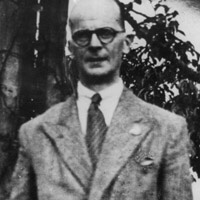
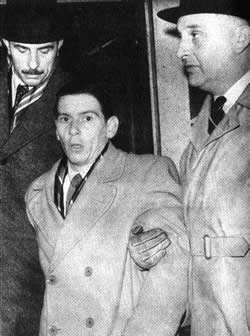
John Christie – Fair use
Before his own trial Christie had been a key witness for the Crown in another murder trial – that of Timothy Evans, another resident at the Notting Hill address…. Evans had stood trial, accused of the murder of his wife and child – and although the murder charge for his wife was not pursued he was convicted of killing his daughter and was sequently hanged….
Christie himself was no stranger to the criminal world…. Throughout his adult life he had committed a string of petty crimes and had spent time in prison…. He had served a three month sentence for stealing postal orders whilst working as a postman, nine months for theft, six months for assaulting the prostitute girlfriend he had briefly lived with and another three months for stealing a car from a priest he had befriended….
Christie had a troubled childhood and grew up with some abnormal ideas on how a healthy sexual relationship should be conducted…. He married Ethel in 1920 but because of his sexual hang-ups was impotent with her – he could only perform with prostitutes and so he continued to use their services…. After four years the marriage broke up – but in 1933, after his last prison sentence, they got back together….
In December 1938 the Christies moved into the ground floor flat of 10 Rillington Place in the Ladbroke Grove area of Notting Hill…. Ten years later, in the April of 1948, Timothy Evans and his pregnant wife, Beryl, moved into the top floor flat…. She gave birth to a little girl soon after, who they named Geraldine – and then in the November of 1949 Beryl discovered that she was pregnant again…. The couple were worried as they could not afford to have another baby – and so Christie said he could help them, by performing an abortion…. Only, what he actually did was strangle her and because his depraved sexual gratifications now included necrophilia – he then raped her….
When Evans arrived home Christie claimed she had died during the termination procedure…. As abortion was illegal he managed to convince Evans that they had to hide Beryl’s body and he also persuaded him to leave Geraldine with him and to go to relatives in Wales to lay low for a while…. When Evans returned to London and wanted to see his daughter Christie refused….
On the 30th of November 1949 Evans went to the police and explained he had accidentally killed Beryl by giving her a potion to end her pregnancy…. He said that he had hidden her body in a sewer – but after a search the police could not find a body…. Evans then told the truth – how Christie had offered to help them and how he, Evans, had found his wife dead on returning home from work…. He explained how Christie arranged for the disposal of her body and somebody to look after Geraldine while he disappeared to Wales….
But this late admission of the truth only added to the tangled web that had already been woven…. A search of 10 Rillington Place revealed the bodies of both his wife and child hidden in an outside wash house…. Evans was then tried for murder, the jury took just 40 minutes to find him guilty…. After a failed appeal Timothy Evans was hanged on the 9th of March 1950….
Timothy Evans, 1949 – Fair use
Ethel Christie was last seen on the 12th of December 1952…. Christie told people that he had been offered a good job out of the area and that his wife had gone on before him…. He eventually moved out of Rillington Place on the 20th of March 1953, booking seven days lodgings in King’s Cross…. However, he had only been there four nights when Beresford Brown, the new tenant at 10 Rillington Place, discovered the remains of three women in an alcove which had been wallpapered over…. When the news broke Christie left his lodgings and took to wandering London, sleeping rough…. The police eventually caught up with him on the 31st March 1953, on the Embankment near to Putney Bridge….
A total of eight female bodies in all were found at Rillington Place…. Those of his wife, Beryl and baby Geraldine Evans and five others:- Ruth Fuerst, a 21-year-old Austrian prostitute – Muriel Amelia Eady, a work colleague of Christie – Kathleen Maloney, prostitute – Rita Nelson, who was six months pregnant – and Hectorina MacLennan, who Christie had befriended, along with her boyfriend, Alex Baker….
At first Christie only confessed to the murders of the three bodies that had been found in the alcove and that of his wife…. He eventually admitted to Beryl’s murder – but not that of Geraldine…. He went on trial for the murder of his wife – in the same court that Evans had been convicted in – on the 22nd of June 1953…. He pleaded insanity but the jury rejected this plea – and after just 85 minutes of deliberation found him guilty…. There was no appeal….
Christie was hanged by Albert Pierrepoint, who had also executed Evans, on the 15th of July…. Two-hundred people people waited outside the prison to see the execution notice…. After being restrained for the procedure to take place Christie had complained that his nose was itching – only to be told by Pierrepoint that it wouldn’t bother him for much longer….
10 Rillington Place was demolished – in the 1970s the whole street was redeveloped…. Timothy Evans was granted a posthumous pardon in 1966….
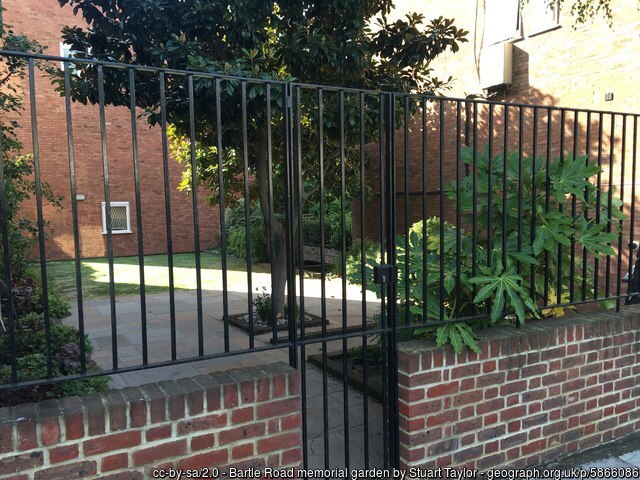
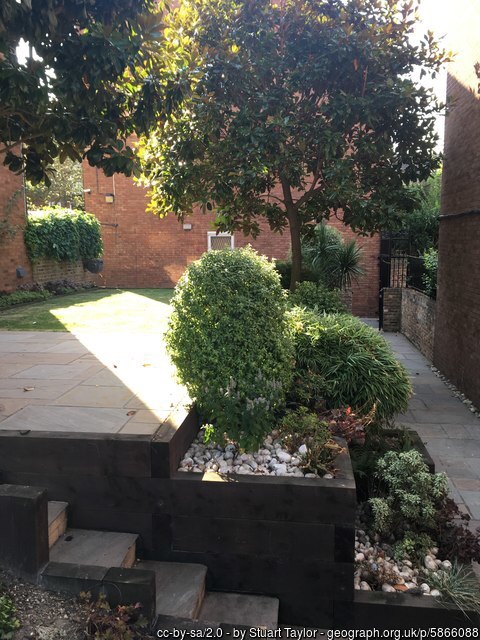
Memorial garden on the approximate location of 10 Rillington Place
On this day in history : 24th June 1825 – The birth of William Henry Smith, who expanded the family business ‘W.H.Smith’ – and was the first to sell newspapers and books at railway stations….
Preserved W.H.Smith stall (Horsted Keynes branch) at the Bluebell Line – Image credit : Dan Davison CC BY 2.0
William was born in London and was educated at grammar school before joining the family business in 1846 to work alongside his father; the company became W.H.Smith & Son…. The first newsstand was opened at Euston Station in 1848 and was followed by others at Birmingham, Manchester and Liverpool stations in 1850…. W.H.Smith & Son was to become a household name….
The company had originally been formed by Henry Walton Smith and his wife Anna in 1792, as a small newsagents in Little Grosvenor Street, London…. Henry died soon after his son William Henry was born – Anna joined forces with a business associate, Zaccheus Coates, to continue running the business…. After the death of Coates William and his older brother helped their mother run the company – and when she died it was William, with the better business sense of the two brothers, who took over the running…. It became W.H.Smith, the ‘Son’ being added when William Henry Jr joined hm….
As well as its railway station outlets the firm had a publishing business based in Cirencester and from 1860-1961 it ran a library service….
William Henry Jr married Emily in 1858 and they had six children, two sons and four daughters…. Now a family man with a well established business William Henry was to launch a highly successful political career…. He was elected Conservative Member of Parliament for Westminster in 1868 and then in 1874 he was appointed Financial Secretary to the Treasury…. In 1877 he was made First Lord of the Admiralty; there are those who claim he was the inspiration for the character of Sir Joseph Porter in Gilbert and Sullivan’s comic opera ‘HMS Pinafore’….
In 1885 William became Chief Secretary for Ireland – and he served twice as the Secretary of State for War…. He was appointed First Lord of the Treasury and Leader of the House of Commons in 1887 and became Lord Warden of the Cinque Ports in 1891…. He died not long after, in the October of 1891, at the age of 66 – whilst at Walmer Castle in Kent….
On this day in history : 23rd June 1314 – The death of English knight Sir Henry de Bohun – who was killed at the Battle of Bannockburn by Robert the Bruce….
The earliest known depiction of the Battle of Bannockburn, from a 1440s manuscript – Public domain
Bohun was the grandson of the Earl of Hereford – he was young and keen to make a name for himself…. There was probably no better way to do so than on the battlefield….
On the 23rd of June 1314 he proudly rode at the front of King Edward II’s army as it approached the Scottish troops led by Robert the Bruce…. The Scottish King had been crowned in 1306, after killing his rival for the throne, John Comyn…. For the next 8 years Bruce was to simultaneously fight a bloody civil war against his own opponents and a guerrilla war against the occupying English forces….
The killing of Comyn in Greyfriars Church, Dumfries – as imagined by 19th century illustrator Felix Phillippoteaux – Public domain
In 1314 Bruce’s brother, Edward, made a deal with Philip Mowbray, keeper of Stirling Castle…. This was to lead to direct confrontation with the army of King Edward II….
Bruce knew his army was no match for the English when it came to fighting on open land – they would have a far better chance if they planned an ambush…. As Edward II’s troops marched towards them Bruce’s spear men, who had been waiting in the woods, emerged and lined up to confront them…. Mounted on a horse among them was Robert the Bruce – and all he was holding was an axe….
Bohun saw his chance of fame and glory…. He lowered his lance and charged at Bruce – who saw him coming and took up the challenge by charging in return at Bohun…. At the last second Bruce swerved to the side and brought his axe crashing down on Bohun’s helmet – splitting it in two – along with his head….
Robert the Bruce killing de Bohun in the Battle of Bannockburn – Public domain
Spurred on by their King’s victory over Bohun, Bruce’s men surged forwards – killing Bohun’s squire, who was standing over his master’s body…. Confusion followed and the English fled….
Bruce was not entirely convinced that they should risk another day’s fighting – even after their victory…. However, word was received that morale was low in the English camp and so Bruce decided to chance it…. The next day he led his men to a triumphant victory over the English….
Finally in 1328 the English recognised Bruce as the King of the Scots….