On this day in history….29th April 1956

On this day in history : 29th April 1956 – The death of Harold Bride, the Junior Wireless Officer who survived the ill-fated maiden voyage of RMS Titanic….

Harold Bride, April 1912 – Public domain

Harold Sydney Bride was born in Nunhead, London on the 11th of January 1890, the youngest of five children…. On deciding he wanted to be a wireless operator he trained with Marconi, completing his training in July 1911…. His first sea assignment was onboard the American transatlantic liner SS Haverford…. He had further postings on the Beaverford, LaFrance, the Lusitania and the Anslem, before in 1912 joining the crew of RMS Titanic as Junior Wireless Officer, assisting Jack Phillips….

The Titanic left Southampton bound for New York on the 10th of April….The wireless room was situated on the Boat Deck and amongst the operators’ duties was to send personal messages on behalf of the passengers…. Another crucial duty was to receive iceberg warnings from other ships….

RMS Titanic departing Southampton, 10th April 1912 – Public domain

On the evening of the 14th of April Bride was grabbing a few hours sleep before he was due to take over from Phillips at midnight…. The pair were trying to clear a backlog of messages to be sent for passengers – as the radio had not been working properly earlier….

The Titanic struck an iceberg at 11.40pm…. Bride woke and rushed to find out what had happened…. Phillips told him they had struck something and Bride hurried to finish his preparations to go on duty…. Shortly afterwards Captain Smith appeared and asked the two wireless operators to be on standby to send out a distress signal…. Just after midnight he reappeared, giving them the ship’s position and ordering them to request help….

Phillips sent out the distress call and Bride acted as messenger to keep the Captain informed as to which ships may come to the now sinking Titanic’s aid…. The closest ship was RMS Carpathia – unfortunately it did not arrive until after the Titanic had gone down….

Phillips and Bride remained at their post sending out SOS signals…. By now Bride was wearing a life jacket, Phillips was still to put his on…. The Captain came in to tell them that their duty was done and that they were relieved…. Bride went to fetch some personal belongings – whilst Phillips continued to work…. When Bride returned he discovered another crew member attempting to steal Phillips’ life jacket – he managed to grab hold of the man and Phillips rose and knocked the crew member out…. By now water was flooding into the wireless room….

Bride began to help launch one of the two remaining lifeboats – only it was to be washed off the deck inside down….with Bride beneath it…. Somehow he managed to swim out and climb on to the upturned boat…. He and 15 other men managed to cling on until they were taken into other lifeboats and eventually RMS Carpathia…

Although badly injured Bride was able to help Harold Cottom, Carpathia’s wireless operator, send out scores of messages from other Titanic survivors…. Bride had badly sprained one of his feet, the other was severely frost bitten – he had to be carried from the Carpathia – but was greeted by Guglielmo Marconi himself…. He received $1,000 from the New York Times for his exclusive story – and later gave evidence at the inquest….

Bride being carried up ramp of ship – Public domain

Bride went on to marry Lucy Downie in April 1920 and they had three children…. He continued to be a Marconi wireless operator and in World War 1 served as an operator onboard the steamship ‘Mona’s Isle’…. In 1922 he retired from service, settled in Glasgow and worked as a salesman…. He died aged 66 of lung cancer….

On this day in history….28th April 1923

On this day in history : 28th April 1923 – The opening of the British Empire Exhibition Stadium – later to become known as Wembley Stadium, one of England’s main venues for sporting and entertainment events….

Wembley Stadium with its Twin Towers – Image credit : Merv Payne CC BY-SA 2.0

In 1920 it was decided to hold a major exhibition in London in order to promote trade throughout the whole of the British Empire…. Land was earmarked at Wembley Park pleasure gardens for an exhibition centre and a grand event was planned for 1924…. An organising committee was established with the Prince of Wales as President – who was keen to see a great national sports ground included – the ears of the Football Association pricked up….

£750k was raised, including a £175k contribution from the government and work began in 1922 with the first turf being cut by King George V…. Contractors Sir Robert McAlpine & Sons worked to a design by Sir John Simpson & Maxwell Anton, which was to include the Twin Towers – two domed towers which were to become the Stadium’s trademark landmark…. The construction took just 300 days, being completed by April 1923…. As a safety check 1,000 men sat, stood and marched on the stands, which were designed to accommodate 30,000 seated spectators whilst a further 100,000 could be housed standing….

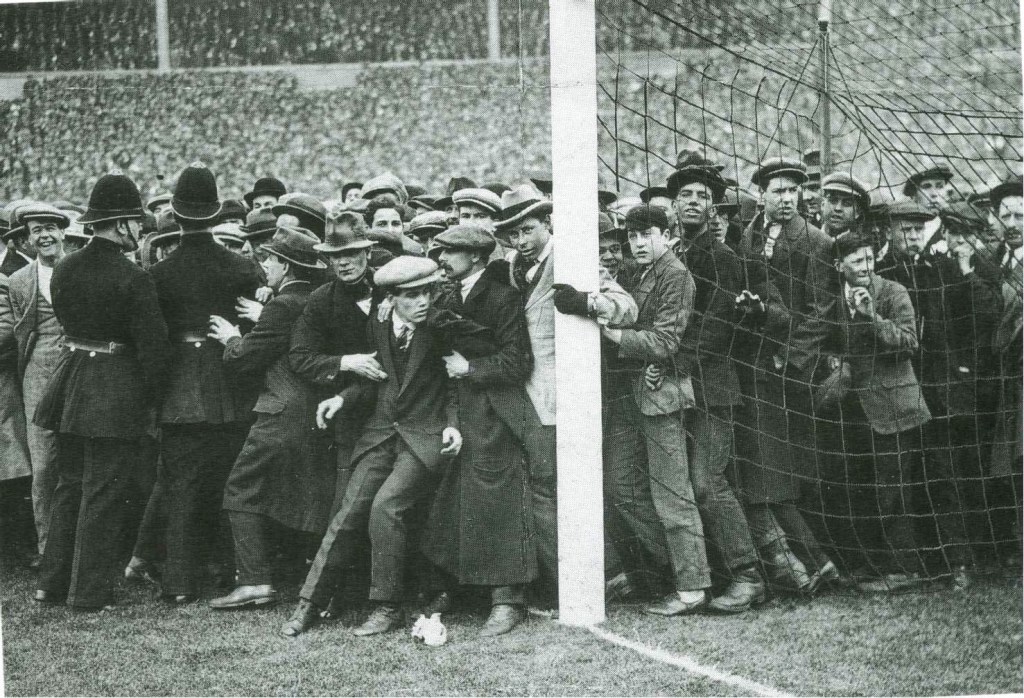
Three days after the Stadium’s completion, on the 20th of April 1923, the FA Cup Final was held…. The event had received worldwide publicity – bringing fame to the Stadium, long before its main purpose, the planned British Empire Exhibition, had even taken place…. The official spectator capacity for the football match was 127,000 but more than 300,000 descended on the Stadium….

Crowds at the edge of the pitch – Public domain

Crowds spilled on to the pitch and it looked as if the match was going to have to be cancelled…. The day was saved by mounted police constable George Scorey and his trusty white horse, Billy – who between them managed to clear the pitch…. The final score was Bolton 2 West Ham 0 – in a match that became known as ‘The White Horse Final’….

Billy the White Horse and Police Constable George Scorey – Public domain

The official opening by King George V of the Empire Exhibition Stadium took place on the 23rd of April 1924…. It was to be the first time ever the King was heard on the radio…. Over 27 million visitors attended the exhibition over its duration….

In August 1927 the Stadium was bought by Arthur Elvin and it became a successful greyhound racing venue…. He also arranged for it to become the stadium used for the annual F.A. & Rugby League Challenge Cup – and 1928 saw the addition of motorcycle speedway….

The 1930s saw improvements to the terraces and seating facilities….and in 1948 the Stadium was loaned free of charge to allow the London Olympic Games to use it…. In 1963 a glass roof was added – and this was also the first year a European Cup Final was played there, when Milan beat Benfica 2-1…. Since then many large events have been held, from concerts to football matches, including the 1966 World Cup….and that final – England 4 West Germany 2….

The Queen presents the World Cup trophy to Bobby Moore, 1966

In 1996 the spectator capacity was reduced to 76,000 and converted to all seating…. The last football match to be played was an international which saw England beaten by Germany 1-0…. In 2002 demolition began to make way for a new stadium – with the famous Twin Towers coming down in February 2003 – to be replaced by the now iconic arch in May 2004….

On this day in history….27th April 1922

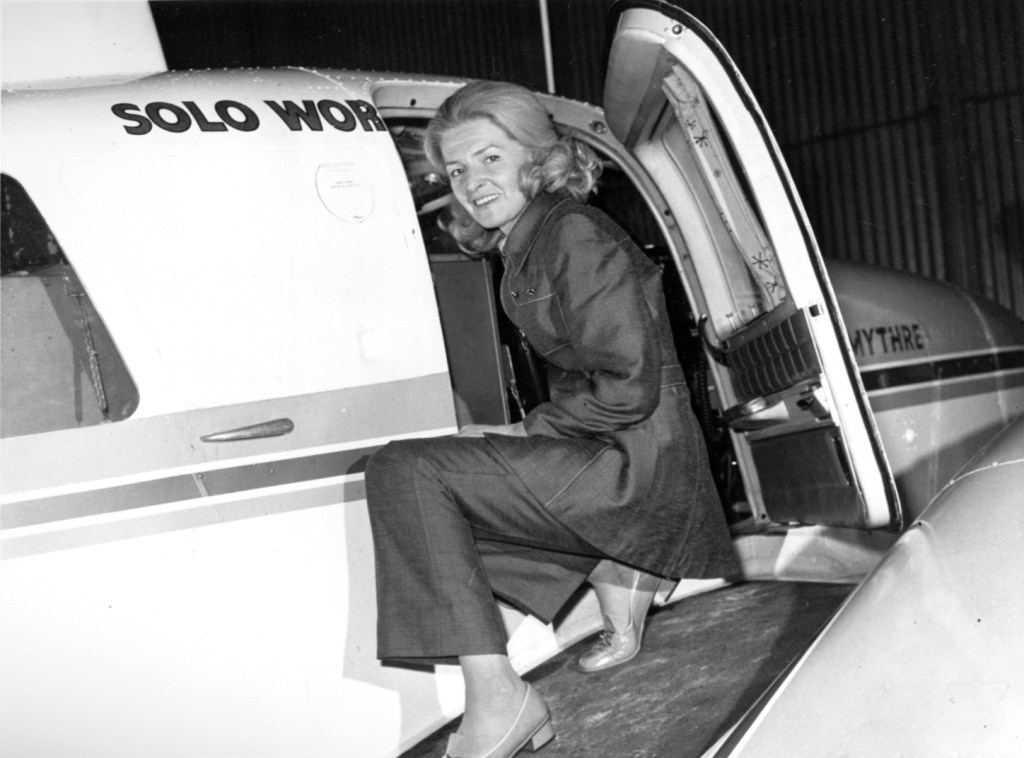
On this day in history : 27th April 1922 – The birth of aviator Sheila Scott – who broke over 100 aviation records and was the first British pilot to fly solo around the world….

Sheila Scott – Public domain

Sheila Christine Hopkins was born in Worcester and she had a troubled childhood…. She attended the Alice Ottley School, a prestigious school that has seen pupils such as Barbara Cartland and Vanessa Redgrave…. But Sheila was not to do well at the school and was nearly expelled on several occasions….

During World War 2 she was to serve as a nurse at the Haslar Royal Naval Hospital – and then between 1945-1959 she was to pursue a career as an actress and model…. Using the name Sheila Scott she had small roles in theatre, films and TV…. She married Rupert Bellamy in 1945 but it was to be a short-lived marriage, ending in 1950….

Sheila learned to fly at Thruxton Aerodrome, near to Andover, Hampshire in 1958…. Her first aircraft was a Thruxton Jackaroo – a converted de Havilland Tiger Moth – which she bought from the RAF…. She owned this plane until 1964 and won several races with it…. To pay for her flying she worked as a demonstrator for Cessna and Piper….

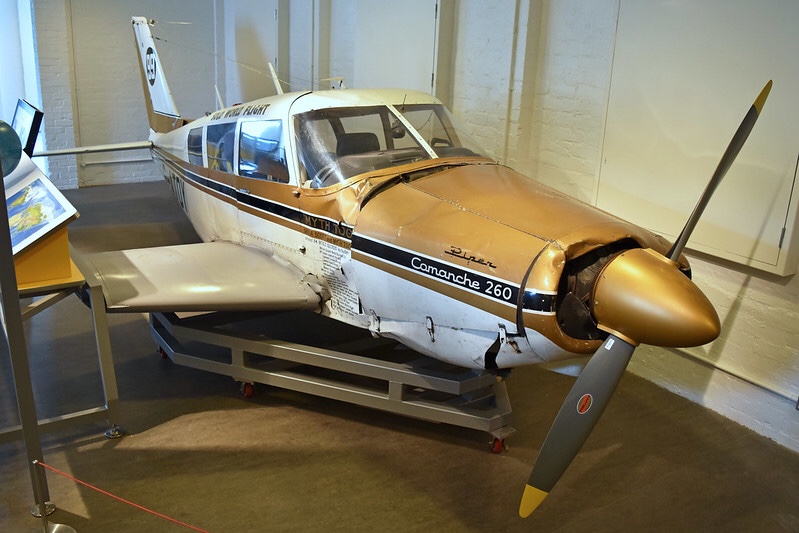
In April 1966 she bought her Piper Comanche, which she named ‘Myth Too’ – it was the aircraft in which she set almost 90 of her records…. In 1967 she set the world record for flying between London and Cape Town and also in the same year the record for crossing the North Atlantic Ocean…. In 1969 the South Atlantic – and then in 1971 flying from Equator to Equator over the North Pole…. Sheila was the first to fly over the North Pole in a light aircraft….

The Comanche ‘Myth Too’ (which was damaged after Sheila owned it) – Image credit : Alan Wilson via Flickr

Her first solo around the world flight began on the 18th of May 1966, from Heathrow…. 34 days later, after flying some 31,000 miles and 189 hours of flying time, on the 20th of June 1966 she arrived back…. She was to repeat the trip again 1969-70…. In 1971 she bought her Piper-Aztec in which she completed her third solo around the world trip…. Unfortunately this aircraft was destroyed in 1972 whilst at the Piper factory in Lock Haven, Pennsylvania, after a severe flood caused by Hurricane Agnes….

Sheila was to win several awards…. She received a Herman International Aviation Trophy for setting a new light aircraft speed record of 28,633 miles solo in 33 days and 3 minutes in 1967…. She won the Brabazon of Tara Award in 1965, 1967 and 1968, the Britannia Trophy of the Royal Aero Club of Britain 1968 and the Royal Aero Club Gold Medal in 1971…. In 1968 she was awarded an OBE….

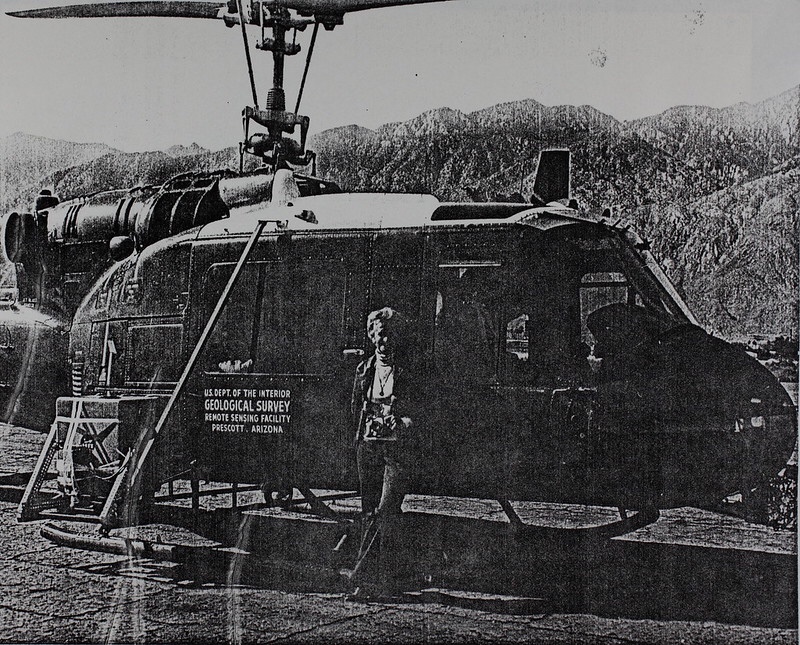
She wrote two books:- ‘I Must Fly’ (1968) and ‘On Top of the World’ (1973)…. She founded the British branch of the ‘Ninety-Nines’ an international organisation providing support, networking, mentoring and scholarship for female pilots – which was originally created by Amelia Earhart in 1929…. She was also a member of the ‘International Association of Licensed Women Pilots’ and the ‘Whirly-Girls International’ – a non-profit making educational organisation to help women advance in helicopter aviation….

Image credit : SDASM Archives via Flickr

After having achieved so much in her lifetime it is sad to think Sheila’s life ended in poverty, living in a bedsit in Pimlico, Central London…. She died of cancer at the Royal Marsden Hospital on the 20th of October 1988, aged 66….

On this day in history….26th April 1880

On this day in history : 26th April 1880 – The birth of Eric Campbell – the actor who invariably played the part of the bully in Charlie Chaplin’s films – and who’s life came to a tragic end….

Eric Campbell – Fair use

Campbell was born in Sale, Cheshire – although it had previously been thought that he was born in Dunoon, Scotland…. His parents were William, a cotton dealer and Jane Campbell – and he was one of four sons…. He began acting as a boy and was later discovered by theatre impresario of the music hall Fred Karno…. Campbell was a gentle giant; at 6ft 5in tall and weighing nearly 20 stone it was his sheer size and baritone voice that impressed Karno….

He married Fanny Gertrude Robotham, a fellow music hall performer, on the 30th of March 1901…. They travelled to New York in 1914 and Campbell was hired by Broadway producer Charles Frohman…. In March 1916 he was acting in George M. Cohen’s play ‘Pom Pom’ when brothers Charlie and Syd Chaplin came across him…. They took him back to Hollywood with them….

Campbell may have been built like a wrestler but he had a comparatively small head – which he kept shaven…. Charlie, by darkening his eyes, exaggerating his eyebrows and getting him to grow a scraggy beard, created Campbell into the prefect villain to play opposite his own ‘Little Tramp’ character…. Campbell’s first film with Chaplin was ‘The Floor Walker’ in 1916 and was followed by a quick succession of other films…. By the summer of 1917 Campbell had become Chaplin’s favourite co-star – he appeared in a total of 11 of his films…. Possibly his best role was in ‘Easy Street’ in 1917….

Chaplin was, at the time, the most famous movie star in the world….and he had many imitators…. However, Campbell also had his fair share, including Oliver Hardy, of Laurel and Hardy fame….

Campbell’s career had really taken off – it looked as if his future was rosy…. Chaplin’s contract with Mutual had ended and he was signed with First National Pictures – a real scoop for him – and he intended on taking Campbell with him…. In the meantime Campbell was working with Mary Pickford, co-founder of Pickford-Fairbanks Studios, with Douglas Fairbanks, on the 1918 film ‘Amarilly of Clothes-Line Alley’…. But tragedy was about to strike Campbell’s life….

On the 9th of July 1917 his wife, Fanny, died suddenly of a heart attack, after they had been out for dinner at a restaurant near to their Santa Monica home…. Then as his 16-year-old daughter, Una, walked to a nearby shop to buy an outfit in which to mourn her mother, she was struck by a car, leaving her with serious injuries….

In September 1917, still grieving, Campbell met comedienne Pearl Gilman at a publicity gathering…. Twice divorced, each time from an extremely wealthy man, Gilman was nothing short of a gold-digger….and she set out to take full advantage of Campbell’s situation…. Five days after they had met the pair were married….two months later Gilman sued for divorce, claiming he was a heavy drinker and had abused her…. Campbell moved out of their home and took a room at the Los Angeles Athletic Club, next door to his best buddy, Charlie Chaplin….

With Charlie Chaplin in ‘The Immigrant’ 1917 – Public domain

On the 20th of December 1917 Campbell attended a Christmas party – and drowned his sorrows…. At 4am he drunkenly drove towards home – but was involved in a head-on collision – he was killed instantly….

After his cremation his ashes were to remain unclaimed…. His daughter had returned to the UK by now, to live with relatives in Nottingham…. It was to be 30 years before Campbell’s ashes were eventually laid to rest in an unknown site within the Rosedale Cemetery, Los Angeles….

On this day in history….25th April 1931

On this day in history : 25th April 1931 – The birth of English artist, author and conservationist David Shepherd – known for his paintings of wildlife, aviation and steam locomotives – and his wildlife foundation….

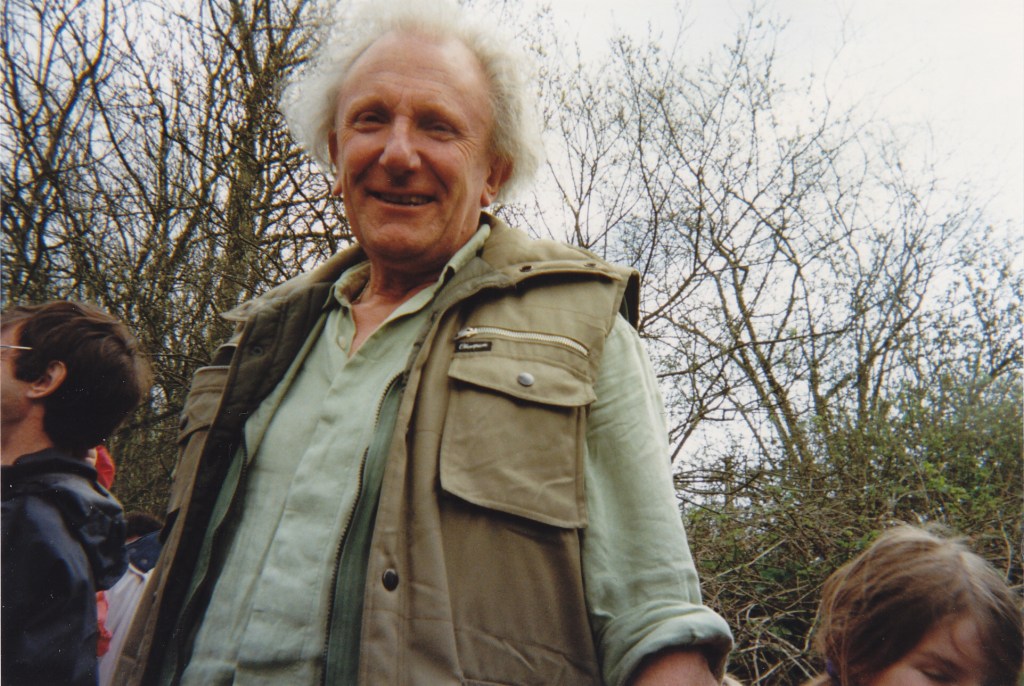
David Shepherd mid 1990s – Image credit : NotFromUtrecht – own work – CC BY-SA 3.0

David was born in Hendon, London and spent much of his childhood in Totteridge, North London before boarding at the Stowe School in Buckinghamshire…. At the age of eight he won a painting competition in the children’s publication ‘Nursery World’….

He left school in 1949 and travelled to Kenya with hopes of realising a career as a game warden – only to be rejected…. On returning to England he was to face rejection once again – this time when he applied to the Slade School of Fine Art – part of the University College of London – he was told that he had ‘no talent whatsoever’! However, not everybody agreed with this opinion – as David was taken under the wing of and taught by artist Robin Goodwin – a member of the Royal Society of Marine Artists and a lecturer at the Slade School….

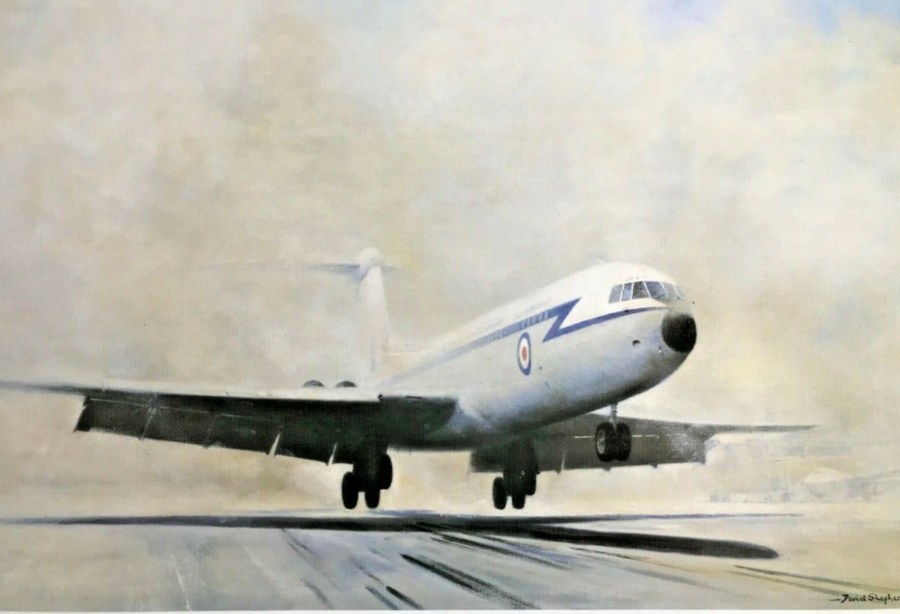
David started his art career as an aviation artist – working for the armed services he was given the chance to travel the world…. It was whilst in Kenya in 1960 that he was commissioned by the RAF to produce his first wildlife painting – a rhinoceros on a runway…. It was to prove to be a turning point in his career as an artist….

Whilst in Tanzania and during an excursion into the African bush David came across a harrowing sight – a waterhole that had become poisoned – some 255 zebra lay dead around it…. The experience inspired him to become involved with conservation – and becoming a some what outspoken campaigner…. He always felt it to be his duty to help those animals endangered by human society – elephants, tigers, rhino and so many more – the creatures that gave him so much success as an artist…. He received an Honoury Degree in Fine Arts from the Pratt Institute, New York, in 1971….

David Shepherd, 2014 – Photo credit : Meg Ghyll via Flickr

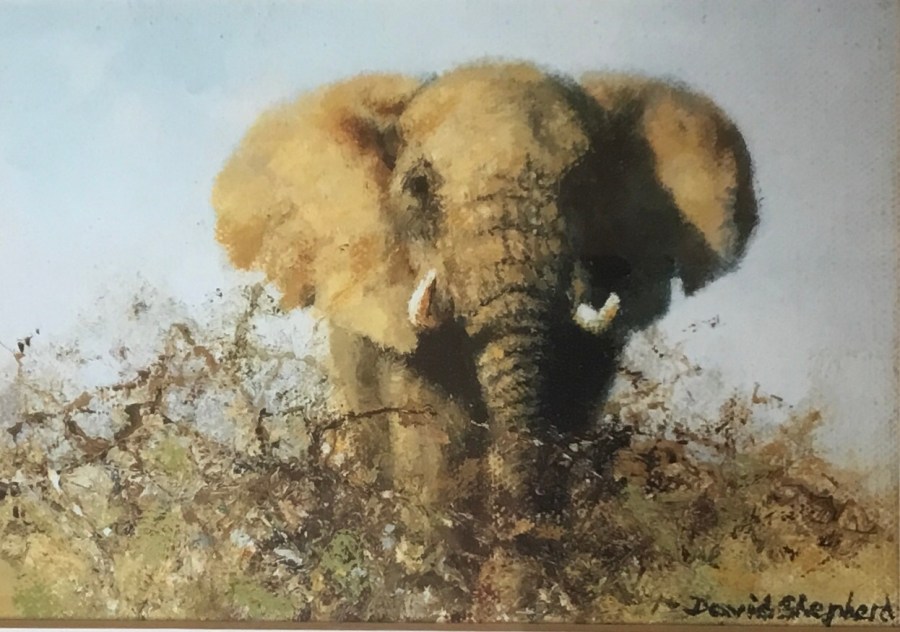
His first major fund raising success was for Indria Gandhi’s ‘Operation Tiger’ in 1973 – when his painting ‘Tiger Fire’ raised £127K – over £1.4 million in today’s terms…. One of his most famous paintings is ‘Tiger in the Sun’ from 1977…. He is also well-known for his paintings of elephants – especially ‘The Ivory is Theirs’ and ‘Wise Old Elephant’…. Over the years his paintings have raised vast amounts for conservation projects…. In 1979 he was awarded with an OBE….

In 1984 David set up ‘The David Shepherd Wildlife Foundation’…. With his own efforts and those of supporters and artists from all around the world the Foundation has raised and donated in grants well in excess of £10 million to wildlife survival projects in Africa and Asia….

In 2011 he launched the campaign ‘Tiger Time’ – to save tigers in the wild, receiving much celebrity support including from Sir Paul McCartney, Joanna Lumley, Stephen Fry and Ricky Gervais…. In 2012 David was awarded the Conservation Award in the Wetnose Animal Aid Awards and in 2016 he received the Animal Hero Lifetime Achievement Award…. He was a Member of Honour of the WWF….

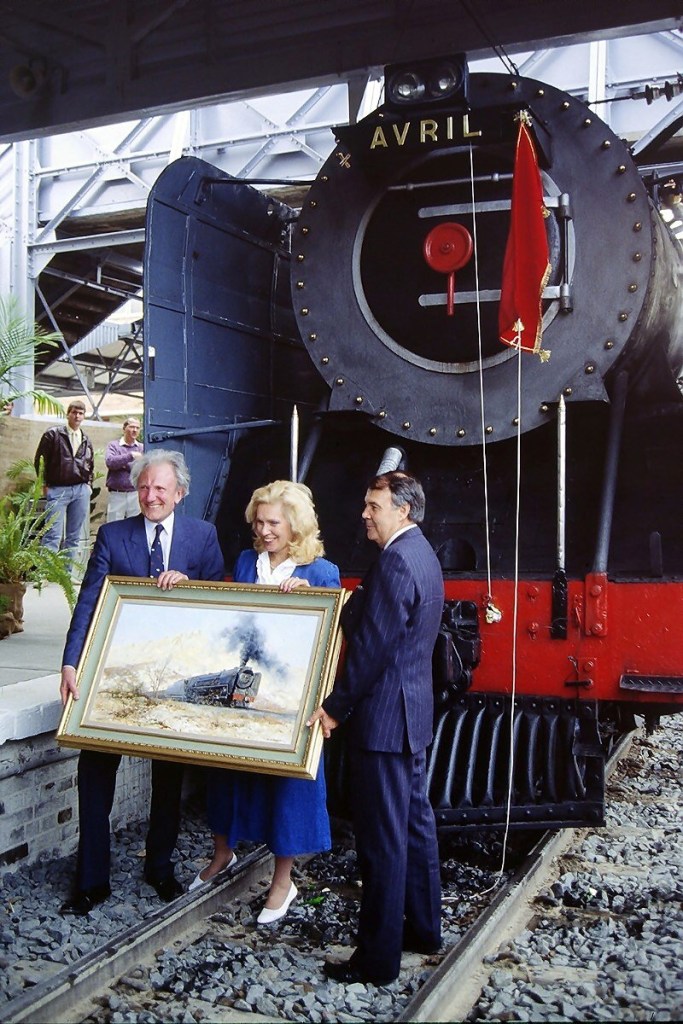
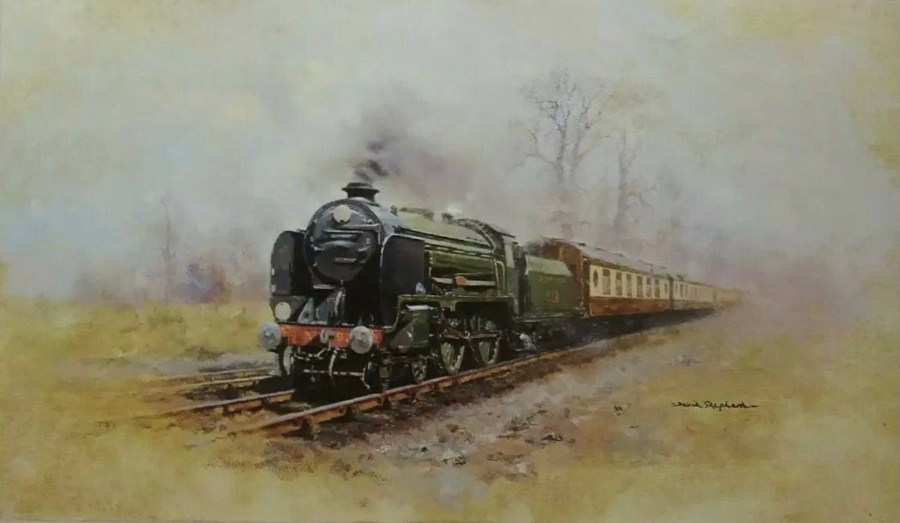
Aside from his work as a conservationist in wildlife he was also a steam enthusiast and owned a collection of steam locomotives…. He did much in the conservation of our steam heritage and was involved in the founding of the East Somerset Railway – and also served as President of the ‘Railway Ramblers’….

David Shepherd with wife, Avril, 1991 – Image credit : H.G. Graser – own work – CC BY-SA 3.0

David died in hospital on the 19th of September 2017 after a long battle with Parkinson’s disease…. He left behind his wife Avril, four daughters, his grand children and great grand children – all of whom share his passion and continue his work….