On this day in history….11th February 1800

On this day in history : 11th February 1800 – The birth of politician, scientist, inventor and photography pioneer William Henry Fox Talbot, who invented the early photographic process ‘Calotype’….

img_5938
Fox Talbot by John Moffat – Public domain

Fox Talbot was born in Melbury Sampford in Dorset…. He was the only child of William Davenport Talbot and Lady Elisabeth Fox…. Sadly his father died before his first birthday – but his mother remarried in 1804…. Fox Talbot attended Harrow and then in 1817 joined Trinity College, Cambridge….

He married Constance Mundy in 1832 and it was also in this year that he was elected MP for Chippenham, Wiltshire…. It was whilst holidaying at Lake Como in Italy in 1833 that Fox Talbot became frustrated at his own inability to sketch the stunning scenery before him…. He began to form the idea of capturing an image on light sensitive paper….

img_5939
Lake Como, Italy – Image credit : Luca Casartelli CC BY-SA 2.0

On returning to England he began to develop his idea in earnest and after just three weeks was ready to present his ‘art of photographic drawing’ to the Royal Society….

Others before him had conducted their own experiments; Joseph Nicephone de Niepce had produced pictures on bitumen and Thomas Wedgwood had made photograms…. Fox Talbot went on to develop the three elements of photography – developing, fixing and printing…. It was quite by accident that he discovered an image was present after a relatively short time of exposure – it was there but just couldn’t be seen – but by using a chemical procedure a negative could be produced, which could then be fixed with another chemical solution…. Fox Talbot called this process the ‘Calotype’ (also known as ‘Talbotype’)…. He patented it in 1841….

To simplify Calotype involved taking a sheet of paper coated with silver chloride which was exposed to light using a camera obscura…. This was a predecessor to the camera we now know…. It was a box, with the interior painted black and a tiny pin hole to allow the light to enter…. Those areas of the paper that came into contact with the light took on a dark tone creating a negative image…. Gallic acid would be used to develop the image….accelerating the silver chloride’s chemical reaction to light…. Before Fox Talbot’s accidental discovery it could take up to an hour for a negative image to appear on the light sensitive paper…. Gallic acid reduced this waiting time down to around a minute…. The image was then fixed with hyposulfite… The negative could be used many times by contact printing on to sensitised paper….

Fox Talbot was a man of many talents…. Among his other attributes he was also a mathematician, astronomer and archeologist…. He died on the 11th of September 1877….
On this day in history….10th February 1355

On this day in history : 10th February 1355 – The St. Scholastica’s Day riot breaks out in Oxford; in three days of mayhem 62 scholars and some 30 local people are killed….

Saint Scholastica, who died in 543, founded a nunnery in Italy….her feast day is the 10th of February…. As it happened on this feast day so the riot in Oxford got its name….

It was a Tuesday; scholars of the University and priests were drinking at the Swindlestock Tavern in the town and had the nerve to complain about the quality of the wine being served…. Landlord John of Barford, who also happened to be Mayor of Oxford at the time, rudely retorted back with ‘stubborn and saucy language’…. Soon wine jugs and quart mugs were being aimed at him – and a full scale pub brawl broke out….

Locals coming to the aid of the Mayor were soon reinforced after the bells of nearby St. Martin’s Church were rung to summon more help…. The students retaliated by rousing their own backup – and pitch battle began….with weapons including bows and arrows….

img_5935
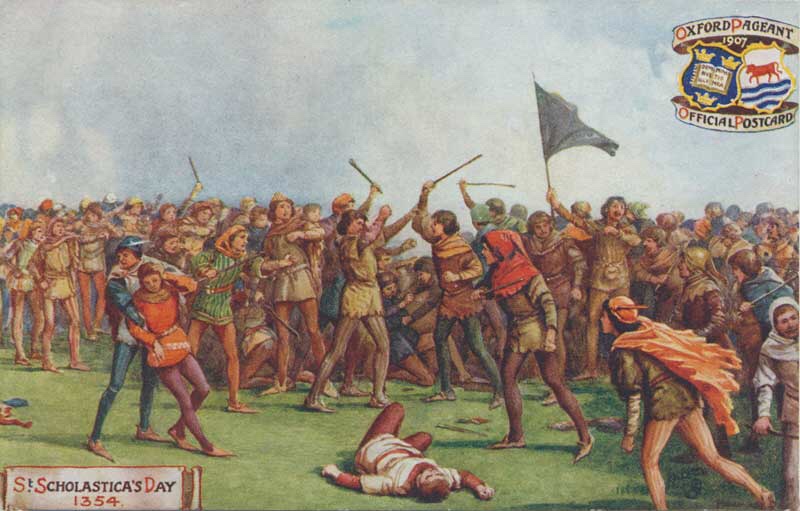
St Scholastica’s Day riot, as depicted on a 1907 postcard – Public domain

To be fair it wasn’t all about the lousy wine…. There was much anger and frustration within the town…. Trainee priests were furious about the high rents they were being charged and the expensive cost of food and drink….and the townsfolk were fed up with the high jinx behaviour of the University students….

As the battle raged on the Mayor travelled to Woodstock the following day to ask for the help of the King…. Meanwhile some 2,000 men from the surrounding countryside descended on the town to lend their support to the townsfolk – shouting “Slea, slea…. Havock, havock…. Smyth fast, give gode knocks”…. They barged into the University’s academic halls and killed 62 students….

The riot was to last for 3 days, 93 people lost their lives…. Afterwards the rioters were severely punished and King Edward III held the Mayor and his Baliffs responsible for what had happened…. Every year thereafter, on St. Scholastica’s Day, the Mayor and his Baliffs had to attend a special Mass to pray for the souls of those who were killed…. Then they and 62 townsfolk, chosen to represent the dead students, marched to the University’s Church of St. Mary-the-Virgin…. Here waiting for them were the University’s Vice-Chancellor and the church’s vicar, to receive from the Baliffs 62 pence in small silver coins – all as per the King’s orders….

img_5937
1907 postcard – Public domain

This ceremony was eventually abolished in 1825, when the Mayor of the time refused to participate…. But it took until 1955 – six hundred years after the event – for Parliament to finally rescind King Edward III’s edict….

On this day in history….9th February 1846

On this day in history : 9th February 1846 – The birth of fraudster James Whitaker Wright – who took his own life at the Royal Courts of Justice, immediately following his conviction for fraud….

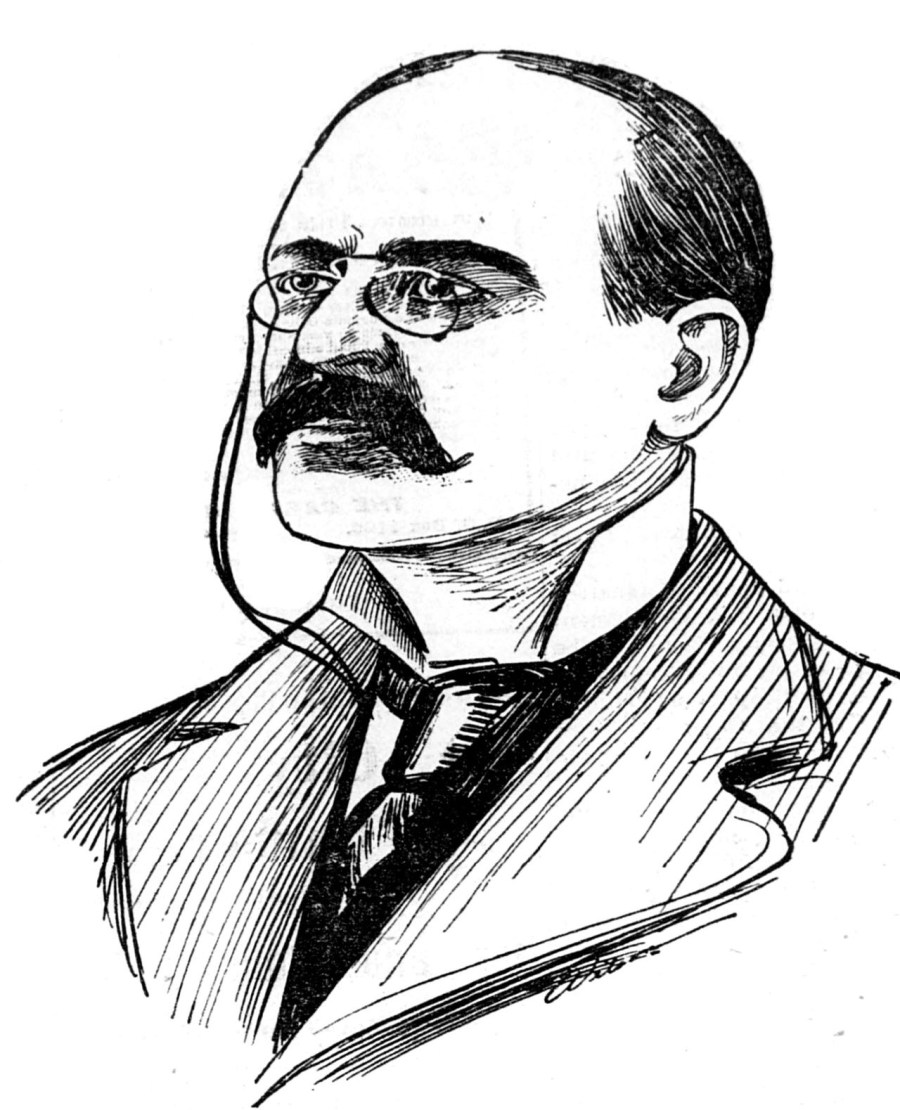
img_5931
James Whitaker Wright – Drawing 1904 – Public domain

Whitaker Wright was the son of Methodist minister James Wright and tailor’s daughter Matilda Whitaker…. He was born in Stafford, the eldest of five children…. From a young age he was sent to boarding school in Birmingham – where he learned to operate a printing press…. By 1861 he was working in Ripon as a printer and after a brief period between 1866 and 1868 (when he tried to follow in his father’s footsteps by becoming a Methodist preacher) he started a printing business in Halifax with his brother John Joseph Wright…. They set up business in 1868 – but by the following year it had failed….

Whitaker Wright’s father died in 1870 and the family emigrated to Toronto, Canada…. It was in 1878 that he met and married Anna Edith Weightman – he then went on to make his fortune, becoming a millionaire by the age of 31, by promoting silver mines in Colorado and New Mexico….

Returning to England Whitaker Wright continued to promote Canadian and Australian mining companies…. It was the height of the Australian gold boom….and the Midas touch appeared to be rubbing off on to Whitaker Wright….

In 1889 he bought Le Ley Estate in Brook, near to Witley, Surrey – and then in 1894 he added to it by acquiring Lea Park House…. Ownership of the vast estate gave him the rights as Lord of the Manor and control over Hindhead Common and the Devil’s Punch Bowl…. It was said he could make his way all the way to Haslemere station without once leaving his own land….

img_5933
Devil’s Punch Bowl, Hindhead Common – Photo credit : Don Cload CC BY-SA 2.0

By spending millions Whitaker Wright transformed his estate into something extraordinary…. He built three artificial lakes in the grounds, the largest of which, Thursley Lake, covering 50 acres of farmland…. He imported marble from Italy to have grand statues made for his newly landscaped gardens…. There were stables for 50 horses…. The house itself was virtually rebuilt, a palm house was added, along with a theatre and a ballroom…. But the piece de resistance had to be the underground ballroom….this he had constructed underneath Thursley Lake, reached by tunnels it had a glass dome rising into the lake…. A further tunnel led to an artificial island….

img_5932
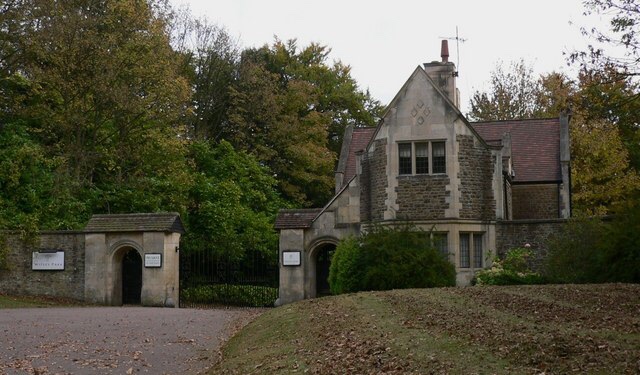
Thursley Lodge Gatehouse, Le Ley Estate (now Witley Park) – Photo credit Shazz CC BY-SA 2.0
img_5934
Thursley Lake, Witley Park

During the 1890s Whitaker Wright formed various companies including the London and Globe Company, floating stocks and bonds of a variety of mining companies…. However, he was falsifying statements and in 1899 the London and Globe Company went into receivership – and Whitaker Wright himself was declared bankrupt on the 13th of January 1903…. Shareholders of London and Globe brought a prosecution against him – he fled to France and then made his way to New York, only to be arrested on his arrival…. After his extradition back to London his trial began at the Royal Courts of Justice and on the 26th of January 1904 he was found guilty and sentenced to 7 years imprisonment….

It was immediately afterwards, whilst waiting in a court anteroom that Whitaker Wright swallowed a cyanide pill…. He was also found to have a revolver hidden upon his person….

His funeral took place in the churchyard of All Saints in Witley – (the church building itself was not able to be used as he had committed suicide)…. Villagers lined the route to watch his glass hearse go by – he had been a popular man in the neighbourhood, having provided employment for some 600 local people…. A further 500 gathered in the churchyard to pay their last respects….

Lea Park was bought in 1909 by Viscount William James Pirrie, Chairman of Harland & Wolff – the shipbuilders who built the Titanic….and he changed the name to Witley Park…. Tragically the house was destroyed by fire in 1952….

On this day in history….8th February 1587

On this day in history : 8th February 1587 – Mary Queen of Scots is beheaded on the orders of her cousin Queen Elizabeth I of England – in what can only be described as a horrific botched execution….

img_5896
Mary Stuart – Francois Clouet – Public domain

After Mary had abdicated from the Scottish throne she sought refuge in England and was initially welcomed by Elizabeth, however cautiously…. Mary was permitted to live in various castles around the land but she was continuously watched…. For nineteen years she was virtually a prisoner under house arrest….

img_5897
Mary in captivity by Nicholas Hilliard c.1578 – Public domain

Then in 1586 a plot was uncovered to murder Queen Elizabeth I…. The Babington Plot, sparking a Catholic uprising, led by Roman Catholic nobleman Anthony Babington, implicated Mary and she was brought to trial…. At the two day trial, on the 14th-15th of October 1586, she was found guilty and sentenced to death…. It seems Elizabeth was reluctant to sign her cousin’s death warrant – so a rather underhand method was used to ensure that she did…. The warrant was slipped into a large pile of papers awaiting her signature and so she signed it without realising she had done so….

img_5898
Drawing of the trial of Mary Queen of Scots – The digital collections of the British Library – CC0

44-year old Mary was to be executed in the Great Hall at Fotheringay Castle…. Mary’s own mother, Anne Boleyn had been beheaded – a master French swordsman had been brought in to perform her execution….it had been quick and clean…. The same cannot be said for Mary’s….

The scaffold was draped in black, more than 100 spectators gathered in the Great Hall to watch the proceedings…. Mary was forced to undress to her undergarments – she wore a blood red bodice to symbolise her Catholic martyrdom…. All the while her loyal servants wept around her….

Mary’s lady-in-waiting tied a cloth around her mistress’s eyes and helped her to kneel on the cushion…. Mary prayed – “In manus tuas, Domine, commendo spiritum meum” ~ “Into Thy hands, O Lord, I commend my spirit”….

Unable to see, due to the blindfold, Mary had to fumble around to find the block on which to lay her head…. Once her chin was in place one executioner held her in place whilst the other raised the axe…. As it fell and struck her neck it became all too obvious he had gravely misjudged….the blade had only partially gone through…. He quickly raised the axe and let it fall again but still her head remained attached…. after a third blow and using a sawing motion Mary’s head was finally severed from her body….

img_5899
The execution scene, drawn by eye witness Rupert Beale – Public domain

Exclaiming “God save the Queen!” the executioner raised the head for all to see…. as he did so Mary’s head promptly fell to the ground – and he was left holding only a red wig…. According to witness accounts of the time her lips continued to twitch for a good quarter of an hour after decapitation….

As if all that is not gruesome and traumatic enough, more was still to come…. As the executioner lifted the skirts of Mary’s petticoats to remove her garters – as was his right as executioner – he discovered her pet dog, Geddon, hiding in the folds…. The distraught little dog refused to leave his dead mistress – and lay in the pool of blood where Mary’s head had been….

On this day in history….7th February 1873

On this day in history : 7th February 1873 – The birth of Thomas Andrews – the naval architect in charge of overseeing the plans for the supposedly unsinkable RMS Titanic….

img_5890
Thomas Andrews – Public domain

Andrews was born in Comber, near to Belfast, into a prominent family…. His father was the Right Hon. Thomas Andrews and his mother Eliza Pirrie…. His brother, John, was later to become Prime Minister of Northern Ireland…. Andrews’ uncle was Lord Pirrie, owner of Harland & Wolff, who were to build the Titanic….

img_5893
Harland & Wolff at ‘knocking off’ time…. Titanic can be seen in the background – Public domain

Andrews joined Harland & Wolff in 1889, at the age of 16, as an apprentice….and spent the next five years working his way through the various departments of the company…. He was hardworking and well liked; he progressed quickly and in 1901 he became a member of the Institution of Naval Architects…. By 1907 he had been made Managing Director of Harland & Wolff, in charge of design and construction….

Andrews married Helen Reilly Barbour on the 24th of June 1908 and the couple were blessed with a daughter, Elizabeth, two years later….

img_5891
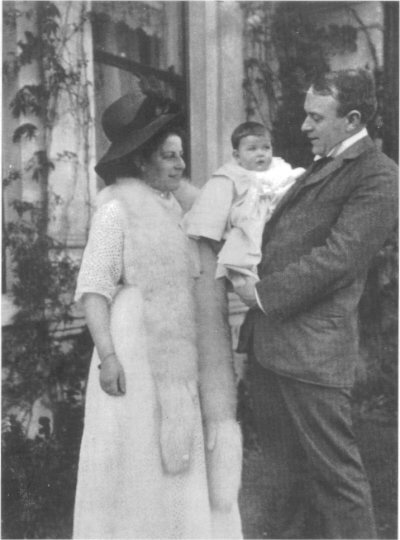
Thomas with his wife Helen and baby daughter Elizabeth – Public domain

Always wanting to be involved Andrews sailed on the maiden voyages of the Adriatic, Oceonic and Olympic – to oversee, observe and learn…. He was always looking for ways to improve things…. So, this is how he happened to be on the maiden voyage of RMS Titanic….

Leaving his wife and daughter behind in Belfast he boarded Titanic with his complimentary ticket No. 112050 and settled into cabin No. A36…. The ship sailed to Southampton on the 10th of April 1912 – and then on to the North Atlantic…. Andrews spent the first few days assisting where he was needed, helping the crew familiarise themselves with the new vessel – and making notes as to what could be done to make things better for future voyages….

img_5894
RMS Titanic departing Southampton 10th April 1912 – Public domain

On the evening of the 14th of April 1912 Andrews returned to his cabin after dinner and became engrossed in catching up with some work…. So absorbed was he that when the ship collided with the iceberg at approximately 23.40pm he hardly even noticed….and thought little of it…. His first hint of the danger they were in came when a message arrived to say his presence was immediately required on the Bridge….

He and 62-year-old Captain Smith, the White Star Line’s most senior captain, assessed the damage in the flooded mail room and squash court…. The design of the ship involved sixteen watertight compartments, with doors which could be closed from the Bridge, sealing off compartments if necessary…. Up to 4 compartments could flood at any one time and the ship would remain upright…. It was the safety design that led White Star to claim their vessels were practically unsinkable….

img_5895
Captain Edward Smith – Public domain

Despite this, Andrews had to break the news to Captain Smith that he did not think the Titanic would stay afloat for more then two hours…. Andrews spent his last hours urging passengers to the lifeboats…. The Titanic sank at around 2.20am on the 15th of April 1912…. The body of Andrews was never recovered….