On this day in history….1st February 1327

On this day in history : 1st February 1327 – Fourteen year old Edward III is crowned King of England – but the country is to be ruled by his mother and her lover….

Edward was born on the 13th of November 1312, probably at Windsor Castle…. His father was King Edward II and his mother Isabella of France – the pair had married in January 1308…. Isabella was the daughter of Philip IV of France….

Edward II’s reign was a troubled one….he had difficulty asserting his authority over the powerful barons…. His own father had left him with enormous debts, a war with Scotland that was proving to be impossible to win – and hostilities with France…. It was all a recipe for disaster….and his nineteen year reign was to eventually come to an acrimonious end….

Royal 20 A.II, f.10
Edward II shown receiving the English crown in a contemporary illustration – British Library digital collections – Public domain

Isabella returned to France in 1325 to settle a long-standing dispute between her husband and her brother, Charles IV of France…. The dispute involved the Gascogne region of Southwestern France… She was successful in her negotiations and managed to secure the land for England – on the condition that in return Edward II would pay homage to Charles IV…. Edward II, reluctant to leave England because domestic troubles were arising once again, decided to send his son on his behalf…. Once the young Edward had arrived and joined his mother, Isabella announced her refusal to return to England…. She also became the mistress of Roger Mortimer of Wigmore….

img_5793
The future Edward III giving homage in 1325 to Charles IV under the guidance of Isabella of France – Public domain

Mortimer, 1st earl of March, owned wealthy estates in Wales and Ireland and was opposed to King Edward II and his Despensers, which had eventually landed him in the Tower of London in 1323…. However, he managed to escape and fled to France…. He and Isabella began to plot….

An invasion of England in September 1326 saw the fall of the Despensers and the deposition of Edward II (and his murder in 1327)…. Edward II was charged with incompetence and breaking his coronation oath – he was forced to give up the throne…. Mortimer was heavily implicated in the proceedings….

Young Edward III was crowned but it was Mortimer who was to become the de facto ruler…. He soon set about seizing many of the noble estates and titles across the land…. He became a very unpopular man – even more so after a humiliating defeat by the Scots at the Battle of Stanhope Park….

In 1330 young Edward III decided it was time he assumed responsibility and dealt with Mortimer…. Edward had married Philippa of Hainault in January 1328 and had become father to a son in June 1330 – he now had an heir of his own….

With the help of his close friend William Montagu – and a small number of loyal trusted supporters – Edward took Mortimer by surprise at Nottingham Castle on the 19th of October 1330….

Mortimer was taken to the Tower of London…. He was condemned without trial, being accused of assuming royal power – and other charges…. His estates were forfeited to the crown…. and he was hanged at Tyburn on the 29th of November 1330…. His body was left hanging on the gallows for two days…. However, Edward III did show some degree of leniency – he refrained from having Mortimer disembowelled….
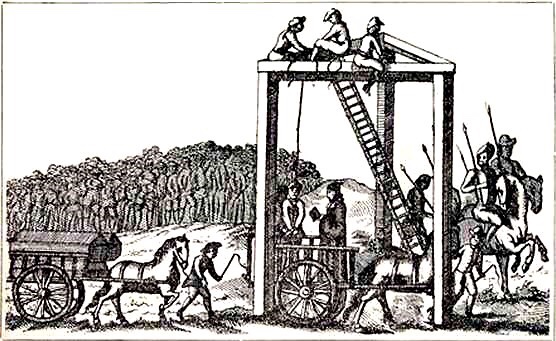
img_5797
The Tyburn – from the collections of The National Archives (United Kingdom) – Public domain

On this day in history….31st January 1953

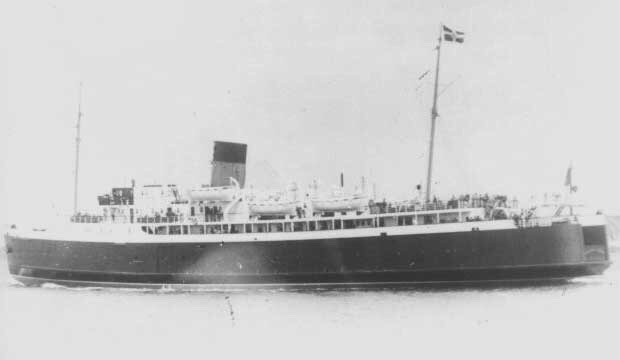
On this day in history : 31st January 1953 – The Princess Victoria, a car ferry, sinks in the Irish Sea during a severe gale – claiming the lives of over 130 passengers and crew….

img_5790
MV Princess Victoria – Image credit Wrecksite – http://www.wrecksite.eu – Public domain

The Princess Victoria, owned by British Railways, was one of the first roll on-roll off ferries…. It had left Stranraer on the Southwest coast of Scotland bound for Larne, Northern Ireland at 7.45am, in the charge of Captain James Millar Ferguson…. 128 passengers were onboard, along with 51 crew and 44 tons of cargo…. Warnings for severe gales had been issued….

Just 90 minutes later the ferry was in serious trouble – as a huge wave had smashed through the stern doors, mangling them out of shape…. The crew desperately tried to shut the doors but water poured on to the car deck…. As the ship filled with water it began to list alarmingly towards the starboard…. The passengers, by now wearing life jackets, tried helplessly to bail water out of the lounge area….

At 10.32am the first SOS was sent out by the ferry’s radio operator…. In the confusion the responding rescue lifeboat was given the wrong directions of how to find the stricken vessel….

At 1pm a message was put out from the Princess Victoria to other vessels in the area that the intention was to abandon ship at 2pm…. The very last message was transmitted at 1.58pm…. By 2pm the ferry was listing so badly that it was impossible to launch the lifeboats on the starboard side….

Two lifeboats, filled with women and children, were dropped so violently into the sea that they capsized, tipping their occupants into the icy sea…. The ferry then tipped over…. As the Princess Victoria went down 55-year-old Captain Ferguson stood on the deck, one hand gripping the hand rail – the other raised in a salute….

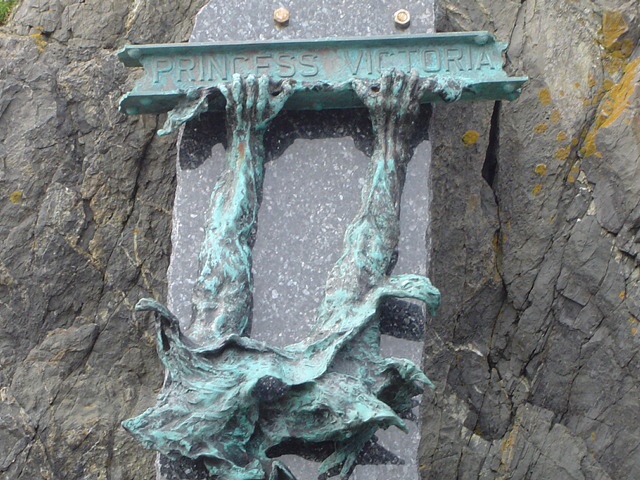
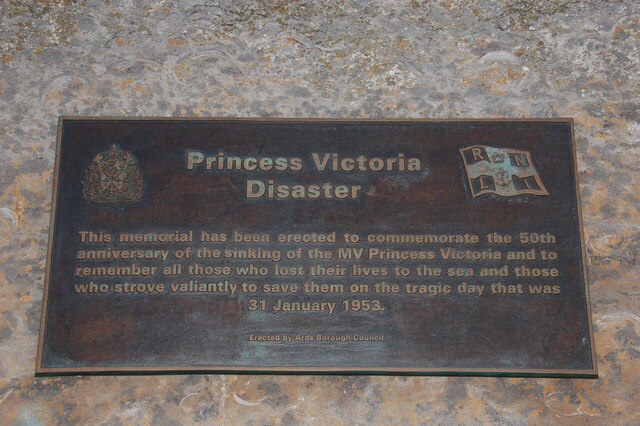
img_5791
Memorial in Portpatrick – Image credit : I Craig from Glasgow CC BY 2.0

44 men were saved by the rescue operation – not one woman or child survived…. Among the dead were deputy Prime Minister of Northern Ireland, J Maynard Sinclair and MP for North Down, Sir Walter Smiles….

At the inquiry it was revealed that the Princess Victoria had been unseaworthy and British Railways was to blame for this…. In concluding the inquiry summarised : “If the Princess Victoria had been as staunch as the men who manned her, then all would have been well and this disaster averted”….

67 bodies were recovered from the sea after the sinking of Princess Victoria….

Later the highest civilian award for bravery was given posthumously to the ferry’s radio operator, David Broadfoot – who remained at his post sending out SOS messages right up to the moment the ferry sank….img_5792

On this day in history….30th January 1649

On this day in history : 30th January 1649 – King Charles I is beheaded for treason at Whitehall, in London….

Charles had ascended the throne in 1635 after the death of his father James I – and it was to be a rocky ride with Parliament from the start…. He was to upset things further by marrying French Princess Henrietta Maria, a Catholic, within a year of becoming King – this enraged the Protestants among his subjects….

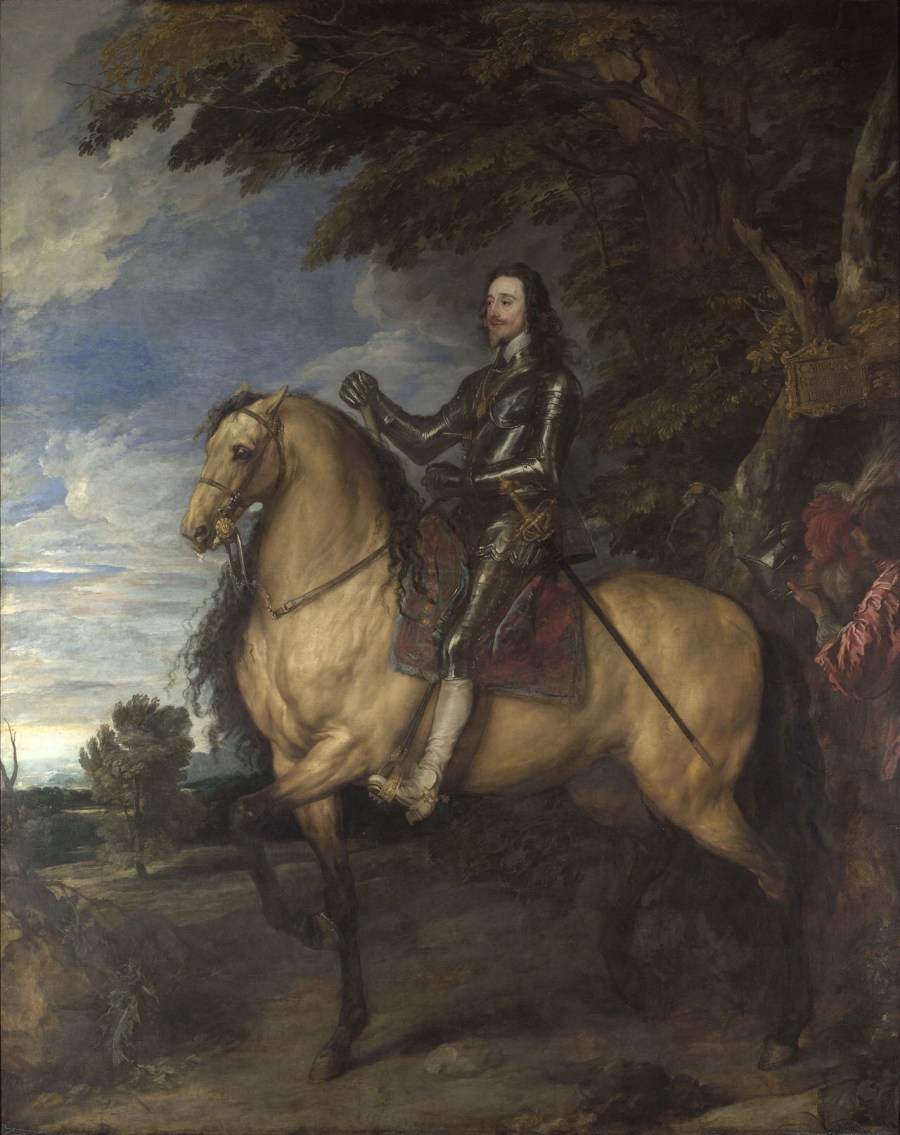
img_5789
Charles I by Sir Anthony van Dyck 1637/38 – Public domain

Charles believed kings had a divine right in the matters of ruling the land – that belief and his tax policies soon turned the government against him…. His response to political opposition was to dissolve Parliament several times and in 1629 he got rid of Parliament altogether and ruled alone…. This finally led to the outbreak of the first English Civil War in 1642, with the opposing Parliamentarians being led by Oliver Cromwell….

By 1648 Cromwell’s New Model Army had gained military supremacy in England…. Charles had been captured, managed to escape and had been recaptured….

His trial was set for early January 1649…. Out of 135 appointed commissioners only 68 turned up – and nearly all of them were Parliamentarian supporters…. The trial of a king was unheard of and those who chose to stay away were trying to disassociate themselves….

img_5786
Charles I at his trial by Edward Bower 1649 – Public domain

For the first three days Charles was brought to the Court and asked to make his plea – each time he refused…. After the third day he was removed from Court and the witness accounts against him were heard…. On January the 26th Charles was condemned to death; he was brought back to Court on the 27th to hear the declaration…. 59 out of the 68 commissioners signed the death warrant….

img_5787
Charles I in the dock – (his back pictured as he faces the High Court of Justice) – Uncredited engraver – Public domain

Charles spent his last days at St James’s Palace – he was possibly moved there to spare him from hearing the scaffold being erected…. He prayed, spent time with his loyal supporters and – perhaps most importantly – his children, whom he had not seen for some 15 months….

When Tuesday the 30th of January dawned it was a bitterly cold day…. Charles dressed in fine clothes, black with a blue sash…. It is said he asked for a second shirt to wear as he didn’t want to shiver and have the crowd think he was shaking with fear….

The scaffold, draped in black, had been erected in front of Banqueting Hall, at the Palace of Whitehall…. Crowds of spectators surrounded it….

At around 2pm Charles climbed on to the platform and proceeded to give his last speech…. He declared himself innocent of the crimes set against him…. He said he always desired the freedom and liberty of the people – he claimed he was a martyr of the people…. Few in the crowd heard his speech on account of the vast number of Parliamentarian guards blocking the scaffold….

Finishing his speech Charles bowed, put on his silk nightcap so that his hair would not get in the way and then placed his head on the block…. As he stretched out his hands, his signal to the executioner, the axe fell – severing his head in one clean blow…. A groan escaped the watching crowd – some dipped their handkerchiefs in the blood, believing a king’s blood could cure their illnesses….

img_5788
Contemporary German print of Charles I’s beheading – Public domain

There has always since been speculation as to the identity of the executioner, who was masked to prevent him from being identified…. Whoever it was, because of the single clean blow, knew what they were doing – they had experience…. The common hangman of the time, Richard Brandon, had reputedly refused to undertake the execution – even with the offered £200…. However, it is quite likely that it was indeed him who performed the act….

To pacify the family of Charles his head was sewn back on to his body…. Burial at Westminster Abbey was refused – instead King Charles I was laid to rest at Windsor Castle….

On this day in history….29th January 1820

On this day in history : 29th January 1820 – King George III dies insane at Windsor Castle, a decade after having to retire from public life because of his mental health….

George had been England’s longest ruling monarch before Queen Victoria…. He came to the throne in 1760 at the age of 22 and there he remained for 59 years and 96 days….

img_5782
Coronation portrait by Allan Ramsay 1762 – Public domain

A year after becoming King he married Charlotte of Mecklenburg-Strelitz, the daughter of a German duke…. It was a political union – but a successful one, the couple went on to have 15 children….

His reign saw the end of the Seven Years’ War and also the American Revolution…. When people nowadays think of George III two things spring to mind – his madness and the loss of the American colonies….

George’s first severe bout of insanity occurred in 1778 and lasted for a month…. So violent was he that a straitjacket had to be used to restrain him…. However, he was to recover and resumed his reign proving to be a very popular monarch….

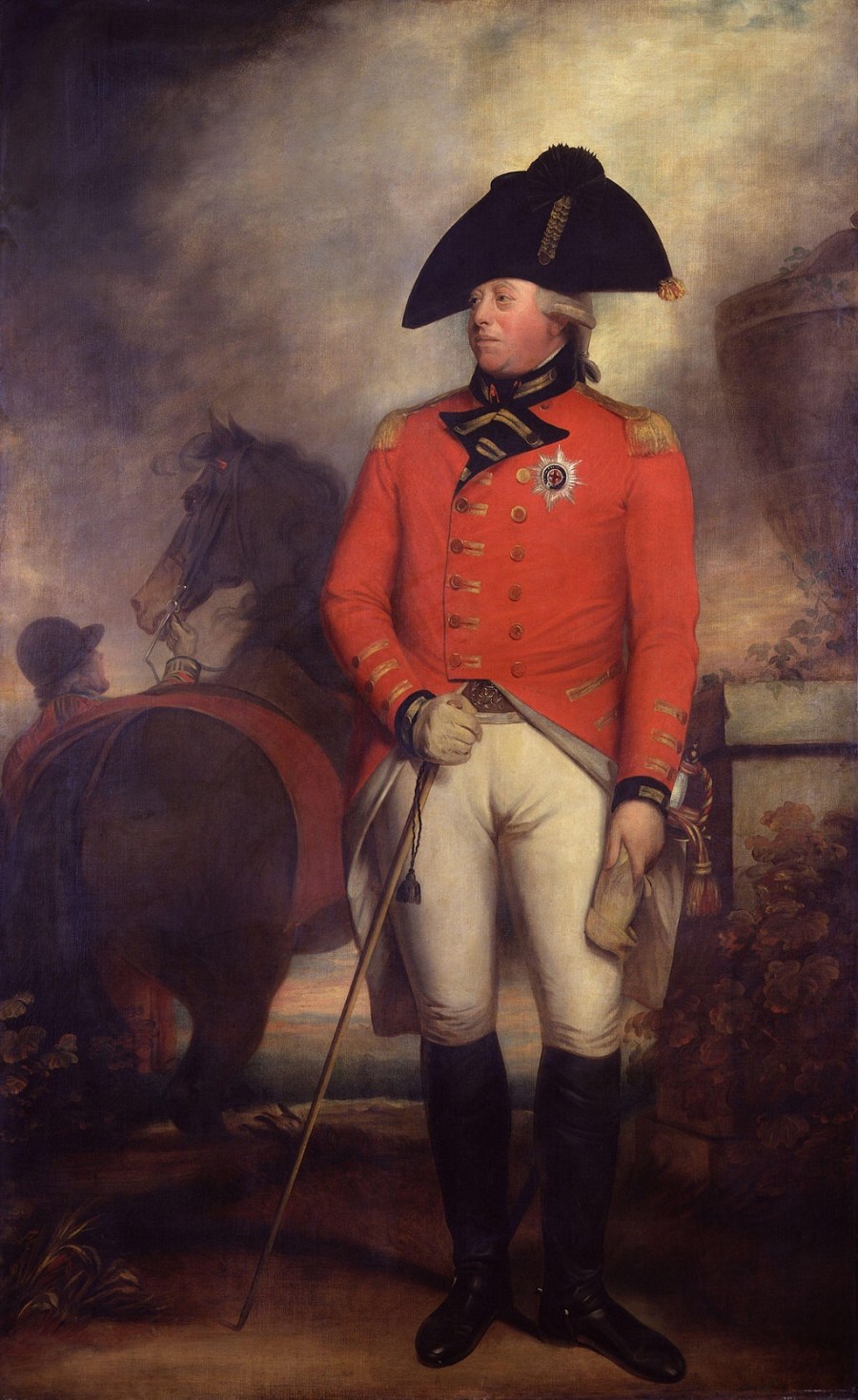
img_5785
Portrait by Sir William Beechey 1799/1800 – Public domain

His next severe bout was in 1804…. Once again he made a recovery – but in 1810 he was to lapse into an illness from which he would not recover…. By this time he was also virtually blind from cataracts and in constant pain from rheumatism…. By the end of 1811 he was permanently insane and lived in seclusion at Windsor Castle…. His son, the future George IV, became Prince Regent….

George’s health continued to decline…. He was unable to understand that he was King – or that his wife had died in 1818…. Eventually he was completely blind, more and more deaf and for the last few weeks of his life unable to walk….

He died at Windsor Castle at 8.38pm on the 29th of January 1820 – his son Frederick, Duke of York, was with him….

It has long widely been thought that George may have suffered from a condition known as porphyria, an inherited blood disorder that can cause confusion, paranoia and hallucinations…. Doctors at the time, knowing no different, may have made this worse by treating him with arsenic….

img_5784
Engraving by Henry Meyer of George III in later life – Public domain

However, a more recent study, a research project at St George’s, University of London, argues against porphyria…. One of the symptoms of the illness is blue urine – and there is little evidence to suggest George III suffered from this….

Using thousands of handwritten letters by George, a computer was used to analyse his language…. His sentences were much longer during his episodes of mental illness…. As many as 400 words could be used in one sentence – that in turn could contain up to 8 verbs…. He also had a tendency to often repeat himself….

This is also something seen today in the writings of those suffering from illnesses such as bipolar…. Therefore, it is argued that King George III actually suffered from bipolar and/or dementia….

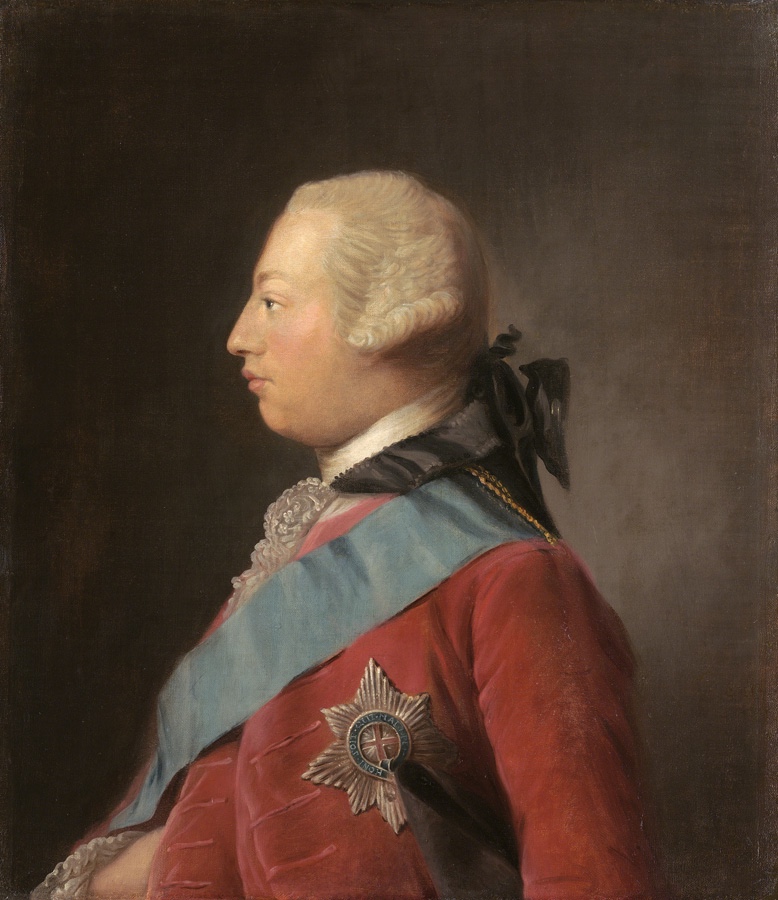
img_5783
George III by Allan Ramsay 1762 – Public domain

On this day in history….28th January 1953

On this day in history: 28th January 1953 – Derek Bentley is executed at Wandsworth Prison for his part in the murder of PC Sidney Miles….

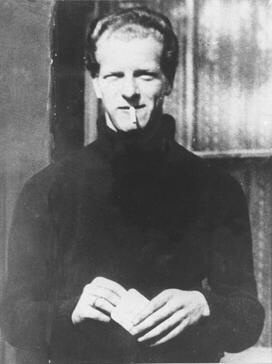
img_5780
Derek Bentley – Fair use

Bentley was 19-years-old when he was hanged; he allegedly had a mental age of 11, was illiterate and suffered with epilepsy – probably resulting from a broken nose he received as a young child….

On the 2nd of November 1952 he and his 16-year-old friend, Christopher Craig, set out to commit a burglary on a warehouse in Croydon belonging to confectionary company Parker and Barlow…. However, while the pair were on the roof of the building they were spotted by a young girl living in a nearby house, who informed her mother – and she subsequently called the police….

Bentley was armed, with a knife and knuckle duster…. Craig too had a knife but he also carried a .455 Eley revolver….

A patrol car arrived with a uniformed constable and detective constable Fairfax – who proceeded to climb a drainpipe to get to the roof of the warehouse…. The would-be burglars attempted to run for it – but Bentley was restrained by Fairfax…. Craig shot the policeman, wounding him in the shoulder…. Notably, Bentley made no attempt to escape, he remained with the injured Fairfax….

Other police officers arrived on the scene….some were armed…. Craig, trigger-happy, was shooting haphazardly at any moving target…. It was as PC Sidney Miles reached the rooftop that the fatal shot was fired, hitting the constable in the head – he died instantly….

Craig, who had now run out of bullets, ran and threw himself off the roof of the building, landing some 30 feet below on a greenhouse – he broke his back….

Both Craig and Bentley were charged with murder…. At some point in all the shooting Bentley had supposedly uttered those fateful words “Let him have it Chris”…. Did he mean a bullet? Or was he in fact urging Craig to hand over the gun?

The controversial trial began on Thursday the 9th of December 1952, both Craig and Bentley pleaded ‘not guilty’…. It took the jury just 75 minutes to return a verdict of ‘guilty’ – but made the recommendation to mercy in the case of Bentley…. However, Judge Lord Goddard did not include this in his report to the Home Office…. Bentley was condemned to hang….

Due to his age Craig was spared the death penalty – instead he was ordered to be detained at Her Majesty’s pleasure…. He was released in 1963 after serving ten years….

Considering his mental age should Bentley have been sentenced as such? Yes, he had set out to commit a burglary and he was armed – but he was not the one who fired the gun….

An appeal hearing was held on the 13th of January – but the sentence was upheld…. A campaign was led by Bentley’s father – over 200 MPs signed a petition for a reprieve to be granted….

The night before the execution date crowds protested outside Parliament chanting “Bentley must not die”…. On the morning of the execution a large crowd gathered outside Wandsworth Prison, some sang the hymn ‘Abide With Me’…. Boos were heard when the notice it had been done was brought out….

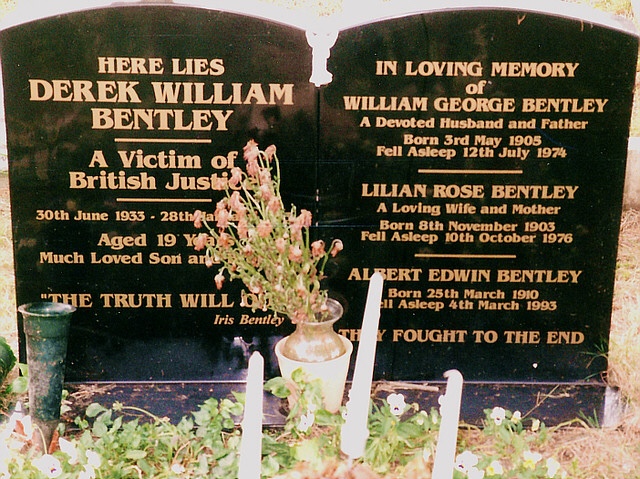
Bentley’s sister, Iris, continued to campaign…. finally, in 1993, Home Secretary Micheal Howard, granted a partial pardon – saying Bentley should never have been hanged…. Later new evidence came to light that three officers had lied under oath about Bentley saying “Let him have it Chris”…. In 1998 the Appeal Court quashed Bentley’s conviction…. Sadly Iris did not live long enough to see this day….

img_5781
Photo credit : Steve Brown via Flickr