On this day in history : 21st August 1765 – The birth of King William IV, who came to the throne at the age of 64 – and was the oldest British monarch to be crowned until the Accession of King Charles III….
William in dress uniform – Sir Martin Archer Shee C.1800 – Public domain
William, who was born at Buckingham Palace, was the third son of George III and Charlotte of Mecklenburg-Strelitz…. He was not expected to become King and at the age of 13 was packed off to join the Royal Navy….something which later earned him the nickname ‘Sailor King’….
William, as Lord High Admiral by William James Ward, published by William Sams, after Abraham Wivell, mezzotint, published 1 June 1827 – Public domain
William saw active service at the Battle of St. Vincent in 1780 against the Spanish – and in New York during the American War of Independence…. George Washington even plotted to have him kidnapped but when his intentions were leaked the plan failed…. William was then to serve under Horatio Nelson in the West Indies and by the time he left the Navy in 1790 he had risen to the rank of Rear Admiral…. He was made the Duke of Clarence and later, in 1825, Clarence House in London was designed for him by John Nash….
Clarence House (1874) – Public domain
In 1791 William began living with Irish actress Dorothea Bland, who was also known as ‘Mrs Jordan’…. They were to live as though husband and wife for the next 20 years and had 10 children, 5 girls and 5 boys…. There were those who were less than respectful to the Duke of Clarence and referred to him as ‘Silly Billy’….
Mrs Jordan in the character of Hypolita; mezzotint by John Jones of London 1791 – Public domain
However, William’s destiny was set to change…. Upon the death of his elder brother’s only child, Charlotte, he became heir to the throne…. It was decided he would need a suitable wife and so one was found for him…. In 1818 he married Adelaide of Saxe-Menninger; they had 4 children but none survived beyond infancy….
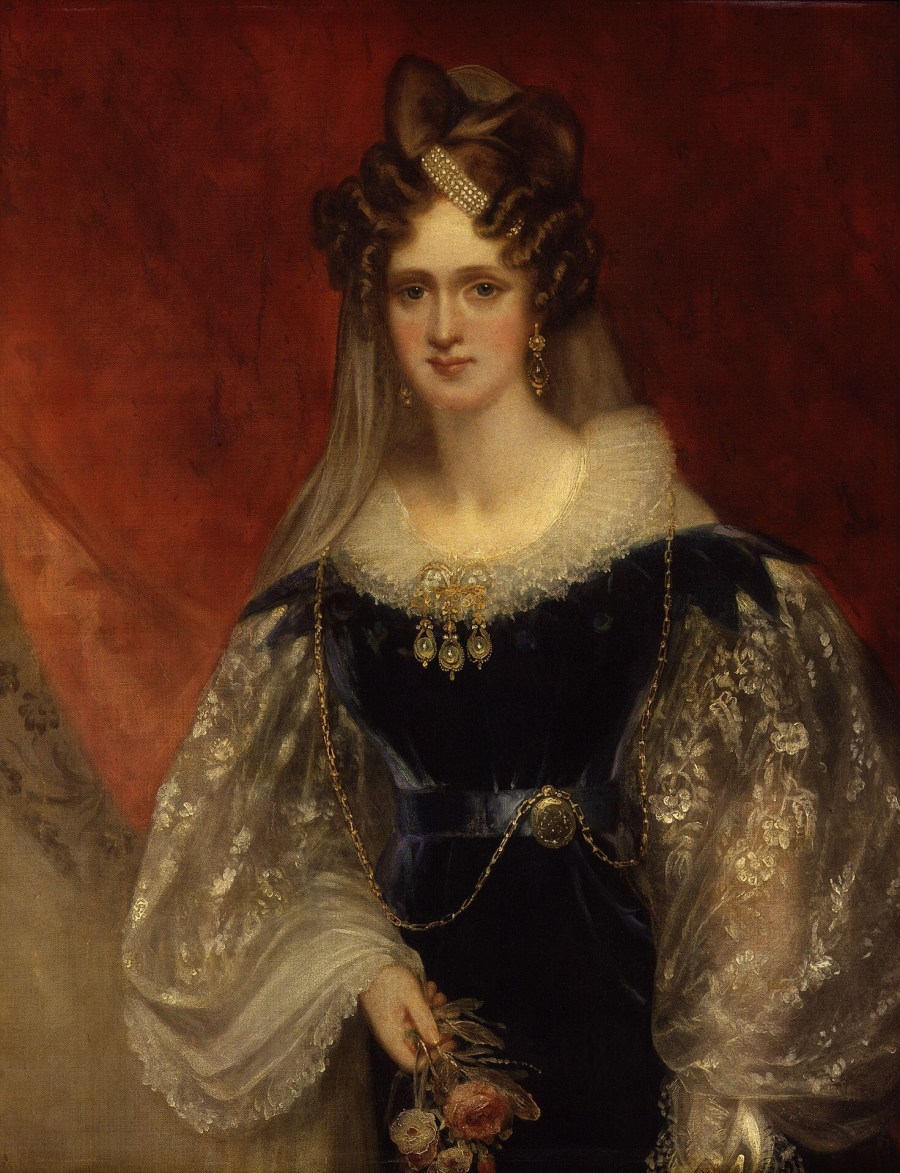
Adelaide of Saxe-Meiningen by Sir William Beechey C.1831 – Public domain
When he came to the throne on the 26th of June 1830 he asked “Who’s the Silly Billy now?”…. He was to reign for just 7 years; William died of heart failure on the 20th of June 1837…. Having no surviving legitimate children the throne passed to his niece, Princess Victoria….
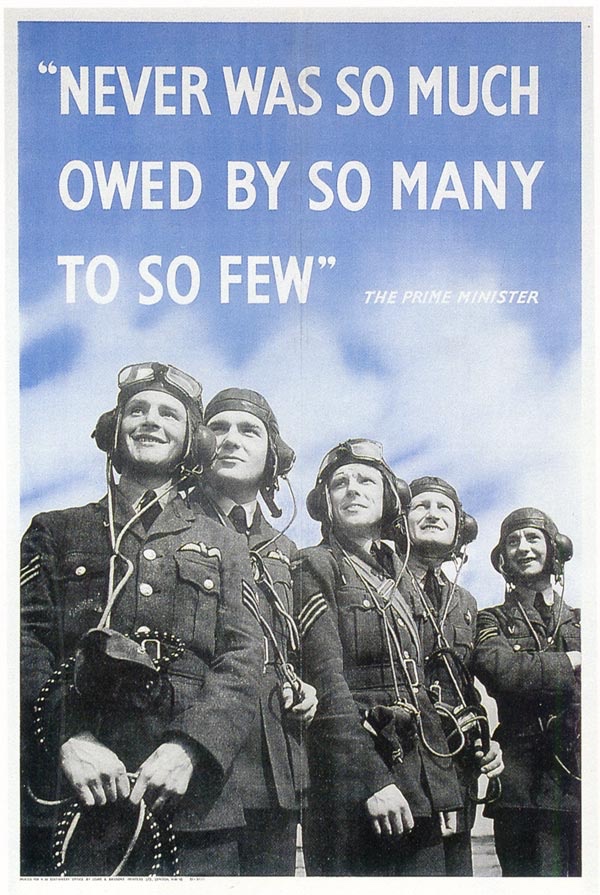
On this day in history : 20th August 1940 – The speech “Never in the field of human conflict was so much owed by so many to so few” was made by Prime Minister Winston Churchill….
Winston Churchill, British Prime Minister, giving a V sign in 1943 – British Government, public domain
It was in recognition of the efforts of the Royal Air Force, who were in the midst of the ongoing Battle of Britain, fighting against the German Luftwaffe – as Britain was anticipating an imminent invasion….
Churchill had apparently first said the words during a visit to the No.11 Group RAF Operations Room – during a particularly harrowing day of battle; it was an experience he found emotionally moving…. He was then to use the words as a basis for his House of Commons speech, in an attempt to inspire the Country…. He pointed out that although in the previous months the Allies had seen monumental defeats, the situation now was much better…. He was right, not long after Britain had won the Battle – the first major defeat of the Luftwaffe….
To this day, pilots who fought in the Battle of Britain are known as ‘The Few’….
On this day in history : 19th August 1975 – Headingley Cricket Ground, Leeds, is vandalised by campaigners calling for the release of robber George Davis from prison….
34-year-old East London mini-cab driver, George Davis, had been jailed for 20 years for his part in an armed robbery in Ilford, Essex – a police officer had been shot and injured…. However, it was claimed Davis was a case of mistaken identity – he had not been involved in the pay-roll robbery…. Since his imprisonment in Albany Prison on the Isle of Wight a series of marches, petitions and fund-raising events had been organised…. Even a 7 hour roof top demonstration on St. Paul’s Cathedral had been held by his brother-in-laws, Jim and Colin Dean….
Campaigners had gained entrance to the Headingley ground, had dug holes on the cricket pitch and had poured oil over one end of the wicket…. They had painted slogans on the walls demanding Davis’s release…. The damage was discovered by head groundsman, George Cawthray – and the final match of the series between England and Australia had to be abandoned…. This meant a draw was declared and England did not have the chance of winning back the Ashes….
Police travelled from London to Leeds to investigate – and four people were brought to trial…. Three received suspended sentences whilst the fourth, Peter Chappell, was given an 18 month prison sentence….
Image credit : sarflondondunk via Flickr
Following the incident an internal inquiry was set up to look into the handling of the Davis case…. In conclusion Home Secretary Roy Jenkins expressed serious doubt as to Davis’s identification, which had been based on the evidence of two police officers…. In May 1976 Davis was released from prison….
However, in July 1978 Davis was jailed for 15 years after pleading guilty to taking part in a bank robbery…. He was freed in 1984 – but three years later was to receive a further 18 month sentence for attempting to steal mailbags….
On this day in history : 18th August 1587 – The birth of Virginia Dare, the first English child to be born in the New World; what became of her and the rest of the Roanoke Colony remains a mystery….
Colonists had set sail for Virginia onboard ‘The Lion’ in May 1587 – the Captain of their expedition was Simon Fernandez, the Portuguese navigator…. Their chosen destination was Chesapeake Bay – but on reaching Roanoke in late July, Fernandez stopped to let his passengers disembark and then refused to allow them back onboard again….
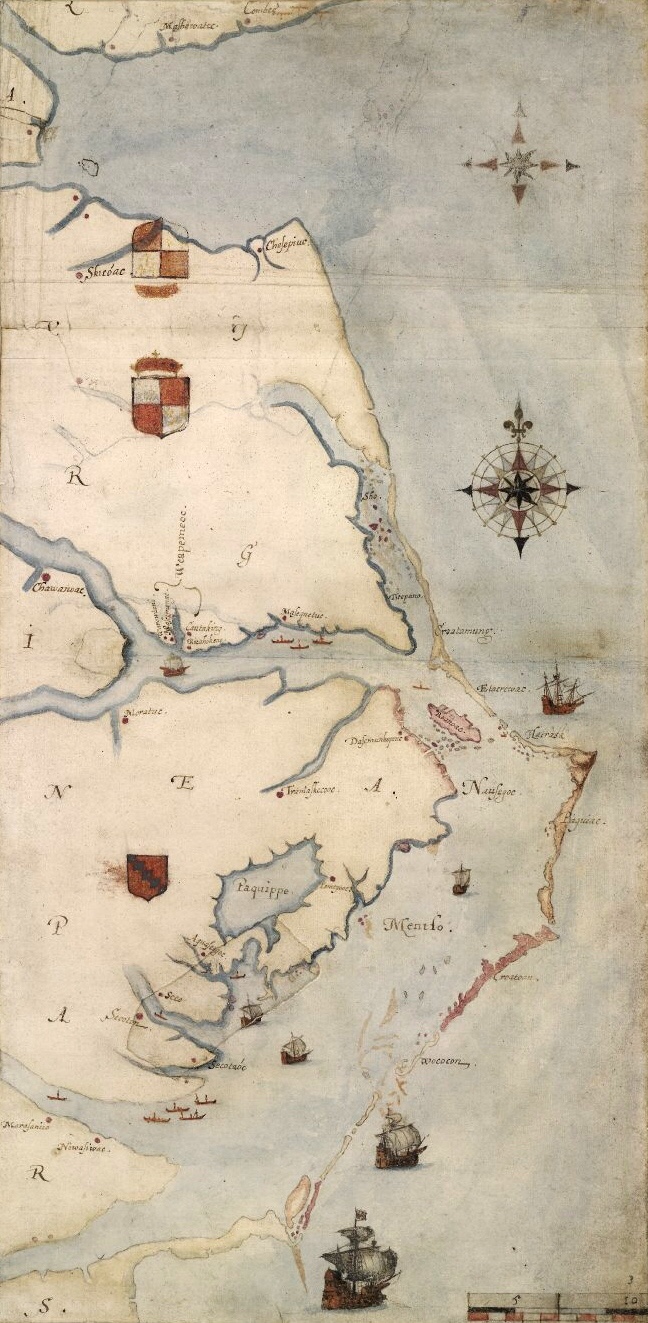
Roanoke Colony – drawn by John White during his first visit to the region in 1585. Roanoke is the pink coloured island, centre, right – John White, public domain
Roanoke, which is now part of North Carolina, had previously been inhabited by 15 men…. The new settlers patched-up the dwellings left behind by their predecessors and attempted to search for the men – but all they found were bones….
The settlers were led by Governor John White; he made enquiries with some friendly natives, the people of Chief Manteo and was told the 15 men had been killed by a hostile tribe…. On the 8th of August White led his men on a dawn raid….but they got it so wrong! Instead of attacking an antagonistic tribe they attacked friendly natives, killing one and wounding many more…. From then on relations with all the tribes declined….
Ten days later White became a grandfather; his daughter, Elenora, who herself had been born in London circa 1563, gave birth to a healthy baby girl…. It was announced : “Elenora, daughter to the governor of the city, and wife to Ananias Dare, one of the assistants, was delivered of a daughter in Roanoke”…. Ananias Dare, a tiler and bricklayer by trade, had also been born in London, circa 1560…. The Dares named their new daughter ‘Virginia’, as she was the first to be born there….and she was christened the following Sunday….
Baptism of Virginia Dare, lithograph, 1880 – Henry Howe, public domain
Towards the end of 1587 food supplies were rapidly beginning to run out; the supply ships, not knowing Fernandez had stranded the Colonists at Roanoke, did not stop there…. The settlers persuaded White to set off and make his way back to England to organise necessary provisions for them – something he eventually agreed to – but against his will….
These were difficult times; England was at war with Spain – and Queen Elizabeth I had commandeered almost all seaworthy ships with which to fight the Spanish Armada…. This meant White did not return to Roanoke until the 18th of August 1590 – on what would have been little Virginia Dare’s third birthday….
The return of Governor White to Roanoke – Public domain
Only there was no sign of his grand-daughter, or his daughter – or indeed any of the 80 men, 17 women and 11 children who made up the Colony of Roanoke…. The houses and fortifications were collapsed….not torn down but purposely dismantled….and there was no evidence of a battle or a struggle…. White had told the settlers before he left that if they were forced to leave they should carve a Maltese Cross as a sign…. There was no cross to be seen….just the word ‘Croatoan’ carved onto a post of the fort…. White assumed they had moved on to Croatoan Island (now called Hatteras Island)…. He never did find out what happened to them….their disappearance remains a mystery to this day….
Of course most theories conclude that they were killed by natives; although others say they were given refuge by sympathetic Chesapeake Indians…. There are those who believe they were taken captive by natives and forced into slavery; there were even reported sightings of European women and children among the native people…. We will never know what happened to little Virginia Dare….but featuring prominently in myths and legends, through American folklore she lives on….
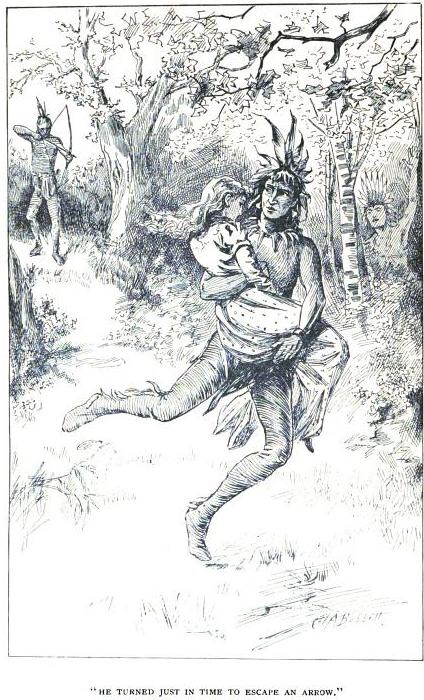
Illustration from Virginia Dare : A Romance of the Sixteenth Century, 19th Century novel by Mrs E.A.B. Shackelford, loosely based on the life of Virginia Dare – Public domain
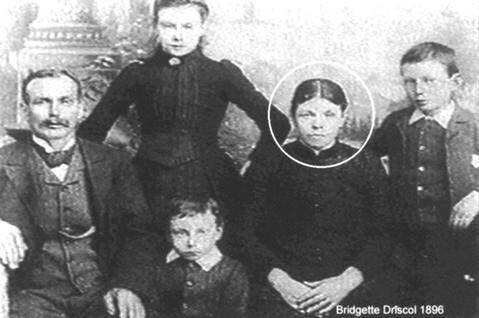
On this day in history : 17th August 1896 – Mrs Bridget Driscoll, from Croydon, Surrey is the first person in Britain to be knocked down by a car and killed….
Bridget, aged 44, had been on a visit to the Crystal Palace with her 16-year-old daughter; as part of the exhibition automobiles were being demonstrated…. People were unfamiliar with these new horseless carriages and many were unsure how to react around them….
Bridget Driscoll (circled) Public domain (this version – Madgamers via Wikimedia)
The driver of the Roger-Benz, an employee of the Anglo-French Motor Co., had only been driving for three weeks (there were no driving tests back then)…. He claimed he was only doing 4mph and had rung his bell and shouted “Stand back!”…. But as he swerved and zig-zagged towards them Bridget Driscoll hesitated and appeared bewildered…. Bridget had the misfortune of becoming Britain’s first motoring fatality – at the time there were fewer than 20 cars on the roads….
At the inquest her death was given an ‘accidental death’ verdict – the coroner stated that he hoped “this would be the last death in this sort of accident”…. It is estimated there have been more than 550,000 people killed on Britain’s roads since then….