On this day in history….4th April 1873

On this day in history : 4th April 1873 – The Kennel Club is founded; the World’s first official registry of thoroughbred dogs and regulation of canine activities, such as dog shows and field trials….

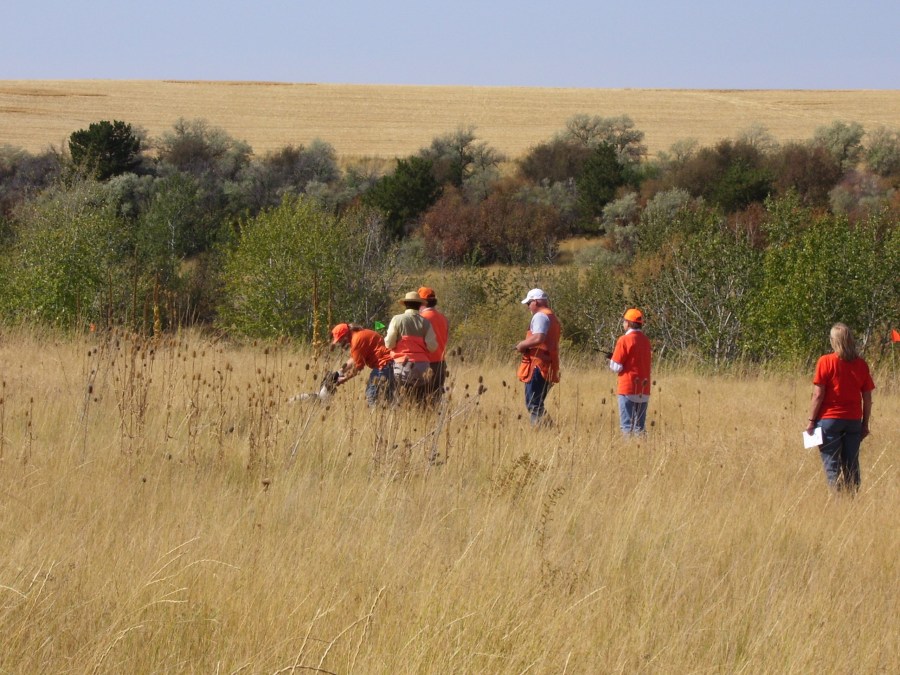
The first known dog show was held in Newcastle-upon-Tyne in 1859 and soon became a very popular hobby among the Victorians…. Loved by both exhibitors and spectators alike it was a pastime accessible to all classes…. This was not quite the case with field trials, as these tended to be more for country gentlemen; the first trial was held in Southill in 1865 – and soon such trials had a huge following….

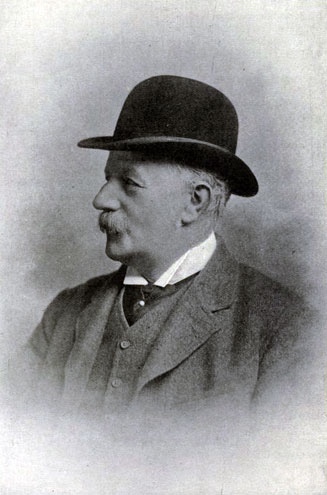
Sewallis E. Shirley, an exhibitor of fox terriers, became frustrated with the lack of consistent rules amongst the various dog shows. It prompted him and some colleagues to organise the First Grand Exhibition of Sporting and Other Dogs at the Crystal Palace in June 1870….and the seeds of the Kennel Club were sown….

img_2705
Sewallis E Shirley – Public domain

Along with 12 other gentlemen Shirley produced a set of rules and regulations to make sure shows and trials were managed and run honestly, fairly and with the welfare of the dogs in mind…. In 1874 the first Kennel Club stud book was produced, listing results of all dog shows and field trials since 1859, along with a code of rules. It has been published every year since….
img_2709
Spaniel field trail

At first the Kennel Club was run from a small three room flat – 2 Albert Mansions in Victoria Street, London – but in May 1877 moved to Pall Mall. The organisation now has its headquarters in Mayfair…. Its first ever patron was HRH The Prince of Wales (to become King Edward VII) who himself was a strong opposer of the practice of cropping dogs ears….

In 1880 the first monthly register of dogs names was printed – a registration to identify dogs individually…. It is this that over the years has provided the source of pedigree for all the breeders on the Kennel Club’s register….

Nowadays the Kennel Club licenses dog shows throughout the United Kingdom – but only runs one show itself…. In 1939, after the death of Charles Cruft it acquired Crufts Dog Show, which had been founded in 1891…. Held every March at the NEC in Birmingham it is the World’s most famous dog show….

On this day in history….3rd April 1993

On this day in history : 3rd April 1993 – After a series of events at the start, including protesters on the course, the Grand National ends in chaos and the race is declared void….

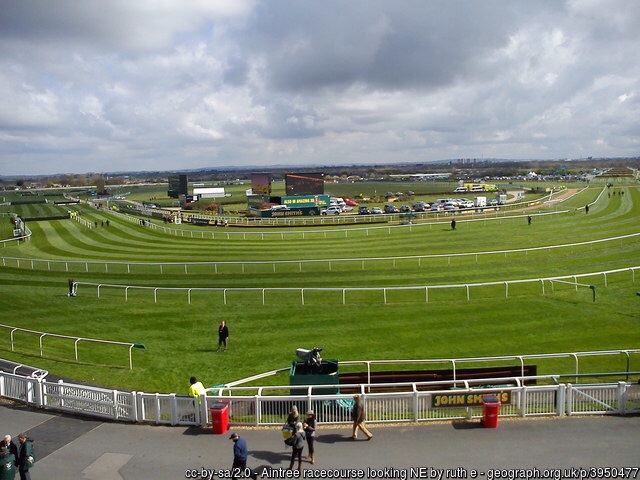
An estimated 300 million people around the World watched the shambles unfold live on television at the Aintree racecourse in Liverpool….img_2704

The problems had started even before the race had begun…. Fifteen animal rights protesters had managed to get on to the track near to the first fence…. After a delay, whilst the protesters were dealt with, the horses and riders were requested to line up again….

What then followed was farcical….two false starts caused by horses becoming tangled with the starting tape…. It was on the second false start that 30 out of 39 riders failed to realise what was happening…. Keith Brown, the starter – and who was officiating his last race before his retirement – had raised the red flag but it had not unfurled…. The crowd shouted to the jockeys to stop and officials attempted to flag them down….

Eleven riders completed the first circuit before realising…. Another seven carried on oblivious – completing the two laps of the four and a half mile gruelling race with its thirty obstacles….only realising their mistake on their finish….

Esha Ness, a 50-1 outsider ridden by John White, crossed the finishing line first….ironically in the second fastest time in the race’s history…. What would have been the 147th running of the Grand National was declared void by the Jockey Club – and the race was not rerun…. Bookmakers faced refunding £75m placed in bets….

An inquiry was launched leading to a number of changes to the starting and recall procedures of the Grand National….

On this day in history….2nd April 1801

On this day in history : 2nd April 1801 – The Battle of Copenhagen takes place – Admiral Horatio Nelson ignores orders to withdraw his forces and proceeds to sink the pro-French Danish fleet….

img_2703
Christian August Lorentzen – Public domain

It was in early 1801, during the Napoleonic Wars, that Denmark, Sweden, Russia and Prussia formed a coalition to ensure free trade with France…. By joining forces to protect their own shipping against Britain they cut Britain’s vital supply of timber and other associated goods needed to sustain the Royal Navy…. Britain responded by sending a fleet to break the coalition….

The fleet, under the command of Admiral Hyde Parker with Vice-Admiral Horatio Nelson as his second-in-command, reached Denmark on the 21st of March…. It had been essential to get there before the Baltic Sea thawed, allowing the Russian fleet to leave its bases in order to assist its Scandinavian allies….

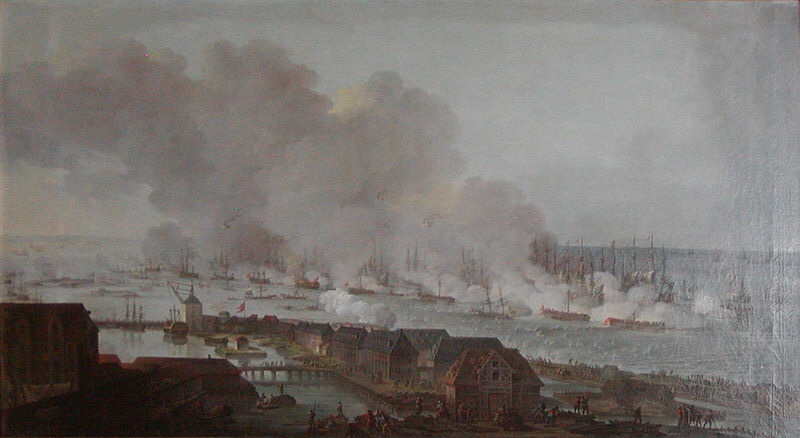
Britain began negotiations with the Danes to try and come to an agreement – but the talks proved fruitless…. So, it was Nelson, onboard 74-gun HMS Elephant, who led 12 ships in an effort to gain entry into Copenhagen Harbour…. The Danes formed a blockade and so battle commenced – with a British attack on the Danish ships and land defences….

img_2699
Nicholas Pocock – Public domain

It was a bold plan…. The waters being shallow and the British having no detailed charts of the area – it did not take long for three of the British ships to run aground….

Parker, observing from a far – with his view obscured by all the smoke – felt that Nelson was taking unnecessary risks…. At 1.30pm he ordered Nelson to retreat – his words to his flag captain… “I will make the signal to recall for Nelson’s sake…. If he is in condition to continue the action, he will disregard it; if he is not, it will be an excuse for his retreat and no blame can be imputed to him”….

Nelson on seeing the signal flag joked to his own flag captain…. “You know, Foley, I only have one eye – I have the right to be blind sometimes”…. He then held his telescope up to his blind eye – the result of an old injury – and said…. “I really do not see the signal”…. He then ignored Parker’s command and carried on with the task in hand….

img_2701
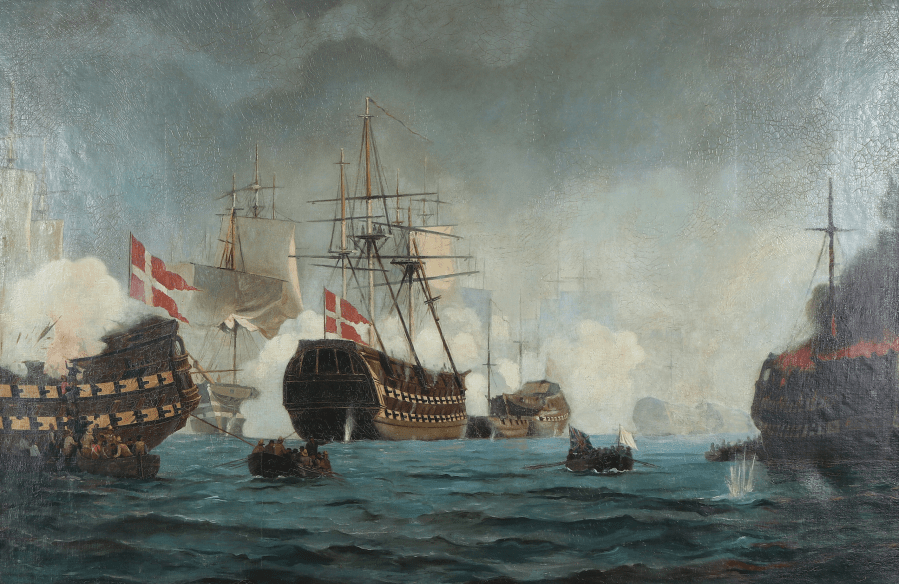
Christian Molsted – Public domain

By late afternoon the British had the upper-hand in the battle and the Danes were taking a thorough battering…. By the end of the fighting 12 Danish ships had been captured or destroyed, with 1,700 men dead or wounded; a further 2000 were captured…. Several British ships were grounded (but later re-floated) with 1,000 men dead or wounded….

img_2700
Christian Molsted – Public domain

Negotiations were reopened – helped by the fact that Russia’s Czar Paul had been assassinated and his successor Czar Alexander was known to be far more sympathetic to the British…. Eventually an agreement was secured with the Danes….

On this day in history….1st April 2000

On this day in history : 1st April 2000 – An Enigma machine, used by the Germans in WW2 to encode messages, is stolen from Bletchley Park Museum in broad daylight….

img_2689
Bletchley Park – image credit: Magnus Manske CC BY-SA via Wikimedia

Bletchley Park, the stately home in Buckinghamshire that was known as Station X in the war, was where British agents managed to crack the Enigma code…. The Germans had thought the code unbreakable but 10,000 mathematicians, linguists and even chess champions had worked at Bletchley decoding up to 18,000 messages per day….

img_2688
Women dutifully working in Bletchley Park – image: UK Government CC BY-SA 4.0

Station X remained a secret until 1967 but nowadays it is a popular tourist attraction…. The day the Enigma machine was stolen was a day that Bletchley was open to the public; it disappeared from a secure, alarmed glass case, which showed no signs of forced entry….

The machine’s whereabouts remained a complete mystery until September 2000…. Police began to receive letters from a person saying that they were acting on behalf of someone who had bought it…. A £25K ransom was demanded for its return, which the museum agreed to pay…. The machine is special in that it is one of only three in the World of a higher standard than the everyday Enigma machines used in the field – as it had been used by the SS…. The value of this particular machine being over £100,000…. However, the 6th of October deadline for the ransom payment was not met….

img_2687
ENIGMA machine at Bletcley Park – image credit: _dChris via flickr

Two weeks later TV presenter Jeremy Paxman received a parcel at his BBC Television Centre office….inside was the missing machine…. Three of its four encryption rotor wheels were missing but these too were later returned safely….

In November 2000 Dennis Yates, a 58-year-old antiques dealer from Derbyshire, was arrested. He admitted sending the letters to the police and the machine to Paxman…. It appears he had got himself caught up in something and found himself out of his depth…. He had received death threats from those he was working for – and never revealed who the mystery buyer was…. Those that had originally stolen the Enigma machine were never caught; Dennis Yates was sentenced to ten months in prison for his part….

On this day in history….31st March 1855

On this day in history : 31st March 1855 – English novelist Charlotte Brontë, author of Jane Eyre, dies during her pregnancy – three weeks before her 39th birthday….

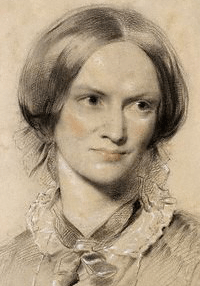
img_2683
Charlotte Bronte – George Richmond Public domain

Charlotte, the daughter of an Irish-Anglican priest, had received an unexpected marriage proposal from her father’s curate, Arthur Bell Nichols…. Arthur had loved her from a far for a long time….but Charlotte’s father thought it an unsuitable match, partly due to Arthur’s financial status – and so Charlotte declined the proposal….

However, her good friend, fellow writer Elizabeth Gaskell (who was later to become Charlotte’s biographer) urged her to reconsider….pointing out the advantages of being married….

Charlotte found herself becoming more and more attracted to Arthur – and in January 1854 she agreed to become his wife…. It took until April to finally get her father’s begrudging approval but once he had reluctantly agreed plans were made and the couple married in June. Charlotte’s father had been due to give his daughter away – but at the last minute decided he was unable to do it, leaving Charlotte to walk down the aisle alone….

She became pregnant soon after the wedding – but her health was quickly to decline…. Elizabeth Gaskell described the symptoms of her illness as “sensations of perpetual nausea and ever-recurring faintness”…. Charlotte became weaker and weaker and eventually she and her unborn child passed away….

img_2686
Portrait by J.H. Thompson at the Bronte Parsonage Museum – Public domain

The cause of death stated upon her death certificate is that of tuberculosis…. However, there are several other possibilities as to the illness that claimed her life…. Typhoid is one such possibility – servant to the Brontë family, Tabitha Ackroyd, had died from the disease a few weeks before – so this could have been very likely…. Another thought is that Charlotte may have contracted pneumonia after getting soaked on a moorland walk – at the time pneumonia was almost impossible to recover from…. ‘Jail Fever’ – or Epidemic Typhus – has been another suggestion put forward; a bacterial infection very common in those more unsanitary times and passed to humans by fleas or lice…. Or it could have been an infection from contaminated water….

But one of the possible causes most favoured by the experts is that she died from dehydration and malnutrition brought on by Hyperemesis Gravidarum – or chronic morning sickness….

Charlotte is buried in the family vault in the church of St. Michael and All Angels in Haworth, West Yorkshire….