On this day in history….13th April 1570

On this day in history : 13th April 1570 – The birth of Guy Fawkes – who as a member of a provincial group of English Catholics was to take part in the failed Gunpowder Plot of 1605….

img_2831
Birthplace of Guy Fawkes – 25, High Petergate, York – now the Guy Fawkes Inn public house

Guy was born in Stonegate, York – the second of four children, one of whom died – but he had two sisters, Anne and Elizabeth, who survived into adulthood…. His father, Edward Fawkes, worked as a Proctor for the Church and although his mother, Edith, came from a recusant Catholic family she too attended Church of England services….img_2830

When Guy was just 8-years-old his father died, leaving his son an estate in Clifton, York as an inheritance…. Edith remarried a few years later, this time to a Catholic, Dionis Bainbridge; it was around this time a now teenage Guy converted to Catholicism…. Although undoubtedly influenced by his step father it is likely that Guy was encouraged at school in his Catholic beliefs…. He attended St. Peter’s School in York where the Head Master, John Pulleyn, came from a family of strong Yorkshire recusants…. Also a governor at the school had spent 20 years imprisonment for recusancy…. It was a crime to be a Catholic in the time of the reign of Queen Elizabeth I….although there were those who refused to attend Anglican services and stayed loyal to the Pope….

On leaving school Guy went into service, working for Anthony Browne, 1st Viscount Montagu….but who took a dislike to the young Fawkes and so dismissed him…. In October 1591 Guy decided to sell his inherited estate and travel to the continent to fight for Spain in the Eighty Years War against the Dutch Republic….

img_2826
Guy Fawkes as depicted by George Cruickshank – Public domain

He was to join Sir William Stanley, an English Catholic who had formed an army in Ireland to fight in the Netherlands…. Guy became a junior officer, taking part in the Siege of Calais in 1596 – and worked his way up through the ranks to gain a Captaincy…. Whilst in Flanders he met a disgruntled Englishman by the name of Thomas Wintour, who persuaded him to join a small band of angry Catholics planning a rebellion….

It was around this time that Guy became known as ‘Guido’ – the Italian version of his name….

img_2828
Signature of “Guido” Fawkes – note the top example – this was made soon after his being tortured after the failed Gunpowder Plot…. Public domain

He travelled to Spain in an attempt to gain support for the English Catholic rebellion – and managed to secure an audience with the Spanish King…. Whilst politely listening to what ‘Guido’ had to say – that the newly crowned King James I was a heretic (and he also denounced Scotland plus all those favoured by the King) – Philip III offered no help; Spain was not going to declare war on England….

img_2827
Contemporary engraving of 8 of the 13 conspirators – Crispijn van de Passe the Elder – Public domain

In 1604 as part of a group of 13 English rebellious Catholics, led by Robert Catesby, who conspired to assassinate the Protestant King James, Guy helped hatch the plans for the Gunpowder Plot – and we all know where that led….

img_2829
Children preparing for Guy Fawkes night celebrations (1954) – Geoff Charles CCO

On this day in history….3rd February 1960

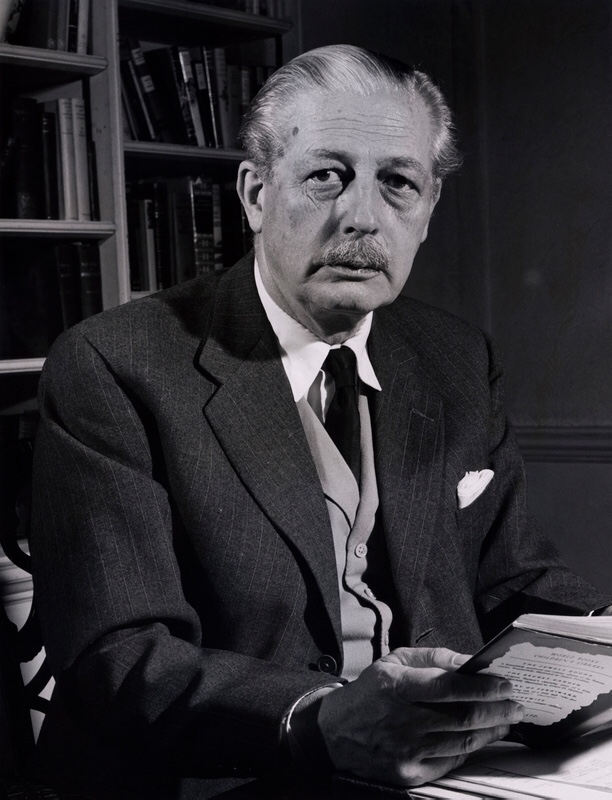
On this day in history : 3rd February 1960 – Prime Minister Harold MacMillan makes his famous ‘Wind of Change’ speech against apartheid, angering some South African politicians….
img_5877
Harold MacMillan in 1959 – Public domain

MacMillan had been in South Africa for over a month visiting the then British colonies, including Ghana and Nigeria…. He chose to give his speech whilst addressing the South African Parliament in Cape Town, making it clear that South Africa was included in the views of the British government…. What he had to say did not come as a total surprise as he had hinted he was going to use the opportunity to voice his opinion about the situation in South Africa….

“The wind of change is blowing through this continent, whether we like it or not, this growth of national consciousness is a political fact. We must all accept it as a fact, and our national policies must take account of it”….

img_5875
MacMillan meeting Ghanaian leader Prempeh II – The National Archives UK – OGL v1.0

MacMillan’s speech was the first time a senior international representative had publicly voiced disapproval on South Africa’s racial segregation laws…. It made it clear the UK government was not going to prevent the independence of its own territories and recognised that the people had the right to claim the governing of their countries for themselves…. It was the responsibility of the British government to promote the equal rights of all the individuals concerned…. As this was something MacMillan envisaged for the whole of the Commonwealth he urged South Africa to move towards racial equality….

South African Prime Minister Hedrick Verwoerd thanked MacMillan for his speech but added that he disagreed, claiming it was white South Africans who had brought civilisation to the country….

“To do justice in Africa means not only being just to the black man of Africa, but also to the white man of Africa”….

img_5876
The National Archives UK – no restrictions

It was the first time Britain had acknowledged the black nationalist movements in Africa…. Nationalist Party politicians were outraged by the speech…. However, it opened the way for international opposition to the apartheid system…. A month later the Sharpeville Massacre caused so much revulsion worldwide that South Africa faced exclusion and trade sanctions….

It took a further 30 years for South Africa to finally begin to disband its apartheid laws, under President de Klerk…. Nelson Mandela was released in 1990 and became President of South Africa in May 1994….