On this day in history….16th July 1439

On this day in history : 16th July 1439 – King Henry VI bans kissing in England – in an attempt to stop the spread of the plague…. A ban that failed as people refused to co-operate….
img_3575
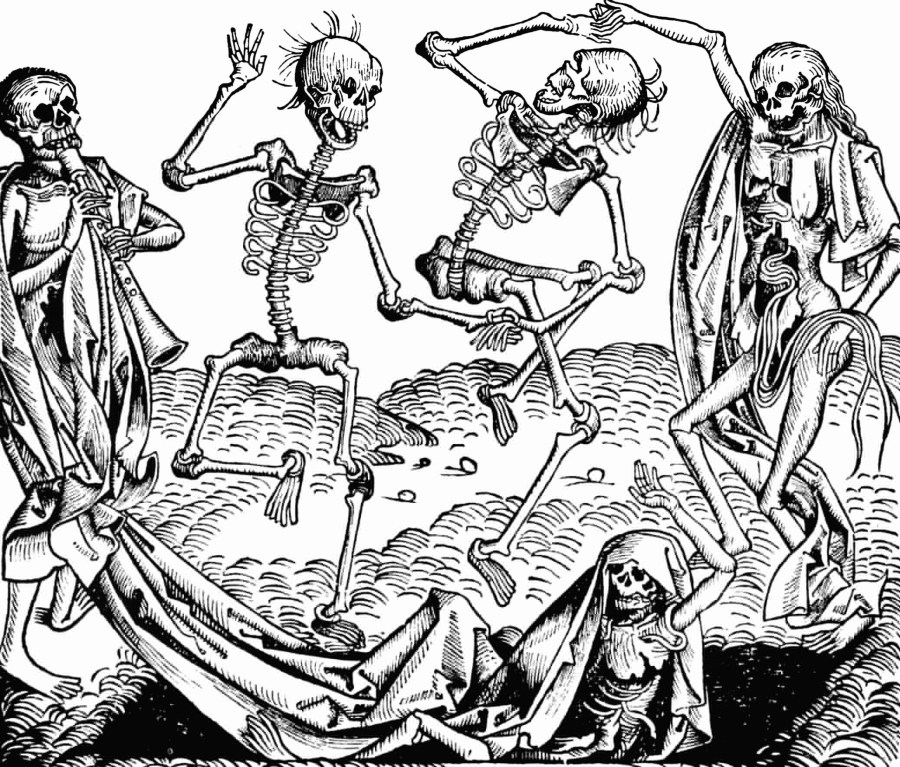
Inspired by the Black Death, ‘The Dance of Death’ or, ‘Danse Macabre’ – a common painting motif in the late Medieval period – Public domain

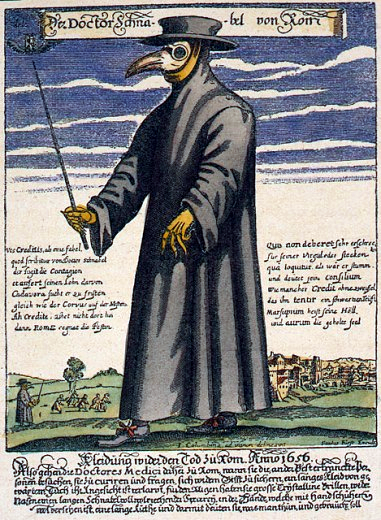
People in the Middle Ages believed that disease was spread through tiny particles…. It was not understood that the plague was spread by black rats, which were everywhere; fleas would bite the rats and then humans, passing the disease on…. Symptoms would start with a high fever and a hacking cough…. Huge black boils, some the size of an egg, would then appear on the neck, in the armpits and groin area…. Most died within 2-7 days…. There was no medical help….only special ‘plague doctors’ who would beat sufferers with a rod to try and ‘purify’ them of whatever sin they had committed in order to receive such a terrible punishment….
img_3577
Copper engraving of Doctor Schnabel (Dr Beak), a plague doctor in 17th Century Rome, circa 1656 – Public domain

It is thought the disease arrived in Europe from Central Asia via the Silk Route – with rats coming in onboard merchants’ ships…. It is thought between 1347 and 1351 up to 200 million died across Eurasia; there are no exact figures but recent research believes between 45-50% of Europe’s population was wiped out…. It is estimated around 30% of England’s population died but some sources say it could have been as high as 50%…. Whole families perished….nobody was safe, from peasants to royalty…. The unhygienic environment of the time meant disease spread quickly….King Henry VI issued his decree – banning kissing until the plague had passed – as he believed ‘if the lips were kept chaste the small particles of plague could not be passed on’….

img_3576
The Great Plague of London, in 1665, killed up to 100,000 people – Public domain

By the end of 1350 Black Death had more or less died out in Europe….but not so in England, the disease kept on recurring…. It peaked in 1665 with the Great Plague of London….and it was The Great Fire of London in 1666 that helped eradicate the disease by killing most of the black rats….and their fleas….

img_3578
Black rat at London Zoo – Image credit: Liftarn CC BY-SA-3.0

On this day in history….7th September 1665

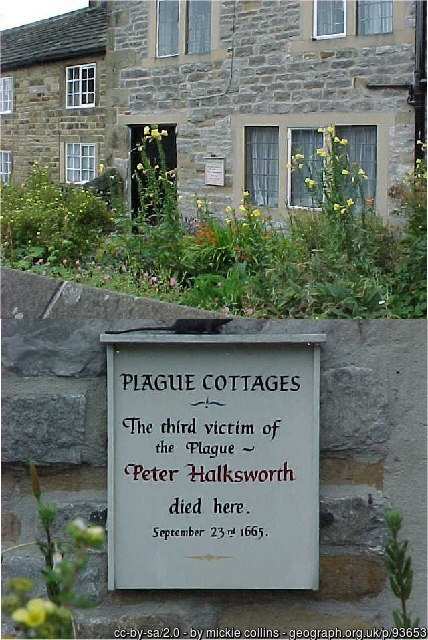
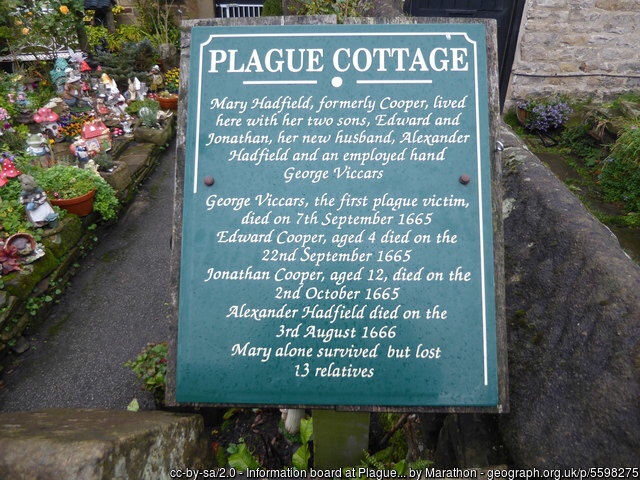
On this day in history : 7th September 1665 – Bubonic Plague claims its first victim in the Derbyshire village of Eyam – after the arrival of a bale of cloth that had been sent from London….

The cloth had been ordered by tailor Alexander Hadfield…. It was his assistant, George Viccars, who had the task of unpacking it…. On doing so he noticed it was a little damp – and so he spread it in front of the fire to dry out…. In doing so he released the hoards of plague-carrying fleas that had infested it…. George was to become the first of the many who were to die in the village – between September and December 1665 at least 42 had died – and by Spring the villagers were thinking of leaving their homes and livelihoods in order to escape the disease….

It was newly appointed rector William Mompesson who took it upon himself to prevent this from happening…. He knew that if the parishioners left then the disease would soon spread to the nearby towns of Bakewell and Sheffield – and many more thousands would likely fall victim…. He realised the only way to stop this was if the whole village were to quarantine – even if it meant staring into the face of death….

Eyam Church

Mompesson had come to the village at a difficult time…. He was a replacement for the previous rector, Thomas Stanley – who had been removed from his post as he, like most of the villagers, had been a supporter of Oliver Cromwell…. Puritan Stanley refused to use the Book of Common Prayer which had now been made mandatory by King Charles II…. Stanley had been much respected in the village, whereas Mompesson was not liked…. He knew to get people to listen to him he needed the assistance of Stanley – who was fortunately still living on the outskirts of the village…. He reached out and asked for his help….and together they came up with an admirable plan….

On the 24th of June 1666 Mompesson explained to his parishioners that they had to impose a quarantine – nobody must be allowed to leave or enter the village…. The Earl of Devonshire, who was living nearby at Chatsworth, had arranged to send food and supplies…. With Stanley at his side Mompesson promised that he would stay with the villagers and do all he could to alleviate their suffering…. He recognised he was asking them to agree to stay and quite likely die…. They would have to bury their own dead and church services would be held outside to allow distance to be maintained between people…. Reluctantly the villagers accepted the plan….

The plague lasted for 14 months…. Out of the population of around 350 some reports say only 83 survived – the church in Eyam has records of 273 individuals dying from plague…. There is no doubt that the actions of the people of Eyam saved the lives of so many more people…. Plague Sunday has been celebrated every year in the village since the bicentenary in 1866….