On this day in history….13th August 1964

On this day in history : 13th August 1964 – The last two criminals to face the death penalty in Britain are simultaneously hanged for the murder of a laundry van driver In Cumberland….

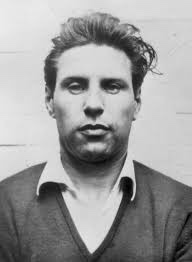
Evans (left) : Allen (right) – Fair use

24 year old Gwynne Evans dropped to his death at the hands of hangman Harry Allen in Strangeways Prison, Manchester – whilst at exactly the precise same time 21 year old Peter Allen was hanged in Walton Jail, Liverpool by Robert Leslie Stewart….

The pair had been convicted of killing 53 year old John Alan West at his home in Seaton, Cumberland…. John West, known as ‘Jack’, was a bachelor and had worked for the Lakeland Laundry at Workington for 34 years…. He had returned home after an ordinary days work and gone about his usual evening routine…. But then, at 3am, a neighbour was woken by noises coming from West’s house…. On looking out of the window he saw a car disappearing – and he called the police…. West was found dead, with severe head injuries and a stab wound to the chest….

A search of the property revealed a raincoat which had been left behind by Evans…. In one of the pockets was a medal, along with the name and address of a Norma O’Brian in Liverpool…. The police contacted her and she confirmed that she knew Evans and that the medal belonged to him….

Evans was traced through his criminal and army records to the home of his parents – and from there they were able to find Allen…. Within 36 hours both men had been arrested – on being questioned Allen initially claimed that he had been at home with his wife on the night of the murder – however, it soon came to be that both men were blaming each other for striking the fatal blows…. Both were found guilty of murder at trial….

By now public opinion had turned against capital punishment – despite this calls for a reprieve failed…. Theirs were, however, to be the last executions in Britain….
On this day in history….12th August 1964

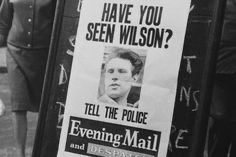
On this day in history : 12th August 1964 – A massive manhunt gets under way after Great Train Robber Charlie Wilson escapes from Winson Green Prison in Birmingham….

Fair use

32 year old Wilson had been the gang’s treasurer; it had been his job to divide up the £2.6m haul between the gang members, with each receiving £150k…. Wilson was quickly captured after the robbery – and at his trial he became known as ‘the silent man’ due to his refusal to speak…. He was sentenced to 30 years imprisonment….

Just four months into his sentence, on the 12th of August 1964, three men broke into the prison during the early hours and freed him…. They had stolen a ladder from a nearby builders’ yard, which they used to gain access into the grounds of a psychiatric hospital next door to the prison…. From there they were able to use a rope ladder to scale the 20ft prison wall…. Once inside they coshed a guard and tied him up before opening Wilson’s cell door…. It remains a mystery as to how they got the key, as there was only one designated key holder on site – and it was not the guard that they had attacked….

Via Pinterest

Wilson was on the run for three and a half years…. He was eventually recaptured in Canada on the 24th of January 1968 – after his wife had called her parents in England, only for the call to be traced…. Wilson was returned to England to finish his sentence…. He was released in 1978….

He emigrated to Marbella, Spain and became suspected of being involved with a drug smuggling ring…. Wilson was alledged to have lost some of the ring’s money through bad investments – and on the 23rd of April 1990, whilst relaxing beside his swimming pool, he was shot dead by a hitman….

On this day in history….10th October 1580

On this day in history : 10th October 1580 – After the three day Siege of Smerwick, in Ireland, the English Army behead over 600 Irish civilians and Papal soldiers….

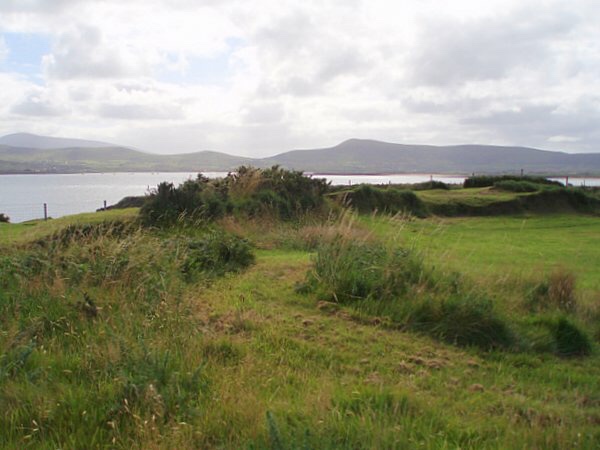
The massacre site today – Image credit : Sharon Loxton CC BY SA 2.0

On the 10th of September 1580 some 600 Italian and Spanish Papal troops landed in Smerwick under the command of Sebastiano di San Guisseppi…. They had been sent by Pope Gregory to help with the ongoing rebellion…. English forces were quick to respond and blockaded the Papal ships into Smerwick Bay…. The Papal troops had little choice but to take refuge in the fort at Dun an Oir….

In October 4,000 English troops arrived led by Grey de Wilton and laid siege to the garrison – the Papals had no way of escaping…. After three days of negotiations San Guisseppi ordered his men to surrender…. It is unknown if de Wilton offered clemency as part of the deal….

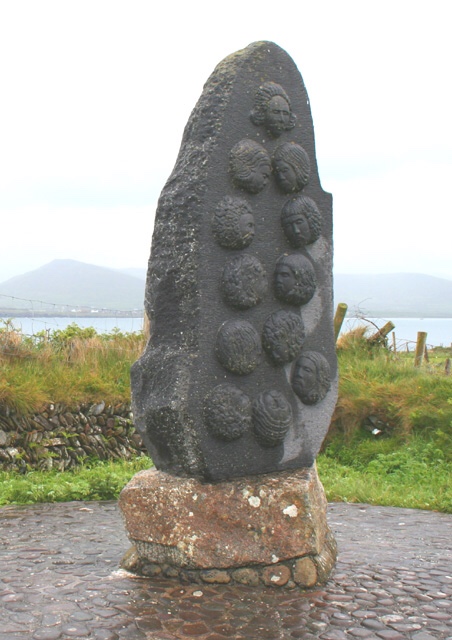
But what is known is that de Wilton callously ordered the massacre of the Papal troops along with scores of Irish civilians – sparing only between 20 and 30 Papal commanders…. The Italian and Spanish troops and Irish men and women were slaughtered by beheading – their bodies then thrown into the sea and their heads thrown into a field, now known as Gort na gCeann – Field of the Heads….

Memorial monument at the Field of the Heads – Image credit : Expresso Addict CC BY-SA 2.0

Irish folklore tells of how the massacre took two days to complete – the condemned lined up in a field to await their turn…. The field is now known as Gort a Ghearradh – Field of the Cutting…. One of those ordered to carry out the executions was Sir Walter Raleigh….

On this day in history….30th April 1963

On this day in history : 30th April 1963 – Residents of Bristol begin a two month boycott of bus travel with the Bristol Omnibus Company, after its refusal to employ Black or Asian bus crews….

Fair use

During the early 1960s racial discrimination was widespread across the UK…. At this time it is estimated some 3,000 West Indian people were living in Bristol, some having recently arrived, whereas others had been living in the area for years and many had served for the country during World War 2…. However, this did not make them exempt from the discrimination that many faced on a daily basis….

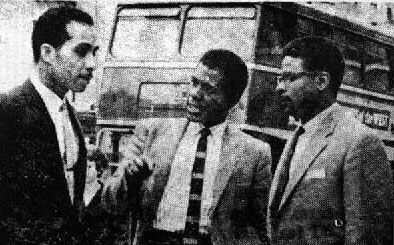
Four young West Indian men, Roy Hackett, Owen Henry, Audley Evans and Prince Brown, decided to do something about this and they set up an action group – which was later to be called the West Indian Development Council….

Owen Henry was to meet Paul Stephenson, a social worker with a West African father…. With his education and the field he worked in Stephenson was a natural choice to act as spokesman for the group…. Unemployment amongst the Black population of Bristol was much higher than that of the White…. 5% unemployment as opposed to just over 2%…. Many companies were reluctant to employ non-white people – it was perfectly legal in 1963 to refuse a person a job on account of their ethnicity…. It was suspected that the Bristol Omnibus Company was one such employer…. It was decided to set up a test case to prove the company had a colour bar….

Paul Stephenson arranged a job interview as a bus conductor for a young warehouseman and Boys’ Brigade Officer called Guy Bailey, for the 27th of March 1963…. Bailey arrived at the appointed time, dressed smartly in his best suit and introduced himself to the receptionist and explained his reason for being there…. To which she replied “I don’t think so”…. He politely pointed out that she was mistaken and that his name was Mr Bailey and could she please check again…. After a brief conversation with her manager she came back and said all the vacancies were full….

It wouldn’t have made any difference if all the positions were vacant – Bailey would have been denied a job anyway – all because of the colour of his skin…. The action group decided to trigger a boycott of the bus company – inspired by the Montgomery Bus Boycott in the United States in 1955, when Rosa Parks refused to relinquish her seat when ordered to do so by the bus driver….

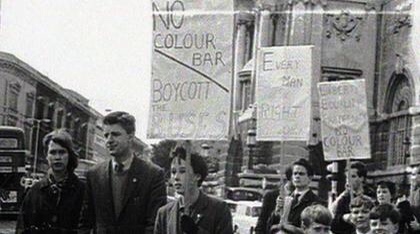
The action was announced in the Press on the 29th of April – and the following day none of Bristol’s West Indians used the buses and they were supported by a good proportion of the white population…. The action escalated; Bristol University students held protest marches to the bus station and to the headquarters of the Transport and General Workers’ Union (TGWU)…. Politicians became involved – condemning the bus company…. The TGWU refused to meet with the West Indian Development Council and a bitter war of words broke out in the Press….

Bristol University students marching in support – Fair use

Eventually the Bishop of Bristol and representatives of the local Labour Party stepped in independently of the West Indian Development Council and negotiated with the Union…. A further meeting was held between the Lord Mayor of Bristol and Frank Cousins, leader of the TGWU – and talks began with the parent company of Bristol Omnibus – Transport Holding Company…. After several months of talking finally on the 27th of August it was agreed to lift the colour bar….and on the 28th it was announced there would be no more discrimination…. On the 17th of September 1963 Raghbir Singh, a Sikh, became Bristol’s first non-white bus conductor…. The 1965 and 1968 Race Relations Acts were later passed by the UK Parliament…. In 2009 Stephenson, Bailey and Hackett were awarded OBEs for their parts in organising the bus boycott….

On this day in history….20th April 1968

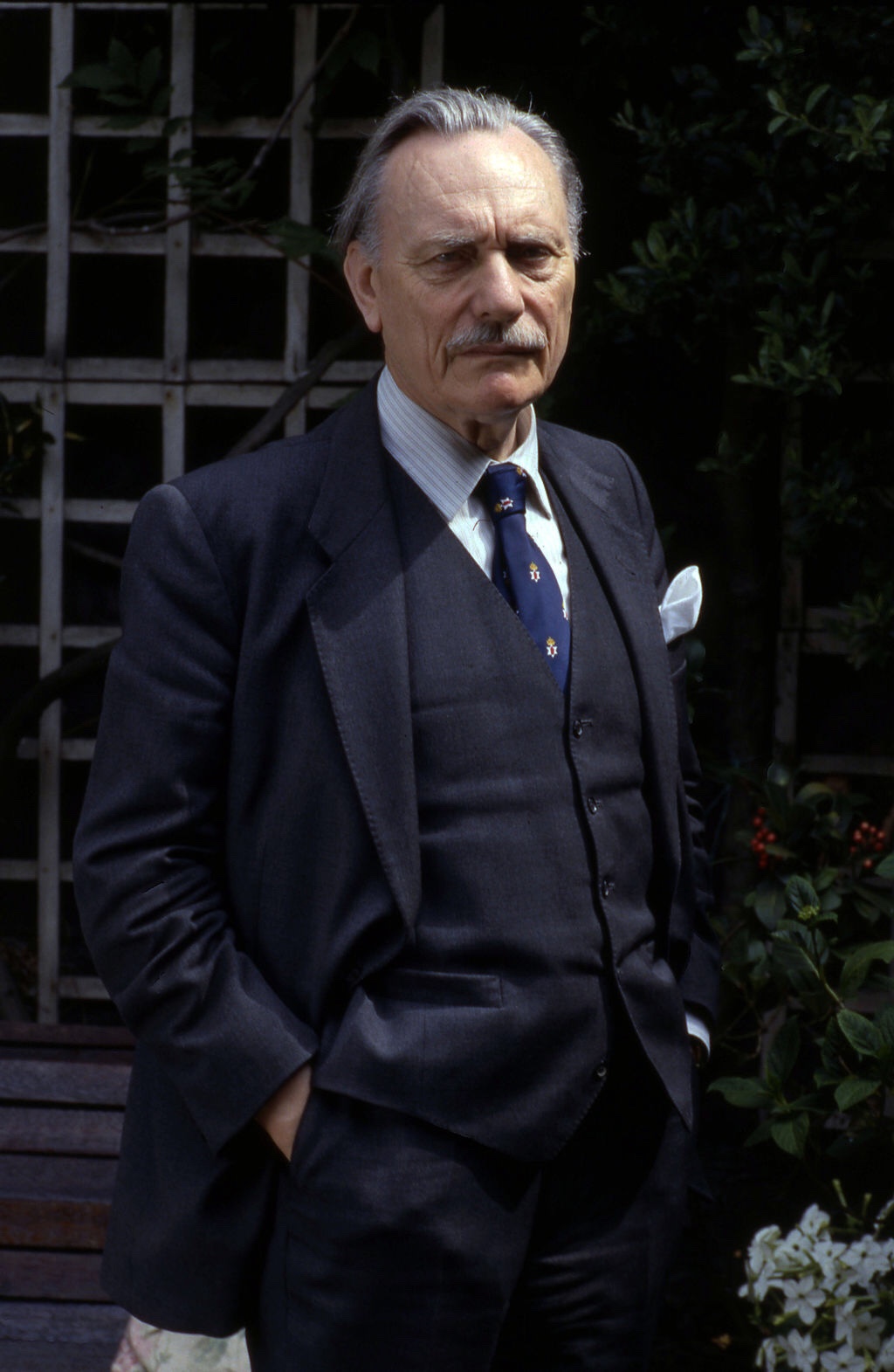
On this day in history : 20th April 1968 – Conservative MP Enoch Powell makes his controversial ‘Rivers of Blood’ speech – resulting in his dismissal from the shadow cabinet….

Enoch Powell – Image credit : Allan Warren – own work – CC BY-SA 3.0

“As I look ahead, I am filled with foreboding. Like the Roman, I seem to see the River Tiber foaming with much blood”….

Powell made his speech, attacking the Labour Government’s immigration policy, at the general meeting of the West Midlands Area Conservative Political Centre in Birmingham…. He was MP for Wolverhampton South West…. He claimed Britain was “mad, literally mad” to allow 50,000 dependents of immigrants into the country each year….

“It is like watching a nation busily engaged in heaping up its own funeral pyre”….

His estimation was that by the year 2000 one in ten of the population, up to 7 million people, would be of immigrant descent…. He called for an immediate reduction in immigration and a policy urgently encouraging those already in the UK to return to their native lands….

Enoch Powell had every intention of stirring things up – and he certainly succeeded….

Leading Conservative front bench MPS were outraged, with many threatening to resign if Powell was not sacked from his position as Shadow Defence Secretary…. When seeking advice from Margaret Thatcher, the leader of the Conservative Party Edward Heath, was told by her that she thought it best to “let things cool down rather than heighten the crisis”…. Nevertheless, that following Sunday evening Heath sacked Powell via a telephone call…. Edward Heath later said in public that Powell’s speech was “racist in tone and liable to exacerbate racial tensions”….

Any hopes Powell had for future postings within the Conservative Party were now dashed…. However, he received overwhelming support from the public…. Letters poured in, thousands of workers came out on strike and marches were organised by protesters – all to show support of his views…. A poll conducted showed 75% of the population were sympathetic to his views….

In February 1974 Powell left the Conservative Party as he disagreed with Edward Heath’s intention of joining the European Community…. Margaret Thatcher, as Prime Minister – and a long standing admirer of Powell – was forced to admit race relations in the country had gone “badly, badly wrong”….

The 2001 census showed there were 4.6 million people of ethnic minority in the United Kingdom…. A far cry from the 7 million Powell had predicted….

Image credit : Allan Warren – own work – CC BY-SA 3.0