On this day in history….19th November 1911

On this day in history : 19th November 1911 – Two ships are lost in one day on the notorious sandbank Doom Bar, in the Camel Estuary, Cornwall….

Doom Bar at high water – Image credit : Worm That Turned – own work – CC BY-SA 3.0

Doom Bar, previously known as Dunbar Sands – or Dune-bar – lies at the mouth of the River Camel Estuary where it meets the Celtic Sea off the north coast of Cornwall…. During storms the sands are prone to dramatic shifting, making the narrow channel between Doom Bar and the cliffs at Stepper Point very difficult for ships to navigate…. Until the 20th century this was the only access available to Padstow Harbour…. The channel is regularly dredged by the Padstow Harbour Commission – but despite being made safer the RNLI still has to deal with incidents at Doom Bar….

Tractor and trailer dredging – Image credit : Paul Harvey – CC BY-SA 2.0

Since records began in the early 19th century there have been over 600 reported wrecks, capsizings and beachings…. The largest is believed to have been the 1118 ton barque Antoinette – which sank on New Year’s Day 1895; thankfully all onboard were rescued…. The only warship ever lost on the sands was HMS Whiting, a 12-gun schooner which had been captured from the French in 1812…. The ship had been involved in the pursuit of smugglers when it hit the sandbank…. Following the incident the captain lost a year of his seniority – and three crewmen who deserted after the sinking were later caught and each received 50 lashes….

The two ships to be lost on the 19th of November 1911 were The Island Maid, all of her crew were rescued – and The Angele, who lost her entire crew, except for the captain….

Doom Bar at low tide, river channel on far side – Image credit : Andy F – CC BY-SA 2.0

On this day in history….29th August 1782

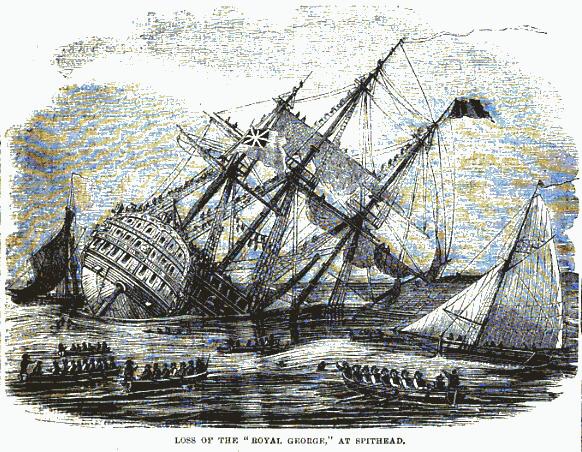
On this day in history : 29th August 1782 – British battleship HMS Royal George sinks off of Spithead whilst repair work is carried out beneath its waterline…. Some 900 lives are lost….

HMS Royal George – by John Cleveley the Elder – Public domain

At the time of its launch, on the 18th of February 1756, HMS Royal George was the largest warship in the world, with 100 guns on 3 decks….

In August 1782 preparations were being made for the Royal George to sail to Gibraltar, as part of the fleet of Admiral Howe…. The fleet was anchored off of Spithead in order to take on supplies…. All shore leave had been cancelled, out of fear of desertion, so all 1,200 crew were onboard apart from a detachment of 60 men who had been sent ashore on errands…. Also on board were over 300 family members of the crew, mostly women and children, spending time with their loved ones before it was time to set sail…. A large group of workmen, working against the clock to get repairs done, were also present….

Around 7am the ship was ‘heeled over’, to enable easier access to the hull…. The process involved rolling the ship’s starboard guns to the centre of the ship to cause it to tilt over the port side, raising the starboard side up…. However, a large quantity of rum casks had been loaded onto the port side and the additional weight of these was overlooked…. As a result the ship rolled over too far….

Public domain

The captain gave the order to roll the guns back but it was too late….the ship had taken on too much water through the gun ports…. A sudden in-rush of water filled the ship and it sank…. Although 255 people were saved around 900 more were lost, including some 300 women and 60 children….

Many of the victims were washed ashore at Ryde on the Isle of Wight…. They were buried in a mass grave stretching along the beach….

Toll for the brave
The brave that are no more,
All sunk beneath the wave,
Fast by their native shore.
- The Loss of the Royal George, William Cawper, 1782

On this day in history….5th June 1916

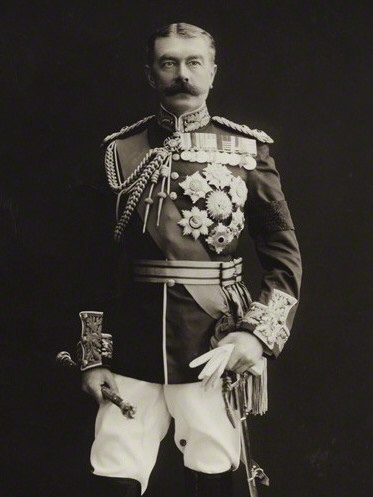
On this day in history : 5th June 1916 – Whilst on its way to Russia, carrying Lord Kitchener on a diplomatic mission, HMS Hampshire hits a mine off of the Orkney Islands…. 737 lives are lost, including that of Lord Kitchener….

HMS Hampshire – Public domain

HMS Hampshire had been ordered to carry Kitchener from Scapa Flow to Russia – where he was to meet with Tsar Nicholas II for face to face talks about munitions shortages….

Due to gale force winds Admiral Sir John Jellicoe altered the route that Hampshire had been due to take – despite there having been reports of U-boat sightings in the area….

Just after 7.30pm, in a force 9 gale, the ship struck a mine – which had been laid a week before approximately one and a half miles off of mainland Orkney, by U-boat U75, commanded by Kurt Beitzen…. Within 20 minutes HMS Hampshire had sunk….

Kitchener was last seen standing on the quarterdeck – his body was never recovered…. All 10 of his entourage perished – altogether 737 lost their lives, only 12 members of the crew survived….

Portrait of Field-Marshal Horatio Herbert Kitchener – Public domain

The shock was felt all over the British Empire…. Many wondered how on earth the war could be won without Kitchener…. King George V wrote in his diary “It is indeed a heavy blow to me and a great loss to the nation and the allies” …. He ordered that all army officers were to wear black armbands for a week….

On this day in history….17th April 1951

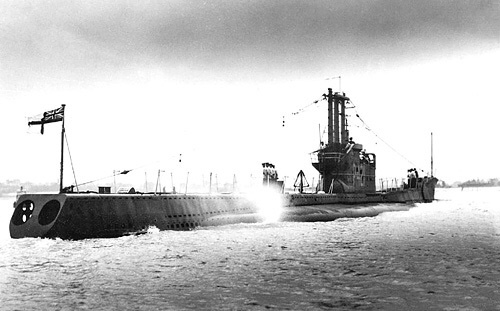
On this day in history : 17th April 1951 – British submarine, ‘The Affray’, goes missing off the south coast of England…. It is feared all 75 crew members onboard are dead….

HMS Affray – Royal Navy photos – Public domain

The Amphion-class submarine belonged to the 5th Submarine Flotilla and had been commissioned on the 25th of November 1945…. She had left Portsmouth at around 4pm on the 16th of April 1951 on her way to a simulated war mission exercise – ‘Spring Train’…. Onboard was a reduced crew of 50 – as opposed to the usual 61 – but she also carried 25 naval officers undergoing training….

The Affray had submerged at 9.15pm around 30 miles south of the Isle of Wight – the last sighting of her had been by the destroyer HMS Contest, which was returning to Portsmouth…. The submarine was due to resurface at 8.30am on the 17th of April – but failed to appear….her position was unknown….

Crew of HMS Affray – Lieutenant John Blackburn (far right) was in command at the time of the disaster – Fair use

A large search party, led by HMS Agincourt and comprising of 24 ships and submarines from Britain, France, Belgium and the United States set out….accompanied by as many aircraft as could be mustered up…. It was thought the crew onboard the Affray could survive up to three days…. At one point in the search two of the searching ships received a morse code signal, reading ‘We are trapped on the bottom’ – but it gave no help in locating them…. After three days the search was scaled down….

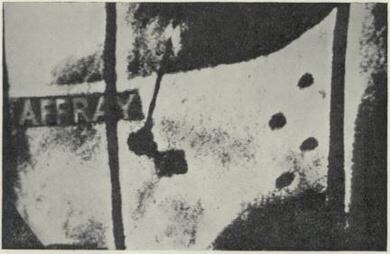
The Affray was eventually found two months later, 46 miles south of Portland, in 300ft of water – making it impossible to recover, due to the depth…. Remote control cameras were used during an investigation that was to last for three months…. One theory was that the submarine’s battery had exploded…. But the main conclusion was that the ‘snort mast’ (the tube allowing the Diesel engine to ‘breathe’) had snapped – allowing water to flood in….

Wreck of the Affray, as taken by remote control camera – Fair use

It was to be the worst British submarine disaster since World War 2….

A strange event occurred shortly after the time of the incident…. The wife of the captain of one of the Affray’s sister submarines experienced a visit from a ghost…. Dressed in dripping wet submarine officer’s uniform, she recognised him as an officer who had been killed during WW2 – and not from the crew of the Affray…. He told her the location of the missing submarine – and when it was eventually found – the location proved to be correct….