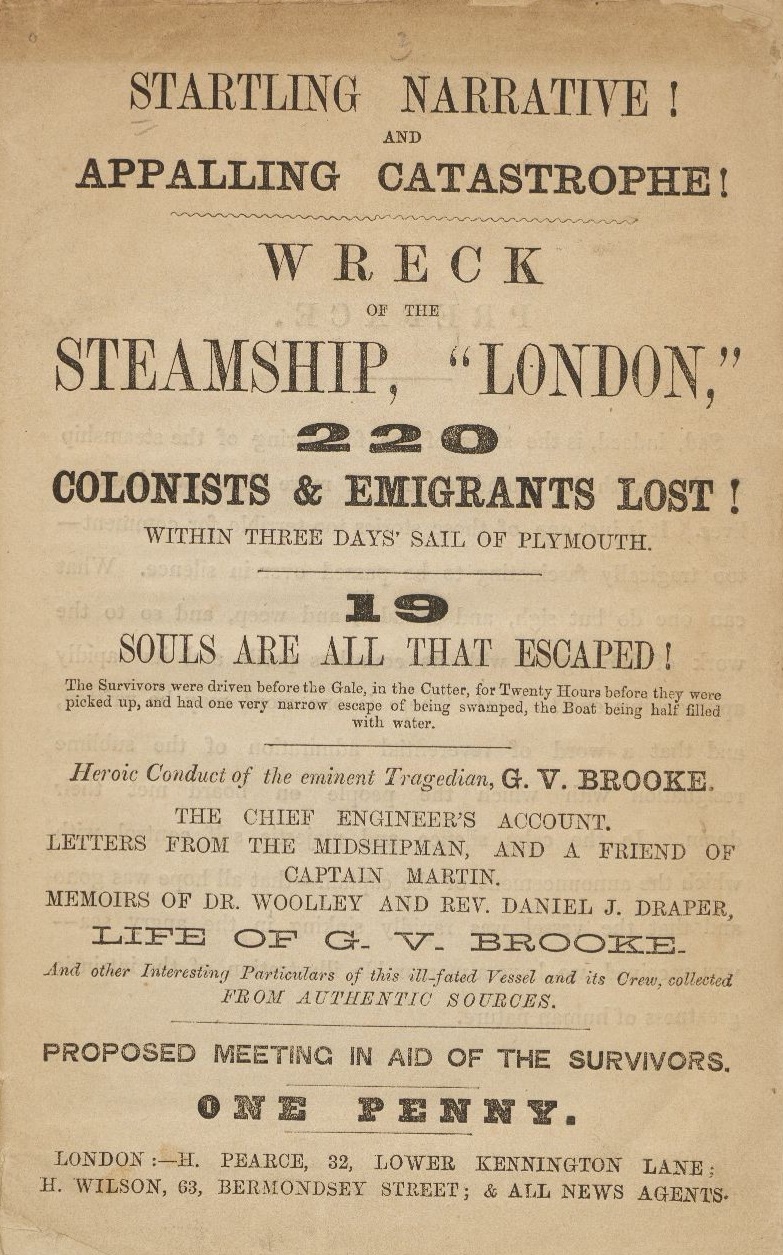
On this day in history : 11th January 1866 – SS London, a British steamship, sinks in the Bay of Biscay…. At least 220 lives are lost….
Although a steamship SS London looked more like a sailing ship – a ‘hybrid’ ship, as they were known…. The London was just 2-years-old, having been built at the Blackwall Yard and then launched on the River Thames on the 20th of July 1884…. She was considered to be modern, luxurious – and had a top-speed of 11 knots…. She also boasted 7 lifeboats – more than the legal requirement for a ship of her size at the time…. Tragically, these lifeboats were to be of little use….
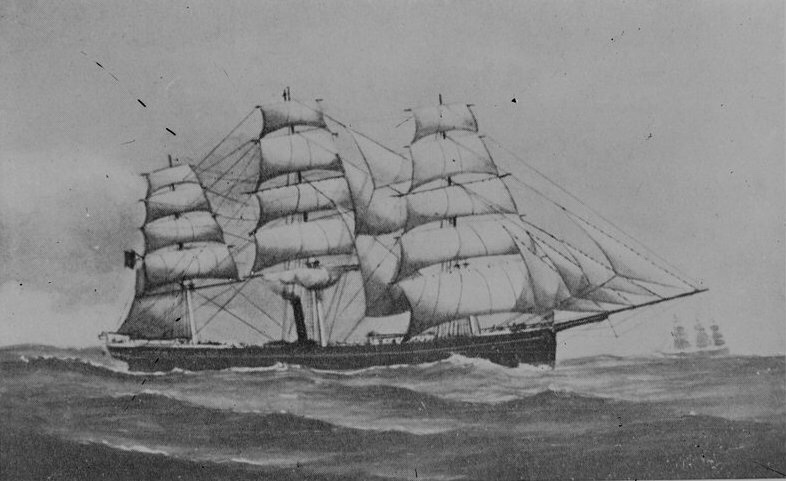
SS London’s final voyage began on the 28th of December 1865…. She left London’s East India Docks, under the command of Captain Martin – an experienced Australian navigator – and sailed to Gravesend in Kent…. From here she went on to Plymouth, arriving on the 4th of January 1866 – a day late, as due to storms she had taken refuge near to Portsmouth…. On the 6th of January she finally set sail for Melbourne, a voyage expected to take between 60 to 90 days….
On board were some 239 passengers and crew, including 6 stowaways…. Out of the 92 crew all were men with the exception of 1 woman, who acted as part nurse / part stewardess…. The average age of the crew members was just 24….
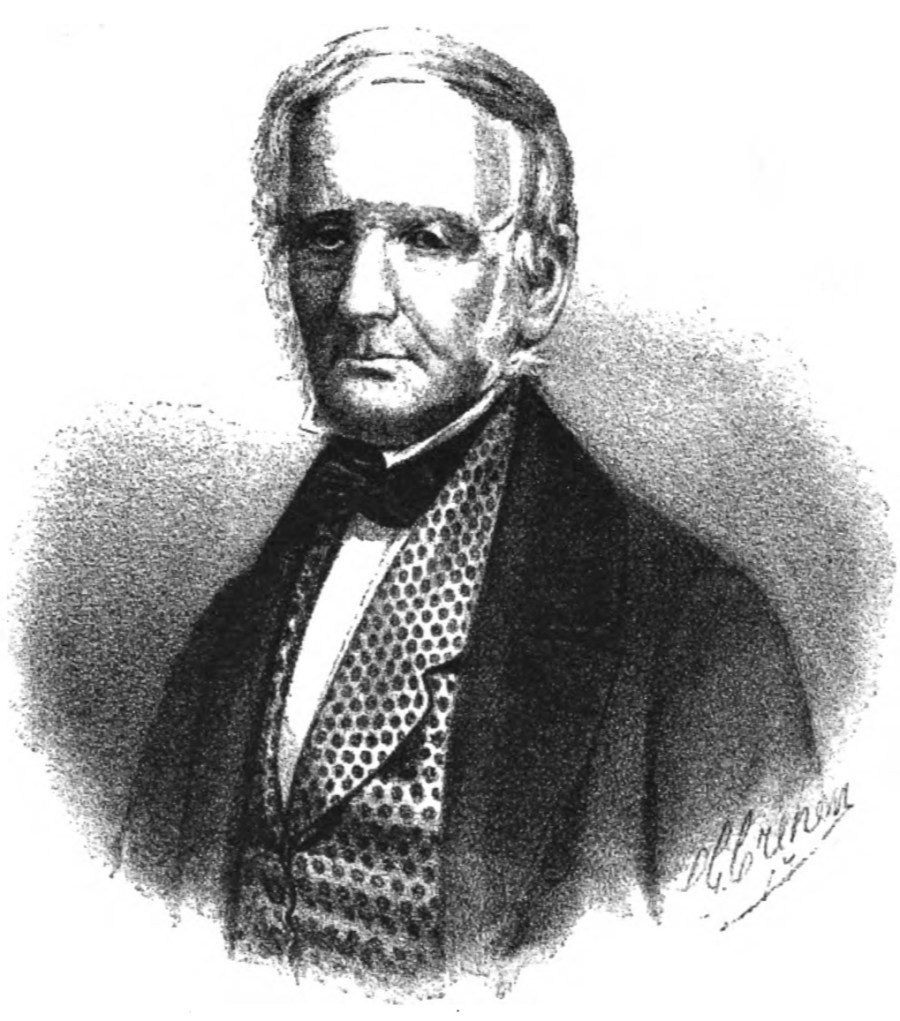
The 3rd class passengers would have been herded together, sleeping in dormitory-type accommodation…. At the opposite end of the scale 1st class passengers enjoyed the luxury of having their own cabins…. Among the passengers were several celebrities and dignitaries – including Gustavus V Brooke, a well-known Shakespearean actor of the time and very popular in Australia…. Also on board was the eldest son of William Debenham – founder of the chain of department stores….
By the second day the weather had started to deteriorate and by the 8th of January it had turned into a howling gale…. The following day it was so severe that a lifeboat was torn away, followed by the jib-boom and then the tops of the mainmast and foremast…. By the 10th of January people were in fear for their lives; 2 more lifeboats had been lost, along with more sails…. It was at this point that the captain decided to turn back – and he steered towards the eye of the storm…. A decision that was later to be criticised, as they had already come through the worst of the storm….
A huge wave crashed on to the deck, the engine hatch was smashed and water flooded the engine room, putting the fires out…. A massive hole appeared which the crew attempted to plug with mattresses and tarpaulins…. Both crew and passengers frantically tried to pump out the water….
At 5am on the 12th of January another huge wave crashed into the stern, smashing all the portholes…. The captain decided it was time to abandon ship and a lifeboat was launched…. However, it promptly sank, as all the lifeboats had been swamped….
By now the passengers were giving up hope….and had all but resigned themselves to their fate…. Many had spent time with the 3 ministers on board the ship, praying and trying to find some comfort…. Matters were not helped by the attitude of the captain, who repeatedly told them there was no hope….
Another lifeboat was successfully launched – but by now spirits were so crushed that nobody, especially the women, would attempt to get into it…. In the end it was 16 crew members and 3 male passengers who took the places in the boat…. Ironically, they were the only ones to survive – and were rescued the following day….
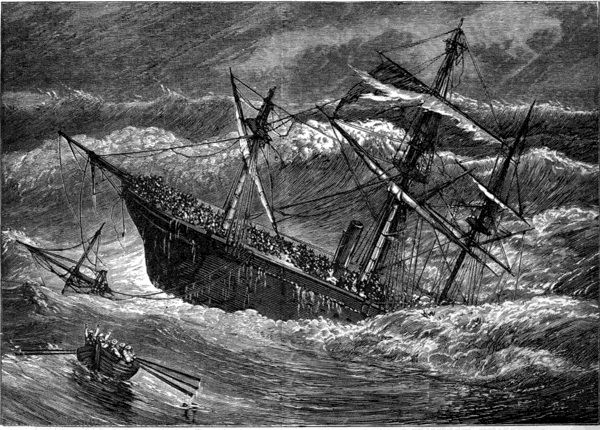
SS London went down taking at least 220 men, women and children with her…. The successfully launched lifeboat was just 100ft away – and so the 19 onboard had little choice but to witness the sinking…. It is said as the doomed ship sank beneath the waves the last thing to be heard from her was the sound of singing – the popular hymn of the time ‘Rock of Ages’….
Following the sinking of SS London there was much controversy…. The public were furious and arguments raged in Parliament…. A public inquiry was held and concluded 3 main factors contributed to London’s fate…. The captain’s decision to turn back into the storm to return to Plymouth being the first…. Secondly, the ship was over-laden – she was carrying 345 tons of railway iron…. Finally, 50 tons of coal carried on the upper deck had blocked the scupper holes, which then prevented the drainage of seawater….
In the weeks and months to follow several bottles containing messages washed up on the French shores of the Bay of Biscay, containing farewell letters from some of those lost on SS London….
Rock of Ages, cleft for me, Let me hide myself in Thee; Let the water and the blood, From Thy riven side which flowed, Be of sin the double cure, Cleanse me from its guilt and power....