On this day in history….3rd February 1014

On this day in history : 3rd February 1014 – The death of Sweyn Folkbeard – England’s shortest-reigning king, with a reign of just 40 days….

img_2328
Sweyn Folkbeard, detail of a mid-13th-century miniature. Cambridge University Library. Public domain.

Sweyn was born around 960 AD and was the son of Harald Bluetooth, the first Scandinavian king to be baptised a Christian….

Sweyn Folkbeard – (known as such because of his long clefted beard) – grew up to be a brutal and violent man….but then – they were brutal and violent times…. During the mid 980s AD he led a revolt against his father and seized the throne…. Harald went into exile and died soon after….

img_2329
Sweyn and the Jomsvikings at the funeral ale of his father Harald Bluetooth. Painting by Lorenz Frolich c.1883-86. Public domain.

It was during the 990s AD that Sweyn began a campaign of fear and mass destruction in England…. King of England at the time – Ethelred the Unready – attempted to rid himself of the troublesome Dane by paying him off…. The ‘Danegeld Tax’ was intended to pay tribute to the Vikings and save the land from being ravaged. Only it did not work….the Danes continued to raid Northern England, albeit on a smaller scale…. Some Danes even began to settle here….

Ethelred was advised in order to save England he must get rid of the Danes once and for all…. On the 13th of November 1002 he ordered the complete massacre of all Danes in England – men, women and children (St. Brice’s Day Massacre)…. Among those to be slaughtered was Gunhilde, Sweyn’s sister….

Sweyn swore revenge…. In 1003 he arrived with a massive invading force….landing at Sandwich (Kent). From there he ravaged much of Southern England….terrifying the natives and forcing them into submission. He then proceeded north to the Humber – Northumbria surrendered…. Next Sweyn made his way to Winchester and finally turned his attention to London….

Ethelred resisted at first, putting up a fierce fight….but his subjects were terrified of the consequences. The English Earls, not happy with how their King was handling matters, reluctantly declared Sweyn King of England…. Ethelred fled to the Isle of Wight and from there to Normandy – where he joined his wife and children….

img_2331
Ethelred the Unready in an early thirteenth-century copy of the Abingdon Chronicle. Public domain.

Sweyn was made King of England on Christmas Day 1013 (although he was never crowned)…. He ruled from a fortification at Gainsborough, Lincolnshire…. On the 3rd of February 1014 he died suddenly…. Some say he had a fall from his horse, whilst others believe he died from apoplexy (stroke). He had reigned for just 40 days….

He was buried in England but later his remains were moved to Roeskild Cathedral, Denmark. He was succeeded as King of Denmark by his son, Harald II….

img_2330
Viking longboat ‘Hugin’ at Pegwell Bay, near to Sandwich Kent…. A gift from the Danish government in 1949….

On this day in history….2nd February 1650

On this day in history : 2nd February 1650 – The birth of Eleanor “Nell” Gwyn – who from selling oranges goes on to become an actress and the mistress of King Charles II….

img_2325
Eleanor ‘Nell’ Gwyn – Image credit : Smithsonian Institution via Flickr

Born Eleanor Gwyn – the early details of Nell’s life are sketchy….but it is thought her father died in Debtor’s prison and her mother ran a bawdy house….

When Nell was around 14-years-old a friend of her mother’s, Mary Meggs – a former prostitute also known as ‘Orange Moll’ – was granted a licence to sell fruit and confectionery at Drury Lane Theatre…. She hired Nell and her older sister, Rose, to sell oranges….the scantily clad ‘orange-girls’ would sell sweet ‘china’ oranges at sixpence each….

The girls were also used to act as messengers between men in the audience and the actresses backstage…. Female actors were a relatively new phenomenon – until recent years the roles of women had been played by men and boys…. With her vivacious wit, high spirits and pretty heart-shaped face Nell soon came to the attention of Charles Hart, a leading actor of the time…. At the age of 15 Nell made her debut on the stage….and she also became Charles Hart’s mistress….

Plays were written for Nell to bring out her comic talents….but as well as having the ability to make audiences laugh she was an excellent singer and dancer. Nell Gwyn became the leading comedienne of The King’s Company….

Nell was popular amongst the gentlemen and was mistress to a fair few….including Charles Sackville (Lord Buckhurst). When her relationship with King Charles II began she referred to the King as her Charles the Third….

img_2326
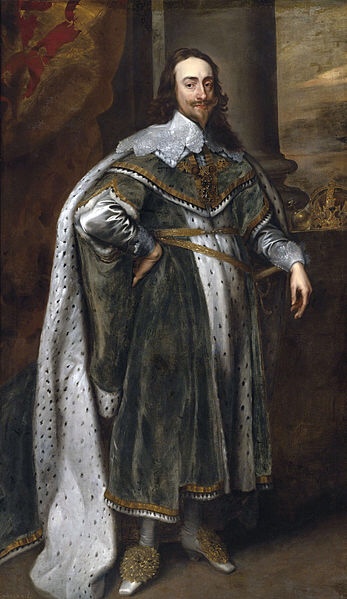
King Charles II of England by John Michael Wright – Public domain

Her love affair with the King began in April 1668, when she attended a performance of the play ‘She Wou’d if She Cou’d’ by George Etherege at the theatre in Lincoln’s Inn Fields…. The box alongside hers was occupied by King Charles II and they spent the entire evening flirting with each other….

Nell became the King’s mistress in 1669. She was actually one of many….the King was a busy boy…. As well as having a wife, the Portuguese Queen consort Catherine of Braganza, he liked to have several mistresses on the go at one time…. Frances Stuart, Lucy Walters, Louise de Kerouaille, Moll Davis and Lady Castlemaine were just a few Nell had to share him with….and other mistresses came and went….

The rivalry between the King’s women was great….all were needy and greedy – demanding houses, money and even titles….all except Nell. Perhaps this was a clever move on her part….she was given a house near to Pall Mall and an allowance of £4,000 per year – and then later a further £5,000 per year on top….

The King had 13 children that he acknowledged with his mistresses – and he provided for them all…. Nell gave birth to their first child, Charles, on the 8th of May 1670…. She herself had never received a title from the King – but managed to manipulate one for her child….by calling him a ‘little bastard’ in front of his father…. The King was shocked – but Nell responded by asking what else she should call him, for was it not true? The King immediately made his young son the Duke of St. Albans…. Nell gave birth to their second son, James, Lord Beauclerk in 1671….but he was to die in 1680….

img_2327
Charles Beauclerk, 1st Duke of St. Albans c.1690 – artist : Godfrey Knellor – Public domain
img_2324
Nell Gwyn with her two sons. Image credit : Lisby via Flickr

King Charles II himself was to die 5 years later, on the 6th of February 1685…. On his deathbed he requested of his brother, James, who was to succeed him….“Let not poor Nelly starve”….

After the King’s death Nell found herself in considerable debt with the threat of Debtor’s prison hanging over her…. True to his word King James II settled her debts and gave her a pension of £1,500 per year….

However, just 2 years later Nell was to suffer a stroke – and 8 months later, on the 14th of November 1687, she died….she was just 37 years of age…. Nell Gwyn, favourite of the King, was to become a legend….out of all the King’s mistresses she was the only one who managed to win the affection of the people….

img_2323
Nell Gwyn – artist Peter Lely c.1675 – Public domain

On this day in history…. 27th October 1917

On this day in history : 27th October 1917 – The death of Arthur Rhys-Davids – flying ace of the First World War and the victor of one of the most famous dog fights of the War….

Portrait of Lieutenant Arthur Rhys-Davids – From the collections of the Imperial War Museums – Public domain

As soon as he had finished his schooling Arthur deferred his entry to Oxford University and joined the Royal Flying Corps…. He first reported for duty on the 28th of August 1916 as a 2nd Lieutenant in the Royal Flying Corps Special Reserve in Oxford and began his training…. He was then to join 56 Squadron at London Colney….

At the beginning of April 1917 the Squadron flew to France and were to based at Vert Galand…. Arthur was to get his first taste of aerial combat on the 7th of May…. He was to encounter a German pilot far more experienced than he was; despite being shot down he lived to tell the tale…. Others were not so lucky; it was a disastrous day for the Squadron, only five aircraft returned to Vert Galand….

Royal AircraftFactory S.E.5 – the type of aircraft Rhys-Davids would have flown – Public domain

On the 23rd of May Arthur scored his first victory – shooting down an Albatross D.111 fighter…. The following day he had three more victories – in just one hour…. And on the 25th he succeeded in bringing down another aircraft – with five victories to his name Arthur was now a flying ace…. On the 25th of June 1917 he learned that he had been awarded the Military Cross….

During an evening flying patrol on the 23rd of September 1917 several members of 56 Squadron, including Arthur, encountered German flying ace Werner Voss…. Credited with 48 victories Voss was much feared but also much admired…. Only at this stage Arthur and his comrades were unaware of who it was they had come across….

The six aircraft of Arthur’s patrol had become involved in a dog fight involving large numbers of aircraft from both sides – when suddenly Voss appeared amidst them…. “The German triplane was in the middle of our formation, and its handling was wonderful to behold. The pilot seemed to be firing at us all simultaneously, and although I got behind him a second time, I could hardly stay there for a second. His movements were so quick and uncertain”…. ~ James McCudden – (one of the most highly decorated airmen in British history and who was flying in the same patrol as Arthur that particular evening…. McCudden was eventually killed in action on the 9th of July 1918)….

The German made no attempt to escape and the six British pilots were now engaged in a ferocious battle with him…. Voss fired and hit McCudden in the wing, then forced two more of the British aircraft out of the fight with hits to their engines…. More British and German planes joined in but still Voss in his Fokker triplane managed to evade them…. Eventually he made a flat turn and Arthur saw an opportunity and managed to get on his tail…. Arthur fired and the Fokker dived towards German lines with the young British pilot still behind him…. But then Voss made an error…. Arthur made a turn away – and the German, mis-reading the situation, turned with him – bringing his aircraft back into Arthur’s firing line – who let him have it full pelt, taking the Fokker down….

When the patrol returned to base it was still unknown to them who the mystery pilot was…. When the Germans announced that their ace pilot Werner Voss was missing in action jubilation broke out in the ranks of 56 Squadron, with showers of congratulations for Arthur….who was later to say…. “If only I could have brought him down alive”….

Werner Voss – a card from the private collection by Scinke, Berlin 1917 – PD-US

On the 27th of October 1917 Arthur was promoted to Lieutenant, backdated to the 1st of September…. Later that same day he took off on a routine patrol and was last seen chasing after a group of German Albatross fighters…. It was just a month after his 20th birthday – he was never found….

On this day in history….31st August 1422

On this day in history : 31st August 1422 – The death of King Henry V…. He is succeeded by his only son and heir, Henry VI – who is just 9 months old….

King Henry V – Public domain

Henry V died suddenly at Chateau de Vincennes, in the royal fortress town of Vincennes, to the east of Paris…. He is believed by many to have died from dysentery; some historians think he contracted this at the Siege of Meaux – which was fought between the English and the French during the Hundred Years’ War…. He had become ill during the long battle, which had taken place during the winter months – it is, therefore, disputed that dysentery was the cause of his death as he would undoubtedly have died long before August…. Another possible cause could have been heatstroke, as he had been riding in full armour in the blistering heat…. Henry V was 35 years old and had reigned for nine years…. Just two years before, in 1420, he had married Catherine of Valois, the daughter of Charles VI of France – and their son Henry, was born at Windsor Castle on the 6th of December, 1421….

Henry’s marriage to Catherine of Valois – British Library – Public domain

Henry V had died before he could be crowned King of France…. His body was returned to England and on the 7th of November 1422 he was buried at Westminster Abbey…. Not long before his death he had named his brother, the Duke of Bedford, as Regent of France, in name of his young son Henry VI….

Henry VI was the youngest ever to succeed the throne…. On the 21st of October 1422 he also became the King of France, following the death of his grandfather, Charles VI of France – and in accordance with the terms of the Treaty of Troyes, which was made after Henry V’s victory in France….

Catherine of Valois was treated with suspicion by the English as she was the daughter of Charles VI and she was prevented from having a major part in the upbringing of her son…. On the 26th of September 1423 nobles of England summoned Parliament in the young King’s name to establish a regency council to govern until Henry VI came of age…. The Duke of Bedford was appointed Senior Regent of the Realm….

Henry VI was headstrong and unruly as a child – but finally in 1437 he was considered old enough to rule for himself….

King Henry VI – Public domain

On this day in history….2nd August 1100

On this day in history : 2nd August 1100 – King William II of England is killed by an arrow while hunting in the New Forest – after supposedly being mistaken for a deer….

William II of England – Public domain

William was the third son of William the Conqueror and was often known as William Rufus on account of his ruddy complexion and red hair…. He was not a popular king; as well as levying heavy taxes on his subjects he was considered as a harsh, severe and ruthless monarch….a barbarian, with no respect for his people…. He wasn’t on particularly good terms with the Church either….

The story goes, according to Malmesbury in his circa 1128 book ‘Chronicle of the Kings of the English’, something like this…. William had an ominous dream, which filled him with trepidation…. But nevertheless, the following afternoon he went into the forest, near to Brockenhurst, on a hunting expedition…. Whilst most of the party went on the chase William remained, attended by Frenchman Walter Tyrrell, Lord of Poix…. As the sun began to go down a stag ran through the trees nearby – the King took up his bow and fired an arrow – but only managed to slightly wound the stag…. As the King stood, with his hand shielding his eyes against the sun to watch the stag run, Walter attempted a shot…. But the arrow struck William – and Walter jumped on his horse and fled….

Whilst it had always been widely accepted that William’s death was an accident there has also always been the niggling question as to whether he was actually assassinated…. Some believe Walter was acting on behalf of William’s younger brother, Henry, who had a wish to claim the throne….

Indeed, when looking at the story that emerges from what the historians have pieced together, it does seem to be a little more than simply a tragic accident…. The hunting party consisted of William Rufus, Walter Tyrrell, Gilbert and Roger de Clare and William’s younger brother Henry…. The party divided into two groups in order to chase the deer and wild boar…. Walter, who was the King’s best archer, paired with the King – and it does appear that he fired the fatal arrow…. Some accounts say he saw a movement in the trees and fired, thinking it to be a deer…. Others say he fired an arrow to finish off the stag that the King had wounded – only for it to hit an oak tree, bounce back and strike William in the chest, piercing his lung…. By breaking off the arrow William managed to speed up his own death…. Walter, fearing the consequences, fled to France never to return….

Death of William II – Lithograph 1895 – Public domain

Henry’s reaction was a little suspicious…. Instead of claiming his brother’s body he dashed off to the Treasury at Winchester to declare himself the new King of England…. The de Clares, being loyal supporters of Henry, were rewarded handsomely for their loyalty…. Nobody went after Walter…. William Rufus’s body was found by a charcoal burner – and it was he who carried the dead king back to Winchester….

In recent years there has been some doubt cast on the exact location of William’s death – some think it may have actually happened in the Beaulieu area…. But at the place where legend says it occurred stands the Rufus Stone….and inscribed upon it….

‘Here stood the oak tree, on which the arrow shot by Sir Walter Tyrrell at a stag, glanced and struck King William the Second, surnamed Rufus, on the breast, of which he instantly died, on the second day of August, anno 1100’….

A mature oak tree stands alongside….not the original one of course – but perhaps from one of its acorns?

The Rufus Stone – Image credit : David Hunt – own work – Public domain