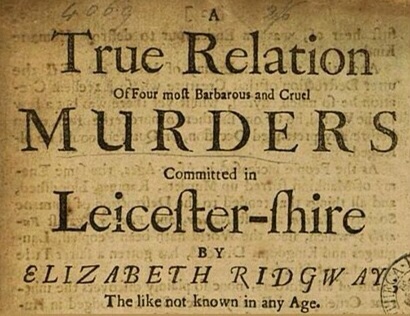
On this day in history : 24th March 1684 – English woman Elizabeth Ridgeway is burned at the stake after being convicted of poisoning her husband of just three weeks….
Born Elizabeth Husbands, during the mid 1600s, she had been brought up in the Christian faith on the family farm near to Ibstock, Leicestershire…. She didn’t leave home until she was around 29-years-old….
She married Thomas Ridgeway, a wealthy tailor, on the 1st of February 1684…. However, he owed his sister £20, a debt she called in almost immediately after her brother had married – the newly weds were now virtually bankrupt….
One Sunday morning, just over three weeks after they were married, Thomas went off to Church, whilst his wife stayed at home to prepare his dinner…. When he returned for his meal she served him up a bowl of broth, of which he ate most but left some complaining it was ‘gritty’…. Less than 30 minutes later he was vomiting violently, which continued to around midnight – when he died in agony….
Thomas’s young apprentice told his master’s relatives that he had seen something in the bottom of the bowl as Elizabeth removed it from her husband…. He was convinced it was poison and Thomas’s family reported it to a Justice of Peace, who ordered an inquest…. Thomas’s body was examined and indeed showed evidence of poisoning…. Elizabeth was arrested and taken to Leicester Gaol….
On Friday the 14th of March she was brought to trial before Lord Judge Street – she pleaded ‘not guilty’…. However, after some deliberation the jury returned a ‘guilty’ verdict…. Elizabeth was sentenced to burn…. There were those who claimed the sentence to be too harsh and called for a reprieve – but the Judge was having none of it…. He did, however, ask local clergyman, John Newton, to counsel her…. But Elizabeth had no interest in making her peace with God – in fact on the morning of her execution she had a shocking confession to make….
Not only did she admit to poisoning her husband, with arsenic, it transpired she had quite a catalogue of murders to her name…. Elizabeth had poisoned her own mother, after an argument, the year before she had left the family home to take up work as a servant…. It was whilst in this employment that she fell out with a male, fellow servant – being one to bear a grudge she decided to poison him too….
She then found herself entangled in a romantic liaison with a suitor by the name of John King…. Elizabeth had quite a few suitors – but after having promised too much to King she could not see a way of backing out…. She had her eye on the wealthier prospect of Thomas Ridgeway…. She solved her little problem by getting rid of King with more poison…. Of course after marrying Thomas, only for him to instantly lose his wealth, he was to meet the same fate….
On this day in history : 4th March 1702 – The birth of Jack Shepherd – also known as ‘Honest Jack’ – a notorious criminal who escaped from prison several times, making him a hero to the public….
Attributed to Sir James Thornhill, chalk and pencil, circa 1724 – Public domain
Jack was born in Spitalfields, London – the son of a carpenter…. When his father died Jack’s mother could no longer provide for him and his brother, Thomas – and so she put them in the workhouse…. From here Jack was apprenticed out but badly treated…. Eventually he went to work as a shop boy for a draper, Mr William Kneebone – his mother’s employer…. It was Kneebone who taught Jack to read and write and then got him an apprenticeship with a carpenter….
For four years or so Jack was a decent hardworking young man….but there were those who wished to lead him astray…. Near to Jack’s workplace was a button maker’s shop belonging to Joseph Hayne, who also owned the Black Lion ale house in Drury Lane…. It was here that Hayne would entice young apprentices – as it was the hang-out of a hardened bunch of criminals always on the lookout for new blood….
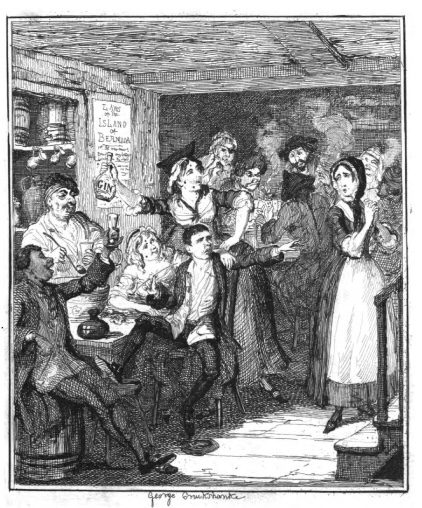
Jack began to frequent the Black Lion and found himself spending time in the company of fallen women – especially one in particular – ‘Edgworth Bess’’ so-called because she hailed from Edgworth….although her real name was Elizabeth Lyon…. Soon Jack was stealing small items from the houses he worked in, trinkets, silverware and the like, to keep his new lady friend happy….
George Cruikshank – Public domain
It wasn’t long before Jack’s carpentry work began to suffer…. With only two years of his apprenticeship left to complete he quit his position…. Encouraged by Edgworth Bess he took up a life of crime, progressing on to breaking into houses to supplement his income…. He continued to work as a tradesman carpenter so he could carry on stealing from his clients….
Jack and Edgworth Bess started to live together as common-law man and wife…. When she was arrested and imprisoned in St Giles Roundhouse he was refused permission to visit her…. Undaunted, he broke into the prison and ‘rescued’ her….
He was now leading the life of a seasoned criminal – and he wasn’t the only one…. His brother, Tom – also a carpenter – already had a conviction for stealing his master’s tools and had received a branding on his hand for his trouble…. Jack, Tom and Edgworth Bess committed a burglary on a linen draper’s in Clare Market – scared he would hang this time Tom put all the blame on to his brother…. A warrant was put out for Jack’s arrest – only he couldn’t be found….
There was no honour amongst this group of thieves…. Jack was invited to an ale house for a game of skittles by fellow felon James Sykes – also known as ‘Hell and Fury’…. Sykes had laid a trap, by tipping off a constable, so that he could get his hands on the reward money…. Jack was arrested, taken before the magistrate and imprisoned in St Giles Roundhouse – only to make his escape by breaking out through the roof….
It was a short while after that Jack was crossing Leicester Fields with Benson, an associate…. Seeing a chance to steal a gentleman’s pocket watch Benson thought he would try his luck….only it wasn’t his lucky day…. The gentleman cried out “pick pocket!” – and Jack found himself back in prison, the St Ann’s Roundhouse this time…. When Edgworth Bess turned up to visit him she too was detained on suspicion of being an accomplice….
The following day, after an appearance before the magistrate, the pair were sent to New Prison…. As ‘husband and wife’ they were allowed to stay together and were housed in ‘Newgate Ward’…. They were visited by well wishing acquaintances, who smuggled in tools for Jack to attempt an escape…. A few days later he sawed through his shackles, made a hole in the wall and then using bedsheets tied together he and Edgworth Bess lowered themselves to the ground below…. They then managed to scale the prison gates and made their escape….
George Cruikshank – Public domain
By this time Jack was gaining fame for his exploits…. He was a good looking chap, with a likeable character and a cheeky line in banter…. Other thieves begged to be allowed to go a-thieving with him…. He was to go into partnership with Joseph ‘Blueskin’ Blake – but they were to be betrayed by some rival crooks and Jack was to be arrested yet again – and held at Newgate Prison…. He faced prosecution on three accounts at the Old Bailey – but was to be acquitted of the first two through lack of evidence…. However, he was found guilty of the third and sentenced to death – the date being set for Friday the 4th of September 1724….
Jack wasn’t beaten yet though…. He managed to loosen an iron bar on a window of his cell….when visited by Edgworth Bess and another female friend, Moll Maggot, the two women distracted the guards and he removed the bar…. Being of slight build and only 5ft 4” tall Jack managed to squeeze through the gap – he was then smuggled out of the prison dressed in women’s attire – once again he had escaped….
George Cruikshank – Public domain
After two weeks of freedom Jack was rearrested on the 9th of September by a posse from Newgate Prison – and he was returned to the condemned cell…. His fame had spread – he was visited by many, some out of curiosity and others wanting to help…. However his plans to escape were thwarted when a stash of files and tools were found in his cell…. He was taken to a strong room within the prison, known as ‘the Castle’…. Here he was clapped in leg irons and chained….and when he managed to pick the lock to those found himself handcuffed as well….
Public domain
Jack’s brother and Blueskin were arrested on the 9th of October and the following day Tom was transported…. Blueskin faced trial on the 14th – when evidence was given against him, by a rival, Blueskin attacked him in the courtroom with a pocket knife – slashing his throat…. The disturbance quickly spread throughout Newgate Prison, which was situated next door…. Jack took advantage of the commotion – he managed to unlock his handcuffs and broke through the ceiling…. Still wearing leg irons he continued to break through another six rooms until he reached the prison chapel, from there he managed to reach the prison roof…. He returned to his cell, fetched a blanket, which he then used to reach the roof of an adjacent house…. Jack then broke in, crept down the stairs, out of the door and onto the street…. He made his way to Tottenham, where he hid in a barn…. When discovered by the owner he convinced him that he had escaped from Bridewell Prison where he was being held for not supporting a bastard son! Telling the same story to a passing tradesman he paid him 20 shillings to remove his leg irons….
People were astonished by Jack’s escapades…. Daniel Defoe, who was then a journalist, covered his story and wrote pamphlets about him…. However, two weeks later Jack was arrested one last time…. He had broken into the establishment of a pawn broker and helped himself to a black silk suit, a silver sword, wig and all the finery of a gentleman…. He then went on a bender with two of his lady friends…. He was apprehended during the early hours of the 1st of November 1724 absolutely rip-roaring drunk…. He was taken back to Newgate and placed in a stone room where he could be watched at all times…. As an extra precaution he was chained down with 300lbs of iron weights…. Such was the interest in him that his gaolers charged 4 shillings a time to see him…. The King’s painter, James Thornhill, painted his portrait…. A pubic outcry called for his sentence to be commuted to transportation and when he was taken before Mr Justice Powis, at Westminster Hall on the 10th of November, he was offered the chance to reduce his sentence – if he informed on his associates…. But he refused and the death sentence was upheld…. The following day Blueskin was hanged and Jack took his place in the condemned cell….
Engraving by George White – Public domain
On Monday the 16th of November Jack was taken to Tyburn, to the gallows…. A last attempt at escape failed, as the penknife he had been intending to use to cut the ropes, that bound him on the way to the gallows, was discovered…. The procession of his cart through the streets had something of a carnival atmosphere – some 200,000 people lined the streets to see him go by…. Rather than the usual rotten fruit, stones and worse hurled at a cart making its way to Tyburn, the good natured crowds celebrated Jack….
Once the hangman had the noose in place sadly, for Jack, it was not to be a quick death…. Due to his slight stature he had to endure a long, traumatic strangulation…. After the obligatory 15 minutes waiting time following death, his body was cut down…. The crowd surged forward, preventing Jack’s friends from snatching his body, as was their plan – in the vain hope that by whisking him away to a doctor he may be revived….
Engraving by George Cruikshank – Public domain
Jack’s remains were buried in the churchyard of St Martin-in-the -Fields later that evening….
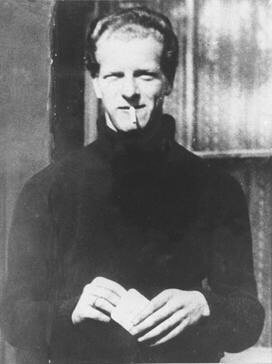
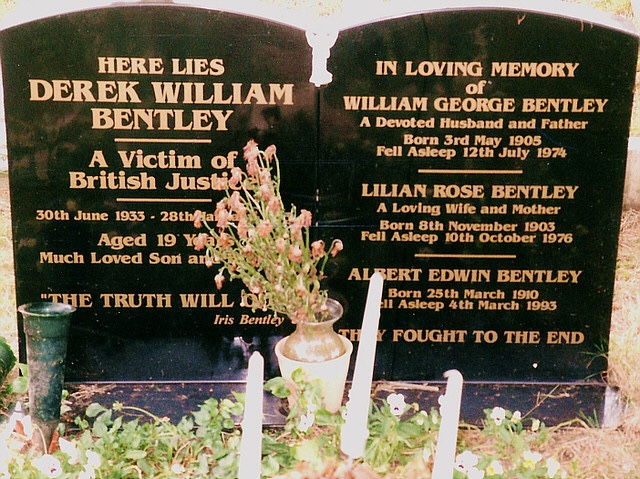
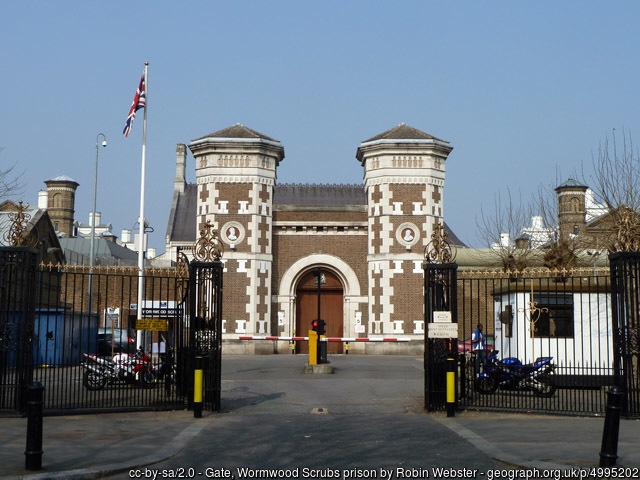
On this day in history: 28th January 1953 – Derek Bentley is executed at Wandsworth Prison for his part in the murder of PC Sidney Miles….
Derek Bentley – Fair use
Bentley was 19-years-old when he was hanged; he allegedly had a mental age of 11, was illiterate and suffered with epilepsy – probably resulting from a broken nose he received as a young child….
On the 2nd of November 1952 he and his 16-year-old friend, Christopher Craig, set out to commit a burglary on a warehouse in Croydon belonging to confectionary company Parker and Barlow…. However, while the pair were on the roof of the building they were spotted by a young girl living in a nearby house, who informed her mother – and she subsequently called the police….
Bentley was armed, with a knife and knuckle duster…. Craig too had a knife but he also carried a .455 Eley revolver….
A patrol car arrived with a uniformed constable and detective constable Fairfax – who proceeded to climb a drainpipe to get to the roof of the warehouse…. The would-be burglars attempted to run for it – but Bentley was restrained by Fairfax…. Craig shot the policeman, wounding him in the shoulder…. Notably, Bentley made no attempt to escape, he remained with the injured Fairfax….
Other police officers arrived on the scene….some were armed…. Craig, trigger-happy, was shooting haphazardly at any moving target…. It was as PC Sidney Miles reached the rooftop that the fatal shot was fired, hitting the constable in the head – he died instantly….
Craig, who had now run out of bullets, ran and threw himself off the roof of the building, landing some 30 feet below on a greenhouse – he broke his back….
Both Craig and Bentley were charged with murder…. At some point in all the shooting Bentley had supposedly uttered those fateful words “Let him have it Chris”…. Did he mean a bullet? Or was he in fact urging Craig to hand over the gun?
The controversial trial began on Thursday the 9th of December 1952, both Craig and Bentley pleaded ‘not guilty’…. It took the jury just 75 minutes to return a verdict of ‘guilty’ – but made the recommendation to mercy in the case of Bentley…. However, Judge Lord Goddard did not include this in his report to the Home Office…. Bentley was condemned to hang….
Due to his age Craig was spared the death penalty – instead he was ordered to be detained at Her Majesty’s pleasure…. He was released in 1963 after serving ten years….
Considering his mental age should Bentley have been sentenced as such? Yes, he had set out to commit a burglary and he was armed – but he was not the one who fired the gun….
An appeal hearing was held on the 13th of January – but the sentence was upheld…. A campaign was led by Bentley’s father – over 200 MPs signed a petition for a reprieve to be granted….
The night before the execution date crowds protested outside Parliament chanting “Bentley must not die”…. On the morning of the execution a large crowd gathered outside Wandsworth Prison, some sang the hymn ‘Abide With Me’…. Boos were heard when the notice it had been done was brought out….
Bentley’s sister, Iris, continued to campaign…. finally, in 1993, Home Secretary Micheal Howard, granted a partial pardon – saying Bentley should never have been hanged…. Later new evidence came to light that three officers had lied under oath about Bentley saying “Let him have it Chris”…. In 1998 the Appeal Court quashed Bentley’s conviction…. Sadly Iris did not live long enough to see this day….
On this day in history : 14th December 1959 – The shortest murder trial in British legal history takes place at Winchester Assizes….the proceedings take just 30 seconds….
Brian Cawley pleaded and was found guilty of the murder of Rupert Poole Steed – he was later sentenced to life imprisonment….
Cawley, a 30-year-old council worker lived, along with his wife and three children, rent free in a house owned by Rupert Steed, in New Road, Basingstoke…. Steed, a 43-year-old retired grocer’s manager and batchelor, had befriended the family – helping them out financially and buying them presents….
However, Cawley started to drink and as a consequence lost his job…. His wife left him, taking the children with her…. One night Cawley returned home….and for no explicable reason beat Steed to death…. After pleading guilty – at his 30 second trial – he began his life sentence….
On this day in history : 13th September 1902 – Burglar Harry Jackson is the first man to be convicted in Britain using fingerprint evidence….
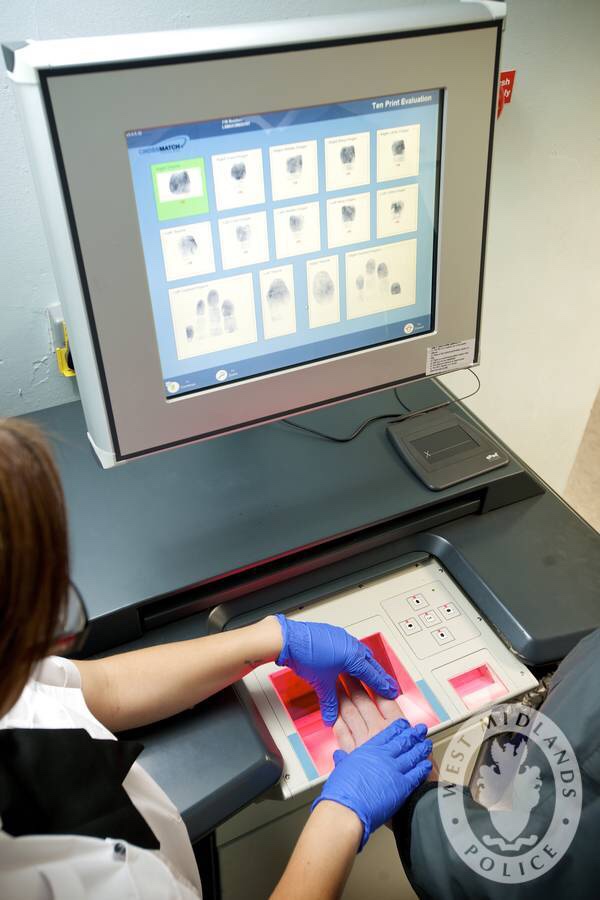
The 41-year-old labourer had broken into a property in Denmark Hill, London and had stolen a set of billiard balls…. The investigating officer noticed a set of fingerprints on the newly painted windowsill – and had called in the newly-formed Metropolitan Police Fingerprint Bureau…. On searching their files they came across Jackson’s prints – as he had recently served a prison term for another burglary…. He was arrested, tried at the Old Bailey and sentenced to 7 years imprisonment….
Whilst fingerprinting became recognised as a valuable forensic tool in the identification of criminals, there were those in the beginning who disapproved…. A letter to The Times, signed by ‘A Disgusted Magistrate’ said “Scotland Yard, once known as the World’s finest police organisation, will be the laughing stock of Europe if it insists on trying to trace criminals by odd ridges on their skins”….
Fingerprint livescan. Birmingham central custody suite – West Midlands Police – CC BY SA 2.0







 Cottage Capers