Bring back the stocks…I say!!

There have been a few times in the past, when I have jokingly remarked it would be fun to see a set of stocks on the village green…. I may not have been saying that if I had lived in this house a couple of hundred years ago, even less so if I had been one of its first occupants….
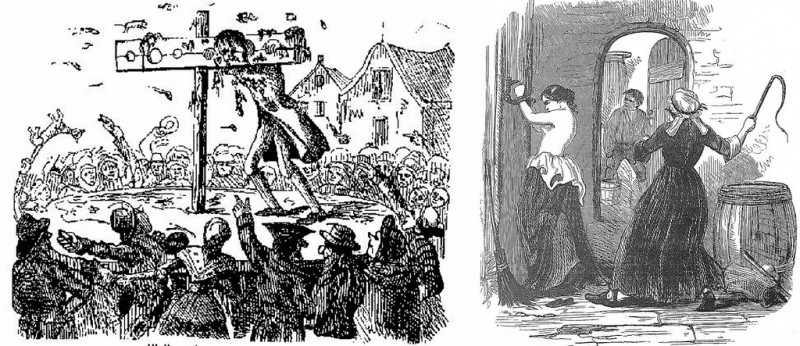
stocks-1
Photo credit: ‘Punishment in 18th century Bristol by John Latimer’ brizzle born and bred via Foter.com / CC BY-ND Original image URL: https://www.flickr.com/photos/brizzlebornandbred/10242020225/

Wind back to when No.3 was first built – England would still have been governed under the Feudal System. Feudalism was introduced when William I took control after the Norman Conquest in the 11th Century; it was to become the way of Mediaeval life. As William was still also the Duke of Normandy he had to divide his time between England and France, so was absent for many weeks at a time. Therefore, he needed people he could trust to run things for him in his absence. In order to do this, he divided the country up into large chunks, similar to the counties we know today. These plots of land were ‘given’ to those he considered the most trustworthy, namely those that had fought with him and were prepared to die for him. The land was not ‘given’ to them unconditionally, they had to swear an oath of loyalty and collect taxes for the King. The noblemen (barons, earls and dukes) were the most important men in their allotted portion of land, they were known as ‘tenants-in-chief’. They in turn divided the land further into smaller pieces, called Manors, which were entrusted to Norman knights, who had also served well in battle. Each also had to swear an oath and it was his duty, as Lord of the Manor, to manage the land and its occupants. He had to collect taxes on behalf of the tenant-in-chief and provide soldiers from amongst the men living within his Manor to fight when ever needed. It was also the lord’s responsibility to ensure law and order was upheld….

stocks-6
Photo credit: Image taken from page 210 of ‘The History of England from the earliest dawn of authentic record…Embellished with…engravings.’ The British Library via Foter.com / No known copyright restrictions Original image URL: https://www.flickr.com/photos/britishlibrary/10999381745/

The Manorial Court dealt with crimes that were of a less serious nature. Courts were held at regular intervals throughout the year and all villagers were required to attend, or face a fine. Trial was by jury, which consisted of twelve men, selected by the villagers. A steward, chosen by the lord, was in charge of the Court. The  community was divided into groups, called tithings, each tithing represented by ten adult (over the age of 12) men, who were then responsible for each other’s behaviour. If one member (or part of his household) broke the law or behaved in an inappropriate way, it was the duty of the other nine tithe members to bring them before the Court.

More serious crimes were referred to the King’s Court; these included murder, treason, heresy and witchcraft. Trial by jury did not come to the King’s Court until 1275. Before this time, trial was by ‘ordeal’; it was believed God would decide whether a person was innocent of the crime he or she had been accused of. There were three types of ordeal used to determine a person’s fate:-

Ordeal by fire: The accused was made to walk a distance of approximately 9 foot holding a red-hot iron bar, (or similarly, picking up a stone from a boiling cauldron of water). The hands would be bandaged. Three days later the bandages would be removed, if the wounds showed no signs of healing, the person would have been pronounced ‘guilty’….

Ordeal by water: The accused would have been thrown into water with their hands and feet bound together; if they floated, they were declared ‘guilty’….

Ordeal by combat: Reserved for noblemen. The accused would fight with his accuser, usually to the death; the victor being considered the one in the ‘right’….

In 1215 the Pope made a ruling that priests must not help with enforcing ordeals (as it was his belief they were wasting too much of God’s time) – as a result the King’s Court also became trial by jury. This was actually not popular with the people, some thought those with a grudge against them may use the system to their own advantage. In 1275 a law was introduced permitting the use of torture if trial by jury was refused. Torture was also used to extract confessions or to get the names of accomplices and other information about the crime in question….

Punishments were issued to fit the crime and reflect the social standing of the person who had been found guilty. The worse the crime, the harsher the punishment. For serious crimes, death was usually inevitable; as well as murder, treason and witchcraft, highway robbery and the stealing of livestock carried death sentences….

Although prisons existed, they were used as a holding place for people awaiting trial rather than as a punishment. They were squalid places, lack of food and disease often meant prisoners died before even coming before the Court. Prison sentences were usually not an option as the money to keep long-term prisoners was not available; it was cheaper to either execute or mutilate them….

Most towns had a gibbet. People were hung on them and their bodies left to rot to act as a deterrent to others. Witches were strangled or in severe cases, burnt. Sometimes beheading was used as a form of execution. Serious theft could result in hands being cut off, branding may have been used, along with other barbaric punishments, such as the poking out of eyes. Punishments and executions were always in public….

stocks-15
Photo credit: ‘Gallows’ Jaime Perez via Foter.com / CC BY-NC Original image URL: https://www.flickr.com/photos/jaimeperez/452796686/

Courts were often biased, the poor discriminated against and judgement would often have been known before the case even came to trial. If somebody did not turn up to attend the Court they were automatically considered to be an outlaw; their possessions would have been seized, becoming the property of the King. Outlaws would often band together and live in hiding; of course, one of the most famous being Robin Hood….

Lesser crimes were dealt with within the community and it was up to the Lord of the Manor to decide a fitting punishment. The Middle Ages had a tendency to use ridicule to punish petty crimes, public humiliation was common practice. Anything from being forced to wear an animal mask to being publicly flogged…. Not working hard enough, cheating on a spouse, blasphemy, not observing the Sabbath and being drunk and disorderly were all punishable crimes in Mediaeval England….

Petty theft could result in being given extra, unpaid work and/or a fine. Slacking at work would warrant a flogging….

Women who nagged, scolded and gossiped could find themselves the centre of the utmost ridicule….by being forced to wear a ‘scold’s’ bridle. Although it looked like a torture contraption it was not really designed as such, more for humiliation. It consisted of a metal bridle that strapped about the head and had ‘bits’ that went into the mouth. Sometimes the bits had spikes to prevent the woman from talking. She would then be paraded through the streets for up to twelve hours; some bridles even had bells attached to them, to add to the indignation….

Another punishment used for women who found themselves fallen from grace was the ducking-stool, popular especially in the 16th and 17th centuries. The offending woman was strapped into a chair on the end of a long pole; she was then repeatedly dropped into a river or lake…. The last recorded ducking in England was in the Herefordshire town of Leominster. Jenny Pipes was a notorious scold and was dunked in 1809. In 1817, Sarah Leeke was found guilty of the same crime; fortunately for her, the water in the ducking pond was too low, instead she was wheeled around the town strapped in the ducking chair, to receive the ridicule of the townsfolk….

stocks-11
Photo credit: ‘The Ducking Stool at Leominster’ copyright John Phillips and licensed for reuse under creative commons license CC SA Wikicommons

Another variation of this was the cucking-stool, in which the guilty person was made to sit, to endure being paraded through the streets….

To us now, the  ducking-stool may conjure up quite a comical image…. However, it was a terrible ordeal for the woman concerned. Deaths did occur, either through drowning or shock. In more severe cases, for example a person accused of witchcraft, the chair would be held under the water for several minutes, repeatedly. If the accused survived it would be assumed they were guilty. If they drowned, the only consolation would be their name was cleared….

stocks-10
Photo credit: Image from page 90 of ‘Essentials of United States history’ (1911) Internet Archive Book Images / No known copyright restrictions Original image URL: https://www.flickr.com/photos/internetarchivebookimages/14756866006

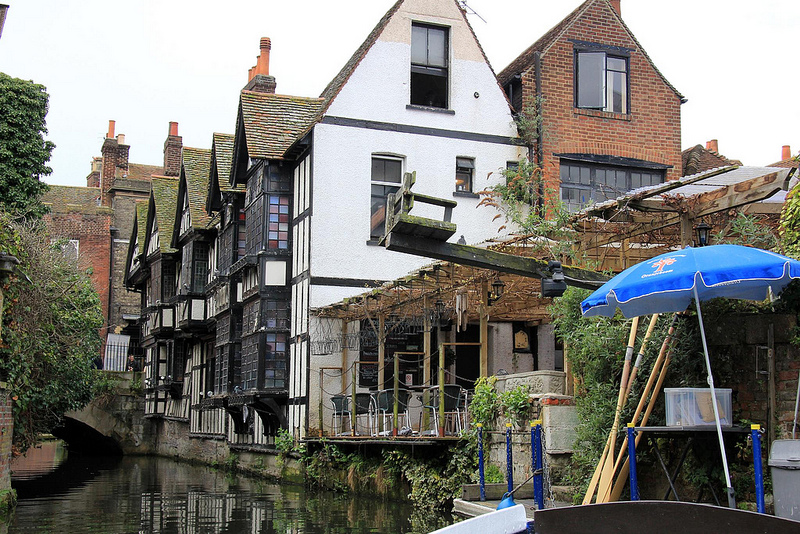
In the City of Canterbury, Kent, the original ducking chair can still be seen in its place at the back of the Weavers House Pub on the banks of the River Stour….
stocks-9
Photo credit: ‘Canterbury Historic River Tours’ Karen Roe via Foter.com / CC BY Original image URL: https://www.flickr.com/photos/karen_roe/7217331258/

Of course, one form of punishment we commonly associate with days gone by is that which got me on to this subject in the first place….the stocks; (and we must also contemplate their cousin, the pillory, too)….

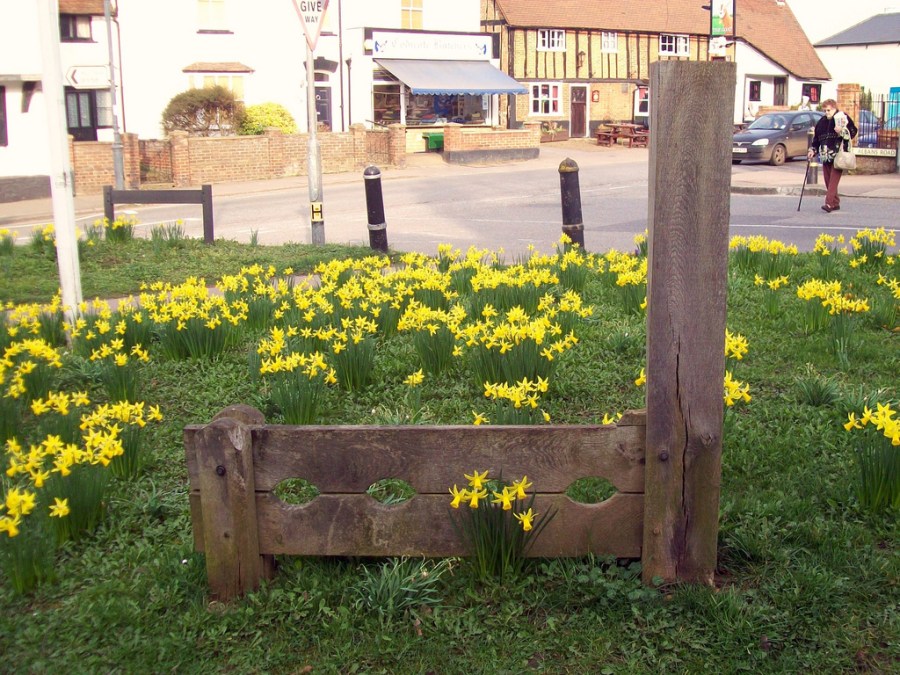
The stocks go back to at least Anglo-Saxon times…. A wooden construction, where the convicted person would sit and have their ankles trapped in holes within the structure and sometimes their hands too.  Occasionally, although not commonplace, even the neck would be entrapped. Most stocks were capable of holding at least two prisoners at one time….

stocks-13
Photo credit: ‘Stocks’ Kasper Veste via Foter.com / CC BY-SA Original image URL: https://www.flickr.com/photos/kasper_veste/4443518243/

In 1351 the parliament of King Edward III passed a law prohibiting labourers from leaving their home Manor to look for better paid work. After the Black Death there was a desperate shortage of labour – workers were in a situation where they could demand better conditions and wage increases…. To curb this the Statute of Labourers was instated….all upstarts were sentenced to the stocks. In 1405 it was made law that every town and village in England should have them….

stocks-4
Photo credit: ‘St Leonard’s Church Shoreditch’ Alan Denney via Foter.com / CC BY-NC-SA Original image URL: https://www.flickr.com/photos/alandenney/14633649205/

A spell in the stocks could last anything from a few hours, to days, even weeks! A part from the obvious discomfort of being pelted with rotten fruit, vegetables, eggs and possibly even worse, the fact the prisoner was unable to shift position in all that time, has to be taken into consideration; that and our great British weather….!!
stocks-14
Photo credit: ‘Stocks, Codicote’ Peter O’Connor aka anemone projectors via Foter.com / CC BY-SA Original image URL: https://www.flickr.com/photos/anemoneprojectors/5545843719/

Stocks and pillories were always positioned in the most prominent place in the town or village….be it the market square, near to the church or on the village green….

The pillory tended to be used for slightly more serious offences. Similar to the stocks but this time the person was in a standing position with their head and wrists entrapped. A term in the pillory was usually shorter, not normally more than a day. Additional punishments may have been administered, depending on the crime. Sometimes the victim’s ears might be nailed to the pillory, to stop movement of the head. Often, the prisoner’s ears would be ripped off through their struggles; if the ears were still intact at the end of the ordeal, they were more than likely to have been cut off at the time of opening the pillory anyway. Branding the face of the criminal, nose slitting and even boring through the tongue with a red-hot iron were all punishments some prisoners of the pillory had to endure….

stocks-2
Photo credit: ‘laurel & hardy’ pinch of salt via Foter.com / CC BY-NC-ND Original image URL: https://www.flickr.com/photos/pinchofsalt/1623455610/

Being drunk and disorderly, cheating, blaspheming, not observing the Sabbath, or simply being a vagrant could result in a spell in the stocks or pillory. However, it was possible, if a person was well liked in a town or village, that no real hardship was suffered. Some places stipulated only soft missiles could be thrown, to prevent stoning….

In 1703, Daniel Defoe, a popular writer of the time, was sentenced to the pillory because his work ‘The Shortest Way with the Dissenters’ was considered seditious libel (criticising and discrediting the King and Church). In the July of 1703 he was taken on three consecutive days to some of the busiest parts of London; The Royal Exchange in Cornhill, Cheapside and finally Fleet Street, to spend an hour each time in the pillory. Huge crowds were expected to turn out and mock him and hurl whatever they deemed fitting; however, all that was thrown at Defoe were flowers, whilst his friends read extracts of his work to onlookers….
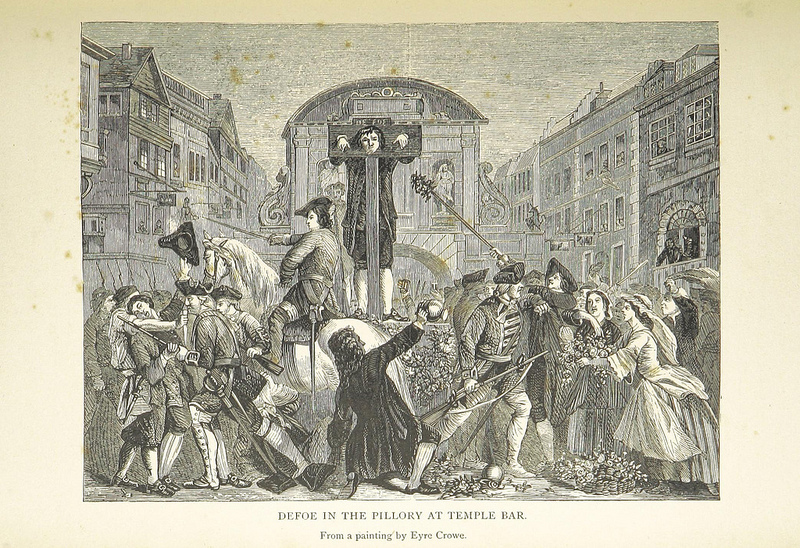
stocks-5
Photo credit: Image taken from page 146 of ‘Daniel Defoe : his life and recently discovered writings : extending from 1716 to 129. [With plates, including a portrait.]’ The British Library via Foter.com / No known copyright restrictions Original image URL: https://www.flickr.com/photos/britishlibrary/11090698076/
The pillory was abolished in 1837. The stocks, although never officially abolished, began to die out in England in the early 19th Century. The last recorded case of them being used was in Rugby, Warwickshire in 1865.

Most stocks were made of wood (although there have been examples made of iron), so many of the original stocks deteriorated and rotted over time. However, many villages, proud of their old stocks, have managed to preserve them as a reminder of the ‘olden days’. Several villages local to Dunsfold still have theirs, including Chiddingfold and Alfold. Dunfold’s have long gone – and after learning all this, I am not quite so sure now that I would like to see a new set on the green after all….

stocks-12
Photo credit: clare_and_ben via Foter.com / CC BY-NC-ND Original image URL: https://www.flickr.com/photos/benandclare/3710415485/
stocks-3
Photo credit: ‘Pillory’ balaji shankar via Foter.com / CC BY-NC Original image URL: https://www.flickr.com/photos/balaji_shankar/584749163/

Us Brits – we’re a bunch of tossers….

Who doesn’t love a pancake…? Whether with simple lemon and sugar or filled with something more elaborate, like salmon and hollandaise sauce; they are a favourite….

pc-2
Photo credit: ‘Pancakes’ Sean MacEntee via Foter.com / CC BY Original image URL: https://www.flickr.com/photos/smemon/21036796708/

Traditionally eaten on Shrove Tuesday, they are seen as an ideal way of using up perishable foods before the onset of the fasting period of Lent. Shrove Tuesday always falls 47 days before Easter Sunday and is the day before Ash Wednesday, the first day of Lent; a time in the Christian calendar for prayer and penance. It represents the 40 days that Jesus Christ spent in the wilderness before his crucifixion. Nowadays, for most of us, if we do give something up for Lent, it tends to be a ‘guilty pleasure’, such as chocolate or wine….

Shrove Tuesday originated in the Middle Ages. People would attend Church to be ‘shriven’; confess their sins and be absolved. A bell would call them to confession; the bell, known as the ‘Pancake Bell’, is still rung today….

pc-24
Photo credit: ‘Pancake restaurant’ hans s via Foter.com / CC BY-ND Original image URL: https://www.flickr.com/photos/archeon/1655189816/

We British have some pretty wacky customs, none more so than pancake racing…. A gathering of people, often in fancy dress, running a race whilst carrying a frying pan, tossing a pancake all the way to the finishing line…. How on Earth did all this come about….?

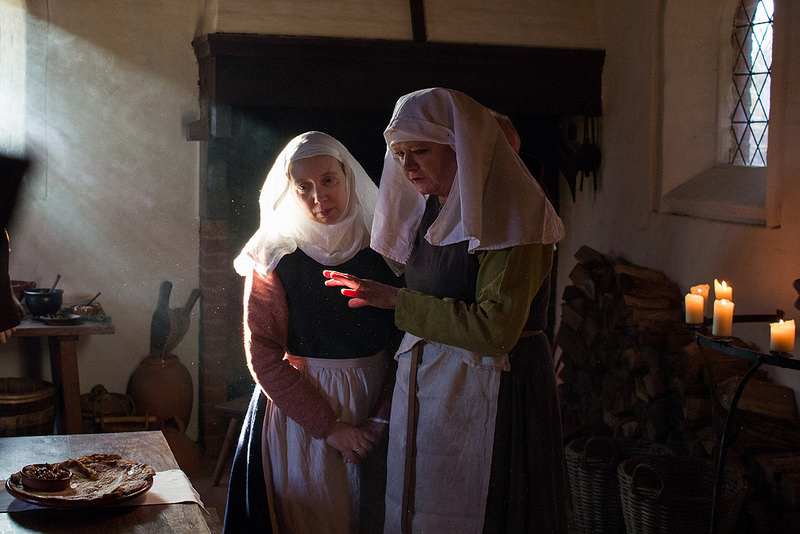
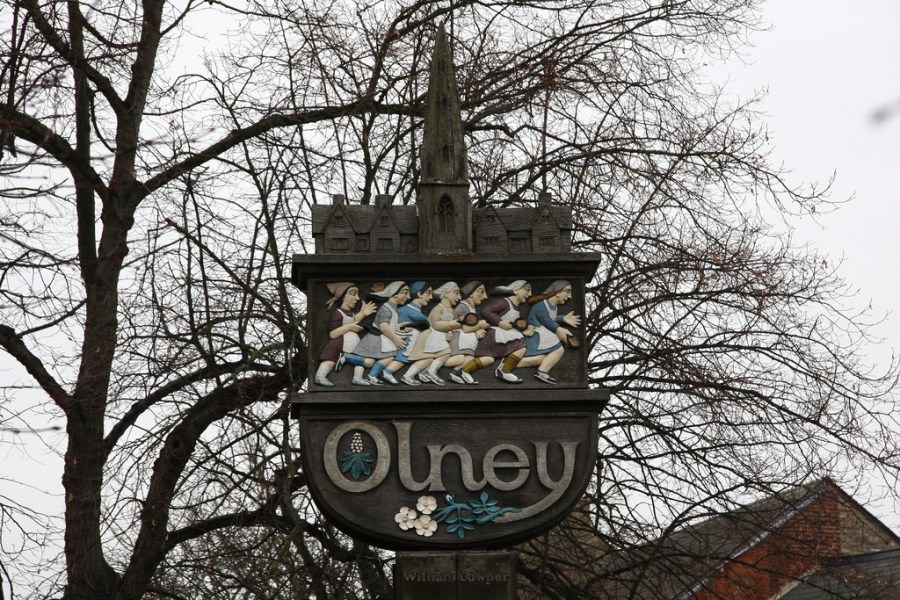
Well….tradition says it originated in the Buckinghamshire town of Olney. In 1445, a woman heard the Shriving bell while she was making pancakes. Still in her apron and clutching the pan she ran to the church….

pc-6
Photo credit: ‘Olney Pancake Race 2009’ robinmyerscough via Foter.com / CC BY Original image URL: https://www.flickr.com/photos/rssupport/3307747992/

The Olney Pancake Race is famous. In order to qualify the competitors have to dress as housewives, in an apron, hat or scarf. The pancake has to be tossed three times during the race, which ends at the church. The winner is the first one to arrive, receive a kiss from the bell-ringer and serve him the hot pancake….

Many towns hold their own pancake races on Shrove Tuesday but there are some that have other traditions to celebrate the day….

Westminster School has its ‘Pancake Greaze’. The Verger from Westminster Abbey leads a procession of school boys to a hall, where the school’s cook is waiting to toss a large pancake over a five metre bar. The boys run and scrabble to grab a piece of the pancake, the one who manages to get hold of the largest piece, (this is determined by weight), wins a prize of cash from the Dean….

In Scarborough, North Yorkshire, people meet on the Promenade, to skip. Nobody knows the true origins of this but it is thought that it could date back to the Middle Ages. Skipping was then associated with fertility, as in the sowing and sprouting of seeds. The skipping that takes place in Scarborough entails using very long ropes; very often, as many as a dozen people can be skipping to each at the same time….

pc-8
Photo credit: ‘Skipping’ Abdulrahman BinSlman via Foter.com / CC BY-NC-SA Original image URL: https://www.flickr.com/photos/sOmpho/2252613928/

In days gone by many towns throughout England would hold mob football matches, a Mediaeval form of football dating back to the 12th Century. In the Middle Ages, the match would have taken place between two neighbouring towns; the idea was to carry an inflated pigskin ball to a goal at the other side of the opponent’s town. As many men as possible would make up a team and any method of getting the ball to the goal was permissible, other than murder or manslaughter! Although this practice has all but died out now (due to the 1835 Highways Act, banning the playing of football on public highways) there are still a few towns that continue the tradition….

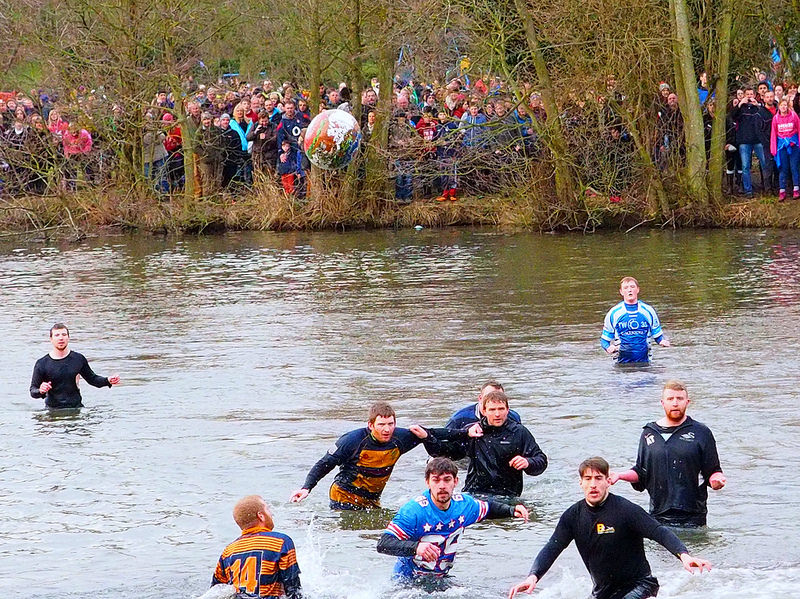
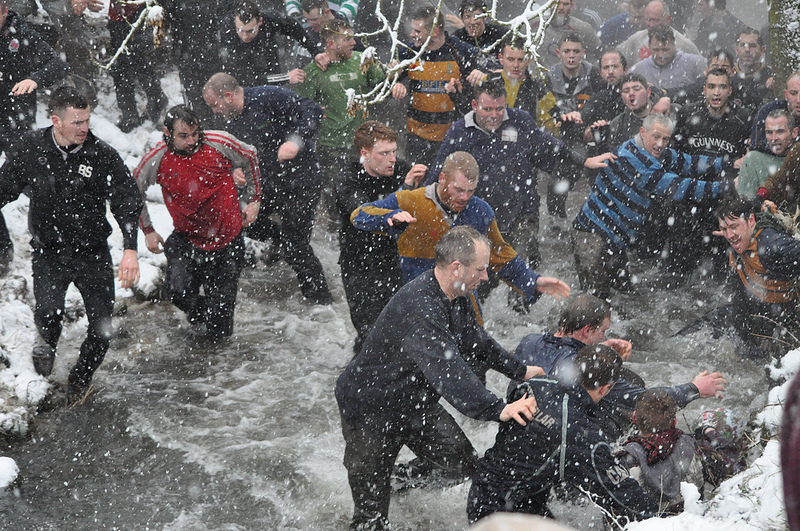
One very famous ‘football’ match, that is held annually, is the Royal Shrovetide Football Match in the Derbyshire town of Ashbourne. It is held every Shrove Tuesday and Ash Wednesday over two eight-hour periods, starting at 2pm and ending at 10pm. The goals are three miles a part and if a goal is scored before 5pm, a new ball is issued and the game continues; if a goal is scored after 5pm play stops for the day. A special ball is used, bigger than a normal football and it is filled with cork, to help it float – as it usually ends up in the river at some point in the game…. The ball is hand-painted by local artists and when a goal is scored the scorer’s name is added and it is presented to him to keep….

pc-18
Photo credit: Jason Crellin via Foter.com / CC BY-NC-SA Original image URL: https://www.flickr.com/photos/jasoncrellin/15950559504/

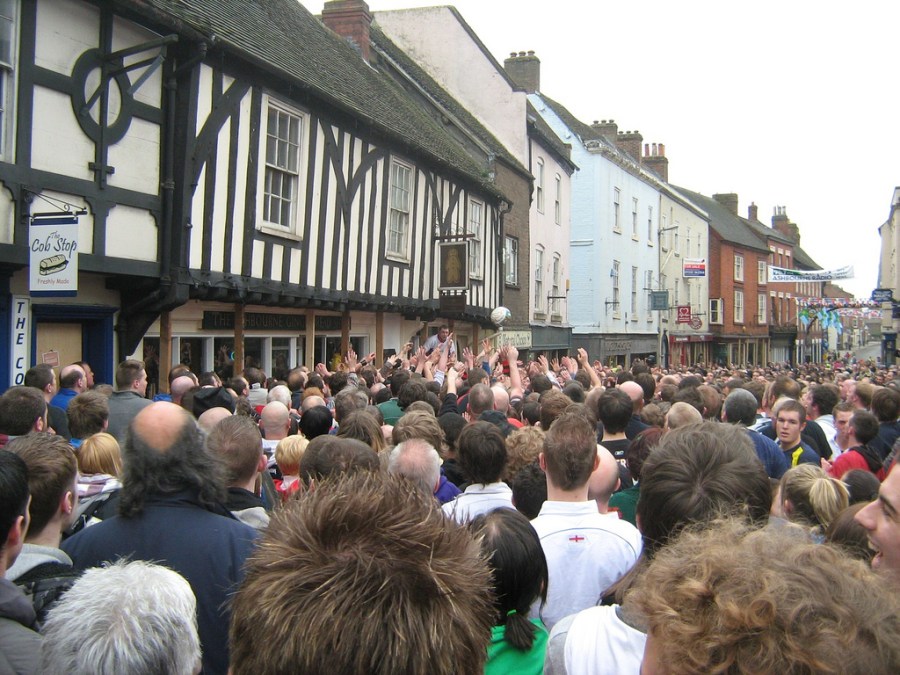
The teams are made up with as many men as possible; those from the north side of ‘Henmore Brook’, who are known as ‘Up’ards’, oppose those from the south side, the ‘Down’ards’. The game resembles more of a rugby match than a football match, the ball is moved about in giant scrums (called ‘hugs’), sometimes involving hundreds of people. Shop windows are boarded up in advance to protect them….

pc-12
Photo credit: ‘Ashbourne Shrovetide Football 2009’ Paul The Archivist via Foter.com / CC BY-SA Original image URL: https://www.flickr.com/photos/paularchivist/3386246084/

The match takes place in the streets, surrounding fields, in the river, where ever it ends up! Although it is perfectly legal to kick or carry the ball it usually just gets bundled through the crowds….

pc-17
Photo credit: Jason Crellin via Foter.com / CC BY-NC-SA Original image URL: https://www.flickr.com/photos/jasoncrellin/1654722543/

To score a goal, the ball has to be knocked three times against the ‘Millstone’ by a player who has been pre-elected by the team. The rules are few; no car or other motorised vehicle can be used, the ball must not be hidden in a bag/up a jumper etc., churchyards are out-of-bounds and of course, murder is not allowed….

No one knows exactly how long the Royal Shrovetide Football Match has been played (due to the town’s records being destroyed in a fire in the 1890s) but it is known to go back to at least 1667.

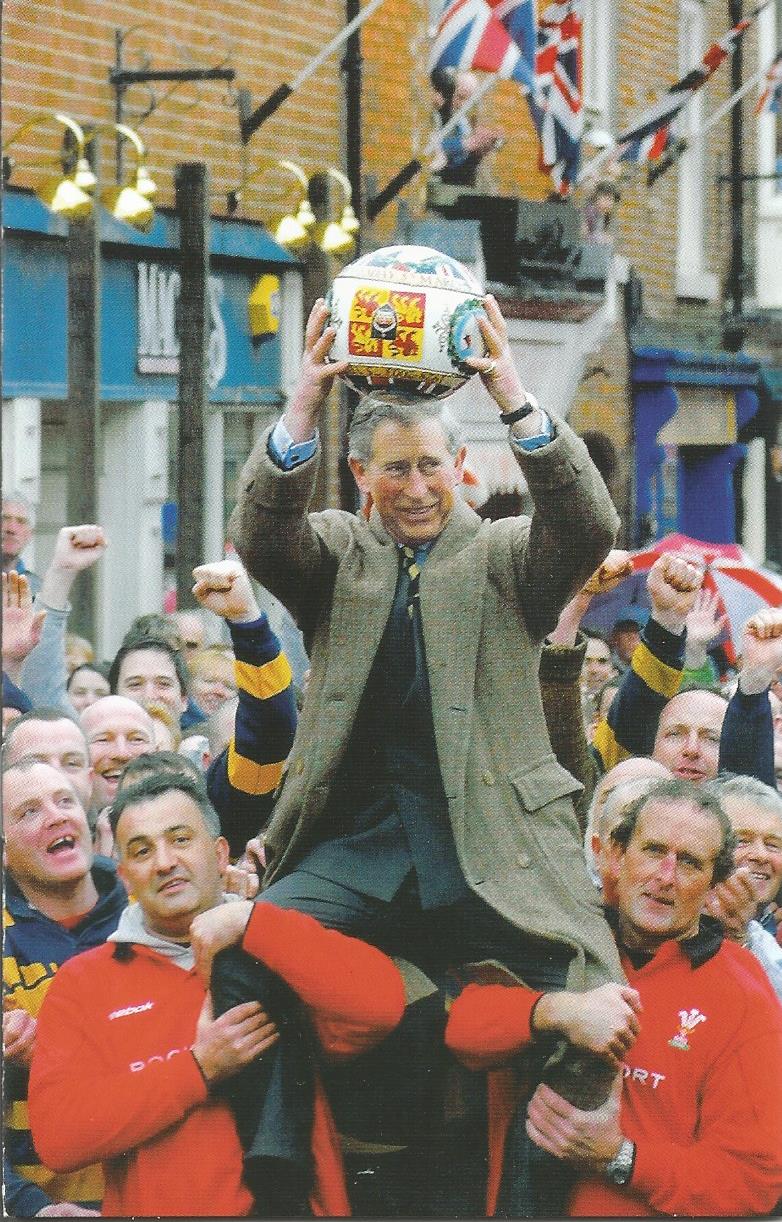
It is called ‘Royal’ because the ball was ‘turned up’ (the term used for starting the game) by Edward III, when he was still the Prince of Wales in the 1920s. Once again, in 2003, Royalty was involved, when Prince Charles started the game.

pc-20
Photo credit: ‘Ashbourne Shrovetide Football 2003 – HRH The Prince of Wales turns up the ball’ Diego Sideburns via Foter.com / CC BY-NC-ND Original image URL: https://www.flickr.com/photos/diego_sideburns/28957545202/

Starting the game entails throwing the ball into the waiting crowd of ‘footballers’, from a specially erected plinth….

This is a massive event for the people of Ashbourne, they often refer to it as their ‘Christmas’, as families and friends who don’t  see each other at any other time of the year come together to meet and socialise….

pc-19
Photo credit: ‘River Games’ ARKpics via Foter.com / CC BY-NC-SA Original image URL: https://www.flickr.com/photos/arkpic/8471046783/

Pancakes have been featured in cookery books dating back to 1439. Four of the main ingredients are thought to have symbolic meanings: Eggs – for creation;  Flour – the staff of life;  Salt – wholesomeness;  Milk  – for purity….  Tossing the pancake seems to go back almost as far: Pasquil’s Palin 1619 ~ “And every man and maide doe take their turne. And tosse their pancakes up for feare they burne”….

pc-21
Photo credit: Oswestry Wesley Guild’s ‘pancake special’ LIGC~NLW via Foter.com / No known copyright restrictions Original image URL: https://www.flickr.com/photos/ligc/12900492524/

In Britain, pancakes are a thin, flat ‘cake’, made from batter and fried in a pan.

pc-1
Photo credit: ‘Pancakes’ olduvai via Foter.com / CC BY-NC-SA Original image URL: https//www.flickr.com/photos/olduvai/401786380/

The rest of the World has its own variations, following are but just a few examples:

Australia; ‘Pikelets’. Traditionally served with afternoon tea, with jam, butter and whipped cream.
Thailand; ‘Roti’. A sweet, rolled up pancake, served drizzled with sweetened condensed milk and sometimes caramelised bananas. Often sold by street vendors.
France; ‘Crepes’. A very thin pancake that can be sweet or savoury.
Germany; ‘Pfannkuchen’. Very much like the French crepe.
USA; ‘Buttermilk pancakes’. Fluffy and sweet, usually topped with syrup.
Mexico; ‘Hotcakes’. Similar to those of the USA but made using cornmeal.
Poland; ‘Nalesniki’. A version of the crepe, again sweet or savoury (for example, fried chicken).
Austria; ‘Kaiserschmarm’. The pancake is broken into pieces and caramelised. It is then topped with fruit and nuts.
Holland; ‘Pannenkoeken'(or ‘Dutch pancake’). Cooked with pieces in the mixture, such as bacon and cheese for savoury versions, or apple and raisins for sweet.
Finland; ‘Pannukakku’. Baked rather than fried, used as a dessert.
Russia; ‘Buckwheat Blini’. Served with butter, sour cream, caviar or fruit preserves.
India; ‘Malapua’. A dessert or snack food. There are many variations but may include mashed bananas and cardamom.
Malaysia; ‘Apam Balik’. Griddle cakes served with butter, ground roasted peanuts and sweetcorn. Nowadays, they are also often strawberry or chocolate flavoured.
Somalia; ‘Anjerno’. A chewy, spongy type of sour dough pancake, with a sweet and sour flavour. Ethiopia has a similar one which is slightly larger.

However you eat yours, enjoy…. I will leave you now, with a traditional English recipe:

Pancakes

200g plain flour
3 1/2 teaspoons baking powder
1 teaspoon salt
1 tablespoon castor sugar
300ml milk
1 egg
50g melted butter

In a large bowl, sift flour, baking powder, salt and sugar. Make a well in the centre, pour in milk, egg and melted butter, mix until smooth.

Heat a lightly oiled frying pan over a medium to high heat. Pour in enough batter to thinly cover pan, (roughly 60ml – or 4 tablespoons per pancake). Brown on both sides…. Serve hot with topping or filling of choice….

pc-26
Photo credit: ‘1946 Pannenkoeken bakken’ Herman van den Bossche via Foter.com / CC BY-NC-SA Original image URL: https://www.flickr.com/photos/herman_van_den_bossche/6661105429/
pc-7
Photo credit: Image from page 70 of ‘Larkin housewives’ cook book; good things to eat and how to prepare them’. (1915) Internet Archive Book Images via Foter.com / No known copyright restrictions Original image URL: https://ww.flickr.com/photos/internetarchivebookimages/14761322721/

Dost thou know thy Tussie-Mussie from thy Nosegay…?

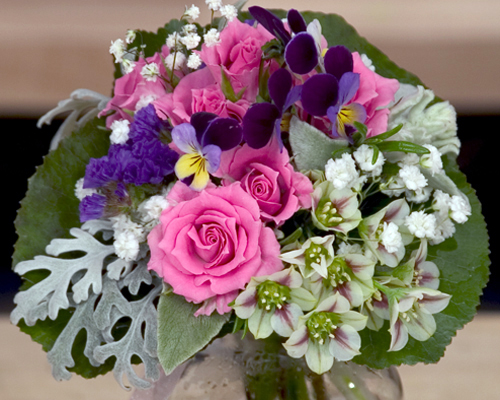
When I hear the words ‘Tussie-Mussie’, for me it conjures up a nostalgic, whimsical image of Victorian times…. A young suitor handing his intended a dainty posy of flowers, waiting to see if she would clutch it to her heart – for if she did, he would have known his love was requited…. Maybe they were secret sweethearts and his gift of flowers conveyed a covert message to her…. Each bloom, individually selected for its meaning, combined together to tell a story…. The language of flowers….

tm-1
Photo credit: ‘Tussie-Mussie’ Leanne & David Kesler, Floral Design Institute, Inc., in Portland, Ore. Flower Factor via Foter.com / CC BY-NC Original image URL: https://www.flickr.com/photos/flowerfactor/8261820014/

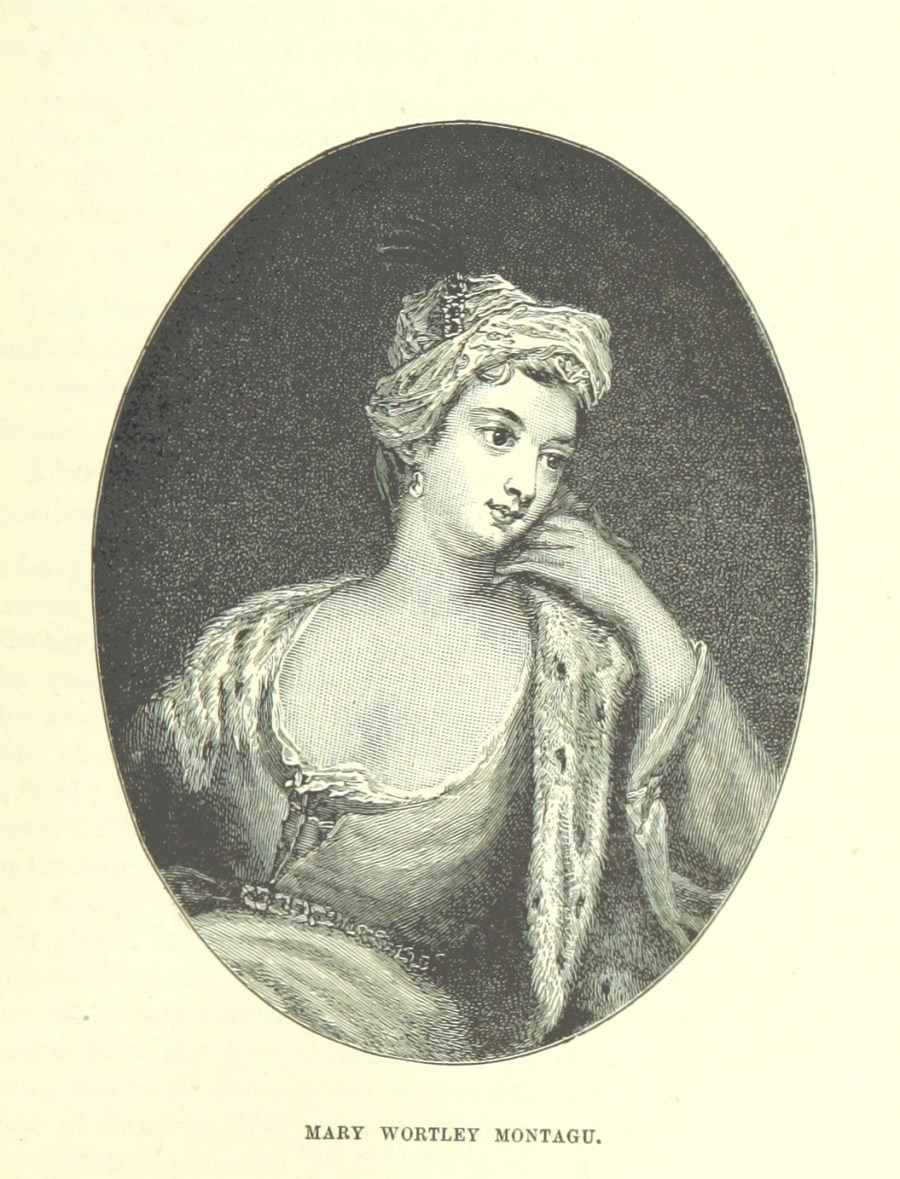
Floriography, the term used for the communication of a message through flowers, was a trend introduced to Europe in the 1700s. Lady Mary Wortley Montagu brought it to England in 1717; wife of the then Ambassador to Turkey, she is better known for her writing, poetry and upon her return from Turkey, for the introduction of the smallpox inoculation to Britain….

tm-13
Photo credit: Image taken from page 333 of ‘Literary Landmarks of London…Eighth edition, revised and enlarged, etc’ The British Library via Foter.com / No known copyright restrictions Original image URL: https://www.flickr.com/photos/britishlibrary/11301275333/

As Floriography gained in popularity throughout Europe and Britain, publications began to appear listing plants, trees and flowers with their meanings. The very first dictionary is thought to be Joseph Hammer-Purgstall’s Dictionnaire du Language des Fleurs’ in 1809. The craze continued throughout the Victorian era and dictionaries were produced in several countries; France, England, the USA, Belgium, Germany and South America. A well-known publication was ‘Le Language des Fleurs’ by Louise Cortambert writing as Madame Charlotte de la Tour, in 1819. Its equivalent in England was by the Clergyman, Robert Tyas and entitled ‘The Sentiment of Flowers; or, Language of Flora’, written in 1836. Other notable works were Henry Phillips’ ‘Floral Emblems’ in 1825 and Frederic Shoberl’s ‘Language of Flowers’ in 1834….

Perhaps though, the one we may be most familiar with and which is still printed today, is the one written by English, children’s book illustrator, Kate Greenaway. Her book, ‘The Language of Flowers’, which was first printed in 1884, lists over 500 flowers and plants, along with illustrations and the meanings and messages they convey. Many of the images are now reproduced as fine art prints, greetings cards and note paper….

tm-3
Photo credit: ‘Queen Victoria’s jubilee garland’ (1887) Toronto Public Library Special Collections via Foter.com / CC BY-SA Original image URL: https://www.flickr.com/photos/43021516@N06/8045542813/

Because so many different publications were available there became many variations of the lists. Certain flowers and plants acquired more than one meaning, sometimes contradictory, often varying from country to country. For example, the herb Basil; in Italy, it represented ‘best wishes’, in Greece it conveyed ‘hatred’, whereas in India it meant ‘sacred’….

There are so many plants and flowers that have meanings, far too many to list here but following are a few of the more familiar ones:

Primrose: Inconstancy, changeability
Sweetpea: Departure, good-bye
Anemone: Forsaken
Bluebell: Humility
Daffodil: Unrequited love
Chrysanthemum: Friendship, cheerfulness
Dandelion: Faithfulness, happiness
Violet: Modesty
Iris: Hope, wisdom, valour
Ivy: Fidelity
Fern: Fascination
Passion Flower: Faith
Honeysuckle: Love (sweet and secret)
Golden Rod: Caution, encouragement
Forget-me-not: True love, forget me not
Lily of the Valley: Return of happiness
Rose: Love
Pansy: Thoughts
Daisy: Innocence, purity
Orchid: Beauty
Peony: Shame
Poppy: Oblivion
Rosemary: Remembrance
Purple Heather: Admiration
White Heather: For wishes to come true
Magnolia: Nobility
Forsythia: Anticipation
Petunia: Resentment, anger
Larkspur: Fickleness
Marigold: Jealousy
Elderberry: Sympathy
Aster: Daintiness….

In Victorian times, the Tussie-Mussie  became something of a fashion accessory. They would have been carried to social occasions, or maybe worn on the wrist, or as a brooch…. If carried, very often a lace doily would have been wrapped around the stems; or perhaps they would have been contained in a small silver vase that could be pinned to a lapel….

Flowers were the most commonly exchanged gift in the Victorian era; much thought went into the meaning of each bloom that made up the display. A Tussie-Mussie traditionally has one single central flower, which is then surrounded by smaller flowers, herbs, foliage and grasses. Each individual piece playing its part, in conveying the message the person giving the gift wishes the recipient to receive…. Every posy is unique, individual and personal… In Victorian times young ladies were taught how to make them as part of their social up-bringing…. The craze eventually ended with the outbreak of World War 1….

Nowadays, Tussie-Mussies are still occasionally given as gifts; when they are, it is common place to include a note, explaining the meaning….

The name, ‘Tussie-Mussie’, was first mentioned in 1440, as ‘Tusemose’. Tuse – meaning a knot of flowers; mose – refers to the damp moss wrapped around the stems to stop them from drying out. During Mediaeval times, small posies of flowers were more commonly known as ‘Nosegays’; ‘gay’ meaning ornament. The name quite literally means ‘an ornament appealing to the nose’….

A Nosegay could have come in several forms; a small scented posy, or sachet of highly aromatic herbs or maybe even an orange studded with cloves. They would have been used by both sexes, carried, pinned to lapels, worn on the wrist or perhaps around the head – anywhere convenient and easily accessible, to mask bad odours and rancid smells….

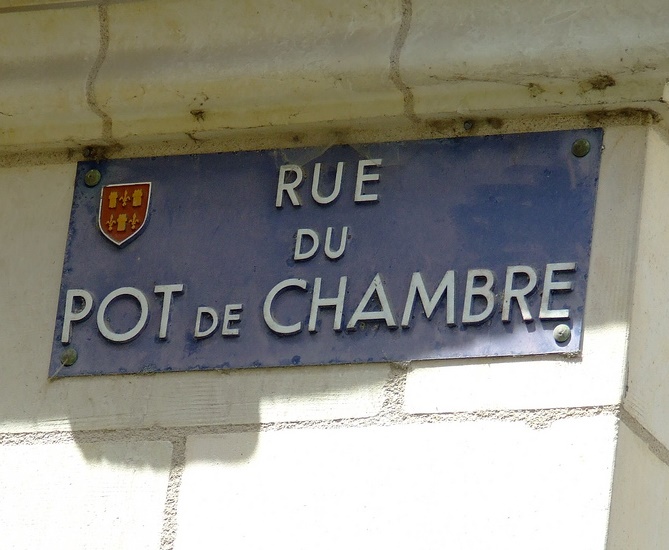
Nosegays were extremely popular whilst in crowded places or while walking through the streets of cities and towns. The streets were particularly filthy in the Middle Ages, often coated in raw sewage, where the contents of chamber pots had been flung from windows. Butchers slaughtered animals in the streets leaving the unwanted waste behind….general rubbish and debris would have been left to rot…. The stench could only have been horrendous, Nosegays were quite possibly the only method to prevent gagging…. It was also believed disease was spread by foul air and bad odours….

tm-9
Photo credit: ‘Sign in Chinon’ Peter Curbishley via Foter.com / CC BY Original image URL: https://www.flickr.com/photos/peter_curb/3685089224/

Contrary to general belief, many people in the Middle Ages did observe personal hygiene. Not all, obviously (hence another use for the Nosegay). Clothes, with the exception of under-garments, would not have been washed frequently; especially in the Winter months, as drying them would have been almost impossible….

Health manuals from the time stressed the importance of keeping clean in order to keep healthy. Magninius Mediolanesis wrote in his ‘Regimen Sanitatis’ “The bath cleans the external body parts of dirt left behind from exercise on the outside of the body”. He then went on to suggest 57 bathing remedies for conditions such as old age, pregnancy and for whilst travelling. He also advised: “Spring and Winter are good times for bathing but should be avoided as much as possible in the Summer”. Another of his pearls of wisdom stated: “Too long in the bath makes you feeble and fat”….

For those would could afford the luxury of a personal bath, namely Royalty, higher nobility and rich merchants, it would consist of a wooden tub with a ‘tent like’ sheet draped over…. Jugs of hot water would have been brought by attendants. According to John Russell’s ‘Book of Nurture’ from the late 1400s, fresh herbs were used for washing and then lukewarm rose-water for rinsing off…. Herbs would also have been added to ease aches and pains; camomile, breweswort, brown fennel and mallow….

tm-12
Photo credit: CC / Public domain

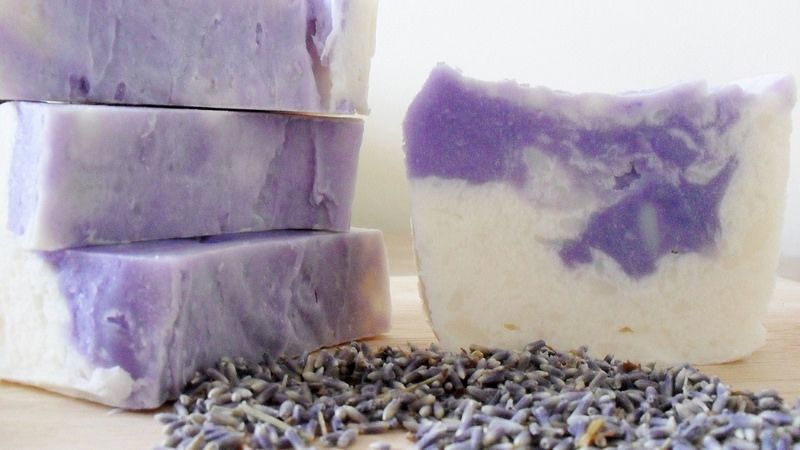
Soap was introduced to the Western World during the Middle Ages, most probably from the Orient. Typically, it was a soft soap made from mutton fat, potash or wood ash and natural soda. It was not very effective as it had little cleansing power. Hard soaps were available but were expensive. Produced mainly in Spain from the 12th Century, they were made from olive oil and often had added herbs and flower petals….

tm-10
Photo credit: ‘Lavender Dream’ Denise Karen via Foter.com / CC BY-NC Original image URL: https://www.flickr.com/photos/handmadebylilli/15845104786/

For some, bathing was a very important affair….King John would take a bath tub where ever he travelled…. In 1351, Edward III had hot and cold taps installed for his bath in Westminster Palace…. Some wealthy monasteries  were able to pipe water in…. Westminster Abbey had a bath attendant, who was paid 2 loaves of bread a day and £1 a year….

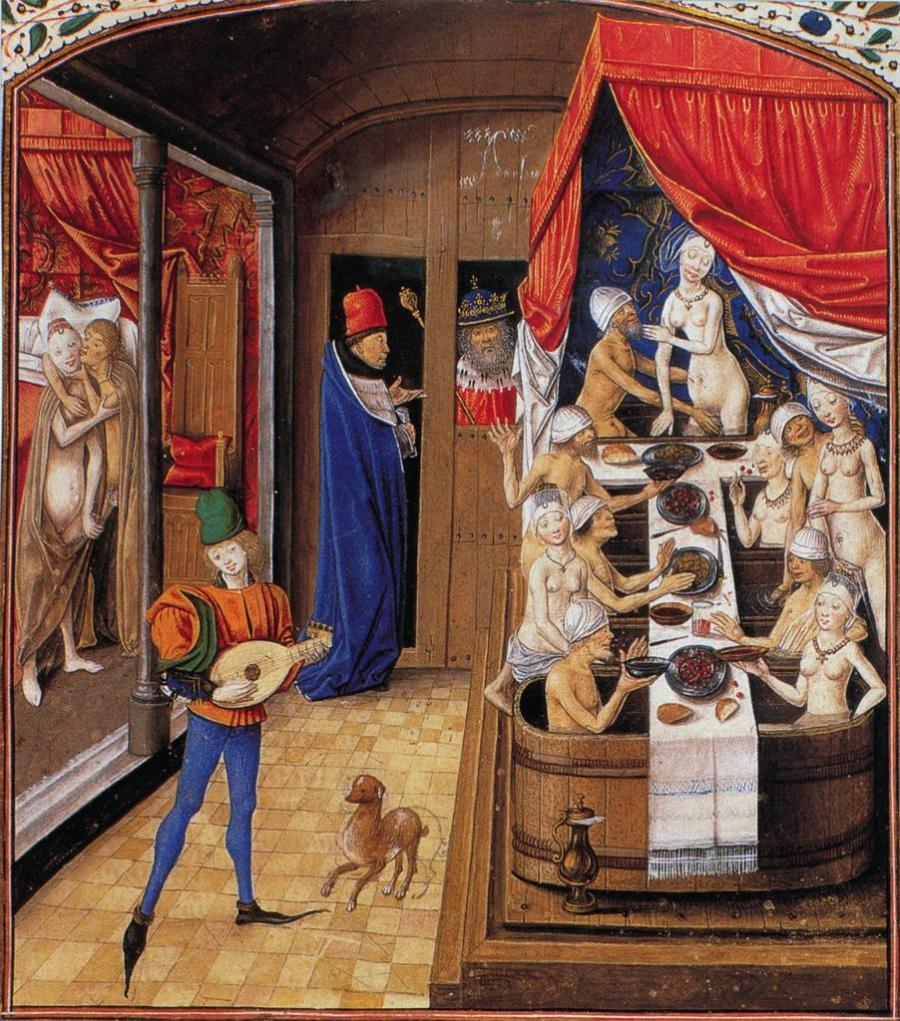
However, for the majority of people, having a private bath was not an option; it was unaffordable and too time consuming. The very poor had to make do with rivers, streams and ponds. Many others had the opportunity of using public baths. By the 13th Century there were over 32 available in Paris; Southwark, (then separate from London), a town standing on the banks of the River Thames, boasted 18 baths. Even many of the smaller towns had their own, often connected to a bakery, making use of the ovens to heat water….

Public baths were not without controversy. Many, (the Church in particular), were outraged that men and women would be naked together. Baths were seen as little more than a front to  disguise what they really were….brothels! Southwark’s were known as the ‘Stews’. The Mediaeval Church authorities claimed that baths spread immorality and disease….

Initially, little notice was taken of these views but gradually it became believed that it was water that was to be blamed for the spread of disease, enabling it to enter the body through the pores of the skin…. It was thought that as the warmth enlarged and opened up the pores, this in turn allowed airborne infections to enter…. Much of this belief could well have been fuelled by Church propaganda….

Of course, there could well have been some truth in that bath houses  were places of debauchery and immoral behaviour…. Promiscuity was prevalent during these times; then, in the late 15th Century there was a widespread outbreak of syphilis across Europe. It is believed the spread of this disease resulted in people becoming less promiscuous and at the same time brought a rapid decline in the popularity of the public bath house….

tm-11
Photo credit: ‘Scene of a Bath-house’ circa 1470 CC / Public Domain Image source: Wikipedia Commons

People in the Middle Ages loved their highly scented herbs and flowers…. Tables would have often been strewn with them in an attempt to keep houses smelling fresh…. Perfume was also popular, made from the oils of flowers and mixed with herbs and spices….both men and women used them….

Well, since bathing had fallen out of favour, they had to do something to mask the pong….!!

tm-2
Photo credit: ‘At the Lead Mines’ River Museum via Foter.com / CC BY-NC-SA Original image URL: https://www.flickr.com/photos/rivermuseum/3599668316/


Swan Roast, anyone…?

It’s that time of year again, our resident female swan is ‘feasting’ – building up her reserves ready for when she sits on the nest. She has become very persistent in asking for food and is incredibly grumpy when it is not forthcoming as and when she demands it…. She will often run at me and try to aim a peck or even a wing swipe, to show her disapproval at being made to wait. I’ve told her, on more than one occasion, that she ought to think herself lucky that this is the 21st Century or she may well have found herself on the dinner table….

swan-r-1
Photo credit: ‘Nordic Museum’ Tuomo Lindfors via Foter.com / CC BY-NC-SA Original image URL https://www.flickr.com/photos/tlindfors/29112721813/

In truth, swan would have been reserved for the tables of Royalty and high nobility. People, in Mediaeval times especially, ate what was available to them and within their social standing. Peasants would have had a diet consisting mainly of bread, porridge, eggs, cheese, nuts, berries and what ever fruit and vegetables they could grow themselves. Meat was, on the whole, seldom eaten, maybe the occasional rabbit, pork or on special occasions, goose or chicken. Hens were more useful as egg layers than to provide meat….

Upper classes enjoyed far more variety, not only due to their wealth but also to their passion for hunting with birds of prey. As well as rabbit and hare, it could in fact be said, if it had feathers it was to be considered ‘fair game’…. Anything from sparrow to peacock could appear on the menu….

swan-r-3
Photo credit: ‘Sparrow’ Stewart Black via Foter.com / CC BY Original image URL: https://www.flickr.com/photos/s2ublack/6906723808/

In this current age of so many bird lovers, (a trip to the local garden centre will show how big a market there is for wild bird feed), it is almost incomprehensible that our feathered friends once graced the tables of households across the land. Thrushes, finches, starlings were all eaten….the utmost prize would have been a young cuckoo that had just fledged. Heron, crane and crow were all considered delicacies and were favoured by Royalty. Stork, cormorant, bittern, puffin, bustard, gull, guillemot, lark and woodcock would all have been served as part of a meal….

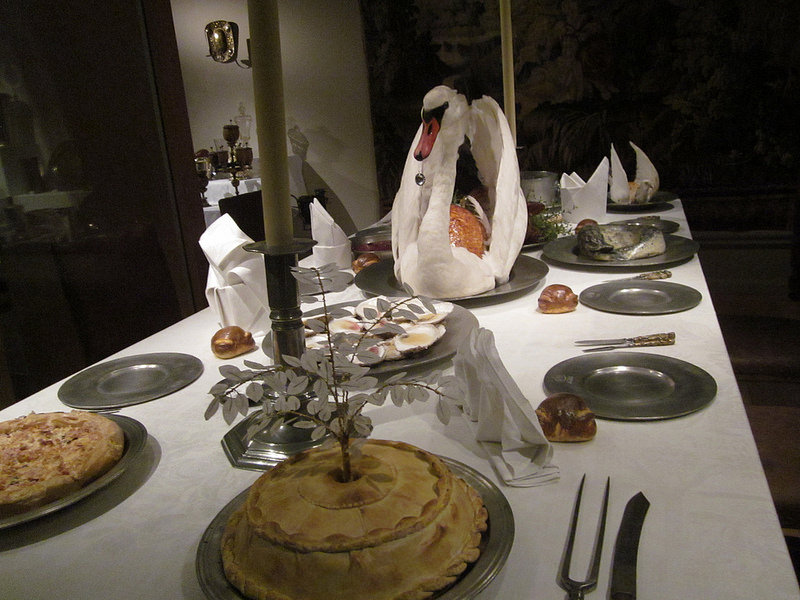
Peacocks were domesticated and prized for their plumage, they were very much a status symbol. Although not particularly tasty and  quite tough, they were still served at banquets, in order to impress. To make the meat more palatable, the birds were likely to have been ‘hung’ for a day or two, by the neck with their feet weighted down. To serve, they would usually have been ‘re-dressed’. This means that once the bird had been cooked the plumage would have been replaced. This was the case with any impressive bird, male pheasants, swans, partridge and the like. In the instance of the peacock, the tail would have been fanned out in a glorious display….

swan-r-4
Photo credit: ‘Peacock on display’ asgw via Foter.com / CC BY Original image URL: https://www.flickr.com/photos/aidanwojtas/12832649754/

Capons (castrated cockerels) and pheasants were purposely ‘fattened up’ – making them expensive, so were a luxury only for those who could afford them….

In England, (unlike Europe), duck was not popular for every day consumption, it was more likely to be eaten at feasts and on special occasions. Sometimes domestic ducks were kept but mainly wild ducks were hunted. The feathers were a bonus as these were prized for bedding….

Geese were also raised for their feathers, as well as for their meat and grease…. Most dwellings kept these noisy, hissy birds…. In England, goose was the traditional choice for Michaelmas and Whitsuntide, (both minor Christian festivals – not so widely observed in recent times); in Europe, goose was a popular choice at Christmas….

Because of the popularity of falconry, partridge, pheasant and quail were all common place. Pheasant, particularly, was highly valued because the meat was considered very flavoursome….

swan-r-5
Photo credit: ‘Pheasant’ Richard Seely via Foter.com / CC BY-NC Original image URL: https://www.flickr.com/photos/rdseely/3335188629/

Wood pigeons, rock doves and turtle doves were all domesticated for food in Mediaeval Europe, again being reserved mainly for the upper classes. They were very often roasted or made into pies….

Crane and heron were hunted by the aristocracy with their hawks and falcons. Both were popular for banquets. Sometimes, heron would be purposely bred. Swans had been domesticated for centuries. It was actually the young swan that was eaten, the meat of the adult being too tough. The young birds would have been removed from their parents at about three months old, to be raised and fattened up on barley, until they were somewhat obese. Swan apparently tastes more like duck than goose and it lacks the tough ‘beefiness’ of goose…. As soon as their white feathers appeared, at about seven months, the young swans were slaughtered….

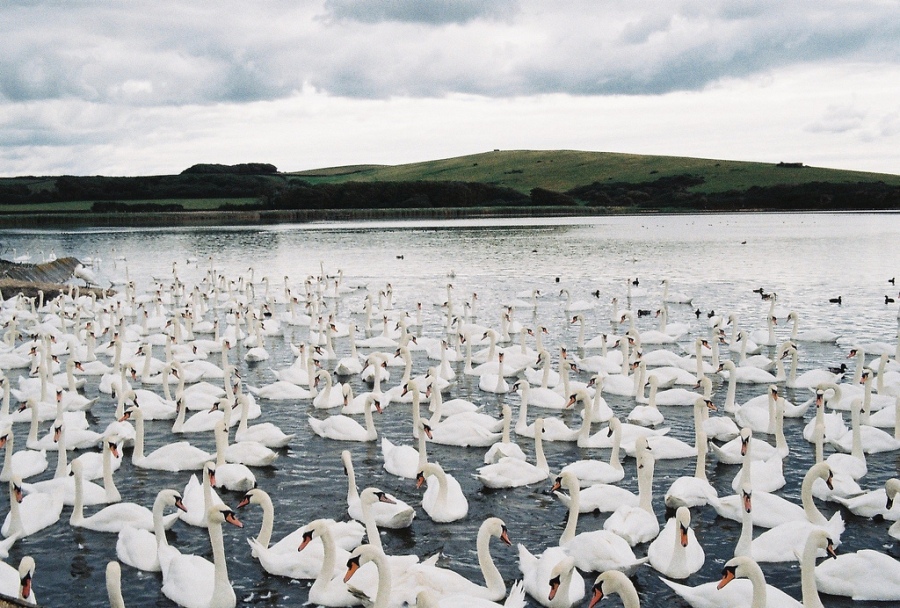
In 1482, during the reign of Edward IV, it became legally defined that anyone caught killing a swan, without the permission of the Crown, could be imprisoned. This is how it came to be  that the Monarch owns the majority of the UK’s swans.  Occasionally, throughout history, the Throne has given ‘rights’ to other establishments to own swans, currently there are three of such establishments: The Dyers Livery Company, a historic guild of dyers dating back to the 12th Century, (but now more noted for its charitable work); The Vintners Livery Company, a historic guild of wine merchants, gaining its first charter in 1363; and the Ilchester family, the Ilchester Estate being where the Abbotsbury Swan Sanctuary is located…. Each establishment identifies its own birds, nowadays by ringing them but in days gone by, notches were carved into the swan’s beak…. Any un-ringed swan is automatically assumed as belonging to the Crown….

swan-r-6
Photo credit: ‘Swannery at Abbotsbury’ Matt Knott via Foter.com / CC BY-NC-ND Original image URL: https://www.flickr.com/photos/matthewknott/6117206053/

The Queen is at liberty to give swans away to who ever she sees fit; for example, in 1967 she gave six as a gift to Ottowa, Canada, to celebrate its 100th anniversary and Canada’s ties with the UK.

Swans are protected by the Wildlife and Countryside Act of 1981, it prohibits the intentional killing or harming of a swan. To do so could result in being arrested; in 2006 a man in Llandudno, Wales, was imprisoned for 2 months for the killing of a swan. Today the crime is referred to as a felony; the old term for the killing and eating of swans by unauthorised persons was ‘swanage’….

Technically, the Royals are still entitled to consume swan meat; as are the fellows of St. John’s College of Cambridge – however, it is unlikely that it will be appearing at any banquets any time soon….unlike those of yesteryear, where a swan would have been considered the jewel in the crown….

swan-r-2
Photo credit: ‘Stockholm Nordiska’ Blake Handley via Foter.com / CC BY Original image URL: https://www.flickr.com/photos/56705607@N00/14221111500/

Anyone fancy slivers of swan, poached in saffron and peaches? Or how about a Swan Roast….

Take: one woodcock, place inside a pigeon….place pigeon inside a partridge….partridge inside pheasant….inside a chicken….mallard….duck….goose and finally, a swan…. Roast for many hours, then re-dress in swan plumage : to really impress, at this stage gild the feathers with gold; serves approximately 30 people….

The correct term for stuffing animal into animal is ‘engastration’ – sounds appetising, doesn’t it?! It goes back to the Roman times, possibly even before….

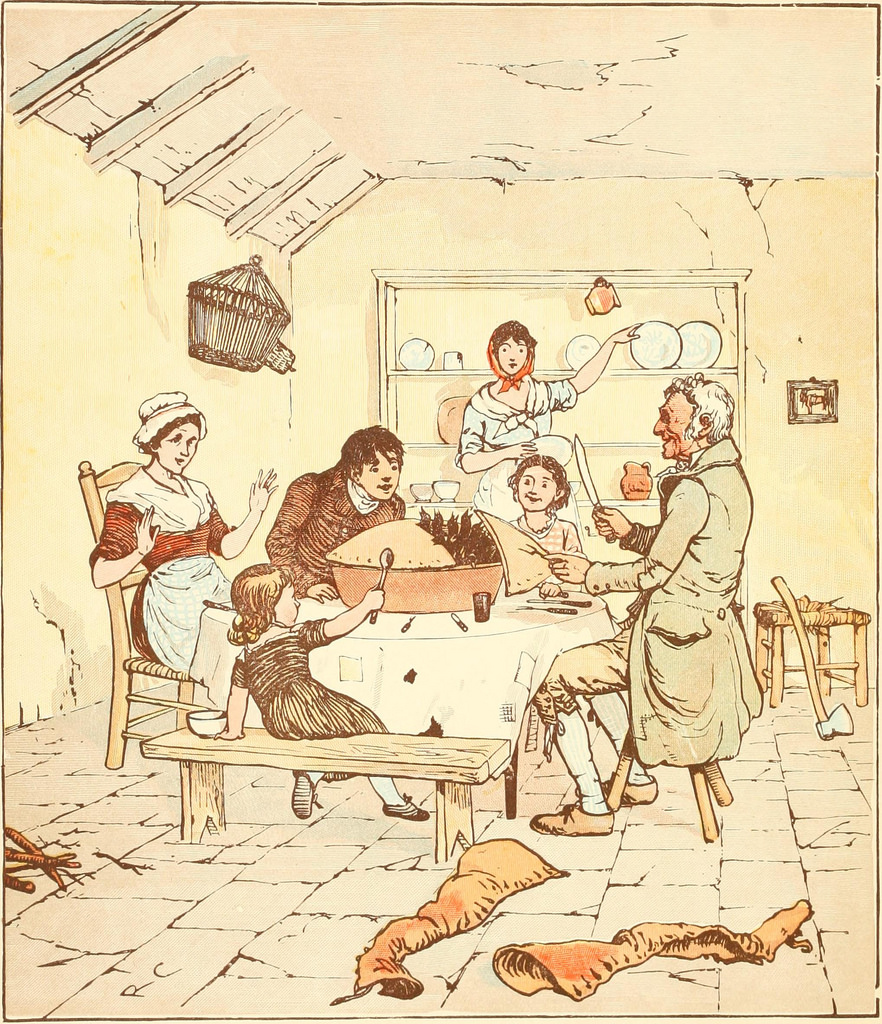
The lavish displays of food at these banquets were very much part of the entertainment. Another great source of delight was the ‘live pie’. As children, we were all familiar with the nursery rhyme ‘Sing a Song of Sixpence’; reputedly about such a pie….

Sing a song of sixpence a pocket full of rye;
Four and twenty blackbirds baked in a pie;
When the pie was opened the birds began to sing;
Oh, wasn’t that a dainty dish to set before the King?
The King was in his counting house counting out his money;
The Queen was in the parlour eating bread and honey;
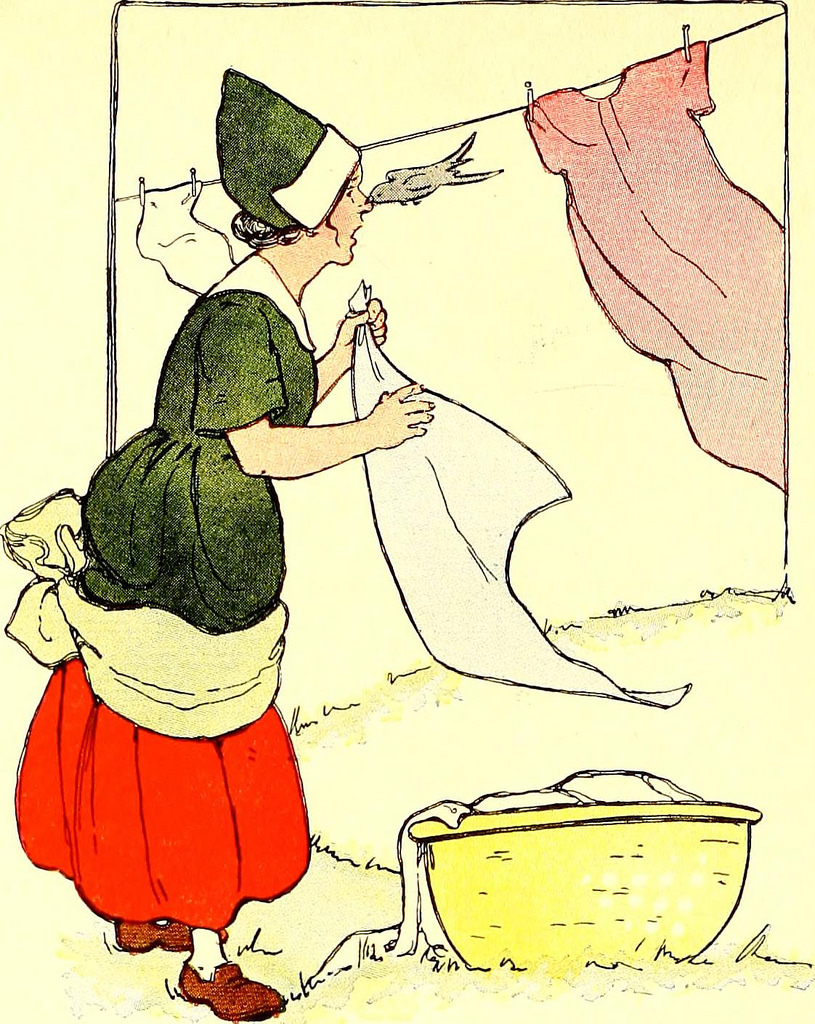
The maid was in the garden hanging out the clothes;
When down came a blackbird and pecked off her nose….

swan-r-8
Photo credit: Image from page 13 of ‘Sing a song for sixpence’ (1890) Internet Archive Book Images via Foter.com / No known copyright restrictions Original image URL: https://www.flickr.com/photos/internetarchivebookimages/14750884564/

A pie would have been made by baking the pastry first without a filling; the crust would have been thick and would have risen to form a ‘pot’ shape. The top would have been cut off and live birds added and then the lid put back on…. The pie would then have been presented at the table and the lid removed, causing much merriment…. (It’s no wonder the maid in the rhyme had her nose pecked off….revenge!)….

swan-r-7
Photo credit: Image from page 11 of ‘The real Mother Goose’ (1916) Internet Archive Book Images via Foter.com / No known copyright restrictions Original image URL: https://www.flickr.com/photos/internetarchivebookimages/14578146570/

Cooks became more competitive; all kinds of animals got added to pies….frogs, rabbits, dogs….even dwarfs, who would pop out and recite a poem! It was reported that a band of musicians actually emerged from one pie….

The first recipe books appeared in England during the 1500s, (before that time recipes would have passed on verbally from mother to daughter). One recipe that may have appeared in such a book has been adapted here for anyone wishing to try out a Mediaeval recipe for themselves….

Mediaeval Game Bird Stew

6 rashers of bacon, cut into large pieces
3 cloves of garlic, chopped
2 small pheasants or 4 quail or 1 chicken
Handful of coarsely cut mushrooms
Teaspoon of roasted, chopped hazelnuts
1 bottle of ale
3/4 cup of water
3 crumbled bay leaves
salt and pepper
6 slices of whole grain bread

In a heavy pan or flame proof casserole dish, fry the bacon with the garlic. Add the bird(s) and brown on all sides. Add nuts and mushrooms, cook for a few minutes and then add ale, water, bay leaves, salt and pepper. Bring to the boil, cover and simmer for 2 hours or until tender and the meat falling from the bone.

Remove from heat, take the birds out of the liquid. As the juice left in the pan begins to cool, skim off any fat that forms with a slotted spoon. Remove the meat from the bones of the bird(s) and return meat to stew. Reheat gently, then serve on the slices of bread, ensuring it is saturated with juices….


Now, does anyone have any idea how big a pot I’d need to make swan soup…..?

swan-r-9
Image from page 58 of ‘The ideal cook book’ (1902) Internet Archive Book Images via Foter.com / No known copyright restrictions Original image URL: https://www.flickr.com/photos/internetarchivebookimages/14765023645/


Within these walls….

Eager to use every inch of available space in No.3, our attention turned to the area under the stairs, that for some reason had been ‘bricked up’ – literally, it was inaccessible.  As we set about removing the bricks, I jokingly remarked to John, “I hope we don’t find a body under here….”

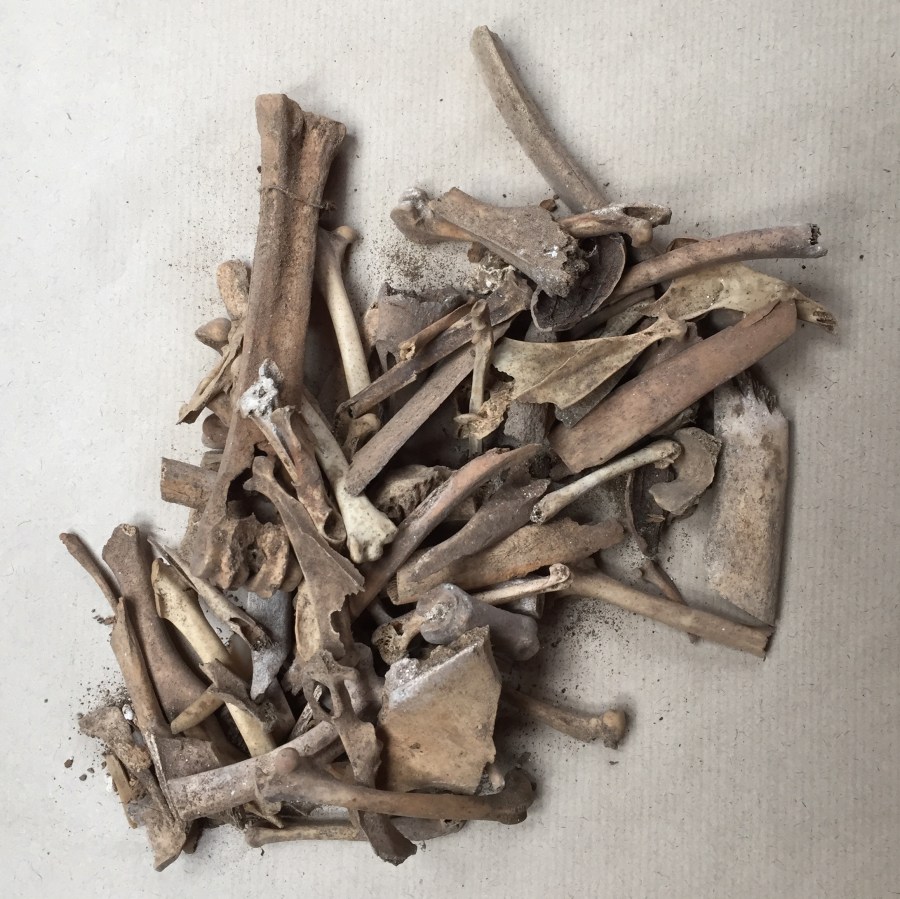
John made a hole big enough to poke his head through and using a torch, peered into the darkness…. Inside could only be described as resembling a ‘midden’ – and there on top of a mound of earth, lay a bone! Slightly nervous of what we were about to find, we continued to break our way in…. What we found was an assorted pile of rubbish and a quantity of animal bones, we can only assume what we had unearthed was a very old rat’s lair….

wb-13-bones-at-no-3
Bones found under the stairs of No.3….

Oddly though, amongst the debris were a collection of marbles and another of old bottle tops…. We never did get to the bottom of why the under stairs had been bricked up (perhaps it really had been a midden and previous occupants, long gone by, couldn’t be bothered to clear it out – who knows) ; it now serves as a very useful cupboard space….

As this was one of the last areas to be explored, I think we were secretly hoping we were going to find something like a ‘concealed shoe’….or perhaps some other ‘offering’ hidden away….protecting the house from evil spirits. We had gone over just about every other inch of the place and all we had found were a few hairgrips under a window sill, a magazine from the 1950s under the bath and a few giant acorns stashed in a hole in a beam….

‘Caches’, the correct term for offerings, (from the French ‘cache’ – meaning to give), are items that have been concealed somewhere in a building; under floors, above ceilings, up chimneys, around windows and doors, plastered into walls….

wb-7-shoe-in-wall
Photo credit : ‘Semaphore Reno 004’ – Marlene Manto via Foter.com / CC BY-NC  Original image URL: https://www.flickr.com/photos/marlenemanto/2874151309/    (Shoe plastered into wall….)

They were believed to protect the inhabitants from evil influences; witches, ghosts, demons and the like. It was a custom that was with us for centuries, only really dying out at some point in the last century (may be the advent of burglar alarms made people feel safer?!)…. It is not a custom that was confined just to the UK, by any means; such offerings have been found in buildings all over Europe, parts of Scandinavia, North America, Australia, even China….

Shoes are the most common; nearly always a single shoe, usually well worn and often repaired. In days gone by, as much use as possible would be gleaned from possessions, unlike the throw away society we know today….

wb-9-concealed-shoes-east-anglia
Photo credit : Edmund Patrick – CC BY-SA 3.0  Collection of concealed shoes from East Anglia held by St. Edmundsbury Heritage Service

About half of the shoes recorded have been those of children; it was believed the innocence and purity of children would over power evil spirits…. The earliest shoe that has been found to date was discovered behind the choir stalls in Winchester Cathedral, the stalls were originally built in 1308; it is thought the shoe may have been there since that time….

It is assumed many shoes are found and simply thrown away, never to be recorded. Northampton Museum has a ‘Concealed Shoe Index’ that it has been compiling since the late 1950s; it has approximately 2,000 entries. Shoes have been found in a large variety of buildings : monasteries, churches, hospitals, theatres, schools, even army barracks. They have been discovered in pubs and breweries, museums, factories and of course private dwellings, from tiny cottages to manor houses, even the likes of Hampton Court Palace….

The shoe is the only item of clothing that truly takes on the form of the wearer, it shapes itself to the foot…. It was believed that the spirit of a deceased person would be trapped in the shoe – a ‘spirit trap’…. It is thought this belief comes from the 14th Century, when it is said John Schorn, the Rector of Marston, Buckinghamshire, cast the Devil into a boot, thus entrapping him….

The largest cache found in the UK was in a 400 year old cottage, which was being renovated in Snowdonia, Wales. Here, building contractors found nearly 100 single shoes buried under a chimney stack. The nearest recorded example of a concealed shoe being found to here, was in the neighbouring village of Hascombe. A house was undergoing repair work and from the rafters fell an 18th Century child’s shoe….its heel broken down where the child had continuously pulled it on and off….and the toe was worn through.

Although many think the ‘concealed shoe’ was to keep away evil influences, there are also others who believe shoes were hidden as a fertility offering. Shoes have long been associated with fertility. In Lancashire, there is an old custom called ‘smickling’ – it involves trying on the shoes worn by a woman who has recently given birth, supposedly this brings luck in conceiving…. Casting a shoe after a bride departing for her honeymoon was another old tradition, even today we still tie shoes to the car of a newly wed couple….

Bröllopsfotografering Frida Pettersson och Pontus Svensson 2007-07-28
Photo credit : Just Married – Johan Lindqvist Fotografi via Foter.com / CC BY-NC-ND Original image URL: https://www.flickr.com/photos/johanlinqvist/4297282191/

Some think the connection between shoes and fertility is reflected in an old English nursery rhyme from Mother Goose :

There was an old woman who lived in a shoe;
She had so many children she didn’t know what to do;
She gave them some broth without any bread;
Then whipped them all soundly and sent them to bed….

wb-11
Photo credit : Internet Archive Book Images “Mother Goose’s Melodies : or songs for the nursery” (1879) via Foter.com/No known copyright restrictions : Original image URL: https//www.flickr.com/photos/internetarchivesimages/14583156277/

This rhyme dates to 1794 and there are some that think it refers to King George II, who’s wife, Caroline, had eight children. George II had the nickname ‘Old Woman’ and it was widely believed that Caroline was the one with the real power….

Of course, it wasn’t just shoes that were used as caches. Other items of clothing have often been found; gloves, hats, belts, breeches, jackets. In a thatched cottage, in Pontarddulias, South Wales, a mid 18th Century corset was found in a wall…. It is not just clothing that has been found; objects such as coins, spoons, knives, books, goblets, pots, pipes, children’s toys and dolls and more macabre things, horses skulls and mummified cats….

Dried cats have been found on numerous occasions. It was thought the presence of the cat would deter vermin, such as rats. However, there was another reason cats were hidden within the house, cats were believed to be highly susceptible to detecting evil spirits : and because of their connection to witches, it was the belief that they would provide protection from such….

wb-8-mummified-cat-seaforth
Photo credit : Radarsmum67 via Foter.com / CC BY Mummified cat, found between floorboards in the attic of a Victorian house, built 1879, being renovated in Seaforth…. Original image URL: https://www.flickr.com/photos/radarsmum67/27029137971/

Witchcraft was greatly feared in centuries gone by. Witches bottles are also regularly found, no where more so than in East Anglia, where the belief in witches was very strong indeed…. Very often they are discovered buried under a fireplace, the floor or plastered into a wall. It was believed that as long as the bottle was kept well hidden and remained unbroken, the ‘spell’ contained within would keep on working…. The origins go back to the 1500s and they are particular to the Elizabethan period….

The earliest bottles to be found were typically ‘Bartmann jugs’ – made from salt glazed stone. During the 1500s and 1600s, Bartmann jugs were made throughout Europe but most especially in Germany. Shaped in the form of a bearded man, their intended use was to store food and drink. They were also manufactured in England, either by copycat potters or German immigrants. Because of the malevolent face of the bearded figure, it became adopted by many as the perfect vessel for a witch’s ‘spell’….

The contents were usually prepared by the local ‘witch’ or folk healer. The spells would be used not only to ward off evil but very often in an attempt to cure an affliction, condition or illness. Earlier spells would contain something personal of the person it was intended for, usually urine but sometimes hair or nail clippings….

Later witches bottles were often made of glass…. They would be filled with red wine, rosemary, pins and needles. The bottle would be buried and it was believed evil spirits would be caught on the pins and needles, drowned in the wine and then banished by the rosemary….

Other ‘ingredients’ could be added to the bottle; depending on the requirements of the particular spell – sea water, stones, earth, ashes, feathers, shells, vinegar….

Sometimes, instead of burying the bottle it would be hurled into the fire, causing it to explode; so if someone was thought to be ‘cast under a spell’, it would be broken….

Generally though, it was customary to bury the bottle, especially under the fireplace….

Now, there’s somewhere we’ve never looked…. Any one got a spade….?

wb-1
Photo credit : The British Library via Foter.com / No known copyright restrictions  –  From the Ingoldsby Legends. Illustrated by Cruickshank, Leech and Tenniel (People’s edition) [A selection]  Original image URL: https://www.flickr.com/photos/britishlibrary/11276749235/