On this day in history : 19th March 1649 – The House of Commons passes an Act abolishing the House of Lords, declaring it “useless and dangerous to the people of England”….
During the reigns of the Tudor monarchs the Crown had steadily grown in power, reaching its height with the reign of King Henry VIII…. The House of Lords continued to be more powerful than the House of Commons – but the Commons was growing in its influence….
When King Charles I came to power he clashed with Parliament over tax revenues and this eventually led to the English Civil Wars…. Charles lost both the first and second Civil War and after his execution the country fell under the control of Oliver Cromwell, Lord Protector of England, Scotland and Ireland…. On the 17th of March 1649 the Monarchy was abolished….
Now the Parliamentarians turned their attention to the House of Lords…. Although its power had diminished with the Bishops Exclusion Act of 1642 there were still enough royal sympathisers to be a nuisance…. So, two days after getting rid of the Monarchy the House of Lords was abolished by an Act of Parliament declaring “The Commons of England by too long experience that the House of Lords is useless and dangerous to the people of England”….
The House of Lords did not reassemble until 1660, once the Monarchy had been restored and King Charles II had taken the throne….
On this day in history : 21st October 1958 – Stella Isaacs, Marchioness of Reading and Baroness Swanborough is the first woman to take her seat in the House of Lords….
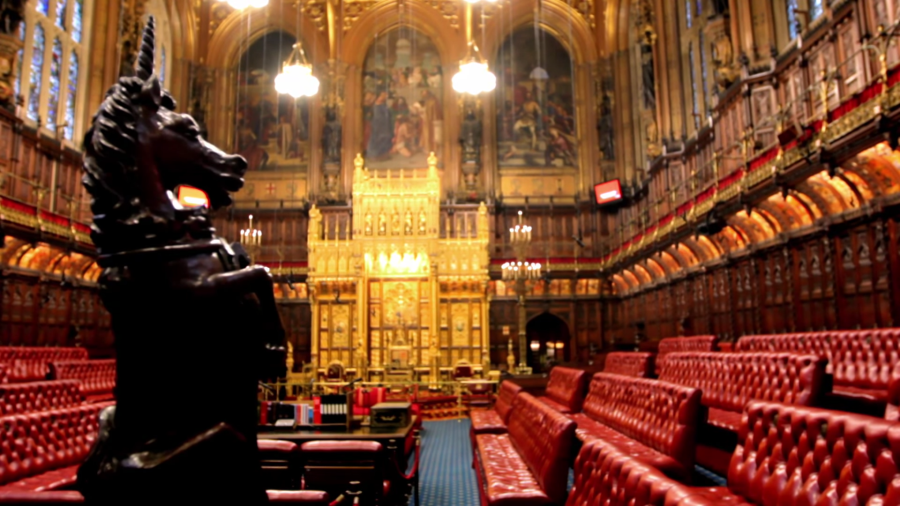
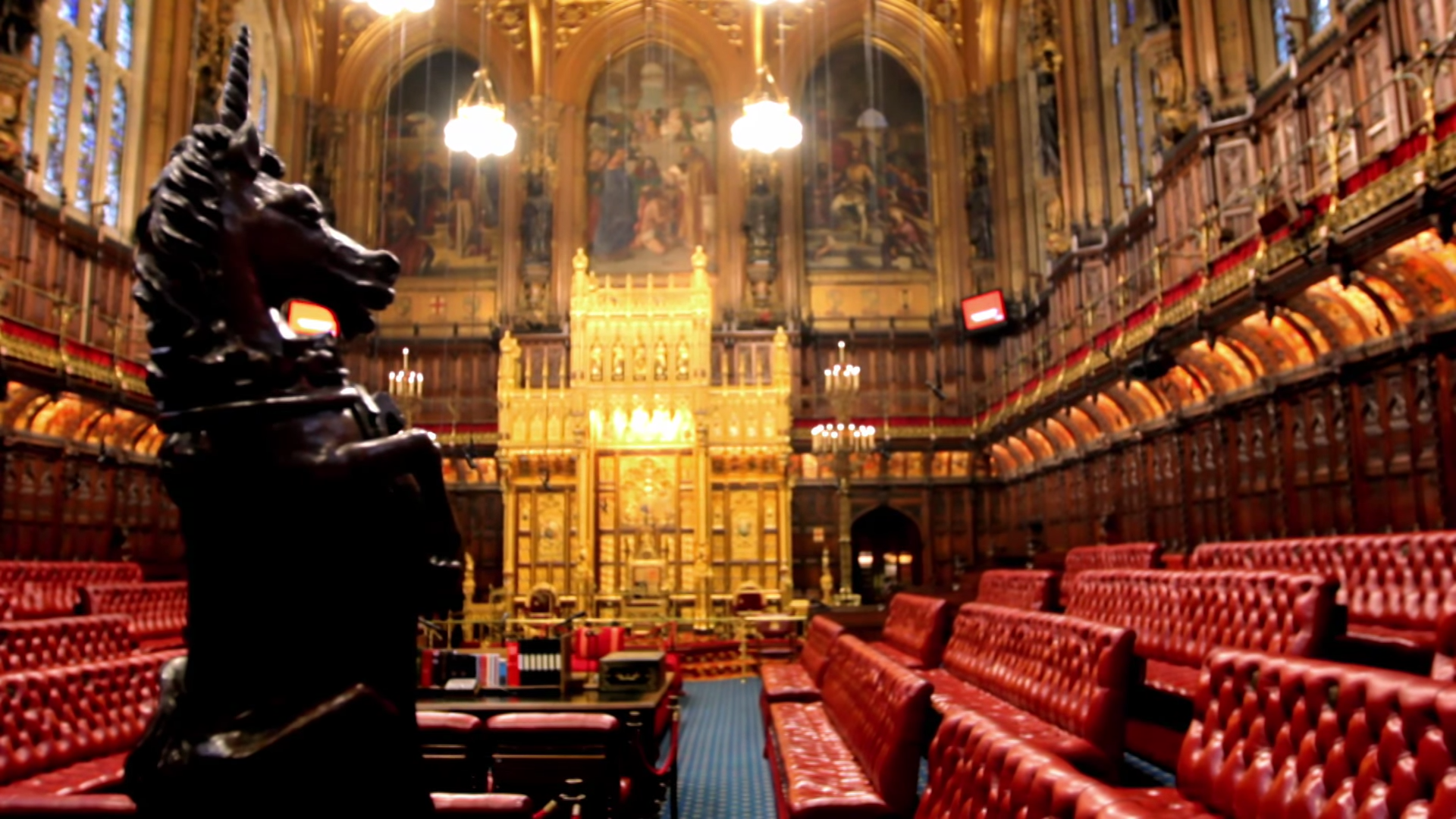
House of Lords Chamber : Image : UK Parliament CC BY-SA 3.0
Baroness Swanborough had been heavily involved with charity work for most of her life, including founding the Women’s Voluntary Service in 1938….
“I have no right to speak, except for my experience over many years with a great number of very strong commonsensical women”…. – Stella Isaacs
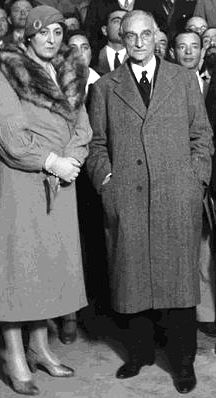
Lord and Lady Reading c.1935 – Public domain
After the passing of the Life Peerages Act, 1958 women were finally allowed to sit in the Upper House as life Peers…. Baroness Swanborough was not the first woman to be appointed (that went to Baroness Wootton of Abinger) – but she was the first woman to take her seat…. Before 1958 only male hereditary Peers were permitted to sit in the House of Lords, along with a small number of judges (Law Lords) and Bishops…. There were women hereditary Peers but of course they were not allowed to sit…. The Life Peerages Act was passed to address the problem of a decline in the number of members….by opening the way to include life Peers this also opened the channels for women…. Ironically, hereditary ‘Peeresses’ were still excluded until the Peerage Act, 1963….
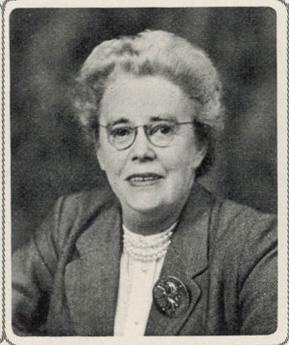
Baroness Wootton of Abinger – Fair use
With women now being allowed into the formerly male dominated establishment certain changes had to be made…. The House of Lords administration had to decide what to call their new female counterparts…. “Peeresses” was favoured by the establishment but the women fought hard to be known as Peers…. Even as late as 1970 there was still resistance to this….but eventually ‘Women Peers’ became accepted….
Another matter was ‘Oh what to wear!’…. It was decided ceremonial dress would consist of a scarlet robe, trimmed with ermine and gold oak leaf lace…. To complete the ensemble a Tricorne hat, designed and made by Ede and Ravenscroft….constructed from lightweight black velour and adorned on the left-hand side by a rosette of gold lace with a gold sequinned button at the centre….
Bathroom facilities were an issue that needed to be addressed…. A ‘Peeresses retiring room’ was allocated, redecorated and furnished…. In 1958 four women took their seats in the House of Lords; by 1971 there were 46 women Peers and the facilities were desperately inadequate…. A letter from the Yeoman Usher of the Black Rod stated two baths and two lavatories were urgently required…. Nowadays there are approximately 200 women Peers…. The first female Chief Whip was Baroness Llewelyn-Davies of Hastoe in 1973 and the first woman leader of the House of Lords was Baroness Young in 1981….


 Cottage Capers