
On this day in history : 22nd October 1707 – Four Royal Navy ships run aground near the Isles of Scilly – over 2,000 sailors are lost, resulting in the Longitude Act 1714 and the invention of the Marine Chronometer….

The fleet of 21 ships entered the English Channel during a storm and were heading for home from the Mediterranean…. They sailed under the command of Sir Cloudesley Shovell, who was onboard his flagship Association…. He consulted with his navigator and it was determined that they had arrived at Ushant, off the French coast near to Brittany…. Whereas, they were in fact near to the Isles of Scilly – much further north…. The next night Association, along with Fireband, Romney and Eagle smashed on the rocks off of the west of Scilly…. Only 25 sailors survived – over 2,000 were lost….
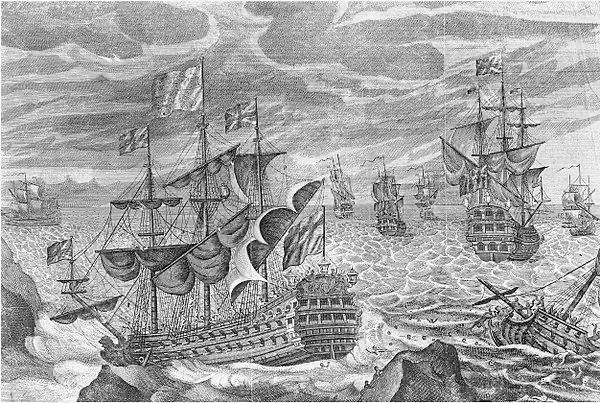
The problem at the time was that navigators could only find accurate Latitude…. By using the sun they could determine north to south…. But when it came to Longitude, east to west, this was a more difficult proposition and open to error…. It had to be calculated by an estimation of speed between one point and another – a method known as ‘dead-reckoning’…. Factors such as wind, tide and current had to be taken into account….
After the catastrophic disaster off of the Scilly Isles the government realised something had to be done…. This resulted in the Longitude Act 1714…. A prize of £20K was offered to the person who came up with the means of determining an accurate Longitude measurement….
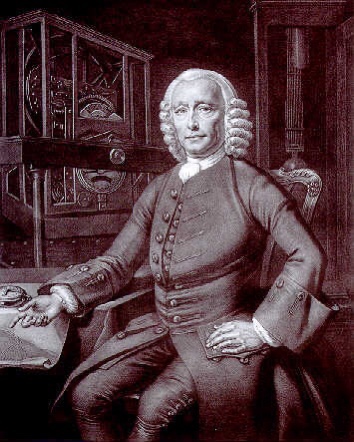
It took years but eventually in 1773 clockmaker John Harrison presented his Marine Chronometer as the solution…. For whatever reason he only ever received £8,750 of the prize money….
The remains of Association and the other ships still lay scattered across the sea bed off of the rocks of Scilly – and will remain so under the Protection of Wrecks Act 1973….
 Cottage Capers