On this day in history. : 19th February 1968 – The High Court awards 62 children compensation after they are born with deformities after their mothers took the drug thalidomide during pregnancy….
The two enantiomers of thalidomide : Left: (S)-(-)- thalidomide : Right: (R)-(+)-thalidomide
Thalidomide can only be described as a dark chapter in the history of pharmaceutical history…. It was developed in the 1950s, by West German pharmaceutical company the Grünenthal Group. It was licensed in the UK by The Distillers Company (Biochemicals) Ltd….
The drug was marketed as a sedative and mild sleeping pill – safe enough even for pregnant women to take…. It became extremely popular with expectant mothers as it was also found to ease morning sickness…. So safe was it deemed that it could be bought over the counter….
Thalidomide became available in the UK in 1958…. It was in 1961 that Australian doctor, William McBride, wrote to the medical publication, The Lancet, with his observations of an increase in deformed babies born to mothers who had used the drug…. It was removed from the UK market in late 1961 after tests concluded that it impaired foetal development….
Congenital malformation of the feet. Effects of maternal drugs – thalidomide. Image credit: Otis Historical Archives via Flickr
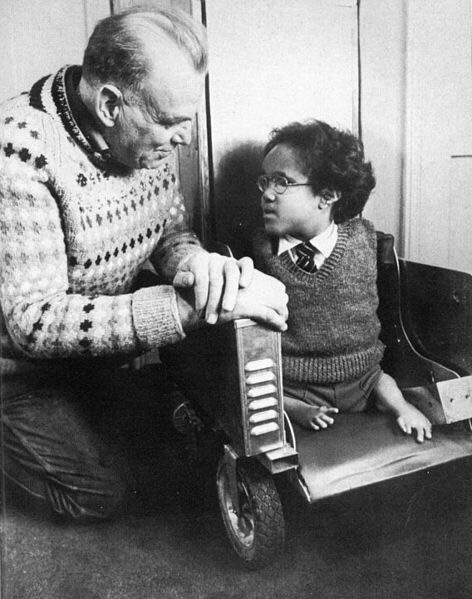
Babies born to mothers who had taken Thalidomide were often born with limbs that had failed to develop properly – but sometimes it affected eyes, ears and internal organs…. The severity of cases varied…. It is unknown how many miscarriages may have been caused by it…. Worldwide it could have been anywhere up to 100,000 women who had used the drug to alleviate their morning sickness symptoms – well over 400 victims were born in the UK….
Terry Wiles (right) who was born with phocomelia due to thalidomide. Public domain
After the High Court ruling in 1968 many other claims were settled out of court. In 1973, after pressure from the press and public, Distillers finally agreed to establish a trust fund and make lump sum payouts to all affected children….
Thalidomide resulted in tougher drug testing and approval procedures – but tragically for so many it was too little too late…. Nowadays Thalidomide is sometimes used as a treatment for certain types of cancer. From 2004 it became available on a named patient basis – meaning doctors can prescribe it but under strict controls….
Pack of Thalidomide tablets circa 2006 or later. Stephencdickson via Wikimedia CC BY-SA 4.0
On this day in history : 19th February 1959 – The United Kingdom grants independence to Cyprus, which is then formally proclaimed in August 1960….
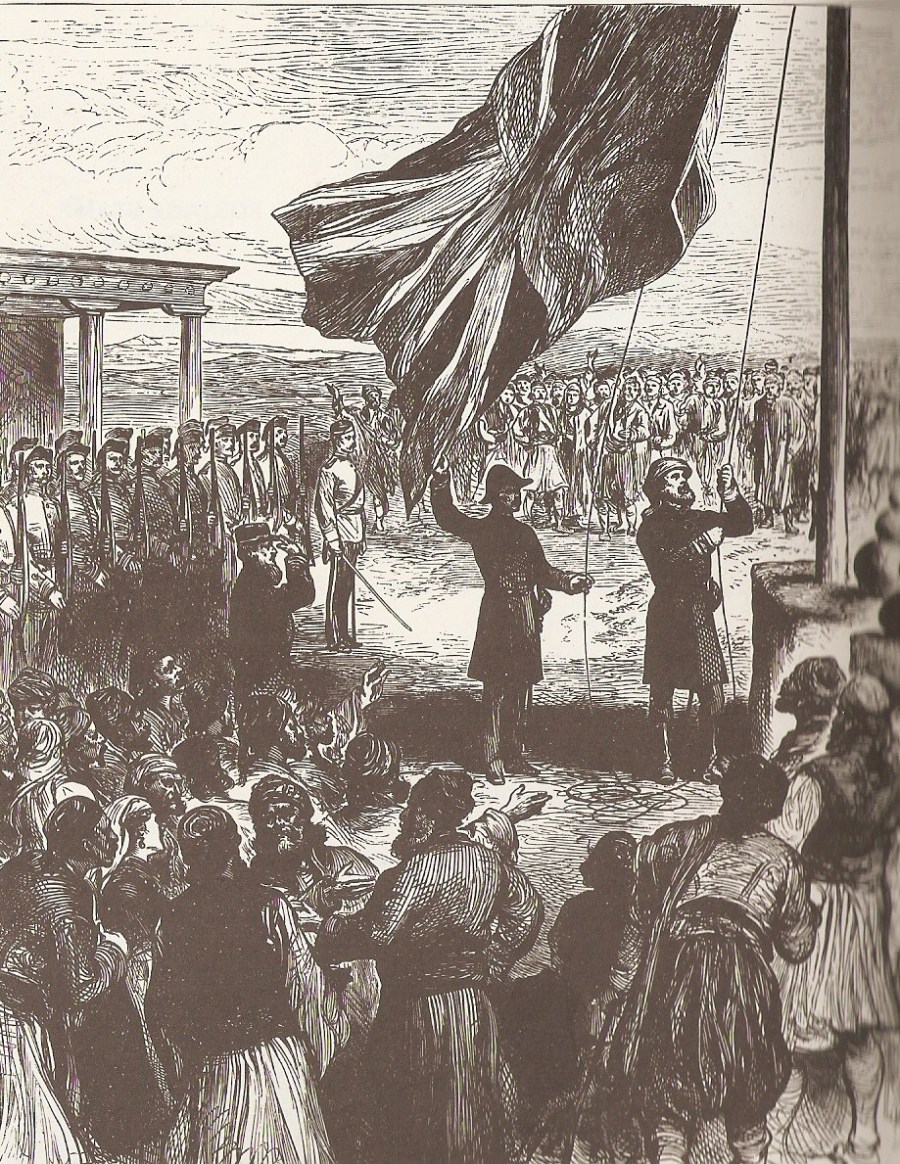
Cyprus had been under Ottoman rule for over 300 years before it was annexed by Britain in 1914 – and then in 1925 it became a British colony….
Hoisting the British flag at Nicosia – Illustrated London News – Public domain
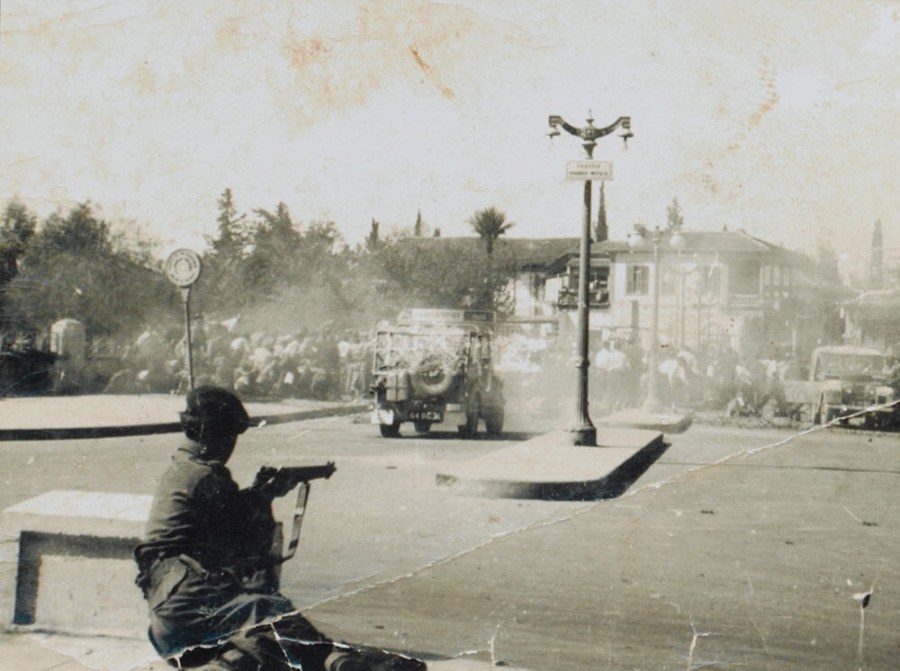
Thirty years later Cyprus was anything but a happy place…. Greek Cypriots, wanting unification with Greece, were waging all-out guerrilla warfare against British rule…. It led to the leader of the campaign, Archbishop Makarios, being deported to the Seychelles…. He was to return in 1959 when independence was granted and was subsequently elected President….
British soldier taking aim at Greek Cypriot demonstrators in Nicosia, 1956 – British Colonial Government – Public domain
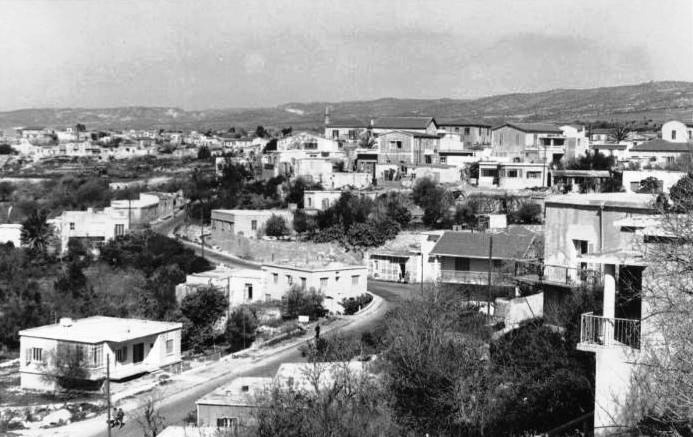
Independence was proclaimed on the 16th of August 1960 after the Greek and Turkish communities managed to come to an agreement on a constitution…. The Treaty of Guarantee was drawn up, giving Britain, Greece and Turkey the right to intervene if the need should arise…. Britain also retained two military bases on the island….
Old Turkish Cypriot quarter in Paphos, 1969 – Brian Harrington Spier via Flickr CC BY-SA 2.0
In 1963 President Makarios proposed constitutional changes – resulting in unrest, violent flare-ups and the withdrawal of the Turkish community from the power sharing deal…. In 1964 the United Nations had to step in by setting up a peace keeping force…. A decade later Greece backed a coup against President Makarios – and he fled…. Turkish troops landed on the north of the island, sending Greek Cypriots fleeing from the northern homes….
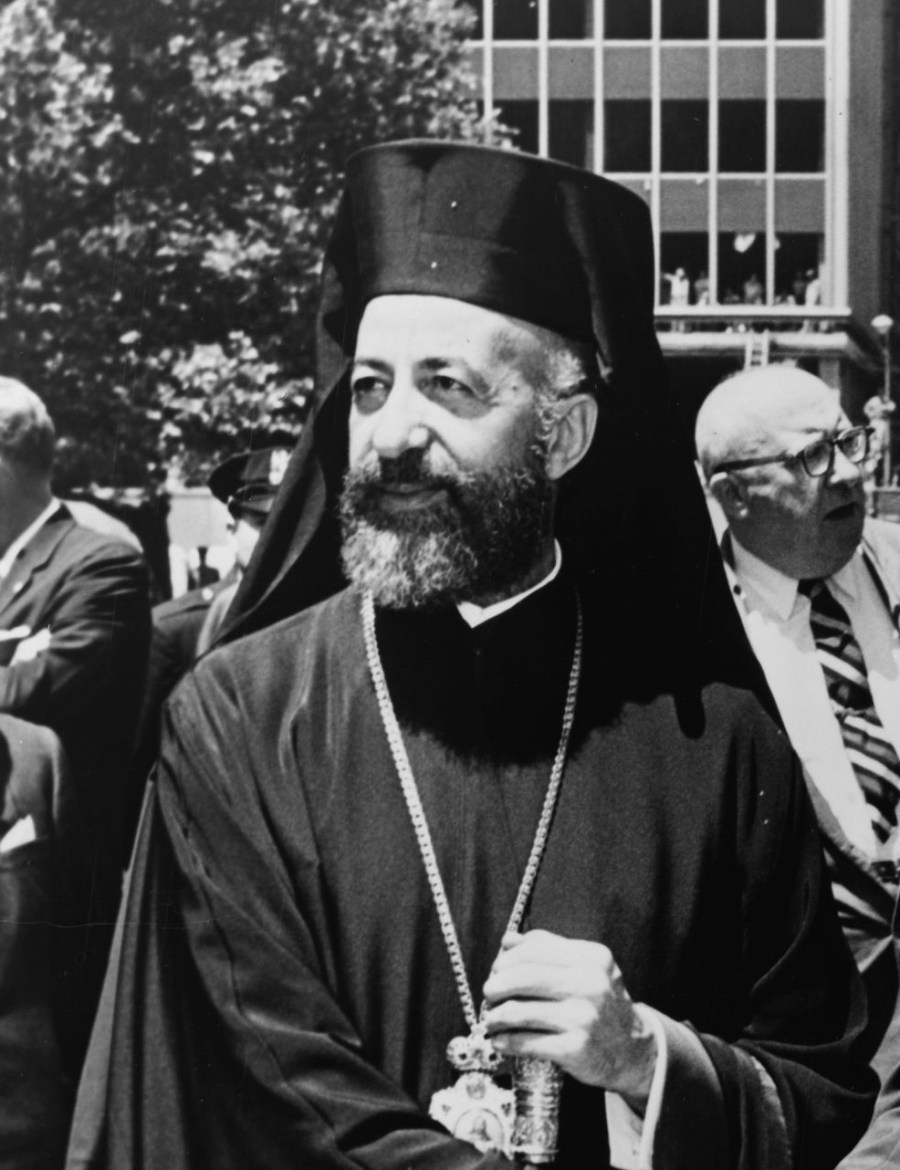
Archbishop President Makarios, 1962 – Public domain
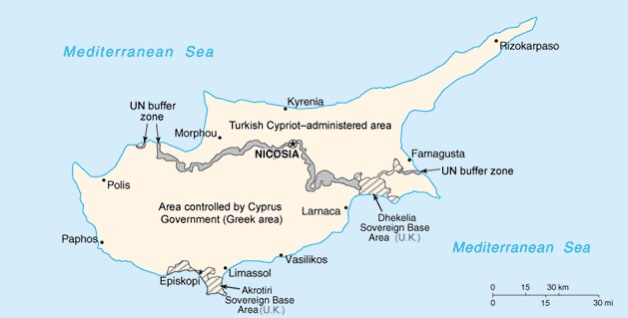
After the collapse of the coup one third of Cyprus was occupied by Turkish forces – leaving the island divided…. Approximately 165,000 Greek Cypriots fled to the south, while some 45,000 Turkish Cypriots had set up their own administration under President Rauf Denktash…. The death of Makarios in 1977 saw Spyros Kyprianou take over and peace talks began once more in 1980 – only to be suspended again in 1983….
A map showing the division of Cyprus – United States Central Intelligence Agency – Public domain
On this day in history : 18th February 1478 – The private execution at the Tower of London of George, Duke of Clarence, for treason against his older brother, King Edward IV….
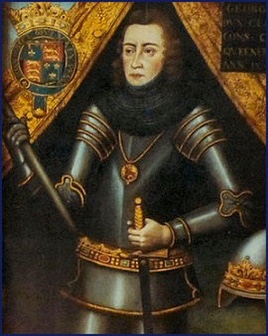
George Plantagenet, Duke of Clarence – by Lucas Cornelisz de Kock – Public domain
George Plantagenet was born on the 21st of October 1449 in Dublin…. His brother, Edward, became King in March 1461 and shortly after George was made Duke of Clarence and then in 1462 appointed Lord Lieutenant of Ireland….
George had always supported his brother, who had taken the crown from Henry VI in the Wars of the Roses – but he was to fall under the influence of his first cousin, Richard Neville, Earl of Warwick…. Edward had plans for his younger brother to marry Mary, the daughter of the Duke of Burgundy – but George had other ideas…. In defiance he married Isabel, the eldest daughter of the Earl of Warwick – and switched his allegiance from the House of York to the House of Lancaster in support of his father-in-law, who’s aim was to have the deposed Henry VI reinstated…. In return Henry VI made George next in line to the throne after his own son…. Power crazed Warwick then arranged for his younger daughter, Anne, to marry Henry VI’s son – thus making George’s likelihood of ever coming to the throne remote…. George began to realise his loyalty to Warwick was misplaced….
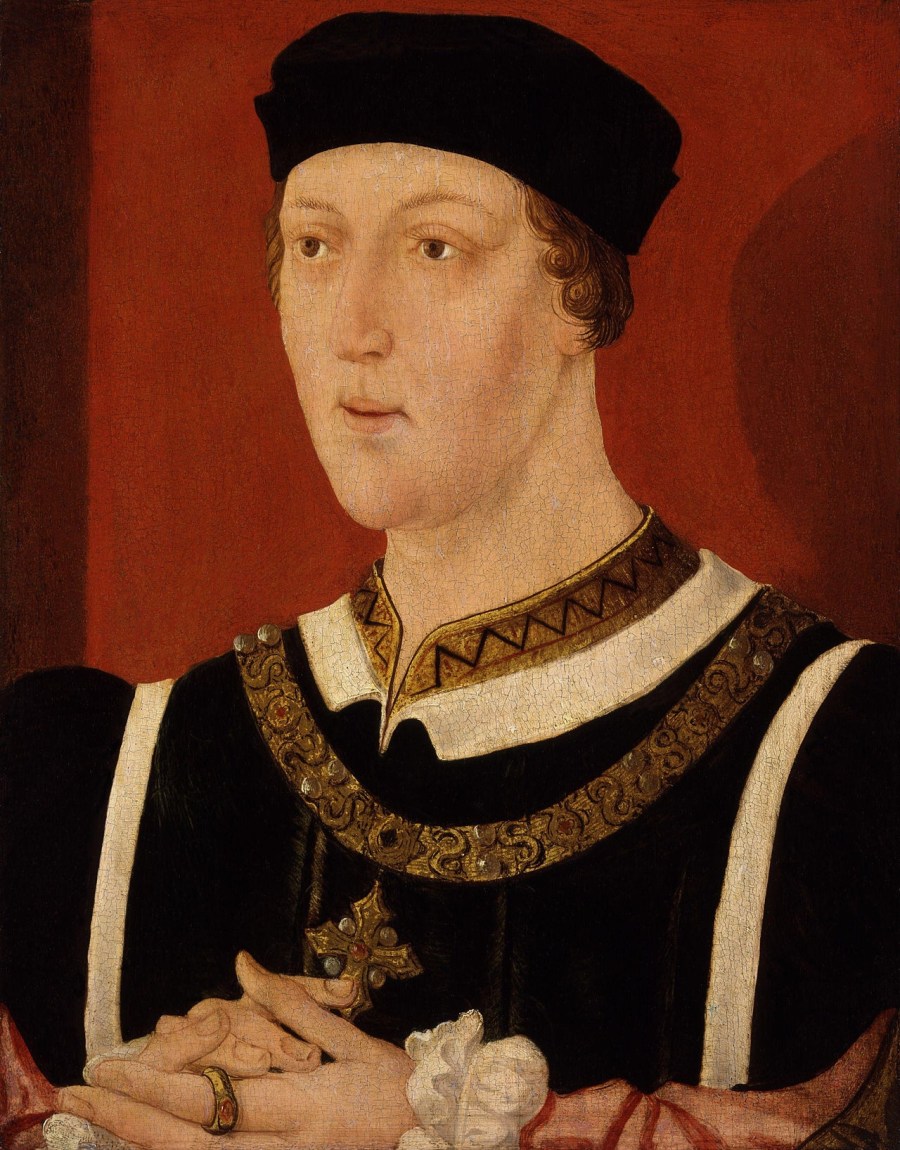
Henry VI – Public domain
George was secretly reconciled with his brother and for a while things were fine between them…. Warwick was killed in battle in April 1471 – and then in 1475 George’s wife gave birth to a son – followed by another the next year…. However, two months later, on the 22nd of December she died – George was convinced she had been poisoned by her lady-in-waiting, Ankarette Twynyho…. Historians today think it is more likely Isabel died from a postpartum infection or consumption…. Edward had Ankarette brought to trial and then bullied the jury into finding her guilty; she was hanged (but later posthumously pardoned by Edward in 1478)….
George had designs on marrying Mary, Duchess of Burgundy – although Edward had originally thought this a good match he now rejected the idea and refused permission…. George was furious; his mental health had always been questionable but by now it was rapidly declining…. His relationship with his brother became extremely sour…. Eventually he was accused of slandering Edward and plotting against him – accusations reinforced by the confession – extracted under torture – from one of his own attendants….
Edward IV – Public domain
George was arrested for high treason in 1478 and taken to the Tower of London…. He was not present at his trial and a Bill of Attainder was passed in Parliament declaring him guilty…. On the 18th of February a private execution took place in the Bowyer Tower…. A later exhumation of his body revealed he had not been beheaded as was the usual form of execution for a nobleman…. Rumours at the time claimed that he had been drowned in a barrel of Malmsey wine….
On this day in history : 17th February 1905 – The birth of American born English socialite Ruth Baldwin ~ lover of the powerboat racer ‘Joe’ Carstairs and part of ‘The Bright Young Things’ set….
Ruth Baldwin – Public domain
‘The Bright Young Things’, given their name by the English Tabloid Press were a bohemian group of aristocrats and socialites during the 1920s…. The Press loved them as they provided plenty of stories to cover, with their hard-partying and social events…. Some indulged in heavy drinking and drug taking – not least Ruth Baldwin, who was well-known for her use of heroin, cocaine and alcohol…. Her lover, ‘Joe’ Carstairs described her as ‘wild’ – but said that she was ‘such fun’….
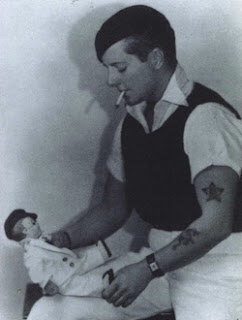
Marion Barbara ‘Joe’ Carstairs was an extremely wealthy woman – who usually dressed as a man, had tattoos upon her arms and had a love of machines, adventure and speed….
Joe was an ambulance driver with the American Red Cross in France during World War 1…. In January 1918 she married childhood friend, aristocrat Count Jacques de Pret, in Paris – purely to gain access to her inheritance…. Joe was openly a lesbian – having numerous affairs, including with Oscar Wilde’s niece, Dolly Wilde and actresses Greta Garbo, Marlene Dietrich and Tallulah Bankhead…. After her mother’s death the marriage was annulled on the grounds of non-consummation and in 1922 Joe changed her name back to Carstairs….
Joe and Ruth became lovers and began living together…. Between 1925 and 1930 Joe became a very successful powerboat racer – winning trophies such as the Duke of York Trophy in 1926, the Royal Motor Yacht Club International Race and the Daily Telegraph Cup…. When Joe bought her first powerboat Ruth gave her a Steiff doll, which Joe called Lord Tod Wadley and to which she became very attached, keeping it close by for the rest of her days…. She even had clothes made for it at Saville Row and its name added to her own on the address plaque at the door of her London apartment….
Joe holding Lord Tod Wadley – Fair use
Joe was always known for her generosity – and was keen for others to succeed…. She was close friends with several other racing drivers, including land speed record competitors…. She gave $10,000 to Sir Malcolm Campbell to fund one of his Blue Bird cars and was as equally generous to others such as John Cobb – who’s Railton Special was powered by the engines from her motorboat Estelle V….
In 1934 Joe bought Whale Cay, an island in the Bahamas – it was here that she entertained the likes of Marlene Dietrich and the Duke & Duchess of Windsor…. She built a luxurious house for herself and her guests….plus a school, church, lighthouse and a cannery for the people of the island…. She created an agricultural enterprise employing hundreds of local people and built accommodation for them…. Later she also bought the neighbouring islands of Bird Cay, Cat Cay, Devil’s Cay and half of Hoffman’s Cay….
Joe was on Whale Cay when she received the news that Ruth had died…. On the 31st of August 1937 Ruth had attended a party at the Chelsea home of Gwen Farrar – where she had accidentally overdosed…. Joe returned to Britain onboard the French liner ‘Normandie’ – the most expensive ship in the world at the time…. She collected Ruth’s ashes and took them back with her to Whale Cay – where they were housed within the church…. In 1975, when she sold Whale Cay and moved to Miami, Florida, Joe took Ruth’s ashes with her….
Joe died on the 18th of December 1993 at the age of 93…. Lord Tod Wadley was cremated with her – and her ashes were buried with Ruth’s at Oakland Cemetery, Sag Harbor, New York….
Miss Marion Carstairs circa 1928/29 – Photograph : Arnold Genthe – Public domain
On this day in history : 16th February 1878 – The birth of Pamela Colman Smith – the writer, artist, illustrator and occultist, who created the classic Rider-Waite deck of tarot cards….
Lots of us have had our cards read at some time or other, whether for fun – or as a way of helping to gain understanding or comfort during difficult times in our lives…. Tarot cards, as a pack of playing cards, have been around since the mid 15th Century – the first documented being in Milan, Ferrara, Florence and Bologna…. Early cards were hand painted and so there were very few packs around – with the invention of the printing press mass production became possible….
Around 1789 Etteilla, the pseudonym of Jean-Baptiste Alliette, the French occultist who first popularised tarot divination, was the first to have a pack of tarot cards designed specifically for occult purposes…. Nowadays the three most common decks used are the Tarot of Marseilles, the Thoth Tarot deck, devised by Aleister Crowley with Lady Frieda Harris and the Rider-Waite deck….
Poet and mystic Edward Waite wanted a fully illustrated deck of tarot cards – the only one at the time was the ‘Sola Busca’, which was created for a wealthy family in Milan during the 1490s…. It was Pamela Colman Smith he turned to for the design of his own set….
Arthur Edward Waite, in the early 1880s – Public domain
Pamela was born in Pimlico, London, to wealthy parents who had a large circle of influential friends…. Her mother, Corinne Colman, was Jamaican and her father, Charles Edward Smith, a white American…. Pamela, known to her friends as ‘Pixie’, was an only child and spent the first decade of her childhood in Manchester, before living in Jamaica for a while….
In 1893 she moved to America and at the age of 15 enrolled at the newly founded Pratt Institute, studying art under artist, photographer and print maker Arthur Wesley Dow, chairman of the Institute…. Pamela, with her natural and mature talent, embraced the Art Nouveau and Symbolism styles of the time….
Corinne Colman died – Pamela took her mother’s death hard and it affected her health…. She left the Institute in 1897, before gaining her degree…. She returned to be with her father and took up work as an illustrator….
She became involved with the Lyceum Theatre group, headed by Ellen Terry, Bram Stoker and Henry Irving…. She toured the country with them, designing costumes and sets…. Then, when she was 21, her father died….once more hitting her hard….
By 1901 Pamela had established her own studio in London…. She would hold weekly meetings for artists, actors and writers, which reflected her bohemian lifestyle…. Some of her illustration projects included work on ‘The Illustrated Verses of William Butler Yeats’ and works by Bram Stoker…. She also produced written work of her own, such as ‘Widdicombe Fair’ and ‘Annancy Stories’ and started her own magazine ‘The Green Sheaf’…. Also around this time she was actively involved in the Women’s Suffrage Movement….
In 1907 prominent photographer and art promoter Alfred Stieglitz gave her space to hold an exhibition in his New York gallery; she was the first artist he had allowed to do so…. It was also around this time that she met, through Yeats, Edward Waite – and they became friends…. It was in 1909 that he commissioned her to do the artwork for the tarot deck he wished to create…. He suggested she drew on the 15th entry Sola Busca cards for inspiration, which she did – although it was also widely thought that the characters in her tarot deck were based on her own social circle….
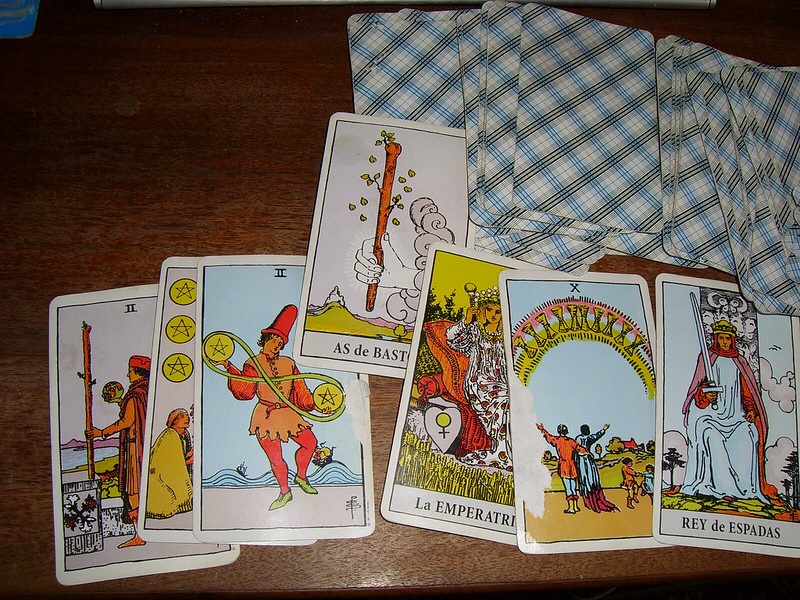
Pamela was the first to use characters even on the lower cards; previously images of groups of cups, wands, swords and pentacles were used…. The result Pamela achieved was a deck of 78 beautifully illustrated cards, which sold at a cost of 6 shillings – a huge amount of money in the day…. They were first published in November 1909, by publisher William Rider – giving the Rider part of the name….
Two of Cups
Five of Wands
Six of Pentacles
This photograph of Pamela Colman Smith, by an unknown photographer, was first published in the October 1912 issue of ‘The Craftsman’ in an article entitled ‘The Fairy Faith and Pictured Music of Pamela Colman Smith’…. She was 34-years-old at the time and I think you will agree the photograph portrays a woman with an appealing charm and maybe a mischievous streak….
Pamela Colman Smith – Public domain
She converted to Roman Catholicism a couple of years later – and some ten years after that opened a rest home for priests in Cornwall, using an inheritance she had received…. Over 100 million sets of the Rider-Waite tarot deck are in circulation around the world, making it the most popular set ever…. Pamela was paid a small fee for producing the designs – but she did not receive royalties…. She carried on working, producing art work for the World War 2 campaign and other commissions – but never recognised a significant commercial success…. She died on the 18th of September 1951, penniless…. Her unsold artwork was auctioned off to settle her outstanding debts….









 Cottage Capers