On this day in history….10th October 1928

On this day in history : 10th October 1928 – The Tyne Bridge, linking Newcastle-upon-Tyne and Gateshead in North East England, is opened by King George V….
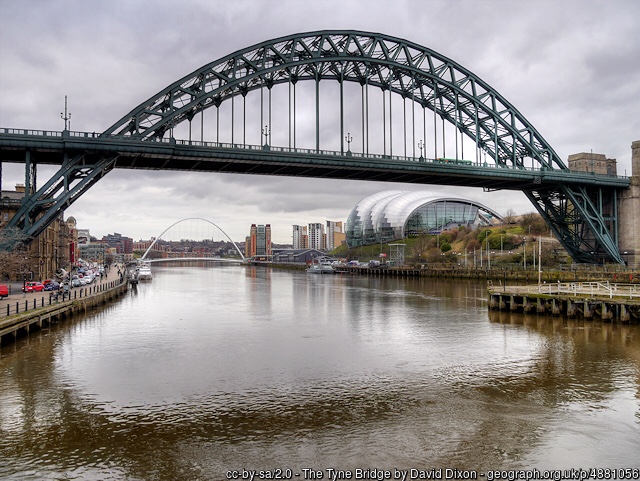
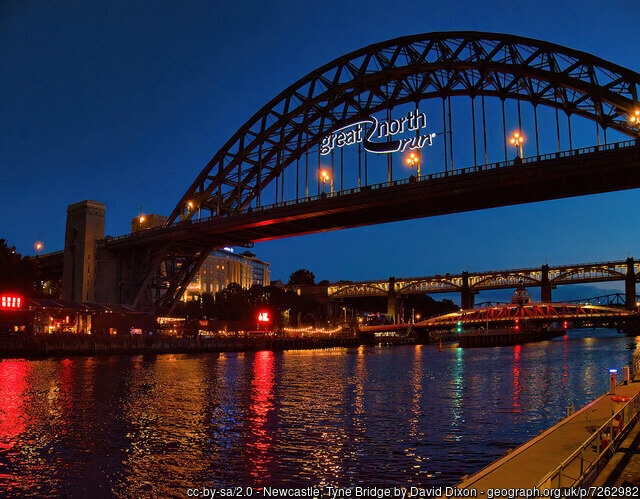
Out of the seven bridges, that cross the River Tyne in the area that is known as the ‘NewcastleGateshead Quayside’, the Tyne Bridge is the most recognisable and iconic….

The bridge was designed by engineering firm Mott, Hay and Anderson and building contractors Dorman Long began work on it in August 1925…. Dorman Long included in its team the first female member of the Institution of Civil Engineers, Dorothy Buchanan…. She was to go on to also be involved with the construction of Lambeth Bridge in London and the Sydney Harbour Bridge….

The bridge’s Cornish granite towers (also known as the pylons) were designed by Robert Burns Dick, a local architect – and were originally intended to be used as warehousing space over five storeys…. However, work inside them was not completed and so they have never been used for this purpose…. Lifts for passengers and goods were also installed but are no longer in use…. The towers are annually opened to the public as part of Heritage Open Days (which take place in September)….
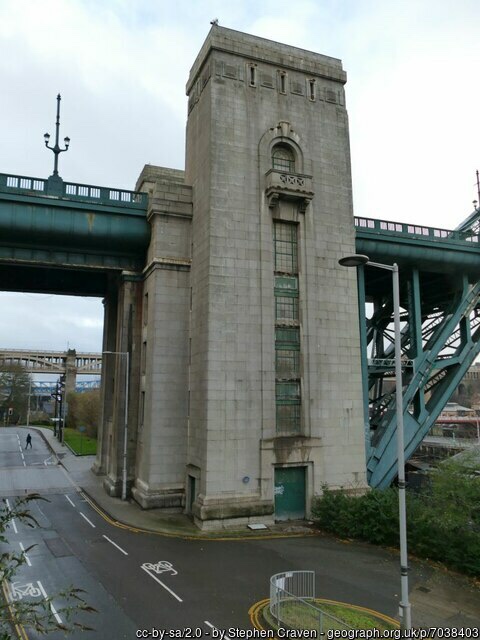
The South Tower

At the time of its construction the Tyne Bridge was the World’s longest single span bridge with the largest steel arch…. The bridge’s length totals 1,276ft (389m), with an arch span of 531ft (161.8m) – it has a height of 194ft (59m) and a width of 56ft (17.8m)…. Some 777,124 rivets hold it all together….

The bridge was painted in a special green paint manufactured by J.Dampney, Tonbridge, Tingate Co. of Gateshead and work was finally completed on the 25th of February 1928…. During construction there was one fatality, that of a scaffolder from South Shields by the name of Nathaniel Collins….

The Tyne Bridge was officially opened on the 10th of October 1928 by King George V and Queen Mary – who travelled across it in their Ascot Landau carriage, making them the first ever to use the roadway…. 20,000 schoolchildren attended the ceremony and the speech given by the King was recorded by Movietone News….
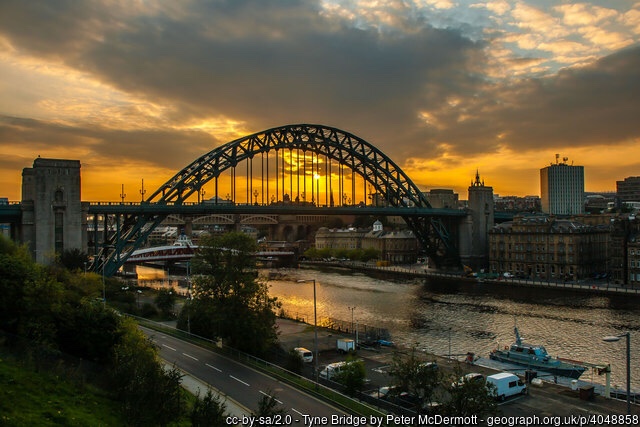
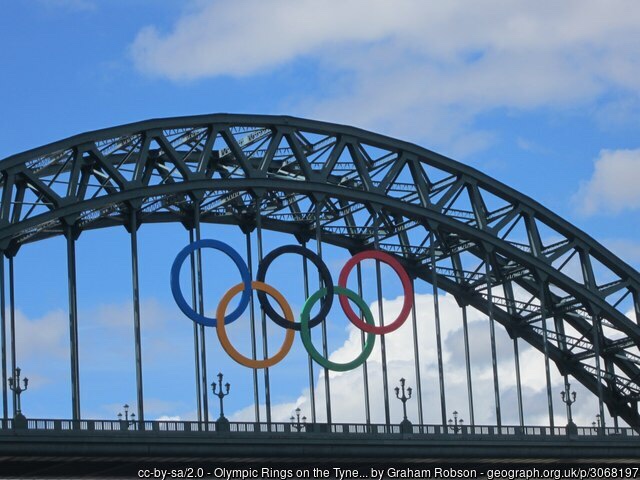
The Tyne Bridge has become part of the region’s culture…. Each year 52,000 runners cross it as part of the Great North Run…. In 2012 giant Olympic Rings were erected on the bridge for Newcastle’s hosting of the Olympic football tournament – and also for the Olympic torch relay which saw Bear Grylls zip-wire his way down from the top of the arch to Gateshead quayside…. The bridge features as a prominent part of many celebrations and events held in Newcastle and the surrounding areas…. In August 2018 it was made Grade II listed by Historic England and in June 2022 it was announced the bridge would be refurbished involving improvements to the structure and a full repaint….
On this day in history….8th October 1929

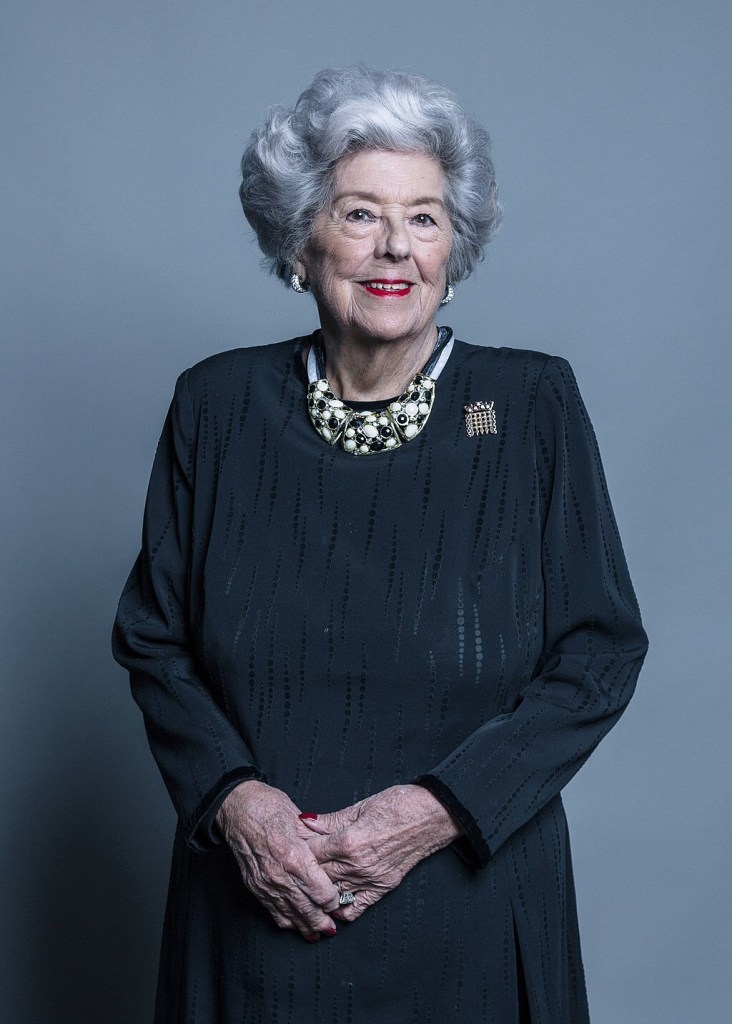
On this day in history : 8th October 1929 – The birth of former Speaker of the House of Commons Betty Boothroyd – the only woman to have ever served as speaker….

Betty Boothroyd – UK Parliament official portraits 2017 – Image credit : Chris McAndrew CC BY 3.0

Born in Dewsbury, Yorkshire, Betty was the only child of textile workers Ben and Mary Boothroyd…. Both of her parents were trade unionists and her mother was a member of the women’s section of the Labour Party – giving Betty her first insight into the world of politics…. She herself joined the League of Youth, an organisation within the Labour Party – and she showed an early talent for public speaking, even winning a national contest….

Betty was to study at the Dewsbury College of Commerce and Art and then she was to embark on a career as a dancer – joining the dance troupe The Tiller Girls, even performing at the London Palladium…. However, a foot infection brought her dancing career to an early end – and so she decided to enter politics….

During the late 1950s she was to work for some senior Labour Members of Parliament, including Barbara Castle…. Then in 1960 she travelled to Washington to observe the campaign of John F Kennedy – and worked briefly for American Congressman Silvio Conte…. She returned to London in 1962 and resumed her career as a political assistant – and then in 1965 was elected herself to a seat on Hammersmith Borough Council….

In 1973 Betty became elected Member of Parliament for West Bromwich – and in 1974 she was appointed assistant government whip, then becoming a Member of European Parliament (MEP) from 1975-77….

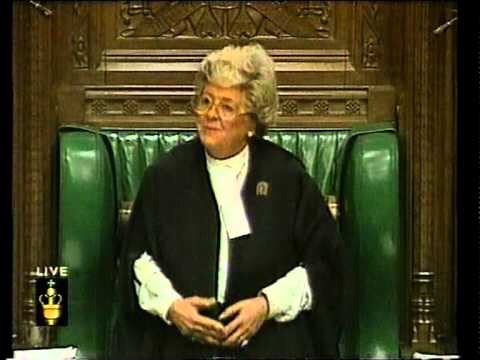
She was to become Deputy Speaker under Speaker Bernard Weatherill in 1987…. Then in 1992 she was elected Speaker of the House of Commons, making her the first ever and so far only woman Speaker…. It was a position she was to hold until the 23rd of October 2000…. On announcing her intention to resign – after Prime Minister’s Questions on the 12th of July 2000 – then Prime Minister Tony Blair said in tribute to her that she was ‘something of a national institution’…. As Speaker Betty had sought to modernise the role – she chose not to wear the Speaker’s traditional wig – and developed her own catchphrase “Righttime’s up!” when bringing Prime Minister’s Questions to a close…. She was well-liked and respected – especially in her firm, authoritative handling of a sometimes unruly House of Commons….

A year after her retirement as Speaker Betty was made a life peer, with the title of Baroness Boothroyd, of Sandwell in the County of West Midlands…. She was awarded the Order of Merit by Her Majesty Queen Elizabeth II in 2005…. Baroness Boothroyd was then to sit as a cross bench peer in the House of Lords….

Betty Boothroyd died at Addenbrooke’s Hospital in Cambridge on the 26th February 2023, aged 93…

Coat of Arms for Baroness Boothroyd – Image : Robin S Taylor – own work CC BY 3.0

On this day in history….7th October 1914

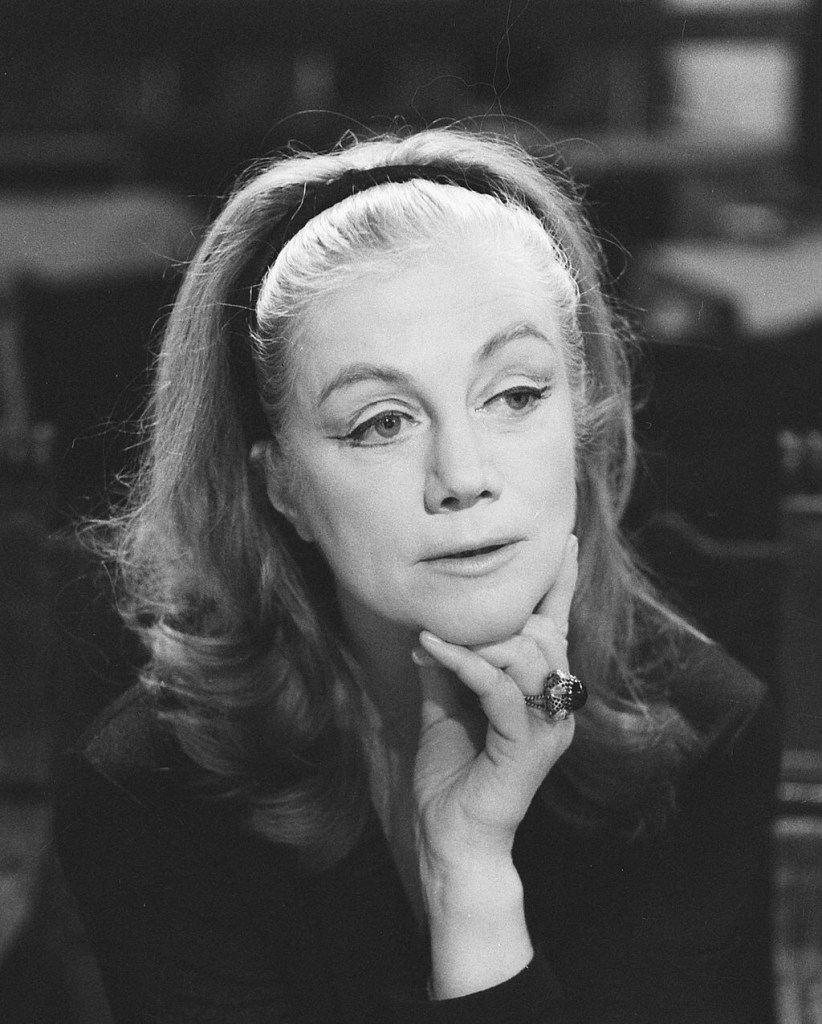
On this day in history : 7th October 1914 – The birth of English actress, dancer and member of the Women’s Auxiliary Air Force, Sarah Churchill – who was also the daughter of Winston Churchill….

Sarah Churchill in 1966 – Image : Dutch National Archives CCO

Sarah Millicent Hermoine Churchill was the third child and second daughter of Winston and Clementine Churchill…. Little is known about her childhood other than that she was born in London and was educated at Notting Hill High School before boarding at North Foreland Lodge, an independent school for girls in Kent…. It is thought that she was a bit of a loner but had a wild side to her character…. Unlike her brother and sisters she did not want to follow in her father’s footsteps….

After leaving school Sarah studied ballet and began performing professionally at the age of 21…. It was at this time that she met popular Austrian comedian Vic Oliver, who was to become her first husband – but not with the blessing of her parents….

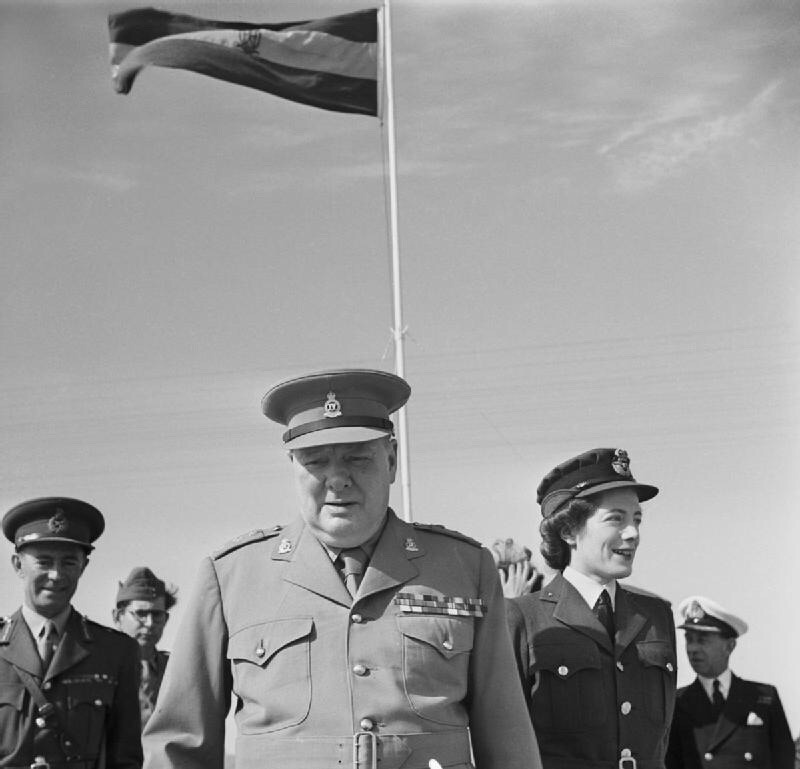
During World War 2 Sarah joined the Women’s Air Force and worked in photo intelligence, a job she was good at…. She accompanied her father on trips to Teheran and Yalta….and was to have an affair with American ambassador John Winart…. By the end of the War her marriage was over….

Sarah Churchill with her father Winston Churchill – From the collections of the Imperial War Museums – Public domain

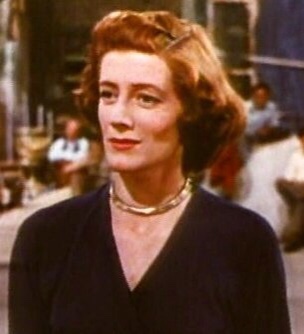
Following the War Sarah relocated to the United States and became an actress…. Her best known role was as Anne Ashmond in the 1951 film Royal Wedding, in which she played opposite Fred Astaire as the love interest of his character Tom Bowen…. She also appeared in He Found A Star (1941), All Over the Town (1949), Fabian of the Yard (1954) and Serious Change (1959)….

Sarah Churchill in ‘Royal Wedding’ – Public domain

She was to marry again, this time to photographer Anthony Beauchamp – but once again with the disapproval of her parents…. They did not even meet their new son-in-law until after the marriage had taken place…. Although Clementine tried to be civil to him, as she had with her daughter’s first husband, Sarah’s father remained frosty with both….

Sarah continued to work as an actress appearing on Broadway and television – and then after eight years of marriage Anthony was to die after taking an overdose of sleeping pills….

In 1962 Sarah was to marry yet again – this time very much with the approval of her parents…. Her new husband was Thomas Percy Henry Touchet-Jesson, the 23rd Baron Audley – making her The Right Honourable Lady Audley…. A year later Sarah was to become a widow again….

She continued with her acting career until 1971…. By now the effects of her alcoholism were beginning to show…. She had been drinking heavily since the 1950s and had been arrested on a number of occasions for causing a scene in the street – even spending a short spell in Holloway Prison….

On the 24th of September 1982 Sarah died at the age of 67 after having an undisclosed illness…. She is said to have died in her sleep…. She is buried with her parents and three of her siblings at St. Martin’s Church, Bladon, near Woodstock in Oxfordshire….

On this day in history….6th October 1992

On this day in history : 6th October 1992 – The death of much loved actor Denholm Elliott, who had over 125 film and television credits to his name….

Denholm Elliott – by Clare Park, 1985 – Fair use

Denholm was born in Kensington, London on the 31st of May 1922…. He was the son of Nina and Myles Layman Farr Elliott…. His father, a barrister, was appointed solicitor-general to the Mandatory Government of Palestine…. In 1930 he was assassinated….

Denholm attended Malvern College – he did not care much for public school life…. After finishing his schooling he began training at the Royal Academy of Dramatic Art in London…. However, after only a couple of terms his mother was asked to remove him – as in their opinion she was wasting her money….

During World War 2 he joined the Royal Air Force, serving in No.76 Squadron as a wireless operator and an aircraft gunner…. On the 24th of September 1942 the Halifax bomber he was flying in was hit by flak and came down in the North Sea…. Only Denholm and two others survived….he spent the rest of the War in a prisoner of war camp – and here he became involved in amateur dramatics….

After the War he pursued his acting career and made his film debut in 1949 with a part in the film Dear Mr Prohack…. The roles he tended to play were generally likeable, dignified characters but sometimes could err on being seedy – such as the drunken journalist Bayliss in Defence of the Realm and the illegal abortionist in Alfie….

During the 1980s Denholm won three BAFTA awards, for his roles in Trading Places, A Private Function and Defence of the Realm…. He received an Academy Award nomination for A Room with a View…. What many of us will remember him for though, is his role as Dr Marcus Brady in Raiders of the Lost Ark and Indiana Jones and the Last Crusade….

Denholm Elliott as Marcus Brody – Fair use

Denholm made many television appearances, including in Dennis Potter plays – he also appeared on the stage…. In 1988 he was awarded with a CBE for his services to acting….

In 1954 he was briefly married to Virginia McKenna and then in 1962 he married actress Susan Robinson and they had two children…. Theirs was an open marriage – Denholm was bi-sexual and had many relationships…. In 1987 he was diagnosed as HIV positive…. He died of AIDS related TB at his home on Ibiza, aged 70….

On this day in history….5th October 1917

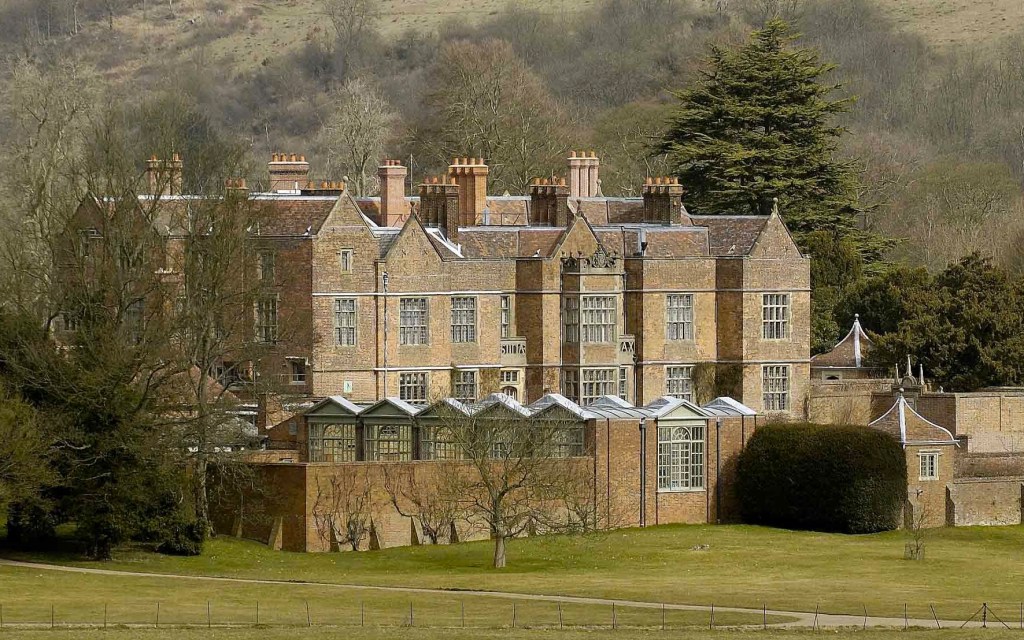
On this day in history : 5th October 1917 – ‘Chequers Court’, a 16th century Manor House in Buckinghamshire, is donated to the nation by Sir Arthur Lee as a country retreat for British Prime Ministers….

Chequers Court – Photo credit : Stephen Simpson – own work – Public domain

Chequers is located near the village of Ellesborough at the foot of the Chiltern Hills and is about 40 miles northwest of London…. It is Grade 1 listed and was built by William Hawtrey in 1585, although it may have been the reconstruction of an even earlier building…. Soon after its completion it became the custodial home of Lady Mary Grey, granddaughter of King Henry VII and younger sister of Lady Jane Grey – the ‘Nine Days’ Queen’…. Mary had married without the consent of Queen Elizabeth I and was banished from Court…. She remained at Chequers for two years, from 1565 – 1567; her room remains just as she left it….

The house passed through several families and in 1715 the owner married the grandson of Oliver Cromwell – which explains why so much Cromwell memorabilia can be found there…. During the 19th century Chequers underwent extensive renovations to make it into the Gothic style so favoured by the Victorians…. The Tudor panelling and windows were removed and battlements and pinnacles were installed…. But then the house came into the Astley family at the turn of the 20th century and it was restored to its Elizabethan state….

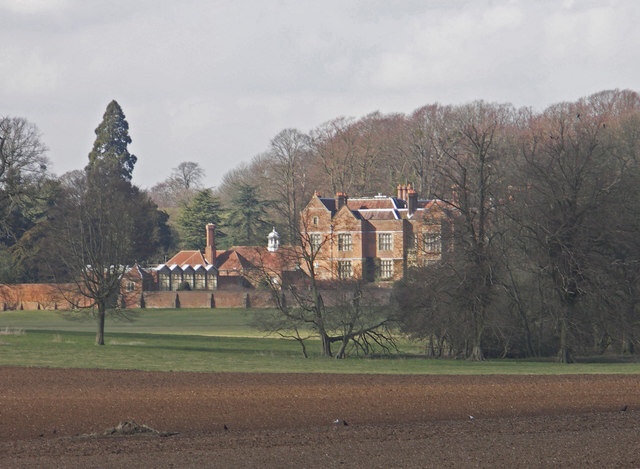
Rear view of Chequers in 2006 – Photo credit : David Ellis CC BY-SA 2.0

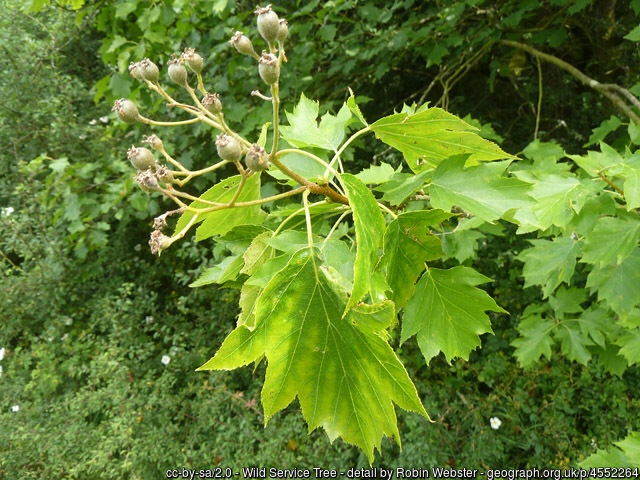
The name ‘Chequers’ may come from Elias Ostiarius, an early owner of the manor of Ellesborough, dating to the 12th century…. ‘Ostiarius’, meaning ‘usher of the Court of the Exchequer’…. Elias was also known as Elias de Scaccario – scacchiera means ‘chessboard’ in Italian and a chessboard – or chequerboard – did feature in his coat of arms…. Another possibility for the name could come from the amount of chequer trees, or wild service trees (Sorbus torminalis) that grow in the grounds…. Native to the UK the tree is related to the mountain ash and rowan…. It is not commonly seen nowadays – but can be a pointer to identifying ancient woodland…. It bears small berry-like fruits, called chequers, which in days gone by were given to children as a sweet treat…. The fruit needs to be bletted (taken from the tree and allowed to ripen further) – but when eaten it has a taste similar to that of dates…. The wild service is a lovely tree and vastly overlooked….

In 1909 Chequers came into the ownership of Arthur Lee – diplomat, politician, soldier and patron of the arts – and his American heiress wife, Ruth…. During World War 1 it became a hospital and then a convalescent home for officers – becoming a private house once more after the War had ended….

After the War there was a noticeable change in British politics…. Previously Prime Ministers had invariably come from privileged backgrounds – but now a new breed of senior politician was coming through…. Men from ordinary backgrounds, without spacious country estates they could retreat to…. The Lees (now Lord and Lady Lee of Fareham) came up with an idea…. They had no children to inherit their wealth and so decided to leave Chequers to the nation…. Talks began with then Prime Minister David Lloyd George and Chequers was given to the nation under the Chequers Estate Act 1917….as a country home where serving Prime Ministers could escape for a bit of tranquility….but also a place to entertain visiting dignitaries….

A stained glass window in the long gallery, commissioned by the Lees, bears the words : “This house of peace and ancient memories was given to England as a thank-offering for her deliverance in the Great War of 1914 – 1918 as a place of rest and recreation for her Prime Ministers for ever”….

After a final dinner held at the house the Lees left Chequers to the nation on the 8th of January 1921….