On this day in history….29th September 1258

On this day in history : 29th September 1258 – The Consecration of Salisbury Cathedral…. At 123m (404ft) it has the tallest church spire in the United Kingdom….

Salisbury Cathedral was built in a style we now call early English Gothic…. The foundation stones were laid on the 28th of April by William Longspee, the 3rd Earl of Salisbury and his wife, Ela of Salisbury…. Many powerful people of the time helped to provide the materials used to build the Cathedral…. King Henry III donated trees from his estates in Wiltshire and Ireland for the timber – whilst Alice Brewer supplied marble from her Purbeck quarry for the columns and bases…. The Bishop, Dean and 52 Canons all contributed financially….

The main body of the Cathedral had been completed by the consecration date but there was still much to be done…. The West Front, Cloisters and the Chapter House were all still to be built…. Salisbury now has the largest Cloister and largest Cathedral Close in Britain….

The spire was added between 1300 and 1320….Its height was not unusual at that time – the old St. Paul’s in London and Lincoln Cathedral both had spires even taller…. However, being made from timber and lead neither lasted; Salisbury is now the only one surviving and since the late 1500s has been the tallest in Britain….
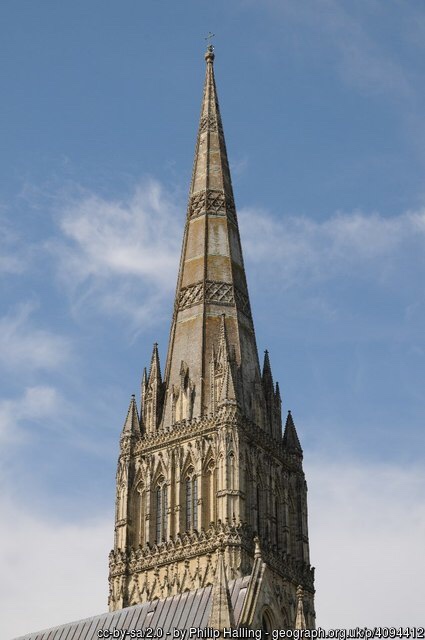
Not long after the spire’s completion problems began to arise…. The original builders of the Cathedral had not planned for such a spire – the weight, pressing down on the centre of the building began to distort it by pushing the columns out of alignment…. There was a serious threat of the Cathedral collapsing…. In the mid 1300s work began to reinforce the structure – iron ties and buttresses were added, along with arches across both sets of transepts….

The spire has undergone repair work several times over the centuries – most famously when Christopher Wren was commissioned to undertake an architectural survey…. He discovered the spire to be leaning by 30 inches – and iron rods were inserted to strengthen the structure…. Hundreds of years later, when this work was inspected, it was found that the spire had not budged another inch….

On this day in history….28th September 1745

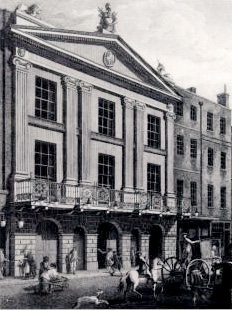
On this day in history : 28th September 1745 – The national anthem – God Save the King – is sung for the first time – at the Drury Lane Theatre, London….

God bless our noble King,
God save great George our King....
The then Theatre Royal, Drury Lane – Public domain

The words were sung as a patriotic song in support of King George II…. ‘The Young Pretender’ – Prince Charles Edward Stuart – had just defeated the King’s army at Prestonpans, near to Edinburgh…. When word reached London Thomas Augustine Arne, leader of the orchestra at the Drury Lane Theatre (and incidentally composer of Rule Britannia) wanted to show patriotic solidarity to the King…. He arranged a musical version of the words which had first been published in Gentleman’s Magazine earlier in 1745…. The true origins of the words are obscure; some attribute them to John Bull, others to Thomas Ravenscroft, Henry Purcell or Henry Covey….

Thomas Augustine Arne – Public domain

The anthem was performed after the evening performance of the theatre’s play on the 28th of September…. It proved so popular that it was repeated every night thereafter – and had soon spread to other theatres….

On this day in history….27th September 1066

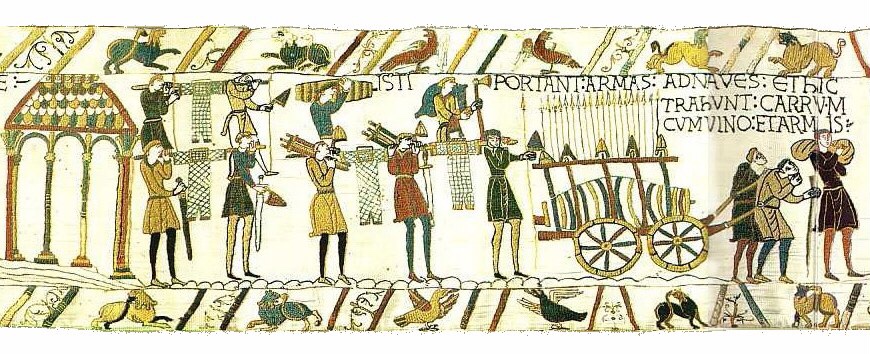
On this day in history : 27th September 1066 – William the Conqueror and his army set sail from northern France to begin the Norman Conquest of England….

Scene from the Bayeux Tapestry showing the Normans preparing for the invasion of England – Public domain

William was the illegitimate son of the Duke of Normandy…. The Duke had no other heir and so after his death in 1035 William, at the age of 7, became the Duke of Normandy….

When he turned 20 he began to rule for himself, with the backing of Henry I of France – but who later turned against him…. Nevertheless, William managed to hold on to his rule and in 1063 he extended his land into the Maine region….

In 1051 William had visited his English cousin, Edward the Confessor….and according to Norman historians, Edward having no heir of his own promised to make William his successor as King of England…. Only, in January 1066, as he lay on his deathbed, Edward had second thoughts and made Harold Godwinson his successor…. Harold, as head of the leading noble family in England, was a man even more powerful than the King himself….

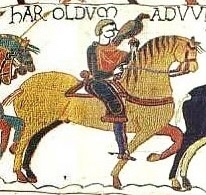
Harold Godwinson from the Bayeux Tapestry – Public domain

However, the new King Harold II had those who wanted his position for themselves…. Obviously William disputed Harold’s appointment but then so did two others – King Harald III Hardradde of Norway – and Harold’s own brother, Tostig; both had their eye on becoming King of England….

Harold II expected an invasion by William and so assembled his troops – but his brother proved to be a thorn in his side, by launching a series of raids…. Harold was forced to leave the English Channel unguarded…. Meanwhile Tostig had joined forces with the Norwegian king and together they invaded England from Scotland…. The two opposing sides met on the 25th of September 1066 at the Battle of Stamford Bridge…. Harold killed both his brother and Harald III….

Whilst all this was happening William and his army had prepared to set sail from the mouth of the Somme River, at Picardy – and landed in England at Pevensey on the 28th of September…. With his 7,000 troops William seized Pevensey and marched on to Hastings….

On the 13th of October Harold II arrived with his army and the next day the two sides met in battle…. Harold was killed by, according to the legend, an arrow in his eye….

Scene from the Bayeux Tapestry depicting the Battle of Hastings – Public domain

William then marched to London and on Christmas Day 1066 he was crowned King of England at Westminster Abbey…. He was to be the first Norman King of England and was later to be succeeded by his son, William Rufus….

On this day in history….26th September 1938

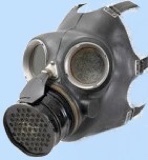
On this day in history : 26th September 1938 – The first gas masks are issued to British citizens as concerns over the prospect of war with Germany grow….

The government issued some 35 million ‘General Civilian respirators’…. During World War One chlorine gas and then mustard gas had been used for the first time…. It is estimated some 88,000 were killed by gas and 1,200,000 injured….

As World War Two loomed the UK government planned for tens of thousands of deaths in London alone…. They had been advised to expect 250,000 deaths from gas in Britain in the first week of the war….

Masks were issued in a cardboard box, with the instructions printed inside the lid…. Adults had ones made of plain black rubber; children had ‘Mickey Mouse’ masks – in an attempt to make them seem a little less scary…. Babies had a mask ‘suit’ which completely enclosed them, leaving only their legs exposed….

AIR RAID PRECAUTIONS ON THE BRITISH HOME FRONT: MOTHER AND BABY IN GAS MASKS, C 1941 (D 3918) Copyright: � IWM. Original Source: http://www.iwm.org.uk/collections/item/object/205198677

People were instructed to carry their masks with them at all times – and to practice putting them on and wearing them…. Many found the masks awkward and cumbersome whilst others found the small of the rubber made them nauseous….

British couple wearing their gas masks at home in 1941 – Image : Ministry of Information – Public domain

It was to be almost a year before war eventually broke out…. Whilst the government had prepared the public for what it feared would be Hitler’s secret weapon thankfully the masks were never needed….

On this day in history….25th September 1983

On this day in history : 25th September 1983 – In a mass break-out from the Maze high security prison, near to Lisburn, Northern Ireland, 38 prisoners manage to escape….

The breakout had been planned for several months and was masterminded by Dermot Finucane…. Using smuggled-in guns and knives at just after 2.30pm prisoners overpowered prison guards and then hijacked a delivery lorry which they used to get to the main gate…. A prison officer attempted to block the entrance using his own car – and then violence erupted…. An officer was stabbed and then proceeded to suffer a fatal heart attack as a result….

Once outside the prison the escapees hijacked several cars to make their getaway…. The biggest search operation ever seen in Northern Ireland was launched…. Police and soldiers set up checkpoints on all roads within a five mile radius of the prison and the area was sealed off….

Ten prisoners were recaptured in the first few hours – nineteen more within the next few days…. The rest got away but by 1992 five more had been caught, whilst three had been killed…. Twenty prison officers had been injured during the escape, four had been stabbed and two shot….

The closing of the Maze Prison was part of the Good Friday Agreement – the last inmates were transferred in September 2000….

H-block corridor – Image credit : Patrick McAleer CC BY-SA 2.5