On this day in history….18th July 1872

On this day in history : 18th July 1872 – The Ballot Act is passed by Parliament – meaning that parliamentary and local government elections are no longer to be public but will be held by secret ballot….

‘The Polling’ from The Humours of an Election series, 1755 by William Hogarth – Public domain

The first secret ballot was held three weeks later, on the 15th of August 1872, in the by-election of Pontefract, West Yorkshire – where newly elected MP for Pontefract, Hugh Childers, needed to win in order to be able to serve….

The Pontefract by-election was a very different affair to what people were used to…. Up until that point voters – men only of course – declared openly to which candidate they were backing, either by a show of hands, calling out their choice or marking their paper for all to see…. Onlookers would jeer or cheer…. With it being public knowledge who voted for who the proceedings were open to bribery, coercion and intimidation….men could lose their jobs and homes if they did not vote the way their employers and landlords wanted them to…. Voters would often be bullied, with mobs brought in to persuade peoples’ opinions – sometimes full-blown fights would break out….

Other times it could be like a drunken party…. Candidates were known to ply voters with large quantities of alcohol, or even lay on lavish feasts, suppers and parties, to sway the vote their way….

‘An Election Entertainment’ from The Humours of an Election series, 1755 by William Hogarth – Public domain

With corruption so rife politicians realised a change was needed…. The Ballot Act of 1872 gave a right to privacy…. “The Act which establishes the Ballot will assist to secure alike the independence of the voter and the tranquility and purity of elections for members to serve in Parliament”….

The first voting boxes were made specially for the occasion – with a seal of wax to make sure it could not be tampered with…. The seal, which depicted a castle and an owl, was made with a liquorice stamp from the local Pontefract Cake factory…. The first box can be seen in the Pontefract Museum, complete with its wax seal….

The Ballot Box at Pontefract Museum – Image credit : ReptOn1x – CC BY-SA 3.0

The first new secret ballot was a very sober affair…. People complained the life and soul and all the fun had gone out of voting…. The Ballot Act – which also gained the name ‘The Australian Ballot’, as the system had first been used in Australia in 1856 – failed to completely erase bribery and corruption – candidates still spent liberally to attract votes…. Gladstone’s government tackled this by setting up a royal commission to look into the system which led to the ‘Corrupt and Illegal Practices Act, 1883’ – which clarified what candidates could legitimately spend election expenses on…. It criminalised attempts to bribe voters, including with food and drink….

‘Canvassing For Votes’ from The Humours of an Election series 1755, by William Hogarth – Public domain

On this day in history….17th July 1917

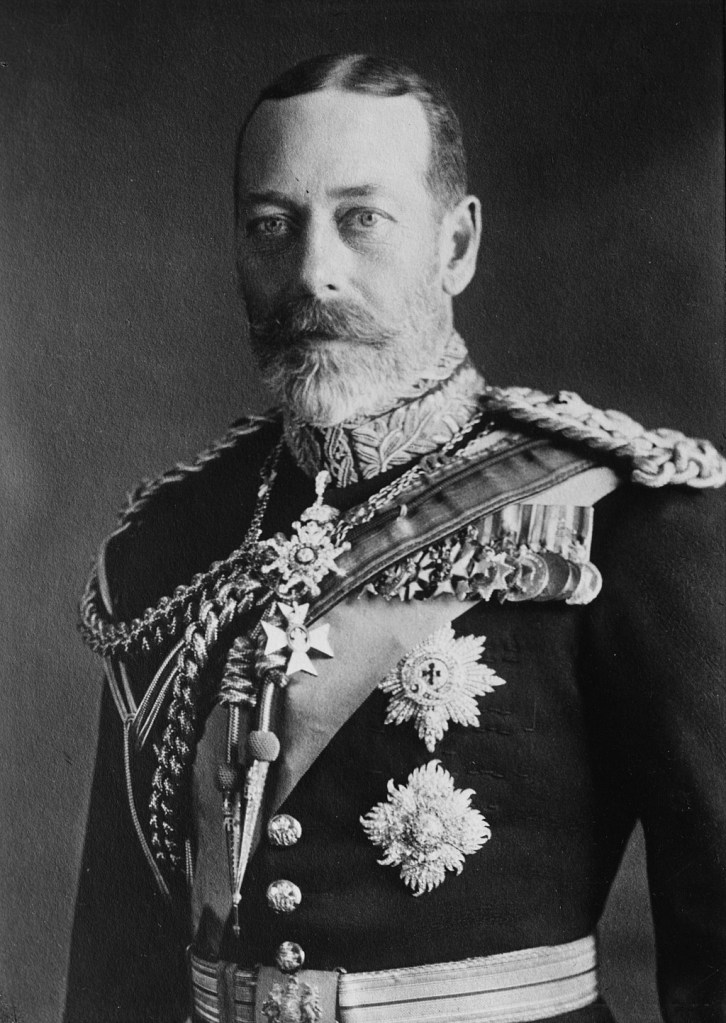
On this day in history : 17th July 1917 – The Royal family adopts the name ‘Windsor’ in a proclamation by King George V, in place of the official name ‘Saxe-Coburg-Gotha’….

George V – Public domain

The proclamation stated that the name of the Royal House and all British descendants of Queen Victoria and Prince Albert via the male line were to bear the name Windsor – women who married into other families would take that name….

“Now, therefore, We, out of Our Royal Will and Authority do hereby declare and announce that as from the date of this Our Royal Proclamation Our House and Family shall be styled and known as the House and Family of Windsor, and that all the descendants in the male line of Our said Grandmother Queen Victoria who are subjects of these Realms, other than female descendants who may marry or may have married, shall bear the said Name of Windsor”….

Badge of the House of Windsor

In 1901 the House of Saxe-Coburg-Gotha had succeeded the House of Hanover in the British Monarchy, with King Edward VII, son of Victoria and Albert of Saxe-Coburg-Gotha, coming to the throne…. Because of anti-German feelings during World War One it was felt necessary to change the name of the Royal family…. ‘Windsor’ was chosen because of the family association with Windsor Castle and the town of Windsor…. George V’s German cousin, Emperor Wilhelm II joked that he was going to the theatre to see the play ‘The Merry Wives of Saxe-Coburg-Gotha’ in reference to Shakespeare’s ‘The Merry Wives of Windsor’….

‘A Good Riddance’ – cartoon from ‘Punch’, June 1917 – Public domain

On this day in history….16th July 1955

On this day in history : 16th July 1955 – Racing driver Stirling Moss wins the British Grand Prix – it is the first time an Englishman triumphs in the race….

Stirling Moss – Image credit : SAS Scandinavian Airlines CC0

The Formula Once motor race was held at Aintree, Liverpool and was race number 6 of 7 in the 1955 World Championship…. The weather was clear and hot and a crowd of over 100,000 watched the race…. 25-year-old, London born Stirling Moss was driving his Mercedes-Benz and he and team mate, World Champion, Argentine Juan Manuel Fangio, shared the lead throughout the 90 lap race…. For the first 9 laps Maserati driver, Jean Behra, was out there with them but had to retire due to a broken oil pipe…. British driver Mike Hawthorn finished in sixth place….

Stirling Moss at Goodwood 2014 in his Mercedes-Benz W196 – Image credit : Iain A Wanless via Flickr

Stirling had scraped enough money together to buy his first racing car – a Cooper – at the age of 18, by selling many of his possessions…. He won 11 of his first 15 races in this car and then quickly progressed through Formulas Three and Two and started competing in Formula One…. He had always driven for British teams but in 1954 had accepted a place on the German team…. Despite his many victories he was never to become World Champion, having to settle for runner up instead, five times – 1955-1960….

His racing career was brought to an abrupt halt on the 23rd of April 1962, following a serious accident whilst racing in the Glover Trophy at Goodwood, in his Lotus…. Stirling was in a coma for a month and suffered partial paralysis for the next six months…. He recovered but retired from professional racing….

Stirling Moss (left) at the 1961 Dutch Grand Prix – Image credit : Dutch National Archives CC0

On this day in history….15th July 1912

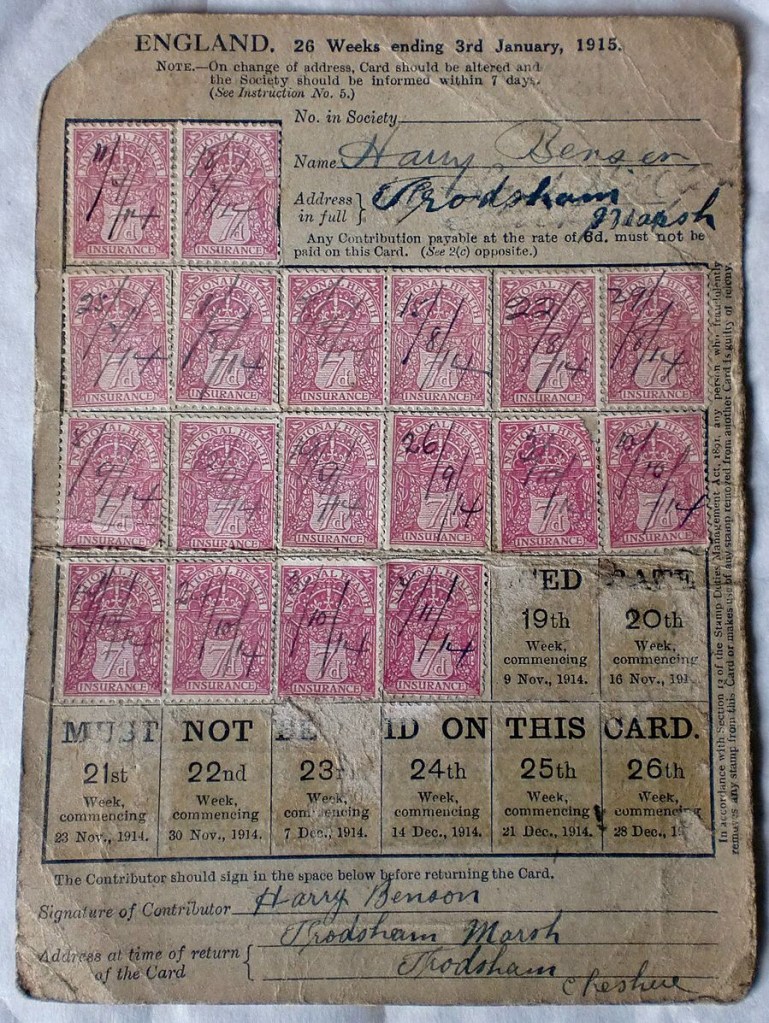
On this day in history : 15th July 1912 – The beginning of National Insurance payments in Britain, after the introduction of the National Insurance Act 1911, by the Government….

1914-15 National Insurance card – Public domain

The Act was one of the first steps towards the creation of the Welfare State – the aim being to provide a benefit scheme funded by contributions from employed persons and their employers…. It had first been proposed in 1908 in David Lloyd George’s ‘The People Budget’…. At the time the proposal was to fund the scheme through general taxation – with a reform to income tax and plans for old age pensions….

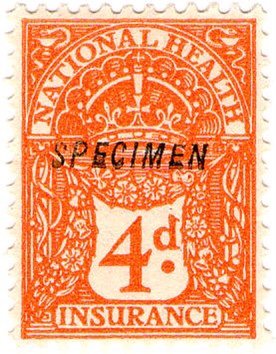
All workers between 16 and 70 were obliged to pay 4d per week, employers paid 3d per employee and the State contributed a further 2d…. In return employees got free medical care and advice and were entitled to an unemployment ‘dole’ benefit of 7 shillings per week up to 15 weeks of the year…. Special stamps would be bought from the Post Office and affixed to contribution cards, providing proof of entitlement to benefits…. Thus originates the saying to be ‘given your cards’ when facing dismissal from a job….

Public domain

In the early days the scheme was run by voluntary friendly societies – approved and underwritten by the Government and was regulated by four insurance commissions…. In 1919 power was passed to the new Ministry of Health and the system was nationalised in 1945 with the creation of the Ministry for National Insurance….

On this day in history….14th July 2005

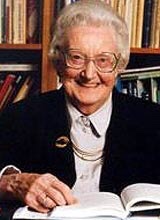
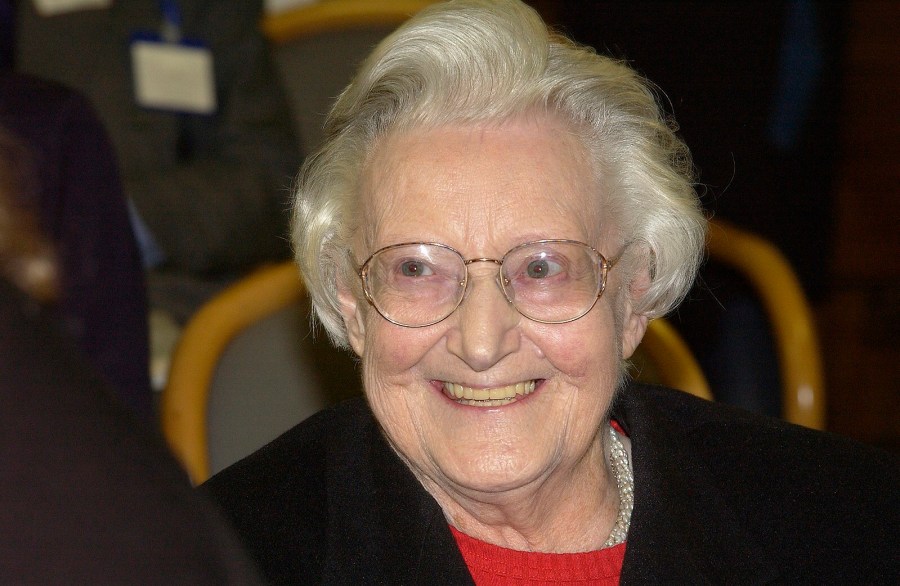
On this day in history : 14th June 2005 – The death of Dame Cicely Saunders – nurse, physician, writer and social worker – who was the founder of the modern hospice….

Dame Cicely Saunders – Fair use

Cicely, who was born on the 22nd of June 1918 in Barnet, Hertfordshire, trained as a nurse at the Nightingale School of Nursing, St. Thomas’s, London, during the Second World War…. Then in 1947 she qualified as a medical social worker….

It was in 1945 that she met and fell in love with Polish-Jewish refugee Ela Majer ‘David’ Tasma, who had escaped from the Warsaw ghetto…. Although managing to work as a waiter David was terminally ill with cancer…. Cicely began to wonder how she could help people such as David – who bequeathed to her £500 (around £18K in today’s terms) to help her realise her dream….

In the late 1940s Cicely began to work part time at St. Luke’s Home for the Dying Poor in Bayswater…. She wanted to learn more about the needs of those who could not be cured…. She began to realise there was no better way to help than to become a physician herself – and so, in 1951, at the age of 33, she became a medical student…. It was also around this time that she met Antoni Michniewizc, a Polish patient whom she became close to….

Cicely qualified in 1957 and became the first doctor in modern times to totally devote them-self to those dying…. Once again this was something to touch her personal life as well as her working life – Antoni died in 1960….

In 1963 she became interested in the paintings of Marian Bohusz-Szyszko, a Polish artist and professor, with a degree in art…. They were to meet and became close friends; however, he was married, with a wife back in Poland, who he continued to support….

Cicely began working at St. Joseph’s Hospice, in the East End of London – and started to put her ideas of palliative care and pain management into practice…. She concentrated on the elements of physical, social, spiritual and emotional needs – including the patient’s family and friends into that care…. Her ideas formed the basis of the philosophy of the modern hospice of today….

In 1967 she realised her own dream….when she established St. Christopher’s Hospice – the world’s first purpose-built hospice combining the principles of teaching and clinical research with the pain and symptom relief of the patient’s needs…. St. Christopher’s was different from other hospitals as it was designed and managed as a home from home environment…. Patients were encouraged to participate in therapeutic activities, such as writing, drawing, gardening, talking – or even just simply getting their hair done…. It was the first hospice to put together expert pain and symptom control and pioneered advanced palliative care….

St. Christopher’s Hospice, Sydenham – Image credit : Stephen Craven CC BY-SA 2.0

Cicely made trips to the United States to teach and to liaise with like minded people – such as Florence Ward, founder of the US hospice movement…. In 1980, five years after the death of his wife, Cicely and Marian were married – by now she was 61 and he was 79…. He died in 1995, aged 94, in St. Christopher’s Hospice…. Cicely developed breast cancer but continued to work….she died at the age of 87 in the hospice that she had founded….

Image credit : History of Modern Biomedicine Research Group