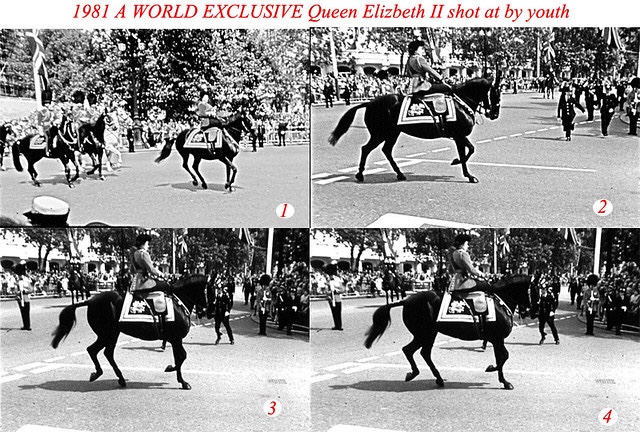
On this day in history….16th June 1883

On this day in history : 16th June 1883 – One hundred and eighty-three children are killed in the Victoria Hall stampede in Sunderland, after rushing to claim a prize at the end of a variety show….

The children’s variety show had been put on by the travelling entertainers Mr and Mrs Fay…. At the end of the performance it was announced that children with certain ticket numbers would receive a prize on exit…. At the same time gifts were distributed from the stage to the children in the stalls…. Some 1,100 children in the upper gallery, not wanting to miss out, stampeded for the stairway leading downstairs….

img_3380
Public domain

However, the door at the bottom of the stairs opened inwards….and had been bolted in such a way as to only open far enough to let one child at a time through….possibly to ensure orderly checking of tickets…. Those children at the front became trapped – and were crushed to death by the weight of the crowd behind them….

Once the adults realised what was happening they hurried to try and open the door – but were unable to…. Caretaker Frederick Graham rushed up another staircase and managed to lead some 600 children to safety….whilst the adults downstairs continued to pull the ones at the front out one-by-one…. Eventually a man tore the door from its hinges….

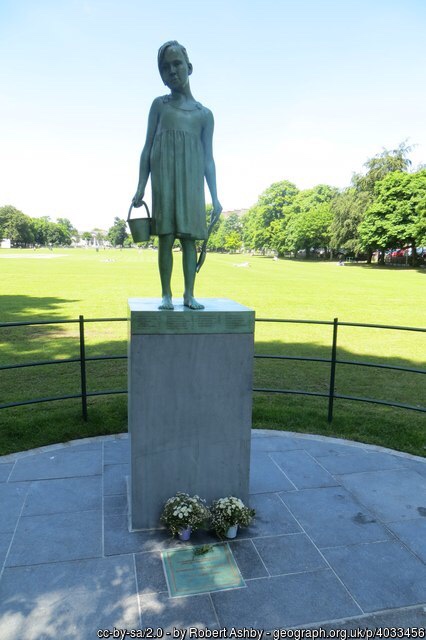
This remains the worst disaster of its kind in British history; all of the children were aged between 3 and 14 years old…. Queen Victoria sent a message of condolence to each family who had lost a child…. Donations were sent from all over the Country and were used to pay for the funerals and to erect a memorial in Mowbray Park – a statue of a grieving mother holding her dead child….

img_3379
Victoria Hall Disaster Memorial in Mowbray Park – Photo credit: Barliner CC BY 2.5

Following an inquiry legislation was passed that every public entertainment venue had to have a specified number of outward opening emergency exits…. This resulted in the ‘push-bar’ emergency doors we are all familiar with today….

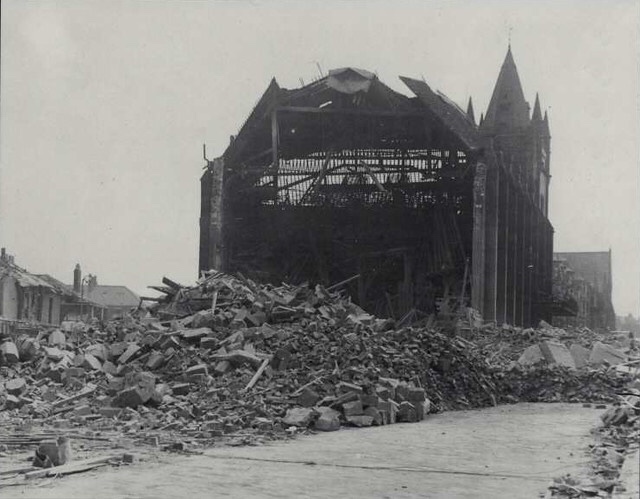
As for the Victoria Hall itself….it continued to be an entertainment venue but was destroyed by a World War 2 parachute bomb in 1941….
img_3381
Sunderland Public Libraries via Flickr

On this day in history….15th June 1911

On this day in history : 15th June 1911 – Anglican cleric, railway enthusiast and children’s author – best known for his creation ‘Thomas the Tank Engine’ – the Reverend W. Awdry is born….

img_3372
The Reverend Wilbert Awdry OBE in 1982 : Image credit – Jamie Spilsbury CC BY-SA 4.0

Wilbert Vere Awdry was born at Ampfield Vicarage near to Romsey in Hampshire – his father was the Anglican Vicar of Ampfield…. The family moved to Box in Wiltshire and lived in a house, ‘Journey’s End’, which was just 200yds from Box Tunnel on the Great Western Railway…. Wilbert would lie in his bed at night and listen to the freight trains; he got to know their whistles and felt each engine had its own personality…. He heard them ‘snorting’ up the steep incline and listened for the conversations they held between themselves….

Wilbert was educated at Marlborough House in Kent, Dauntsey’s School in Wiltshire and then attended Oxford…. Afterwards he was to teach for three years before becoming ordained into the Anglican Church…. He became curate for St. Nicholas’ Church, Kings Norton, Birmingham and then Rector at Elmsworth and Knapwell, Cambridgeshire…. After a term as Rural Dean at Bourn he became Vicar of Emneth in Norfolk…. He retired in 1965 and settled in Rodborough, near to Stroud, Gloucestershire….

It was when his son, Christopher, caught measles in 1943 that Wilbert began to make up stories about trains to keep the boy amused…. After he had written ‘The Three Railway Engines’, which was published in 1945, he built Christopher a model of ‘Edward’ out of a broomstick and some scraps of wood…. He also added some trucks and carriages….

img_3375
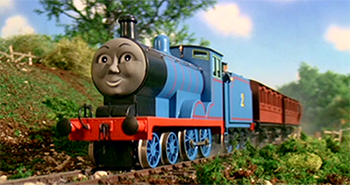
Edward – Reverend Wilbert Awdry – Fair use
img_3377
Gordon – Reverend Wilbert Awdry – Fair use

Christopher was eager to have a model of ‘Gordon’ as well – but this proved difficult because of the size…. So, Wilbert built a smaller model….and ‘Thomas’ came to be…. Christopher wanted more stories about Thomas, which led to ‘Thomas the Tank Engine’ being published in 1946…. By the time Wilbert had stopped writing in 1972 there were 26 books in the Railway series….Christopher went on to add to these books….

img_3374
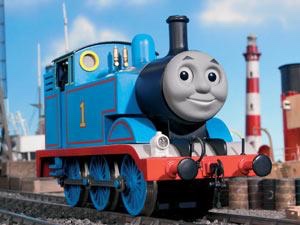
Thomas the Tank Engine – fair use

Wilbert remained a railway enthusiast; he volunteered as a guard on the Talyllyn Railway in Wales and was involved in railway preservation work…. He was awarded an OBE in 1996 but by now his health was failing and he was unable to make the journey to London to receive it personally…. He died peacefully in Stroud on the 21st of March 1997….

img_3373
Reverend Awdry in May 1988 on the Talyllyn Railway with ‘Peter Sam’, one of his creations – Photo credit: Voice of Clam CC BY-SA 3.0

Thomas the Tank Engine will bring back memories for so many of us….either from our own childhoods or those of our children…. I, for one, have a son who was absolutely obsessed – we still have many of the books and somewhere in the loft is a huge collection of die-cast models…. In October 1984 a TV series was developed by Britt Allcroft – with the voice of Ringo Starr telling the stories…. Thomas videos seemed to play on a constant loop in our house…. Oh! And that wretched theme tune….I never have quite managed to get it out of my head!

On this day in history….14th June 1961

On this day in history : 14th June 1961 – The Ministry of Transport announces a new type of road crossing…. If trials are successful the panda crossing would replace the zebra crossing….

img_3369
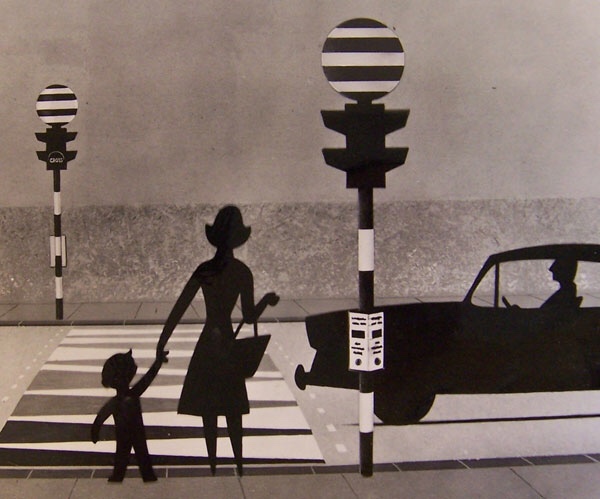
Promotional illustration – image via Roads.org.uk – fair use

The Government had become concerned by the rise in accidents at zebra crossings – which had been introduced in 1951 when there were just two million cars on Britain’s roads…. By 1961 this number had increased to over 10 million….and in the first six months of 1960 some 533 had been killed or injured at uncontrolled zebra crossings, compared to 447 in the same period of 1959…. Transport minister Ernest Marples hoped by enabling a method of control at pedestrian crossings “some of the dangerous uncertainties of the present system would be eliminated”….

3371
Zebra crossing with Belisha beacons, Abbey Road, London….the one featured on the Beatles album…. Image : Misterweiss at English Wikipedia – Public domain

The new panda crossing consisted a triangular black and white stripes – rather than the rectangular ones of the zebra crossing…. A push button on either side of the road controlled a set of flashing lights; pedestrians would push the button and wait at the flashing light…. Drivers would simultaneously be warned to slow down by an amber flashing light – which then turned red…. At the same time a ‘WALK’ sign would appear to the pedestrian….which after a specified time would start to flash to warn that the lights for the motorist were about to turn green again….

The new system was to be installed on a twelve month experimental trial at between 40 and 50 sites in England and Wales…. The very first panda crossing had been installed on the 2nd of April 1961 outside Waterloo station and it had been decided to test in on a larger scale…. Included in the overall number were thirteen in Guildford and ten in Lincoln….

However, the scheme had to be abandoned in 1967 as pedestrians and motorists complained it was too confusing….and there were also too many mechanical failures…. In 1969 it was replaced with the far more successful pelican crossing – and this was superseded by the puffin crossing in the 1990s – using sensors to detect pedestrian and car flow and thus controlling traffic automatically….

img_3370
Pelican crossing control panel – Secretlondon CC BY-SA 3.0

On this day in history….13th June 1981

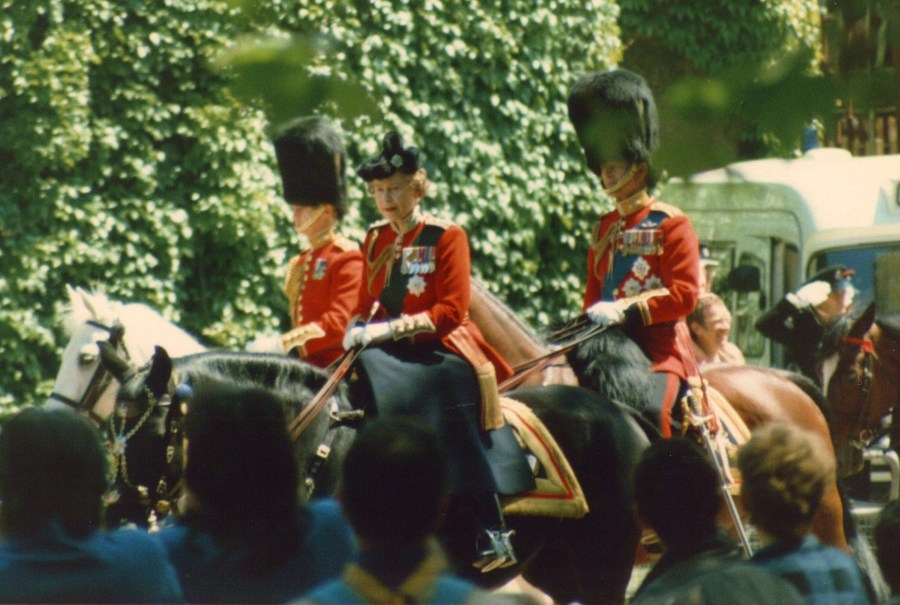
On this day in history : 13th June 1981 – Marcus Sarjeant, a 17-year-old former air cadet is arrested after firing a starting pistol at the Queen during the Trooping the Colour ceremony in London….

img_3366
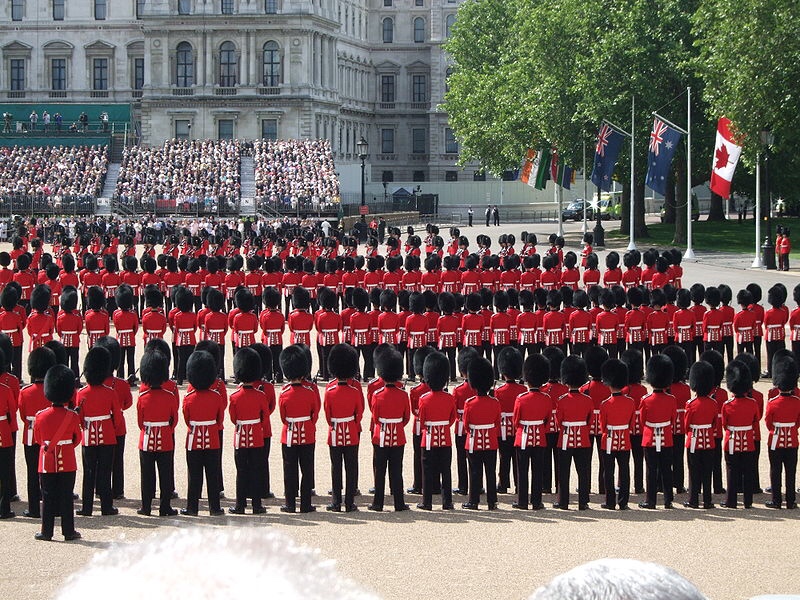
Trooping the Colour. Image credit : Ibagli – Public domain

The Queen, riding 19-year-old Burmese – the horse she had ridden at the ceremony since 1969 – had left Buckingham Palace around 15 minutes earlier, travelled down Pall Mall and just before 11.00am turned into Horseguards’ Parade – when six shots rang out…. Sarjeant had fired six blank cartridges before being overcome by police and a Guardsman….

img_3364
Image credit: Alberto Botella via flickr

The horse was startled by the shots but the Queen managed to maintain control…. She was visibly shaken by the incident but soon regained composure and the procession continued…. Afterwards the return to Buckingham Palace took the same route….

At his trial on the 14th of September 1981, presided over by Lord Chief Justice, Lord Lane, Marcus Simon Sarjeant from Folkestone, Kent pleaded guilty…. The Court was told he had intended to kill the Queen but had been unable to obtain a suitable weapon…. He was found guilty of wilfully discharging a blank cartridge pistol at Her Majesty, with intent to harm…. Under the 1842 Treason Act, the first time it had been used since 1966, Sarjeant was sentenced to five years in prison….

Sarjeant claimed to have been inspired by the shooting of John Lennon…. He said “I wanted to be famous…. I wanted to be a somebody”…. Psychiatric investigations drew the conclusion that he had no abnormalities within the Mental Health Act 1983….

On leaving school Sarjeant had applied to join the Royal Marines – but was unable to accept the discipline and left after three months…. He also only managed to last two days on an Army induction course….

He was released from prison in October 1984 after serving just over three years of his sentence…. He changed his name and began a new life….

img_3365
Queen Elizabeth II riding Burmese to Trooping the Colour for the last time, in 1986. Since then she has travelled in a carriage. Image credit: Sandpiper – Public domain

On this day in history….12th June 1889

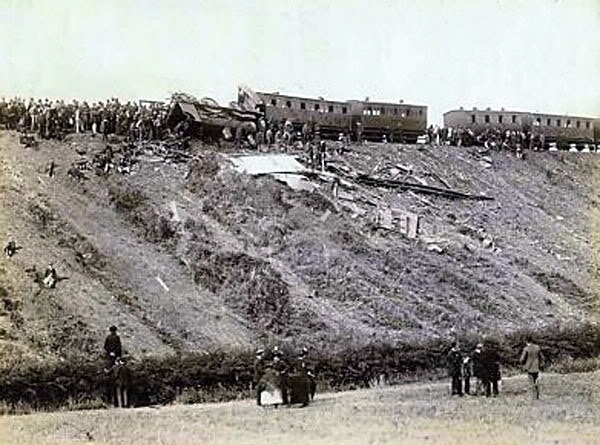
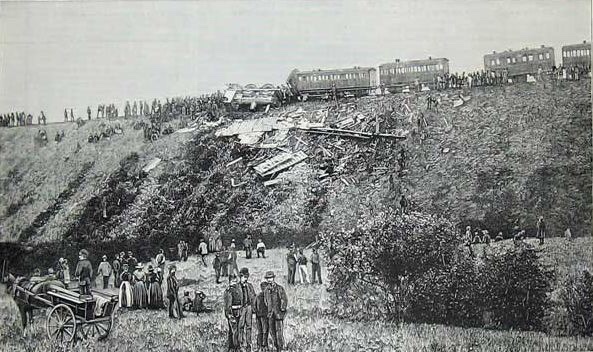
On this day in history : 12th June 1889 – 89 people are killed and over 170 are injured in the Armagh rail disaster, in Northern Ireland – nearly a third are children…. It remains Ireland’s worse ever rail disaster….

img_3362
Public domain – photographer unknown

Each year the Armagh Abbey Street Methodist Church would hold a Sunday School excursion to Warrenpoint, a resort town on the northern shore of Carlingford Lough, about an hours train journey away…. The traditional day trip was extremely popular and open to all; lots of different religions:- Catholics, Church of England, Presbyterian and Methodists – of all classes joined in….

This particular year the demand for places was especially high and a special train with extra carriages was laid on…. Accompanied by the band of the Royal Irish Fusiliers around 940 passengers boarded the train – the doors were locked behind them to prevent non-ticket holders from boarding….and the train departed at 10.15am….

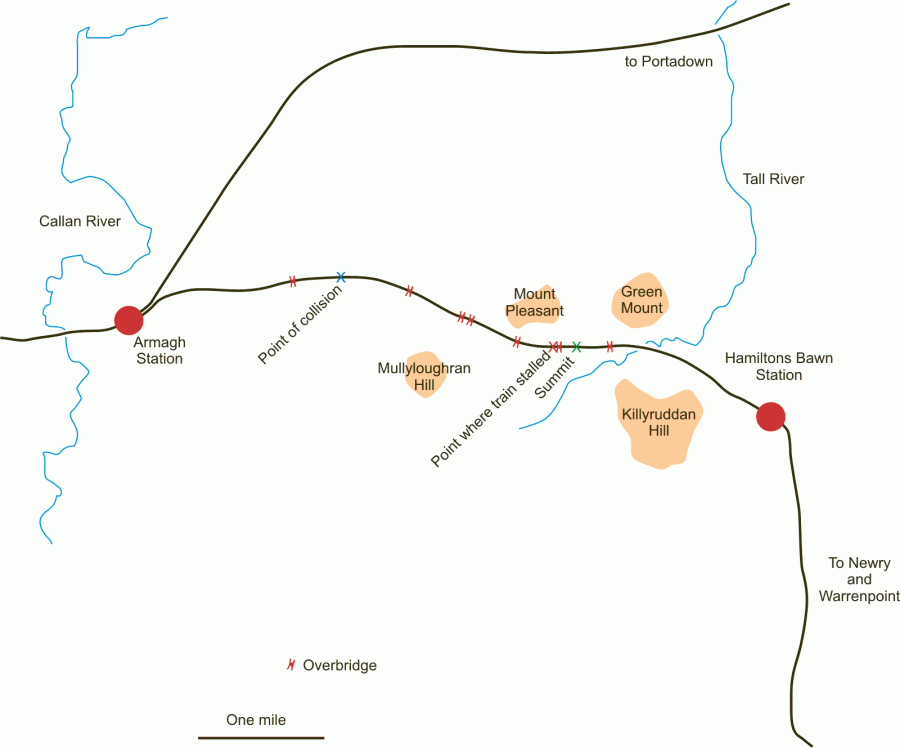
Three miles out of the city they ran into problems; the train tried to pull up the Armagh Bank, a gradient of 1.75…. The weight of the train, some 186 tons not including the engine, was too much – and on reaching Derry’s Crossing, almost at the top, the train stalled…. Realising it would be impossible to restart with that much weight it was decided to decouple the front four carriages and take them on to Hamiltons Bawn – and then return for the remaining eight….

img_3361
Map of the Railway between Armagh and Hamiltons Bawn – Image credit: Afterbrunel (talk) (uploads) – Public domain

The handbrake was applied in the guard’s carriage at the rear – but as an added precaution large stones were placed behind the wheels of the waiting carriages…. However, the stones could not hold the weight and were crushed as the carriages began to roll back…. The runaway train gathered speed and finally crashed into the 10.35 – a powerful engine with a light load – at about 40mph…. There was little damage to the 10.35 but the last three carriages of the Sunday School special and their occupants were obliterated…. 64 were declared dead at the scene and over the following days this number rose…. The names of those who died are recorded in Abbey Street Methodist Church….

img_3360
Illustrated London News, June 22, 1889 – Public domain
img_3363
Recently installed memorial in The Mall, Armagh – commemorating the Armagh railway disaster