On this day in history….12th November 1919

On this day in history : 12th November 1919 – The first successful flight from England to Australia begins at Hounslow…. The converted Vickers Vimy bomber reached Darwin on the 10th of December 1919….

The winning Vickers Vimy, 1919 – Image credit : John Oxley Library, State Library of Queensland – Public domain

It was in 1919 that the Australian government offered 10,000 Australian £s, as prize money, to the first Australian pilots in a British aircraft to fly from Britain to Australia…. Six entries were received…. The rules stipulated that the crews had to be Australian, the aircraft had to be made in the British Empire and the flight had to be done in no more than 30 days – arriving by midnight on the 31st of December 1920…. In addition departure had to be either from Heath Aerodrome, Hounslow near to London for land-planes or from RNAS Calshot for sea-planes….

Vickers entered a Vimy bomber, which had been designed for World War I but which had not seen active service…. It had twin Rolls Royce engines, a top speed of 177 kph – and an open cockpit…. It completed the 17,911 km (11,123 mile) journey in 28 days – at an average speed of 137 kph….

The aircraft was crewed by brothers pilot Ross and co-pilot Keith Smith, along with mechanics James Bennett and Wally Shiers…. They left Hounslow at 8.30am and flew via Lyon, Rome, Cairo, Damascus, Basra, Karachi, Delhi, Calcutta, Akyab, Rangoon, Singora, Singapore, Batavia, Surabaya and reaching Darwin at 4.10pm on the 10th of December…. The journey was not without its difficulties…. They became bogged-down in Surabaya – and a temporary airstrip had to be constructed from bamboo mats – and heavy rain forced several unscheduled stops….
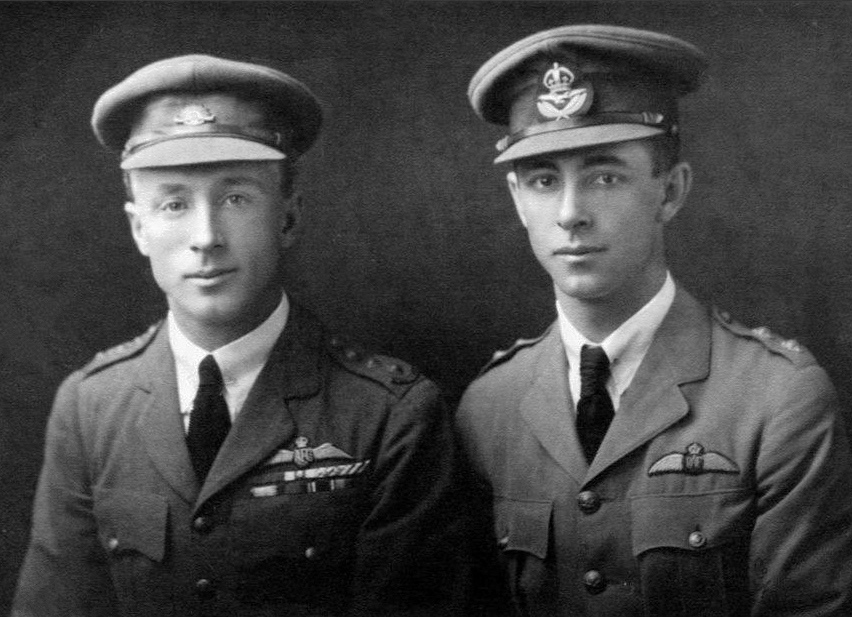
Brothers Capt. Ross & Lieut. Keith Smith – Pilot and co-pilot – Image credit : State Library of South Australia via Flickr CC BY 2.0

The prize money was shared between the four crew and each of the two brothers received a knighthood…. The aircraft was presented to the Australian government and is now on display at Adelaide Airport….
On this day in history….11th November 1987

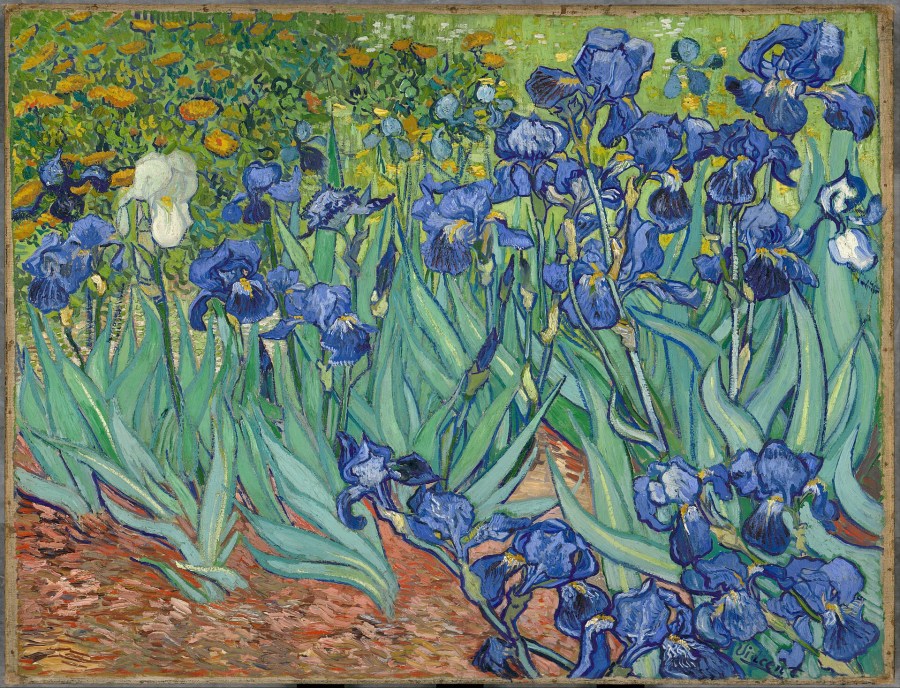
On this day in history : 11th November 1987 – ‘Irises’ ~ a painting by Vincent Van Gogh sells at Sotheby’s for a record of £27m, more than twice the amount the painting had been expected to reach….

Irises – Vincent van Gogh – Public domain

It had beaten the previous world record for a work of art, which had stood for two and a half years – also a painting by Van Gogh – ‘Sunflowers’ – which had sold for $40m….

Irises had been painted in 1889, just a few months before Van Gogh killed himself at the age of 37…. He had painted it in the garden of the French mental asylum in Saint-Remy, where he was being treated….

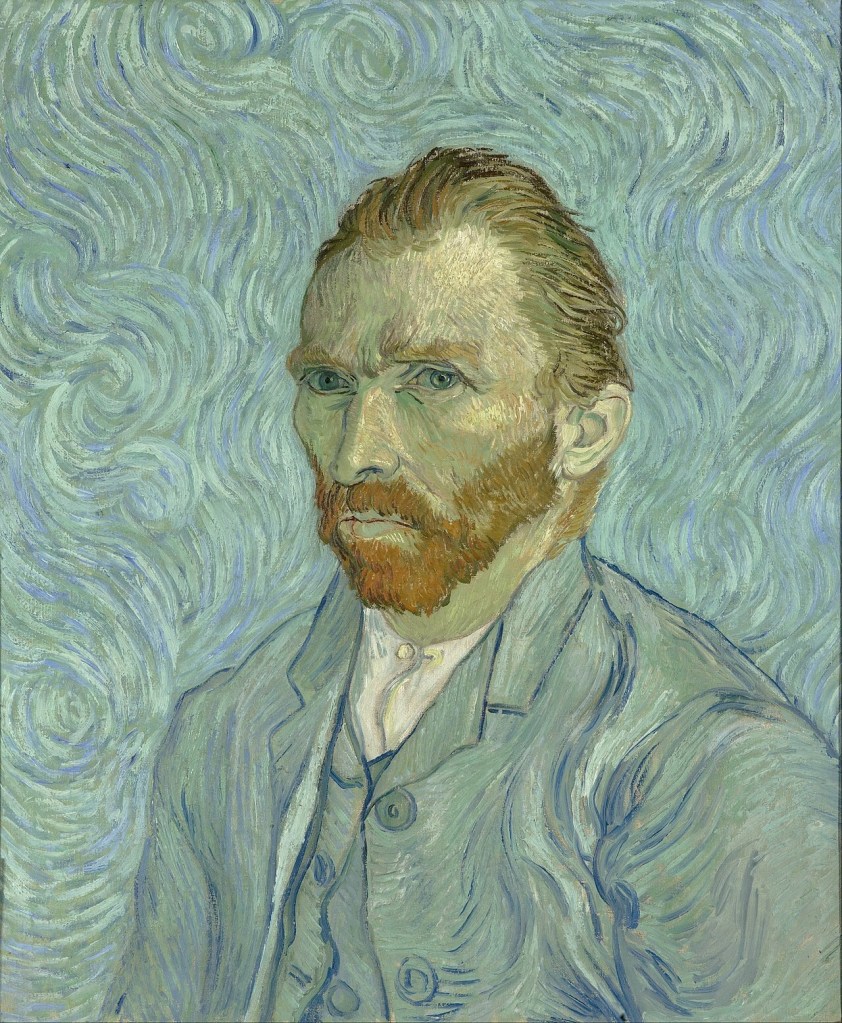
Self portrait – Vincent van Gogh – Public domain

After Van Gogh’s death Irises came into the possession of Julien ‘Pere’ Tanguy, an art dealer…. He later sold it to art critic Octave Mirbeau for 300 francs…. In 1975 it came into the ownership of John Whitney Payson, heir to one of America’s biggest fortunes…. He inherited the painting from his mother who had paid £44,000 for it in 1947 – and had kept it hanging over her fireplace…. Payson had a gallery built in his mother’s memory and this is where Irises was displayed….

However, after the sale of Sunflowers and realising the potential value of Irises he began to worry about the painting’s safety – and so decided to sell it…. The purchaser remained anonymous at the time but turned out to be Australian entrepreneur Alan Bond…. He purchased it with the help of a loan from Sotheby’s – causing controversy as critics claimed such practices artificially inflated values…. As it was, Bond ran into difficulties repaying the loan and in 1990 Irises was sold to the Getty Museum in Los Angeles for $53.9m….

On this day in history….9th November 1907

On this day in history : 9th November 1907 – The Cullinan Diamond, the largest diamond ever to be found, is presented to King Edward VII on his birthday by the government of Transvaal….

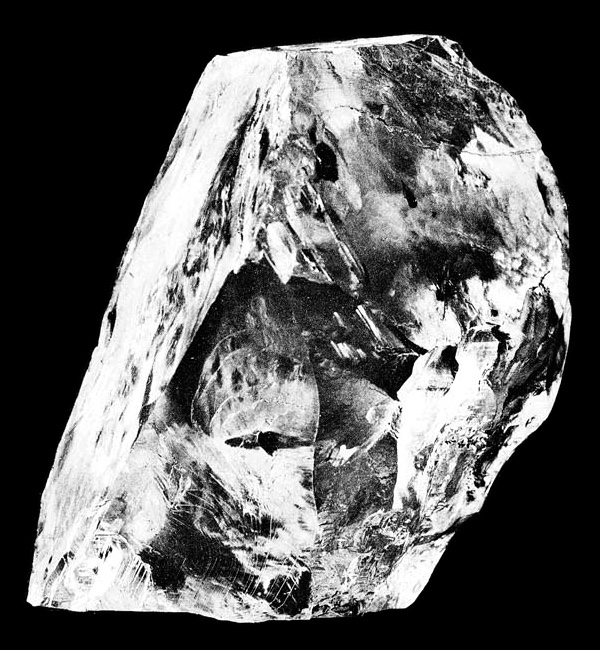
The rough diamond – Public domain

The stone had been discovered on the 26th of January 1905, near to Pretoria in South Africa – and had been named after Thomas Cullinan, chairman of the mining company…. The diamond weighed 3,106 carats and measured approximately 10cm x 6.5cm x 6cm….

It was presented to Edward VII as a gift to help cement the new relationship between Britain and South Africa following the Boer War…. At first the King was reluctant to accept a gift so extravagant but it was finally presented to him on his 66th birthday in a formal ceremony held at Sandringham….

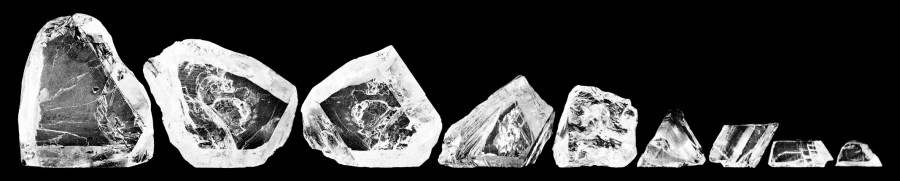
The gem was sent to Asschers of Amsterdam, the world’s leading diamond cutters – it took weeks to decide the best way to split it…. Eventually, on the 10th of February 1908 Joseph Asscher broke it in two – the first blow broke his cutting knife! It took a further eight months and three experts to cut and polish nine individual stones from the original diamond…. They were named I – IX and are still referred to in this way today…. 97 smaller diamonds were also created from the spoils….

Joseph Asscher splitting the diamond – Public domain

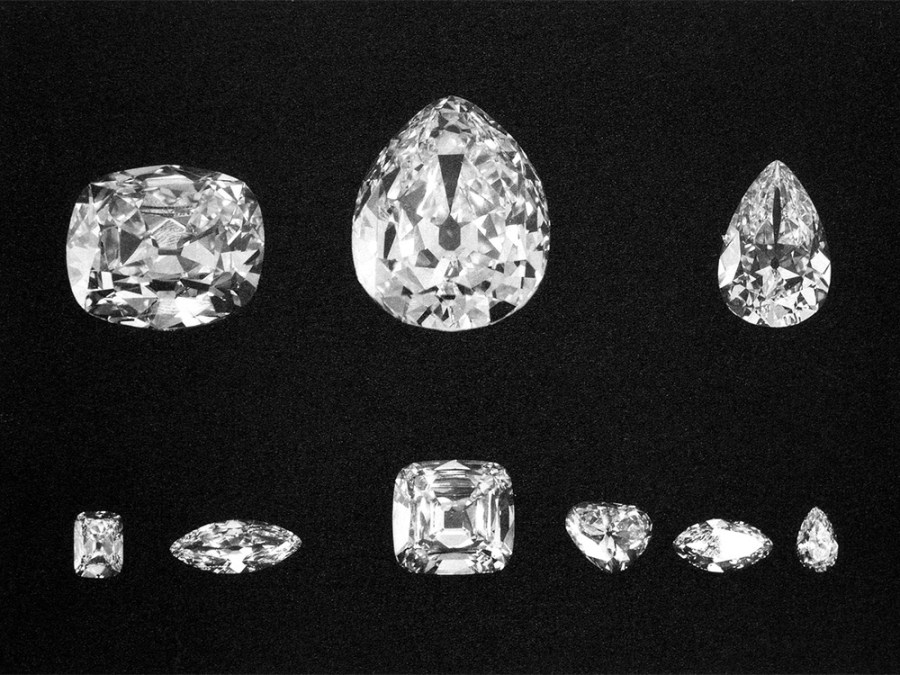
I is known as the Great Star of Africa, weighing 530 carats it has 74 facets…. II is the Second Star of Africa and has 66 facets…. After Edward’s death in 1910 he was succeeded by George V, who had the Great Star set into the top of the Sovereign’s Sceptre and the Second Star set into the Imperial State Crown (but can be removed and worn as a brooch)…. Asschers kept the remainder of the diamonds in payment for their work…. Edward VII had already purchased VI and VIII as a gift for his wife, Queen Alexandra and the South African government bought back the remainder and presented them to Queen Mary…. Queen Elizabeth II received them in 1953 as a bequeathment, stones III – XI were made into part of Her Majesty’s personal jewellery…. The smallest diamond, IX, is 4.39 carats and is set into a platinum ring….

I – IX in order of size – Public domain
I – IX in their cut forms – Public domain

On this day in history….8th November 1920

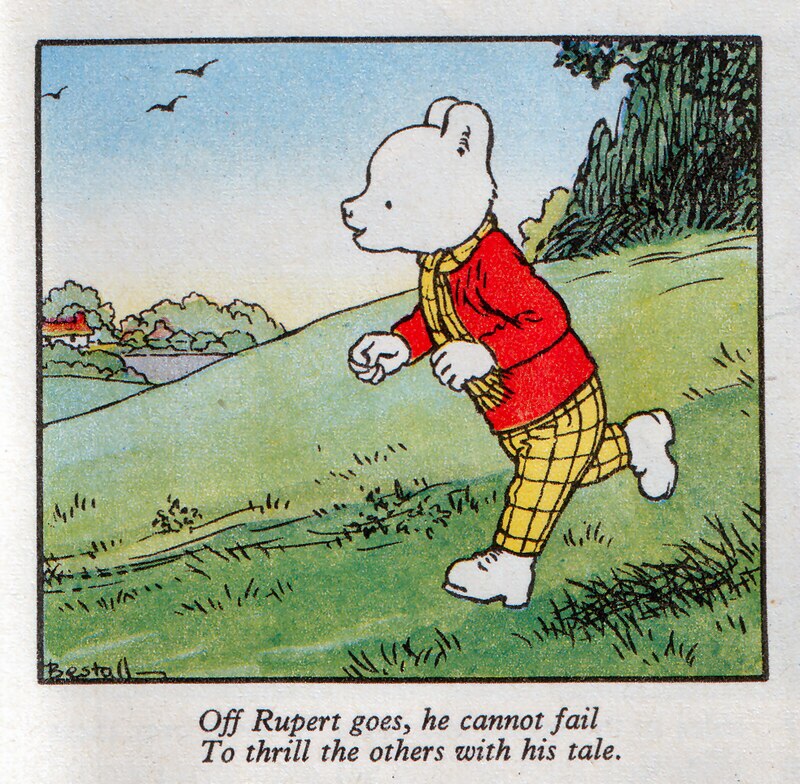
On this day in history : 8th November 1920 – Rupert the Bear makes his first appearance in the Daily Express newspaper…. The comic strip is still published every day….

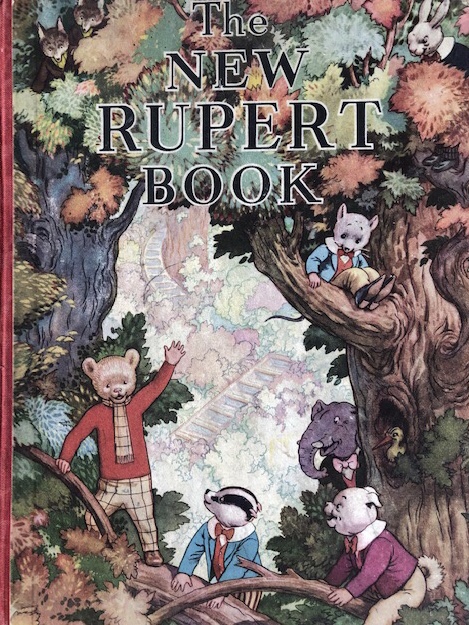
Fair use

Rupert was created by British artist Mary Tourtel…. His first appearance was in a single panel – one of 36 to be printed over the coming days telling the story of the Little Lost Bear…. The main purpose of Rupert was to attract readers to the Daily Express away from its main rivals the Daily Mirror and Daily Mail….

When Tourtel originally created Rupert he was a brown bear – but it was decided to print him in white, to keep publishing costs down…. In 1935 Rupert was taken over by Alfred Bestall, who had worked for Punch Magazine but was to go on to produce Rupert for the next 30 years…. Rupert’s last outing for the Daily Express under Bestall was in July 1965, although he continued working on Rupert annuals into his nineties…. Since Bestall Rupert has had a succession of illustrators and writers….

Alfred Bestall – Fair use

The first Rupert annual was published in 1936 – and a new one has been released every year since – telling of Rupert’s adventures along with those of his friends such as Bill Badger, Edward Trunk the elephant, Willie the mouse, Ping-Pong the Pekinese dog and Podgy Pig…. Over the years some 50 million copies of Rupert annuals have been sold….

Rupert is still a popular character in children’s culture…. There have been several TV series and he has his own fan club…. On the 31st of October 2005 UK media group Entertainment Rights bought a majority interest in the little bear…. This in turn was bought by Boomerang Media and then DreamWorks Animation, with plans for a movie and associated merchandise….

From the 1970 Rupert Bear Annual – Image credit : Ian Burt via Flickr

On this day in history….7th November 1665

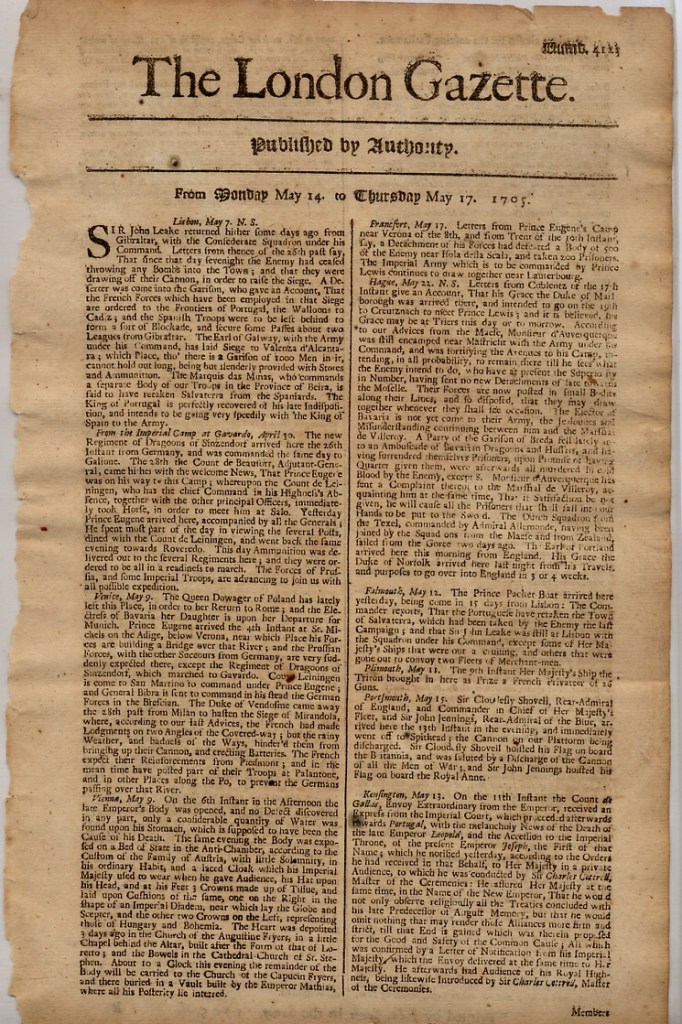
On this day in history : 7th November 1665 – The first edition of the London Gazette is printed…. The publication claims to be the oldest surviving English newspaper….

Reprint of The London Gazette September 3-10, 1666 reporting on the Fire of London – Public domain

Two other publications also make this claim; the Berrows Worcester Journal, established in 1690 and the Stamford Mercury, established in 1712, both like to point out that the Gazette is not a conventional newspaper…. The London Gazette, which was originally published as the Oxford Gazette, is a ‘journal of record’….in as it provides an official publication in the UK for statutory notices which legally have to be recorded and published….

The London Gazette 14-17 May 1705 – Public domain

King Charles II and his Royal Court had decamped to Oxford to escape plagued London…. They did not want papers sent from London for fear of contamination – and so the Gazette was published in Oxford by English journalist and publisher Henry Muddiman…. Charles and his entourage returned to London as the plague diminished and the Gazette moved to the capital with them…. The first London edition appeared on the 5th of February 1666; it did not go on general sale but was sent to those who subscribed…. Her Majesty’s Stationery Office took over its publication in 1889 and since the 1990s it has been produced by The Stationery Office….

Nowadays the Gazette is printed every week day, excluding public holidays…. It records:- Royal assent of Parliamentary Bills for the UK Government and Scottish Parliament, Writs of Election for House of Commons vacancies, promotions and commissions of officers in the Armed Forces, the appointment of public officials, bankruptcies and insolvencies, military honours and awards that have been granted, changes to coats of arms and change of name and Royal proclamations and declarations….

These days the London Gazette can be viewed online….