On this day in history….26th December 1900

On this day in history : 26th December 1900 – The discovery is made that the keepers of the Flannan Isles Lighthouse have disappeared without a trace…. The mystery still remains unsolved today….
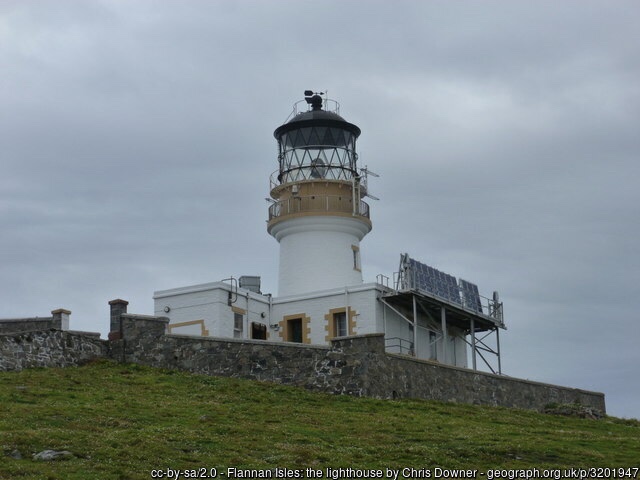
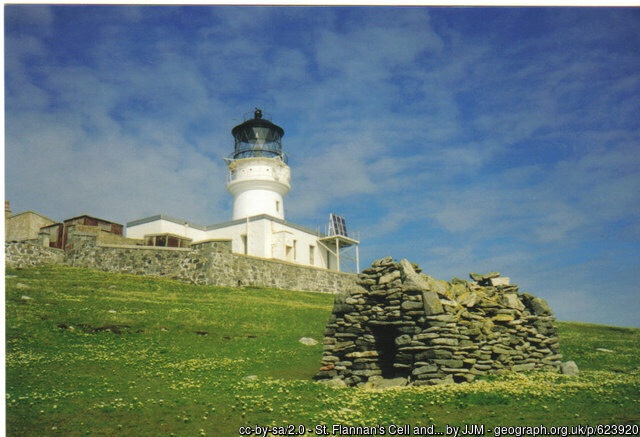
The lighthouse is to be found on Ellean Mor, one of the uninhabited Flannan Islands of the Outer Hebrides off the west coast of Scotland…. The islands were named for St. Flannan, a 6th century Irish Bishop who later became a saint…. Apart from the lighthouse, which is still in use today, the only other building to be found on the islands is a ruined chapel….

St. Flannan’s Chapel

On the 15th of December 1900 it had been noticed that there was no light shining from the lighthouse…. At the time it was manned by three keepers, James Ducat, Thomas Marshall and William MacArthur…. All were experienced, seasoned seafarers….

A ship, captained by James Harvey, was despatched to carry replacement keeper Joseph Moore to investigate what was going on…. When they arrived at the landing platform they were surprised to see nobody was there to greet them, as approaching visitors were always spotted well in advance…. The crew sounded the ship’s horn and sent up a flare to attract attention – but still nobody appeared…. There was no sign of life anywhere, not even the flag was flying from the flagpole….

Landing stage and pathway

Moore rowed ashore with a great sense of unease…. He could not help but notice the disarray at the landing area; a crate that housed ropes and equipment had been severely damaged…. He climbed the steep steps to the lighthouse – and found the door unlocked…. Just inside, where three sets of oilskins should have been hanging, he found just one set…. He ventured into the kitchen and discovered a chaotic scene…. A chair had been overturned and there were the remains of a meal which had obviously been abandoned half way through…. The kitchen clock had stopped…. Moore searched the rest of the lighthouse, the beds were unmade and the place was deserted….
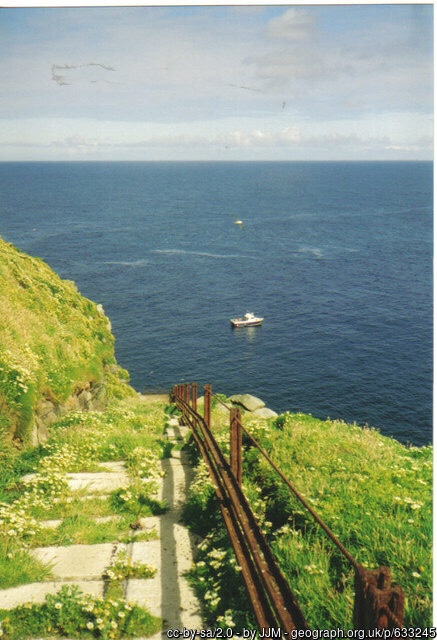
Steps to the landing

He returned to the ship and a search of the island was organised – but there was nothing to be found…. A telegram was sent to the Northern Lighthouse Board : “A dreadful accident has happened at Flannans. The three keepers, Ducat, Marshall and the occasional have disappeared from the island. On our arrival there this afternoon no sign of life was to be seen on the island”…. The message went on to say the accident must have happened about a week before and that the poor fellows must have been blown over a cliff or drowned trying to secure a crate of similar…. Whatever had happened it was assumed they had been claimed by the sea….

View over the islands

On the 29th on December the Board’s Superintendent, Robert Muirhead, arrived to investigate…. He knew the three missing keepers personally, as he had recruited them…. He initially found nothing else that Moore had not already discovered – but then he turned his attention to the lighthouse logbook and found some surprising entries…. One for the 12th of December read: “Severe winds the likes of which I have never seen before in twenty years” – this in itself was odd as there had been no reported storms in the area before the 17th…. The log went on to say that James Ducat had been very quiet and that William MacArthur had been crying…. Again this did not add up – the men were all tough, in fact MacArthur had a reputation for brawling…. All three were used to life in a lighthouse – and this particular one was brand new and the safest of the safe – so it was unlikely that any of them would have cracked…. The last entry on the 15th of December read : “Storm ended, sea calm, God is over all”…. It had also been noted in the log that the men had been praying….

There were many unanswered questions – not least why the men had broken one of the strictest rules of their employment…. On no occasion whatsoever were they to leave the lighthouse unmanned – one of them had to be inside at all times…. Yet, for whatever reason, all three of them had left it….
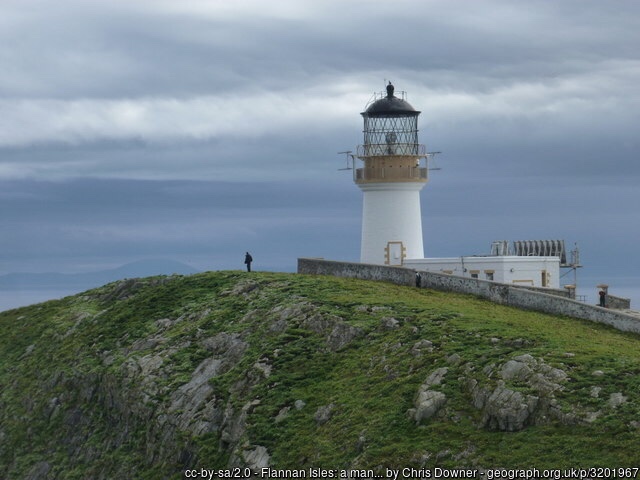
There was much speculation as to what had happened…. Had they gone mad? Had one of them murdered the other two? Was it a sea monster that had taken them – or were they abducted by aliens? Was it the supernatural? Had they absconded to a better life? We shall never know…. The most plausible explanation is perhaps that two of them went to secure the storage crate on the landing platform – seeing his mates in trouble the third went to try and help them, only for all three to be swept away by a freak wave…. No bodies were ever found….

Over the following years future lighthouse keepers at Flannan reported strange goings on…. They told of voices crying out the names of Thomas Marshall, James Ducat and Donald MacArthur…. Considering the experience of these three lighthouse keepers – and the apparent calmness of the sea before their disappearance – maybe it is only these ghosts who will ever know what really happened….
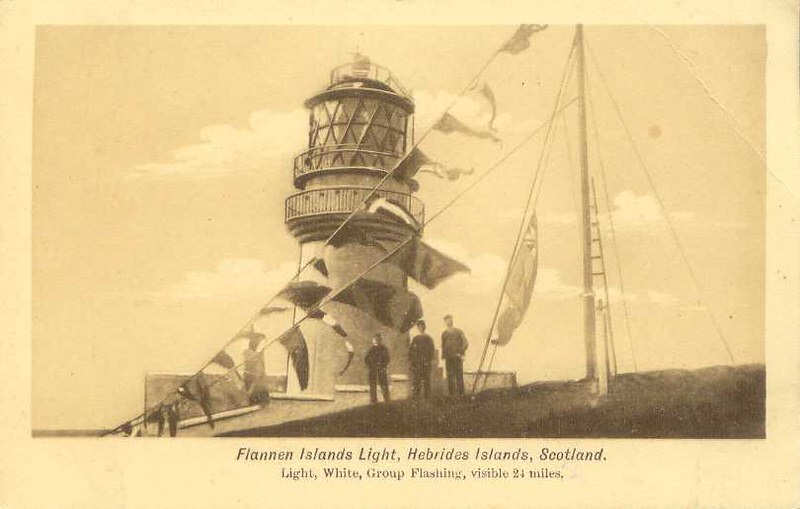
Flannan Isles Lighthouse, 1912 postcard – Image credit : CartoonPeril2011 via Flickr

On this day in history….14th October 1881

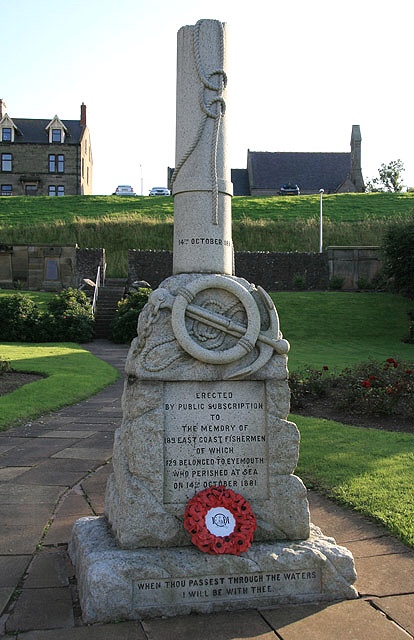
On this day in history : 14th October 1881 – Scotland’s worst ever fishing disaster occurs when a Berwickshire fishing fleet gets caught in a violent storm – 189 fishermen lose their lives….

Granite memorial in Eyemouth; depicts a broken sailing mast – Image credit : Walter Baxter CC BY-SA 2.0

Locals still know the day, when some 29 boats were swallowed by the sea off the south coast of Scotland in hurricane force conditions, as Black Friday…. Most of the fleet was from Eyemouth; 129 men from the town drowned, around 10% of the male population…. A further 24 from Burnmouth died, 15 from Newhaven-by-Edinburgh, 11 from Cove, 7 from Fisherrow, Musselburgh and 3 from Coldingham….

Bronze memorial at St. Abbs, figures of women and children looking out to sea – Image credit : Karen Bryan CC BY-SA 2.0

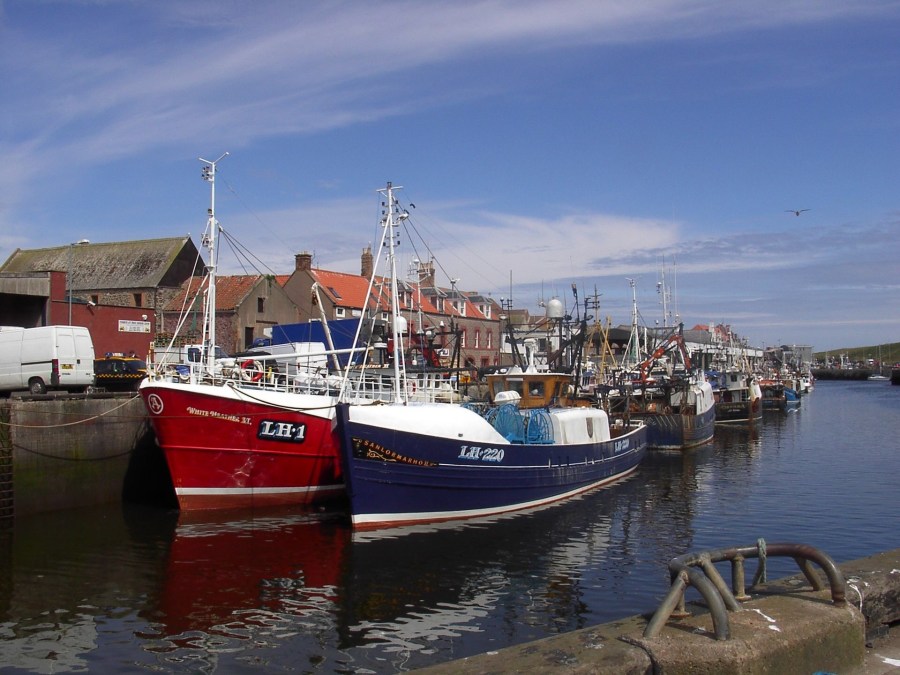
Fishing, being such a vital part of the economy, meant the fishermen had ignored the weather forecast that day…. Times were hard and not being able to afford losing a day’s income meant the fleet had set out as usual…. By lunchtime their worst fears were being realised – they were caught in the most violent of storms…. Those boats that could headed back to harbour but some were already beginning to sink, many more capsized and others were smashed against rocks…. The only glimmer of brightness out of this dark time being when fishing boat Ariel Gazell limped back into harbour at Eyemouth two days after the storm….

Eyemouth Harbour – Image credit : Peter Nisbet at English Wikipedia – Public domain

A massive relief fund was launched to help the families of the lost fishermen and the community – more than £5m in today’s equivalent was raised….

A commemorative tapestry of the tragic event can be seen in Eyemouth Museum….

On this day in history….23rd August 1305

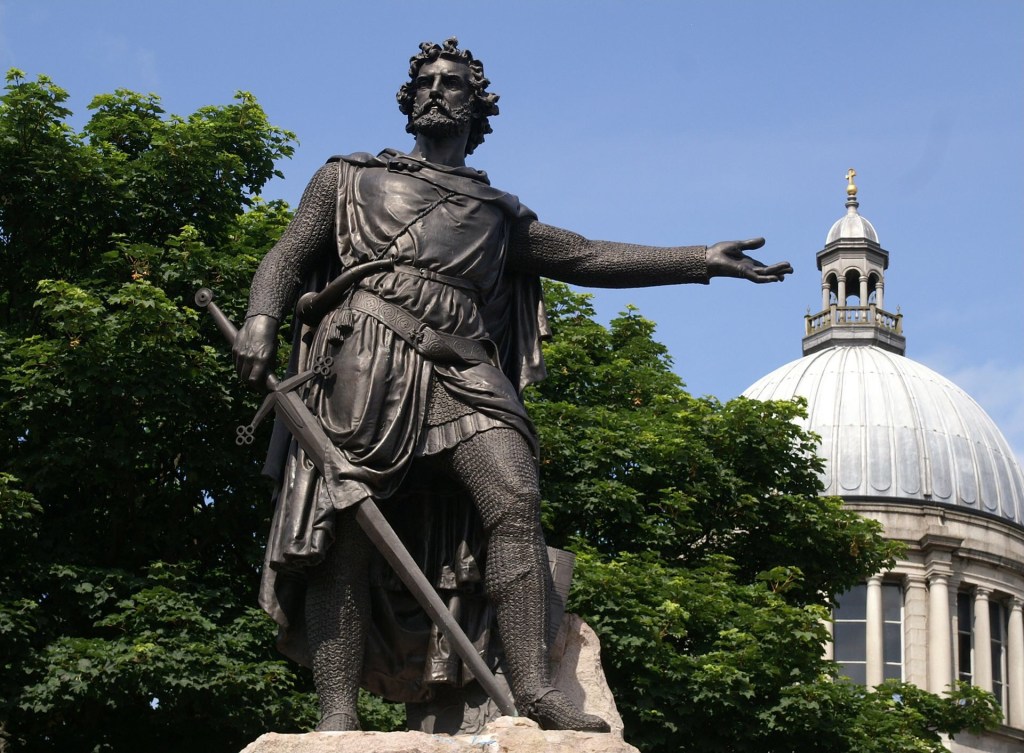
On this day in history : 23rd August 1305 – Sir William Wallace, Scottish patriot, is hanged, drawn, beheaded and quartered in London….

Statue of William Wallace, Aberdeen

After the English had been defeated at the Battle of Stirling Bridge in 1297 Wallace was appointed Guardian of Scotland and remained so until his defeat in the Battle of Falkirk in July 1298….

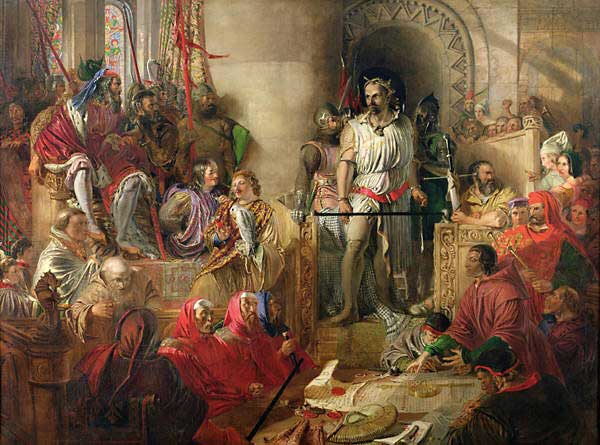
In 1305 he was captured and handed over to King Edward I and brought to trial on the charge of treason – to which he responded “I could not be a traitor to Edward, for I was never his subject”….

Wallace’s trial in Westminster Hall – by Daniel Maclise – Public domain

Following the trial Wallace was taken to the Tower of London…. Here he was stripped naked and then dragged through the streets of the city behind a horse….to the Elms at Smithfield…. He was hanged, drawn and quartered…. He was also emasculated and eviscerated – his private parts and bowels burned before him…. Wallace was then beheaded and his body cut into four parts…. His head, dipped in tar to preserve it, was displayed on a pike on top of London Bridge…. His limbs were sent to Perth, Stirling, Newcastle and Berwick to be displayed separately….

On this day in history….27th June 1746

On this day in history : 27th June 1746 – Flora MacDonald helps Bonnie Prince Charlie escape to the Isle of Skye, dressed as an Irish maid, following his defeat by the English at the Battle of Culloden….

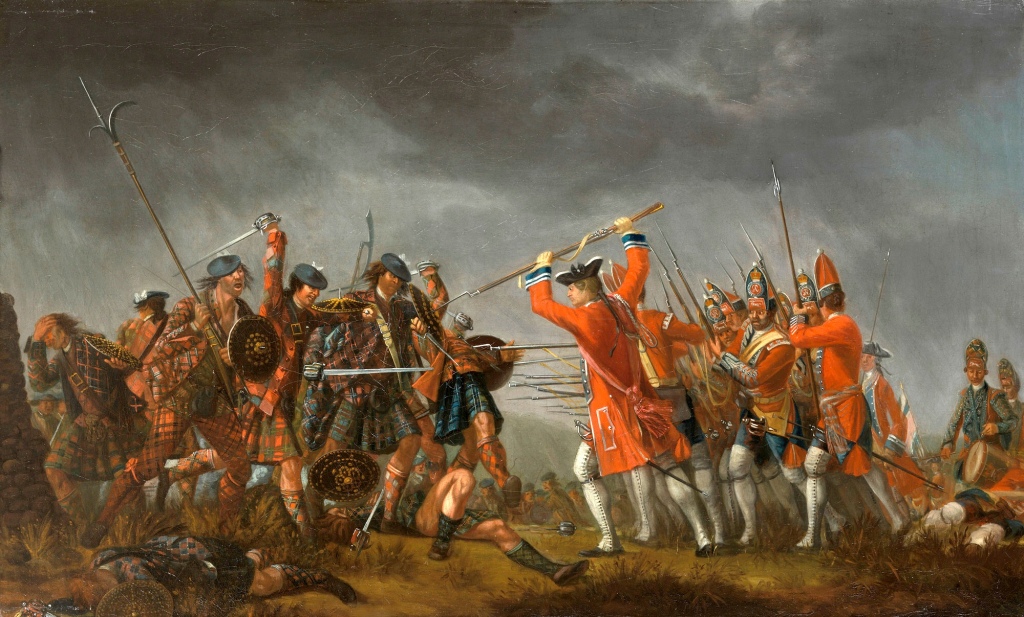
The Battle of Culloden by David Morier – Public domain

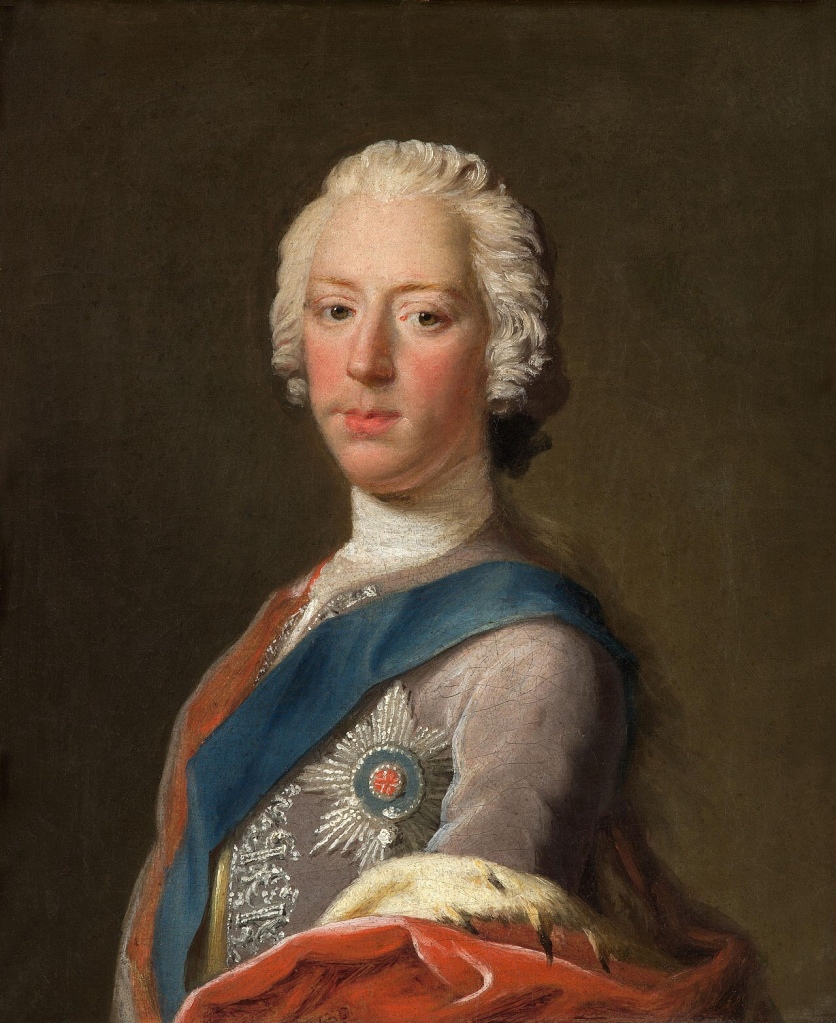
Prince Charles Edward Stuart, better known as Bonnie Prince Charlie, was the grandson of King James II of England…. Charlie was to lead the Second Jacobite Uprising to overthrow King George II in 1745…. But 1746 saw the defeat of the Jacobites at the Battle of Culloden Moor….and Charlie was forced to run or face certain death….

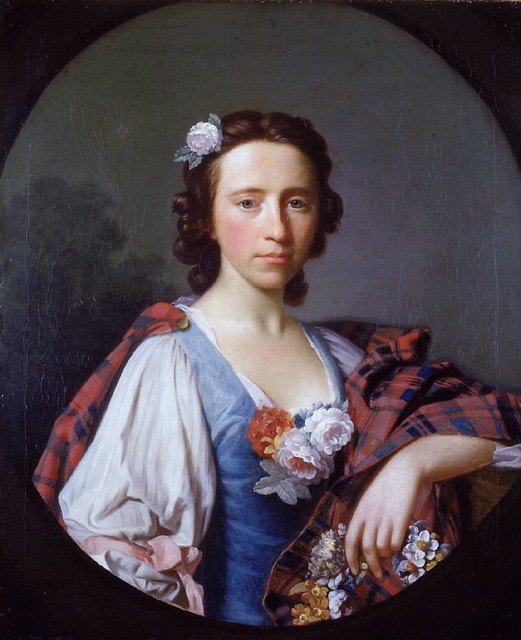
After two months he arrived at the outer Hebridean island of South Ulst – and it was here that he was to meet 24-year-old Flora MacDonald…. Even though the man she was due to marry and her stepfather were both loyal soldiers under King George she agreed to help the Prince – even if somewhat reluctantly to begin with….

Portrait of Flora MacDonald by artist Allan Ramsay – Public domain

Flora managed to persuade her stepfather, who was in charge of the local militia, to allow her to travel to the mainland accompanied by a couple of servants and half a dozen boatmen…. Only one of the ‘servants’ – an Irish spinning maid by the name of ‘Betty Burke’ – was actually Bonnie Prince Charlie in disguise…. And instead of travelling to the mainland the little boat made its way to Kilmuir (now known as Prince’s Point) on the Isle of Skye….

They spent the night hiding in a cottage and the following day made their way on foot to Portree…. From here Charlie was able to find a boat to take him to the island of Raasay – and then he was able to escape to France….

Portrait of Charles Edward Stuart by artist Allan Ramsay – Public domain

Flora however faced arrest and was imprisoned at Dunstaffnage Castle in Oban – before being moved for a short time to the Tower of London…. She was eventually released in 1747 and she returned to Scotland….

“Speed Bonny boat like a bird on a wing,
Onward the sailors cry,
Carry the lad that’s born to be King,
Over the sea to Skye”....

On this day in history….13th April 1880

On this day in history : 13th April 1880 – The death of Scottish botanist and plant hunter Robert Fortune – who brought to us some 250 new species of ornamental plants – and tea to India….

Public domain

Fortune was born in Kelloe, Berwickshire on the 16th of September 1812…. Little is known of his early years and to those who knew him he volunteered little information…. However, we do know he was an apprentice in the gardens of Moredun House and showed promise from the start…. He managed to gain a place at Edinburgh’s Botanic Garden and trained under William McNab, a man who was not easy to impress…. But impress him Fortune did – and with McNab’s backing around 1840 he became Superintendent of the Hothouse Department at the Horticultural Society’s garden at Chiswick, London….

A few months later fortune was granted the position of the Society’s new species collector in China…. He was sent off to find, amongst other things:- double yellow roses, blue peonies, true mandarin oranges, tea plants and information on the peaches that grew in the Emperor’s garden – which were said to weight 2lb each!

Arriving in Hong Kong on the 6th of July 1843 Fortune wasted no time in starting his search…. Over the next three years he made excursions deep into the northern provinces of China…. As plants and seeds were seen as property of the Chinese Empire Fortune would not have been particularly welcome…. He was to encounter many hazards including being threatened at knifepoint by angry crowds, as he went about collecting species such as wisteria and weigela…. He also faced horrendous storms and even pirates on the Yangtze River…. To blend in and avert suspicion he disguised himself as a local Chinese merchant…. He learnt to speak Mandarin, shaved his head and even sported a pigtail…. With this disguise Fortune was able to collect his species to transport back home…. He did this by using Nathaniel Bagshaw Ward’s Wardian cases, an early type of terrarium….

Public domain

He finally returned to London in May 1846 and the following year published his book ‘Three Years’ Wanderings in the Northern Provinces of China’…. Using the journals he had kept he detailed Chinese gardening and agriculture and the history of China’s tea culture…. He had brought back with him a vast array of beautiful exotic ornamental plants and flowers, which were subsequently introduced to the gardens of Europe, the USA and Australia….

Fortune was to set off for China again…. This time for the East India Company, with the mission of securing the best possible tea plants with which to establish plantations in India…. Once more he disguised himself as a local merchant…. He hired an interpreter and ventured into the tea regions of China…. He managed to collect over 2,000 plants and some 17,000 germinating seeds, which were taken to the Himalayas to establish India’s tea industry….

Fortune was to make a further two trips to China and a trip to Japan…. He was to introduce hundreds of trees, shrubs and flowers to us…. From the Kumquat….to many varieties of azaleas, tree peonies and chrysanthemums…. Even the Dragon tree – and camellias, including the ‘Robert Fortune’ which was named for him….

Public domain

Fortune died in London and was buried in Brompton Cemetery….