On this day in history….25th June 1912

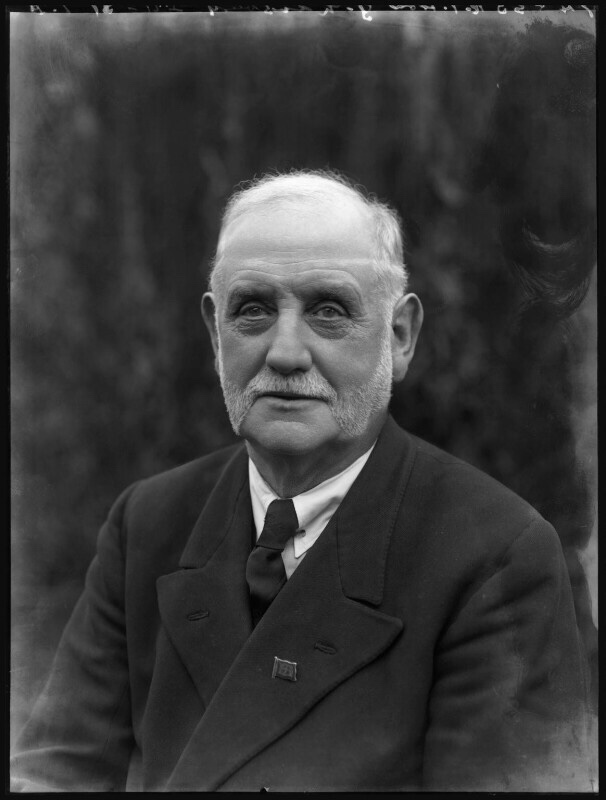
On this day in history : 25th June 1912 – Prime Minister Herbert Asquith comes under attack in the Commons over the force-feeding of suffragettes….George Lansbury is suspended from Parliament for his outburst….

George Lansbury was Labour MP for Bow and Bromley; he was a peace activist, opposed to the Boer War and World War I…. He was also a staunch supporter of Women’s Suffrage….

img_3426
The Right Honourable George Lansbury MP – Bassano Limited – Public domain

The Women’s Social and Political Union (WSPU) had engaged in an active campaign and many had been imprisoned for acts such as smashing windows and refusing to pay fines…. Soon Holloway was full and women were sent further afield, to prisons such as Aylesbury and Birmingham and overcrowding meant conditions were even poorer than usual…. Denied the status of political prisoners and so not receiving the certain privileges that such were entitled to, many of the women resorted to going on hunger-strike in protest…. The authorities responded with forcible feeding….

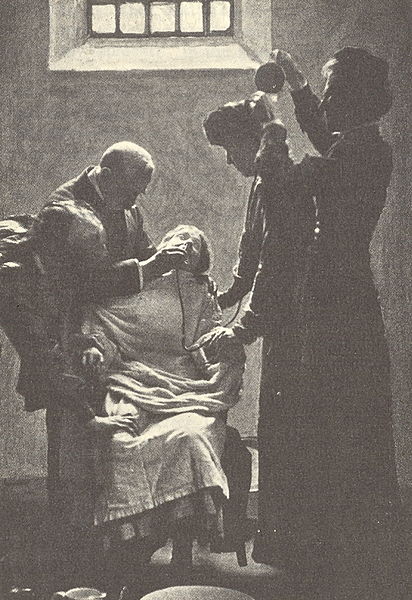
Force-feeding was a brutal procedure…. The woman was either tied to a chair, which was then tipped back, or she was tied down on to a bed…. A rubber tube was then forced up her nose or down her throat, into the stomach…. If administered via the mouth, a ‘gag’ was used, occasionally made of wood but more often steel…. The steel option was particularly painful as it was pushed into the mouth to force open the teeth and then a screw was turned to open the jaws wide…. Sometimes the rubber tube would be accidentally forced into the windpipe, causing food to enter the lungs, thus endangering life…. Which ever method was used, damage to the nose or throat was pretty much inevitable…. Some women had to endure being force-fed more than two hundred times….

suff 15
Force feeding – A suffragette on hunger strike being forcibly fed with a nasal tube. Source: The Suffragette by Sylvia Pankhurst circa 1911 https://common.wikimedia.org/wiki/File%3AForcefeeding.jpg

On the 25th of June 1912 George Lansbury well and truly lost his temper in the House of Commons…. Prime Minister Asquith, in replying to an appeal to release the suffragettes, had stated if the women gave the undertaking not to repeat their offences – meaning give up the cause – then they would be released…. Lansbury shouted “You know the women cannot give such an undertaking! It is ridiculous to ask them to give an undertaking!”….

Shouts of “Order! Order!” Rang out around the Commons…. But Lansbury continued with his tirade; white with fury he advanced to the front bench – shaking his fist in the face of Asquith and other ministers…. With his face just inches from that of the Prime Minister’s he screamed “Why, you’re beneath contempt. You call yourself a gentleman, and you forcibly feed and murder women in this fashion. You ought to be driven out of office”…. He carried on ranting despite MPs shouting their disapproval and the Speaker ordering him to leave…. Lansbury shouted at Asquith “You will go down to history as a man who tortured innocent women”….

Eventually the Speaker regained control, telling Lansbury if he didn’t leave of his own accord then he would be forcibly removed…. His fellow Labour colleagues persuaded him to leave….he was temporarily suspended from Parliament….

Lansbury got little support from other Labour MPs in his fight for Women’s Suffrage – he dismissed theses colleagues as “a weak, flabby lot”…. Later in the same year he resigned his post to fight a by-election in Bow and Bromley for Women’s Suffrage…. He lost to his Conservative opponent – who’s campaign slogan was ‘No Petticoat Government’….

In 1913 Lansbury addressed a WSPU rally at the Albert Hall ~ “Let them burn and destroy property and do anything they will, and for every leader that is taken away, let a dozen step forward in their place”….

suff 9
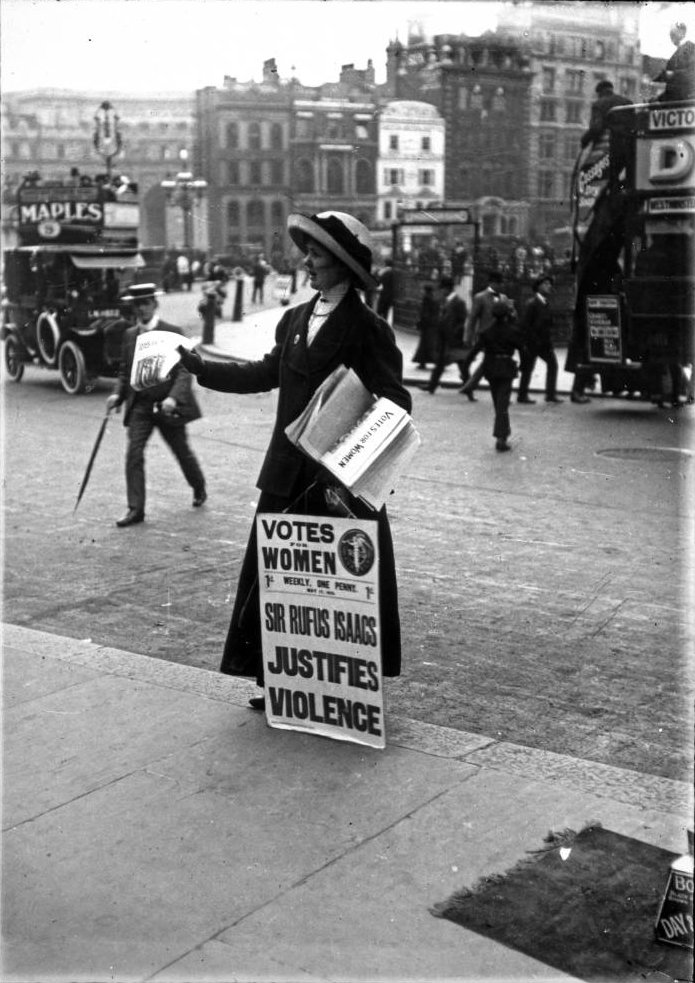
British suffragette with a poster, giving out newspapers Ch. Chusseau-Flaviens https://flickr.com/photos/george_eastman_house/2678367136/in/set-72157606224254056/

Charged and convicted with incitement Lansbury received a three month prison sentence….he immediately went on hunger-strike….

On this day in history….26th November 1867

On this day in history : 26th November 1867 – Mrs Lily Maxwell of Manchester becomes the first ever woman to vote in a British election, due to an error on the list of registered voters….

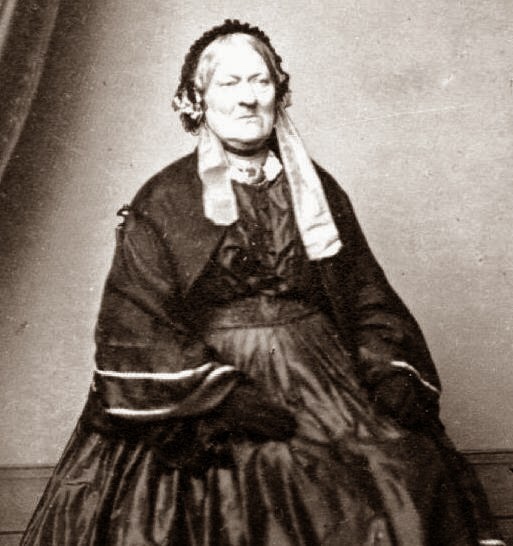
Lily Maxwell – Public domain

Scottish born Lily had a shop in Chorlton-upon-Medlock, Manchester – where she sold a variety of household items including candles and crockery…. She was not always as honest as she should have been – and was even once fined £1 by the courts for diddling her customers with short-comings in weights and measures…

As a shop owner Lily was obliged to pay rates to the local council…. When the 1867 by-election for a local MP came around Lily, as a woman, was not entitled to vote – whereas all male rate payers were…. Somehow Lily’s name got on to the list of these entitled men….

Early suffragette Lydia Becker came to hear of this and urged Lily to use her vote…. Lily agreed, as she was a keen supporter of Liberal candidate Jacob Bright, who advocated Women’s Suffrage and was a campaigner for peace….

Portrait of Lydia Becker by Dacre, Susan Isabel; Manchester Art Gallery; http://www.artuk.org/artworks/lydia-becker-204800

When voting day arrived Lily, accompanied by Lydia, arrived at the town hall to cast her vote…. Bearing in mind in those days it was not a secret ballot – she had to announce loud and clear to all present who she wished to vote for…. She caused quite a commotion amongst the crowd – but as her name was on the list the presiding officer had no choice but to record her vote…. The room exploded with cheers for the first British woman voter….

More than 5,000 women then applied to have their names added to the electoral registers and on the 2nd of November 1868 the case for these claims came before the Court of Common Pleas…. However, it was ruled that women could not vote in British elections and Women’s Suffrage was declared illegal….

On this day in history….13th July 1911

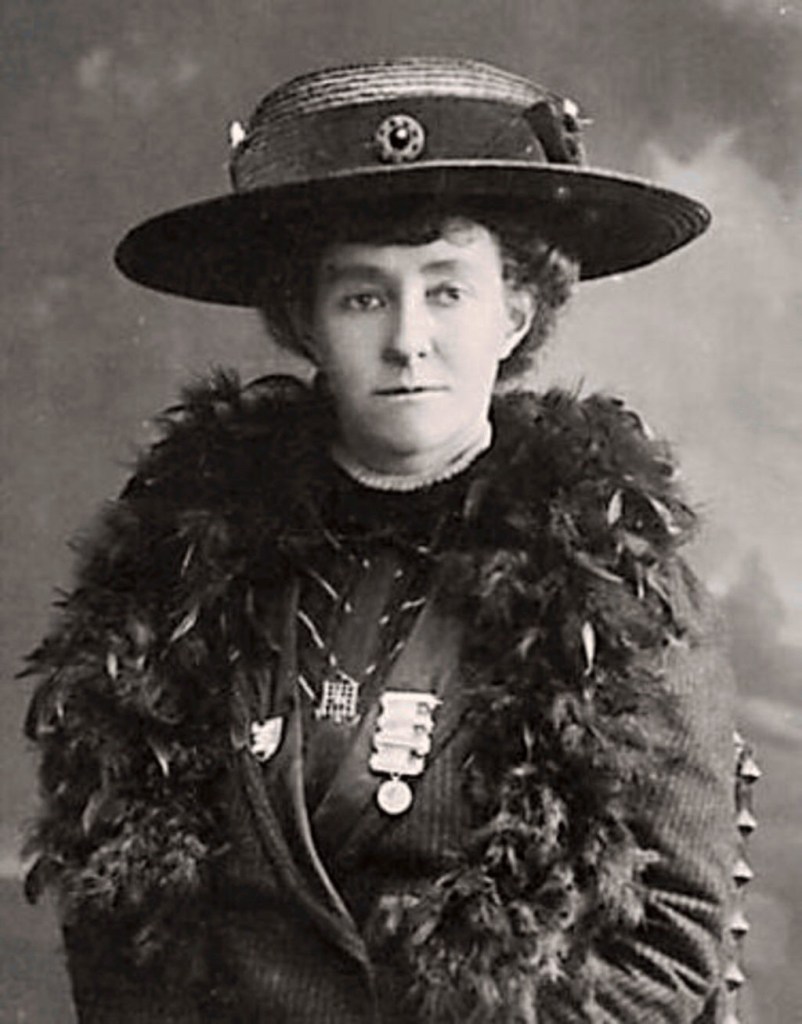
On this day in history : 13th July 1911 – Suffragette Emily Wilding Davison hides in a broom cupboard in the House of Commons so she can record it as her address on the night of the 1911 Census….

Emily Wilding Davison – Public domain

Emily had hidden herself in a cupboard in St. Mary Undercroft, the chapel of the Palace of Westminster…. She remained there throughout the night to avoid being registered in the Census at any other address…. She was discovered by a cleaner the following morning, who reported her – she was arrested but not charged…. Ironically she ended up being recorded on the 1911 Census twice! Once by the Clerk of Works at the House of Commons and again by her landlady at her lodgings….

Having given up her teaching job to work for the cause Emily was an extremely active suffragette…. She was arrested many times, for acts ranging from causing a public disturbance to setting light to post boxes…. She spent several short terms in prison – and was one of the many suffragettes who went on hunger strike…. She even once barricaded herself in her cell – and the guards flooded it with water, nearly filling the room…. Eventually the door had to be broken down…. In 1912, whilst serving a sentence in Holloway, she jumped from a prison balcony in protest of the abuse and force feeding of suffragettes….

Emily Wilding Davison circa 1912/13 – Public domain

Finally on the 4th of June 1913, Emily committed her final act of suffrage at the Epsom Derby…. She ran out onto the racecourse in an attempt to pin a suffrage flag onto the racehorse belonging to King George V – who was watching the race with Queen Mary…. Emily fell beneath the hooves of the horse….she died in hospital on the 8th of June….

Emily Wilding Davison towards the end of her life – Public domain

On this day in history….21st March 1920

On this day in history : 21st March 1920 – The death of Evelina Haverfield, the British suffragette who during WW1 began to devote herself to helping the Serbian people….
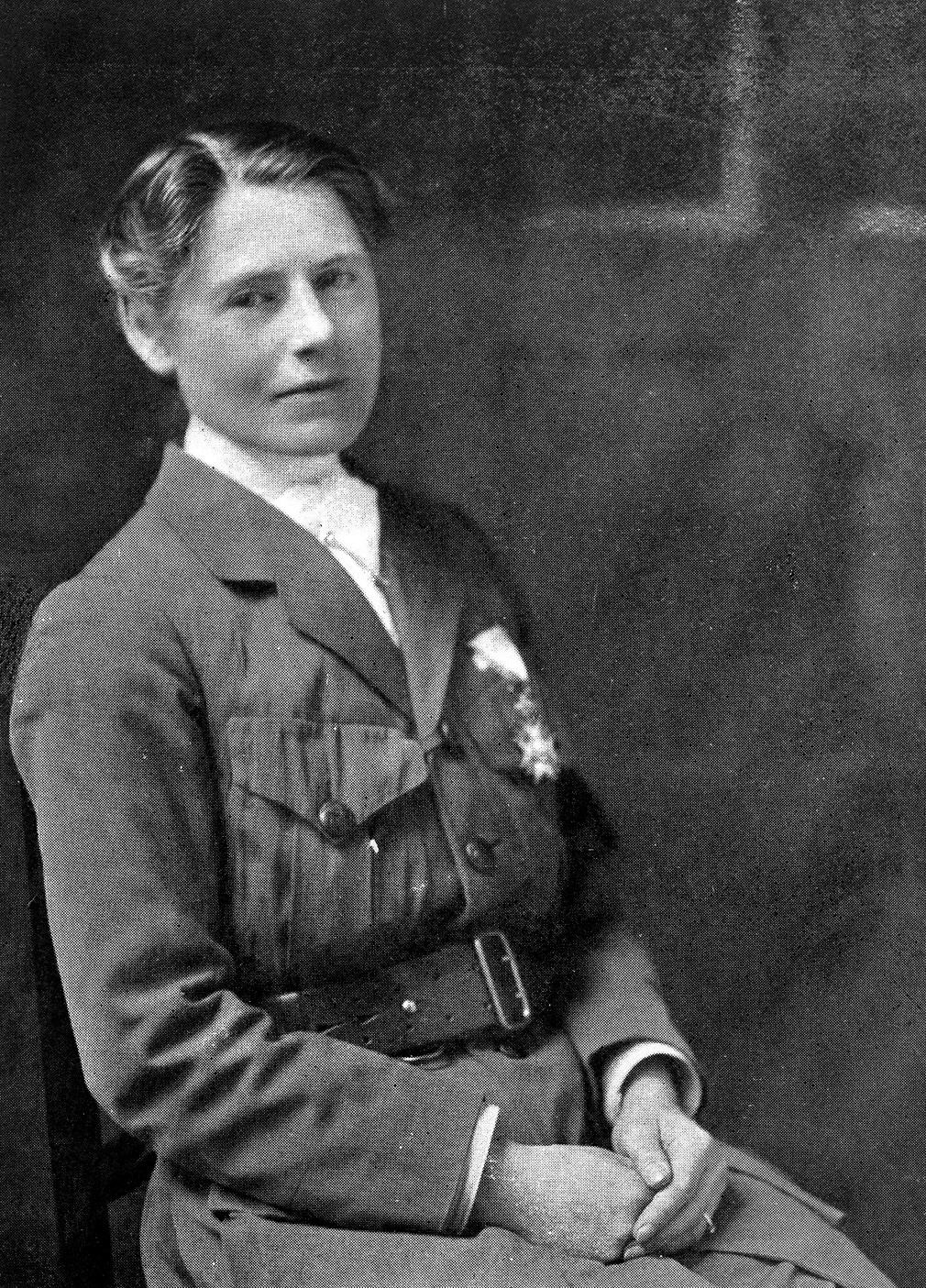
Portrait of Honorable Evelina Haverfield by B. Cundy – The Wellcome Collection CC BY 4.0

Evelina Scarlett, the daughter of William Frederick Scarlett, 3rd Baron Abinger and Helen Magruder Scarlett, was born at Inverlochy Castle, Kingussie, Scotland on the 9th of August 1867…. She grew up in London and Inverlochy before going to school in Düsseldorf, Germany in 1880….

On the 10th of February 1887 Evelina married Royal Artillery Major Henry Wykeham Brooke Tunstall Haverfield – she was 19-years-old, he was 20 years older than her…. They had two sons, John Campbell Haverfield in 1887 followed by Brook Tunstall Haverfield in 1889…. The family made their home in Sherborne, Dorset….only Henry was to die only a few years later in 1895….

Evelina remarried on the 19th of July 1899 – another Royal Artillery Major, John Henry Balguy, a friend of her late husband…. She kept her house in Sherborne – and continued to use the name Haverfield, changing it back by deed poll just a month after the marriage…. She accompanied her new husband to South Africa during the Second World War…. Being an accomplished horsewoman herself she formed a retirement camp for horses…. After 10 years Evelina and Balguy went their separate ways as it was not a happy union, although they never actually divorced….

After joining the Sherborne branch of the National Union of Women’s Suffrage Evelina attended a rally at the Royal Albert Hall…. Inspired she then in 1908 joined the Women’s Social and Political Union, founded by Emmeline Pankhurst…. She was arrested several times, once with Emmeline during a demonstration, another time along with 200 other suffragettes for smashing windows and in 1910 for assaulting a police officer…. She reportedly claimed in court that she had not hit him hard enough and “next time I will bring a revolver!” She eventually found herself in Holloway serving a two week sentence after attempting to break through a police cordon outside the House of Parliament…..

In 1911 Evelina began a relationship with Vera ‘Jack’’ Holme, also known as the Pankhursts’ Chauffeur……it was a friendship that was to last for the rest of her life…. They soon began to live together, quite possibly as a couple – and Vera made Evelina the sole heir in her Will….

Not a lot is known about the early life of Vera Holme…. She was born on the 29th of August 1881 in Birkdale, Lancashire to parents Richard and Mary Holme…. She may have been educated in France before becoming an actress…. Vera was known to be a lesbian, she tended to dress in masculine clothes and adopted mannish mannerisms…. She joined the WSPU in 1908, soon becoming an active member, working alongside the likes of Annie Kennedy, Clara Codd and Elsie Howey…. It was in 1909 that a wealthy supporter of the WSPU bought Emmeline Pankhurst an automobile that Vera was appointed her chauffeur…. Vera also spent time in Holloway….during 1911 after being convicted of stone throwing….
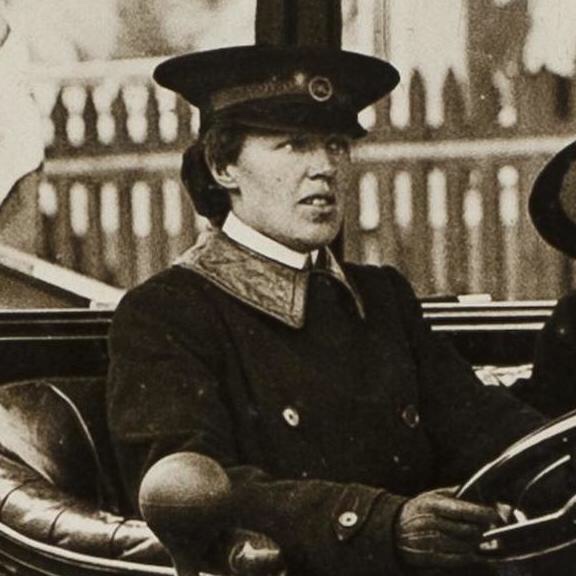
Vera ‘Jack’ Holme – LSE Library via Flickr

At the outbreak of WW1 Evelina founded the Women’s Emergency Corps, to help with the war effort….an organisation that helped women to become doctors, nurses and motorcycle messengers….

In 1915 she received instructions to organise the dispatch of the Scottish Women’s Hospital units to Serbia, an expedition she herself accompanied…. The Scottish Women’s Hospital to Foreign Services had been founded in 1914, providing nurses, doctors, ambulance drivers, cooks and orderlies to what was to become four hospitals in Serbia…. The conditions in Serbia were beyond dire….the Serbian army had just 300 doctors for half a million men…. As well as battle injuries to contend with there was also a typhus epidemic affecting both the military and civilians alike…. However, in 1916 the volunteers were forced to leave after Serbia was finally invaded…. A hard resistance campaign had been fought against the invading Austrians but eventually starvation, disease and exhaustion were to take their toll in the winter of 1915 – Serbia could no longer hold out….

In August 1916 Evelina was dispatched to Serbia via Russia as ‘Head of Transport Column’ – she was in charge of an army of 75 women…. She was then later to co-found with Flora Sandes the ‘Evelina Haverfield’s and Flora Sandes’ Fund for Promoting Comforts for Serbian Soldiers and Prisoners’…. Back in England she raised awareness of the situation in Serbia….
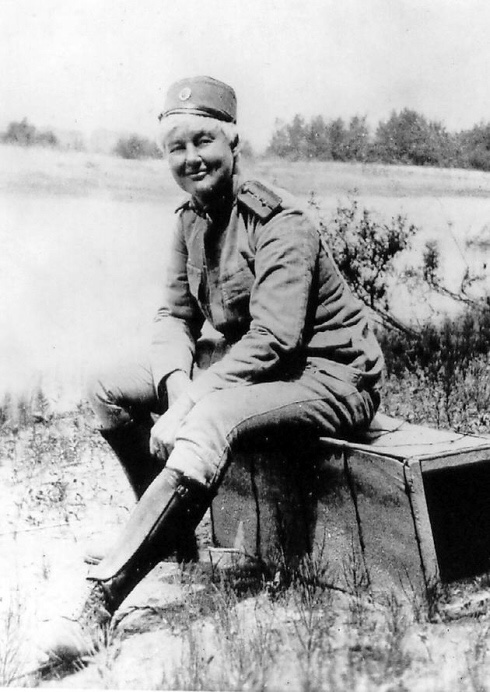
Flora Sandes in Serbian Army uniform ca.1918 – Public domain

After the War Evelina and Vera travelled back to Serbia and they set up a children’s health centre and orphanage in the small mountain town of Bajina Bašta…. The centre was later to be named after her – and she was to receive the highest Serbian award….the Order of the White Eagle….

On the 21stof March 1920 Evelina died of pneumonia…. She was buried with full military honours of the cemetery in Bajina Bašta…. Shops and offices closed for the day and all the inhabitants of the town attended…. Her work was continued after her death – a British medical mission remained in Bajina Bašta until 1922; now a hospital stands in its place where a plaque commemorating Evelina Haverfield hangs…. She is still held in the highest esteem by the Serbian people….
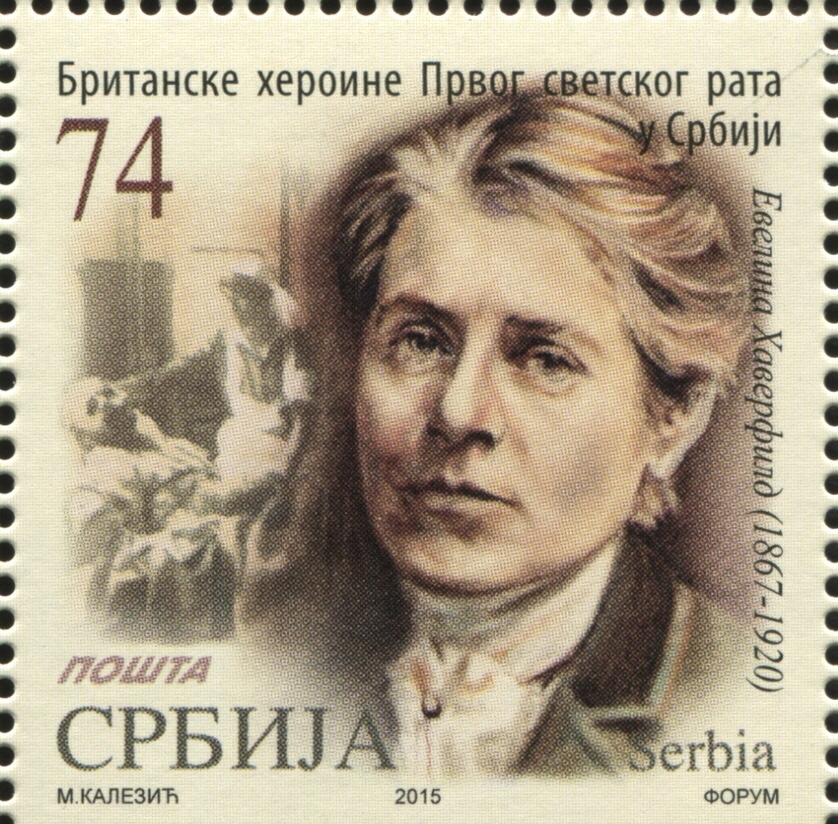
Evelina Haverfield on a 2015 Serbian postage stamp – Post of Serbia – Public domain

On her death Evelina left Vera £50 a year for life in her Will – even though it was contested by the man who was still legally her husband….
A stitch in time….

“We have to free half of the human race, the women, so that they can help to free the other half” – Emmeline Pankhurst

suff 3
Emmeline (Goulden) Pankhurst circa 1913 Public domain https://commons.wikimedia.org/wiki/File%3AEmmeline_Pankhurst_1.png

June the 8th is fast approaching – the day the British public go to the polls…. Being a woman of middling years, this is something I have done on numerous occasions in the past…. I recall the very first time I exercised my right to vote; I was in my late teens, I stopped off at the village hall on my way to work, I felt so very grown-up. That time and every subsequent time since, that I have pencilled my ‘X’ into the appropriate box, I have had no doubt as to which Party I wished to vote for; it has always been perfectly clear in my mind – until now…. For the first time in my life, I am questioning – to the point I have even asked myself whether I should bother to vote at all….

************************

A couple of years ago, John and I visited the Priest House at West Hoathly in West Sussex; a traditional Wealdon hall house, situated on the edge of Ashdown Forest, it is a museum filled with some of the most amazing artifacts from life gone by. One particular item really caught my eye – a framed handkerchief covered with signatures. On closer inspection it became evident that each signature had been painstakingly embroidered. The delicate piece of linen is known as ‘The Suffragette Handkerchief’ and bears 66 signatures and 2 sets of initials; I was fascinated and bought myself a pamphlet explaining its history and meaning…. Last week, whilst doing a spot of spring cleaning, I came across this pamphlet….it seemed poignant that I should unearth it at this particular point in time…. The signatures are those of a group of women that were being held in Holloway Prison in 1912 – when the Women’s Suffrage Movement was at its peak….

suff 17
The Suffragette Handkerchief Image courtesy of http://www.hoathlyhub.info/PriestHouse/

After the industrial revolution many women were in the position of being in full-time employment. Although actively contributing to the Country’s workforce they had no voice in the running of the Nation – no representation in Parliament and indeed, were not even allowed to vote. Organised campaigns for women’s suffrage started to materialise in 1866 and by 1888 women were permitted to vote in many council elections – but that was as far as it went…. In 1867, Liberal MP, John Stuart Mill proposed an amendment to give women the vote on the same terms as those of men…. It was rejected by 194 to 73 – and so the ‘Cause’ gained momentum….by the end of the 19th Century the focus of women’s equality became that of their right to vote….

The National Union of Women’s Suffrage Societies (NUWSS), known as the ‘Suffragists’ (not to be confused with suffragettes) was founded in 1897. It was a merger of two groups that had both split up in 1888; the National Central Society for Women’s Suffrage and the Central Committee, National Society for Women’s Suffrage. The aim of the NUWSS was to lobby and obtain the vote for women through democratic, legal and peaceful means…. Its members were middle class and working class women, working together, alongside each other….and it wasn’t only confined to women, many men also actively campaigned for the Cause…. By 1914 it had over 100,000 members and 500 branches countrywide….

In 1903 the Women’s Social Political Union (WSPU) was founded by six women in Manchester. Dissatisfied with the results being achieved by the NUWSS, this new group decided more militant tactics were needed. The women  only group, under the leadership of Emmeline Pankhurst and her daughter, Christabel, fought for social reforms and became known as the ‘Suffragettes’….adopting the slogan “Deeds, not words”….

suff 1
Emmeline Pankhurst being arrested at King’s Gate in May 1914 Author unknown – public domain https://commons.wikimedia.org/wiki/File%3AEmmeline_Pankhurst_Arrested_1914.jpg

In November 1911, demonstrations in London saw the arrest of 223 women, after a spree of window breakages of government buildings in Whitehall and at shops in the Strand. March 1912 saw an even bigger demonstration, a second wave of window smashing in London, organised by the WSPU, meant a further 200 plus women were arrested. The leaders of the WSPU, including Emmeline Pankhurst, were sentenced to nine months in prison; other women received sentences averaging two months – many for refusing to pay fines levied in Court….

suff 16
Great suffragette demonstration in London – Mrs. Andrew Fisher, Mrs. McGowan and Miss Vida Goldstein from Australia 1911 https://commons.wikimedia.org/wiki/File%3AGreat_suffragette_demonstration_in_London

suff 12
Postcard of a suffragette procession of 1911. Printed by H Searjent of Ladbroke Grove, London 1911 https://commons.wikimedia.org/wiki/File%3ASuffragette_procession_1911.jpg

Soon, Holloway became full, so women were sent to other prisons in places such as Birmingham and Aylesbury. Overcrowding meant the conditions in the prisons were even poorer than usual. Denied the status of political prisoners and so not receiving the certain privileges that such were entitled to, many of the women resorted to going on hunger strike as a protest….

suff 4
Emmeline Pankhurst in prison dress circa 1911 public domain https://commons.wikimedia.org/wiki/File%3AEmmeline_Pankhurst_in_prison.jpg

The pamphlet I found whilst spring cleaning recites the story of how this particular group of women happened to be in Holloway at the time and the author had researched the women whose names appear on the handkerchief. They came from all over the Country and from all walks of life. After reading through the explanation and the information collected on each woman, it inspired me to find out a bit more about women’s suffrage closer to home….

suff 8
Anti Suffrage Postcard c.1910 TWL/2004/1011/55 LSE Library CC / no restrictions https://www.flickr.com/photos/lselibrary/22754363186/

Here in Surrey, the Movement appears to have become active in the 1870s. The first recorded meeting was held in Guildford during January 1871. Farnham had a branch of the NUWSS from 1908 and by 1909 the Godalming branch had been established. Godalming’s president was Mrs. Mary Watts, the widow of the artist G.F.Watts. Her secretary, Theodora Powell, went on to co-found the Guildford branch in 1910, (Cranleigh also got its own branch in this same year). Connected to the Godalming branch was a New Zealander by the name of Noeline Baker, who befriended famous garden designer, Gertrude Jekyll (who lived just outside of Godalming). Jekyll became a member of the NUWSS and designed banners for both the Godalming and Guildford branches….

The Church in Surrey provided sympathisers to the Cause. One clergyman in particular, involved in the League for Women’s Suffrage, was a Reverend Algernon Creed, vicar of Ewshot, near Farnham. This particular piece of information struck a chord with me; I spent my teenage years in Ewshot, living in a house opposite the church…. I got married in that church, my son was christened there and it is where we said ‘good-bye’ to my father after he passed away. A humble church in a small Surrey village, I had no idea such an advocate for women’s equality had once been such an important part of it….

By 1913 all areas of the Country had representation in organisations promoting the suffrage cause. Surrey saw its fair share of militant activism; one method was to sabotage male dominated organisations, golf courses and cricket grounds were popular choices. Sometimes more extreme measures were attempted, for example a bomb left at Haslemere Station (which failed to ignite)….

Many suffragettes had homes in the Surrey Hills, amongst them Emmeline and Frederick Pethick-Lawrence, who helped lead the WSPU. Their home, ‘The Mascot’, in South Holmwood, became the place where many women released from prison after being on hunger strike, went to recuperate….

suff 14
Emmeline Pethick-Lawrence, Jennie Baines, Flora Drummond and Frederick Pethick-Lawrence c.1906-1910 https://www.flickr.com/photos/lselibrary/22545429328/

Peaslake, a village in the Surrey Hills, was home to a surprisingly large number of activists, it was described in 1912 as being “rather a nest of suffragettes”….

Hilda Brackenbury and her daughters Georgina and Marie also opened their home, ‘Brackenside’, in Peaslake, to women recovering from hunger strike….including Emmeline Pankhurst herself. In fact, it was a Peaslake resident, Marion Wallace Dunlop – an artist, sculptor and illustrator – who initiated the very first hunger strike….

Marion Wallace Dunlop, a member of the WSPU, was imprisoned for printing an extract from the bill of rights on the walls of St. Stephen’s Hall at the House of Commons. On the 5th July, 1909, she went on hunger strike, refusing all food as a protest that her rights as a political prisoner were not recognised. She claimed her actions were “….a matter of principle, not only for my own sake but for the sake of others who may come after me….refusing all food until this matter is settled to my satisfaction….” After three days of fasting….she was released….

suff 11
Entry in Mabel Capper’s scrapbook by Marion Wallace Dunlop June 1909 https://commons.wikimedia.org/wiki/File%3AMarion_Wallace_Dunlop_WSPU_prisoners_scrapbook_entry.png

suff 10
Memories of Winson Green Gaol – Mabel Cappers WSPU prisoner’s scrapbook – Forcible feeding illustration 18 September 1909 https://commons.wikimedia.org/wiki/File%3AForcible_feeding_illustration_from_WSPU_prisoners_scrapbook.png

Force feeding was a brutal procedure. The woman was either tied to a chair, which was then tipped back or she was held down on a bed. A rubber tube was then forced up the nose or down the throat, into the stomach. If administered via the mouth, a ‘gag’ was used, occasionally made of wood but more often steel. The steel option was particularly painful as it was pushed into the mouth to force open the teeth and then a screw was turned to open the jaws wide…. Sometimes the rubber tube would be accidentally forced into the windpipe, causing food to enter the lungs, thus endangering life…. Which ever method was used, damage to the nose or throat was pretty much inevitable….

suff 15
Force feeding – A suffragette on hunger strike being forcibly fed with a nasal tube. Source: The Suffragette by Sylvia Pankhurst circa 1911 https://common.wikimedia.org/wiki/File%3AForcefeeding.jpg

Some women had to endure being force-fed more than 200 times…. Two such women were Grace Roe and Kitty Marion….

Grace Roe joined the WSPU after hearing Emmeline Pethick-Lawrence speak in October 1908. Grace was arrested for the first time after a demonstration held at the House of Commons on June 29th, 1909. She was appointed organiser of the East Anglia WSPU in 1910 and then in 1912 Emmeline Pankhurst made her deputy of the WSPU in London, under Annie Kenney. After Kenney’s arrest and imprisonment for ‘incitement to riot’ in April 1913, Grace became leader of the WSPU in London….

suff 13
Emmeline Pankhurst talking to Grace Roe, c.1912 – France https://www.flickr.com/photos/lselibrary/22937693496/

suff 2
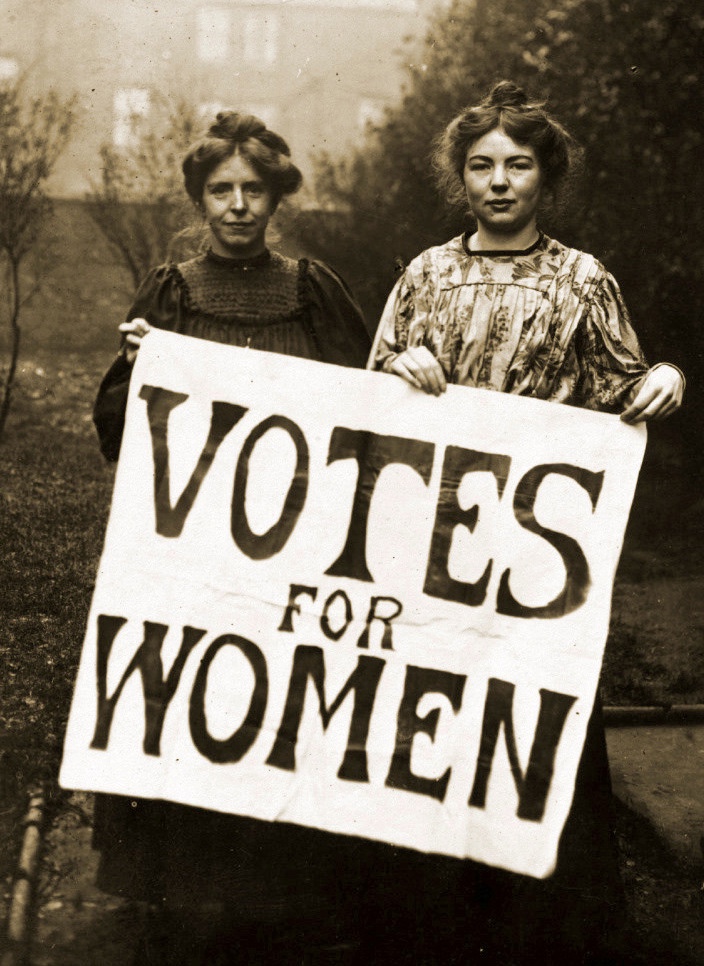
Christabel Pankhurst (left) and Annie Kenney circa 1911 Source: The Suffragette by Sylvia Pankhurst Public domain https://commons.wikimedia.org/wiki/File%3AChristabel_Pankhurst_and_Annie_Kenney.jpg

Katherina Schafer was born in Westphalia, Germany in 1871. Her mother died when she was just two years old, her father remarried but lost his second wife when Katherina was only six; both women died of TB. Katherina’s father was very strict and by all accounts had an uncontrollable temper…. In 1886 the young Katherina moved to England to join her sister, Dora. She learnt English, changed her name to Kitty Marion and became an actress, enjoying a successful although modest career. In 1908 she joined the WSPU, moved to Hartfield, East Sussex and became an active member of the Brighton branch….

In June 1908 Kitty was arrested at a demonstration at the House of Commons. In July 1909 she was arrested once again; this time she was imprisoned. She immediately went on hunger strike which resulted in her being force-fed. In retaliation and protest she barricaded herself in her cell and set light to her mattress….

In November 1911, she was once again sent to prison, with a sentence of 21 days to be served in Holloway, she went on hunger strike yet again…. It has been calculated that Kitty endured some 232 force feedings during the times she spent on hunger strike in prison….

This account by Kitty Marion, from 1913, has been edited by Christabel Pankhurst. The excerpt is taken from ‘The Suffragette’ – the official weekly newspaper of the WSPU….

….”I was lying on my bed, and I immediately turned to the wall, but they wheeled the bed out into the middle of the room, and tried to get me into position for feeding. I struggled violently, but they sat on my legs and I was fed with the nasal tube. I was so exhausted at the end of the feeding that a wardress was left with me for some time”….

The following account is that of E.Sylvia Pankhurst (daughter of Emmeline). The excerpt is as published in McClure’s magazine, August 1913 pp 87-93…. Please be advised, it is quite graphic….

….”I struggled as hard as I could, but they were six and each one of them much bigger and stronger than I. They soon had me on the bed and firmly held down by the shoulders, the arms, the knees and the ankles.

Then the doctors came stealing in behind. Some one seized me by the head and thrust a sheet under my chin. I felt a man’s hands trying to force my mouth open. I set my teeth and tightened my lips over them with all my strength. My breath was coming so quickly that I felt as if I should suffocate. I felt his fingers trying to press my lips a part, -getting inside,- and I felt them and a steel gag running around my gums and feeling for gaps in my teeth.

I felt I should go mad; I felt like a poor wild thing caught in a steel trap. I was tugging at my head to get it free. There were two of them holding it. There were two of them wrenching at my mouth. My breath was coming faster and with a sort of low scream that was getting louder. I heard them talking : “Here is a gap”.

“No, here is a better one – this long gap here”.

Then I felt a steel instrument pressing against my gums, cutting into the flesh, forcing its way in. Then it gradually prised my jaws a part as they turned a screw. It felt like having my teeth drawn; but I resisted – I resisted. I held my poor bleeding gums down on the steel with all my strength. Soon they were trying to force the india-rubber tube down my throat.

I was struggling wildly, trying to tighten the muscles and to keep my throat closed up. They got the tube down, I suppose, though I was unconscious of anything but a mad revolt of struggling, for at last I heard them say, “That’s all”; and I vomited as the tube came up.

They left me on the bed exhausted, gasping for breath and sobbing convulsively. The same thing happened in the evening; but I was too tired to fight so long.

Day after day, morning and evening, came the same struggle. My mouth got more and more hurt; my gums, where they prised them open, were always bleeding, and other parts of my mouth got pinched and bruised.

Often I had a wild longing to scream, and after they had gone I used to cry terribly with uncontrollable noisy sobs; and sometimes I heard myself, as if it were some one else, saying things over and over again in a strange, high voice.

Sometimes – but not often; I was generally too much agitated by then – I felt the tube go right down into the stomach. It was a sickening sensation. Once, when the tube had seemed to hurt my chest as it was being withdrawn, there was a sense of oppression there all the evening after, and as I was going to bed I fainted twice. My shoulders and back ached very much during the night after the first day’s forcible feeding and often afterwards.

But infinately worse than any pain was the sense of degradation, the sense that the very fight that one made against the repeated outrage was shattering one’s nerves and breaking down one’s self control”….                  – E.Sylvia Pankhurst

The act of force feeding was highly controversial, causing a public outcry. In 1913 the government looked to other ways of dealing with the hunger strike issue and introduced the Temporary Discharge for Ill-Health Act, which became known as the Cat and Mouse Act. This in itself could be regarded almost as cruel as the force feeding itself…. It allowed the release of a hunger striker in order for her to recuperate and regain her health…. Once recovered, she would then be re-arrested and made to complete her sentence….

Between 1900 and the start of World War 1 approximately 1,000 people were imprisoned for crimes relating to suffrage. Most were sent to prison for refusing to pay fines imposed by the Courts as punishment….

The subject of women’s suffrage was debated in the House of Commons 18 times between 1870 and 1904. Many suffrage societies suspended their activities at the beginning of WW1. Two million women took up and worked in roles traditionally fulfilled by men; this was to become a key factor in women finally obtaining the vote….

suff 5
Members of the Women’s Social and Political Union campaigning for women’s suffrage in Kingsway circa 1911 Public domain https://commons.wikimedia.org/wiki/File%3AWSPU_in_Kingsway.jpg

In February 1918, the Representation of the People Act was passed awarding the vote to women aged 30 or over, if they were a householder or the wife of one. This excluded the majority of working class women and fell well short of the original aims of the suffrage campaign….

In November 1918 the Parliament (Qualification of Women) Act was passed, allowing women to stand for Parliament. The first ever elected female MP was Constance Markievicz for Sinn Fein but she did not ever take her seat. In 1919, Lady Nancy Astor became the first female MP to sit in the House of Commons….

On the 14th December, 1918, 8.5 million women were eligible to vote in a general election for the first time. It wasn’t until 1928 with the Representation of the People (Equal Franchise) Act that women were given the same equal voting rights as men: the general election of May 1929 saw 15 million women with the right to vote….

So, with all that in mind, I for one have been reminded why I have always felt it my duty as a woman to vote; in recognition of our sisters who fought so hard to secure it for us. Far be it for me to preach to anyone but I hope it’s given you food for thought, girls….as it has for me…. This Country may be facing difficult times and some of us may be having problems deciding which way to vote or whether to even bother….but don’t you think we owe it to these women to do so….? I’m glad I came across that pamphlet….

suff 9
British suffragette with a poster, giving out newspapers Ch. Chusseau-Flaviens https://flickr.com/photos/george_eastman_house/2678367136/in/set-72157606224254056/