“Pop the kettle on….we’ll have a nice cuppa & a mince pie….”

Britain – a nation of tea drinkers and cake eaters….

In recent years TV shows such as The Great British Bake Off have lured us into the kitchen to try out our baking skills – I’ll bet there’s plenty a festive treat coming out of Britain’s kitchens in the run up to this Christmas…. Mince pies, Christmas cakes and puds, Yule logs – the Season wouldn’t be the same without them – so much a part of our traditional celebrations – but do we ever stop to consider why we eat such fare at this time of year….?
pies 3
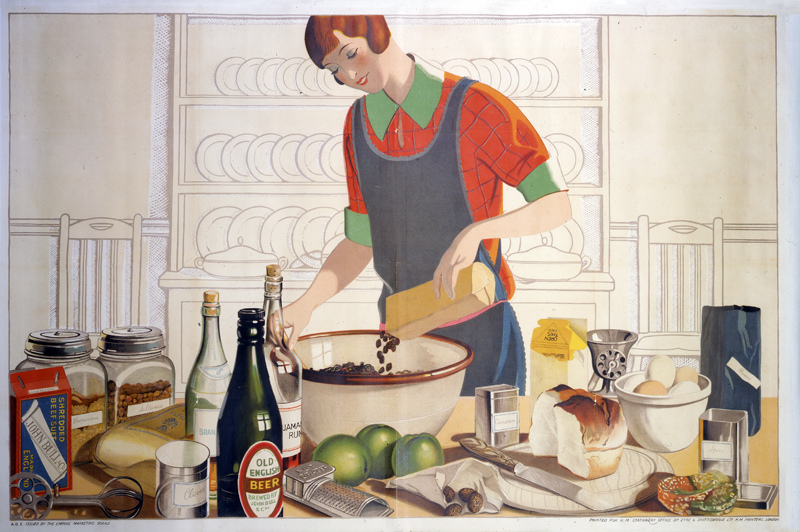
Making the Empire Christmas Pudding The National Archives UK via Foter.com / No known copyright restrictions Original image URL: https://www.flickr.com/photos/nationalarchives/5263978078/

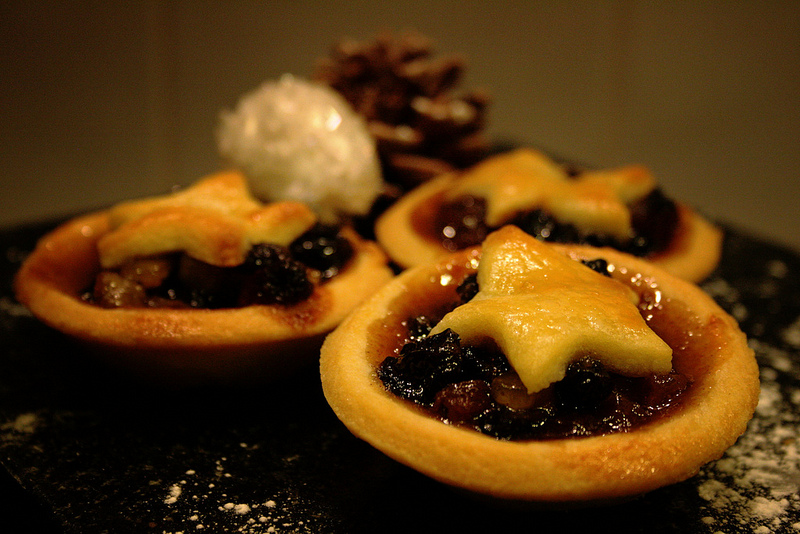
Here in the UK, Brits will munch their way through some 300 million mince pies over the festive period – but the sweet, rich, dried fruit mixture we are all used to filling our pies wasn’t always like that…. We can thank the Victorians for the version we know and love today….
pies 2
Homemade mince pies Eldriva via Foter.com / CC BY-ND Original image URL: https://www.flickr.com/photos/eldriva/8172923611/

A clue to the beginnings of this confection is in the name – ‘mince’…. Other early names include ‘Mutton pie’, ‘Shrid pie’ and ‘Christmas pie’…. It is thought Crusaders returning from the Middle East brought home with them recipes and knowledge of Middle Eastern cookery – combinations of meat and dried fruits, laced with spices such as cinnamon, cloves and nutmeg…. Our Western interpretation gave us the original filling for the mince pie….using meat such as lamb. These first pies were usually formed into an oval shape to represent the crib of the Baby Jesus – sometimes a pastry baby would have decorated the top…. In time mince pies were to become a status symbol at the banquets of the wealthy – a chance to show off as to whose pastry chef could create the most elaborate, exciting shapes….

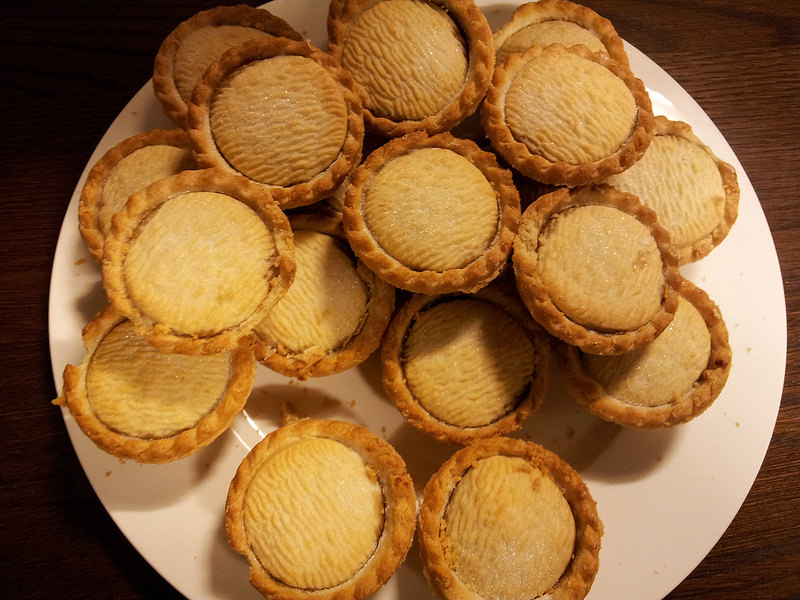
There was a belief in the Middle Ages that eating a mince pie on every one of the 12 days of Christmas brought wealth for the coming year…. (Really? Pass that plate of pies over here then)….
pies 19
Mince pies oatsy40 via Foter.com / CC BY Original image URL: https://www.flickr.com/photos/oatsy40/15443417714/

Our Christmas pudding also has its roots in the Middle Ages; it originates from a 14th Century pottage known as ‘Frumenty’. Made from beef, mutton, prunes, currants, raisins, wine and spices, its consistency was more of a soup. It was meant as a light meal and was eaten in the days leading up to the festive season – the idea being to prepare the body for the on-coming splurge of over-indulgence….

By the end of the 16th Century the porridge was evolving. By 1650, with the addition of eggs, oatmeal, beer, spirits and extra dried fruit, it had become reminiscent of the traditional pudding of the Christmas dinner we know today…. Once again it was the Victorians who adapted it into its now familiar form….

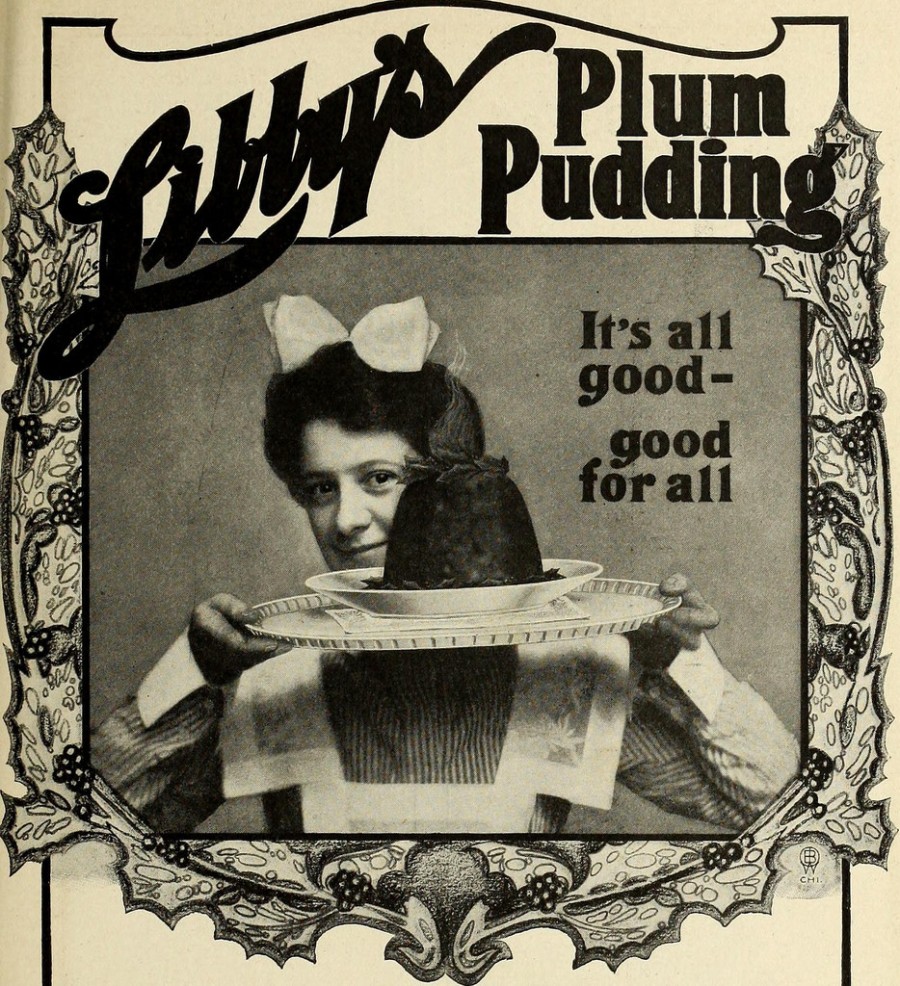
Before the 19th Century puddings were boiled in a cloth – it was the Victorians who began to put the mixture into bowls and moulds. By the 1830s most ordinary families would have had a traditional ball-shaped pudding – if it happened to be on the ‘heavy’ side it would have been jokingly referred to as a cannon ball…. Richer families may have enjoyed more elaborately shaped puds – moulded into shapes such as castles…. At this time Christmas pudding was also commonly known as Plum pudding – as the Victorians used ‘plum’ as another name for raisins….
pies 6
Image from page 288 of “St. Nicholas [serial]” (1873) Internet Archive Book Images via Foter.com / No known copyright restrictions Original image URL: https://www.flickr.com/photos/internetarchivebookimages/14783740952/
Family recipes would have been handed down from generation to generation. Puddings would be made at least a month (sometimes up to a year) before – and left to mature. Cooking meant steaming or boiling the pudding for several hours – nowadays, the majority of us whack them in the microwave….

Of course, with the Christmas pudding comes a whole host of traditions and superstitions. One belief being that the pudding should be made on the Sunday before the beginning of Advent. To bring good fortune for the coming year each member of the family taking a turn to stir the mixture – from East to West – in recognition of the 3 Wise Men – making a wish as they did so…. It was thought the recipe should consist of 13 ingredients, one for Jesus and each of the 12 Disciples…. The tradition of placing holly on the top is a representation of the thorny crown worn by Jesus at the Crucifixion…. Brandy (or another spirit) poured over and set a flame – to show the power of the love of Jesus….

This Sunday became known as ‘Stir-up Sunday’ – taking its name from the obvious – but also from the Collect of the Book of Common Prayer for the Sunday before Advent….

“Stir up, we beseech thee, O Lord, the wills of thy faithful people, that they, plenteously bringing forth the fruit of good works, may by thee be plenteously rewarded, through Jesus Christ Our Lord, Amen”….

Then there are other traditions associated with the Christmas pudding – such as the hiding of a coin within it. This can be traced back to the eating of ‘Twelfth Night Cake’ during the early 1300s, when a dried pea or bean was placed inside the cake. The first coins to be hidden in our puddings were either a penny or silver farthing. Later it commonly became a threepenny bit but the one that will spring to mind for many of us is the sixpence. Nowadays, some families may still carry on the tradition; I expect a few £1 coins will find their way into this year’s puds….

In days gone by it wasn’t just the lucky coin that got popped into the pudding; other tokens were often added – a wishbone for luck; a button for a bachelor; a thimble for a spinster; a ring for someone soon to marry….

Nowadays, most of us buy our puddings ready-made – we spend approximately £48 million on them every year and some 25 million are consumed…. I wonder what Mary Kettilby – who in her 1714 book ‘A Collection of above Three Hundred Receipts in Cookery, Physick and Surgery’ shared the first known printed recipe for Christmas pudding – would have thought about that….

From the Christmas pudding comes our traditional Christmas cake…. During the 16th Century people began to save some of the pudding mixture, substituting the oatmeal for flour and adding eggs and butter to make a cake ready for Easter…. Richer families would decorate their cakes with marzipan and add spices to represent the exotic spices brought as gifts by the Wise Men. From these Easter fruit cakes evolved the Christmas cake….

Originally it was eaten on the 5th of January – ‘Epiphany’ and became a popular form of the Twelfth Night cake…. During the 1830s the focus changed from the 12th Night to Christmas Day itself…. Victorian bakers began to use icing to decorate the cakes with snowy scenes. Egg white icing dates back to the 1600s – but after its use on Queen Victoria’s wedding cake in the 1840s it became known as ‘Royal’ icing; this became the preferred icing on the Christmas cake – and so popular were they at Victorian gatherings by the 1870s we had the Christmas cakes we are familiar with today….

Again there are superstitions attached to the traditional Christmas cake…. It was thought to be unlucky to cut the cake before the dawn of Christmas Eve….and as with the mixing of the Christmas pudding ‘Stir-up Sunday’ rituals were observed…. Traditionally being made in November, the cake is then ‘fed’…. Small quantities of alcohol, usually sherry, brandy or whisky, added at regular intervals through small holes pierced into the un-iced cake….

Naturally, there are traditions that vary from region to region: in Yorkshire, for example, it is popular to eat Christmas cake with cheese! It may sound strange to some but since cheese and fruit compliment each other so well, it actually makes a perfect marriage…. Being a traditional winter cheese, Wensleydale is a good choice….

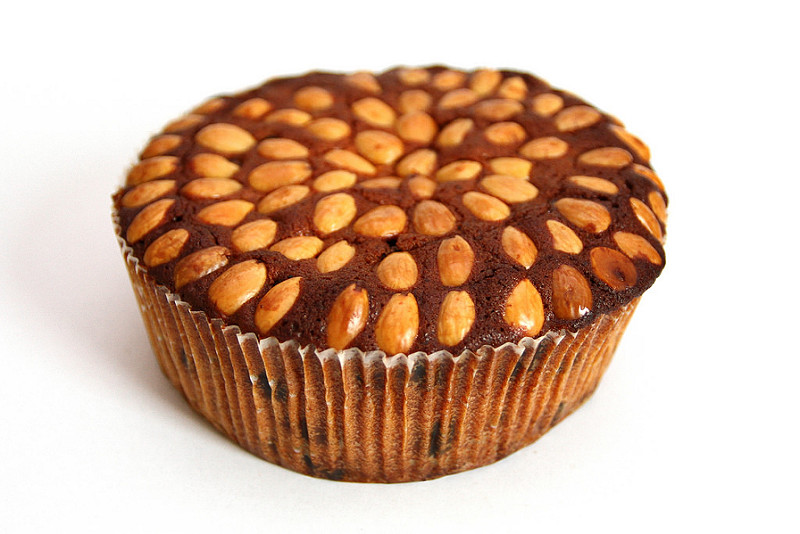
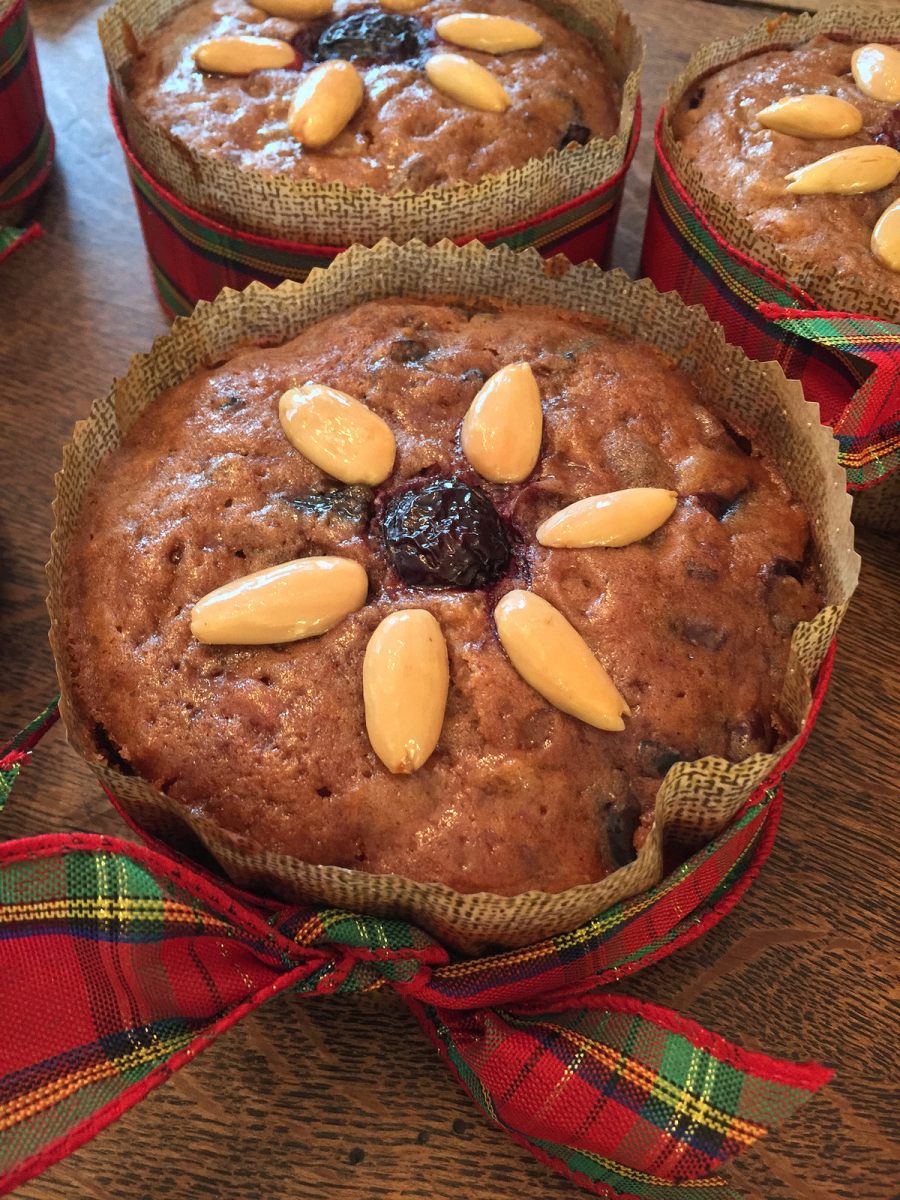
Scotland has its own traditional Christmas fruit cake – the renowned Dundee cake. It was in the Scottish eastern coastal city of Dundee that this cake was first commercially produced….
pies 10
Rural Matters via Foter.com / CC BY-NC Original image URL: https://www.flickr.com/photos/47027921@N05/15781834252/

It is said the cake was first made for Mary Queen of Scots during the 16th Century – as she did not like cherries….and most fruit cakes of the day contained them…. Scottish bakers came up with the idea of using almonds instead….

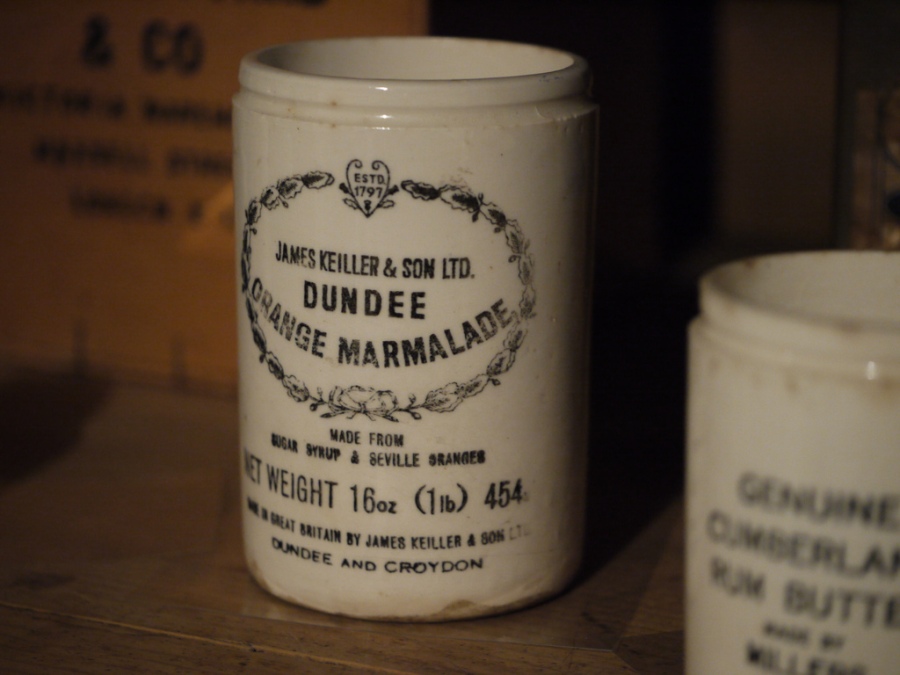
A couple of hundred years later, during the 1760s, Janet Keiller was running her small shop in Seagate, Dundee – where she produced and sold confectionery and preserves…. The story goes that her husband, John, purchased a large quantity of Seville oranges; part of the cargo of a ship that had been forced into harbour to take shelter from a raging storm. The rather bitter fruit, not really suitable for every day eating, was passed its best and so Janet used the oranges by modifying an existing quince jam recipe. To it she added the shredded peel of the fruit, thus creating a new kind of marmalade…. (Marmalade comes from ‘marmelo’, meaning ‘quince’ in Portuguese)…. And so became the famous Keiller’s Dundee Marmalade – which took its place at so many a breakfast table….
pies 17
Marmalade Jar Smabs Sputzer via Foter.com / CC BY Original image URL: https://www.flickr.com/photos/10413717@N08/5734581069/

In 1797 Janet, then 60 years old, set up in business with her son, James, trading initially as James Keiller, changing to James Keiller and Son in 1804. Janet created a unique version of the Dundee cake – using their own candied orange peel and topping each cake with whole, blanched Spanish almonds. This was the first Dundee cake to be produced on a commercial scale….and was a massive success for the business. Even after the deaths of both her husband and son, Janet continued to run the Company with her daughter-in-law, Margaret…. So popular and in demand was the cake, that it was soon embraced by other bakers, both North and South of the border….

Understandably, the Scots are very proud of the heritage of this cake and are eager to protect its origins with a Protected Geographical Indicator (PGI). In November 2014 the then Scottish Food Secretary, Richard Lochhead MP, launched a national consultation. An application was made to the EU under the ‘Protected Food Name Scheme’, which covers regional and traditional foods where the origins and authenticity can be guaranteed. If satisfied that a particular food has the correct characteristics, reputation and quality to the area it has been named after, the EU can award a PGI mark…. So, fingers crossed for Dundee that their cake may attain the same status held by the likes of the Cornish pasty and Champagne….
pies 11
veworthy via Foter.com / CC BY-NC Original image URL: https://www.flickr.com/photos/25785573@N06/39012740301/

Dundee cake is not the only festive fare we associate with Scotland. Christmas time sees the shelves of our shops stacked with tartan packaging that contains the traditional delight that is shortbread…. The origins of Scottish shortbread comes from the Medieval ‘biscuit bread’. The word ‘biscuit’ literally means ‘cooked twice’. Left over dough from bread making was slowly dried out in the oven to make a hard rusk. Gradually, this evolved; the yeast was replaced by butter and shortbread as we know it came to be….

To start with shortbread was an expensive luxury and used only at special occasions; weddings, Christmas, New Year…. Especially New Year – being offered to ‘first footers’ – and for the Pagans – as Yule cakes; symbolising the Sun…. (We’ll come to the importance of Yule very shortly)….

Mary Queen of Scots once again makes an appearance in the history of Scottish baking – she was obviously a lady with a very sweet tooth…. Apparently she was particularly fond of Petticoat Tails – a thin, crispy, buttery shortbread – traditionally flavoured with caraway seeds…. If the Queen favoured something, naturally it was bound to catch on….

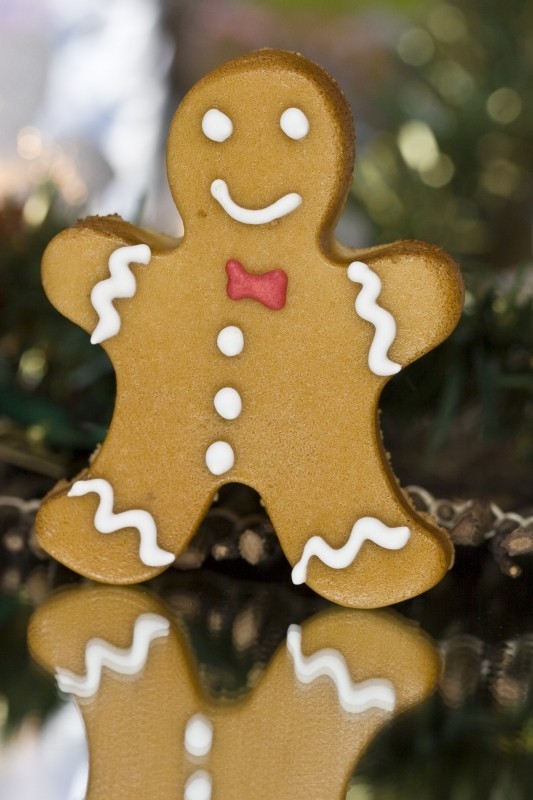
Another UK queen can be attributed to another popular biscuit of ours at Christmas time…. The Gingerbread Man….
pies 14
Gingerbread Man via Foter.com

Gingerbread dates to the 15th Century….but the first gingerbread figures can be documented to the Royal Court of Queen Elizabeth I in the 16th Century – when she had figures made to resemble her important quests to amuse them. In fact, she even had her own Royal Gingerbread Maker….

There was also a belief, among the Common-folk, that the ginger spice kept you warm in the winter, fighting those winter ails…(that’s a good enough excuse for eating ginger biscuits)…. Also, at this time, people believed in magic and witchcraft – some still do…. Gingerbread men were given to young women by witches and magicians as love tokens…. All the young woman had to do was get the man she desired to eat the gingerbread man that had been specially prepared for him – and then he would be hers….

“Run, run, fast as you can,
You can’t catch me, I’m the gingerbread man!”
                                                              -The Gingerbread Man – Nursery rhyme, 1800s

So, finally we come to the Yule log….

Burning the Yule log was originally a Nordic custom; Yule for the Winter Solstice…. The chosen log, or sometimes even a small tree, would ceremoniously be brought into the house – big enough to burn for the 12 days of Christmas. The largest end would be put into the hearth and then slowly fed in over the time – maybe it would be decorated with holly and ivy (to invite friendly sprites) and doused with cider or ale, before being left to smoulder for the 12 days…. Ash is the traditional wood, being a herb of the Sun; Ash brings light at the time of the Solstice…. Yule, when the dark half of the year gives way to the light – the shortest day comes to pass…. It also celebrates the rebirth of the Oak King – or Sun King…. The Yule log is the highlight of the Midwinter Solstice; it must have been harvested from the family’s own land – or at the very least given to them as a gift – never bought – money must never exchange hands…. Each year a piece of the log would be saved to light the next year’s Yule log…. The ashes from the burnt wood said to guard against evil and have medicinal properties; it was even thought to protect from lightning…. Spread upon the fields it promised a good future crop….

Traditionally in England, Oak was the chosen wood, in Scotland – Birch; whereas, in Devon and Somerset, huge bunches of Ash twigs were burnt instead of a log – symbolising the twigs gathered by the shepherds to warm Mary, Joseph and Baby Jesus….

Yuletide, Yulefest – eventually to become Christmastide – one of the many Pagan traditions hijacked by the Christian Church….

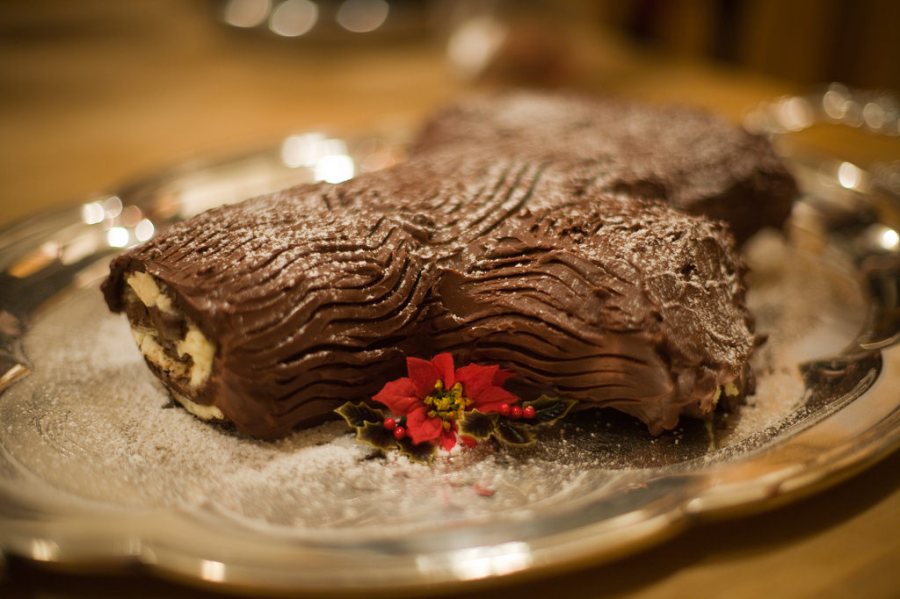
The actual Yule log cake possibly originates to the 1600s – sponge cake dates at least to 1615; the first known such recipe attributed to Gervaise Markham’s “The English Huswife”….
pies 15
Buche de Noel nerdcoregirl via Foter.com / CC BY-SA Original image URL: https://www.flickr.com/nerdcoregirl/3170159856/

Nowadays, we all love that roulade, with its decadent chocolatey taste – along with all those other festive treats, that we may somewhat take for granted…. Did you know however, it is possible we are all technically breaking the law by indulging in them? On the 22nd December 1657, the Puritan Council of the biggest bah-humbug Christmas party-pooper of all time – one Oliver Cromwell – banned all Christmas festivities…. Nativity plays, carol singing, parties – all forbidden…. Mince pies, Christmas puddings, Yule logs – all became a definite ‘No No’…. In a bid to try and stop gluttony, one of the cardinal sins, these treats that we all enjoy so much, became illegal, as they were considered to be forbidden Pagan pleasures….

It is thought the laws were abolished when Charles II came to the Throne….although there are those who believe the laws still stand today – even though Royal approval was granted to the good old Christmas pud, when in 1714 King George I (the ‘Pudding King’) reinstated it as part of the Christmas meal….

Now, we Brits are always being told by ‘The Powers That Be’ that we’re all far too podgy and it’s not good for our health…. wouldn’t it be awful if our Government decided to reinforce some of those quaint, old, long-forgotten British laws in an attempt to make us all slimmer….? So, Ssshhh! Keep this quiet – we don’t want to go giving them any ideas… Go put the kettle on….let’s have that mince pie and a cup of tea….

Merry Christmas!! X

“Where do you want me to stick the tree, Santa…?”

“I believe in everything until it’s disproved. So I believe in fairies, the myths, dragons. It all exists, even if it’s in your mind. Who’s to say that dreams and nightmares aren’t as real as the here and now?…”  John Lennon

fairy 8
Believe I Tinkerbell chris.alcoran via Foter.com / CC BY-NC-ND Original image URL: https://www.flickr.com/photos/alc_chris/9723710634/

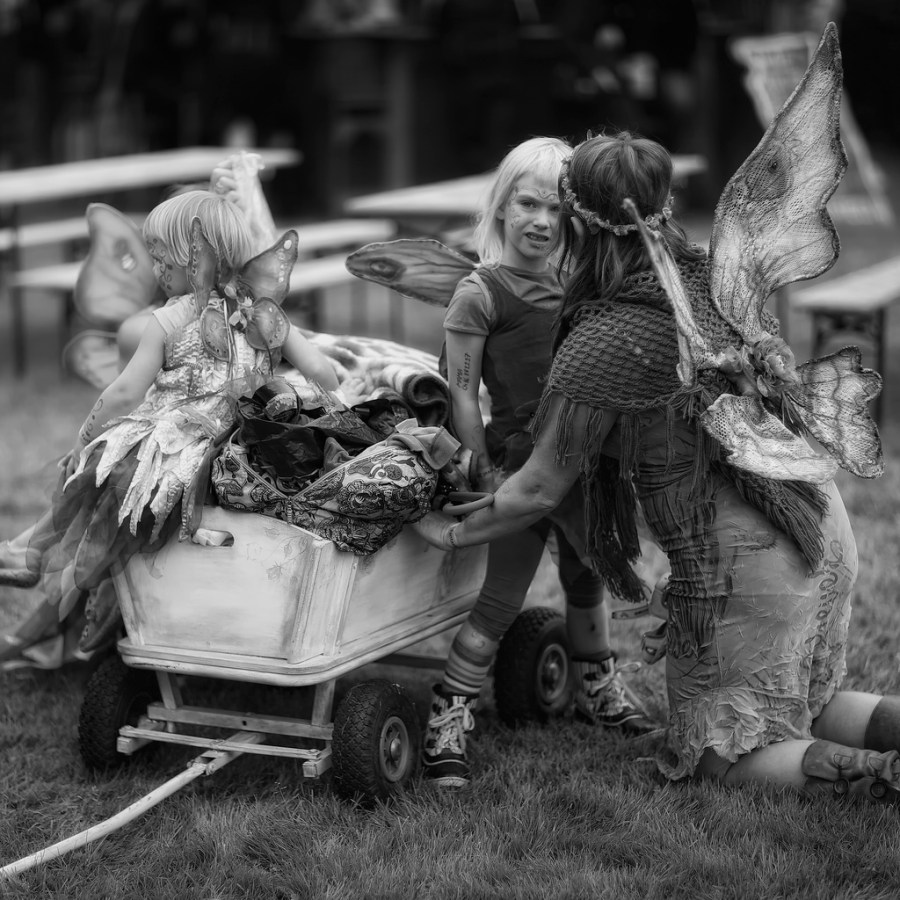
Do you believe in fairies? There’s plenty of folk who do…. How many among us have strapped on our ‘gossamer’ wings, slipped into a tutu, popped a plastic tiara on our heads and pranced around waving a sparkly wand, pretending to be one? Of course, as a child, I hasten to add – to do so as an adult would cause a few raised eyebrows; it would most probably be viewed as a borderline fetish…. But make-believe and fairy tales are as much a part of childhood as Santa Claus and the Easter Bunny….

fairy 1
Faeries Fouquier via Foter.com / CC BY-NC Original image URL: https://www.flickr.com/photos/fouquier/6485890383/

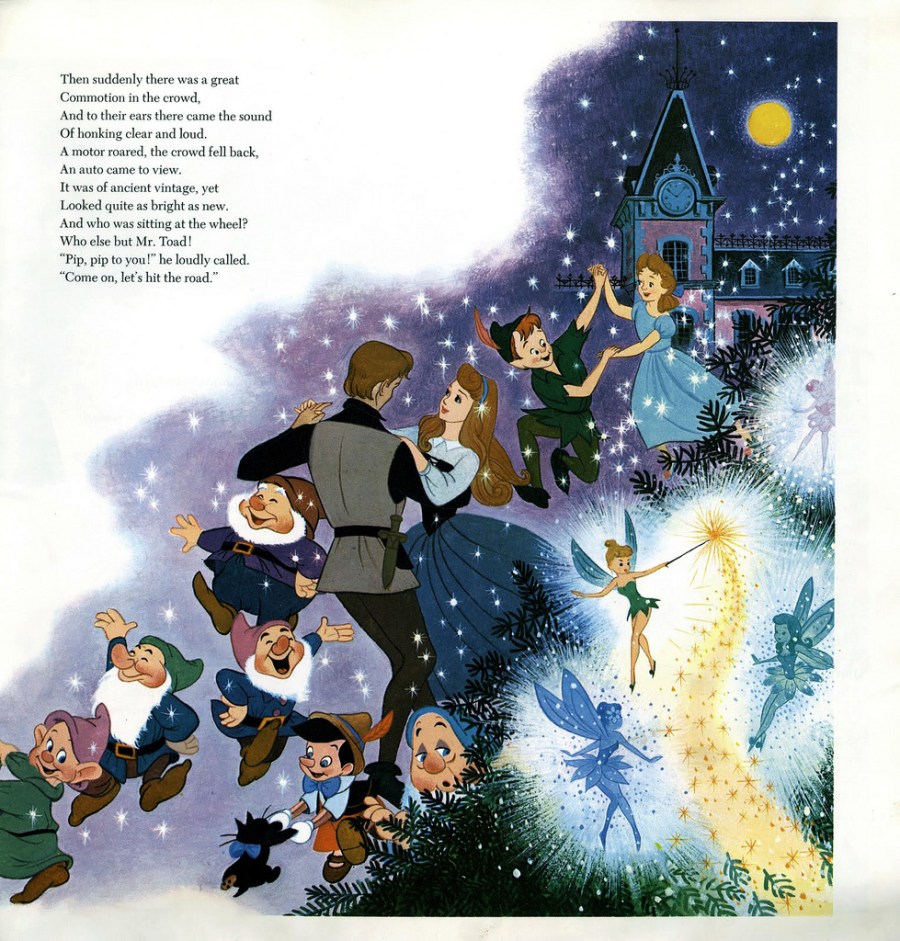
Thanks to popular children’s authors, such as Enid Blyton – and the wonderful films of Walt Disney – the stereotypical fairy is a firmly fixed image in our minds….

fairy 10
A Christmas Adventure in Disneyland 05 – Snow White Tom Simpson via Foter.com / CC BY-NC-ND Original image URL: https://www.flickr.com/photos/randar/10919556055/

However, the term ‘fairy’ actually covers a large range of supernatural, mythical beings…. Elves, goblins, banshees, pixies, brownies, kelpies, sprites, leprechauns, mermaids, changelings, nymphs, gnomes and seelies, to name but a few, can all be described as fairy folk..

But our modern-day nostalgic, affectionate view of the Tooth Fairy or pantomime fairy godmother – (let’s face it, Cinderella would never have got to the ball without one) – has not always been the case…. Wind the clock back to the Middle Ages and people lived in constant fear of them….

“Fairies, black, grey, green, and white. You moonshine revellers, and shades of night. You orphan heirs of fixed destiny, Attend your office and your quality….” William Shakespeare

Fairy folklore is prevalent in Celtic regions…. There is a belief, by some, that they are an ancient race who have inhabited the Earth since long, long ago and that they are descended from the Tuatha De Danann – the tribe of the High Priestess Dana, one of the most ancient Celtic goddesses…. Fairies are said to be able to see the future; they know all about the secrets of herbs and animals….they perform magic…. Sometimes they are friendly and helpful to humans but at other times they can be evil and troublesome – meddling in human affairs….

In fact – so unpopular were the fairy folk that extremes were taken not to even utter their name – they became referred to as ‘Little People’ or ‘Hidden People’; they were often regarded as ‘fallen angels’ – not quite good enough to be accepted into Heaven but not bad enough to be sent to Hell…. The notion of the fairy goes back long before the advent of Christianity; indeed, Pagan beliefs tell us these little folk live within holly bushes and hawthorn trees…. Later the focus switched to the Christmas tree, from the Pagan celebrations of the Midwinter festival, particularly those of Germany and Scandinavia….

Here in the UK, the first Christmas trees didn’t arrive until the 1830s – when they were introduced to us by Prince Albert. In the beginning a figure or picture of the Baby Jesus was put on top of the tree. In 1841 pictures appeared in newspapers of the tree belonging to Queen Victoria and Prince Albert, proudly displaying its angel perched upon the top; naturally the idea caught on…. Since that time most of our trees are adorned with either a star, to represent the Star of Bethlehem as seen by the Wise men – or an angel to symbolise Gabriel from the Nativity….over time many a tree topper evolved from an angel to a fairy….

fairy 11
Winter fairy katmary via Foter.com / CC BY Original image URL: https://www.flickr.com/photos/katmary/5227747833/

Although – there is another ‘tongue-in-cheek’ reason as to why we have a fairy adorning the top of so many of our Christmas trees…. It is the tale of a rather ‘bad day at the office’ for a poor, stressed out Santa Claus….

Santa was having a tough time of it; the elves were on strike, demanding more pay – so the toy making schedule was running way behind…. When Santa finally got around to loading the sleigh he found half the reindeer had bolted and the other half were pregnant…. On piling the sacks of presents into the sleigh, a floor board broke – sending toys tumbling in all directions…. At some point in the proceedings, Mrs Claus announced that her mother was coming to stay, which did not improve his humour…. With a sigh of frustration, Santa decided he needed a strong drink – only to find the elves had polished off all his booze. As if all this wasn’t enough, he somehow managed to clumsily drop the empty cider flagon and it smashed in to smithereens at his feet. Now in a somewhat foul mood he fetched the broom to sweep the fragments of broken pottery away, only to find the mice had been chewing at the bristles…. So, he really wasn’t in the best frame of mind when there came a knock on the door. Grumbling and cursing he flung open the door and found a rather sweet fairy standing there holding a Christmas tree…. “Merry Christmas, Santa…. Where would you like me to stick the tree?…”

fairy 2
Fairy’s toadstool katmary via Foter.com / CC BY-NC-ND Original image URL: https://www.flickr.com/katmary/5513557007/

This story is obviously intended as a bit of fun. Fairies appear in so many of our well-known stories and in even more that have long been forgotten…. Perhaps the oldest record in English literature dates back to the 13th Century and was by historian, lawyer, Churchman, Statesman and writer, Gervase of Tilbury (1150-1220). He, of course, was writing at a time when belief in the Little People was common place. Not having scientific explanations for the many natural phenomenons of the World, supernatural causes took the ‘blame’, not least the fairy folk…. People would go to great lengths to deter fairy visitors; St. John’s wort and yarrow were thought to ward them off….whereas hawthorn, foxgloves and groundsel were all attractive to them. At the time of Hallowe’en offerings would be made in an attempt to keep them sweet….

fairy 12
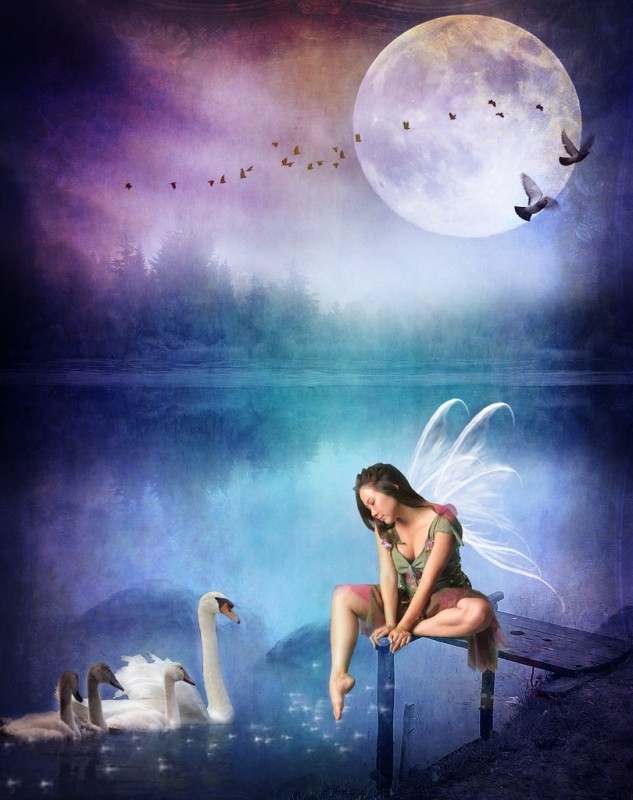
Water fairy katmary via Foter.com / CC BY-NC Original image URL: https://www.flickr.com/photos/katmary/4778581609/

In the time since Gervase of Tilbury fairies have been a subject explored by writers of all genres…. From verse penned by English poet Edmund Spenser to the writings of French author Charles Perrault.

fairy 4
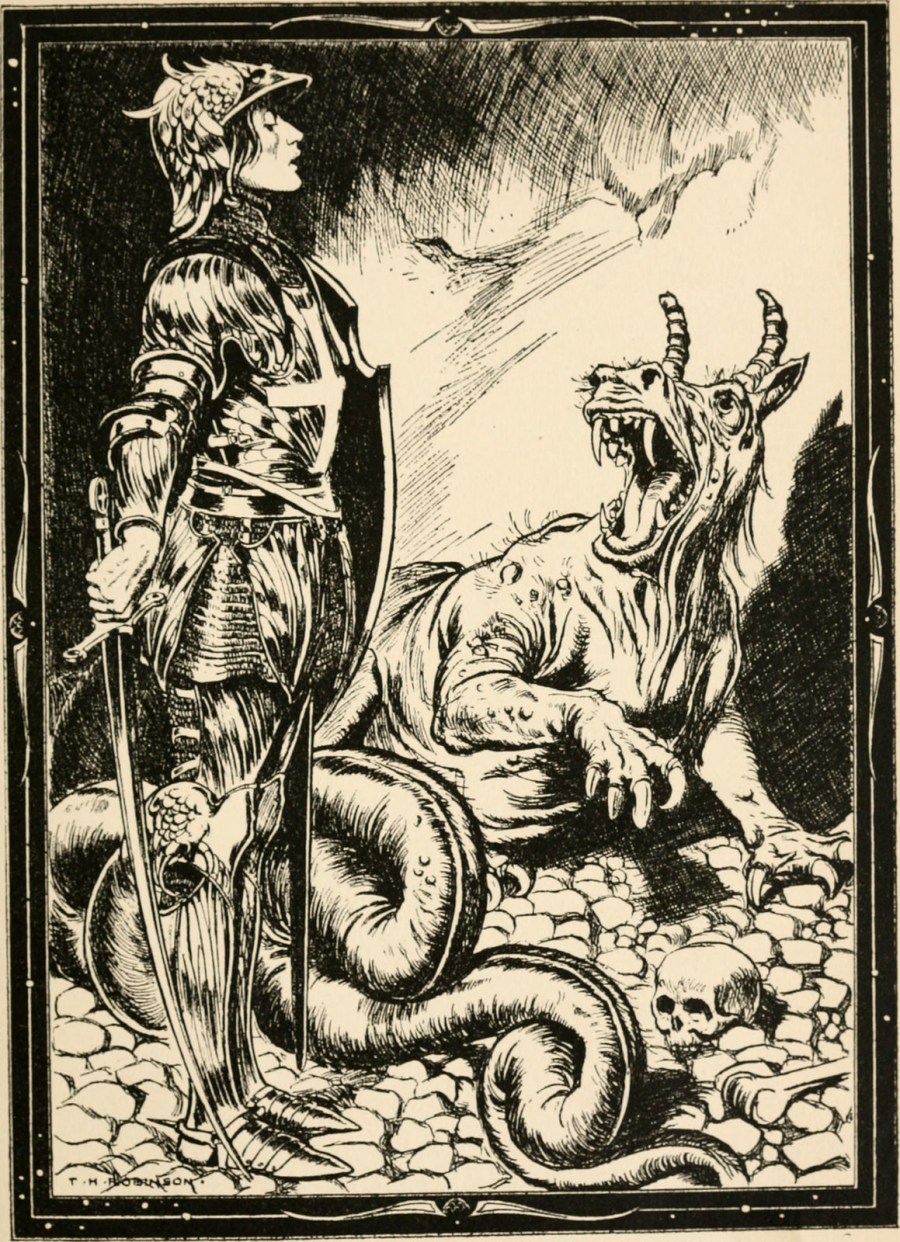
Image from page 34 of “Una and the red cross knight, and other tales from Spenser’s Faery Queene,” (1905) Internet Archive Book Images via Foter.com / No known copyright restrictions Original image URL: https://www.flickr.com/photos/internetarchivebookimages/14596799959/

As children, we were all familiar with the stories by Hans Christian Anderson  and J.M. Barrie – who in his Peter Pan could arguably have created one of the most well-known fairy characters of all time – Tinkerbell….

“Fairies have to be one thing or the other, because being so small they unfortunately have room for one feeling at a time….”  J.M. Barrie, Peter Pan

Then, as part of our schooling, most of us would have studied the works of Shakespeare in one form or another….possibly coming across Titania, Queen of the fairies in A Midsummer Night’s Dream or perhaps the mischievous sprite Ariel in the Tempest….

Maybe the musical among us relate more to the Dance of the Sugar Plum fairy….from the Nutcracker – and probably one of the best recognised pieces of ballet music….

The Sugar Plum Fairy was not actually a character who appeared in the original story – ‘The Nutcracker and the Mouse King’ – written in 1816 by E.T.A. Hoffmann and upon which the ballet is based…. Tchaikovsky used some of the original numbers from the ballet to produce his Nutcracker Suite – he wrote ‘The Dance of the Sugar Plum fairy’ for a musical instrument he had excitedly purchased in Paris – the Celestra…. Looking like a small piano it produces a sound resembling tinkling bells…. Nowadays, we often associate this piece of music with Christmas….

For those who would like to believe that fairies really do exist there are obvious signs to look out for…. It is said that the time they are most likely to be seen is around Beltane, when Mother Nature is awakening from her slumber. For many, stumbling across a fairy ring is the only proof needed that they do indeed exist among us.

fairy 5
Walter Jenks Morgan (British, 1847-1924), “A Fairy Ring” sofi01 via Foter.com / CC BY-NC Original image URL: https://www.flickr.com/photos/sofi01/11406300036/

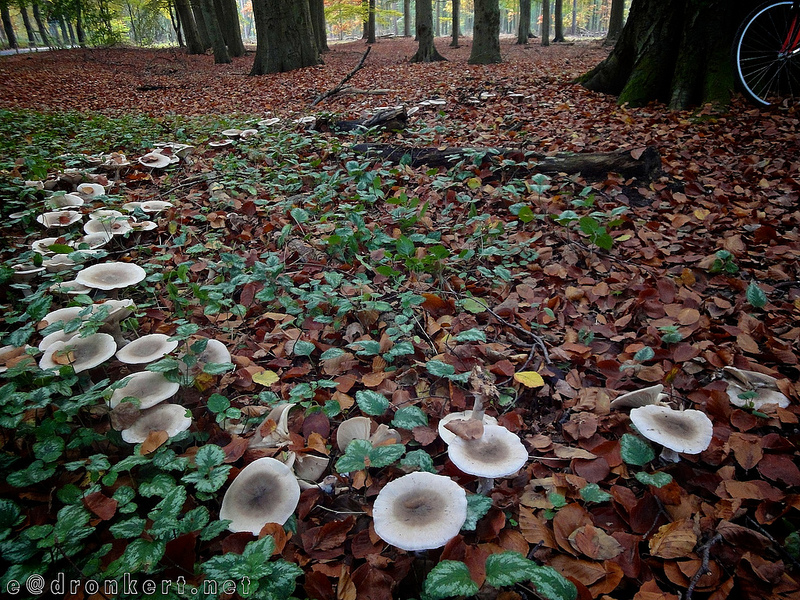
A fairy ring is a naturally occuring circle of mushrooms or toadstools; it is believed to be a place where fairies dance and sing – and many view it as a dangerous place for humans – it is full of dark magic and best avoided at all costs…. In Germany they are known as ‘witches rings’; in Dutch superstition it is where the Devil churns his milk….

fairy 6
Grote heksenkring in Lage Vuursche ednl via Foter.com / CC BY-NC-SA Original image URL: https://www.flickr.com/photos/dnet/8148844932/

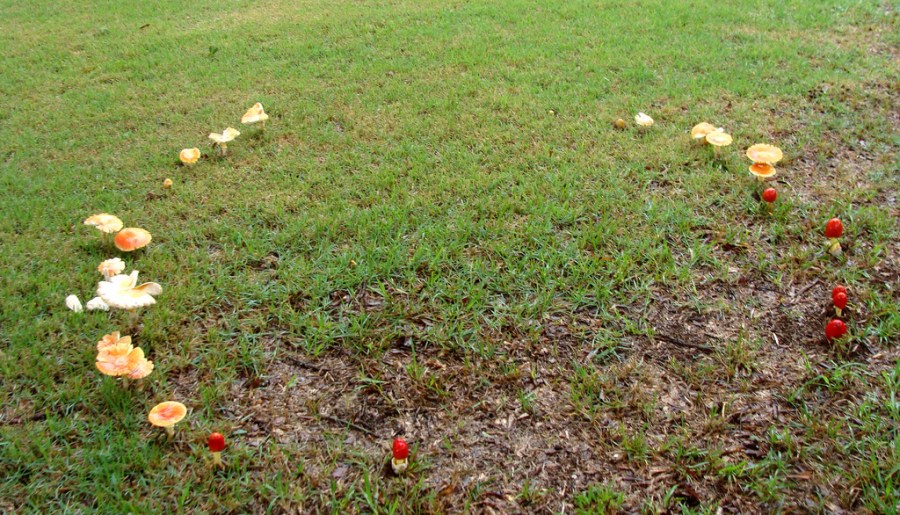
The main part of the fungi that produce these rings is located under the soil; it feeds upon the nutrients it finds there, pushing further and further out in a circular shape, searching for new food – the circle increasing in size as time goes by…. Periodically up pop the toadstools, creating the ring we are familiar with…. Some rings can be hundreds of years old; the largest one ever found is in Belfort, France –  it is some 2,000 feet (600 metres) in diameter and about 700 years old…. So, are fairy rings magical? Perhaps not when one pops up in the middle of your well manicured lawn….

fairy 7
Fairy Ring in a lawn Martin LaBar (going on hiatus) via Foter.com / CC BY-NC Original image URL: https://www.flickr.com/photos/martinlabar/6017436516/

As fairies are such a major part of European folklore it’s only fair to say every region, county or even village will have its own tales to tell….not least Dunsfold….

Vaguely, I remembered hearing there was some connection with fairy folk and the village, when we first moved here some twelve or thirteen years ago…. So, I thought a little digging was required….

Turns out the story originates from the building of the church back in the 13th Century…. Saint Mary’s and All Saints is situated about a mile from the centre of the village; in days gone by it would have been a long, wet, muddy walk every Sunday – wellie boots would not have been an option…. It is built on the site of an ancient chapel and close by is a holy well, sacred from very early times and most likely a place of Pagan worship…. It is believed the waters from the well have medicinal properties and are able to cure afflictions of the eye…. There are tales of the Virgin Mary making an appearance there and it has often been a place of pilgrimage for Roman Catholics…. When the time came for a new church to be built in Dunsfold, it is believed many of the villagers wanted it to be located nearer to the centre of the village…. However, traditionalists argued that it should be constructed on the existing sacred site (as was often the case at the beginning of Christianity). Naturally, the truth gets lost over the centuries – but it appears there were altercations between the builders and those who wanted the place of worship to remain at the existing Holy site…. Certain events were blamed upon the ‘Pharisees’….not to be confused with the biblical Pharisees and Sadducees; this is actually the Sussex and Wealden dialect double pluralisation of ‘fairy’…. The mortals wanted the church to be built within the confines of the village – the Pharisees desired it to remain at the sacred site….eventually tradition won….

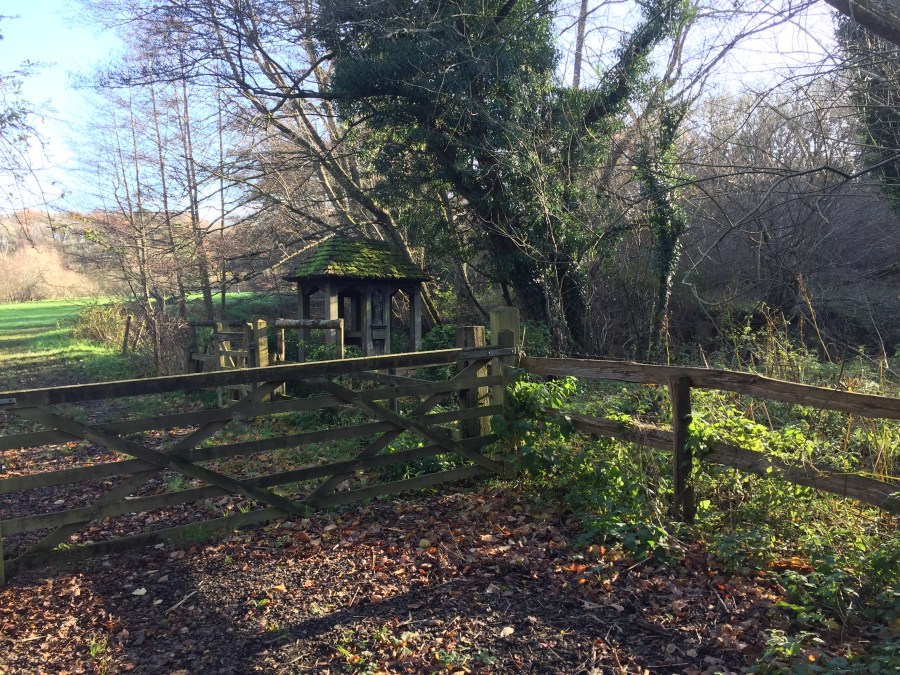
Feeling a little guilty, that in all the years of living in Dunsfold, I have never once gone in search of this sacred well, I decided I had better go and find it…. So, on Saturday afternoon, accompanied by Jordan (my 17-year-old son) – I did just that…. A chilly, late November afternoon – but blessed with glorious sunshine – we set off on a winter’s stroll….albeit a very short one…. In all honesty I had been expecting a bit of a hike – but the well is only a short distance from the church – down a footpath and situated on a tributary of the River Arun….

IMG_3178

There is not a lot to see…. A covered shrine of the Virgin Mary which was dedicated by the Bishop of Guildford on September 29th 1933….

However, it has an air of mystery surrounding it – and I have a feeling it has many more secrets and stories to be uncovered…. Maybe this will be continued….

So….do you believe in fairies? Personally – as a woman – I think I might be one!

“There is a latent fairy in all women, but look how carefully we have to secrete her in order to be taken seriously. And fairies come in all shapes, colours, sizes and types, they don’t have to be fluffy. They can be demanding and furious if they like. They do, however, have to wear a tiara. That much is compulsory….”  Dawn French, A Tiny Bit Marvelous

“Don’t mess with the fairies….”  David C. Mitchell, The Bone Clocks

fairy 13
pexels.com


Strew thy floor with herbs….

After a month of having a poorly rabbit living in the bathroom I have got used to constantly clearing up a trail of straw and hay that seems to find its way around the rest of the house…. In days gone by that would have been perfectly normal in this old place; in fact, the floors would have been totally covered with the stuff….

When we first took possession of this cottage, one of our first jobs was to take up the brick floors of the bathroom and what is now the dining room. The brick was prone to drawing up moisture and so constant damp floors were an issue.  That said, even that – in its time – must have been an improvement on what was there before….plain, simple compacted mud. Yes, we often joke about living in a place with mud floors, this old cottage had literally just that….

The kitchen has old Victorian flagstones (unfortunately they are un-aesthetically pleasing – so now provide a base for wooden laminate flooring) but this floor too would once have been plain mud….

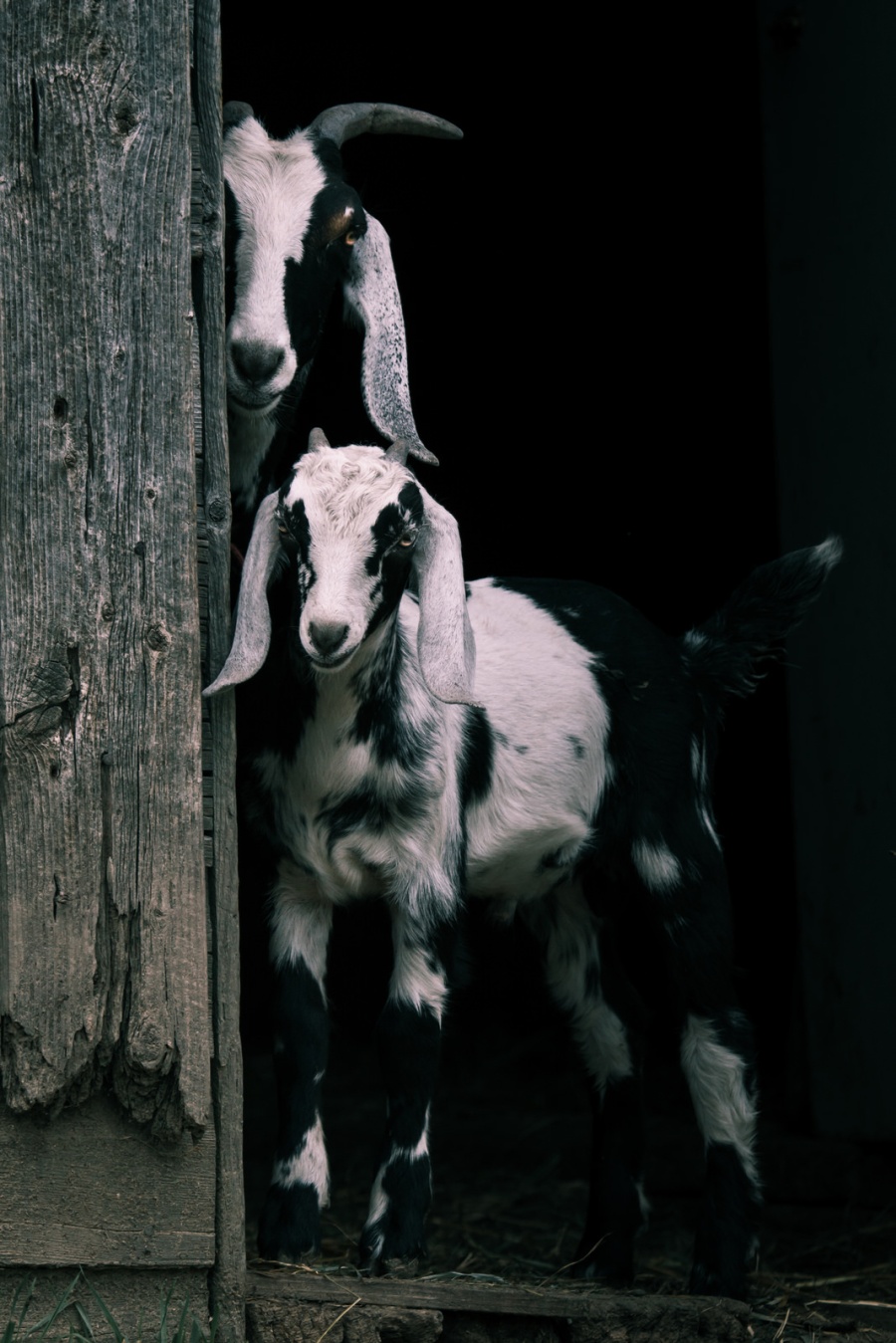
Grander abodes may have had stone floors – but mud or stone, neither offered much in the way of home comfort when left bare…. So, to overcome this, the floors would have been covered with reeds, rushes or straw. This made a soft ‘carpet-like’ covering, providing a little warmth and helping with cleanliness by soaking up spillages (and worse)….as in days gone by it wasn’t unusual for the inhabitants to share their dwelling with their most valuable assets….their livestock. Of course, cows, sheep, goats, pigs and chickens are difficult to house train….

strew 1
Photo credit: Shy Goats Daveography.ca via Foter.com / CC BY-NC-SA Original image URL: https://www.flickr.com/photos/raptortheangel/14685132727/

As if the smell of ‘eau de goat’ constantly lingering in the air wasn’t bad enough – the people probably didn’t smell much better either, as folk did not tend to bath much in the Middle Ages….

Then there were the other uninvited household inhabitants to be considered; rats, mice and other scampering rodents….and with these creatures came fleas, lice and ticks; the straw covering the floors and providing the stuffing for mattresses….an absolute haven for them….

Some households may have replaced the straw or reeds on a fairly frequent basis but the majority would have only changed them a couple of times a year, some may have not bothered at all…. Quite possibly a new layer would just have been added as required, the bottom, rotting layers staying in place for years….

In a previous blog I talked about how nose gays were used by people to overcome unpleasant odours – that was not the only way powerful smelling herbs were used to mask rancid, disagreeable whiffs….

All areas of the home, kitchens, dining halls, sleeping areas would have had herbs strewn amongst the floor covering. They would have been put amongst the straw of bedding and scattered across tabletops….any where they could release their sweet aromas….

When scattered on the floor the herbs would be crushed underfoot when walked upon; some herbs were chosen for their scent, others because they acted as a deterrent to insects, such as fleas….

The best strewing herbs according to Thomas Tusser’s “Five Hundred Good Points of Husbandry” (1573) were:- Bassel (basil), Bawlme (lemon balm), Camamel (chamomile), Costemary (costmary), Cowsleps and Paggles (cowslips), Daisies of all sorts, Sweet Fennel, Germander, Hysop (hyssop), Lavender, Lavender Spike, Lavender Cotton (santolina), Marjoram, Mawdelin, Penny Ryall (pennyroyal), Roses of all kinds, Red Myntes, Sage, Tansy, Violets and Winter Savery….

Many other herbs may have been included; mint, thyme, rosemary, meadowsweet, wormwood, rue, sweet woodruff…. Pennyroyal was used particularly as a flea or tick repellent and meadowsweet was a fond favourite of Queen Elizabeth I…. Part of the purpose of the Mediaeval and Elizabethan garden was to grow herbs for strewing….

Of course, it wasn’t just private abodes that had mud or stone floors, just about all buildings did, including churches. Church pews did not arrive until the 1400s; in fact, our very own church, St. Mary and All Saints, here in Dunsfold, is reputed to have the very first pews in the Country. Before seating was available those attending Services had to stand, kneeling when required to pray…. Only the rich could afford cushions, so it is not hard to imagine the discomfort such floors caused to the knees….

Once again the floors would have been strewn with rushes and herbs….making things a little more comfortable and at the same time disguising nasty odours from the unwashed bodies of the congregation packing the church, or perhaps those of the deceased buried under the church floor…!

Each year, typically in the late summer, the old, rotten rushes were cleared out ready to be replaced. It didn’t take long for the process to become an annual Parish event…. It became an excuse for villages across the Land to celebrate and party when the church’s rushes were replaced; a celebration with revelry, feasting, drinking and Morris dancing….

The rushes were taken to the church in carts, in what was to evolve into Rush Bearing Processions. The rush-cart would be decorated with garlands of flowers (which were then used to decorate the inside of the church) and often silver plate items, borrowed from those in the community fortunate enough to own some….and then the cart would have been pulled along by a team of men….

The processions became competitive, with each village trying to ‘out-do’ the next…. Competition was intense, to who had the biggest and best cart…. Possibly due to the large quantities of ale consumed, sometimes brawls broke out between opposing teams…. It was not unusual for church ministers to refuse entry into their churches of rowdy rush-bearers….

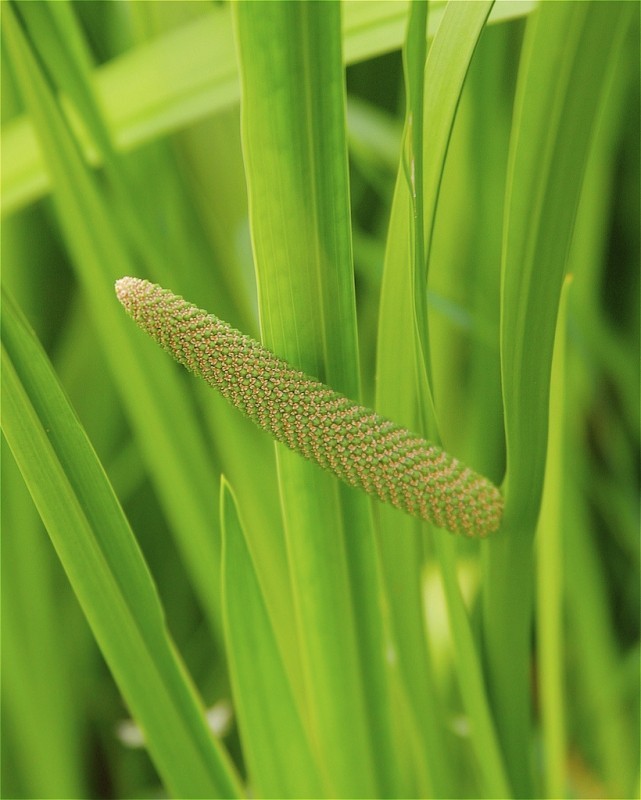
Sweet flag, a strongly aromatic perennial plant, was introduced to Britain during the 1500s and became the centre-piece of rush-bearing ceremonies. A versatile material, with medicinal and culinary uses, it was also used on some English cottages as thatching….

strew 7
Photo credit: Sweet Flag milesizz via Foter.com / CC BY-NC-ND Original image URL: https://www.flickr.com/photos/8583446@N05/3690603555/

Each church tended to allocate one day in the calendar for the ceremony. By the 16th Century, the bells were rung and ale, wine and cake were provided for the rush-bearers. Each church has a patron saint allocated to it at the time of consecration; an annual feast (wake) was held on the nearest Sunday to the official feast day of the allocated saint. By the 18th Century the rush-bearing ceremony usually formed part of the church’s feast day….

Rush strewing in churches died out in the early 1800s, as floors became flag-stoned…. Records show that one of the last was the church in Saddleworth, North Yorkshire, its floors were covered until 1826. Nowadays, certain areas, mainly confined to the North West areas of Cheshire and Lancashire, (although a small part of West Yorkshire participates too), have revived the tradition. Processions attract large crowds of spectators; the carts are highly decorated, with teams of men pulling them, whilst the ladies ride on top…. Who knows, perhaps it will become a celebration which spreads to the rest of the Country….let’s face it, nothing’s changed in that respect….any excuse to party….

The tradition of the little girl at a wedding, preceding the bride with a basket of petals and herbs comes from herb strewing…. Herbal weddings are becoming increasingly popular. Very often newly wed couples are showered with natural confetti, either fresh or dried. Many people like to make their own, maybe blending certain flowers and herbs to convey a personal message, they may incorporate: lavender – for luck and devotion, rose petals – for love, marjoram – for joy and happiness, chamomile – for patience and sage – to wish a long life….

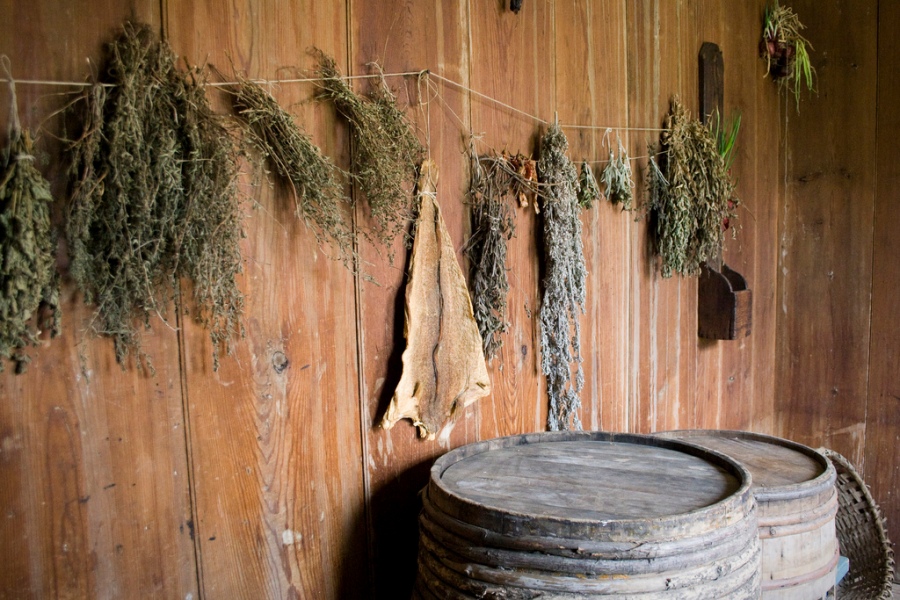
To gather herbs for strewing in the home, they need to be picked in dry weather and it is best to hang them upside down in bunches to dry….

strew 15
Photo credit: Dried Herbs Caitlinator via Foter.com / CC BY Original image URL: https://www.flickr.com/photos/caitlinator/4534924413/

To make a herb powder for use in the home:

1 cup borax : 1/2 cup salt : 1/2 cup powdered mint : 1/2 cup powdered rosemary : 1/2 cup powdered mug wort : 1/2 cup dried lavender

Herbs can be ground in a coffee grinder or spice mill (kept solely for the purpose) to make powder

Mix dry ingredients together – add 12 drops of essential oil of choice…. Sprinkle on rugs and carpets; leave overnight and vacuum in the morning….

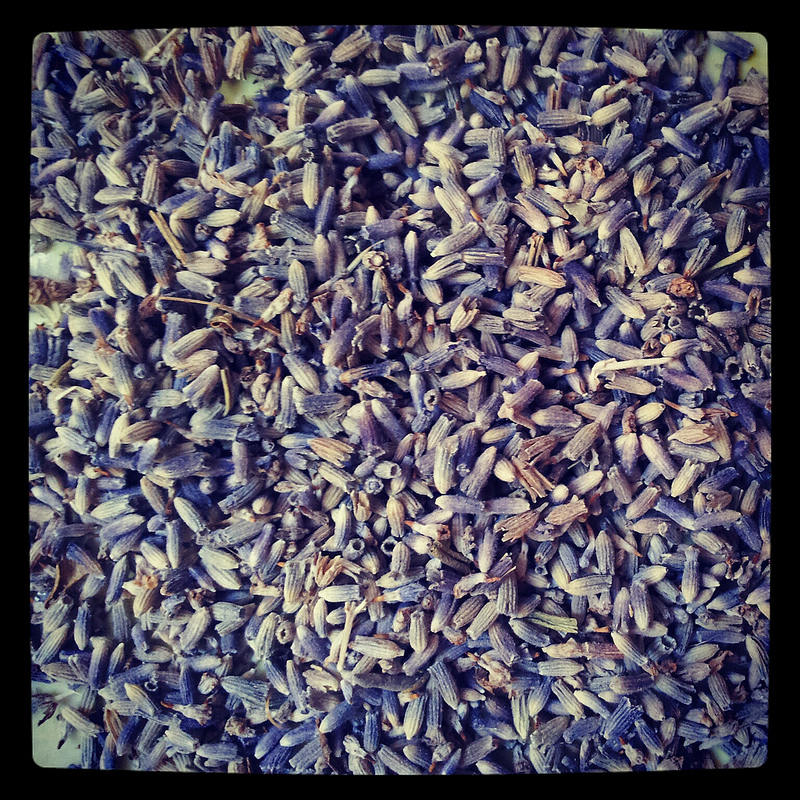
Another easy tip: sprinkle lavender under rugs and doormats, to keep rooms smelling sweet – the scent is released when the lavender is crushed when the rug/mat is walked upon….

Happy strewing….

strew 16
Photo credit: A pile of dried lavender herb fotografeleen via Foter.com / CC BY-SA Original image URL: https://www.flickr.com/photos/fotografeleen/7839750708/


Merry month of May….

May Day – a time to celebrate the coming of summer – a time of joy, hope and love – a time to have some fun…. So, let’s go and crown the May Queen, grab some Morris men and do a turn around the maypole….

may 7
Photo credit: Beltane Shadowgate via Foter.com / CC BY Original image URL: https://www.flickr.com/photos/shadowgate/5711544065/

Where did all this malarkey come from? May Day originates from the Pagan festival of Beltane, which falls exactly six months after November 1st (Pagan New Year) and half way between the spring equinox and summer solstice; it is the peak of spring, a time of abounding fertility…. Beltane is the anglicised name for the Gaelic May Day; it comes from the Celtic god ‘Bel’ (meaning the bright one) and ‘teine’, the Gaelic word for fire. Put together Beltane translates as ‘Bright Fire’. As it is a fire festival, traditionally bonfires are lit to honour the sun and to ask the god Bel to ensure a good harvest….

The earliest May Day celebrations can be traced back to the Romans; young people celebrated the arrival of spring by performing dances dedicated to Flora, the goddess of spring….

In the Pagan festival the Maiden goddess is a manifestation of Flora. The Oak King, also known as Jack-in-the-Green or simply the Green Man, falls in love with her and wins her hand…. They are the May King and Queen, symbols of the sacred marriage, the union of Earth and the sky (Heiros Gamos) – re-enacted in May Day celebrations by the Lord and Lady of the May….

As Beltane is a special time in the Pagan calendar it is a popular time for Pagan weddings; traditionally a union that lasts for a year and a day. At the end of this period the couple can either re-new their vows or go their separate ways without hard feeling. Today Pagan couples choose their own time period, very often it is for life…. Ceremonies are unique to each individual couple, involving the exchange of vows and tokens, such as rings. It also always entails ‘Hand-fasting’. This is when the hands of the couple are bound together using a cord or ribbon, in a figure of eight motion and then unbound again. The binding represents the coming together, the unbinding that they do so of their own free will. This is where we get the saying ‘to tie the knot’ when referring to marriage….

may 10
Photo credit: Hand Fasting Symroe via Foter.com / CC BY-NC-SA Original image URL: https://www.flickr.com/photos/symroe/4768615300/

Another term we use when referring to a wedding is ‘jumping the broomstick’. In times gone by, if a couple could not afford or did not want to get married in Church, they would literally jump over a broomstick laid on the ground. This symbolised crossing over a threshold from one life to another – by doing so they would have been accepted in the community as husband and wife…. There are those who still choose to make a commitment to each other in this way today….

may 11
Photo credit: woodland-blessing-jumping-the-broom mookychicks via Foter.com / CC BY-NC-ND Original image URL: https://www.flickr.com/photos/98260052@N03/21869884023/

The Green Man is a character who appears in many of the May Day celebrations and traditions we know today – in fact there is many a public house across the Land that bears the name…. During the 16th and 17th Centuries, people would make garlands and wreaths for the May King and Queen – things became competitive, the garlands became more and more elaborate….in time the leaves of the Green Man completely engulfed him….

may 5
Photo credit: Jack in the Green Festival Hastings dcanprice via Foter.com / CC BY-SA Original image URL: https://www.flickr.com/photos/132952433@N02/17334297696/

The colours associated with Beltane are:- red – for strength, passion and vitality; white – for cleansing, purity and to get rid of negativity; green – for growth and fertility. Beltane also has its connected sacred trees:-

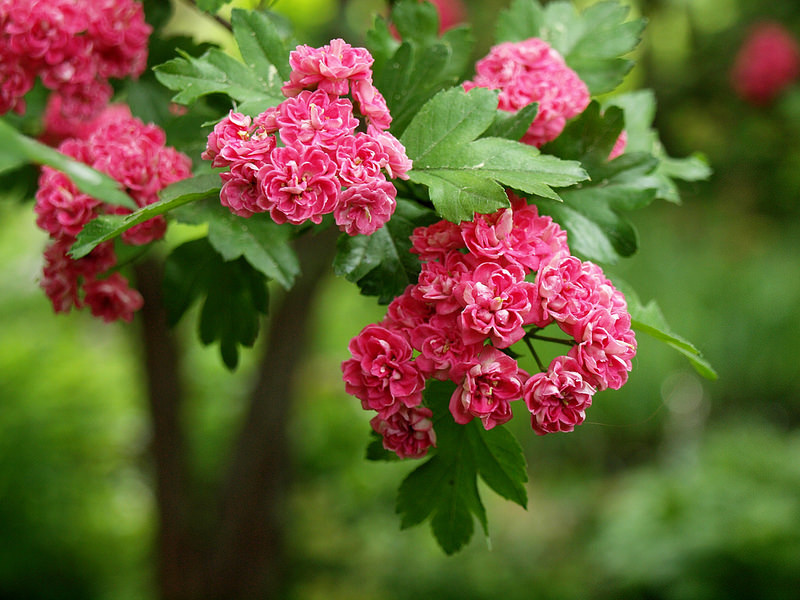
Hawthorn: the tree that bears the may blossom. Traditionally Beltane commenced when the  hawthorn bloomed; it is the symbol of sexuality and fertility. May blossom would have been used to decorate the home at Beltane – but at no other time, as it was then considered unlucky….

Rowan: representing protection and healing. Branches would have been put over the doors of houses and barns to protect from faeries as they awoke from their winter sleep. People wore sprigs of rowan for personal protection….

Birch: seen as a feminine tree; it is among the first to have leaves in the spring. Traditionally it is used to make besom brushes (this is where we get the term ‘a new broom sweeps clean’). Eostre, the Celtic goddess of spring, is associated with birch – wreaths of it given by lovers as gifts to each other….the traditional wood for the maypole is birch….

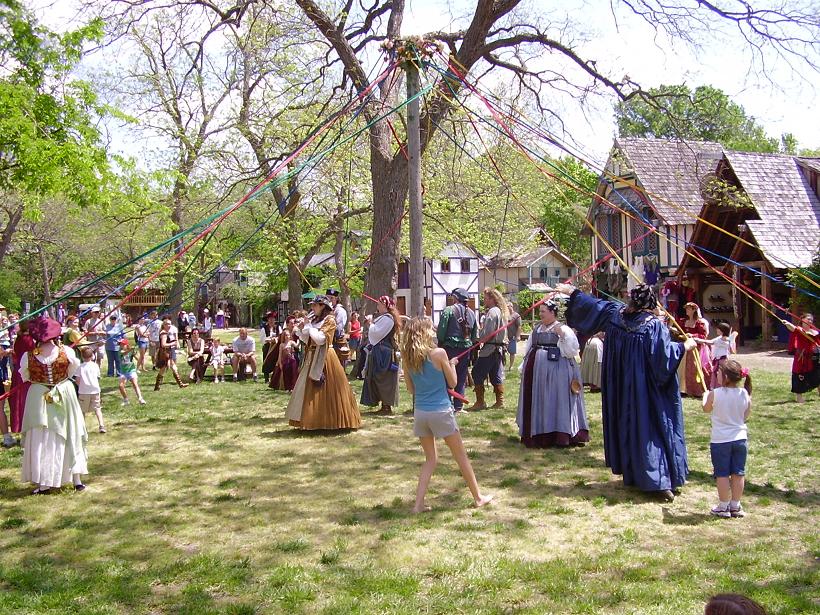
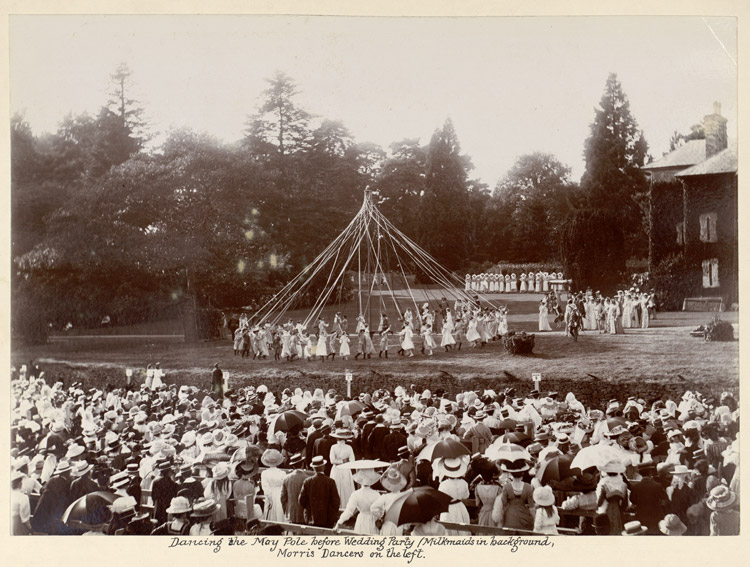
The maypole is a phallic symbol – representing the power of the god. The traditional ring of flowers (which should ideally be may blossom) represents the goddess…. Originally the pole was decorated with garlands of flowers and leaves and dancers simply circled it in time to music, provided by pipe, tabor and fiddle – nowadays often accompanied by an accordion. Ribbons were added at a later time; the weaving of ribbons stands for the ‘spiral of life’. The dancing weaves and creates a complex pattern with the colourful ribbons – the dance is then reversed to undo it….

may 6
Photo credit: may pole Photos by Zoe via Foter.com / CC BY-NC-ND Original image URL: https://www.flickr.com/photos/photosbyzoe/3508801228/

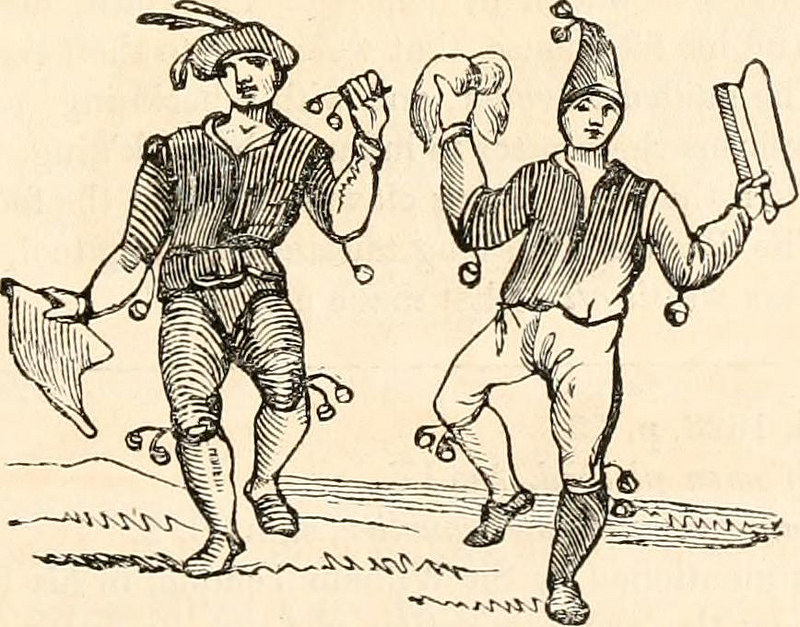
Very often the festivities around the maypole were led by Morris dancers. The Morris Dance is a form of English folk dance that has undergone some 500 years of evolution. Possibly the name comes from the French ‘morisque’ meaning a dance. It became ‘morisch’ in Flemish (who influenced many European customs). Eventually it became known as ‘moryssh’ in English and finally ‘morris’. The earliest record of Morris dancing in England is May 1448. In the beginning it was a dance performed just by one or two people and was popular in the Royal courts – the dancers would wear elaborate, fancy costumes….

may 19
Photo credit: Image from page 634 of “Illustrations of Shakespeare and of ancient manners : with dissertations on the clowns and fools of Shakespeare ; on the collection of popular tales entitled Gesta Romanorum, and on the English Morris dance” (1839) Internet Archive Book Images via Foter.com / No known copyright restrictions Original image URL: https://www.flickr.com/photos/internetarchivebookimages/14765685362/

By the 16th Century Morris dancing had become part of many religious festivals. In Mediaeval and Renaissance England the Church brewed wassail and other ales, which were sold at occasions such as weddings, christenings and wakes and at Whitsun…. It was a method of fund-raising for the Church…. As time went on, Morris dancing became associated with other village celebrations such as fetes and May Day…. It was particularly popular in Tudor times….

Many May Day celebrations were banned by the Church in the 16th Century due to their Pagan origins; although some Roman Catholics continued to celebrate May 1st with the ‘May Crowning’ of the Blessed Virgin Mary. The ban incited riots; 14 men were hanged as a result and a further 400 were pardoned by King Henry VIII….

may 20
Photo credit: May Crowning at St. Gertrude’s Lawrence OP via Foter.com / CC BY-NC-ND Original image URL: https://www.flickr.com/photos/paullew/14107194936/

May Day, which has always been associated with fun, revelry and fertility, disappeared once again during the civil war, when Oliver Cromwell’s Puritans took control of much of the Country in 1645. Cromwell banned maypoles, describing them as ‘heathenish’….

may 4
Photo credit: May Pole ericwg via Foter.com / CC BY-SA Original image URL: https://www.flickr.com/photos/ericwg/16767907/

At the Battle of Worcester in 1651, Cromwell defeated King Charles II, who fled to Europe to spend the next nine years in exile. Cromwell ruled Britain like a Puritan dictator. After his death in 1658, the monarchy was restored and Charles was invited back. He was reinstated in 1660 – known as the ‘Merry Monarch’ he was determined to bring back the fun; to show a return of the good times he had a giant 40ft maypole erected in the Strand, London….

Morris dancing had also been actively discouraged under Cromwell’s Puritan rule but it too made a hearty return under Charles…. By the mid 1700s it had become practised by common folk. The fancy clothes disappeared, ordinary attire was worn, decorated with flowers and ribbons….

May Day celebrations went into decline during the Victorian era…. The Victorians disapproved of bawdy behaviour; the Green Man died out altogether. The traditional Lord and Lady of the May who had boisterously presided over festivities were replaced by the more demure May Queen…. Morris dancing was considered to be old-fashioned, as new forms of entertainment had come along – although some villages still kept it going….

may 21
Photo credit: The May Queen 1886 Thiophene_Guy via Foter.com / CC BY-NC-SA Original image URL: https://www.flickr.com/photos/7726011@N07/7514274860/

Nowadays, many towns and villages have May Day celebrations of their own. Many continue to have a May Queen, some even have a Jack-of-the-Green, (the Green Man having been revived in Whitstable, Kent, in 1976) and maypole dancing. The village greens of Welford-on-Avon and Dunchurch in Warwickshire have permanently erected poles. Barwick in Yorkshire boasts the largest maypole in Britain at 30m high! Of course, Morris dancers are still here to entertain us….nowadays we are familiar with their bright costumes, the bell pads on their shins, wielding their sticks, swords and handkerchiefs, whilst performing their noisy, rhythmic, choreographed dances….

may 18

Photo credit: Morris Men’s Jump the_steve_cox via Foter.com / CC BY-ND Original image URL: https://www.flickr.com/photos/photowannabe/1571528274/

The Labour Government introduced May Day as an official holiday in 1978; the first Monday in May is now a bank holiday….

Back in the early days of this particular house, the Mediaeval May Day was dedicated to Robin Hood; plays would have been performed all over Britain to celebrate spring. Things have changed considerably since then but this village still has its May Day fete….now, all we need is some decent weather….  Hang on though, this is a British bank holiday we’re talking about….decent weather – pah!!

Please…. If you have read this post through to the end then I assume you have found it of interest and I hope you’ve enjoyed it…. If you have found this via Facebook, a little ‘like’ for the Cottage Capers’ page would be very much appreciated – a like and a follow would be even better…. I’m not trying to sell you anything – I’m simply a blogger trying to establish myself…. Many thanX….

may 16
Photo credit: Dancing the May Pole before Wedding Party / Milkmaids in background, Morris Dancers on left LIGC~NLW via Foter.com / No know copyright restrictions Original image URL: https://www.flickr.com/photos/llgc/4541056352/
may 1
Photo credit: Hawthorn Axiraa – back very soon via Foter.com / CC BY-NC-ND Original image URL: https://www.flickr.com/photos/46785534@N06/14249923649/

Are you superstitious….?

It was whilst foraging in the garden the other day, looking for wild strawberry leaves to tempt a poorly rabbit that I am caring for, that I came across a white spider…. My instinctive reaction was to recoil in horror – not because I have any fear of spiders, they don’t usually bother me – but because of something my mother always says….

spider 2

I don’t think I have ever actually seen a pure white spider before…. I have come across some very pale ones which I thought to be white but this little fella was unmistakable….

A bit of detective work (good old Google) meant I was able to identify the arachnid as a crab spider (misumena vatia). Apparently, it is quite a common chap here in the South of England and can often be found between April and September. Usually they prefer yellow or white flowers, which are good camouflage, so they can pounce on unsuspecting flies and bugs, trapping them in their crab-like front legs. The interesting thing about these particular crab spiders, is their ability to change colour to match their surroundings. This can take a few days but they are able to appear white, yellow or green….

So, now you are probably wondering what all the fuss was about…. Why my horror at finding what is fundamentally a harmless little creature just minding its own business? Well, ever since I can remember my mum has always told me that to come across a white spider means a death is soon to occur, either within the family or someone closely connected to it….

Being of a superstitious nature, it wasn’t just the identification of this small soul I was Googling, I wanted to see if I could find any reference to the old wives tale…. I discovered all kinds of beliefs surrounding our eight legged friends; money spiders bringing wealth, how seeing a spider weave its web in the morning is a bad omen, killing a spider means extreme bad luck and having cobwebs in the house is seen as lucky – but nowhere could I find anything about the impending doom and gloom a white spider is supposed to bring….in fact all my searching revealed quite the opposite. To find a pure white spider is a sign that changes for the better are due to arrive and an increase in wealth could well be in store….

So, where did Mum’s belief stem from? When I asked her, she told me it was something her granny always used to say…. This got me thinking about how such tales and folklores vary from region to region and from family to family. Superstitions are often a family ‘thing’, passed from generation to generation, it gives a sense of belonging. Most of these beliefs involve luck, whether the bringing of good fortune or keeping misfortune at bay…. Many require some kind of ritual; an action we repeat which is symbolic – to give us security and comfort…. A vast majority of the superstitions we know today can be traced back to the Middle Ages or even before….

During Mediaeval times, the World was both a wondrous and terrifying place; due to the lack of scientific understanding, general illiteracy and yet a need for an explanation of the unknown, people turned to other sources for answers – namely magic, evil spirits, witches and demons…. The World became obsessed with witchcraft, it is estimated some 200,000 people were executed after being accused of practising it…. I have already touched on some of the ways people protected their homes from witches in a previous blog (Within these walls…) – but there are so many other superstitions and their associated customs and rituals that also originate from this time….

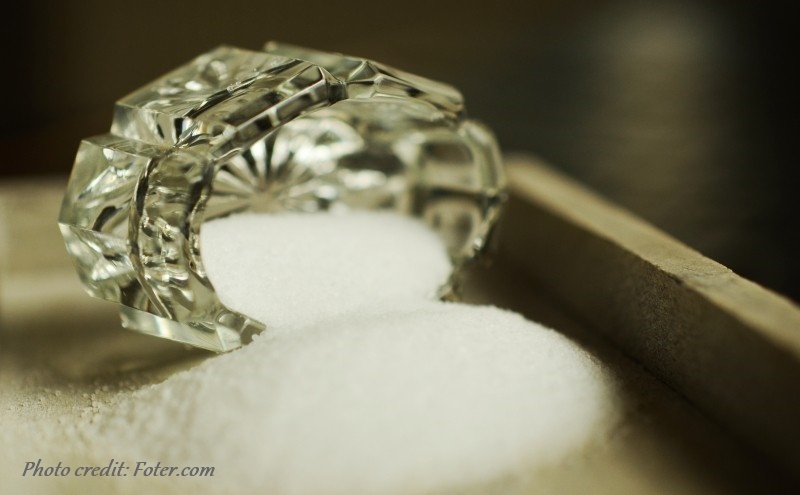
Throwing spilt salt over the left shoulder is something I for one have done on occasion but never really knowing why. Back in the Middle Ages, salt was an extremely expensive commodity, certainly not to be wasted. Rather than just discard spoiled salt, why not try to get some use from it….by chucking it over the shoulder, into the eyes of any evil spirit that might just happen to be lurking behind….

spider 4

Keeping evil out of the house was a priority. Placing rosemary by the door was thought to deter the likes of witches; growing ivy on outside walls was also meant to protect a property. An iron horseshoe above the door made a witch hesitate before entering a building. It had to be the correct way up to prevent the luck from escaping and it had to have come off of the horse naturally rather than being purposely removed….

Sometimes evil spirits could sneak into the home unnoticed – they could hide in things brought indoors, such as between the leaves of certain vegetables, like cabbages and lettuces. Do you cut a cross into the bottom of your Brussel sprouts whilst preparing them for the pot? Contrary to belief, doing so doesn’t help them to cook any better – it comes from an old belief that tiny demons hide inside them. If these demons happen to be swallowed, they can enter the body….

spider 8

Occasionally accidents happen, such as the breaking of a mirror. In the Middle Ages it was commonly believed that the reflected image was actually the soul of the person looking into the mirror; so if it were to break, it meant the fracturing of the soul…. To counteract the predicted forthcoming ill-luck, it was necessary to wait for seven hours before clearing up the broken shards and then disposal required burying them outside, under the light of the moon….

Great pains were taken to avoid tempting ill-fate, something we often do unconsciously today. How many times have you stepped off the pavement in order to divert from walking under a ladder? When a ladder is in position, for example leaning against a wall, it forms the shape of a triangle. The triangle is the sign of the Holy Trinity; it was once thought to be seriously unlucky to break the triangle by walking through it….

spider 9

Thirteen, for some, is an extremely unpopular number. The number of people at the Last Supper equalled thirteen, the thirteenth guest being Judas – he who betrayed Jesus. The Crucifixion occurred on a Friday – thus explaining the superstitions surrounding Friday the 13th…. For centuries people avoided having thirteen diners around the table….in fact having thirteen at a gathering could warrant being accused of witchcraft….

The term ‘bless you’ comes from times of the plague. It was at this time that people began to cover their mouths and noses when sneezing, to stop the spread of germs. Saying ‘bless you’ was thought to stop the Devil from entering the body during the sneeze….

Of course, there were lots of ways to entice good luck, many of which have stayed with us. Crossed fingers for instance, making the sign of the cross, to protect from bad luck and evil spirits – we all do it when willing something positive to happen…. (or perhaps when making a promise we don’t intend to keep)…!  Touching wood is another; this comes from the old belief that sacred trees, oak, ash and hawthorn, had spirits that protected from evil and demons….

spider 10

Tossing a coin into a wishing well stems from the idea that certain wells and pools were the home to water spirits – coins were thrown in as offerings….hoping a wish would come true…. Of course, nowadays many a charity may benefit from our wishful thinking….

spider 11

Then there are occasions that require good luck blessing rituals….such as weddings. Bridal clothes were considered to be especially luck – there was once a time when a bride could expect to have the clothes she wore physically ripped from her….gradually, the focus moved on to the  garter, which represented sexuality and fertility. Batchelors would fight to obtain the garter as the belief was that he who gained it would be delivered of a beautiful, fertile wife….

spider 12
Photo credit: acme via Foter.com / CC BY  Original image URL: https://www.flickr.com/photos/acme/5926093323/


Cutting the wedding cake was a ritual born of the belief that if a bride did not cut the first slice then the marriage would be childless….

spider 13
Photo credit: Image from page 425 of “Frolics at Fairmount” (1910) Internet Archive Book Images via Foter.com / No known copyright restrictions Original image URL: https://www.flickr.com/photos/internetarchivebookimages/14755803805/

Still today, we follow so many wedding traditions that have been with us for centuries. The same can be said for so many other areas of our lives, all those little quirks that have stayed with us…. So, whatever superstitions you observe, be it black cats, avoiding the cracks in the pavement, not putting you umbrella up indoors, saying ‘white rabbit’ on the first day of a new month or looking for four-leaf clover…. Be lucky X ….
Oh look! I’ve just spotted a pair of magpies outside….

spider 14