Dost thou know thy Tussie-Mussie from thy Nosegay…?

When I hear the words ‘Tussie-Mussie’, for me it conjures up a nostalgic, whimsical image of Victorian times…. A young suitor handing his intended a dainty posy of flowers, waiting to see if she would clutch it to her heart – for if she did, he would have known his love was requited…. Maybe they were secret sweethearts and his gift of flowers conveyed a covert message to her…. Each bloom, individually selected for its meaning, combined together to tell a story…. The language of flowers….
tm-1
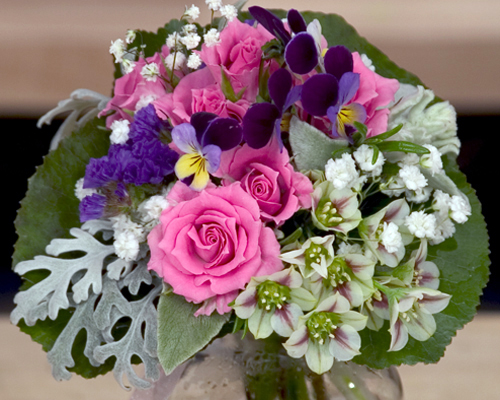
Photo credit: ‘Tussie-Mussie’ Leanne & David Kesler, Floral Design Institute, Inc., in Portland, Ore. Flower Factor via Foter.com / CC BY-NC Original image URL: https://www.flickr.com/photos/flowerfactor/8261820014/

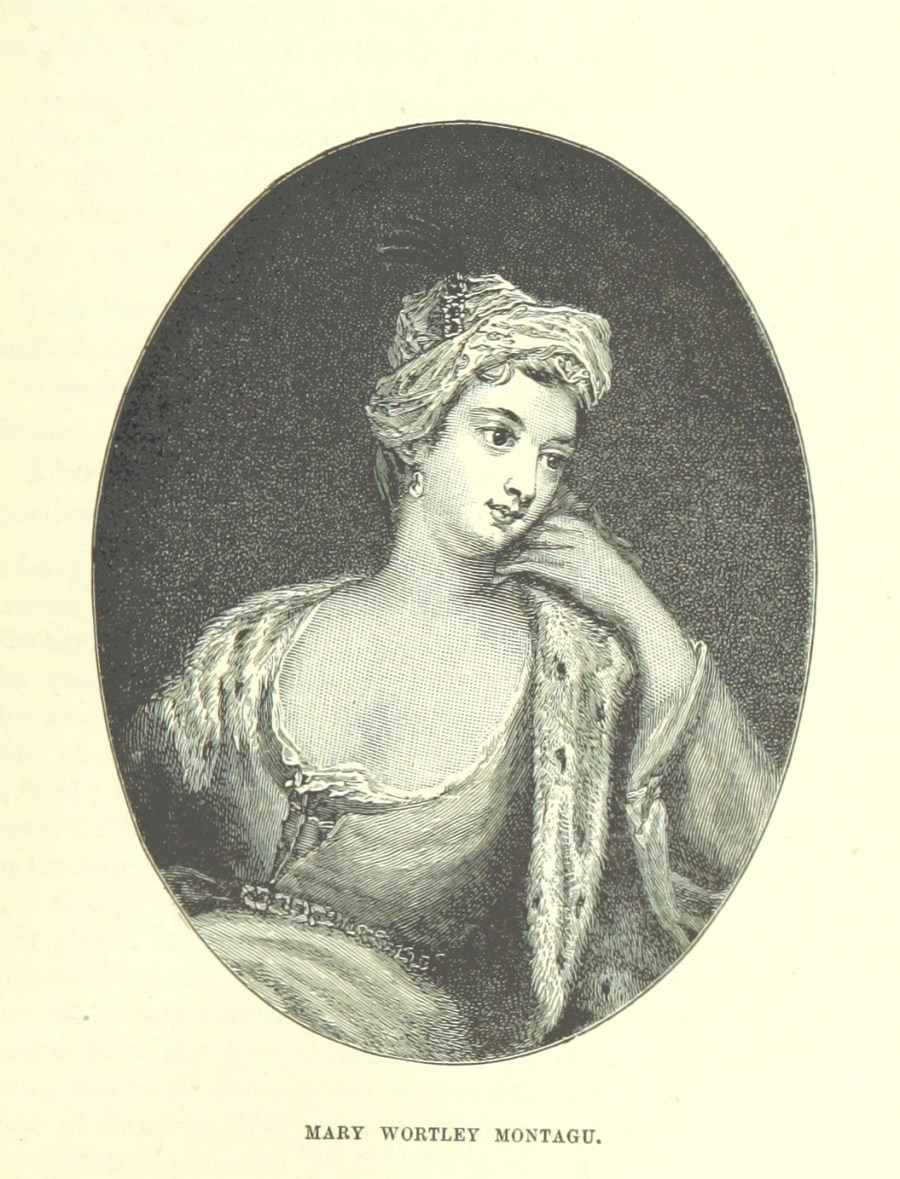
Floriography, the term used for the communication of a message through flowers, was a trend introduced to Europe in the 1700s. Lady Mary Wortley Montagu brought it to England in 1717; wife of the then Ambassador to Turkey, she is better known for her writing, poetry and upon her return from Turkey, for the introduction of the smallpox inoculation to Britain….
tm-13
Photo credit: Image taken from page 333 of ‘Literary Landmarks of London…Eighth edition, revised and enlarged, etc’ The British Library via Foter.com / No known copyright restrictions Original image URL: https://www.flickr.com/photos/britishlibrary/11301275333/

As Floriography gained in popularity throughout Europe and Britain, publications began to appear listing plants, trees and flowers with their meanings. The very first dictionary is thought to be Joseph Hammer-Purgstall’s Dictionnaire du Language des Fleurs’ in 1809. The craze continued throughout the Victorian era and dictionaries were produced in several countries; France, England, the USA, Belgium, Germany and South America. A well-known publication was ‘Le Language des Fleurs’ by Louise Cortambert writing as Madame Charlotte de la Tour, in 1819. Its equivalent in England was by the Clergyman, Robert Tyas and entitled ‘The Sentiment of Flowers; or, Language of Flora’, written in 1836. Other notable works were Henry Phillips’ ‘Floral Emblems’ in 1825 and Frederic Shoberl’s ‘Language of Flowers’ in 1834….

Perhaps though, the one we may be most familiar with and which is still printed today, is the one written by English, children’s book illustrator, Kate Greenaway. Her book, ‘The Language of Flowers’, which was first printed in 1884, lists over 500 flowers and plants, along with illustrations and the meanings and messages they convey. Many of the images are now reproduced as fine art prints, greetings cards and note paper….

tm-3
Photo credit: ‘Queen Victoria’s jubilee garland’ (1887) Toronto Public Library Special Collections via Foter.com / CC BY-SA Original image URL: https://www.flickr.com/photos/43021516@N06/8045542813/

Because so many different publications were available there became many variations of the lists. Certain flowers and plants acquired more than one meaning, sometimes contradictory, often varying from country to country. For example, the herb Basil; in Italy, it represented ‘best wishes’, in Greece it conveyed ‘hatred’, whereas in India it meant ‘sacred’….

There are so many plants and flowers that have meanings, far too many to list here but following are a few of the more familiar ones:

Primrose: Inconstancy, changeability
Sweetpea: Departure, good-bye
Anemone: Forsaken
Bluebell: Humility
Daffodil: Unrequited love
Chrysanthemum: Friendship, cheerfulness
Dandelion: Faithfulness, happiness
Violet: Modesty
Iris: Hope, wisdom, valour
Ivy: Fidelity
Fern: Fascination
Passion Flower: Faith
Honeysuckle: Love (sweet and secret)
Golden Rod: Caution, encouragement
Forget-me-not: True love, forget me not
Lily of the Valley: Return of happiness
Rose: Love
Pansy: Thoughts
Daisy: Innocence, purity
Orchid: Beauty
Peony: Shame
Poppy: Oblivion
Rosemary: Remembrance
Purple Heather: Admiration
White Heather: For wishes to come true
Magnolia: Nobility
Forsythia: Anticipation
Petunia: Resentment, anger
Larkspur: Fickleness
Marigold: Jealousy
Elderberry: Sympathy
Aster: Daintiness….

In Victorian times, the Tussie-Mussie  became something of a fashion accessory. They would have been carried to social occasions, or maybe worn on the wrist, or as a brooch…. If carried, very often a lace doily would have been wrapped around the stems; or perhaps they would have been contained in a small silver vase that could be pinned to a lapel….

Flowers were the most commonly exchanged gift in the Victorian era; much thought went into the meaning of each bloom that made up the display. A Tussie-Mussie traditionally has one single central flower, which is then surrounded by smaller flowers, herbs, foliage and grasses. Each individual piece playing its part, in conveying the message the person giving the gift wishes the recipient to receive…. Every posy is unique, individual and personal… In Victorian times young ladies were taught how to make them as part of their social up-bringing…. The craze eventually ended with the outbreak of World War 1….

Nowadays, Tussie-Mussies are still occasionally given as gifts; when they are, it is common place to include a note, explaining the meaning….

The name, ‘Tussie-Mussie’, was first mentioned in 1440, as ‘Tusemose’. Tuse – meaning a knot of flowers; mose – refers to the damp moss wrapped around the stems to stop them from drying out. During Mediaeval times, small posies of flowers were more commonly known as ‘Nosegays’; ‘gay’ meaning ornament. The name quite literally means ‘an ornament appealing to the nose’….

A Nosegay could have come in several forms; a small scented posy, or sachet of highly aromatic herbs or maybe even an orange studded with cloves. They would have been used by both sexes, carried, pinned to lapels, worn on the wrist or perhaps around the head – anywhere convenient and easily accessible, to mask bad odours and rancid smells….

Nosegays were extremely popular whilst in crowded places or while walking through the streets of cities and towns. The streets were particularly filthy in the Middle Ages, often coated in raw sewage, where the contents of chamber pots had been flung from windows. Butchers slaughtered animals in the streets leaving the unwanted waste behind….general rubbish and debris would have been left to rot…. The stench could only have been horrendous, Nosegays were quite possibly the only method to prevent gagging…. It was also believed disease was spread by foul air and bad odours….
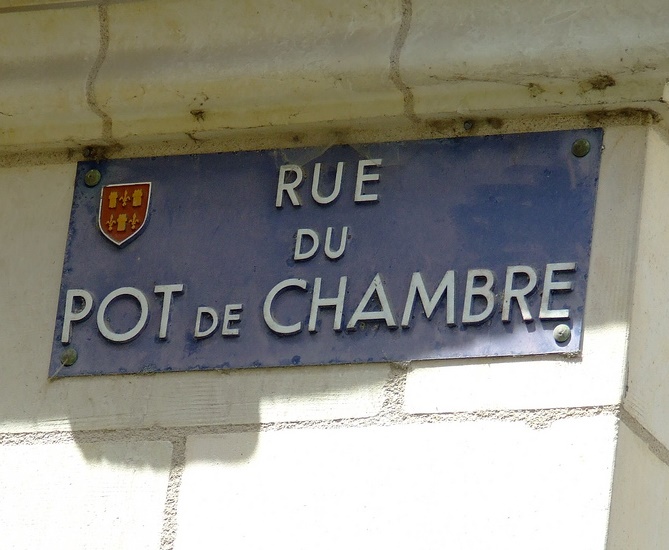
tm-9
Photo credit: ‘Sign in Chinon’ Peter Curbishley via Foter.com / CC BY Original image URL: https://www.flickr.com/photos/peter_curb/3685089224/

Contrary to general belief, many people in the Middle Ages did observe personal hygiene. Not all, obviously (hence another use for the Nosegay). Clothes, with the exception of under-garments, would not have been washed frequently; especially in the Winter months, as drying them would have been almost impossible….

Health manuals from the time stressed the importance of keeping clean in order to keep healthy. Magninius Mediolanesis wrote in his ‘Regimen Sanitatis’ “The bath cleans the external body parts of dirt left behind from exercise on the outside of the body”. He then went on to suggest 57 bathing remedies for conditions such as old age, pregnancy and for whilst travelling. He also advised: “Spring and Winter are good times for bathing but should be avoided as much as possible in the Summer”. Another of his pearls of wisdom stated: “Too long in the bath makes you feeble and fat”….

For those would could afford the luxury of a personal bath, namely Royalty, higher nobility and rich merchants, it would consist of a wooden tub with a ‘tent like’ sheet draped over…. Jugs of hot water would have been brought by attendants. According to John Russell’s ‘Book of Nurture’ from the late 1400s, fresh herbs were used for washing and then lukewarm rose-water for rinsing off…. Herbs would also have been added to ease aches and pains; camomile, breweswort, brown fennel and mallow….

tm-12
Photo credit: CC / Public domain

Soap was introduced to the Western World during the Middle Ages, most probably from the Orient. Typically, it was a soft soap made from mutton fat, potash or wood ash and natural soda. It was not very effective as it had little cleansing power. Hard soaps were available but were expensive. Produced mainly in Spain from the 12th Century, they were made from olive oil and often had added herbs and flower petals….
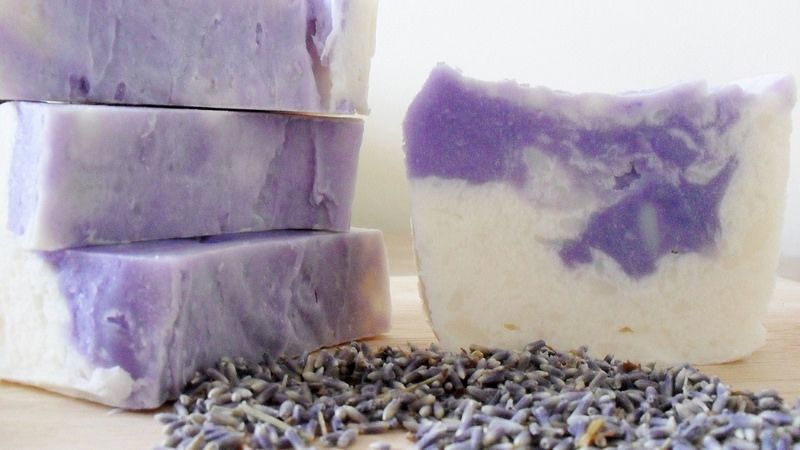
tm-10
Photo credit: ‘Lavender Dream’ Denise Karen via Foter.com / CC BY-NC Original image URL: https://www.flickr.com/photos/handmadebylilli/15845104786/

For some, bathing was a very important affair….King John would take a bath tub where ever he travelled…. In 1351, Edward III had hot and cold taps installed for his bath in Westminster Palace…. Some wealthy monasteries  were able to pipe water in…. Westminster Abbey had a bath attendant, who was paid 2 loaves of bread a day and £1 a year….

However, for the majority of people, having a private bath was not an option; it was unaffordable and too time consuming. The very poor had to make do with rivers, streams and ponds. Many others had the opportunity of using public baths. By the 13th Century there were over 32 available in Paris; Southwark, (then separate from London), a town standing on the banks of the River Thames, boasted 18 baths. Even many of the smaller towns had their own, often connected to a bakery, making use of the ovens to heat water….

Public baths were not without controversy. Many, (the Church in particular), were outraged that men and women would be naked together. Baths were seen as little more than a front to  disguise what they really were….brothels! Southwark’s were known as the ‘Stews’. The Mediaeval Church authorities claimed that baths spread immorality and disease….

Initially, little notice was taken of these views but gradually it became believed that it was water that was to be blamed for the spread of disease, enabling it to enter the body through the pores of the skin…. It was thought that as the warmth enlarged and opened up the pores, this in turn allowed airborne infections to enter…. Much of this belief could well have been fuelled by Church propaganda….

Of course, there could well have been some truth in that bath houses  were places of debauchery and immoral behaviour…. Promiscuity was prevalent during these times; then, in the late 15th Century there was a widespread outbreak of syphilis across Europe. It is believed the spread of this disease resulted in people becoming less promiscuous and at the same time brought a rapid decline in the popularity of the public bath house….
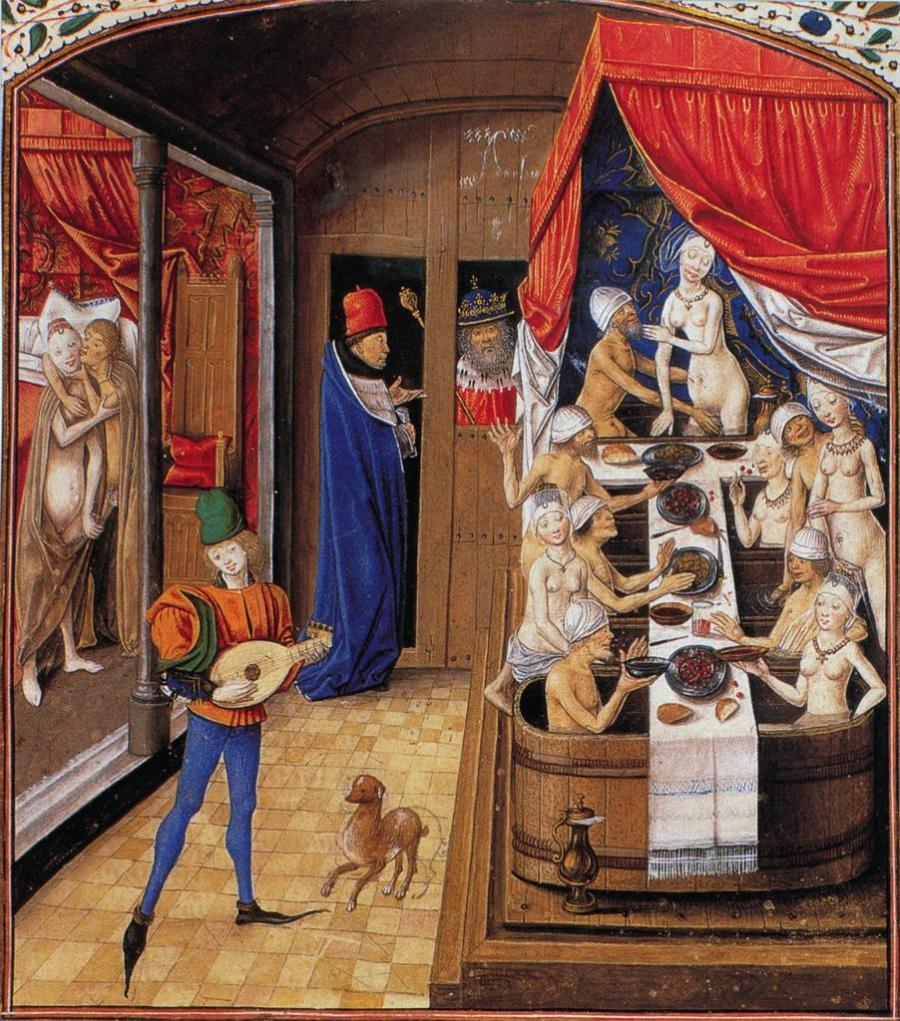
tm-11
Photo credit: ‘Scene of a Bath-house’ circa 1470 CC / Public Domain Image source: Wikipedia Commons

People in the Middle Ages loved their highly scented herbs and flowers…. Tables would have often been strewn with them in an attempt to keep houses smelling fresh…. Perfume was also popular, made from the oils of flowers and mixed with herbs and spices….both men and women used them….

Well, since bathing had fallen out of favour, they had to do something to mask the pong….!!

tm-2
Photo credit: ‘At the Lead Mines’ River Museum via Foter.com / CC BY-NC-SA Original image URL: https://www.flickr.com/photos/rivermuseum/3599668316/


Within these walls….

Eager to use every inch of available space in No.3, our attention turned to the area under the stairs, that for some reason had been ‘bricked up’ – literally, it was inaccessible.  As we set about removing the bricks, I jokingly remarked to John, “I hope we don’t find a body under here….”

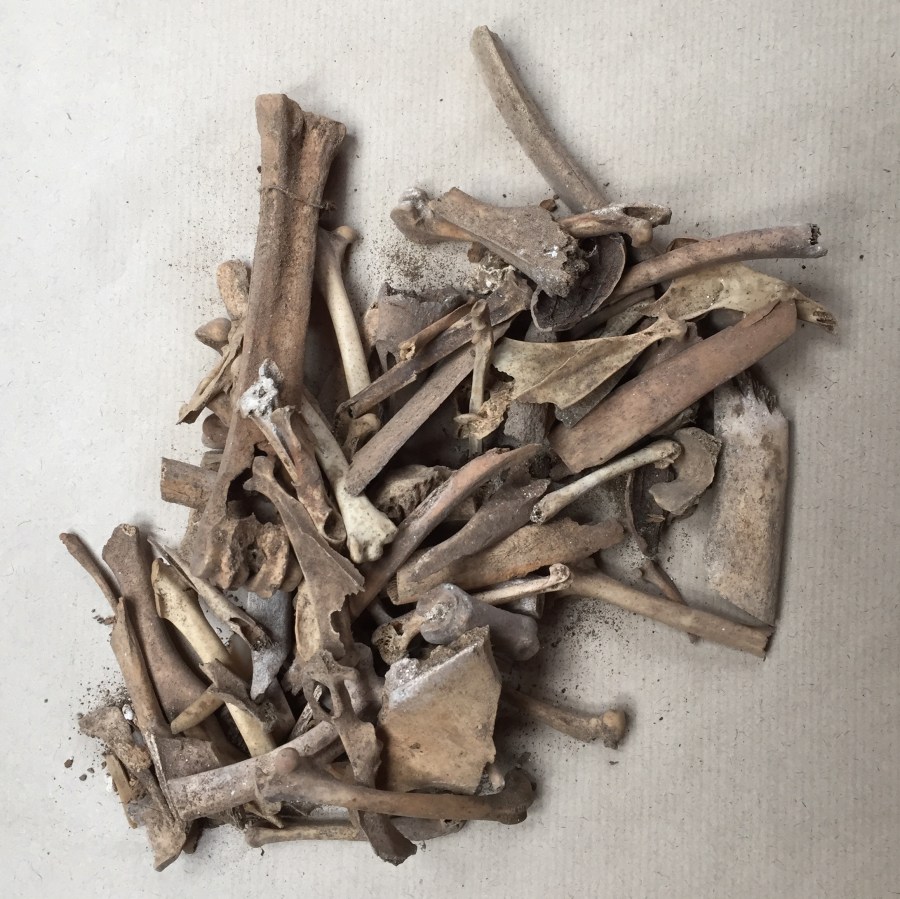
John made a hole big enough to poke his head through and using a torch, peered into the darkness…. Inside could only be described as resembling a ‘midden’ – and there on top of a mound of earth, lay a bone! Slightly nervous of what we were about to find, we continued to break our way in…. What we found was an assorted pile of rubbish and a quantity of animal bones, we can only assume what we had unearthed was a very old rat’s lair….

wb-13-bones-at-no-3
Bones found under the stairs of No.3….

Oddly though, amongst the debris were a collection of marbles and another of old bottle tops…. We never did get to the bottom of why the under stairs had been bricked up (perhaps it really had been a midden and previous occupants, long gone by, couldn’t be bothered to clear it out – who knows) ; it now serves as a very useful cupboard space….

As this was one of the last areas to be explored, I think we were secretly hoping we were going to find something like a ‘concealed shoe’….or perhaps some other ‘offering’ hidden away….protecting the house from evil spirits. We had gone over just about every other inch of the place and all we had found were a few hairgrips under a window sill, a magazine from the 1950s under the bath and a few giant acorns stashed in a hole in a beam….

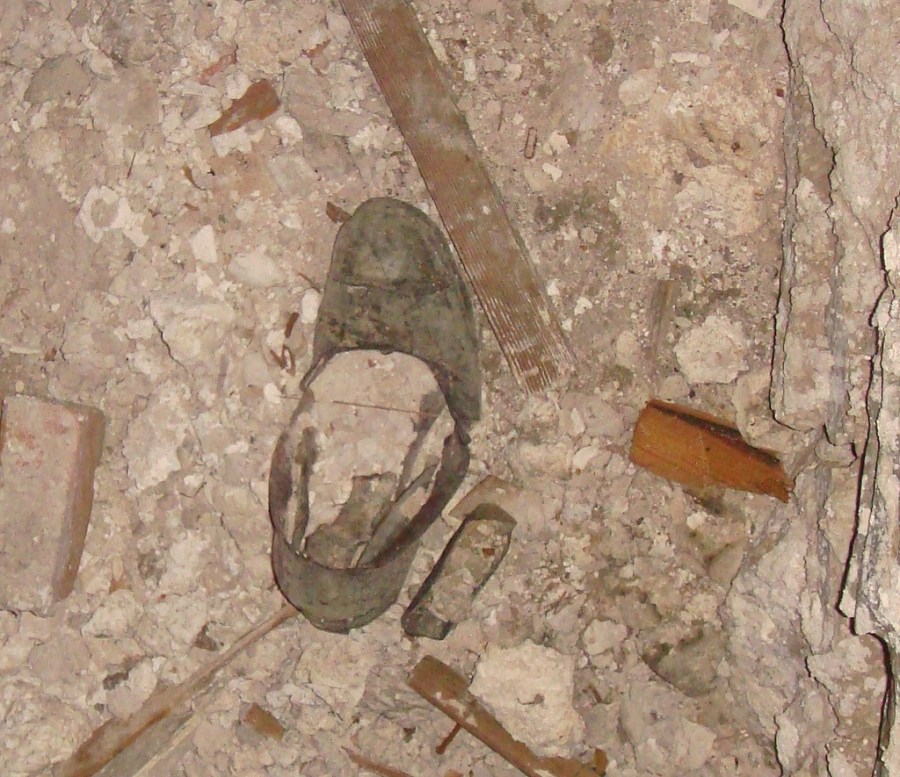
‘Caches’, the correct term for offerings, (from the French ‘cache’ – meaning to give), are items that have been concealed somewhere in a building; under floors, above ceilings, up chimneys, around windows and doors, plastered into walls….

wb-7-shoe-in-wall
Photo credit : ‘Semaphore Reno 004’ – Marlene Manto via Foter.com / CC BY-NC  Original image URL: https://www.flickr.com/photos/marlenemanto/2874151309/    (Shoe plastered into wall….)

They were believed to protect the inhabitants from evil influences; witches, ghosts, demons and the like. It was a custom that was with us for centuries, only really dying out at some point in the last century (may be the advent of burglar alarms made people feel safer?!)…. It is not a custom that was confined just to the UK, by any means; such offerings have been found in buildings all over Europe, parts of Scandinavia, North America, Australia, even China….

Shoes are the most common; nearly always a single shoe, usually well worn and often repaired. In days gone by, as much use as possible would be gleaned from possessions, unlike the throw away society we know today….

wb-9-concealed-shoes-east-anglia
Photo credit : Edmund Patrick – CC BY-SA 3.0  Collection of concealed shoes from East Anglia held by St. Edmundsbury Heritage Service

About half of the shoes recorded have been those of children; it was believed the innocence and purity of children would over power evil spirits…. The earliest shoe that has been found to date was discovered behind the choir stalls in Winchester Cathedral, the stalls were originally built in 1308; it is thought the shoe may have been there since that time….

It is assumed many shoes are found and simply thrown away, never to be recorded. Northampton Museum has a ‘Concealed Shoe Index’ that it has been compiling since the late 1950s; it has approximately 2,000 entries. Shoes have been found in a large variety of buildings : monasteries, churches, hospitals, theatres, schools, even army barracks. They have been discovered in pubs and breweries, museums, factories and of course private dwellings, from tiny cottages to manor houses, even the likes of Hampton Court Palace….

The shoe is the only item of clothing that truly takes on the form of the wearer, it shapes itself to the foot…. It was believed that the spirit of a deceased person would be trapped in the shoe – a ‘spirit trap’…. It is thought this belief comes from the 14th Century, when it is said John Schorn, the Rector of Marston, Buckinghamshire, cast the Devil into a boot, thus entrapping him….

The largest cache found in the UK was in a 400 year old cottage, which was being renovated in Snowdonia, Wales. Here, building contractors found nearly 100 single shoes buried under a chimney stack. The nearest recorded example of a concealed shoe being found to here, was in the neighbouring village of Hascombe. A house was undergoing repair work and from the rafters fell an 18th Century child’s shoe….its heel broken down where the child had continuously pulled it on and off….and the toe was worn through.

Although many think the ‘concealed shoe’ was to keep away evil influences, there are also others who believe shoes were hidden as a fertility offering. Shoes have long been associated with fertility. In Lancashire, there is an old custom called ‘smickling’ – it involves trying on the shoes worn by a woman who has recently given birth, supposedly this brings luck in conceiving…. Casting a shoe after a bride departing for her honeymoon was another old tradition, even today we still tie shoes to the car of a newly wed couple….

Bröllopsfotografering Frida Pettersson och Pontus Svensson 2007-07-28
Photo credit : Just Married – Johan Lindqvist Fotografi via Foter.com / CC BY-NC-ND Original image URL: https://www.flickr.com/photos/johanlinqvist/4297282191/

Some think the connection between shoes and fertility is reflected in an old English nursery rhyme from Mother Goose :

There was an old woman who lived in a shoe;
She had so many children she didn’t know what to do;
She gave them some broth without any bread;
Then whipped them all soundly and sent them to bed….

wb-11
Photo credit : Internet Archive Book Images “Mother Goose’s Melodies : or songs for the nursery” (1879) via Foter.com/No known copyright restrictions : Original image URL: https//www.flickr.com/photos/internetarchivesimages/14583156277/

This rhyme dates to 1794 and there are some that think it refers to King George II, who’s wife, Caroline, had eight children. George II had the nickname ‘Old Woman’ and it was widely believed that Caroline was the one with the real power….

Of course, it wasn’t just shoes that were used as caches. Other items of clothing have often been found; gloves, hats, belts, breeches, jackets. In a thatched cottage, in Pontarddulias, South Wales, a mid 18th Century corset was found in a wall…. It is not just clothing that has been found; objects such as coins, spoons, knives, books, goblets, pots, pipes, children’s toys and dolls and more macabre things, horses skulls and mummified cats….

Dried cats have been found on numerous occasions. It was thought the presence of the cat would deter vermin, such as rats. However, there was another reason cats were hidden within the house, cats were believed to be highly susceptible to detecting evil spirits : and because of their connection to witches, it was the belief that they would provide protection from such….

wb-8-mummified-cat-seaforth
Photo credit : Radarsmum67 via Foter.com / CC BY Mummified cat, found between floorboards in the attic of a Victorian house, built 1879, being renovated in Seaforth…. Original image URL: https://www.flickr.com/photos/radarsmum67/27029137971/

Witchcraft was greatly feared in centuries gone by. Witches bottles are also regularly found, no where more so than in East Anglia, where the belief in witches was very strong indeed…. Very often they are discovered buried under a fireplace, the floor or plastered into a wall. It was believed that as long as the bottle was kept well hidden and remained unbroken, the ‘spell’ contained within would keep on working…. The origins go back to the 1500s and they are particular to the Elizabethan period….

The earliest bottles to be found were typically ‘Bartmann jugs’ – made from salt glazed stone. During the 1500s and 1600s, Bartmann jugs were made throughout Europe but most especially in Germany. Shaped in the form of a bearded man, their intended use was to store food and drink. They were also manufactured in England, either by copycat potters or German immigrants. Because of the malevolent face of the bearded figure, it became adopted by many as the perfect vessel for a witch’s ‘spell’….

The contents were usually prepared by the local ‘witch’ or folk healer. The spells would be used not only to ward off evil but very often in an attempt to cure an affliction, condition or illness. Earlier spells would contain something personal of the person it was intended for, usually urine but sometimes hair or nail clippings….

Later witches bottles were often made of glass…. They would be filled with red wine, rosemary, pins and needles. The bottle would be buried and it was believed evil spirits would be caught on the pins and needles, drowned in the wine and then banished by the rosemary….

Other ‘ingredients’ could be added to the bottle; depending on the requirements of the particular spell – sea water, stones, earth, ashes, feathers, shells, vinegar….

Sometimes, instead of burying the bottle it would be hurled into the fire, causing it to explode; so if someone was thought to be ‘cast under a spell’, it would be broken….

Generally though, it was customary to bury the bottle, especially under the fireplace….

Now, there’s somewhere we’ve never looked…. Any one got a spade….?

wb-1
Photo credit : The British Library via Foter.com / No known copyright restrictions  –  From the Ingoldsby Legends. Illustrated by Cruickshank, Leech and Tenniel (People’s edition) [A selection]  Original image URL: https://www.flickr.com/photos/britishlibrary/11276749235/

New year, new beginnings, old traditions….

new-years-eve-4

As the New Year approaches, I find myself wondering about some of the traditional customs we associate with it, here in the British Isles and how they vary from region to region….

New Year is one of our oldest holidays, although the exact date of the festivities has changed over the times. Its origins can be traced back thousands of years to Ancient Babylon, when, starting on the first day of Spring, (which was determined by the cycle of the Sun and Moon), an eleven day long festival was held. These early, mostly Pagan, celebrations were in honour of the Earth’s cycles….

January the 1st became the common day for celebrating New Year with the introduction of the Julian Calendar, implemented by Julius Ceasar….

The Julian Calendar has its flaws, namely that it does not accurately record the actual time it takes for the Earth to circle once around the Sun (tropical year). It is because of this, that in 1582 the Gregorian Calendar was first introduced. Also known as the Western or Christian Calendar, it is the most commonly used one in the World today. It is named after its founder, Pope Gregory XIII but it was not adopted by the whole World immediately. In fact, it took over 300 years for it to become used to the extent it is today. France, Italy and Spain were amongst the first to employ it, the United Kingdom, United States and Canada did not start using it until 1752. Turkey was the last and it wasn’t until 1927 that they followed suit….

After the fall of the Roman Empire the date for New Year changed in Britain to March the 25th. It wasn’t until the adoption of the Gregorian Calendar that January 1st became the official day once again. It took until 1974 for it to become a public bank holiday….

There have always been superstitions associated with New Year, evolving in their own particular ways, from one part of the country to another. Most of them relate to luck and new beginnings….

Making New Year’s resolutions goes back to ancient times. Other customs and beliefs have come to us along the way…. Some are more general, such as opening the door at midnight to let the old year out and the new one in….

‘First Footing’ is also a widely observed custom but one that has its variations depending on its whereabouts in the country. Most commonly though, it is believed that the first person to cross the threshold after midnight, should have dark hair, to bring good luck. Ideally, they should bring coal, to symbolise warmth for the coming year, bread to represent food and salt for money – (hence the saying “worth his salt”). Many believe that if a blonde person were to be the first, ill luck would be forth coming. Many Scottish people believe the First Footer should be a stranger. In Wales, where it is known as ‘Nos Galan’, it is considered that if the first visitor is a woman and the door is opened by a man, this will bring bad luck. The Welsh also believe that bad luck will also be brought if the First Footer is a red head. Another belief is that all debt must be paid by the end of the year. To start a new year owing, would mean a whole year will be spent in debt….

Another popular superstition was – ‘the cream of the well’. It was believed that if a woman washed in the first water drawn from the well on New Year’s Day, she would become beautiful….

Some traditions are very regional. In Yorkshire, just before midnight, people say “black rabbits, black rabbits, black rabbits”. Then immediately after the clock has struck, “white rabbits, white rabbits, white rabbits”. By saying these words, good luck is ensured for the coming year. This is where the saying “white rabbit” comes from, said by so many of us on the first day of every month….

Herefordshire once had an old tradition of ‘burning a bush’. A young farmer, rising before day break, would cut down a hawthorn bush and set fire to it, to guarantee a good harvest later in the coming year….

Fire seems to feature in many of our New Year’s customs and beliefs. Northumberland for instance, has the Allendale Tar Barrel Festival. On the 31st of December, whisky barrels are filled with kindling, sawdust and burning tar, they are then paraded through the streets, on the heads of barrel carriers, called ‘Guisers’….

In Perthshire, the town of Comrie has its Flambeaux Procession. Eight, flaming torches are carried through the town and then are flung from a bridge into the River Earn, this is meant to cast out any evil spirits….

Stonehaven, near Aberdeen, has a Fireball and Chain Festival. Sixty, kilt clad marchers, swing about their heads, sixteen pound balls of fire attached to wire ropes, whilst parading through the streets accompanied by pipes and drums….

The Welsh people have their own gift giving tradition of ‘Calennig’. Some think this custom goes back to Pagan times. The name ‘Calennig’ is thought to come from the Latin ‘calends’ or ‘kalends’ – meaning first day of the month, which is also where we get the word ‘calendar’ from. A Calennig is a small decoration made from an apple, (or perhaps, nowadays, an orange), which has been studded with cloves and supported on three twigs. A sprig of box foliage is then inserted into the top of the fruit. It is meant as a token to ensure a future good harvest and is either displayed in the house or given as a traditional New Year’s gift….

Welsh children often get up early on New Year’s Day, (Dydd Calan), in order to go and sing songs to their neighbours, perhaps taking calennig decorations as gifts. In return, they receive sweets and money….

Another Welsh tradition, especially in South Wales, first recorded in 1800 and known as ‘Mari Lwyd’ (Venerable Mary), was not always so welcome! The skull of a horse, decorated with colourful streamers, would be carried on a pole and made so that the jaws could be snapped open and shut. The bearer would be covered in a white sheet, draped from the skull. Then, accompanied by a group of men, the ‘horse’ would go from house to house. The home owners would be challenged to a contest in song and rhyme, each taking a turn to banter in a more and more humorous and witty way as the contest progressed. The idea was for the group to be invited into the house to partake in ‘merriment’, in the form of food and drink. Obviously, having a group of boisterous, probably drunk, rabble of men, turn up on the doorstep, late at night, wielding a horse’s skull and expecting fun and banter….did not appeal to all! So, this custom began to decline at the beginning of the 20th Century. It was also discouraged by some of the Christian clergy, who frowned upon its Pagan origins….

Then, of course, we come to Scotland’s Hogmanay – the Scots word for the last day of the year. The exact origins of the name are unknown, the earliest references come from the 1600’s, with many spellings, such as ‘hagmane’, ‘hog ma nae’ and ‘hagmonay’….

Christmas, as we know it, was not celebrated as a festival in Scotland. In fact, from the end of the 17th Century, right up to the 1950’s, it was more or less banned…. Most Scottish people had to work over the Christmas period and instead celebrated the Winter Solstice holiday of New Year. The reason being, the Kirk (Church) viewed Christmas as a Catholic feast and as the Scottish Church had its roots in the Protestant Reformation, the festivities had to be banned….

‘Hand Selling’ was once the Scottish custom of giving gifts, it would happen on the first Monday of the year but this has now died out. Instead, New Year became the time for Scots to gather, exchange gifts, feast and hold celebrations. An important part of the festivities was (and indeed still is today), to welcome both friends and strangers into the home, to enjoy warmth and hospitality….

Hundreds of years ago, Pagan festivities would include lighting bonfires and rolling tar barrels, that had been set ablaze, down hillsides. These traditions are reflected in the magnificent firework displays and torch light processions, held every year, in Edinburgh and many other Scottish cities. Even more Pagan was the act of wrapping animal hide around a stick and setting it alight. The smoke was believed to ward off evil spirits, the smoking stick was known as a ‘Hogmanay’. Other customs would involve people dressing up in cowhides and running around the village whilst being beaten with sticks! Some of the more rural, remote communities, especially the Highlands and Islands, still continue a form of these old traditions today. For example, in the Outer Hebrides, on the Isle of Lewis, young boys divide into groups, the leader dresses in a sheepskin and they move from house to house, with a sack in which they collect a type of fruit bun, called a bannock….

In other parts of Scotland, it is traditional to give children a Hogmanay Oatcake on New Year’s Eve – this represents the time when they would of gone from door to door asking for oatcakes and bread….

“Get up, goodwife, and shake your feathers,
And dinna think that we are beggars;
For we are bairns come out to play,
Get up and gie’s our Hogmanay!”

One of the oldest traditions (and one shared by many cultures), is the cleaning of the house until it is spotless, on New Year’s Eve, making sure every task is finished. Symbols for what is desired for the coming year may be left out, such as food, so there will be plenty to come, coins for wealth and dolls, for the hope of being surrounded by family. Many Scots fast, or perhaps just have a very small breakfast, on New Year’s Eve. Then, once the magical hour of midnight arrives, all the windows and doors of the house are flung open to welcome in the New Year and to let out the old. Then a huge feast is partaken of….but not of course until the traditional “Auld Lang Syne” has been sung….

Nowadays, Auld Lang Syne has been adopted as the official New Year’s song, by just about every English speaking nation of the World….

It was in 1788, that Robert Burns first recorded the lyrics on paper and sent them to the Scots Musical Museum. He had based his famous poem on an earlier song, printed by James Watson in 1711. There is doubt as to whether the tune we all know and sing the words to, is actually the melody Burns intended….

Roughly translated, “Auld Lang Syne” means “for old times sake”. It is about looking back over the previous year and preserving friendships….


“Should auld acquaintance be forgot
And never brought to mind?
Should old acquaintance be forgot
And auld lang syne


For auld lang syne, my jo
For auld lang syne,
We’ll tak a cup o’ kindness yet,
For auld lang syne….

On that note….it just remains for me to wish you, in whatever way you choose to celebrate it – A very happy and prosperous New Year!


                                                                                   new-years-day-6